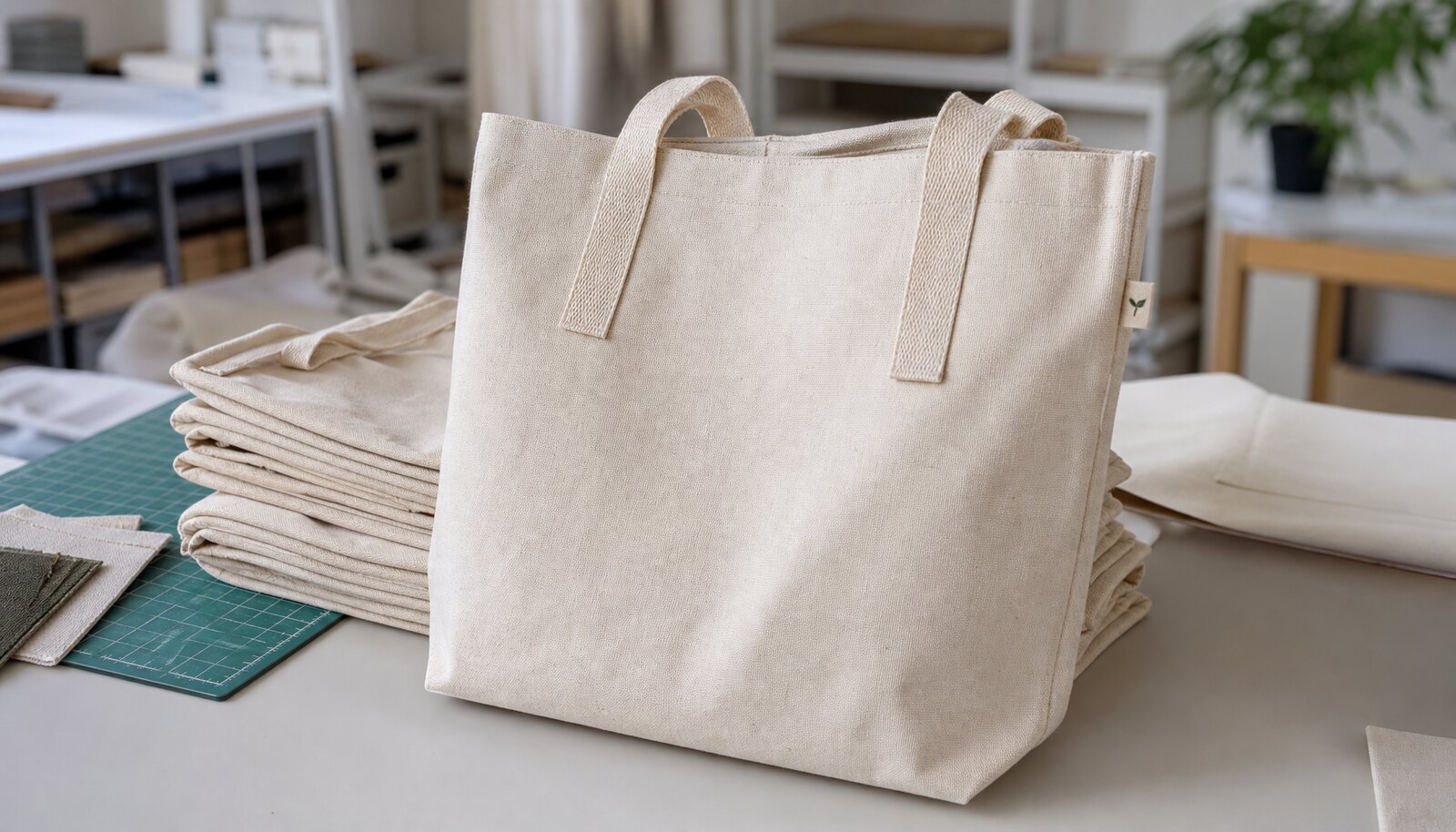
Why recycled canvas for corporate events is a spec decision, not a branding decision
For corporate events, recycled canvas totes do more than carry materials. They affect how the event feels at registration, how many inserts fit inside, and whether the bag is reused after the event. Procurement teams often get pulled toward the lowest quote, but the better question is whether the tote will survive actual use without looking cheap on day one.
The right spec depends on what the bag must hold. A tote for a summit welcome kit is not the same as a tote for a product launch with catalogs, samples, and a water bottle. If the tote collapses, prints poorly, or frays at the handle, the event gift loses value immediately. That is why material selection should be tied to load, print format, and distribution method.
- Standard corporate event tote: 12 oz recycled canvas, open top, one-color logo.
- Heavier kit tote: 14 oz recycled canvas, reinforced handles, gusseted body.
- Premium VIP tote: denser canvas, cleaner finishing, better print alignment, possible woven label.
Start with fabric weight, weave density, and recycled content proof
The most common buying mistake is treating recycled canvas as one material. In practice, you will see differences in yarn thickness, weave tightness, surface smoothness, and actual finished weight. A 10 oz tote can be fine for a folded brochure and T-shirt, but it will feel flimsy for a packed conference kit. At the other end, a very heavy canvas may create a premium feel but can raise sewing labor, carton weight, and freight cost without improving event performance enough to justify it.
For most corporate events, 12 oz recycled canvas is the balance point. It offers enough body for screen printing, enough stiffness to stand up on a registration table, and a cost that still works for mid-volume giveaways. Use 14 oz only when the contents are heavier, the bag must look premium in photos, or the buyer wants a longer usable life after the event.
- Target spec for mainstream events: 12 oz, plain weave, neatly trimmed edges.
- Choose 14 oz if the tote will carry hard goods, boxed gifts, or multi-day event kits.
- Request the recycled content statement in writing; do not rely on a verbal sustainability claim.
Compare sourcing routes before you compare price
The quote you receive depends on whether you are buying direct from a factory, through a trading company, or from a local stockist adding decoration. These routes are not interchangeable. A direct factory quote often gives better control over fabric, sewing, and carton packing, but it requires clearer specs and faster decision-making. A trading company may reduce coordination effort if you are combining multiple SKUs, but the true factory standard can be harder to verify.
If your event date is fixed and the tote is one of several items in a larger kit, the sourcing route matters as much as the material. The same bag may arrive at very different true costs once you add sampling, coordination time, packing inserts, and freight volume. Compare routes on evidence, not on headline unit price.
- Direct factory: best for repeat orders, custom sewing details, and stable print specs.
- Trading route: useful if your event kit includes mixed goods from several product categories.
- Stockist/decorator: fastest for simple logos, but limited on fabric and construction changes.
Use the table below to choose the right spec path for your event
The decision is not just about what looks good in a presentation. It is about matching the tote to the event flow, the contents, and the distribution channel. The comparison below helps procurement teams separate practical choices from aesthetic preferences.
Treat the table as an RFQ filter. If a supplier cannot meet the row that matches your event use case, the quote may be cheap for the wrong bag. That usually leads to rework, overspend on freight, or complaints when the bags are handed out.
- Write decisions in measurable language, not only descriptive wording.
- Ask for sample photos plus one physical approval sample for important orders.
- Keep quotation, sample approval, and inspection notes tied to the same spec version.
Design choices that change price more than buyers expect
The biggest cost drivers are usually not the tote body alone. Print method, handle reinforcement, gusset size, and packing format can shift the quote materially. A one-color screen print is efficient because the setup is simple and repeatable. Add a second color or a large solid area and you often create more labor, more ink usage, and higher rejection risk if alignment drifts.
Gusset depth also changes more than appearance. A deeper gusset improves capacity, but it uses more fabric and can change how the bag folds for packing. Likewise, a sewn-in zipper or snap increases labor and inspection time. If the event only needs quick handout bags, keep the structure simple and spend the budget on clean sewing and good print registration instead.
- Lowest-cost usable build: open top, no lining, 1-color print, standard handles.
- Mid-range build: 12 oz canvas, reinforced handles, gusset, clean internal seam finish.
- Higher-cost build: zipper closure, multi-color print, woven label, premium packing.
Print method selection should follow artwork, not habit
Screen print is still the most practical choice for many corporate event totes. It handles flat logos well, stays economical at volume, and works with most standard canvas surfaces. If the logo has thin text, fine rules, or tonal gradients, ask the factory how they will simplify the artwork for production. A design that looks sharp on screen can close up when printed on textured recycled canvas.
For premium event kits, a woven label or small embroidery may outperform a large printed graphic. This is especially true when the bag itself is neutral and the brand wants a quieter, more durable mark. But embroidery can distort on lightweight canvas, and woven labels are only appropriate when the brand story supports that more restrained look.
- Screen print: best for bold logos, event names, and quick production.
- Water-based or discharge print: better hand feel, but needs the right fabric color and test approval.
- Embroidery or woven label: better for small premium branding, not large busy artwork.
MOQ logic: order by spec family, not just by quantity
MOQ on recycled canvas totes is usually tied to fabric color, print setup, and sewing line efficiency. A supplier may quote a low overall quantity but only if all bags use the same fabric and the same decoration method. The moment you split into different sizes, different logo placements, or different closures, the true MOQ rises. Buyers who ignore this often receive a cheap headline price that becomes expensive once the final configuration is fixed.
The better way to write the RFQ is to define one core tote spec and one fallback spec. For example, make the 12 oz open-top tote the main option and keep the 14 oz gusseted version as an alternative only if the contents justify it. That gives the factory a clear production path and lets procurement compare apples to apples.
- Keep one artwork version whenever possible to protect MOQ efficiency.
- Use one size for the main event and only add a second size if the contents truly differ.
- Ask whether leftover fabric or dye lot matching will affect repeat-order availability.
Sample approval should test function, not just appearance
A sample is not only for color approval. It should show the actual fabric hand feel, handle reinforcement, seam behavior, and print finish. If the bag is meant to carry a catalog set or boxed merchandise, fill the sample with realistic contents and see how it hangs. That quickly reveals whether the gusset is deep enough and whether the handle length feels practical for the attendee.
Before bulk approval, make sure the sample reflects the same fabric weight, print method, and packing style the factory will use in mass production. A beautiful sample made from better material than the final lot creates avoidable conflict later. The approval sample should be documented with measurements, photo records, and a signed note on acceptable shade variation.
- Load test the sample with the planned event contents, not empty only.
- Measure handle drop, body height, gusset depth, and print position.
- Approve one physical master sample and keep it at the factory or buyer side for reference.
Packing and freight can change the landed cost more than the tote itself
Totes are simple on paper, but packing choices affect labor, carton count, pallet efficiency, and shipping volume. Bulk packed totes reduce cost and carton size, which is useful for centralized distribution. Individual polybagging adds protection and a cleaner handout experience, but it also increases labor and may enlarge cartons enough to move freight brackets. When event teams request tissue wrap, insert cards, or barcode labels, those tasks should be separated clearly in the quote.
For international buyers, carton dimensions and gross weight matter as much as unit price. A tote that is only a few cents cheaper but uses more air in packing can become a worse landed-cost option once freight is added. Ask the supplier to quote carton count and packing configuration so your logistics team can estimate the true delivered cost before approval.
- Central warehouse distribution: bulk polybag, high carton count efficiency.
- VIP handout or direct-to-delegate: individual bag protection, consistent folding, and outer carton labeling.
- Retail resale or premium gifting: add tissue, insert card, and cleaner presentation only if the budget supports it.
Schedule risk is usually caused by approvals, not sewing
Most tote delays do not come from stitching alone. They come from slow artwork signoff, missing Pantone references, late sample feedback, or carton artwork changes after production starts. A realistic event schedule should include time for sample approval, correction if needed, bulk production, packing review, and freight booking. If the event is fixed on a hard date, build your internal approvals backward from that date instead of treating production as the only lead-time item.
For custom recycled canvas totes, a common planning window is around 30 to 45 days after sample approval in normal season, but that is only useful if all pre-production details are frozen. If the supplier still needs artwork revision or fabric confirmation, add buffer time. A rushed order can force the factory to use the nearest available material lot, which may change shade or hand feel from the approved sample.
- Freeze artwork before sample production begins.
- Treat carton labels, shipping marks, and packing inserts as part of the schedule.
- Reserve freight space early if the event date is fixed and the order is cross-border.
Specification comparison for buyers
| Spec decision | Recommended option | When it fits | Buyer risk to check |
|---|---|---|---|
| Fabric weight | 12 oz recycled canvas for most corporate events; 14 oz if the bag carries catalogs or boxed gifts | Standard conference kits, staff appreciation gifts, registration bundles, and premium brand activations | Too light and the tote loses shape; too heavy and freight plus sewing cost rise without a visible benefit |
| Fiber content route | Post-consumer recycled cotton canvas or recycled cotton/poly blend with clearly stated recycled content | When sustainability claims need to be supportable in buyer documentation or event messaging | Unclear recycled percentage, weak traceability, or claims that cannot be repeated on invoices and packing lists |
| Print method | 1-2 color screen print for large flat logos; water-based or discharge print where hand feel matters; woven label or embroidery for small premium marks | Simple corporate logos, internal event branding, or premium welcome kits | Fine text may fill in; gradients and tiny legal text can blur; embroidery can distort on light canvas |
| Handle build | Self-fabric handles with reinforced X-box or bartack stitching; longer drop if the tote will be worn over a shoulder | Conference carry, trade events, and employee welcome packs | Thin handles cut into the hand when the tote is loaded; short drop reduces actual use |
| Closure option | Open top for fast packing; zipper or snap only when contents are small-value or privacy-sensitive | Event inserts, stationery, apparel, and standard giveaways | Adding closures increases cost, sewing time, and inspection points; closures can also distort print placement |
| Supplier route | Direct factory sourcing for custom runs; trading company only if you need mixed product consolidation or faster communication in one market | Known specs, repeat orders, and buyers who can review pre-production samples directly | Middleman margin can hide the real factory spec; request the actual production site and build standard |
| MOQ strategy | Order to fabric color and print method, not only total pieces; use one artwork set across sizes if possible | Budget-controlled events with one core design and multiple attendance tiers | Low MOQ quotes may use leftover fabric, inconsistent shade lots, or weaker packaging standards |
| Packing standard | Bulk polybag in cartons for simple distribution; individual tissue/polybag if bags are handed out at VIP desks or shipped to multiple sites | Central warehouse distribution, direct-to-delegate kits, or premium branded handoff | Overpacking adds labor and carton volume; underpacking risks scuffs, dust, and print rub-off |
| Lead time planning | Allow sample approval first, then 30-45 days production for custom recycled canvas in normal season | Projects with fixed event dates, international freight, or multiple approval stakeholders | Artwork delays, fabric booking, and carton shortages can add hidden days that do not show in first quotes |
Buyer checklist before sampling
- Define the event use case: registration handout, VIP gift bag, staff kit, or retail resale unit; the load requirement changes the fabric weight and handle reinforcement.
- Lock the canvas spec in writing: recycled content statement, weave density, target GSM/oz, and acceptable shade variation.
- Send print artwork in vector format with Pantone references and minimum line thickness for the chosen print method.
- State the required inside finishing: hem type, seam reinforcement, handle stitching pattern, and whether a gusset is required.
- Specify packing format, carton quantity, and any insertion work such as flyers, tissue, or hangtags.
- Request pre-production sample photos before bulk start and physical seal samples if the event date is fixed.
- Compare quotes on the same basis: fabric weight, print colors, handle length, packaging, carton size, and delivery term.
Factory quote questions to send
- What is the exact fabric construction, recycled content basis, and measured weight in oz or GSM for the quoted bag?
- Which print method is included in the price, and what are the limits for logo size, color count, and fine detail?
- What is the MOQ by fabric type, print color count, and packing requirement?
- What is included in the sample charge, and will the sample be produced on the same fabric and print method as bulk?
- How many stitching points are used on the handles and side seams, and do you have a standard load test target?
- What are the packing details per carton, carton dimensions, and gross weight for freight planning?
- What is the production lead time after sample approval, and what are the main delay risks in the current schedule?
- Can you provide photos or a spec sheet from the actual production line, not only a sales sheet?
Quality-control points to confirm
- Fabric weight tolerance: keep the actual weight within an agreed band, such as ±5-8% of target, and reject any lot that feels materially lighter than the approved sample.
- Shade consistency: approve one master sample and set an acceptable range for recycled fiber color flecks, since recycled canvas often has visible tone variation.
- Print registration: verify logo placement, edge sharpness, and opacity after curing; reject visible cracking, smearing, or inconsistent ink build.
- Stitching strength: inspect handle bartacks, side seams, and bottom seam intersections for skipped stitches or loose thread tails.
- Dimension control: measure body width, gusset depth, handle drop, and overall height against the signed spec sheet, not the brochure.
- Odor and finish: check for strong chemical smell, excess lint, or oily stains before packing, especially for events where bags are handed out directly.
- Packaging integrity: verify count per carton, carton labeling, and whether each bag is folded in the same direction to avoid print scuffing.