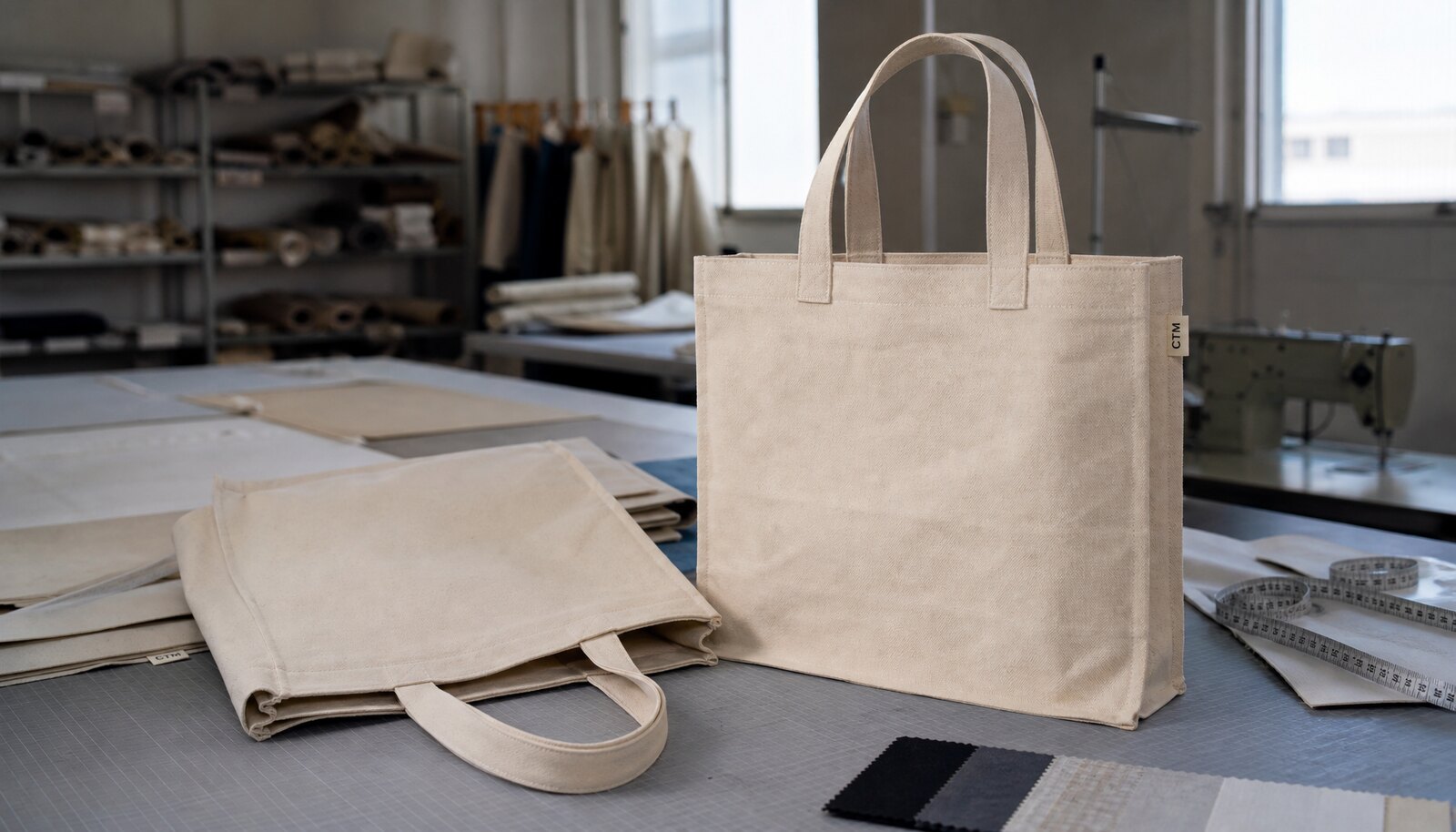
Why boutique tote quotes go wrong
Most quote problems start with vague product descriptions. A buyer asks for "recycled canvas totes" and receives prices based on different fabric weights, different bag constructions, and different packing assumptions. The units look comparable on paper, but the delivered bags are not comparable in handfeel, print quality, or shelf presentation.
For boutique use, the bag is part product, part packaging, and part brand signal. If the tote is too light, the store feels cheap. If the print is too small or the handle is weak, the bag gets reused less and your brand exposure drops. A good RFQ should force suppliers to quote the same target, not their own interpretation of it.
- Lock down one intended use: retail purchase bag, gift-with-purchase tote, or merchandise carrier.
- Separate appearance requirements from structural requirements so suppliers cannot trade one off without notice.
- Ask for a quote line that matches the exact fabric, print, packing, and carton standard you want.
Choose the right recycled canvas spec before you quote
For boutique programs, recycled canvas usually lands in the 12–16 oz range. Around 12 oz works when the tote needs to stay affordable and the brand is selling lighter lifestyle items. Around 14 oz is a common middle point because it gives a better body without becoming overly stiff. Around 16 oz suits premium retail presentation, heavier contents, or customers who expect a tote that lasts through repeated use.
Do not quote fabric weight alone and assume you are comparing the same bag. Ask whether the weight is measured before or after washing and finishing, and whether the supplier is using single-face canvas, double-layer reinforcement, or a lined construction. A lined tote may look expensive and carry well, but sewing time and inspection effort go up quickly.
- Use 12 oz when cost sensitivity is high and the tote is not expected to carry heavy goods.
- Use 14 oz when the buyer wants a balanced retail feel and a lower risk of bag collapse.
- Use 16 oz when the tote must support premium branding, thicker goods, or repeated reuse.
Print method changes the quote more than most buyers expect
The print method is often the biggest hidden cost driver after fabric weight. Screen printing is usually the best choice for a simple boutique logo, especially if the design has one to three solid colors. It gives clean opacity on canvas and a strong retail look, but it brings setup charges and screens for each color. If the artwork is very detailed or relies on gradients, screen print can become a compromise instead of a solution.
For a more premium feel, embroidery or a sewn woven label can make sense, especially on a smaller logo area. These methods usually cost more per unit or require different setup logic, but they can reduce the risk of cracking, bleeding, or poor registration. The key is to tell suppliers the actual logo size and exact placement, not just send the art file and hope they interpret it correctly.
- Screen print: best for bold logos, flat colors, and larger order quantities.
- Embroidery: best for premium retail cues, smaller logos, and durable branding.
- Woven or sewn label: useful when the tote needs a subtle brand mark and lower print risk.
Compare supplier routes before you compare unit prices
For this product, the sourcing route matters as much as the spec. A direct tote factory can often give the clearest cost structure and the most control over packing and production details. A trading company may be easier when you need mixed items or faster communication, but you need to see whether they are quoting from a real factory or adding margin on top of it. Regional converters can be useful for short transit times, yet the base material options may be narrower and the unit price higher.
The right choice depends on your order size, artwork complexity, and tolerance for coordination. If you are launching a boutique line, the risk is not just price. It is whether the supplier can hold the same bag size, handle drop, color, and pack count across the whole run without turning every issue into a change order.
- Direct factory: best when you need clear production control and repeat orders.
- Trading company: best when you need coordination across multiple product types or lower communication burden.
- Regional converter: best when lead time is tight and you can pay more for proximity.
What a useful quote should include
A real factory quote should not stop at the unit price. It should show the bag dimensions, fabric weight, print method, handle material, and packing assumption. It should also tell you what is excluded. If the supplier is quoting EXW, you still need to add freight, export handling, customs, and local delivery before you know the true landed cost. If the quote includes FOB or delivered pricing, confirm whether the cartons, labels, and any testing are already included.
This is where buyers often lose time. Two quotes can look close by unit price, but one may include a pre-production sample, polybagging, carton marking, and one-color print setup, while the other excludes all of that. Use a line-by-line comparison so you are not comparing a finished quote with a raw manufacturing base price.
- Require the quote basis: EXW, FOB, CIF, or delivered.
- Ask for carton count, gross weight, and carton size, not just bag size.
- Separate sample charges, setup charges, and replenishment pricing.
MOQ logic: keep the first order simple enough to repeat
MOQ on recycled canvas totes is not only about factory minimums. It is also about production efficiency. Each added color, size, handle length, or print variant creates more cutting, more sewing coordination, and more packing complexity. A buyer trying to launch too many variants at once usually ends up paying for setup inefficiency and then carrying slow-moving stock.
The cleaner approach is to start with one base size and one or two print versions at most. If color variety matters, keep the body color stable and vary the print or label instead. This lets the factory optimize fabric cutting and reduces the chance that one shade runs out or one variant delays the whole shipment.
- One size plus one artwork is the lowest-risk first order.
- Two colors is manageable when the factory can run the same sewing line setup.
- Three or more variants should only be used if the demand forecast justifies extra complexity.
Sample approval should test the real production outcome
A good sample is not a marketing sample. It should be made from the final fabric weight, final handle material, and final print method. If you approve a blank sample and later approve artwork on a different base, the bulk product may change in handfeel or dimension. For recycled canvas, even small changes in finishing can affect shrinkage, surface roughness, and print absorption.
The sample review should focus on measurable items: finished width and height, handle drop, print placement from seam, stitch quality, and carton fold pattern. If the sample has a side label or woven mark, inspect that too, because these details often slip when buyers only judge the logo front face. A pre-production sample is the best checkpoint before production release because it should mirror the bulk run as closely as possible.
- Measure the sample after pressing, not only off the sewing table.
- Compare the logo position against a marked approval sheet or tech pack.
- Check one packed sample in carton form, not only the loose bag.
Use acceptance criteria that a factory can actually hit
The best QC rules are simple enough to be inspected consistently. For boutique totes, define an acceptable dimension tolerance, a print placement window, and a stitch quality standard. If the bag is supposed to be 38 by 42 cm, say what range is acceptable after sewing. If the print is supposed to sit above the bottom seam, define the distance in millimeters. Vague language like "nice placement" creates conflict during shipment approval.
Also define what is not acceptable. Loose threads, crooked handles, dirty marks, weak bar-tacks, and print smudges should be rejected before packing. If the tote is going into retail stores, one bad bag can damage the shelf impression of the whole program. It is cheaper to reject an imperfect lot at the factory than to manage complaints after the bags are distributed.
- Dimension tolerance: set one clear range for width, height, and gusset.
- Print quality: define centerline, color target, and no-smudge standard.
- Stitch standard: require reinforced handle joins and no skipped stitches in visible areas.
Packing and retail readiness affect both cost and damage rate
Packing is one of the most overlooked quote items. Some boutiques want the totes bulk packed for efficiency; others need each bag folded in a specific direction to keep shelf presentation neat. If you need individual polybags, barcode stickers, silica gel, or insertion cards, the factory should quote that separately. Do not assume retail-ready packing is included in a plain tote quote.
Carton planning matters too. Ask for the number of bags per carton, the expected gross weight, and whether the carton size is optimized for warehouse handling or only for factory convenience. Overstuffed cartons can crush the bag corners; underfilled cartons raise freight cost. If the product is destined for retail distribution, carton labels should match your SKU structure so receiving teams can move fast.
- Specify fold direction if the bag must open neatly on shelf.
- Set carton count based on handling weight, not only container efficiency.
- Confirm whether polybags are required and if they are printed or plain.
Lead time risk sits in approvals, not only sewing
Most schedule slippage happens before the factory starts bulk sewing. Artwork changes, sample revisions, shade confirmations, and packing adjustments can consume more time than the sewing line itself. That is why a quote should separate sample lead time from bulk production lead time. If a supplier only gives one number, you do not know where the delay risk really sits.
A practical schedule also includes buffer time for raw material purchase. Recycled canvas may be available in a standard neutral shade, but special colors, custom labels, or particular handle webbing can add sourcing lead time. If your boutique launch date is fixed, the safest move is to freeze the tech pack early and avoid late changes to logo size or packing structure.
- Break lead time into sample, material sourcing, bulk sewing, inspection, and dispatch.
- Freeze artwork before cutting starts.
- Reserve a buffer for packaging materials and final approval delays.
Specification comparison for buyers
| Spec decision | Recommended option | When it fits | Buyer risk to check |
|---|---|---|---|
| Fabric weight | 12–16 oz recycled canvas for boutique retail use | When the bag must feel substantial on shelf and hold product weight without collapsing | Too light looks cheap; too heavy raises cost and can distort print registration |
| Body construction | Single layer with reinforced bottom or full lining for premium SKUs | When you need a cleaner interior, better shape, or higher perceived value | Unlined bags may show thread tails and reduce stiffness; lining increases sewing labor and lead time |
| Print method | Screen print for simple 1–3 spot colors; embroidery or woven label for premium branding | When artwork is bold, logo-led, and order quantity supports setup cost | Fine gradients, small text, or distressed art may print inconsistently on recycled canvas |
| Supplier route | Direct factory quote from a tote specialist | When you need cost control, custom packing, and clearer production accountability | Factories may quote low but exclude testing, carton marking, or special packing unless specified |
| MOQ strategy | Start with a practical MOQ tied to one fabric color and one print layout | When the boutique line is new and sell-through is not fully proven | Splitting colors, sizes, or print placements quickly multiplies setup cost and residual inventory |
| Handle spec | Webbing or canvas handles with bar-tack reinforcement | When bags will carry heavier boutique purchases or be reused often | Short handles, thin webbing, or weak stitching cause returns and retail complaints |
| Sample approval route | Pre-production sample based on final artwork, dimensions, and packing spec | When you need a true production reference before bulk release | A sales sample without final materials can hide shade, shrinkage, and print alignment issues |
| Packing format | Bulk packed in polybag with carton count and inner separators only if needed | When the goal is shipment efficiency and damage control | Retail-ready folding or insert cards can add labor and must be quoted clearly |
| Landed-cost route | Compare EXW, FOB, and delivered cost with freight, duties, and inland handling | When comparing overseas quotes across different suppliers or countries | A low unit price can become expensive once cartons, sampling, freight, and duty are added |
Buyer checklist before sampling
- Finalize one dimension set, one fabric weight range, one print method, and one handle length before requesting quotes.
- Send a flat artwork file with Pantone references or an approved color target, plus print size and placement distance from seam.
- State whether the tote must be fully recycled canvas or a recycled canvas outer with alternative lining or reinforcement.
- Specify the target MOQ, acceptable overrun/underrun range, and whether mixed colors or mixed artwork versions are allowed.
- Require a pre-production sample and define what must match: fabric handfeel, logo size, stitch density, carton count, and fold method.
- Ask for packing details including polybag thickness, carton dimensions, gross weight target, and barcode or label placement.
- Request lead time split into sample time, bulk production time, and dispatch time, not one single number.
- Compare quotes only after adding freight, duty, local delivery, and any extra packing or testing charges.
Factory quote questions to send
- What recycled canvas GSM or oz weight are you quoting, and is the weight before or after washing/finishing?
- Is the bag body single layer, lined, or reinforced at the bottom and handles, and what exact stitch method is used?
- Which print method is included in the unit price, how many colors are covered, and what is the setup charge?
- What is your MOQ per color, per artwork, and per size, and can you combine variants into one production run?
- What size tolerance do you allow on width, height, and gusset after sewing and pressing?
- What sample type will you provide before bulk: blank sample, printed sample, or pre-production sample, and what is the cost?
- How are the bags packed per polybag and carton, and what is the carton count, carton size, and gross weight?
- What is the production lead time after sample approval, and what factors can delay it?
- Which QC checkpoints do you include before shipment, and can you share photos or an inspection report?
- What is the quote basis: EXW, FOB, CIF, or delivered, and what costs are excluded from the unit price?
Quality-control points to confirm
- Fabric weight matches the approved range and feels consistent across the roll and finished bags.
- Recycled canvas shade is consistent enough for one production lot; batch variation is controlled and documented.
- Finished dimensions stay within an acceptable tolerance after sewing and pressing, especially bag depth and handle drop.
- Print registration is centered and readable, with no smearing, pinholes, or cracking at first inspection.
- Handle attachment uses even bar-tacks or reinforced stitching with no skipped stitches or loose ends.
- Seams are straight and secure at stress points, especially side seams, bottom corners, and handle joins.
- No oil marks, fabric holes, broken threads, or excessive lint remain on visible surfaces.
- Carton packing matches the approved pack plan, with correct fold direction, quantity per carton, and label placement.