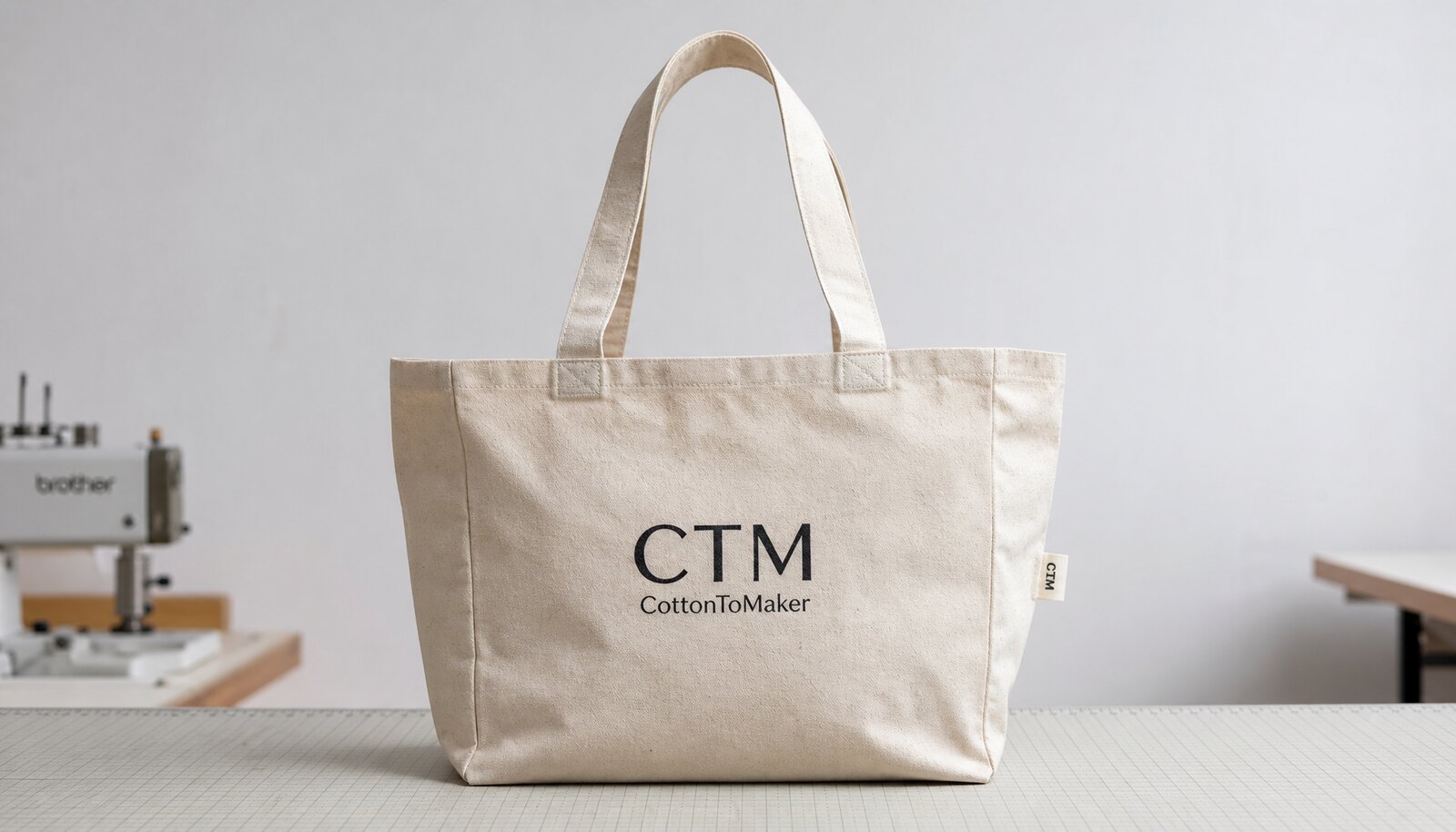
Start With the Merchandising Job
The right print method is not the cheapest one on paper. For recycled canvas totes for boutiques, the real question is whether the print will look clean on recycled fiber, hold up through retail handling, and still match the brand after the first reorder. A soft logo that looks good on a sample sheet can turn muddy on a speckled canvas. A sharp graphic that looks strong in photos can feel too stiff in store if the ink layer is too heavy.
Before you compare suppliers, define the buying job. A boutique gift tote for checkout counters does not need the same print structure as a resale tote sold at full margin. A seasonal launch can accept a different MOQ and lead time than a core replenishment program. If you start with the use case, the print method usually becomes obvious.
- Choose for shelf look, handling, and reorder stability, not only unit price.
- Separate display bags, resale bags, and event bags before you send an RFQ.
- Keep one reference sample for every logo, placement, and print method you approve.
Pick the Canvas Before the Ink
Recycled canvas varies more than many buyers expect. The fiber mix, weave density, and finishing can change how ink sits on the surface. For boutique programs, a lighter bag around 280 to 340 gsm can work if the tote is mostly for packaging or light carry. If the bag needs structure and a more premium retail feel, 340 to 420 gsm is usually safer. Heavier fabric also gives the printer a more stable surface, but it can raise cost and make folding bulkier.
The bag structure matters as much as the fabric weight. A gusset, boxed corner, or reinforced handle attachment creates seams that steal print space and distort the logo if the art is too close. On recycled canvas, the surface can show slub and natural flecking, so a fine-line logo may disappear unless the ink has enough opacity. Freeze the bag dimensions, handle drop, seam allowance, and print panel before you talk about artwork.
- Use about 280 to 340 gsm for lighter boutique bags and 340 to 420 gsm for more structured retail totes.
- Keep critical logo elements away from seams, gussets, folds, and handle stitches.
- If the canvas is heavily speckled, simplify the artwork so the print does not fight the fabric texture.
Screen Print, Transfer, or Water-Based Ink
For most boutique orders, screen print is still the baseline. It works well for one to three spot colors, gives strong opacity, and usually offers the best cost once setup is spread across enough pieces. A direct factory with in-house screen printing is the cleanest route for repeat orders. The tradeoff is that screen setup adds time, and thick ink can feel heavy if the logo covers a large area.
Water-based screen print is the better version when the brand wants a softer hand and a less plastic finish. It suits natural recycled canvas, but the ink can sit lighter on a flecked surface and may not fully cover dark fibers. Transfer or DTF is the practical choice when the art is full color, the run is short, or the buyer wants to test a new design without paying for a full screen setup. The risk is feel and durability at fold points. For bags that will be folded, stacked, and handled often, that risk matters.
- Screen print: best for simple logos, repeat orders, and lower unit cost at higher volume.
- Water-based ink: best when the buyer wants a softer premium finish on natural canvas.
- Transfer or DTF: best for short runs and complex artwork, but inspect edge lift and fold durability.
Compare Supplier Routes, Not Just Factory Names
A direct factory with an in-house print line gives the best control over the fabric, print, sewing, and packing. That matters when the boutique program needs repeatability. The same plant can keep the screen, match the fabric lot, and correct placement without sending the job across multiple vendors. The limitation is that some factories will push back on very small orders or highly complex art because it disrupts their line balance.
A trading company or print specialist can be useful when the order is smaller, the artwork changes often, or you need mixed packing across multiple destinations. The downside is control. If the print, sewing, and packing happen in different places, each handoff adds risk. Ask who actually makes the screen, where the curing happens, and who carries the cost if the first strike-off is off by a few millimeters.
- Direct factory route: best for repeatability and long-term cost control.
- Trading company route: best when the order has many moving parts or lower MOQ pressure.
- Print specialist route: useful for complex artwork, but confirm who owns each production step.
Set MOQ and Sampling Around the Print Method
MOQ should be tied to the print method, not treated as a generic factory rule. Screen print usually needs enough volume to absorb screen-making and setup cost, so 300 to 500 pieces per design and color is a common commercial zone. Transfer can go lower, but the price per bag will usually rise. If the supplier offers a very low MOQ on screen print, find out what changed. It may be a smaller print area, a lighter bag, or a higher setup fee folded into the quote.
Sampling should follow the actual production path. A development sample on a similar fabric is useful for visual direction, but it is not enough for final approval. The pre-production sample should use the real recycled canvas, the final logo size, the final ink system, and the final packing method. For boutique buyers, the sample should also show the bag folded the way it will land in cartons, because a print that looks centered flat can drift once the tote is packed.
- Treat the development sample as a design tool, not as approval for bulk.
- Approve on the actual fabric lot whenever possible.
- If the quote says low MOQ, ask what extra setup or material cost was moved into the unit price.
Use Real QC Thresholds
Quality control on recycled canvas needs practical tolerances. Do not ask for impossible perfection on a material that has natural variation. What matters is whether the print is centered, legible, and stable after handling. A logo should sit within a controlled placement window, typically within 3 mm for key retail faces, and the print should not bleed into seams or show ghosting where the bag folds. If the artwork depends on fine serif text or thin lines, make the supplier prove that those details remain clear on the actual fabric lot.
Construction quality is part of the print decision. A loose handle stitch can distort the logo after load is applied. A gusset that twists during sewing can move the print panel out of alignment. For boutique bags, inspect the stitch density, bar tacks, handle reinforcement, and overall bag shape together with the print. A bag that passes print inspection but fails on sewing is still a bad buy.
- Placement tolerance: keep critical logos within 3 mm of the approved position.
- Print surface: no bleeding into seams, no ghosting at fold lines, and no obvious pinholes.
- Durability: no cracking, peeling, or transfer after normal fold and rub handling.
- Construction: handles and bar tacks should hold shape without puckering or loose thread tails.
Packing Matters More Than Buyers Think
Packing is not an afterthought for boutique tote orders. If the bags are going straight to retail shelves, a clean fold and consistent carton count can matter more than another half-point of ink coverage. For some programs, an individual polybag is necessary for warehouse handling, but many boutique buyers can use a belly band, tissue, or simple inner pack if the receiving team accepts it. Recycled canvas can pick up dust and warehouse marks, so the packing should protect the surface without turning the tote into a plastic-heavy item.
Write the packing spec in the RFQ. Include the fold style, inner pack count, master carton count, barcode position, carton mark layout, and whether desiccant is needed. If the supplier is also shipping to retailers, give them the receiving rules early. A tote that arrives correctly printed but wrongly packed still creates dock delays and rework.
- Define whether the bag ships flat, folded once, or folded with tissue or a belly band.
- Lock the inner pack and carton count before the sample is approved.
- Confirm label placement, carton marks, and barcode format before bulk packing starts.
Lead Time and Schedule Risk
A tote order can slip for reasons that look small on a spreadsheet. The real schedule is not just sewing time. It includes artwork cleanup, screen making, strike-off approval, print curing, sewing, folding, packing, and then export booking. Screen print usually adds more fixed setup time than transfer, and multiple colors add line time. If the order supports a retail launch, build enough space for one correction round after the pre-production sample.
Most late shipments come from avoidable issues: artwork approved too late, color targets changed after the sample, or carton details revised after production starts. The best way to reduce risk is to lock the spec and freeze the art before the factory begins bulk material allocation. If the bags must arrive by a store opening, ask the supplier to map each step separately instead of quoting only a single delivery date.
- Expect a separate approval step for artwork, strike-off, and pre-production sample.
- Give extra buffer if the bag uses multiple print colors or a new recycled fabric lot.
- Treat packaging changes as schedule changes, not as minor edits.
Read the Quote Like a Buyer
A usable quote separates fabric, print, sewing, packing, sample cost, setup cost, and freight terms. If the supplier only gives a single unit price, you cannot compare it with another offer on equal ground. The first question is whether the quote is for EXW, FOB, or a delivered basis. The second question is what spec that price assumes. The same tote can look cheap because the canvas is lighter, the print is smaller, or the packing is simplified.
Normalize every offer before you compare suppliers. Use the same recycled canvas GSM, the same bag size, the same print method, the same logo dimensions, the same packing count, and the same carton specification. Then look at the hidden costs: setup fee per color, screen storage charge, sample fee, and any surcharge for mixed SKUs. For importers, landed cost usually moves more from these details than from a small difference in ex-factory price.
- Ask for a line-item quote, not a single bag price.
- Compare quotes only after the spec, packing, and shipping terms are normalized.
- Track setup fees separately so reorder economics stay visible.
Buyer Checklist and RFQ Questions
Before you send the RFQ, make sure the buying brief is complete. A clear brief saves more money than aggressive price haggling because it reduces revision cycles and wrong assumptions. For recycled canvas tote programs, the most common problem is not the factory price. It is a vague spec that lets two suppliers quote two different products and both call them comparable.
The RFQ should answer four things: what the bag is, how the print should look, how it should be packed, and how you will accept it. Once those are fixed, the supplier can quote a real production route instead of guessing. If the supplier pushes back on those basics, that is a signal that the offer will be hard to control later.
- Buyer checklist: size, GSM, color, print area, print method, packing, lead time, and destination.
- Buyer checklist: one approved reference image for front, back, and close-up print detail.
- Factory quote questions: setup fee, MOQ by color count, sample process, carton details, and freight basis.
- Factory quote questions: who owns the screens, who does the packing, and who handles rejects or reprint claims.
Specification comparison for buyers
| Spec decision | Recommended option | When it fits | Buyer risk to check |
|---|---|---|---|
| 1-2 spot colors, large logo area | Direct factory screen print with in-house prepress | Repeat boutique runs with stable artwork and 500+ pcs | Screen setup fees, ink opacity on recycled fibers, and screen retention for reorders |
| Small launch, 100-300 pcs | Trading company or print decorator using transfer or DTF | Test orders, seasonal drops, or new boutique concepts | Higher unit cost, plastic hand feel, and weaker long-term durability at folds |
| Soft premium look on natural canvas | Water-based screen print from a tote specialist | Merchandising that needs a quieter, less glossy finish | Lower opacity on speckled recycled fabric and more variable coverage |
| Full-color art or gradients | Transfer or DTF from a print specialist | Illustrated seasonal graphics and short-run campaigns | Edge lift, crack risk at stress points, and heat sensitivity in shipping or storage |
| Reorder program with the same logo | Direct factory with screen archive and fabric lot control | Core boutique line that restocks every season | Confirm screen storage terms, dye lot stability, and whether requalification is needed after a fabric change |
| Hard budget target | Factory with one- or two-color screen print and simple packing | High-volume promotional or retail bag programs | Low quote may hide lighter GSM, smaller print area, or rougher finishing |
| Retail-ready carton and barcode handling | Factory that prints, folds, labels, and cartons in one workflow | Wholesale shipments to boutiques, DCs, or distributors | Pack-out mistakes, label mix-ups, and carton mark errors |
| Multiple SKUs in one purchase order | Project-managed sourcing route with one factory lead or trading company | Color sets, multiple placements, or mixed logo versions | Artwork mix-ups, missed approvals, and late change fees |
Buyer checklist before sampling
- Lock the tote size, recycled canvas GSM, color, and gusset style before asking for print quotes.
- Approve the logo in the exact print size and placement you want on production fabric, not on a generic swatch.
- Separate setup fees, sample fees, packing fees, and freight terms so the quotes are comparable.
- Confirm whether the supplier prints in-house or outsources the decoration step.
- Ask for the packing method, carton quantity, carton size, and barcode label position in writing.
- Define the acceptable print tolerance for color, placement, and edge sharpness before bulk starts.
- Keep a reorder file with approved artwork, fabric lot, print method, and packing spec.
Factory quote questions to send
- What is the recycled canvas GSM, and what tolerance do you allow from lot to lot?
- Which print method are you quoting, and is it done in-house or through a subcontractor?
- What is the setup fee per color or per design, and is screen storage included for reorders?
- Will the strike-off use the actual production fabric, the actual ink, and the final bag size?
- What is the minimum order quantity by print method, color count, and bag color?
- How are the bags packed, and can you quote the carton count, master carton size, and label spec?
- What lead time applies after sample approval, and where does the schedule usually slip?
- Can you quote EXW, FOB, and a landed estimate on the same spec sheet?
Quality-control points to confirm
- Fabric GSM matches the approved spec, with no obvious lot shift that changes print coverage.
- Print placement stays within 3 mm of the approved position on front, back, and side panels.
- Logo edges are sharp, with no bleeding into seams, gussets, or fold lines.
- Color match is consistent against the signed strike-off under standard viewing light.
- After rub and fold handling, the print shows no cracking, peeling, or visible transfer.
- Stitching, bar tacks, and handles carry load without puckering or skipped stitches.
- Carton marks, barcode labels, and inner pack counts match the purchase order exactly.