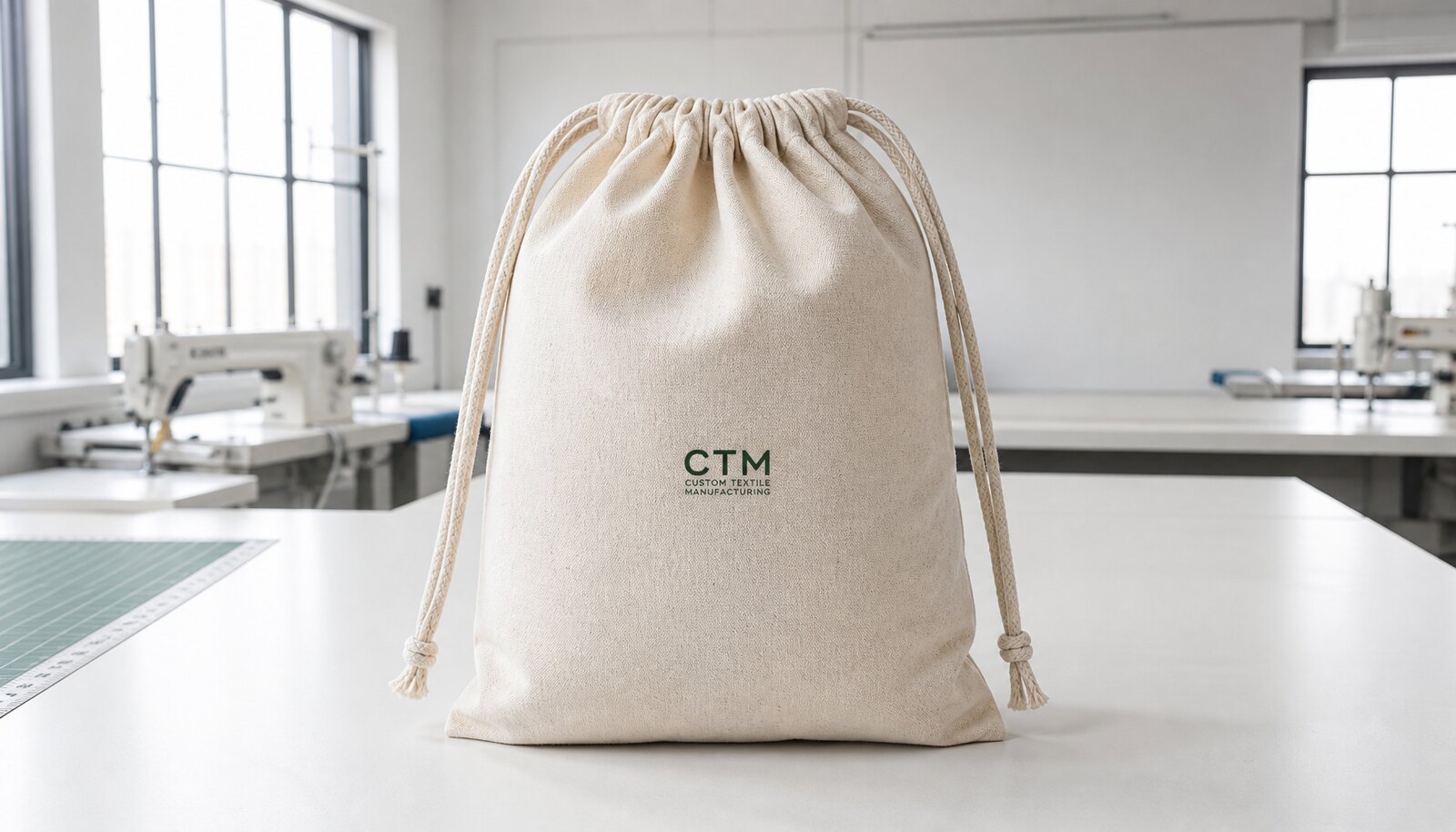
What a promotional drawstring bag has to do
A promotional drawstring bag looks simple until the order fails on the details. For a buyer, the real job is not to find the lowest unit price. It is to choose a bag that survives the campaign use case, prints cleanly, packs efficiently, and lands on time without a surprise change in fabric or construction. If the bag is for an event giveaway, the main risks are weak seams, poor print clarity, and packaging that inflates freight. If it is for retail or a brand insert, the risk shifts toward hand feel, presentation, and repeatability across reorders.
Start by defining the usage pattern, because that determines almost every cost driver. A bag handed out once at a trade show can be a light nonwoven or thin cotton style. A bag that carries shoes, products, or a retail bundle needs better fabric weight, stronger stitching, and a more controlled print method. If the supplier is not pushed to quote against the actual use case, they will usually fill the gap with their cheapest standard spec, which is how buyers end up comparing unrelated offers.
- State the end use: giveaway, retail insert, event pack, or product carrier.
- Set the expected load weight, even as a range.
- Define whether appearance or durability is the priority.
- Match the bag spec to one primary use case, not three conflicting ones.
Pick fabric by use, not by habit
For promotional drawstring bags, fabric choice is the first meaningful pricing decision. Cotton is the most common option when the buyer wants a natural look and better perceived value. In practical sourcing terms, a light cotton bag around 120 to 140 gsm works for general giveaways, while 150 to 180 gsm feels more substantial and supports better print definition. If the bag needs a premium retail feel, canvas around 200 gsm and up gives more body, but it also raises material cost, sewing time, and carton weight. Nonwoven PP is the cheapest route for mass events, but it should be chosen with eyes open because it reads as a short-life promotional item, not a durable carry bag.
Polyester and RPET are useful when the bag needs smoother surface printing, color vibrancy, or some resistance to moisture. The tradeoff is feel and, in some cases, a more synthetic look that may not fit a natural brand story. Recycled cotton or blended recycled fabrics can be a strong commercial choice when sustainability matters, but you need the supplier to define the exact composition and whether recycled content is pre-consumer or post-consumer. Without that detail, buyers often receive a vague claim that is hard to defend in a packaging review or retail compliance check.
- 120 to 140 gsm cotton: standard promotional use, modest price, acceptable hand feel.
- 150 to 180 gsm cotton: better structure, better print stability, better for repeated use.
- 200 gsm and above canvas: premium look, higher freight, better retail shelf presence.
- Nonwoven PP: low-cost giveaway only, avoid if the bag needs a long service life.
- Polyester or RPET: useful for brighter graphics and lighter weight, but test seam strength.
Print method and artwork rules
Print choice has a direct effect on quote, lead time, and complaint risk. For one- or two-color logos, screen printing is usually the cleanest commercial option because it is predictable and easy to repeat. If the artwork includes many colors, fine gradients, or photographic detail, heat transfer or digital transfer may be better, but only if the supplier has a controlled process and the bag fabric tolerates the method. Embroidery works on thicker cotton or canvas and gives a strong premium signal, but it is slower, heavier, and not the right answer for fine small text.
The biggest mistake is sending artwork without setting a print standard. A buyer should specify exact print size, placement, Pantone reference if color matching matters, and whether the logo must stay centered across all sizes. For promotional runs, even a 10 mm shift can make the bag look inconsistent in a retail display. Also define whether the print is one side or two sides, because the second side often changes setup cost more than the buyer expects.
- Screen print: best for solid logos, simple artwork, and repeat orders.
- Heat transfer: better for complex graphics, but test rub resistance and wash behavior if needed.
- Embroidery: suitable for thicker fabrics and premium programs, not tiny type.
- Specify print placement in millimeters, not just left chest or center front language.
- Approve a strike-off or pre-production print sample before mass run.
Construction details that move the quote
The bag body is only part of the price. Small construction changes affect labor, reject rate, and finished appearance. A simple straight-bottom bag with a standard cord tunnel is the cheapest to sew. Add a gusset, reinforced corners, metal eyelets, thicker cord, or colored binding and the quote will move quickly. For a promo buyer, the right question is not whether the bag can be made, but whether the added construction earns back its cost in perceived value or durability. If the bag is going into a short campaign, many of these features are unnecessary. If the bag needs to hold samples or small retail items, reinforcement becomes worth paying for.
The quote should also reflect size. A 20 x 25 cm pouch with a narrow opening is faster to cut and sew than a larger bag with a gusset and broader hem. Cord length and cord material matter too. Cotton cord gives a natural look, while polyester cord slides more easily and can be more cost-stable. Ask the factory to show where the reinforcement goes and how many bartacks or extra stitches are used at the stress points, because that is where cheap bags usually fail.
- Simple flat bag: lowest sewing cost and fastest production.
- Gusseted bag: more usable volume, but more labor and more scrap risk.
- Reinforced corner or bartack: worth it when the bag carries weight.
- Metal eyelets: add appearance and strength, but increase process steps.
- Cord material and length must be written into the spec, not assumed.
MOQ logic and what a real quote should show
MOQ is rarely a random number. It reflects fabric cutting efficiency, print setup, color changeover, and packing labor. A factory may quote a lower MOQ for a plain bag and a higher MOQ once you add custom print, custom size, or special packing. If a supplier gives one price without showing the breakpoints, the buyer cannot tell whether the number is driven by material consumption or by a setup fee spread across the lot. For promotional drawstring bags, that distinction matters because a small campaign order and a scale-up order can have very different economics.
A serious quote should show unit price by volume tier, sample charge, setup charge, packaging cost, and the delivery term. For example, the difference between 1,000 and 5,000 pieces may not come from labor alone. It may come from how much fabric is wasted in cutting, whether the print screen is reused, and whether packing can be done in bulk or needs individual folding. If the supplier cannot explain the price ladder, the quote is not yet usable for a procurement decision.
- Request pricing at multiple breakpoints, not only one target quantity.
- Separate bag cost from print setup and packaging cost.
- Ask whether the quoted MOQ assumes one color, one size, or one artwork position.
- Confirm whether sample fees are offset against production or billed separately.
- Watch for hidden costs in special carton labels, bag inserts, or individual polybags.
Compare sourcing routes before you request quotes
The comparison table in this guide is meant to stop the wrong sourcing route from contaminating the quote. A direct factory is usually the cleanest path when the bag spec is stable and the buyer wants repeatable quality. A trading company can help when the program is mixed and the buyer needs one source for multiple materials, but the quote comparison becomes harder because margin can sit in several layers. A stock distributor is only worth using when time matters more than spec control. If the buyer wants a promotional item that still feels intentional, the sourcing route must match the commercial objective, not just the deadline.
For new programs, a hybrid route is often the lowest-risk path. Build and approve the sample with a supplier that can move quickly, then scale the confirmed spec with the factory that can deliver the volume. That approach works if the approved sample is truly locked, including fabric weight, print method, folding method, and packing count. Without a locked benchmark, the second supplier may produce a bag that looks similar on paper but behaves differently in hand, in freight, or on the shelf.
- Use direct factory sourcing when the spec is stable and volume is repeatable.
- Use a trading company only if the added coordination is worth the flexibility.
- Use stock blanks only for rush campaigns that can accept standard dimensions.
- Use a hybrid sample-to-scale route when design risk is still open.
- Keep one sealed golden sample for all production comparisons.
Sample approval and QC thresholds
A sample is useful only if it answers a production question. The first sample should confirm fabric feel, bag size, print clarity, cord movement, and the way the bag folds and packs. The pre-production sample should then confirm that the factory can reproduce that same result after cutting, sewing, printing, and packing at scale. Many procurement problems start when the buyer accepts a nice-looking sales sample and never creates a production reference. When the bulk run arrives, the supplier can argue that the sample was only indicative. That argument disappears if the approved sample is sealed and referenced in the PO.
Set measurable QC thresholds before production begins. Finished size tolerance, color variation, print alignment, and defect count must be stated in the approval record. For a promotional program, a few visual defects can be accepted if the bags are low value and time sensitive, but the buyer should still define the reject categories. Loose threads, off-center prints, weak seam corners, and dirty packaging should not be left to a vague final inspection decision. The cleaner the threshold, the easier it is to settle disputes with the factory and the better the reorder history becomes.
- Approve a physical golden sample, not only photos.
- Define size tolerance and print placement tolerance in writing.
- Set acceptable defect types and reject types before mass production.
- Inspect the first output from the line, not only the finished cartons.
- Match every production lot back to the approved sample code or reference.
Packing, carton plan, and shipping risk
Packing is one of the easiest ways to distort a freight quote. Drawstring bags compress well, but the way they are folded and counted changes carton size and labor cost. Individual polybags make the product look cleaner for retail, but they add material, labor, and waste. Bulk packing is cheaper and usually better for event giveaways, yet it can create warehouse handling problems if the bags are not counted or labeled clearly. The buyer should decide whether the commercial goal is retail presentation or campaign efficiency before approving the packing method.
Carton planning also affects damage risk. A soft bag packed too tightly can arrive with permanent creases or crushed print. A loose carton can lead to overfill, carton collapse, and count disputes. The factory should state carton quantity, gross weight, carton dimensions, and whether the cartons are export-grade or retail-grade. If the shipment is going by sea, ask how the cartons are palletized and whether moisture protection is included. If it is going by air, ask for the volume weight, because a light but bulky bag often costs more in freight than buyers expect.
- Use individual polybags only if the campaign or retail channel needs them.
- Confirm fold style so every carton packs the same way.
- Write carton quantity and gross weight into the shipping instruction.
- Use export cartons with clear marks for count and product version.
- Add moisture control if the route is long or the destination is humid.
Landed cost and schedule control
The right decision on promotional drawstring bags is the one that survives landed cost, not just unit price. A cheaper FOB quote can become expensive if the bag is bulky, the print setup is repeated too often, or the packaging inflates freight. Buyers should compare ex-works, FOB, and DDP quotes separately so the logistics and customs assumptions do not get blurred into the unit price. Once the quote is structured correctly, the next question is lead time. Sample approval, artwork signoff, print plate setup, raw material booking, and production queue time can each add days. A supplier that promises a short lead time without naming those steps is probably compressing the schedule on paper, not in the factory.
The best procurement workflow is simple: issue a complete RFQ, compare like-for-like quotes, approve one golden sample, then lock the production spec before payment release. That is how you avoid the two common traps in this product category: paying for features you do not need, or receiving a bag that is slightly different in every lot. If the program is recurring, keep the last approved spec, last carton plan, and last inspection note together. That history is more valuable than a new sales pitch because it tells you what actually worked in production.
- Compare quotes by total landed cost, not only ex-factory price.
- Separate freight, duties, and packaging from the bag unit price.
- Map the schedule from artwork approval to shipment date.
- Keep one spec pack for reorders so the second run matches the first.
- Use the first order to learn the factory's real capacity and response time.
Specification comparison for buyers
| Spec decision | Recommended option | When it fits | Buyer risk to check |
|---|---|---|---|
| Direct factory with in-house print | Best for simple logo runs and repeat orders | You need control on fabric, print, and packing in one place | Confirm the factory actually owns the print process, not a subcontractor |
| Trading company bundling two factories | Useful when you need multiple materials or packaging formats | You want one contact but the bag body and decoration come from different lines | Quote may hide margin layers and make reorders harder to benchmark |
| Stock blank bag distributor plus local print | Good for urgent campaigns with short deadlines | You can accept standard sizes and limited fabric choice | Check blank quality, shrinkage, and whether the print supplier can hold color repeatably |
| Local decorator using imported blanks | Fits small launches and test markets | You need low MOQ and fast turn without changing fabric spec | Imported blanks can vary by lot and may not match your next reorder |
| Recycled cotton or recycled blend specialist | Best for sustainability-led brands | You need an environmental claim backed by material content and consistent texture | Demand material traceability and verify whether recycled content is pre- or post-consumer |
| Nonwoven PP promotional supplier | Works for very low unit cost giveaways | The bag is for short-life events, not long retail use | Thin fabric, weak handles, and poor print adhesion can damage brand perception |
| Polyester or RPET factory with heat transfer or screen print | Good for water resistance and brighter graphics | You want lightweight bags for events, sports, or travel | Confirm heat resistance, seam strength, and whether the coating affects print durability |
| Hybrid route: sample locally, scale offshore | Best when you need faster design approval before volume buying | You want to de-risk artwork, size, and finish before a large PO | Keep one approved golden sample and match it to the production country spec |
Buyer checklist before sampling
- Final bag size, fabric, and GSM are written on the RFQ, not left as a verbal reference.
- Logo file, print colors, placement, and print size are fixed before the price request goes out.
- Target MOQ, reorder quantity, and acceptable oversupply are stated together so the factory can price the true lot size.
- Sample standard is defined: pre-production sample, sealed golden sample, or production-dipped reference.
- Packing instruction covers folding method, polybag use, carton quantity, barcode or label needs, and pallet requirement.
- Quote requires separate lines for bag body, print setup, packaging, and any surcharge for special yarn, recycled content, or rush lead time.
- Delivery term is clear: EXW, FOB, or DDP, with the destination port or warehouse named.
- QC tolerances are set for size, stitching, print alignment, color variation, and defect limits before mass production starts.
Factory quote questions to send
- What exact fabric options do you recommend for this bag use case, and what GSM is quoted for each?
- Is the print in-house, or will any decoration be subcontracted?
- How many colors are included in the price, and what is the setup charge for extra colors or print sides?
- What is the MOQ at the quoted unit price, and how does the price change at 1,000, 3,000, and 5,000 pieces?
- What sample charge applies, and is it refundable after order confirmation?
- What is the standard lead time after sample approval, and what happens if artwork or packaging changes late?
- How are the bags packed per carton, and what is the carton size and gross weight?
- What tolerance do you allow for finished size, print placement, and color variation?
- Can you provide photos or a short production reference from a similar bag, not just a catalog image?
Quality-control points to confirm
- Measure finished size against the agreed spec and define the acceptable tolerance before shipment.
- Inspect fabric weight or hand feel against the approved swatch so a thinner substitute does not pass.
- Check stitch density, bartacks, and cord channel reinforcement, especially at the top corners and draw points.
- Verify print registration, edge sharpness, and color match on the first and last cartons, not only one sample piece.
- Confirm cord length, cord end finishing, and whether the cord slides smoothly without snagging.
- Open cartons to test folding method and packing compression so the bags do not crease permanently or warp the print.
- Check for odor, stains, loose threads, skipped stitches, and needle damage on the fabric surface.
- Review carton marks, barcode labels, and carton count to reduce receiving errors at the warehouse.