Start With the Hotel Use Case
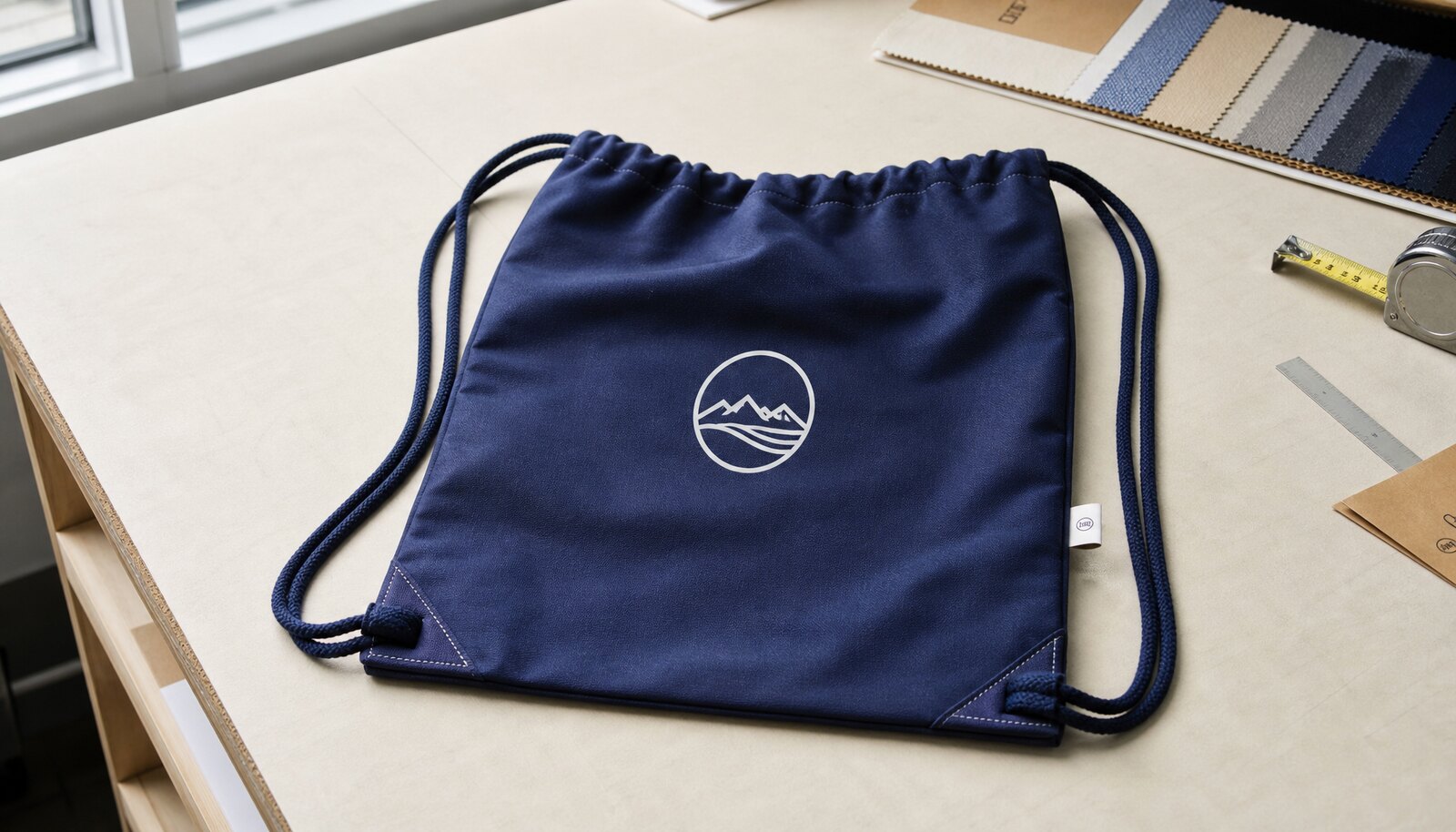
Promotional drawstring backpacks for hotels are not just giveaway bags. For a hotel buyer, the real question is whether the bag works as a room amenity, a welcome kit carrier, an excursion bag, or a retail item that can sit near the front desk without looking cheap. That use case drives the material, print method, strap strength, and the amount of packing labor you should pay for. If the bag is only meant to hold a brochure and a water bottle, a light 210D polyester body can be enough. If the bag must survive repeated guest handling or carry spa items, you need a stronger build and more attention to reinforcement.
The fastest way to waste money is to start with a logo idea and only later decide what the bag must carry. Set the load, the size, and the distribution method first. A hotel that hands bags out in rooms will usually care about appearance, low dust, and compact carton packing. A resort running excursions will care more about shoulder comfort, cord strength, and whether the bag fits a towel, sandals, and a bottle. Treat the bag as a function-driven product, not a generic promo item.
- Room giveaway: prioritize low weight, clean print, and compact carton volume.
- Spa or resort use: prioritize body strength, cord comfort, and a premium fabric handfeel.
- Retail-facing merchandising: prioritize color consistency, label quality, and shelf presentation.
Choose Fabric for Printability and Load
For most hotel promotions, the best price-to-performance point is a polyester body in the 210D to 300D range. 210D polyester is light, prints well, and keeps freight weight under control. It is a sensible option when the bag is a guest amenity or a short-stay kit. 300D gives the bag more body and improves perceived quality, which matters if the hotel is positioning itself above basic economy. If the design needs a more natural or premium look, cotton or canvas can work, but those materials add cost, increase carton weight, and can shrink or wrinkle more than polyester.
Ask the factory for the real fabric basis, not a vague phrase like 'good quality material.' For polyester, the quote should identify the denier, coating, and whether the cloth is plain weave or twill. For cotton or canvas, request GSM and pre-shrunk status. If the bag is intended for repeated guest use, the weak point is often not the body fabric but the channel stitching, the corner bar-tacks, or the cord holes. A stronger fabric will not help if the attachment points fail first.
- 210D polyester: best for lower cost, faster printing, and high-volume hospitality programs.
- 300D polyester or rPET: better handfeel and structure for premium hotels or spa use.
- Cotton or canvas: good for retail-style presentation, but higher freight and more variation to control.
Set the Decoration Before You Set the Price
The decoration method can move the quote as much as the fabric choice. For a hotel logo with one to three spot colors, screen print is usually the cleanest commercial option. It is economical at volume and gives stable repeatability when the artwork is simple. If the logo has gradients, small text, or many colors, heat transfer may be more practical, but the buyer should expect extra setup logic and a different durability profile. Woven labels and sewn patches can also work well on premium bags because they look intentional and can survive wear better than thin transfers when the bag is handled often.
Specify the artwork area in millimeters, not just by saying the logo should be 'large enough.' Tell the factory the print size, the placement, the Pantone targets, and whether the logo must appear on one side or both sides. If the hotel wants the bag to survive light washing or heavy abrasion, include a rub test or wash expectation in the RFQ. The best quote is the one that already knows whether the decoration will be one-color screen print or a more complex multi-step process.
- Screen print: best for simple, repeatable hotel branding and lower setup cost.
- Heat transfer: useful for detailed art, but verify peel resistance and wash behavior.
- Woven label or patch: good for premium feel and when the brand wants a more finished look.
Compare Supplier Routes, Not Just Unit Price
A hotel buyer is often choosing between a direct bag factory, a trading company, and a local decorator that imports blanks. Each route has a different value proposition. A direct factory is usually the best path when you need custom size control, repeat orders, and a stable production record. A trading company can help if you are consolidating several hotel items under one purchase order, but the buyer must verify that the trader is not losing control of the sewing or print spec. A local decorator using imported blanks can be useful for urgent promotions, but the repeat risk is higher if the base bag changes from one stock lot to the next.
The comparison should be based on who controls the critical production variables. The right partner is the one who can show fabric records, print setup details, and packing discipline, not the one who simply offers the lowest headline price. Ask for photos of the sewing line, print area, and carton pack from current production. If the supplier cannot show those details, the buyer is taking a real risk on consistency and arrival quality.
- Direct factory: best for custom spec control and repeat orders.
- Trading company: useful for mixed programs, but confirm who owns quality responsibility.
- Local decorator with blanks: fastest for short lead times, but review blank stability and future reorders.
Read the Quote Line by Line
A serious factory quote should not just show a single unit price. It should break out the bag body cost, sewing labor, print setup, print price per color or per position, sample charges, packing method, carton size, and the quoted incoterm. If the quote only gives one number, the buyer has no way to compare suppliers fairly. The quote should also show price breaks by quantity, because the main cost driver in a drawstring backpack is often not fabric alone. Setup, manual labor, and packing labor can dominate the cost structure when the order is small.
MOQ logic matters because factories price around fabric usage, print screens, and sewing efficiency. A lower MOQ often costs more per piece because the supplier still has to cut, print, inspect, and pack the order with the same fixed labor burden. This is why a 1,000-piece quote can look much higher than a 5,000-piece quote even when the fabric spec is unchanged. If you need a small run, you can sometimes reduce cost by simplifying the print, using a stock fabric color, or accepting bulk packing instead of individual polybags.
- Request tiered pricing by quantity, not a single price.
- Separate blank bag cost from decoration and packing cost.
- Ask whether setup fees are one-time or repeated for every reorder.
Use Sampling to Catch Problems Early
For hotel promotional backpacks, sampling should be treated as a production control step, not a formality. Start with a material or stock sample if the factory is proposing a standard fabric, then move to a pre-production sample with the final artwork and packing format. The sample must be judged against the final use case. A bag that looks fine on a table can still fail if the cord slices into the channel, the logo shifts on the panel, or the bottom seam opens when the bag is loaded with a towel and bottle. That is why sample approval should include use testing, not just visual approval.
A good sample review includes size check, print alignment, color match, seam quality, cord movement, and carton pack confirmation. The buyer should keep a signed reference sample or golden sample with the PO record so the factory has a physical target for bulk production. If the supplier says the sample is 'for reference only,' that is not enough. The approved sample should define what the bulk run must match, especially for logo placement and fabric shade.
- Check the sample with real hotel contents, not with an empty bag.
- Measure the final size and compare it to the drawing or tech pack.
- Keep one approved sample for production reference and one for incoming inspection.
Define QC Limits the Factory Can Actually Hold
The main quality risks on drawstring backpacks are usually visible and preventable: weak seams, poor cord anchoring, off-center logos, uneven fabric color, and packing errors. Set acceptance criteria in plain language. If you need a centered front logo, say how far it can drift from center. If the bag must hold a certain load, say the test weight or at least the kind of contents it must support. For buyer teams that use AQL, a common approach is AQL 2.5 for majors and 4.0 for minors, but the key point is to make the inspection rule explicit before production starts.
Factory QC should not stop at a final carton count. The supplier should inspect the sewing line for broken stitches, the print line for register shifts, and the packing area for mixed lots or missing labels. A cheap bag can become expensive when the logo is crooked or a carton arrives with the wrong count. If the hotel will distribute the bags as part of a guest experience, the visual threshold should be higher than for a generic trade show giveaway.
- Acceptable logo drift and print tolerance should be written into the PO.
- Load-test the cord and top channel on sample and pre-production units.
- Check carton count, label accuracy, and pack consistency before release.
Specify Packing for Housekeeping and Distribution
Packing can change both cost and usability. Bulk carton packing reduces labor and freight volume, which helps when the hotel team will repack the bags on site. Individual polybags make sense when the bags are going straight to retail display, conference kits, or stored in a clean guest amenity room. If the backpacks need barcode stickers, size labels, or bilingual pack notes, write that into the packing instruction. The supplier should know whether the bags will be distributed from a warehouse, a front desk, or a housekeeping cart, because those routes create different handling needs.
Carton configuration should be part of the quote data. Ask for carton size, gross weight, piece count per carton, and whether the supplier can keep mixed colors separated. Small mistakes in packing often cause bigger downstream problems than small fabric defects. A carton packed too tightly can crease printed panels, while a loose pack can damage cartons in transit. For hotel buyers, clean presentation often matters as much as the bag itself.
- Bulk pack is usually cheaper and better for back-of-house distribution.
- Individual polybags are better for retail presentation and dust control.
- Require carton marks that match the PO, destination, and item code.
Model Lead Time and Landed Cost Before You Commit
Lead time should be read as a sequence, not a single number. A standard program often needs time for artwork confirmation, sample approval, material allocation, production, inspection, and packing. For a straightforward promotional drawstring backpack order, many factories can move in roughly three to six weeks after sample approval, but that changes with fabric sourcing, printing complexity, and order size. If the hotel program is tied to a launch date, build buffer time around sampling and freight, not just sewing time. The longest delays often come from late artwork changes or waiting for approval on the pre-production sample.
Landed cost is more useful than factory price when the order will cross borders. Freight, duty, carton volume, and packing weight can change the real cost of the program. A lighter polyester bag may look cheaper at factory level and still be less attractive if the artwork requires multiple print passes or if the order is packed inefficiently. Compare at least three scenarios: lower-cost standard fabric, premium fabric with better structure, and a faster route with a local decorator or stock blank. The buyer then sees where the real tradeoff sits between cost, timing, and brand presentation.
- Do not commit without a sample approval date and a shipment window.
- Compare factory price, freight, duty, and carton volume together.
- Keep a buffer for artwork revisions and inspection rework.
Specification comparison for buyers
| Spec decision | Recommended option | When it fits | Buyer risk to check |
|---|---|---|---|
| Direct factory with decoration | One supplier controls fabric, sewing, and print | You need custom branding, repeat orders, and tighter process control | Confirm who owns screens, trims, and final QC responsibility |
| Trading company with multiple bag lines | Use when you need mixed SKUs and a single purchasing contact | You are bundling hotel backpacks with other amenity bags or gift items | Watch hidden markup and weak control over stitching or print specs |
| Domestic decorator using imported blanks | Fast artwork turn on standard blanks | Small hotel chains, urgent events, or test programs | Check whether blank quality and stock color are stable enough for repeats |
| 210D polyester body | Lightweight, economical, and easy to print | Large-volume promotions and lower-cost guest kits | Avoid very thin cloth; confirm denier, coating, and tear strength |
| 300D polyester or rPET | More body and a better premium feel | Upscale hotels, spa programs, or heavier contents | Check hand feel, weight, and color tolerance on recycled yarns |
| Cotton or canvas body | Natural look with stronger retail appeal | Boutique hotels and premium gift packs | Review shrinkage, lint, and higher freight due to heavier bags |
| Screen print | Best for simple logos and repeat runs | 1-3 spot colors with stable artwork | Confirm opacity on dark fabric and rub or wash resistance |
| Heat transfer or woven label | Sharper detail or multi-color branding | Complex art, gradients, or smaller runs | Check peel resistance, registration, and extra setup cost |
Buyer checklist before sampling
- Define the hotel use case first: room giveaway, spa kit, excursion bag, laundry bag, or retail merchandise.
- Lock the finished size, usable volume, and target load before discussing fabric weight.
- State the body material, denier or GSM, cord type, eyelet type, and reinforcement requirement in the RFQ.
- Provide vector artwork, Pantone targets, print size, and the number of print positions.
- Ask for tiered pricing by quantity, plus any setup charges, sample fees, and color-change charges.
- Specify the packing method, carton count, inner pack, barcode label, and ship mark format.
- Define the approval standard for sample, pre-production, and production inspection.
- Confirm lead time after sample approval, and state the incoterm you want quoted.
Factory quote questions to send
- What is your price at 1,000, 3,000, and 5,000 pieces, and what changes at each tier?
- What fabric, denier or GSM, cord size, and reinforcement method are included in that price?
- How many print colors are included, and what is the setup charge for each decoration method?
- What is your MOQ by color, by artwork, and by order if I need mixed destinations?
- Can you quote a blank sample, a pre-production sample, and a production sample separately?
- What packing is included: bulk pack, individual polybag, carton quantity, and carton size?
- What is your standard lead time after sample approval and deposit, and what delays it?
- Which QC standard do you use for final inspection, and who signs off on the golden sample?
Quality-control points to confirm
- Measure finished size against the approved spec, with a practical tolerance written into the PO.
- Pull-test the cord channel, knots, and eyelets to confirm they do not tear under normal loading.
- Inspect print placement, color match, and edge sharpness under daylight or D65 lighting.
- Check seam strength at the bottom corners and top channel where the bag sees the most stress.
- Verify that the drawcord slides smoothly and does not snag on stitching or fabric burrs.
- Open cartons at random to confirm count accuracy, carton marks, and inner pack consistency.
- Inspect for odor, oil stains, broken threads, and fabric discoloration before shipment release.
- Use a clear AQL or buyer-specific acceptance standard and write it into the purchase order.