Why sample approval fails on printed drawstring backpacks
Most sample approval problems happen because buyers approve appearance but do not approve production conditions. A drawstring backpack is simple, but the final result still depends on fabric weight, print method, seam location, cord tension, and packing pressure. If the sample uses a stock fabric close to the target, a temporary cord, or a different print table setup, the bulk order can look acceptable in photos and still arrive with off-center logos, distorted openings, or cracked print on folded panels.
The main buying problem is that a printed sample can pass internal review and still be a weak production reference. That usually leads to disputes around what was actually approved: color only, artwork only, or the full item construction. A useful approval process turns the sample into a contract-grade reference by locking the measurable points before bulk fabric is cut.
- Do not approve from artwork PDF alone; approve the physical sample or detailed photo set with measurements.
- Do not treat stock sample fabric as equal to bulk fabric unless GSM and weave are confirmed.
- Do not sign off before checking loaded use, not just empty tabletop appearance.
Start with the spec points that change print results
Before a factory makes the approval sample, the buyer should define the few specifications that most affect print stability. On drawstring backpacks, those are usually fabric weight, weave surface, base color, print size, and distance from seams and cord channel. Smooth canvas prints differently from loose plain weave cotton, and a large front print on 140 GSM fabric behaves differently from the same artwork on 260 GSM canvas. If these points are loose, the factory may make a good-looking sample that is expensive or inconsistent to repeat in bulk.
For most procurement teams, the practical approach is to choose the end use first. A promotional gym sack for a campaign often works in 140-180 GSM cotton with simple spot-color screen print. A retail-focused backpack with stronger shelf feel often needs 220-280 GSM canvas, cleaner panel alignment, and reinforced corners. That decision changes the quote, MOQ logic, and approval criteria immediately.
- Common cotton body weights: 140 GSM, 160 GSM, 180 GSM, 220 GSM, 250 GSM, 280 GSM.
- Heavier fabric usually improves print surface stability but raises material cost and carton weight.
- Large full-front graphics on low GSM fabric can show puckering once cords are tightened.
Choose the print method before you judge the sample
Many sample disputes come from judging the artwork result without agreeing on the print method that produced it. Screen printing is still the most reliable choice for bold logos and medium-to-large quantities because color control is strong, unit cost scales well, and the print stays flat if the ink deposit is managed correctly. Heat transfer can reproduce fine gradients, but it adds a film layer and may change hand feel, especially on soft cotton. Digital print can help for small runs or many SKUs, but color repeat and unit economics need to be checked carefully.
A buyer should approve the sample with the print method written into the specification. If the sample is made by digital print for speed but the bulk order will be screen printed, the approval is incomplete. Edge sharpness, color density, and even print size can shift between methods. For brand owners, this is critical when logos sit close to seams or need exact Pantone matching.
- Use screen print when artwork is simple, color count is limited, and the order volume supports screen setup.
- Use heat transfer when image detail is more important than a natural fabric hand feel.
- Ask whether white underbase is included on dark fabric; this affects color pop and cost.
- Request a rub test on the printed sample if the bag will be tightly packed or folded.
Build the sample around actual MOQ and bulk material logic
A strong sample approval guide must connect design choices to the factory's MOQ logic. Fabric MOQ is often different from print MOQ, and both are different again from accessory MOQ. For example, a factory may accept a low sample quantity using stock natural cotton, but require a higher bulk quantity if you want a custom dyed body color, matching rope, woven label, and exact Pantone print. If the buyer approves a sample built from stock substitutes, the quote and delivery assumptions can be wrong from the start.
This matters most when there are multiple SKUs. Ten artworks across one total order quantity may look efficient to a buyer, but if each artwork needs its own screen set and separate print run, the real cost per SKU climbs. Procurement teams should ask the factory to show MOQ logic by fabric color, print design, and accessory color, not just one total order MOQ.
- Stock natural cotton usually supports lower MOQ than custom dyed colors.
- Screen print MOQ may be workable overall, but each design still adds setup time and waste.
- Custom rope color, woven label, or eyelet finish can each create separate minimums.
- Sample approval should state which components are stock and which are custom for bulk.
What to measure on the physical sample before approval
Printed drawstring backpack approvals should be based on measurable acceptance criteria, not comments like "looks centered" or "print seems dark enough." The most important checks are finished width and height, hem channel depth, print size, print distance from top edge and side seam, rope thickness, and corner construction. Since the bag gathers at the top when closed, print placement must be checked with the bag laid flat and with cords pulled to working tension.
Retail buyers should also inspect how the print interacts with the bag in real use. A logo placed too high can disappear into the gathered top. A print placed too low can distort across bottom seam bulk or reinforcement patches. If the front panel is cut slightly off grain, a centered print can still look visually crooked once the cords are tightened. That is why sample review should include both flat photos and in-use photos.
- Measure print position from fixed sewing points in millimeters.
- Check the sample flat, half-tightened, and fully cinched.
- Record cord diameter and total cord length because both affect opening shape.
- Inspect corner reinforcement from inside and outside of the bag.
Use approval criteria that prevent the most common bulk disputes
The cleanest way to avoid conflict is to define what is acceptable before bulk production starts. For printed drawstring backpacks, the highest-risk defects are print off-center, shade variation between lots, fuzzy print edges on textured fabric, weak corner stitching, uneven cord lengths, and offset ink transfer after packing. If the factory knows exactly which defects are critical and which are minor, it can control the line better and sort the output faster.
Buyers do not need an overly technical document, but they do need tolerances. For example, print placement tolerance can be stated in millimeters, fabric GSM can be given with an agreed tolerance range, and visual standards can be supported by sample photos. This makes final inspection easier because the QC team is not inventing standards after production is already finished.
- Example acceptance points: print position within agreed tolerance, no visible missing ink on main logo areas, no seam opening, no major cord fray.
- Define whether slight shade variance is acceptable between cartons or only within a carton.
- State whether crease marks from packing are acceptable for promotional use or not acceptable for retail display.
Read the quote like a production sheet, not just a unit price
A useful quote for a printed drawstring backpack should break out the cost drivers that can change after sample approval. At minimum, the buyer should look for body fabric specification, print method, number of print colors, accessory details, packing method, and sample assumptions. If the quote only shows one unit price and a vague description, it is hard to compare suppliers because one supplier may include reinforced corners and individual polybags while another excludes them.
The safest approach is to ask for line-item logic even if the supplier will not reveal its full internal costing. A commercially useful quote can still show which elements add cost: heavier GSM, extra print colors, inside labels, custom rope dyeing, barcode stickers, and tighter packing requirements. This helps the buyer decide whether to simplify the specification or protect a retail requirement.
- Example quote data fields: fabric GSM, print size in centimeters, color count, cord material, packing quantity per carton, carton size, sample charge, and lead time split.
- Ask whether screen charge is one-time, per color, or absorbed above a certain order quantity.
- Confirm whether pre-production sample cost is deductible from bulk order value or charged separately.
- Check if the quoted carton pack causes compression that could mark the print.
Do not ignore packing during sample approval
Packing is often left until the end, but it should be part of sample approval because printed cotton surfaces are vulnerable to rubbing, offset, and crease memory. A backpack that looks fine as a loose sample can arrive damaged if the print faces another fresh print under pressure in a tight carton. The risk rises when large ink areas are used, when dark fabric needs heavy white underbase, or when the bags are packed immediately after printing without enough curing and cooling time.
Procurement teams should decide early whether the item is a low-cost bulk-packed promotion bag or a retail-facing product that needs cleaner presentation. Bulk stack packing can save real money, but the print orientation, stack count, and liner material matter. If polybags are required, ask whether they are individual or shared by set, and whether ventilation holes or warning marks are needed for the destination market.
- Approve carton quantity based on both freight efficiency and print protection.
- Ask the factory to test stack packing with the actual printed sample before bulk.
- For retail programs, confirm barcode label placement and whether hangtags are attached or packed loose.
- If bags are folded, confirm the fold line does not cut across a fragile print area.
Map the timeline from sample to shipment realistically
Lead time problems often start when sample approval is treated as a single event instead of a sequence. For a printed drawstring backpack, the realistic flow may include artwork confirmation, fabric color approval if custom dyed, pre-production sample, bulk cutting, printing, sewing, packing, and final inspection. If one step slips, the whole schedule compresses and quality risks increase, especially around printing and curing.
Buyers should ask the supplier to split lead time by stage rather than promise one overall ship date. This is useful when the project has promotional deadlines or retailer booking windows. It also shows whether the factory is planning to print before sewing or sew before printing, which can affect both efficiency and print precision depending on the design location.
- Sample lead time is often shorter with stock fabric and one-color screen print than with custom dyed fabric and multiple accessories.
- Pre-production approval should happen before full bulk cutting if print placement is critical.
- Final inspection booking should leave time for rework on print, cord, or packing defects.
- Ask whether weekends or public holidays affect the stated production window.
Set up the approval file your team can actually use
The best approval file is simple enough for merchandising, QC, and the factory line to use consistently. It should include the approved sample photos, key measurements, artwork file version, print method, fabric GSM, cord specification, packing method, and any comments on acceptable variation. This document should travel with the purchase order, not stay only in an email chain between the buyer and salesperson.
For importers and distributors, this file becomes even more valuable on repeat orders. Repeat business often fails because teams assume the factory will remember the previous version, but small details change: cord thickness, label position, print size, carton pack, or even the base fabric width that affects panel proportions. A structured approval record protects continuity when buyer contacts or factory merchandisers change.
- Keep one physical sealed sample and one digital photo set with dimensions marked.
- Use version control for artwork and sample comments so old approvals are not reused by mistake.
- Attach the approval file to the PO and inspection brief, not just the sourcing folder.
- Note any approved exceptions, such as a stock cord shade used only for the first run.
Specification comparison for buyers
| Spec decision | Recommended option | When it fits | Buyer risk to check |
|---|---|---|---|
| Fabric weight | 140-180 GSM cotton for promo use; 220-280 GSM canvas for retail feel | Choose lighter fabric for giveaways and event packs; choose heavier canvas for resale or higher print coverage | Low GSM may wrinkle, show print strike-through, and distort after cord tension |
| Print method | Screen print for bold spot colors; heat transfer for photo detail; digital print for small runs | Screen print works best when artwork is simple and order quantity is stable; transfer or digital helps when SKUs are many and volume per design is low | Wrong method can shift color, crack on folds, or raise unit cost at bulk scale |
| Base fabric color | Use fabric dyed close to final background color instead of flooding large areas with ink | Best for dark body colors, large logos, or retail graphics that need cleaner hand feel | Large ink coverage increases stiffness, rub risk, and sample-to-bulk color variation |
| Drawcord type | 8-10 mm cotton rope for natural look; 5-6 mm PP cord for lower cost and cleaner consistency | Cotton rope suits eco and retail positioning; PP cord suits promotion and sport channels | Cord thickness changes opening behavior, packing volume, and stress at corner eyelets |
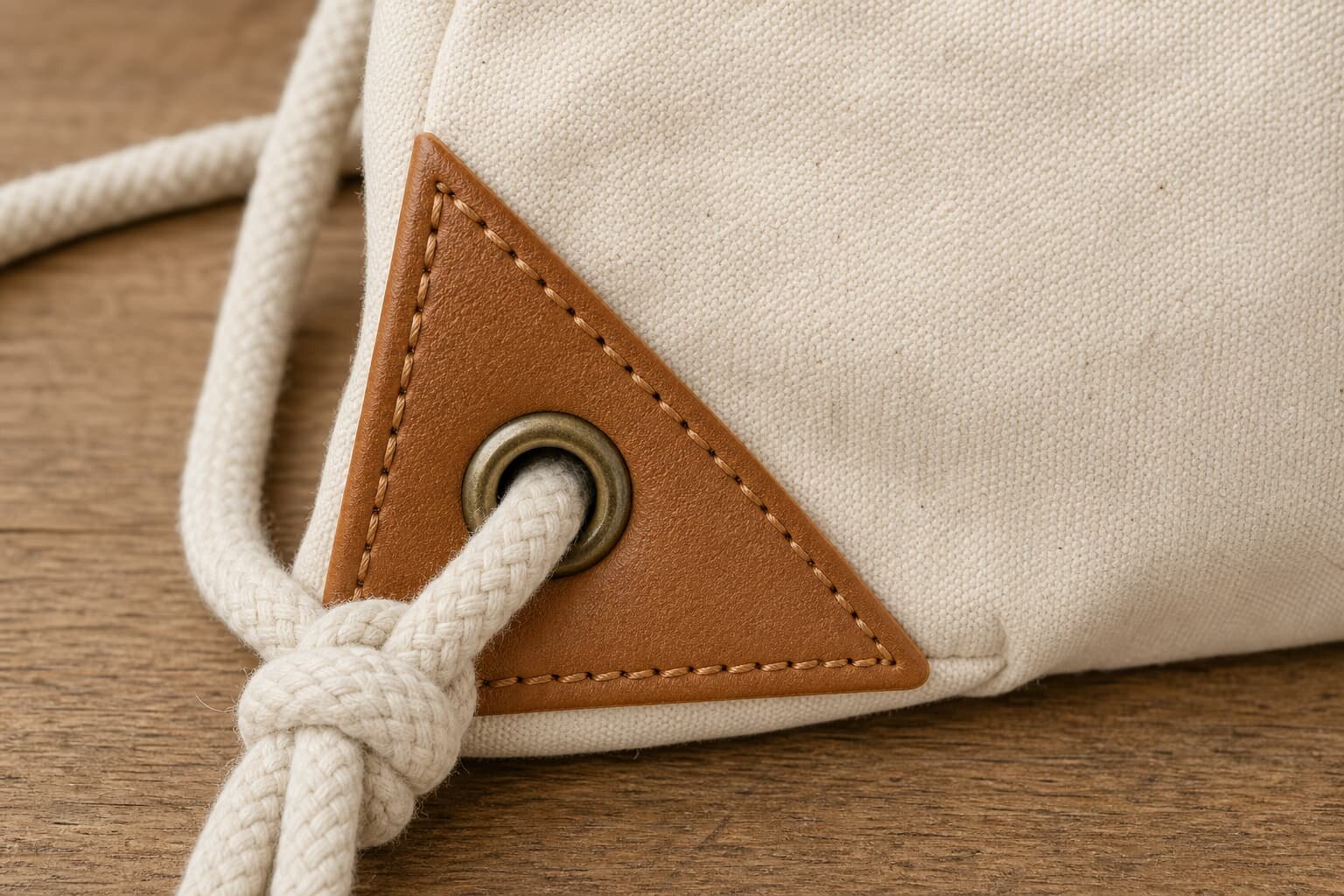
| Corner construction | Patch reinforcement or metal eyelet on 220+ GSM fabric; folded seam reinforcement on lighter fabric | Needed when end users carry shoes, water bottles, or books | Sample may look fine empty but fail under load if corners are not tested with weight |
| Artwork approval format | Approve both flat artwork and photo of printed physical sample with ruler and Pantone reference | Best when logo size, placement, and color accuracy matter across repeat orders | A digital artwork file alone does not confirm print position, edge sharpness, or seam interference |
| Sample quantity | At least 2 pre-production samples per SKU: one for internal approval, one for destructive and packing checks | Important for retail launches, distributor programs, and multi-team sign-off | Single sample approvals often skip wash, rub, load, and carton-fit verification |
| Packing method | Individual polybag only if required; otherwise stack packed by dozen with carton lining sheet | Use simple bulk packing for cost control unless retail channel requires barcode or insert | Over-packing adds cost and carton weight; under-spec packing causes print rubbing and shape marks |
Buyer checklist before sampling
- Confirm finished size tolerance, fabric composition, and GSM on the approved sample and in the PO.
- Approve the print method by name, not just the artwork appearance, because screen print, transfer, and digital do not behave the same in bulk.
- Check front print placement from top hem, side seams, and bottom edge with measurements in millimeters.
- Record Pantone references, acceptable color tolerance, and whether fabric color should be matched under daylight or store lighting.
- Pull the cords 20-30 times on the sample to see if corners distort, cord channels bunch, or print cracks at folds.
- Load the sample with a realistic weight for the target use, then inspect seam stress, eyelets, and rope slippage.
- Review whether the approved sample includes the actual bulk fabric GSM and actual cord thickness, not a near substitute from stock.
- Check if reinforcement patches are hidden inside or visible outside, and make sure the same construction is written into the production spec.
- Verify packing method, master carton quantity, carton dimensions, and whether print faces inward or outward in stack packing.
- Keep one sealed approval sample or signed photo set as the dispute reference for bulk production.
Factory quote questions to send
- Is the quoted fabric stock or custom woven, and what is the exact GSM tolerance used in the price?
- What print method is included in the quote, and how many print colors, print locations, and screen charges are separated?
- Does the sample price include revised sample rounds if print placement or cord color changes after first review?
- What MOQ applies to each fabric color, each print design, and each size, and can different artworks share one bulk run?
- Are reinforcement patches, eyelets, lining, inside labels, hangtags, and barcode stickers included or optional?
- What is the lead time split between lab dip or fabric approval, sample making, bulk production, and final packing?
- What carton pack assumption is used in the quote, and how does individual polybag packing change carton count and cost?
- If the print coverage is increased or moved closer to seams, will the unit price or rejection risk change?
- What AQL level or internal inspection standard does the factory use for print position, shade, and stitching defects?
- Can the factory send pre-production photos with measurement points and print close-ups before full bulk cutting starts?
Quality-control points to confirm
- Measure bag width, height, and hem channel after sewing, because drawstring channels can reduce usable height.
- Check fabric GSM on incoming rolls or at least compare bulk hand feel and thickness against the approved sample.
- Verify print position from fixed points, not by visual centering alone.
- Inspect print edge sharpness, pinholes, color consistency, and rub resistance on folded areas.
- Test cord pull symmetry so both straps tighten evenly and do not twist the bag opening.
- Review seam density, backstitching at stress points, and reinforcement patch alignment.
- Confirm eyelets are smooth, secure, and do not cut cords under repeated pulls.
- Check stacked packed bags for offset ink transfer, crease marking, and logo-to-logo rubbing before carton sealing.