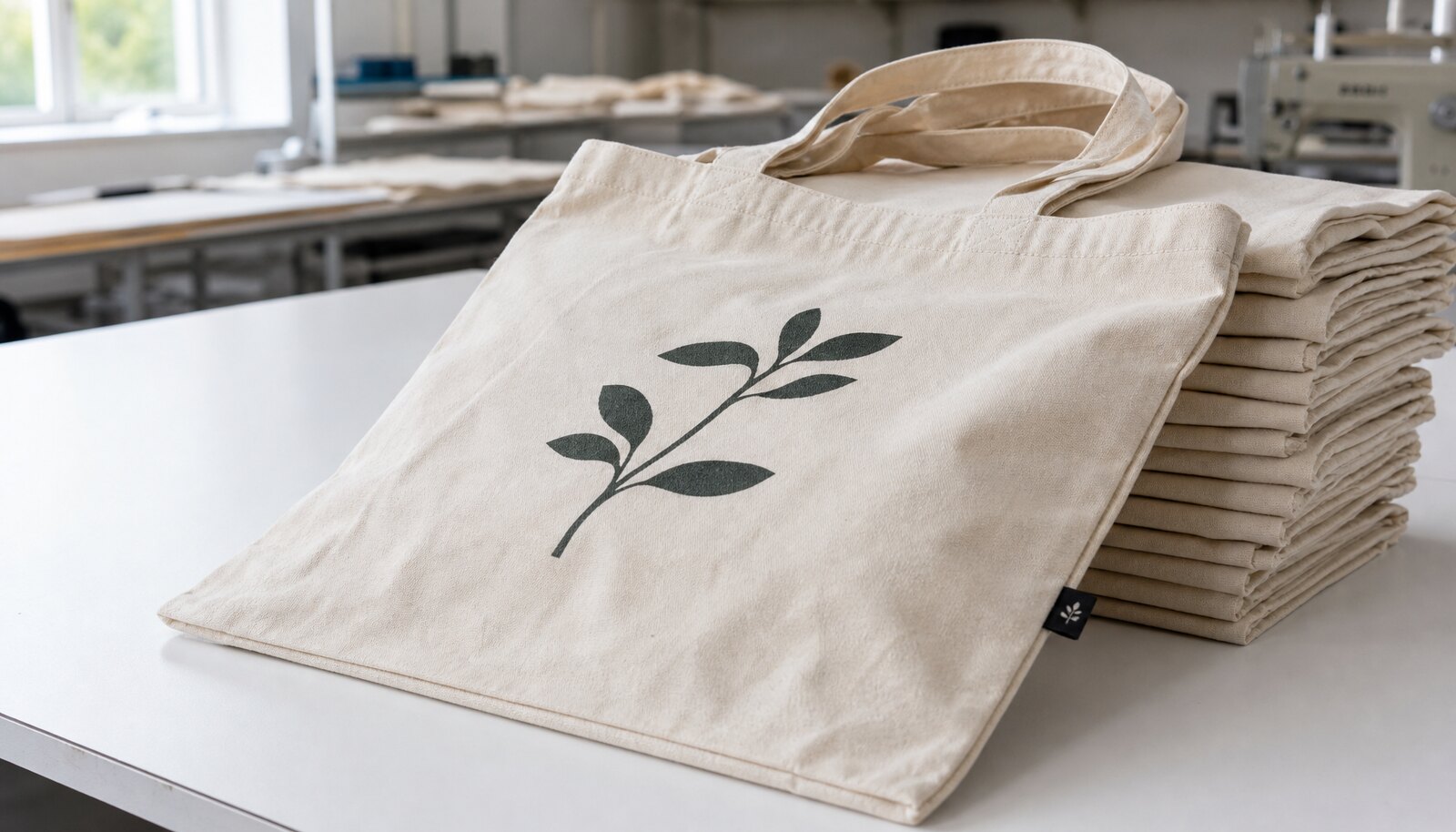
What buyers really mean when they search for printed cotton bags online
Most procurement teams are not searching for inspiration. They are trying to buy a reusable cotton bag that can carry a clear logo, land at a predictable cost, and survive basic retail handling. The sourcing problem is usually comparison, not availability. One supplier quotes a 140 GSM bag with one-color screen print and bulk packing. Another quotes a 120 GSM bag with a heat transfer logo, individual polybags, and a lower MOQ. Both may call it the same product, but they are not comparable.
For printed cotton bags online, the buyer should treat the search as a specification exercise. The useful starting point is the end use: retail shopper bag, event giveaway, branded insert bag, or store merch bag. That choice affects fabric weight, handle strength, print method, and whether the bag should look structured or soft. If those points are not fixed before RFQ, the supplier will fill in the blanks with the cheapest workable version.
- Define the use case first: retail carry bag, promotional bag, or packaging insert.
- Use one approved spec sheet before requesting prices from multiple suppliers.
- Do not compare bag prices without matching fabric weight, print area, and packing method.
Choose the cotton base before you talk about print price
Fabric weight is the first commercial decision. For many printed cotton bags, 140–160 GSM is the practical middle ground. It gives enough body for a clean print, better opacity than very light cloth, and a decent handfeel for retail. If the bag is meant to look premium or carry heavier items, 180 GSM is safer. If the brief is a simple giveaway bag where unit cost matters more than structure, 120–130 GSM can work, but only if the buyer accepts a thinner appearance and lower perceived value.
Cotton finish matters as much as GSM. Unbleached natural cotton has a more organic look and usually hides small lint variations, but printed colors can appear softer. White or bleached cotton gives better logo contrast and a cleaner retail presentation, but the fabric can show sewing inconsistencies more easily. If the bag will be sold in stores, ask whether the fabric is pre-shrunk, because shrinkage can distort the logo position after first use or cleaning.
- 140–160 GSM: common for retail reuse and brand merch.
- 180 GSM: better for premium presentation and stronger structure.
- 120–130 GSM: acceptable for low-cost promotions, but weaker visual body.
- Ask whether the fabric is pre-shrunk or whether shrink tolerance is already built into the cut size.
Print method drives both appearance and cost
For most bulk orders, screen printing is the default route. It handles simple logos well, gives strong color laydown, and stays competitive once the run is large enough to absorb setup. Buyers often see a low per-unit quote and miss the real cost structure: screen setup, extra colors, and print area all change the final number. If your artwork is a clean one- or two-color logo, screen printing is usually the most controllable option.
DTG or digital print can make sense for short runs, gradient art, or many SKU variations, but it is not the best answer for every supplier quote. Digital print often looks more detailed, yet the color consistency and ink handfeel can vary more than buyers expect. Heat transfer is sometimes used for small runs or complex logos, but it can feel less durable if the adhesive or transfer film is not controlled properly. If the bag is for retail resale, not just a one-time event, ask how the print behaves after rubbing and folding.
- Screen print is usually best for repeat orders with simple branding.
- Digital print fits short runs and artwork with gradients or photo effects.
- Heat transfer may be acceptable for low-volume samples but should be tested for durability.
- Fix the number of colors and print size before comparing supplier quotes.
How to compare supplier quotes without getting misled by a low number
A useful quote comparison starts with a common basis. Ask every supplier to quote the same finished bag size, same GSM, same handle length, same print method, same number of colors, and same packing format. Without that, a lower price usually just means reduced material, smaller print area, lighter stitching, or a different packing assumption. The difference may not show in the sample photo, but it will show in the warehouse or at the customer’s first complaint.
Below is a practical comparison of sourcing routes and how they affect the buying outcome. The point is not that one route is always best. The point is to understand what each route is hiding or exposing in the quote. Direct factories are usually stronger on repeat production control, while trading companies can help with mixed orders or multiple product categories in one shipment.
Supplier route comparison for printed cotton bags online
When the order is simple and repeatable, a direct factory is usually easier to manage. You can request the fabric roll spec, sewing details, print layout, and packing photos from the same operation. For procurement teams, that reduces interpretation risk. If the order is part of a broader program with pouches, backpacks, or jute items, a trading route can simplify consolidation, but you lose some direct visibility into the production floor.
The right route depends on order size, customization level, and how much detail your team needs before approval. For a small launch, a flexible supplier may matter more than the lowest price. For replenishment, consistency and process control matter more than broad category coverage.
Comparison table: sourcing routes and quote behavior
Define the measurable checks around fabric weight, size tolerance, handle pull, seam strength, logo rub, stains, loose threads, and carton count verification. Add tolerance ranges only where the buyer truly cares, and ask for photos that show the measurement point, not just a finished product overview.
For procurement decisions, the inspection note should say who checks, when they check, and what evidence is required. Photos without measurements are often not enough for remote approval.
- Write decisions in measurable language, not only descriptive wording.
- Ask for sample photos plus one physical approval sample for important orders.
- Keep quotation, sample approval, and inspection notes tied to the same spec version.
What should be inside the sample approval process
A sample only has value when it matches the bulk build. A plain size sample tells you almost nothing about the finished order. The pre-production sample should use the same fabric weight, the same print method, the same label placement, and the same seam construction as the bulk run. If the supplier swaps ink or fabric on the sample, you are approving a different product.
The best sample review is practical. Lay the bag flat and compare finished size, print position, handle symmetry, stitch density, and fabric opacity. Put a few typical items inside the bag and look at seam stress. If the bag is intended for retail sale, also evaluate whether the print feels too heavy, too glossy, or too faint under store lighting.
- Approve finished size, not just cut size.
- Match sample fabric GSM and color to the intended bulk order.
- Inspect logo placement, edge clarity, and ink curing.
- Test handle comfort and seam stress with realistic load weight.
Factory QC points that catch the most common failures
The most frequent issues in printed cotton bags are not exotic. They are poor print registration, weak curing, uneven cutting, short handles, loose threads, and inconsistent bag dimensions. These problems often come from rushed setup or poor process discipline rather than bad material alone. For a buyer, the key is to set acceptance thresholds before production starts, then make the supplier show evidence that the run is controlled.
A practical QC standard does not need to be complicated. It needs to be visible and repeatable. If the logo is central, confirm allowable misalignment. If the bag is a shoulder tote, confirm handle length and symmetry. If the order includes retail packing, inspect whether the polybags are clear, clean, sealed correctly, and not adding moisture inside the carton.
- Reject heavy print smudging, blurred edges, and weak curing.
- Reject loose stitching, skipped stitches, and uneven handle reinforcement.
- Reject large variation in finished dimensions across the carton.
- Reject damp or dirty cartons, especially for export sea freight.
Packing and carton choices affect both damage and landed cost
Packing is often treated as an afterthought, but it changes labor, carton size, freight cost, and damage risk. Bulk packing is the lowest-cost route and usually the right answer for wholesale distribution. Folded and individually polybagged units are better when the bags go straight to retail shelves or need extra cleanliness control. If the bags are going into master cartons and then onward to a fulfillment center, the packing method should be aligned with the receiving workflow.
Buyers should pay attention to how the supplier counts cartons and whether carton labeling matches the SKU structure. Mixed-size cartons can save cost in some programs, but they create warehouse confusion. If the order has multiple colors or print variants, request carton markings that clearly identify the version, quantity, and PO number. This matters more than a glossy sample photo.
- Bulk packed: lowest cost, best for distribution and wholesale.
- Individually polybagged: cleaner presentation, higher labor and freight volume.
- Carton labeling should match SKU, color, quantity, and PO details.
- Moisture protection matters on ocean shipments and humid lanes.
Lead time, MOQ logic, and the real cost drivers in bulk orders
MOQ is not only a factory number; it is usually the point where setup costs and fabric yield start to make sense. For printed cotton bags, MOQ is often driven by fabric stock, print setup, and packing labor rather than sewing alone. A low MOQ may be available if the factory uses existing fabric and simple one-color printing. Once the order asks for custom-dyed fabric, extra colors, woven labels, or retail packing, the MOQ and lead time normally rise.
A realistic lead time includes fabric prep, cutting, printing, sewing, inspection, packing, and container booking. For a straightforward order, buyers may see roughly 15–30 days after sample approval, but the number depends on current load, print complexity, and packaging. Seasonal launches, color matching, and retail inserts can add time. The safest planning method is to separate sample approval lead time from bulk production lead time and from freight booking lead time.
- MOQ usually rises with custom color, extra print colors, or retail packing.
- Lead time should be split into sample stage, bulk production, and freight stage.
- Fabric stock availability can matter more than sewing capacity.
- Ask for a realistic capacity note, not a generic delivery promise.
Specification comparison for buyers
| Spec decision | Recommended option | When it fits | Buyer risk to check |
|---|---|---|---|
| Fabric weight | 140–160 GSM cotton for standard retail use; 180 GSM if you need a stiffer handfeel | Best for reusable shopping bags, bookstore bags, brand merch, and moderate carry loads | Quotes based on 120 GSM can look cheaper but feel thin, print show-through is higher, and seams may distort after loading |
| Print method | Single-color screen print for most volume runs; DTG only for short runs or complex art | Screen print fits clean logos, event bags, and repeat production; DTG suits low MOQ artwork with gradients | Some suppliers quote screen print but price an extra plate or color change later; confirm ink count, print area, and setup fee |
| Bag construction | Stitched hem with reinforced handles and cross-stitch bar tacks | Retail and distribution orders where bag failure hurts brand perception | Light sewing only may pass sample inspection but fail in repeated use, especially with long handle bags and heavy inserts |
| Handle length | 55–65 cm total length for shoulder carry; shorter handles for hand carry only | Retail and trade show bags where end users may carry the bag on the shoulder | Handle length affects fabric consumption and sewing time; if not fixed in spec, factories may shorten handles to reduce cost |
| Base style | Flat tote for lowest cost; boxed bottom for better packing and volume | Flat bags suit giveaways and fold-flat retail packaging; boxed bottoms suit grocery-style and premium use | Boxed bottom adds labor and can change carton count; compare pricing on the same finished size, not just open width |
| MOQ route | Stock fabric + one-color print for lower MOQ; custom fabric color only if volume is high | Launches, seasonal programs, and buyers testing the market | Low MOQ often hides higher unit cost and fewer packing options; verify whether MOQ is per design, per color, or per order |
| Supplier route | Direct factory for repeat volume; trading company only if you need mixed categories or consolidation | Established SKUs, controlled artwork, and ongoing replenishment | Trading quotes can include more service but may weaken visibility on fabric source, print control, and actual packing plant |
| Packing method | Bulk packed by count with moisture protection, then carton packed to standard export quantity | Wholesale, distribution, and ocean freight shipments | Retail-ready fold-and-insert packaging adds labor and can increase carton size, which changes freight cost and damage risk |
| Sampling approach | Pre-production sample with exact fabric, ink, sewing, and label position | Any branded order above test volume | A plain size sample is not enough; color, print density, and shrink behavior must be approved on the real material |
Buyer checklist before sampling
- Confirm finished bag size, fabric GSM, handle length, and seam type in one written spec sheet.
- State print method, number of colors, print size in cm, and whether the print is on one side or both sides.
- Request a sample made from the same fabric weight and same ink type as the bulk order.
- Specify target shrink tolerance and whether pre-shrunk cotton is required.
- Align packing format: bulk packed, folded, polybagged, or retail inserted, plus carton count and master carton markings.
- Ask for production photos of cutting, printing, stitching, and carton packing on the first bulk run.
- Compare quotes on the same finished dimensions, same GSM, same print area, same handle spec, and same packing assumption.
Factory quote questions to send
- What is the finished size, GSM, and fabric construction used in this quote?
- Is the quoted print screen print, heat transfer, DTG, or another method, and how many colors are included?
- Does the MOQ apply per design, per color, per size, or per order?
- What is included in the unit price: printing, labels, folding, polybag, carton, and export packing?
- Can you provide a pre-production sample using the exact fabric and ink that will be used in bulk?
- What is the standard lead time after sample approval, and what changes if the order includes custom labels or retail packing?
- What carton quantity, carton size, and gross weight do you expect for this order?
- What is your tolerance for fabric shrinkage, print misalignment, and stitch defects, and how will defective units be handled?
Quality-control points to confirm
- Fabric GSM should match the approved sample within a practical tolerance; a visible downgrade in handfeel or opacity is a rejection risk.
- Print registration should stay within a tight visual tolerance, especially on logos with borders or fine text; blurred edges should be rejected.
- Ink rub test should not leave heavy transfer after normal dry rubbing; weak curing is a common issue on cheap printed cotton bags.
- Handle stitching should be even, with reinforced ends and no skipped stitches or loose thread bundles.
- Bag opening and finished dimensions should remain consistent across a carton; large variation usually means poor cutting control.
- Shrinkage after wetting or light wash should not distort the logo position or make the bag unusable for retail presentation.
- Cartons must arrive dry, clean, and properly labeled; weak carton compression causes corner damage and creasing in transit.