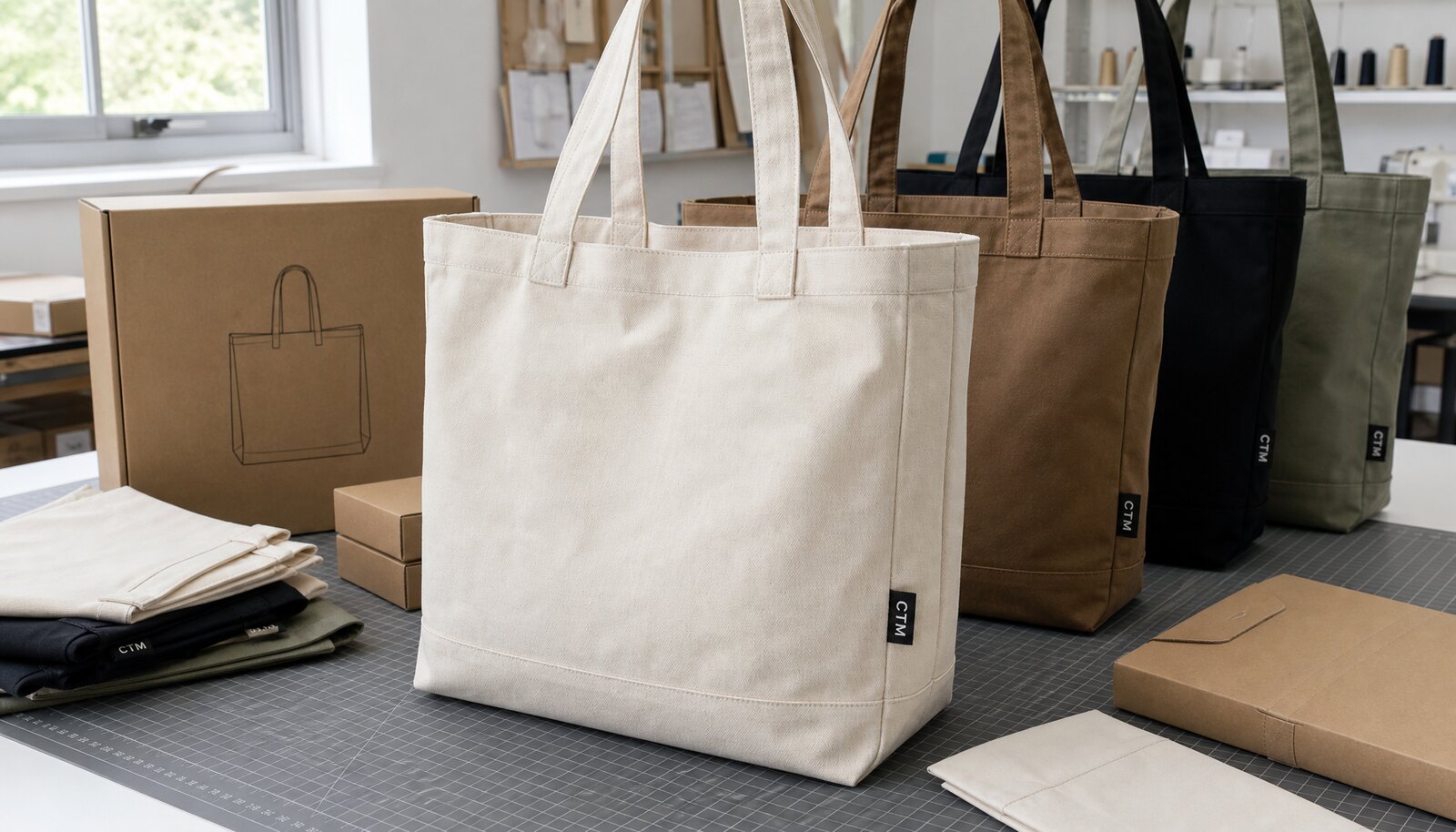
Start with the retail job, not the tote
When buyers source printed canvas shopping bags for retail chains and event giveaway planning, the first mistake is usually starting with artwork. The logo matters, but it is not the main commercial variable. The bag has to carry product weight, survive folding and redistribution, and still look intentional when it reaches a customer or store associate. A checkout handout, a seasonal launch tote, and a trade-show giveaway may all look similar in a catalog, but they solve different operational problems. If the use case is vague, every supplier can sound qualified while quoting a different product.
For retail chains, the right starting point is the point of use. Where will the bag be handed out? What is the normal fill weight? Will it be reused, or is it only meant for one event? Will it sit at checkout, be packed into a promo kit, or move through a warehouse-to-store flow? Buyers should also define the largest item the bag must take without strain, because that decision drives body width, gusset depth, handle reinforcement, and fabric weight. Once those operational details are fixed, the price conversation becomes much more precise.
A short procurement brief can prevent most of the ambiguity: campaign type, quantity by version, target ship date, expected load, and required pack format. That gives the factory a real basis for quoting instead of guessing. It also keeps a premium retail tote separate from a lower-cost event bag, which matters because those two programs should not compete inside the same forecast. The commercial question is not whether the sample looks good in a sample room. It is whether the bag performs at the point of use and still lands inside the buyer’s cost and timing target.
- Define the heaviest normal fill, not only the average fill.
- State whether the bag is a reuse item, a single-event giveaway, or a promo insert.
- Tell the factory where the bag will be used: checkout, event floor, campaign kit, or warehouse distribution.
- Separate retail chain orders from event giveaway planning before issuing the RFQ.
Set the load target and geometry before you price fabric
Size drives usability, but it also drives waste, freight, and sewing time. If the bag needs to take a shoebox, a folded apparel stack, or a bundle of sample items, the body width and gusset cannot be guessed from the logo layout. Buyers should specify finished dimensions first and only then let the supplier propose cutting dimensions that account for seam allowance and shrink behavior. A bag that is too narrow will look tidy on paper and fail in the field. A bag that is too large may carry well, but it can also inflate carton cube and freight cost.
Handle length and handle drop deserve the same attention. A short handle can be fine for a hand carry bag, but it is awkward if customers need to wear the tote over a shoulder or if store staff must move multiple bags quickly. Handle drop also affects how the bag sits when packed and how the logo is read when the bag is folded. If the program expects the bag to stand upright on a counter or shelf, a flat bottom and more structured gusset help. If it must pack tightly for distribution, the fold profile becomes part of the design, not just the packing step.
This is where buyers should insist on finished, measured values rather than marketing language. Ask for body width, body height, gusset depth, handle width, and handle drop in millimeters or centimeters, and ask the factory to confirm the allowable variance. If the program needs a closer fit, say so early; if it can tolerate a broader tolerance because it is an event giveaway, make that explicit too. A usable spec reduces sample churn and gives the supplier less room to substitute a different shape under a familiar name.
- Specify finished dimensions first, then cutting dimensions.
- Set handle drop based on the carrying method, not the artwork layout.
- Treat gusset depth and base shape as part of the load spec.
- Ask for measurable tolerances instead of a verbal promise that the bag is 'close enough'.
Choose fabric weight and sewing details for the actual failure mode
Canvas is a commercial decision as much as a material choice. For many retail chain programs, 10 oz to 12 oz cotton canvas is the practical range because it gives a recognizable canvas hand feel without making the bag too expensive or too bulky. A lighter build can work for low-load event giveaways, but the buyer should expect a thinner hand, more show-through of the weave, and less confidence for reuse. A 14 oz build belongs in heavier-fill or premium programs where the bag is part of the brand experience, not just a carrier.
Construction matters as much as fabric weight. A good-looking bag can still fail if the seam allowance is too narrow, the handle anchor is weak, or the bottom seam twists under load. Buyers should ask how the bag is sewn: self-fabric handles versus webbing, single-layer versus doubled handle, stitched seam versus reinforced bottom, and whether stress points use bar-tacks or a box-X pattern. For heavier fill, handle reinforcement is not optional. If the bag is meant to hold dense merchandise, the buyer should also ask for the test load that the factory uses internally and whether it is relevant to the actual use case.
Fabric behavior is another hidden variable. Dyed canvas, bleached canvas, and natural canvas do not age the same way, and different mills can produce the same nominal weight with different density and hand. Buyers should ask whether the fabric has been pre-shrunk, whether shrinkage is part of the spec, and whether the same mill lot will be used on a reorder. If the answer changes by batch, the supplier should say so upfront. That is not a deal-breaker, but it is a signal that the buyer needs a formal approval sample and should not treat reorder continuity as automatic.
- 10 oz: suitable for low-load giveaways and lower price targets.
- 12 oz: the most balanced default for retail chains.
- 14 oz: better for premium programs and heavier merchandise.
- Use reinforced handle anchors if the bag is expected to be reused.
- Ask whether the fabric is pre-shrunk, and if not, how shrinkage is controlled.
Pick the print method by artwork complexity and handling life
Screen print remains the most useful method for most printed canvas shopping bags because it performs well on bold logos, spot colors, and repeat orders. It also tends to be the cleanest path when the chain wants a stable price after setup is spread across volume. The limitation is texture and detail. Thin lines, small reversed type, soft gradients, and artwork that sits too close to seams are the places where screen print starts to look rough on canvas. If the logo is simple and the order is large, screen print is usually the commercial default.
Transfer and DTF-style methods have a place, but they should be chosen for a reason. They can reproduce finer detail and are often easier to set up for short runs or frequent artwork changes. The buyer should not assume that detail equals durability, though. A transfer that looks crisp on day one can fail after folding, stacking, or repeated handling if the adhesive, press settings, or finish are weak. That is why a flat approval sample is not enough. The factory should provide a folded-pack sample and, ideally, a sample that has already been handled enough to show whether the edges lift or the surface cracks.
Artwork rules matter. Buyers should ask for a strike-off or proof on actual canvas, not just a digital proof on paper stock. If the logo crosses a seam, gusset, or handle area, the risk of registration shift rises fast. A supplier that can explain curing, color matching, and registration control is more credible than one that only says the print 'looks fine'. For chain programs, the safe move is to limit artwork complexity to what the material can hold consistently, rather than forcing a fragile design into a production method that was built for simpler graphics.
- Screen print is usually best for simple logos and repeatable chain programs.
- Use transfer or DTF only when the artwork or run size really needs it.
- Review a strike-off on actual canvas, not just a digital proof.
- Ask how the factory handles cure temperature, registration, and artwork near seams.
Use a comparison table that separates product choice from sourcing route
A useful sourcing decision starts when procurement compares suppliers on the same commercial basis, not just on the same bag name. One way to do that is to separate the product choice from the sourcing route. A 12 oz screen-printed tote is not the same buying decision as a direct-factory program, even if the factory name is hidden inside both quotes. Buyers need to compare landed cost, lead time, defect exposure, and documentation burden side by side so the cheapest quote does not win by hiding assumptions.
The comparison should include what is actually driving cost. Direct factory sourcing often wins on repeat programs because setup is transparent and the buyer can push on sewing, print, and packing as one production system. Trading companies can be useful when the buyer wants one contact across several SKUs, but the buyer must verify who really controls the factory and who signs off on changes. Domestic decorators are often the fastest option for event giveaways, but they may use stock blanks that reduce control over size, color, and fabric lot. The route matters because each one changes the amount of inspection and follow-up the buyer has to manage.
The same logic applies to product construction. A lighter bag may be correct for an event floor, but if the chain expects customers to reuse it, the buyer should compare the price of a 10 oz bag against the real cost of complaints, breakage, and low perceived value. A heavier bag may cost more to sew and ship, but if it reduces claims or supports premium brand presentation, that can be the better commercial answer. Procurement should judge the whole package, not only the unit price line.
- Compare landed cost, not just ex-factory price.
- Ask who actually sews, prints, packs, and signs off on the goods.
- Match the sourcing route to the urgency and repeatability of the program.
- Do not let a cheaper quote win if it hides setup, packing, or documentation costs.
Build an RFQ that produces comparable quotes
A good RFQ makes it hard for suppliers to quote a vague bag. It should state finished dimensions, canvas weight, fabric color, handle type, print method, artwork colors, pack format, delivery term, and quantity by version. If those details are missing, one supplier may quote a rough approximation while another quotes the exact build you need, and the comparison becomes useless. Procurement does not need more quotes; it needs comparable ones.
The quote should break out blank bag cost, print setup or tooling, packing cost, sample charges, and any export or carton-related charge that is not part of the piece price. That split shows whether the low unit price depends on high setup charges or a minimum order that is not obvious at first glance. If the program may reorder, ask for the repeat price without new tooling and ask whether the supplier will hold the same fabric, thread, and print process. Reorder stability is one of the most valuable numbers in the whole process, and many RFQs leave it out entirely.
For programs with multiple artwork versions or regional SKUs, request a line for each version rather than a blended price. That is the only way to see which art files are causing setup waste or production complexity. It also helps reveal whether a supplier is padding the quote for minor change management or whether the campaign genuinely requires multiple production runs. The best RFQ is not the longest one. It is the one that removes interpretation and leaves only real commercial variables on the table.
- Use one exact spec sheet and one reference sample per order family.
- Ask for separate lines for blank, print, packing, sample, and freight if applicable.
- Request price breaks at realistic quantity steps such as 1,000, 3,000, 5,000, and 10,000 units.
- Quote each artwork version separately if the campaign uses more than one design.
Compare supplier routes with landed cost, lead time, and paperwork
Direct factory sourcing is usually the best fit when the buyer wants control over fabric, sewing, print, and packing, especially for repeat retail chain programs. The advantage is not only lower price on a good month; it is also cleaner visibility into what is actually being made. That matters when the same bag will be reordered later or when the chain needs a documented approval trail. The buyer still needs to verify capacity and quality control, but once the spec is locked, direct factory sourcing usually offers the most stable production chain.
A trading company can make sense when the buyer is consolidating multiple items or wants one project manager across categories. The tradeoff is that the buyer may need to ask more questions to get to the real factory, the real print site, and the real change-control process. That adds documentation burden. It is not always a bad choice, but it should be used deliberately, not by default. If the sub-factory is disclosed and the sample chain is clear, the route can work well; if the supplier is vague about who does what, the buyer is taking on hidden risk.
Domestic decorators using imported blanks are useful when speed is more important than lowest landed cost. They can turn around an event giveaway quickly, and they are often easier for a buyer to communicate with on short timelines. The buyer should still ask where the blank came from, whether the size is stock or custom, and how print adhesion will be tested on the actual blank. This route is often acceptable for short campaigns. It is less ideal for a chain rollout that expects the same tote to be repeatable across stores, regions, or seasons.
- Direct factory: best for repeatability and tighter spec control.
- Trading company: useful only when the actual sub-factory and change control are disclosed.
- Domestic decorator: best for urgency and short-run event programs.
- Ask every route to prove where sewing, printing, and packing actually happen.
Set QC criteria that inspectors can execute without interpretation
Generic quality language is not enough for a tote order that will be received by a retail chain. The buyer needs measurable criteria that an inspector can apply on the line and at final inspection. Start with dimensions, print placement, stitching, and carton condition. Then define the acceptable deviation in writing. If the bag can move by a centimeter and still be acceptable, say so. If the logo must sit within a smaller window, say that too. Without written thresholds, inspection turns into opinion.
A practical quality structure uses three layers. First is appearance: color match, print sharpness, panel alignment, thread trimming, and seam neatness. Second is function: handle pull performance, seam integrity, bag shape under load, and whether the tote sits or folds as intended. Third is packing: count accuracy, SKU accuracy, barcode scan quality, label placement, and carton condition. Many buyers use General Inspection Level II with Critical 0, Major 2.5, Minor 4.0 as a baseline and then tighten the major rate for premium programs. The exact numbers should match the retailer's risk tolerance, but the defect classes should be written before production starts.
The key is to define failure modes rather than just defects. A print shifted five millimeters on a small logo may be more serious than a minor thread tail. A torn carton with a perfect bag is still a receiving problem if the chain cannot process it quickly. A cheap-looking tote that arrives with clean, consistent packing can still pass if that is the commercial target. QC is not about punishing cosmetic variation. It is about controlling the issues that matter to retail receiving and customer perception.
- Use a physical approval sample and written tolerances together.
- Define Critical, Major, and Minor defect classes before mass production.
- Inspect handle anchors, seam integrity, print placement, and carton accuracy.
- Write the acceptance rules so the factory and inspector use the same standard.
Test the failure modes that matter in the field
Visual inspection catches obvious mistakes, but the buyer should also test how the bag behaves when it is actually used. For handle strength, ask for a pull or load check during sampling and tie the pass criteria to the expected filled weight plus a margin. A tote meant to hold normal retail merchandise should not be tested only as a flat visual sample. It should be treated as a carrier that will be lifted, swung, stacked, and folded. If the bag will be reused, ask for a durability check that includes repeated handling.
Print durability is another common failure point. A dry-rub test and a folded-pack rub test are useful because the bag is rarely stored pristine. If the artwork is large or the bag is intended for repeat use, a wet-rub or wash-related check may be worth specifying where relevant. The exact test method can vary by factory, but the buyer should define the acceptance logic in advance: no obvious smear, no edge lift, no major cracking, and no transfer to the adjacent bag or carton surface. If the print uses multiple colors or a transfer layer, check the edges and seams carefully.
The carton deserves its own test. A tote can pass every garment-level check and still arrive damaged if the carton is too weak, too full, or poorly taped. Buyers should ask for a carton drop or transit check that matches the route, especially if the shipment moves by air or spends time in humid storage. For event giveaway planning, also check the bag after fold and refold because staff often open cartons, inspect one piece, and repack them. The sample that looks best on a table is not always the one that survives distribution.
- Ask for a load or pull check at the sample stage.
- Use dry-rub and folded-pack rub tests for print durability.
- Add a wet-rub or wash-related check when reuse is part of the brief.
- Test carton handling if the route or storage conditions create risk.
Specify packing, labeling, and carton acceptance around receiving
Packing is one of the easiest places to lose time and money because the problem shows up only when the shipment lands. Retail chains care about how quickly receiving can count, scan, and move product to the floor or to a store-facing distribution flow. If the master carton contains a confusing fold, mixed counts, or weak labels, the receiving team spends time checking instead of stocking. That is why packing should be part of the product spec, not an afterthought.
Flat-packed cartons are usually the best default for chain programs because they are easier to count, stack, and move through a warehouse. Individual polybags may protect a printed surface or support a premium presentation, but they also add labor, material, and cube. If polybags are required, the buyer should say why: protection, shelf presentation, or contamination control. The carton spec should also cover master carton size, pack count, barcode placement, and whether the outer label needs SKU, color, quantity, country of origin, or all of the above.
Carton acceptance should be written in simple terms. The cartons should be dry, square, intact, and correctly taped. The count should match the PO. The label and barcode should scan cleanly. The carton should not be crushed, open, or contaminated. If the retailer has a rule about overs, shortages, or mixed cartons, that rule should be documented before packing starts. Good packing is not a cosmetic detail. It is a receiving strategy that keeps the goods from failing at the dock after they have already passed sample approval.
- Choose flat packing unless there is a clear reason for polybags.
- Write fold method, count, barcode content, and label text into the spec.
- Keep one SKU or artwork version per carton unless the retailer accepts mixed packs.
- Define carton acceptance as dry, square, intact, and correctly labeled.
Specification comparison for buyers
| Procurement choice | Best fit | Landed cost / lead time | Defect risk / documentation burden |
|---|---|---|---|
| Direct factory, in-house sewing and printing | Repeat retail chain programs, 5,000+ units, and reorders that need stable spec control | Usually the best landed cost once setup is amortized; standard lead time if the spec is locked early and carton density is optimized | Lower risk of mid-order spec drift, but the buyer should still verify factory audit status, print ownership, sample traceability, and change control |
| Trading company with disclosed sub-factory | Multi-SKU consolidation or buyers who want one contact across several items | Convenient for bundled sourcing, but unit price is often higher and lead time can stretch if approvals move through several hands | Higher documentation burden because the buyer must confirm the actual factory, print location, and who signs off on change requests |
| Domestic decorator using imported blanks | Urgent event giveaways, smaller test orders, or launch timing that matters more than minimum unit cost | Fastest path to delivery, but landed cost can rise once blank bag cost, print labor, and domestic freight are stacked | Medium risk if blank stock changes by lot or supplier; buyer should demand proof of blank source and a folded-pack adhesion test |
| 10 oz natural canvas, 1-color screen print | Light handouts and lower-cost event programs | Lowest entry price and good freight density, but the bag is more likely to feel thin and show weave texture through the ink | Moderate risk if the print area is large or the logo has fine detail; request a sample on actual canvas, not paper |
| 12 oz natural canvas, 1-3 color screen print | Default choice for many retail chains | Best balance of unit cost, freight efficiency, and perceived quality; often the easiest spec to repeat cleanly | Moderate documentation burden; still needs clear tolerances, print placement control, and carton label accuracy |
| 14 oz canvas or reinforced construction | Premium retail programs and heavier fills | Higher material and sewing cost, larger carton cube, and sometimes slower output from the sewing line | Lower functional risk after approval, but buyers should inspect seam strength, handle anchoring, and packing efficiency carefully |
| Screen print with spot colors | Bold logos and repeatable chain programs | Best unit economics once setup is amortized, especially for one to three colors | Lower print risk when artwork is simple, but buyers should verify cure quality, rub resistance, and registration against seams |
| DTF or transfer print | Short runs or artwork that needs finer detail | Faster setup and more flexibility for artwork changes, but the premium can be higher on long runs | Higher rub and fold risk, so the buyer should insist on folded-pack testing and clear durability acceptance criteria |
Buyer checklist before sampling
- Finished bag size with tolerances for body width, body height, gusset depth, handle length, and handle drop
- Canvas weight in oz and gsm, plus whether the fabric is natural, bleached, dyed, or prewashed
- Thread type, seam allowance, stitch density target, and handle reinforcement pattern such as box-X or bar-tack
- Print method, Pantone targets, minimum line weight if the artwork is fine detail, and the approved artwork version number
- Sample chain: artwork proof, pre-production sample, physical reference sample, and packed carton sample
- Packing spec: fold method, polybag requirement or no polybag, inner pack count, master carton count, carton dimensions, and label content
- MOQ by size, color, and artwork version, plus setup charges, tooling if any, and price breaks at higher quantities
- Delivery term, ship window, inspection level, and whether the quote includes inland freight, export docs, or only FOB
- Document control: approved PDF spec, photo of the signed sample, and written change-notice rules for reorders
- Compliance and receiving data if needed: country of origin marking, SKU code, barcode format, and carton master label text
Factory quote questions to send
- Is printing done in-house? If not, which site actually prints, packs, and signs off on the final goods?
- What is the exact fabric spec being quoted, including oz, gsm, weave, and finished fabric width before cutting?
- Can you confirm finished dimensions with tolerances, not just nominal cut size?
- How many colors, screens, plates, or print setups are included in the unit price?
- What is the MOQ by size, color, and artwork version, and what are the price breaks at 3,000, 5,000, and 10,000 units or your nearest commercial ladder?
- Please separate blank bag cost, print cost, packing cost, sample fee, and any carton or export-document charge on the quotation.
- What packing format is quoted: fold method, polybag use or no polybag, carton count, carton dimensions, and label or barcode content?
- What QC evidence can you provide before shipment: inline photos, final inspection report, carton count photos, and a sample reference photo?
- What is the production lead time after artwork approval and sample approval, and what specific items can extend it?
- If we reorder later, which parts of the spec are locked, and which parts may change because of fabric lot, trim availability, or factory capacity?
Quality-control points to confirm
- Finished bag size should stay within the agreed tolerance; many programs use about +/- 1 cm on body dimensions and +/- 0.5 cm on handle length or handle drop unless the retail spec is tighter.
- If the program is repeatable, the supplier should state whether the same fabric mill, thread, and print process will be used on reorders, or whether substitution rules apply.
- Handle stitching should show no skipped stitches, broken thread, open ends, or loose tails; define the reinforcement pattern in writing and inspect both sides of each handle anchor.
- Set a minimum stitch density in the spec if the bag depends on seam strength; many buyers use a clear SPI target on body seams and reinforced anchoring at stress points.
- Print placement should remain within the stated offset from center or edge, and color should be checked against the approved physical sample under the agreed light source.
- Screen print adhesion should pass a dry-rub test and a folded-pack rub test with no major smearing, cracking, or transfer to adjacent bags or carton surfaces.
- For higher-risk programs, ask for a pull or load check at the sample stage and define the pass criteria against the expected filled weight plus a margin, rather than using a vague pass/fail statement.
- Inspect canvas for holes, heavy slubs in visible areas, oil stains, weak weave sections, and obvious color contamination; define what counts as a minor versus major defect before mass production.
- Use an AQL plan for shipment inspection when order size justifies it; many buyers start with General Inspection Level II and set Critical 0, Major 2.5, Minor 4.0, then tighten the major rate for premium retail programs.
- Cartons should be square, dry, correctly taped, and labeled with the right SKU, color, count, and barcode; receiving failure on count or label accuracy should be treated as a nonconformance, not a cosmetic issue.