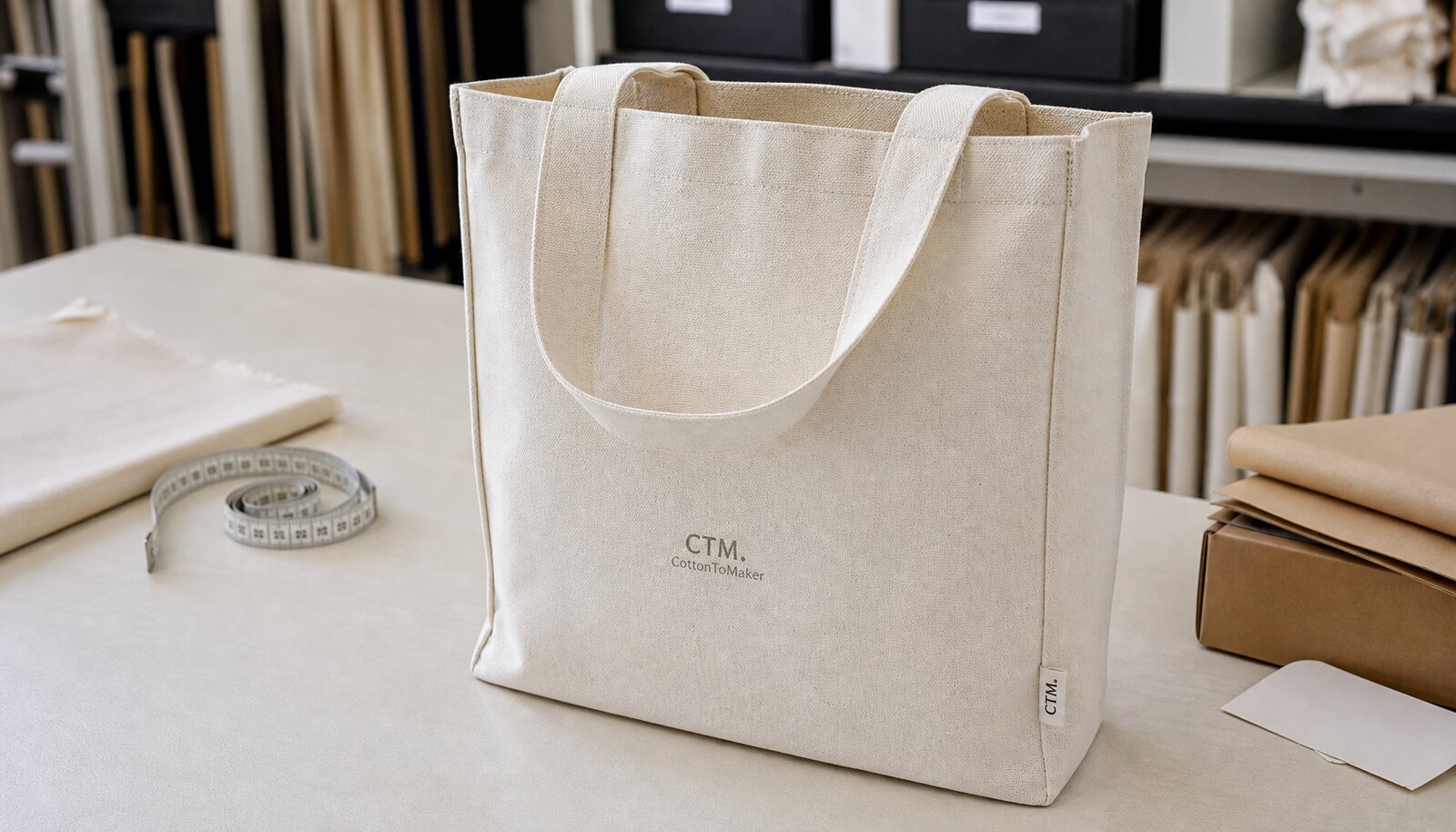
1) Start with the event job-to-be-done, not the tote bag
Printed canvas shopping bags for wineries event giveaway planning works best when the buyer starts with the use case instead of the decoration. A bag for a spring release tasting does a different job than a bag for a wine festival registration desk or a VIP club mailing. One may only need to hold brochure packets and a tasting card; another may need to carry one or two bottles, a corkscrew, and a smaller branded insert. That difference changes the fabric weight, the gusset, the handle reinforcement, and even the carton pack method.
Procurement teams get better quotes when they describe how the bag will be handed out, what it must carry, and how long it should stay in use. For example, an event-only giveaway can accept a lighter construction if the pack-out is efficient and the bag is still visually clean on the table. A cellar-door retail bag needs a stronger handle attachment and a more polished print because it will be compared directly against competing merchandise. If the winery wants repeat use after the event, the bag must feel stable enough to survive folding, storage in a car, and repeated bottle carry.
That is why the first buyer-side question is not ‘How much for a printed tote?’ It is ‘What functional threshold must this bag meet?’ If the bag will hold wine bottles, define the bottle count and approximate load. If it is for literature and small gifts, define the largest item size and the expected carry duration. Once those parameters are fixed, supplier quotes become much easier to compare and much less likely to hide shortcuts in the build.
- Define the event type: tasting-room giveaway, festival handout, club gift, or retail sale.
- Define the carry load: literature only, one bottle, two bottles, or mixed gift contents.
- Define the service life: single-event use, seasonal reuse, or retail resale.
- Define the presentation level: bulk distribution, wrapped gift, or shelf-ready merchandise.
2) Specify the canvas like a procurement buyer, not a catalog shopper
The biggest sourcing mistake is accepting the word canvas without the numbers behind it. Canvas can describe a wide range of fabrics, and two suppliers may use the same label while offering very different hand feel, opacity, and seam behavior. For most winery giveaway programs, 10 oz / about 340 GSM is a practical baseline because it balances cost, body, and print stability. It is strong enough to feel like a real reusable item, but not so heavy that printing, folding, and freight become unnecessarily expensive.
When the bag needs a premium feel or regular bottle carry, 12 oz / around 400 GSM often makes more sense. The extra weight gives a firmer stand-up profile and reduces the flimsy impression that some buyers want to avoid at a tasting event. If the order is highly cost-sensitive and the bag is only carrying brochures or a light event insert, 8 oz / about 280 GSM can be acceptable, but procurement should treat it as a lighter-duty promo tote rather than a premium winery bag.
Buyers should also ask how the fabric is finished. Pre-shrunk, washed, or enzyme-treated canvas may behave differently from untreated canvas after production or use. Shrink control matters because a tote that looks correct in a sample but pulls in after packing or handling can throw off print placement and size compliance. If the supplier cannot tell you the expected shrink range or how they control it, the quote is not complete enough to award on price alone.
A usable quote should name the fabric weight, weave type, fiber blend if relevant, and any finishing treatment. If a supplier only writes ‘canvas bag’ without the GSM, shrink allowance, or finish, the buyer should assume the offer is not fully specified.
- 10 oz / 340 GSM: common starting point for winery event giveaways.
- 12 oz / 400 GSM: better for bottle-carry confidence, retail feel, and repeated use.
- 8 oz / 280 GSM: viable for light handouts, but less premium and less rigid.
- Ask for shrink control details if the bag must keep exact dimensions after packing or use.
3) Construction details that separate a decent tote from a return-risk tote
The construction spec is where a lot of buyer risk sits, because it is easy to overlook until the first batch arrives. A winery giveaway bag may look fine in a photo and still fail on the floor if the side seams are weak, the handles are attached too close to the edge, or the seam allowance is too narrow. If the bag will carry glass bottles, the buyer should care about the stitch pattern and the reinforcement points as much as the print itself.
A practical spec should identify the seam type, the seam allowance, the handle attachment method, and where reinforcement is added. For example, side seams should be straight and consistent with no puckering; bottom seams should not twist the bag body; handle joins should use a box stitch or bar-tack style reinforcement if the load will be more than light paper goods. Self-fabric handles are economical, but webbing handles can be more comfortable and may hold shape better under repeated use. If the handles are long enough for shoulder carry, confirm that the join point does not cut into the top edge of the bag or distort the print area.
Buyer-side decision thresholds help a lot here. If the bag needs to support bottles, ask for a real load test rather than relying on sample feel. If the event is high visibility, require cleaner corner finishing and less visible thread trimming. If the bag is being sold, not given away, require more even seam lines and tighter stitch consistency because consumers will compare it with retail merchandise. A bag can still be acceptable if it has a rustic canvas texture; it is not acceptable if the seams look careless or the handle points show asymmetry.
When you send a PO, name the construction points explicitly: seam allowance, stitch density, handle length, reinforcement style, and acceptable loose-thread level. This is the fastest way to avoid later arguments over what ‘standard quality’ means.
- Specify seam allowance and seam type, not just the bag size.
- Require handle reinforcement at the load-bearing point.
- Confirm whether handles are self-fabric or webbing and how that affects comfort.
- Use a load test or weight-equivalent check for bottle-carry orders.
4) Print method choice should follow artwork complexity and event volume
For winery branding, the decoration method should be chosen for repeatability first and creativity second. A simple logo, winery name, and event date usually fits screen print very well. Screen print is still the easiest method for opaque, durable coverage on natural canvas, especially when the design is one or two colors. It is also a supplier-friendly method because the setup is predictable and the unit cost typically improves as quantity increases.
Digital print can work when the artwork includes gradients, fine illustration, or multiple colors that would make screen setup expensive. But buyers should be honest about how that artwork will look on coarse canvas. Tiny text can soften, thin lines can break, and color shading can appear less even than it does on a screen proof. Heat transfer or similar decoration methods may solve some short-run issues, but they also add another layer of dependency on adhesive performance and folding durability. If the bag is going to be handled repeatedly at an event, the buyer should ask what happens when the print is creased, rubbed, or packed tightly into a carton.
A smart sourcing rule is simple: if the design can be simplified without hurting the brand, simplify it. A winery logo, estate name, and event line usually deliver more value than a visually complex image that prints weakly. Keep letter sizes large enough for the weave, avoid ultra-thin serifs, and keep the logo clear of seam lines or corners. If the art must be complex, ask for a printed sample on the actual canvas, not just a color proof on paper or screen.
The decision threshold should be based on real-world visibility. If a guest can read the bag from arm’s length in normal event lighting, the print is probably acceptable. If the print needs careful inspection to understand the logo, the artwork is too detailed for the chosen method or the chosen fabric.
- Best default for most winery programs: 1-2 color screen print.
- Use digital print only when the artwork complexity justifies the higher process risk.
- Avoid fine lines and tiny type on textured canvas.
- Ask for actual print on actual fabric before approving a complex design.
5) Compare suppliers by operating model, not just by unit price
A buyer usually has three sourcing routes: direct factory, trading company, or local decorator. Each one can be right in a different situation, but they do not carry the same level of control. Direct factory sourcing is the strongest option when the winery needs repeatable construction, consistent print, and a clear chain of responsibility for sewing, printing, and packing. If the bag will be reordered for multiple seasonal events, direct factory control usually pays off because the buyer can hold the same approved sample and construction spec over time.
A trading company can be useful when the winery needs a broader promotional package, mixed accessories, or help coordinating multiple SKUs in one shipment. The tradeoff is that the actual factory may sit behind the sales layer, which can make it harder to verify fabric lot control, sewing quality, or reorder consistency. The buyer should ask who owns the artwork file, who owns the screens or print plates, and who will handle a defect claim if the product arrives outside spec.
Local decorators are often the fastest option for a very small run or an emergency event order. They may be convenient when the event is close and the quantity is not large enough to justify overseas production. The limitation is that the blank bags may come from elsewhere and the decoration line may not be designed for heavier canvas. If you choose this route, check the blank bag source, the print durability, and whether the decorator can document the actual finished dimensions and materials.
The key procurement lesson is to compare risk along with price. Two quotes with similar unit cost can have very different service outcomes if one supplier controls the full bag build and the other only decorates a pre-bought blank.
- Direct factory: best for construction control, repeat orders, and export documentation.
- Trading company: useful for bundled programs, but verify actual manufacturing control.
- Local decorator: fast for short runs, but often weakest on bag construction visibility.
- Ask who holds the artwork file, screens, and reorder baseline.
6) MOQ, schedule, and seasonal demand need to be planned together
MOQ is not a single fixed number in the tote market. It changes with size, fabric weight, handle type, number of print colors, labels, and whether the factory needs a new cutting layout or a new screen. A buyer who asks for a one-color logo on a standard size bag may get a workable MOQ. The same buyer may see a higher minimum if the order includes a side gusset print, custom inner label, or premium packing. That is normal, but it has to be visible in the quote.
For wineries, the order schedule often follows the event calendar: spring releases, summer tasting events, harvest season, holiday gifts, and club shipments. That means one large order may be more efficient than several small urgent orders, especially if the artwork stays the same. If the design is stable, consolidating volume can reduce setup costs and lower the chance of rework. If the event dates vary, the buyer should consider a base stock strategy: produce the same bag once, warehouse it, and draw down inventory as events occur.
The schedule is usually where procurement teams lose time. The longest delay is often not sewing; it is artwork approval, sample revision, or late changes to pack-out. A useful planning model separates sample time, production time, and freight time. That keeps the team from assuming the supplier can start the job the same day the quote is accepted. It also helps identify whether the winery needs air freight, sea freight, or a split shipment based on the event deadline.
If the event date is immovable, freeze the specification early. Late changes to artwork size, handle length, or packaging format are among the most common reasons a tote order misses the handout window.
- MOQ rises with more colors, more custom features, and more packing labor.
- Consolidate stable artwork into one run when the event calendar is seasonal.
- Separate sample time, production time, and freight time in the schedule.
- Freeze the spec early if the event date cannot move.
7) Quote structure: make every supplier answer the same cost questions
A useful quote should be broken into parts that can be compared line by line. At minimum, ask for the unit bag price, print setup cost, per-color charge, sample fee, carton cost, and shipping basis. If those items are blended into one number, it becomes difficult to see whether a low unit price is hiding a large setup fee or whether a cheap quote depends on cutting corners in packing. Procurement buyers need the quote to show where the money goes, not just what the total is.
This matters even more for winery giveaways because the finished bag can be used in different ways. A bag that looks inexpensive on an ex-factory basis may become expensive once you add inner polybags, barcode labels, special carton marks, and freight on a bulky carton cube. If the bags are being shipped with other promotional merchandise, carton size can also affect the shipment plan. A slightly more expensive bag with better carton efficiency may actually produce a lower landed cost than a bargain bag with a poor fold and oversized cartons.
A fair quote comparison should use the same artwork, the same bag size, the same fabric weight, and the same packing instruction. If one supplier quotes a 10 oz bag in bulk pack and another quotes a 12 oz bag in individual polybags, the numbers are not comparable. Buyers should ask suppliers to restate the offer in the same format if needed. That extra step saves time later and avoids purchasing a bag that looks cheap only because the specification was not normalized.
The best procurement practice is to calculate cost per usable giveaway unit. That means dividing total spend by the number of bags that will actually be handed out, sold, or included in gift bundles. It is a more honest metric than unit price alone.
- Request line items for bag price, setup, sample, packing, and shipping basis.
- Normalize size, fabric weight, print method, and pack method before comparing quotes.
- Check carton cube because canvas totes are light but bulky.
- Compare cost per usable bag, not just the ex-factory figure.
8) Quality control needs measurable acceptance criteria, not general promises
QC is where many tote orders become either repeatable or frustrating. A good supplier may say the bags are ‘good quality,’ but procurement teams need measurable acceptance criteria. Start with the approved sample and make it the baseline for production. The finished bag should match the sample on size, shape, handle placement, print position, and overall hand feel. If the sample is not retained, it becomes harder to prove that the production lot drifted.
For dimensions, define a tolerance that your team can actually inspect. For many tote programs, buyers set size limits of roughly +/- 0.5 cm for smaller bags and about +/- 1.0 cm for larger bags, but the exact tolerance should be written into the PO or spec sheet. For print registration, the practical rule is that the logo should remain clearly away from the seam, gusset, and handle stitch lines, with no clipped letters or visibly skewed placement. If you want a numeric limit, define one by measuring from the centerline or top edge on the sample and requiring the same on production pieces within a small tolerance.
Stitching also needs a standard. A visible seam should have even stitch density, no skipped stitches, and no loose thread tails that catch in the hand. Many buyers ask the supplier to state a stitch density target, often around 6-8 stitches per inch for visible seams depending on the construction. For handle reinforcement, do not accept a vague promise. Ask for a box stitch, bar tack, or equivalent reinforcement method, and then inspect that it appears on both the sample and the bulk pack. If the bag will carry bottles, perform a simple load test on the sample and check that the handle join and top seam do not deform excessively.
Color control matters too. Natural canvas can vary by batch, so the buyer should approve against a physical master sample instead of a digital image. If exact brand color is critical, ask the supplier how they control ink batch, fabric batch, and reprints. For the final packing check, confirm carton count, carton marks, and overall cleanliness. Dust, oil marks, loose fibers, and cutting debris are not acceptable in a direct giveaway bag because the guest will see them immediately.
AQL language can help if your purchasing team uses it. Even if you do not write a full AQL table into the PO, define the acceptable defect categories and the inspection level so the factory knows what will be checked. That makes the inspection less subjective and reduces disputes after arrival.
- Use the approved physical sample as the production baseline.
- Write a clear size tolerance and a clear print placement tolerance.
- Require a defined handle reinforcement method, not just ‘strong handle.’
- Inspect stitch density, loose threads, stains, print drift, and carton count.
- Ask for an AQL or inspection plan if the order is large enough to justify one.
9) Packing, carton cube, and warehouse handling can change the real cost
Canvas tote bags are light, but they are not compact unless they are folded and packed well. That means packing decisions affect freight, warehouse space, and event-day speed. Bulk packing is usually the most efficient approach for giveaway programs because it lowers labor and keeps the carton cube under control. If the event team just needs to pull bags from a box and hand them out, overpacking creates cost without adding value.
Individual polybags are only worth the expense when presentation or cleanliness matters enough to justify the labor. For a retail-resale bag or a premium club gift, a neat polybag may make sense. For a conference table handout, it usually does not. Buyers should also ask the supplier how the bags are folded. A bulky or inconsistent fold can make the carton larger than expected and can create wrinkles that affect first impression at the venue.
Carton specifications should be discussed before the order is approved. Ask for outer carton dimensions, gross and net weight, carton count, and whether the factory can optimize the carton for standard pallet sizes or courier limits. If you are shipping mixed promotional products, carton marks should identify the event SKU, quantity, and color clearly enough for receiving staff to sort quickly. A carton that arrives intact but unlabeled can still create delay on event week.
For wineries that store stock between events, carton stackability matters. A tidy carton pattern, consistent fold, and clean marks can save labor every time the warehouse team picks an order. This is often overlooked because the bag itself is low in unit price, but the handling cost repeats every time the bag moves.
- Use bulk packing when the bag is a giveaway, not a retail item.
- Use individual polybags only when presentation or dust protection justifies the cost.
- Request carton dimensions, carton weight, and pallet compatibility.
- Specify clear carton marks for event SKU, color, and quantity.
10) A practical buyer playbook for wineries placing the order
Before awarding the PO, align the internal team on what cannot change. That includes canvas weight, bag size, handle length, print colors, and the event delivery date. If those are still open, quotes will remain unstable. Then request a sample pack from the preferred supplier or finalists: fabric swatch, blank sewn sample, and printed sample if possible. Those three items tell you much more than a product photo or a polished sales deck.
Once the sample is in hand, test the details that matter to the event. Put in the expected load, fold the bag the way it will be folded for distribution, and check whether the print still reads cleanly after handling. If the winery staff will pull bags from cartons at the event, inspect whether the packing is easy to open and whether the first bags in the carton look presentable. Operational details matter here because event staff are not QA inspectors; they need the product to work without extra sorting.
Before final approval, ask for a production timeline that lists artwork sign-off, sample approval, cutting, printing, sewing, packing, and shipment. If the supplier cannot give stage-by-stage timing, the schedule risk is higher. You should also ask whether a reorder can use the same screen, fabric source, and carton spec. That one question matters because a good first order is only valuable if the second order can match it.
For winery event giveaway planning, the best bag is the one that arrives on time, looks consistent, carries the right load, and fits the budget without hidden packing or freight surprises. That is a procurement result, not just a product result.
- Freeze the spec before you ask for final pricing.
- Request a sample pack: swatch, blank sewn sample, and printed sample.
- Test the bag with the intended carry load and folding routine.
- Get a stage-by-stage production timeline in writing.
- Confirm reorder continuity for fabric, screens, and carton spec.
Specification comparison for buyers
| Sourcing / spec scenario | Best-fit option | Why buyers choose it | What to verify before award |
|---|---|---|---|
| Direct factory, standard event run | 10 oz / 340 GSM canvas, 1-color screen print, bulk pack | Best when the artwork is stable, the event date is fixed, and the buyer wants the cleanest control over stitch, print, and carton packing | Confirm seam allowance, bar-tack count, shrink allowance, and whether the factory owns the sewing line and print line |
| Direct factory, higher-use VIP or retail bag | 12 oz / 400 GSM canvas, reinforced handles, 1-2 color screen print | Better hand feel and load confidence for bottle carry, club gifts, and bags that should be reused after the event | Ask for handle reinforcement detail, stitch density, and a physical sample with loaded-bag testing |
| Trading company, mixed promotional program | Standard canvas tote sourced with bundled accessories | Useful when the winery wants one purchasing point for bags, bottle openers, tags, or gift sets | Verify who actually manufactures the bag, whether the fabric lot is controlled, and how claims are handled if defects appear |
| Local decorator, short-run emergency order | Blank canvas bag with local print or transfer | Fast for small quantities when an event date is near and the order is too small to justify factory setup | Check print durability, blank bag origin, and whether the local decorator can document dimensions, material, and wash/shake stability |
| Low-MOQ factory quote | Same size and fabric, simplified decoration, minimal packing | Helps when the winery is testing a new event concept or only needs a pilot quantity | Watch for hidden surcharges, substituted fabric weight, shorter carton fill, or weaker QC due to the small run |
| Export shipment with tight freight budget | Compact carton pack, bulk poly packing only if needed, optimized folded size | Reduces volumetric freight and makes receiving easier when bags ship with other SKUs | Request carton dimensions, gross/net weight, and master carton count before approving the PO |
| Retail-resale presentation | Individually polybagged bag with barcode label and cleaner fold | Appropriate when bags are sold at the cellar door or included in a premium gift bundle | Confirm labor charge, scratch protection, and whether polybagging changes carton cube or lead time |
| Multi-event seasonal program | Shared base bag with date-specific insert or hangtag | Allows reuse of the same base product across spring release, harvest, and holiday events | Make sure reorders keep the same print screen, fabric lot, and color reference, or define allowed shade variation |
Buyer checklist before sampling
- Lock the event use case first: bottle carry, literature handout, retail sale, or VIP gift.
- Approve bag size, gusset depth, handle length, and canvas GSM before requesting quotes.
- Require the supplier to state stitch type, seam allowance, bar-tack detail, and reinforcement points.
- Use one artwork file and one print placement spec so all quotes are directly comparable.
- Ask for a physical pre-production sample or sewn sample with actual print, not only a digital proof.
- Set measurable acceptance criteria for dimensions, print registration, color variance, and defect count.
- Confirm carton size, carton count, master pack arrangement, and pallet pattern if shipping by sea or consolidating freight.
- Ask whether the supplier can hold the same fabric lot and print screen for future reorders.
- Build schedule buffer for artwork approval, sampling, pre-shipment inspection, and freight delay.
- Compare landed cost per usable bag, not only the ex-factory unit price.
Factory quote questions to send
- What exact canvas specification are you quoting: GSM, weave density, fiber blend, and expected shrinkage after finishing?
- What seam construction do you use on the side and bottom seams, and what seam allowance is built into the pattern?
- How are the handles attached: single stitch, double stitch, box stitch, or bar-tack reinforcement, and what stitch count do you target per inch?
- Can you quote the same bag at 8 oz, 10 oz, and 12 oz so we can compare hand feel and freight impact on the same size?
- What print method are you proposing, how many colors are included, and what is the setup charge per color or screen?
- What print registration tolerance can you hold between the logo and the seam or gusset line?
- What is the finished size tolerance for width, height, and gusset depth after pressing and packing?
- What color variance can you accept against the physical approved sample, and do you control shade by fabric lot?
- What AQL or inspection standard do you use for sewing, print defects, stains, loose threads, and carton count?
- Can you provide a full sample pack: fabric swatch, blank sewn sample, and printed pre-production sample?
Quality-control points to confirm
- Fabric weight should match the approved GSM within the supplier's stated tolerance; require a mill report or weigh-cut method if the order is large enough to justify it.
- Finished dimensions should stay within the agreed tolerance, commonly set buyer-side at about +/- 0.5 cm for small totes and +/- 1.0 cm for larger canvas bags; define your own limit in the PO.
- Handle attachment should show even stitching, no skipped stitches, no loose tails, and no uneven twist; inspect both the top join and the load-bearing points.
- Specify a minimum stitch density such as 6-8 stitches per inch for visible seams unless the supplier's construction method requires otherwise, and confirm that the same density appears on samples and bulk goods.
- Run a simple pull check on the handle attachment during sample approval; many buyers ask for a practical load test such as carrying 2-4 standard wine bottles or an equivalent weighted load for several minutes without seam failure.
- Print registration should keep the logo clear of seams, gussets, and handle stitches; a practical buyer-side acceptance target is no obvious shift visible at arm's length, and no cutoff of letters or icon edges.
- Color variance should be approved against a physical master sample under normal daylight; for branded natural canvas, set an allowed delta only if your team can measure or visually sign off on it consistently.
- Ink should not flake, crack heavily, or smear after a fold-and-rub test; slight texture break on coarse canvas is acceptable, but failure at the logo edge is not.
- Carton count should reconcile exactly to the packing list, with no mixed SKUs unless the carton mark and case pack were preapproved.
- Reject bags with oil marks, heavy dust, fabric snags, open seams, or sharp thread ends that would be visible at tasting-room handout distance.