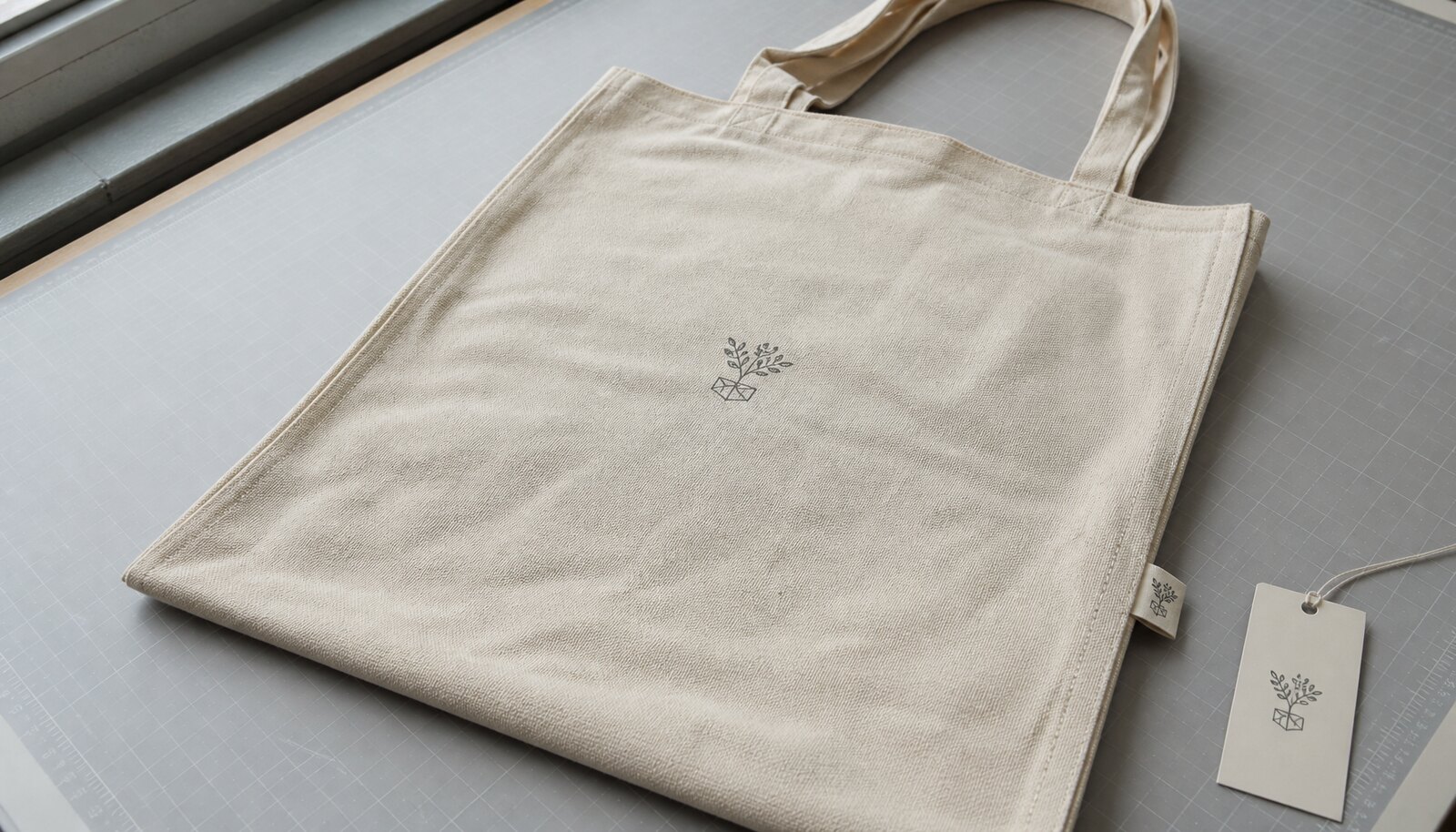
Why subscription box buyers should treat the bag as part of the pack-out, not as merchandise
A printed canvas shopping bag can be a useful packaging component, but only if it fits the subscription box workflow. It may hold inserts in place, create a reusable touchpoint after delivery, or support a premium unboxing sequence. The operational question is not whether the bag looks good in a mockup. It is whether the bag can be produced consistently, folded into the carton cleanly, and printed in a way that survives handling from factory to customer.
That is why buyer teams should define the bag’s role before comparing quotes. An insert bag is usually judged on foldability, print stability, and carton fit. A reusable retail-style tote needs better handle strength and more forgiving construction. A premium gift bag may justify specialty decoration, but only if the design supports the added cost and inspection load.
The most common sourcing mistake is treating the bag as a standalone promo item. Once the bag becomes part of a subscription program, it affects carton cube, freight, kitting speed, and even defect tolerance. A low-cost bag can become expensive if it slows the fulfillment line or needs repacking because the print rubs off in transit.
- Define the bag’s job first: insert, reusable tote, or premium gift component.
- Match the bag size to the carton and the kitting sequence before you compare decoration quotes.
- Compare landed cost per delivered box, not only the ex-factory bag price.
Set the fabric spec before you compare print methods
Canvas weight changes how the bag folds, how it carries print, and how it feels in the customer’s hand. Light canvas is easier to pack and often cheaper to ship, but it can wrinkle more, show print texture more strongly, and feel less substantial. Heavier canvas gives a sturdier look, but the extra body can raise freight, increase sewing cost, and make carton planning less efficient. For many subscription programs, 10 oz to 12 oz is a practical middle ground, but the right choice still depends on the bag’s role and the contents it will carry.
Weight is only one part of the spec. Buyers should also ask for finished GSM or ounce weight, weave type, shrinkage allowance, and whether the cloth has been washed or pre-shrunk. These details matter because the bag can change slightly after cutting and sewing. If the print placement must line up with inserts or a specific fold, a small dimension shift can become a real production problem.
Structure matters just as much. Gusset depth, handle length, seam reinforcement, and the distance between the artwork and the seam all affect whether the bag prints cleanly and packs flat. A design that sits too close to a stress point may look fine on a flat sample but distort once the bag is filled or folded.
Use the fabric decision as the first screen in the sourcing process. If the cloth is too light for the load or too heavy for the carton, the print method will not fix the underlying problem. The best decoration process can only work well when the base bag is stable.
- 8 oz to 10 oz: useful for lighter insert programs and tighter freight targets, but it needs stronger QC on seams and print opacity.
- 10 oz to 12 oz: common choice for retail-ready subscription bags because it balances structure and packability.
- 12 oz to 14 oz: better for premium reuse and stronger body, but it increases freight and can change folding behavior.
How the main print methods compare in real buying terms
The print method should be chosen by artwork, volume, timeline, and tolerance for risk. Buyers often receive quotes that sound similar but are built on different decoration systems, so the first task is to separate sales language from process reality. A method that looks inexpensive on paper may require more sampling, more packing control, or more rework if the factory does not run it often.
Screen print remains the most procurement-friendly option for many printed canvas shopping bags for subscription boxes. It works well for bold logos and simple graphics, especially at repeat volumes. The strength of screen print is control: the setup is visible, the process is mature, and the outcome is usually repeatable when the supplier manages ink deposit and cure correctly. Its main limitations are complexity and detail. Thin lines, small type, and photo-like art need careful separations and can become expensive if the design keeps changing.
Water-based screen print is a good variant when the brand wants a softer textile feel. It can sit more naturally on canvas, but the buyer has to check opacity against the actual cloth shade. A pale ink on natural canvas may look acceptable in a sample photo and still read weakly in production. That is why strike-offs on the real fabric matter more than digital artwork proofs.
Heat transfer and digital direct print help when designs change often or when the artwork needs full color. They are useful for seasonal campaigns and short runs, but the buyer must watch for edge lift, fold-related scuffing, and process drift across canvas lots. These methods can reduce setup friction, yet they usually shift more control burden onto sampling and pack-out tests.
Specialty effects such as foil, puff, or embroidery can lift the perceived value of a bag, but they also add cost, process steps, and inspection time. In a subscription program, the question is whether that premium effect justifies the extra risk. Often it does only in limited-edition or high-margin campaigns.
- Screen print: best for simple logos, repeat orders, and lower recurring cost.
- Water-based screen print: softer hand feel, but require closer opacity and cure control.
- Heat transfer: useful for short runs and multi-color artwork, but test edge lift after folding.
- Digital direct print: strong for full-color variation, but sensitive to canvas consistency.
- Specialty decoration: use when the premium effect justifies more inspection and rework risk.
A buyer-side comparison table should include MOQ, lead time risk, and sample failure modes
Many supplier comparison tables stop at durability and color range. That is not enough for procurement. Buyers also need to know how the method behaves when MOQ is tight, whether the process tends to create sample failures, and how likely the schedule is to slip if one approval round is missed. The same method can be perfectly fine at 5,000 pieces and awkward at 500 pieces.
MOQ impact is often underestimated. Screen print can be economical at scale, but multiple colors or multiple SKUs can raise the minimum each time a new screen set is needed. Digital methods may be attractive for lower quantities because they avoid screen setup, yet the per-unit price may stay higher, especially if the supplier needs special pretreatment or manual finishing. Heat transfer can look flexible until the buyer learns that the supplier’s best pricing assumes a narrow artwork range or a specific transfer sheet size.
Lead time risk also differs by method. Screen print usually depends on file approval, sample approval, screen making, sewing, printing, drying, and packing. Digital or transfer methods can shorten the setup path, but they can still slip if the canvas lot changes or the press settings are not stable. For procurement, the important question is not which method is fastest in theory. It is which method the factory can repeat without revising the process every time the artwork changes.
Sample failure modes should be part of the decision, not a late surprise. A screen print sample may fail because the ink is too heavy, the registration is off, or the cure is weak. A transfer sample may fail because the edges lift after folding. A digital sample may look sharp on one cloth lot and soften on another. If the supplier cannot explain these failure modes before the order is placed, they are not fully controlling the process.
- Build MOQ into the method comparison instead of treating it as a separate issue.
- Ask which method has the most predictable approval cycle for your artwork complexity.
- Use sample failure modes as a procurement filter: if the supplier can’t name them, the process is probably not well controlled.
Ask better process questions: ink, mesh count, cure, and color control
Process questions are where you learn whether a supplier is actually making the bag or simply reselling it. For screen print, ask what ink family is used and why it was selected for the canvas weight. Water-based, plastisol, and other systems behave differently on absorbent cloth, so the supplier should be able to explain the choice in plain terms. Ask for the mesh count as well. Fine logos and thin text generally need different control than a broad one-color block.
Cure matters just as much as ink. Under-cured prints are one of the easiest ways to lose a good shipment after folding and packing. The buyer should ask for the temperature or press method used to dry or cure the decoration and how the factory checks that the cure is complete. A response like “it is dry” is too vague for a production order. The supplier should be able to describe how they validate cure and whether they test rubbing before packing.
Color control should be approved on the actual fabric, not on a flat art file. Natural canvas, unbleached canvas, and dyed canvas all change how a printed color looks. If the shade is important, ask for a strike-off on the final cloth and check it under the lighting that matches your approval environment as closely as possible. If the design includes multiple colors, ask how the factory manages registration and whether there is a standard tolerance for alignment.
- Ask for ink family, mesh count, and cure method on every screen-print RFQ.
- Request a documented temperature or dwell-time standard for curing or drying.
- Approve color on finished fabric, not on paper proofs alone.
- For multi-color artwork, confirm registration tolerance and how it is checked during the run.
Check the production route: in-house control usually reduces dispute risk
The route from sewing to printing to packing affects both cost and accountability. When one factory controls the whole process, it is easier to tie a defect back to a specific operation. That matters when the print area sits near a seam, when the cloth shrinks slightly, or when a fold line creates a visible mark. One team owns the bag and one quality record follows it through production.
Mixed production routes can still work, and sometimes they are the only practical way to get a special finish. But they create handoff risk. If sewing and printing happen in different locations, the bag may be printed before sewing, after sewing, or in a sequence that changes placement accuracy. That can affect how the seam meets the artwork and whether the print stays centered after the bag is folded.
If any step is subcontracted, ask for more than a yes-or-no answer. Request the names of the facilities, the step performed at each site, and which party signs off on the first-off sample. If the supplier cannot clearly explain ownership of the process, then the quote may be hiding real production complexity. For buyer teams, the risk is not only quality failure; it is also schedule slippage if one subcontracted step misses the approval window.
- Prefer one-facility control when the ship date is fixed and the bag will go straight into box packing.
- If steps are outsourced, ask who owns artwork approval, cure approval, and final inspection.
- Confirm whether the sample and the production run come from the same line or a different subcontractor.
Build the quote so landed cost is visible, not buried
A useful quotation should read like a production brief. At minimum, it should separate the base bag from decoration, setup, sampling, and packing. It should list the bag size, fabric weight, print method, number of colors or passes, and carton assumptions. If those details are missing, two quotes that appear close may actually represent different products.
Landed cost is where many buying mistakes happen. Canvas bags are bulky, and the fold method can change carton volume enough to affect freight or warehouse handling. A quote that assumes loose packing may look cheap until the buyer adds repacking labor or shipping cube. Ask for carton dimensions, bundle count, and the packed configuration the factory used to calculate the quote. If the supplier cannot show those assumptions, the landed-cost comparison is incomplete.
Buyers should also ask how much the price changes if the artwork changes slightly. Some suppliers can reuse screens or digital files if color count and size stay stable; others treat every change as a new setup. That difference becomes important in subscription programs where graphics may change by season or by box tier. A quote with transparent setup logic is easier to budget and easier to repeat.
- Require a line-item quote for fabric, sewing, decoration, setup, sampling, packing, and carton spec.
- Ask for price breaks at multiple quantities, not only one MOQ.
- Compare carton dimensions and bundle density because freight often decides the true winner.
- Confirm whether pre-production sample cost and sample freight are included or extra.
Treat packing and carton design as part of print quality
A strong print can still fail in the final stage if the bag is packed badly. Canvas bags are often folded, stacked, and compressed in master cartons. If the printed face rubs against another bag or the carton wall, scuffing and transfer can appear before the shipment even reaches the fulfillment center. For that reason, packing is part of the decoration specification, not a separate shipping afterthought.
Flat packing is usually the safer route for printed canvas shopping bags for subscription boxes. Buyers should define the fold direction, the inner bundle count, and whether the bag needs tissue, a polybag, or another separator to protect the printed face. If both sides are printed, ask the factory how they prevent abrasion between stacked bags. If only one side is printed, keep that face away from friction points during bundling.
Carton design matters as well. Overfilled cartons can compress fold lines into the print; underfilled cartons waste cube and increase freight. A practical quote should include the master carton dimensions and the expected packed volume, not just the bag dimensions. If the supply chain includes humidity or long ocean transit, moisture protection should be discussed before the packing spec is finalized.
- Specify fold method and direction so the printed face is protected during shipment.
- Define inner bundle count and master carton quantity.
- Add moisture protection if the route includes humidity or extended transit.
- Match packing to the kitting line so the bag can be inserted without extra scuffing.
Use QC to catch the defects that matter to buyers, not only cosmetic issues
QC should be written around measurable defects. A bag can look acceptable in a quick review and still fail the program if the print rubs off, the handle seam opens, or the artwork drifts after folding. Buyers should define critical, major, and minor defects before production starts. Critical defects include wrong artwork, wrong colorway, severe print offset, seam failure, contamination, or anything that would trigger a stop-ship decision. Major defects are functional or highly visible issues that reduce saleability. Minor defects are small cosmetic problems that do not affect use but may still matter if they appear repeatedly.
A simple sampling framework can reduce arguments later. Many buyers use an AQL 2.5 plan for major defects and AQL 4.0 for minor defects, or an equivalent buyer-approved approach. The exact number is less important than consistency: the factory and the buyer need the same defect definitions, the same sampling map, and the same stop-ship threshold. If a carton shows print transfer, the lot should be contained before it leaves the factory.
Canvas print failures often show up after folding, not just on a flat sample. Under-cured ink can transfer; over-inked areas can crack on the fold line; pale ink on natural canvas can disappear into the weave; and misregistration can make a logo look off-center even when the bag dimensions are correct. That is why the first lot should be checked in packed form, not only as loose samples. Ask the factory to demonstrate no visible color transfer after 20 firm dry rub cycles with a white cotton cloth, and to document the result. For wet rub, use a buyer-agreed pass/fail method tied to the actual end use.
Stitching needs equal attention. Tug the handle area, inspect bartacks, and check whether the print area wrinkles or opens under tension. If the design sits too close to a seam, the bag can pass flat inspection and still distort in use. Good QC connects construction and decoration; it does not treat them as separate checks.
- Define critical, major, and minor defects before production begins.
- Use an AQL plan or equivalent sampling logic and make stop-ship criteria explicit.
- Require rub testing on the printed surface and document the result.
- Inspect handle stress points, seam integrity, and fold-related print damage together.
- Review packed cartons for transfer, crushing, moisture, and count accuracy.
Request samples, line photos, and verification that match the quoted process
A sample should prove that the factory can make the quoted bag at production pace. Ask for a pre-production sample on the final canvas color and final print method. If possible, ask for a sample from the actual production line rather than only a hand-finished showpiece. A polished sales-room sample does not tell you how the bag behaves when it is folded, stacked, and packed with the rest of the order.
Supplier verification should focus on process capability. Ask whether the decoration is in-house, how often subcontractors are used, and who signs off on cure and color. If the supplier claims screen printing, ask to see the screens, press type, and drying or curing equipment used for this bag weight. If they claim digital printing, ask what machine is used for canvas and whether pretreatment is needed. The goal is not to gather marketing material. It is to confirm that the factory can actually control the quoted method.
Good audit questions are concrete. Ask how the supplier traces canvas lots, how they isolate a defect if one shipment is rejected, how they prevent mix-ups between similar SKUs, and whether they keep retained samples from the production lot. Ask who approves first-off samples and where the approved artwork file is stored. Those answers tell you whether the supplier has a production quality system or only a quoting workflow.
- Request a physical sample on final fabric, not only a render or blank bag.
- Ask to see the actual printing equipment used for the quoted process.
- Verify how the supplier traces fabric lots, print files, and packing records.
- Ask whether retained samples are kept for the production lot and for how long.
Specification comparison for buyers
| Print method | Durability on canvas | Color range | MOQ and setup impact | Lead time and risk notes |
|---|---|---|---|---|
| Screen print | High when the ink is cured correctly; strong for repeated handling and folding | Best for 1-4 spot colors; fine detail is possible but needs tighter art control | Moderate setup; screens, separations, and registration add cost, but unit price usually improves at higher volume | Lower process risk when art is simple; sample approval should verify cure, registration, and rub resistance |
| Water-based screen print | Good to very good; softer hand feel, but opacity depends on fabric shade and ink deposit | Usually strongest in 1-3 colors; pale inks may need underbase or extra passes | Moderate setup similar to screen print; may need more sample iterations on darker or more textured canvas | Risk rises if the factory under-cures or under-deposits ink; ask for actual fabric strike-off, not only artwork proof |
| Discharge-style print | Good visual integration when the fabric and dye system allow it; less common on tote canvas than on apparel | Best for muted, natural-looking artwork rather than saturated color blocks | Higher approval burden because the fabric chemistry matters; MOQ can be less forgiving if testing is needed | Higher sampling risk; ask what fabric types have been successfully tested and whether a strike-off is required before bulk |
| Heat transfer | Moderate; can perform well, but edges and corners may lift if folding and packing are aggressive | Strong for full-color art, gradients, and small text | Low to medium setup depending on transfer type; often attractive for smaller or changing runs | Lead time can be short, but packing and folding discipline matters; test edge lift after carton compression |
| Digital direct print | Moderate; detail is strong, but canvas texture and fiber variation can create unevenness | Very strong for full-color art, gradients, and small text | Low decoration setup, but process control is tighter; sample approval should be on the actual production canvas | Lower setup friction, but higher risk of shade variation or image softening if the cloth lot changes |
| Foil or specialty effects | Variable; often less durable on folded, handled bags and more sensitive to abrasion | Usually accent effects rather than broad coverage | High setup because of extra process steps and rework risk | Higher failure risk in folding and shipping; ask how the factory protects the decorated area in cartons |
| Embroidery plus print | Very durable in the embroidered area, but not efficient for fine art or low-cost programs | Limited color and detail compared with print methods | High setup and higher unit cost; MOQ often needs to justify the added labor | Lead time can extend if embroidery and printing are split across teams or subcontractors |
| Single-color logo with low-coverage print | Usually the most robust and controllable option | Best for one brand color or black; simplest to match and repeat | Lowest to medium setup depending on method; tends to be the easiest to scale | Lower rejection risk if the print sits away from seams and fold lines |
| Full-panel art or photographic decoration | Durability depends heavily on method, fabric consistency, and packing; often less forgiving than a small logo | Maximum color range | Highest complexity; sample approvals, pack-out tests, and rejection risk are higher | More lead-time risk because packing, abrasion, and image consistency all need tighter control |
Buyer checklist before sampling
- Confirm final bag size, gusset, handle drop, and usable loading weight for the intended contents.
- Specify fabric construction, finished GSM or oz weight, color, shrinkage allowance, and whether the bag will be washed, steamed, or only dry handled.
- Send vector artwork, define exact print size and placement, and include Pantone or reference color targets.
- Require the supplier to state the print method, ink type, curing method, and whether the decoration step is in-house or subcontracted.
- Ask for a pre-production sample on the actual fabric color and with the final artwork, not just a mockup or blank bag.
- Agree on packing style, inner bundle count, master carton dimensions, moisture protection, and fold direction before production starts.
- Define inspection criteria in advance: stitch quality, print registration, rub-off, stains, quantity count, and carton condition.
- Request photos of the first-off sample, in-process line, and packed cartons before authorizing full shipment.
- Ask the supplier to quote landed-cost assumptions, including carton cube, bundle count, and whether sample freight or packing labor is included.
Factory quote questions to send
- What canvas construction, finished GSM or oz weight, and shrinkage tolerance will you guarantee after production and any finishing process?
- Which print method is actually used for this order, what ink or transfer system is involved, and is the decoration done in-house or outsourced?
- What is the setup fee by color, screen, plate, or artwork version, and how does the unit price change at 500, 1,000, 3,000, and 5,000 pcs?
- What mesh count, curing temperature, curing time, or press settings do you normally use for this canvas weight and print method?
- Can you provide a physical pre-production sample on the correct fabric color, with the final print placement and final packing method?
- How do you control print registration, ink opacity, rub resistance, and fold-related scuffing during packing and carton loading?
- What is your standard AQL or sampling plan for stitching and print inspection, and what defects are treated as critical versus minor?
- Will any part of sewing, printing, or packing be subcontracted, and if so, which factory performs each step?
- What is the standard lead time after sample approval, and which materials or decoration steps are likely to extend it?
- What carton dimensions, inner pack count, and pallet or parcel assumptions are included in your quote?
Quality-control points to confirm
- Confirm the bag dimensions, handle length, gusset, and finished appearance against the approved spec, allowing for an agreed tolerance on each critical dimension.
- Measure canvas weight or verify supplier test data against the approved GSM/oz target, because underweight canvas often fails at handles and can make print coverage look patchy.
- Inspect print placement from the top hem, side seam, and centerline; reject visible skew, misregistration, or a print that drifts into seam allowances.
- Check print cure or drying by performing a dry rub test and, where relevant, a wet rub test on a representative sample from the first lot. As a buyer rule, require no visible color transfer after 20 firm dry rub cycles with a white cotton cloth; for wet rub, require no obvious smearing or pigment lift beyond a light trace on the cloth, and document the method used.
- Look for common canvas print failures: pinholes, banding, ghosting, haloing at edges, cracked ink after folding, tacky surfaces, and color variation between front and back panels.
- Review stitching at the handles, side seams, and bottom gusset for skipped stitches, loose ends, poor bartacks, seam puckering, and needle damage near print areas.
- Inspect folded bags in carton for abrasion marks, transfer marks from stacking, crushed corners, and moisture exposure from packing materials.
- Use a clear sampling plan such as AQL 2.5 for major defects and AQL 4.0 for minor defects, or an equivalent buyer-approved plan, and define which issues are critical enough to stop shipment: wrong artwork, incorrect colorway, severe print offset, seam failure, or contamination.
- Ask for a first-article or pre-shipment carton check that includes count accuracy, label accuracy, bundle count, and pack integrity before the factory closes the order.
- Review one packed carton after compression to see whether the print face scuffs or the fold lines create visible marks before you approve mass shipment.