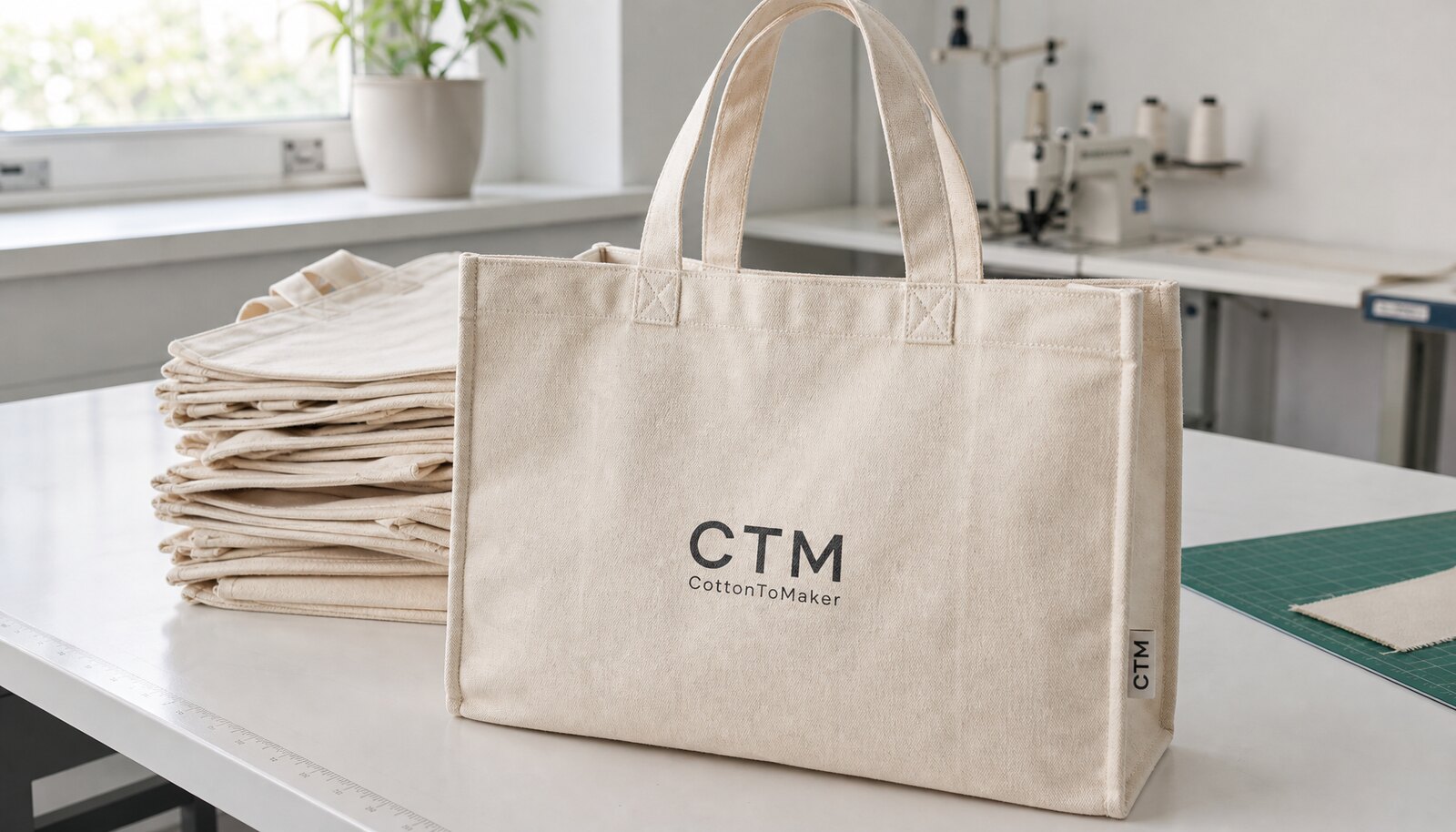
Why schools need a sourcing plan before requesting quotes
Printed canvas shopping bags for schools usually have a broader job than a single tote order. One campus may use them in the bookstore, another in an admissions welcome kit, and another for alumni events or fundraisers. If a buyer sends one generic request for all of those uses, suppliers tend to quote a standard promotional tote instead of a bag that fits the actual channel. The result is often a good-looking sample that fails in the one area the school cares about most: load capacity, retail presentation, or repeatability.
A private label sourcing plan helps procurement teams avoid those mismatches by forcing decisions before the RFQ goes out. The plan should define who the end user is, what the bag must carry, how visible the branding needs to be, and how the bags will be packed and distributed. That sounds basic, but it is usually where school purchases get vague. A bookstore tote and a welcome-kit tote may both be “canvas shopping bags,” yet one needs stronger handles and shelf-ready packing while the other needs lower cost and simple bulk carton delivery.
The commercial question is not only what the bag looks like. It is whether the school wants the bag to behave like retail merchandise or like a marketing giveaway. Retail bags need better construction control, clearer branding, and more consistent packing. Giveaway bags can accept lighter fabric and simpler finishing, but they still need enough strength to survive student use. If those paths are mixed together in one spec, the supplier will price to the least demanding version and the school may overpay for features it does not need, or underbuy the bag’s real load requirement.
For procurement buyers, the most useful first step is to segment the order by use case. Ask whether the bag is for daily carrying, special events, resale, or bundled merchandise. Then define the commercial target: lowest landed cost, higher retail margin, or a mid-tier bag that can do both. That single decision shapes fabric weight, print method, label strategy, carton pack-out, and even the inspection plan. In other words, the sourcing plan is not paperwork. It is how the buyer protects margin, quality, and timing before the factory starts cutting fabric.
- Separate resale, welcome kit, and giveaway bags into different specs if their load, branding, or packing needs differ.
- Decide whether the bag must support books, apparel, boxed stationery, or mixed merchandise.
- Treat private label as part of the product design, not as a cosmetic add-on after sampling.
Choose fabric weight based on the real load, not the logo size
Canvas weight is usually the first place a school buyer can save money—or create a quality problem. A 10 oz bag looks attractive in a sample photo, but if the tote is meant to carry heavy textbooks, lab notebooks, or stacked merchandise, it may feel too soft and age quickly. On the other hand, a 12 oz bag can give a more premium hand feel and better structure, but it may be unnecessary for a one-time event giveaway or a low-margin fundraiser item. The correct choice depends on actual load, not simply on what feels “nice” in a sample room.
For most campus retail and bookstore programs, 10 oz to 12 oz canvas is the practical range. Ten ounce fabric is often the best balance of cost, foldability, and durability when the bag is used for books, apparel, or everyday errands. Twelve ounce fabric is better when the school wants a more retail-ready bag with a fuller shape, stronger drape, and a perception of quality that supports a higher selling price. Eight ounce canvas is acceptable for light promotional use, but procurement teams should be cautious about using it for anything that will be repeatedly loaded with books or hard items. It can work, but only if the buyer accepts that the bag is more promotional than durable.
The right way to compare fabrics is to ask suppliers for the same basis: GSM or ounce weight, weave type, finish, and whether the sample and bulk rolls are from the same mill. Fabric weight alone does not tell the full story. Natural canvas, bleached canvas, dyed canvas, and recycled canvas can all behave differently after printing and sewing. Heavier canvas can also change the print appearance by absorbing ink differently. This matters when the school expects a crisp logo or an exact Pantone match.
Buyers should also decide whether the bag needs a gusset, because gusset depth changes both usability and cost. A flat tote is cheaper and easier to stack, but a gusseted tote carries binders, boxed gifts, and folded apparel more reliably. If the bag is going into a campus store or online shop, gusset depth often pays for itself in better shelf appeal and fewer customer complaints. If it is for a one-day event, a simple flat construction may be the smarter commercial choice. The sourcing plan should state that decision explicitly so the supplier quotes the correct build, not a generic tote that only looks right on paper.
- 8 oz: suitable for light giveaways, short-term promotions, and lower-cost event distribution.
- 10 oz: balanced choice for many bookstore, campus retail, and fundraiser programs.
- 12 oz: better for premium retail positioning, heavier items, and more structured presentation.
- Add a gusset if the tote must hold books, boxed stationery, or folded apparel without collapsing.
Print method choice should follow artwork complexity and reorder plans
Most school logos can be produced efficiently with screen printing, and for a lot of private label tote programs that is still the most practical choice. Screen printing works well when the artwork is simple, the colors are solid, and the buyer wants consistency across a multi-reorder program. It usually gives better opacity on natural canvas than many lower-cost alternatives, and the setup cost is easier to manage when the order is large enough to spread the screens over enough units. For one-color or two-color school marks, screen printing often gives the best combination of durability and predictable unit economics.
The choice changes when the artwork becomes more detailed. Mascots with gradients, thin lines, or multiple shades can be difficult to hold cleanly in screen print, especially on textured canvas. In those cases, digital print or heat transfer may be better for a small launch run or a sample program. That said, procurement teams should not assume these methods are automatically better. They need to check whether the print feels stiff, whether the edges crack after handling, and whether the image survives normal use. The school bag has to look good in a store rack, but it also has to survive being folded, carried, and refolded.
A useful rule for buyers is this: if the design will repeat over the year or across multiple campus locations, favor a stable method with repeatable setup and lower per-unit volatility. If the design is seasonal, event-specific, or likely to change often, prioritize a method that reduces tooling cost and short-run risk even if the unit cost is slightly higher. That tradeoff is especially important for schools running rotating fundraisers or annual welcome kits. The bag may only be in market for one semester, so a cheaper setup is more valuable than a lower unit price that comes with a high screen charge.
Private label details should be considered at the same time as the print method. A sewn-in woven label, a side label, or a hangtag may be the primary brand signal if the front print is intentionally small. If the supplier is only quoting the logo but not the label system, the buyer is missing part of the retail presentation. A clean private label tote is usually a combination of print placement, seam quality, and label execution. The school should know which of those elements is the hero feature before approving any sample.
One practical sourcing rule is to request a real pre-production sample using the same print method planned for bulk. Avoid approving a digitally mocked print if the final order will be screen printed, or vice versa. The look can change enough to alter the retail appeal, especially on natural canvas. For a private label school program, the sample is not just a proof of art. It is a proof of the final product method.
- Screen print: best for solid logos, repeat orders, and stable color control.
- Digital or heat transfer: useful for complex art, small runs, or seasonally changing graphics.
- Embroidery: premium look, but usually best for small logos and heavier fabric areas.
- Insist that the sample uses the same production method as the bulk order wherever possible.
Use a supplier comparison that reflects the sourcing route, not just the price
A school buyer may get quotes from a direct sewing factory, a trading company, a local decorator, or a combined sample-room-plus-bulk setup. Those options are not interchangeable. A direct factory can give tighter control over fabric, stitching, and repeat orders if it owns or closely manages the sewing line. A trading company may be easier when the school needs mixed products, label help, or sourcing coordination, but the buyer then needs more visibility into who actually produces the tote and who owns the quality decision if something changes. A local decorator can be fast and accessible for small domestic programs, but may not be the right route if the school needs repeat imports, custom packing, or stronger cost control on larger quantities.
The best route depends on the order’s commercial profile. If the school wants a one-time event bag, a domestic decorator or local printer may be sufficient, especially when speed matters more than long-term consistency. If the school expects annual reorders, bookstore replenishment, or a student store line that has to remain stable across semesters, a direct factory or specialized tote workshop often offers better control over fabric, stitching, and bulk repeatability. Trading companies can be useful when the school needs project management, but the buyer must verify whether the company is merely quoting the work or actually managing the production checkpoints.
The procurement risk is that supplier routes often hide different kinds of weakness. A low-priced general supplier may offer a tempting first quote but substitute a lighter fabric, weaker seam detail, or simpler packing if the PO is not tightly written. A retail-ready supplier may cost more upfront but save labor on receiving, labeling, and shelf prep. The right comparison, then, is not unit price alone. It is unit price plus the cost of mistakes, receiving work, packing labor, and reorder friction. That is especially true in school programs, where staff time is usually more expensive than the difference between two tote quotes.
Before award, the buyer should ask who owns the final approval if the sample and bulk differ. The answer should name one party, not “the team” or “our QC.” The supplier should also be able to show how they control the same label, the same carton mark, and the same fabric basis on reorder. For printed canvas shopping bags for schools, consistency is part of the product. A bag that drifts from one semester to the next creates problems for merchandising, fundraising, and brand presentation even if the quoted price looks attractive at first.
- Ask whether the factory owns the sewing line or outsources it.
- Clarify who owns QC decisions if fabric, print, or packing changes during production.
- Check whether the supplier can repeat the same label, carton mark, and fold method on reorder.
- Compare total landed cost, not only the EXW unit price.
A procurement table that helps you choose the right supplier route
The comparison table below is meant to support an actual sourcing decision, not just list generic supplier types. When schools buy printed canvas shopping bags, the supply route affects MOQ, sample costs, lead time, packing quality, and how easy it is to fix mistakes. A buyer who needs retail-ready bags for a campus bookstore may prioritize packaging capability, while a buyer sourcing for a single fund drive may prioritize speed and low setup cost.
Use the table as a first-pass filter, then ask the same quote questions of every supplier type. If a quote seems too cheap, compare the hidden variables: fabric weight, print method, label inclusion, carton count, and who approves the final sample. That is usually where the real commercial difference sits.
- Require the same spec version across all quotes so pricing is actually comparable.
- Tie sample approval to a physical sealed sample, not only a photo file.
- Write down which supplier route is responsible for print, packing, and final inspection.
How to define MOQ without creating hidden cost traps
MOQ should be understood as an efficiency threshold, not just a supplier demand. It reflects fabric roll usage, screen setup, labor scheduling, and how many units the factory can run without wasting material. For a simple one-color tote, the MOQ may be relatively low because the production line is straightforward. For a private label tote with multiple colors, a woven label, and retail packing, the effective MOQ rises because each added feature creates another process step and more handling. Buyers should therefore ask for MOQ by design, by color, and by label version rather than accepting one vague number.
For schools and campus stores, this matters because the order may be split across departments or fundraising groups. A buyer might want 300 bags for the bookstore, 200 for an alumni event, and 150 for a student club. If those are treated as three separate designs, the factory may price each one at a high unit cost. If they are treated as one base bag with different labels, the unit economics can improve materially. That is the kind of decision a sourcing plan should surface before the RFQ is sent out.
The common mistake is to chase the lowest MOQ without checking what changed to make that MOQ possible. A supplier may accept 100 or 200 pieces, but only by charging a high setup fee, limiting the fabric choice, or substituting a thinner canvas basis. Sometimes the order is still worth doing because it is a pilot or limited-run event. But the buyer needs to know the tradeoff. A lower MOQ is not a free advantage if it creates poor retail perception or leaves no margin for fundraising resale. The same logic applies to multi-color artwork. If reducing MOQ requires simplifying the logo, the school should decide whether the design impact is acceptable before the quote is accepted.
A practical rule for procurement teams is to evaluate MOQ against the reorder plan. If the school expects to repeat the same tote in the next term or the next academic year, it is usually better to place a more efficient first run even if the initial commitment is larger. If the tote is tied to a one-off event, lower MOQ may be the right answer even at a slightly higher unit cost. The sourcing plan should record that logic so stakeholders understand why the buyer chose volume, cost, or flexibility.
- Break MOQ into per design, per color, and per label version.
- Treat a lower MOQ with no other change as a warning sign—something else usually shifted.
- Consolidate the base tote and vary only the label or insert card when multiple groups need different branding.
Sample approval should test the bag as a product, not just the print
A sample for printed canvas shopping bags for schools should prove the whole product, not only the artwork. Procurement teams often focus on print clarity because it is the most visible element, but the bag can still fail if the handles are too short, the seam line drifts, the gusset is shallow, or the label is placed in a way that interferes with packing. A good pre-production sample needs to confirm the full set of variables that affect use, retail appearance, and repeatability.
The most useful sample sequence is usually a strike-off or artwork proof, followed by a pre-production sample made from the same fabric, same construction method, and same label placement planned for bulk. If the supplier wants to use a lighter test fabric or a different print method just to “show the design,” the buyer should treat that as a mock-up, not an approval sample. The risk is that the mock-up looks better than the actual bulk product, which creates an avoidable dispute later. A school buyer should not approve a product family based on a nice print on the wrong canvas.
Sample review should include dimensional checks as well as visual checks. Measure finished width, height, and gusset after sewing. Check handle drop by holding the bag in a realistic carrying position. Confirm that the print sits inside the approved window and does not collide with seams, top hem, or bar-tacks. If the tote will be sold in a campus store, review how it folds, how it stacks, and whether the label is visible in display position. That is especially important for private label programs because the branding needs to remain clean when the bag is folded on a shelf or packed in a carton.
Buyers should also ask for a controlled deviation process. If the sample and the bulk line differ in any material way—fabric mill, ink, trim source, label supplier, or packing method—the supplier should flag it before production continues. Small changes can become big issues in school programs because the product is usually associated with a campus brand, not just a one-time promotion. Keeping one approved sample and one sealed bulk standard reduces disagreement if a question appears during production or receiving.
Finally, do not approve a sample without deciding how rejects will be handled. The school should know whether defective units are replaced, reworked, credited, or held for inspection. That decision matters when the order is tied to an event date or bookstore launch. A late replacement plan can matter more than the defect itself.
- Measure finished dimensions, not cut dimensions.
- Check handle drop by simulating real carrying weight.
- Confirm print placement, seam clearance, and label position on the actual bag, not just in art proofs.
- Keep one golden sample and one sealed bulk reference sample tied to the PO number.
Packing choices change both cost and school-store usability
Packing is often treated as a final detail, but for bulky canvas totes it has a real commercial impact. Bulk packing is the lowest-friction choice for warehouse receiving, distributor resale, and campus distribution. Individual polybag packing makes more sense when the bags go directly to retail shelves, ecommerce fulfillment, or welcome kits that require a cleaner presentation. The problem is that retail packing increases labor, film use, carton volume, and sometimes freight cost. Buyers should not pay for retail packing unless the channel truly needs it.
For school stores, the right answer can vary by channel. A bookstore buying in mixed cartons may want bulk pack by style and color with clear carton marks so staff can store and replenish quickly. A campus shop selling online may need polybags, barcodes, and maybe inserts to reduce handling later. A fundraiser organizer may only need counted cartons and simple bundle packing for event distribution. The sourcing plan should state that channel logic up front because packaging is one of the easiest places for a supplier to default to a standard method that does not fit the school’s workflow.
Canvas tote packing should also be designed for freight efficiency. A small change in fold style can affect how many pieces fit in a carton, which changes carton count, pallet count, and shipment cost. Ask the supplier to confirm not only the bag dimensions but the folded size, the bags-per-carton count, and the gross weight. If the buyer expects split deliveries to multiple campuses, carton labeling becomes even more important. The receiving team needs to know style, color, quantity, and department or event reference without opening every box.
Private label details should not be compromised by packing. If a woven label is the main brand identifier, make sure it remains visible or consistently positioned when the tote is folded. If a hangtag is included, confirm that it will not wrinkle, detach, or obscure the logo in bulk cartons. For many schools, the first impression of the product is not the bag on a hanger; it is the way the carton opens and the unit looks when staff pull it out for display. That is why packing needs to be written into the spec, not left as a supplier choice.
- Bulk pack for lowest cost and simplest inbound handling.
- Use individual polybags only when retail display, ecommerce, or welcome-kit presentation needs it.
- Request carton dimensions, gross weight, and bags per carton before price comparison.
- Require carton marks that show style, color, quantity, and destination or department code.
Lead time risk usually comes from artwork and approvals, not sewing
Many school buyers focus on the sewing calendar when they ask about lead time, but the real schedule risk often sits earlier in the process. Artwork approvals, label approvals, and packing approvals can delay a tote order more than the factory line itself. Schools often need sign-off from marketing, advancement, bookstore management, or campus leadership, and each revision can reset the clock. A supplier can sew a simple tote quickly if the spec is frozen, but the process slows down when the school continues to adjust mascot lines, sponsor marks, or label positions.
A realistic sourcing plan separates lead time into stages: sample development, sample approval, bulk production, packing, and shipping. Buyers should ask the supplier which stage is the critical path. For example, screen setup may be the bottleneck on a simple art program, while fabric sourcing may be the bottleneck if the tote uses a specific dyed canvas or recycled material. If the order is tied to a student orientation date or bookstore launch, the buyer should add buffer time for approvals, freight booking, and any customs or receiving delays.
The strongest schedule control comes from locking the spec before the PO is issued. That means the school should approve the final artwork, fabric basis, private label placement, and packing format in one version-controlled document. Without that discipline, the factory may wait for the next revision while the buyer assumes production has already started. That mismatch is a frequent cause of missed launch dates. In procurement terms, schedule risk is not just about speed; it is about removing ambiguity.
For school programs that must hit a fixed event date, the buyer should also ask for an in-line update or first-piece approval photo. That does not eliminate all risk, but it gives the procurement team a chance to spot misprints, wrong label placement, or wrong fold style before the full run is finished. If the supplier cannot provide milestone photos, the buyer should consider whether the route is suitable for a time-sensitive retail or fundraising launch.
- Artwork delays are often more common than sewing delays.
- Complex print jobs need extra time for screen prep, proofing, or testing.
- Build buffer time for approvals, freight booking, and campus receiving windows.
A usable quote should show the cost drivers clearly
A quote for printed canvas shopping bags for schools should be easy to compare across suppliers. If the supplier gives only one all-in number, the buyer cannot tell whether the difference comes from fabric weight, print method, packing, or label inclusion. A useful quote separates the major cost drivers so the school can see what is being purchased. At minimum, it should identify fabric basis, print method, number of colors, label type, packing format, sample charge, and freight assumptions. Without that structure, price comparison becomes guesswork.
The best quotes also make it clear what is not included. Is the price for EXW only? Does it include carton packing, barcode stickers, polybags, or insert cards? Are there setup charges for screens or plates? Is the sample cost credited back on bulk? Is freight included or excluded? These are not minor details. They change the unit economics, especially for schools working with budget approvals or fundraiser margins. A tote that is five cents cheaper on paper may become more expensive once packing labor or extra labels are added.
A good procurement rule is to compare at least three versions of the same spec: a base version, a retail-ready version, and a premium version. That makes it easier to see where the buyer gets commercial value. For example, the retail-ready version may cost more but reduce receiving work and improve shelf presentation. The premium version may support a higher resale price or a stronger fundraising story. This kind of comparison is more useful than asking vendors for “best price” because it forces the school to evaluate margin, brand impact, and operating effort together.
When suppliers explain their price, listen for whether they can describe the actual production sequence. A supplier that knows the fabric source, print setup, stitch plan, label application, and packing order usually understands the product better than a supplier that only repeats a total number. For private label school totes, that knowledge is valuable because it often predicts whether the bulk order will match the sample. The quote is not just a price sheet; it is a preview of how the order will be made.
- Require separate line items for fabric, sewing, printing, labels, packing, sample, and freight assumptions.
- Compare base, retail-ready, and premium versions of the same tote before awarding the order.
- Treat a quote as a process document, not only a price number.
Specification comparison for buyers
| Supplier option | What to verify | Commercial advantage | Buyer risk to control |
|---|---|---|---|
| Direct sewing factory | fabric swatch, approved sample, seam close-ups, logo test photos, packing pilot, and final inspection evidence | Better sample-to-bulk control and faster production feedback | May be weaker on export paperwork or branded packing unless checked early |
| Trading company | Factory name, production photos, trim-source proof, and who owns QC decisions | Can coordinate small mixed orders and extra services | Markup can hide real factory capability and slow defect decisions |
| Specialized bag workshop | bag size, gusset, handle drop, seam allowance, stitch density, reinforcement patch, and loading expectation | More practical for detailed construction, trims, and repeat programs | Capacity may be limited during peak seasons |
| Low-price general supplier | 8-12 oz cotton canvas, 120-220 gsm cotton, recycled cotton, or blended fabric selected by use case and target price | Useful for simple promotional runs with loose specs | Material downgrades, weak packing, and vague inspection scope can erase savings |
| Retail-ready supplier | fold method, inner bundle, carton count, carton mark, moisture protection, SKU separation, and warehouse receiving needs | Can handle labels, SKU separation, carton marks, and receiving rules | Higher unit cost must be compared against reduced warehouse work |
| Compliance-focused supplier | Fabric records, labeling review, test plan, and production traceability | Safer for retail programs and repeat brand orders | Documentation claims need evidence, not only sales language |
| Local sample room plus bulk factory | Signed sample, bulk factory handoff, first-piece photos, and deviation owner | Good for complex branding before large production | Sample room quality may not match bulk line unless handoff is controlled |
Buyer checklist before sampling
- State the use case first: bookstore resale, student welcome kit, alumni gift, fundraiser item, or event giveaway. Each use case has different fabric, print, and packing needs.
- Specify fabric weight in GSM and oz, plus the desired hand feel: soft, structured, stiff, or premium retail appearance.
- Provide exact dimensions: body width, body height, gusset depth, handle length, handle drop, and any desired base reinforcement.
- Attach vector artwork with Pantone references, minimum line thickness, and a no-print buffer around seams, handles, and top hem.
- Identify label strategy: woven side label, sewn-in neck label, printed brand mark, hangtag, or barcode sticker.
- Define whether the bags must be shelf-ready, polybagged, bundle-packed, carton-packed by color, or pre-counted for campus distribution.
- Set acceptance criteria for print registration, color variation, seam quality, stitch count, and allowable size tolerance.
- Ask the supplier to quote sample cost, tooling or screen charges, bulk unit price, and freight assumptions separately.
- Request carton data: units per carton, inner bundle count, carton size, gross weight, palletization compatibility, and carton mark text.
- State the reorder plan up front so the supplier knows whether consistency or lowest first-order price matters more.
Factory quote questions to send
- What fabric weight are you quoting exactly, in GSM and oz, and is that for the finished fabric or the raw roll before cutting?
- Is the quoted MOQ per design, per color, per label version, or per total order?
- What print method are you pricing, how many colors are included, and what is the setup charge or screen charge?
- Can you make the exact same sample process in bulk, or will the production method change after approval?
- What is the bag construction: seam type, seam allowance, reinforcement method, handle stitching, and gusset build?
- Which private label elements are included: woven label, printed label, hangtag, barcode sticker, or insert card?
- What packing format are you pricing, including fold method, polybag status, bundle count, and carton count?
- What is your carton size, gross weight, and export packing method, and can you provide a packing mockup before bulk?
- What lead time do you need after artwork approval, sample approval, and deposit, and which step is the critical path?
- What QC standard do you use for print registration, color tolerance, seam strength, measurement variance, and defect classification?
Quality-control points to confirm
- Use an AQL-style inspection plan for bulk production. For school tote programs, a practical starting point is AQL 2.5 for major defects and 4.0 for minor defects, unless the buying organization has a stricter standard.
- Classify defects before inspection starts. Major defects include wrong fabric weight, wrong logo placement, broken seams, missing labels, or cartons with the wrong count. Minor defects include loose threads, slight ink variation, or small fold marks that do not affect use.
- Measure fabric weight or confirm mill certificate against approved spec before cutting. If the roll feels significantly lighter than the approved sample, stop the lot and escalate before sewing begins.
- Approve one golden sample and one sealed bulk standard sample. Keep both with the PO number, artwork version, fabric basis, and packing spec so the supplier cannot swap references later.
- Check first-piece output on the production line. Verify print placement, handle alignment, seam tension, label position, and overall dimensions before full run release.
- Inspect print quality under normal daylight and, if relevant, under store lighting. Look for misregistration, blurred edges, ink bleeding, pinholes, and uneven opacity on natural canvas.
- Test handle strength and reinforcement visually and by pull check on sampled units. Confirm bar-tacks, cross-stitches, or box stitching are consistent on both handles.
- Check measurement tolerance on length, width, and gusset depth. A practical limit for many tote programs is ±0.5 cm to ±1.0 cm, but buyers should define their own tolerance in the spec.
- Verify color match against the approved Pantone reference or against an approved physical standard. Natural canvas can shift the visual result, so confirm both on-fabric and on-bag appearance.
- Review label placement for straightness, secure stitching, and consistency across all sampled cartons. Private label bags look damaged when labels drift even if the sewing is otherwise acceptable.