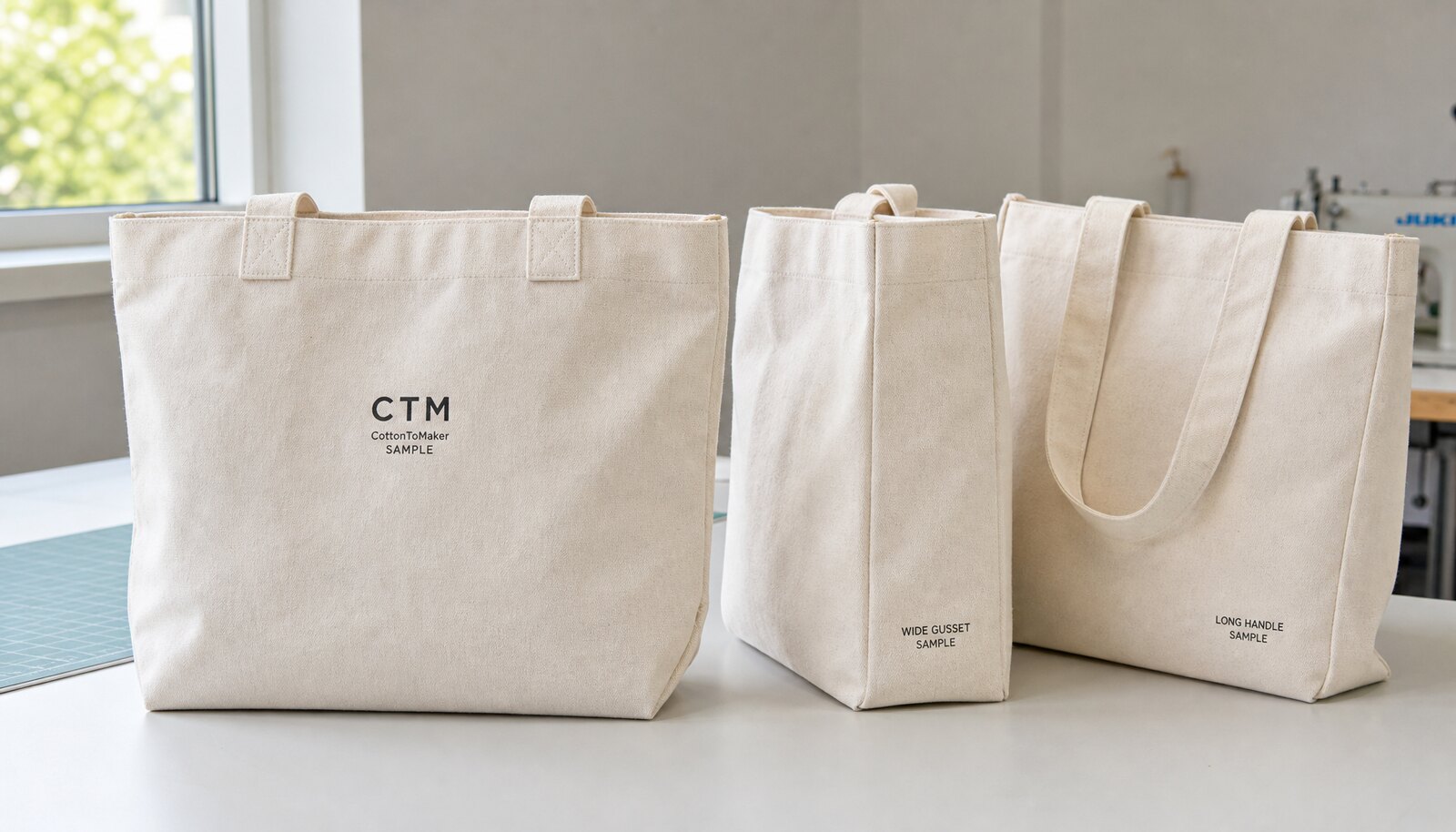
Why printed canvas shopping bags for schools need a packaging specification, not just a product quote
Schools often start with a simple request: a printed canvas tote with the school logo. The problem is that the quote can look fine while the actual receiving experience is poor. A bag can be the right size and still create issues if it arrives folded in the wrong direction, packed in mixed cartons, printed slightly off center, or counted incorrectly by campus. For school procurement, the packaging specification is part of the product specification.
That matters because school orders are rarely one-dimensional. A single campaign may serve orientation week, book fairs, open days, fundraising sales, classroom welcome packs, or staff gifts. Each use case affects how the bag should be packed, labeled, and distributed. A tote for a fundraising merch table may need retail-style presentation, while an enrollment handout should be bulk packed for fast receiving and immediate distribution. If the RFQ only asks for size and logo, the supplier fills in the rest with assumptions. Those assumptions are where delays and avoidable cost creep in.
A strong packaging spec helps in three ways. First, it makes supplier quotations comparable because every bidder is pricing the same product and pack-out. Second, it reduces receiving errors at the warehouse, school office, or distributor hub. Third, it lowers the chance of a late-stage dispute over what counts as acceptable. For school buyers, that is more valuable than shaving a small amount off the unit price.
A useful way to think about this category is: product + artwork + pack-out + distribution route. If any one of those is vague, the quote is weaker. The goal is not to over-engineer the bag. The goal is to make the bag easy to approve, easy to ship, and easy to hand out without relabeling or repacking.
- Treat packing instructions as a purchasing requirement, not as a note for the factory.
- Separate campus handout packs from resale merch packs; the carton logic is different.
- If multiple schools or departments are involved, specify how cartons are sorted and labeled before production starts.
Start with the school use case: the product should match the distribution method
Before comparing suppliers, define how the bags will actually be used. A school event handout only needs enough structure to carry a brochure, a notebook, and a few inserts. A book fair bag may need deeper gusset capacity and stronger handles. A retail-style fundraising tote should present well on a display table, with cleaner seams and consistent folding. If the supplier quotes against the wrong use case, the bag may technically meet the spec but still fail the job.
For procurement, it is useful to write the use case directly into the RFQ. Example: “for student orientation kits, distributed in bulk to three campuses,” or “for school shop resale, folded and packed individually for shelf presentation.” This changes the packing method, carton count, and sometimes even the recommended fabric weight. It also helps vendors avoid quoting a one-size-fits-all solution that sounds simple but costs more downstream.
The use case should also define the user. Bags for younger students need manageable weight and handle length. Bags for staff or adult visitors can be larger and slightly more structured. If the audience includes textbooks, the bag should be tested with actual books or equivalent weight, not just by visual inspection. That small step often reveals whether the handle drop is comfortable and whether the bottom seam carries the load as expected.
- State who will carry the bag: students, parents, staff, or event visitors.
- State what will go inside the bag: notebooks, textbooks, flyers, kits, or merch.
- State where the bags will be handed out: on-campus, by distributor, or via retail shelf.
Fabric weight and construction: what gives a school tote real durability
For most school procurement programs, 10–12 oz canvas, or roughly 340–400 GSM, is the practical range. That band usually balances structure, cost, and print quality. Below it, the tote may droop under books, show the contents too much, or feel too flimsy for repeated use. Above it, the bag becomes heavier and more expensive, and the cost of freight or carton handling can rise because the packed cartons weigh more. For small children or low-cost event kits, 10 oz may be sufficient. For repeated school use, 12 oz often gives a better commercial result.
Construction matters as much as cloth weight. A flat tote is fine for lightweight collateral, but if the bag is expected to hold folders, a library book, or a few textbooks, a gusset is usually worth the extra sewing. A 8–12 cm gusset is a common working range because it adds useful depth without making the tote awkward. Reinforced top hems, clean overlock or binding, and good seam allowance are not cosmetic choices; they are what keep the bag from fraying after repeated use.
Buyers should also distinguish between raw fabric weight and finished bag feel. A supplier can quote a technical cloth spec that looks strong on paper, but if the weave is open or inconsistent, the finished bag may look thin and print poorly. Ask for finished fabric photos, not only a fabric description. Better yet, ask the supplier to confirm the canvas is from the same mill or the same fabric lot that will be used in production, especially for repeat orders.
If the school intends to wash the bags, the buyer should ask for shrinkage expectations and whether the bag will be pre-shrunk or not. Schools often assume a tote will behave like a garment; it will not unless the fabric and sewing were selected for that purpose. A bag that shrinks too much can distort the print, pull at the seams, or change the handle drop after washing.
- 10 oz / 340 GSM: workable for short-term handouts and lighter inserts.
- 12 oz / 400 GSM: better for book carry and repeated school use.
- Gusset depth of 8–12 cm usually suits folders, notebooks, and small book loads.
- Ask for finished GSM and real sample photos, not fabric terms alone.
Print method decisions: what schools notice on the finished bag
Most school logos are simple enough for screen printing, and that is still the most commercially sensible option for one to three spot colors. It is cost-effective, relatively durable, and visually clear on canvas if the print is properly prepared. The buyer should still define print size, placement, number of colors, and acceptable tolerance for registration. Otherwise, a “simple logo” can arrive with blurred text or uneven alignment that only becomes obvious once the bags are stacked at the handout desk.
Complex artwork changes the equation. If the school crest includes gradients, fine lines, or many colors, heat transfer or digital print may be necessary. These methods can handle detail, but they introduce different risks: cracking on folds, edge lift, poor curing, or an overly plastic look. That is why buyers should decide early whether the bag is meant for heavy daily use or for a short campaign where appearance matters more than long-term wear. The print method should fit the life cycle, not just the artwork.
It is also worth specifying the print surface. Canvas texture can make a design look softer than it appears on screen. If the logo relies on thin type or small lettering, ask the supplier to show the actual artwork on the same or very similar canvas color. A digital proof is not enough. A strike-off or pre-production sample will reveal whether the ink fills in the letters, whether the background tone affects contrast, and whether the logo placement feels centered in real life.
For school orders, the most common print failure is not dramatic color mismatch; it is inconsistency. A logo may be slightly different from bag to bag, or a small line of text may disappear at the edges of the print area. Those defects do not always make the bag unusable, but they can make a campus distribution look careless. That is why sample approval should include a visual check from normal viewing distance, not only a close inspection.
- Screen print: best for simple school logos and short text.
- Heat transfer: useful for complex art, but test fold-line durability and abrasion.
- Digital print: practical for shorter runs or multi-color graphics.
- Request a physical strike-off on the actual fabric color whenever possible.
Supplier routes compared: direct factory, trading source, and what the buyer should verify
The right supplier route depends on order size, design complexity, and how much control the buyer wants over materials and packing. A direct factory usually offers better control over cloth sourcing, sewing consistency, and carton labeling, especially for repeat orders. A trading source can be useful when the buyer needs small mixed runs, multiple campuses, or consolidated coordination across products. But easier coordination should not be mistaken for better control. The more the spec depends on hidden production details, the more important it is to verify what the supplier actually controls.
Instead of asking only whether a vendor is a factory or trader, ask what evidence they can provide. For example: business license, factory audit if available, photos of the sewing and printing line, sample production records, carton packing photos from a similar order, and recent shipment documents with sensitive details redacted. If a supplier claims direct factory status but cannot show a consistent line, sample history, or work-in-progress photos, the buyer should treat that claim carefully. The same goes for trading sources that cannot explain where printing and sewing are actually done.
For school procurement, a trusted supplier is one who can keep the spec stable. That means the same fabric weight, the same print method, the same handle reinforcement, and the same packing format across repeat orders. If the quote changes from round to round without a clear reason, the buyer should ask whether the fabric lot, printing subcontractor, or carton size has changed. Many “price” problems are actually spec drift problems.
A practical verification step is to ask the supplier to quote the same bag in two versions: one with the proposed production spec and one with the actual deliverable spec. If the numbers differ a lot, there is usually a hidden detail in the pack-out, cloth quality, or print method. That approach helps procurement buyers see the real tradeoff before they commit.
- Request business license and factory audit evidence when available.
- Ask for photos of the sewing line, printing area, and packing station, not just showroom images.
- Verify whether printing and sewing happen in one site or through subcontractors.
- Keep a signed sample and a dated spec sheet tied to the same quotation version.
Specification comparison: what changes cost, quality, and receiving efficiency
The table below is more useful when read as a set of procurement decisions rather than as a simple spec matrix. Each choice affects not only the unit price but also the chance of rework, the speed of receiving, and how much labor the school or warehouse needs after delivery.
A buyer ordering printed canvas shopping bags for schools should look for the lowest-risk combination, not the fanciest combination. Sometimes a slightly higher unit price saves money because it reduces relabeling, repacking, or replacement claims. In school buying, total handling cost often matters more than the quoted bag price alone.
- Compare the packed result, not just the factory FOB or ex-works price.
- Price increases are often justified when they reduce sorting labor or rework.
- Use one comparison sheet across suppliers so the difference is visible at a glance.
MOQ, price breaks, and how to avoid comparing misleading quotes
MOQ in this category is rarely a single universal number. It changes with fabric color, print color count, bag size, artwork complexity, carton spec, and whether the supplier is buying stock cloth or cutting a custom batch. A low advertised MOQ can be real, but it can also mean the supplier is assuming a standard natural canvas, one-color print, and simple bulk packing. The moment the order adds campus names, custom labels, or individualized packing, the practical MOQ rises because the labor content rises.
For school buyers, a better question than “What is your MOQ?” is “At what point does the price step change, and what exactly is included at each step?” Some suppliers price by one design; others by one print color; others by one carton configuration. If the school wants to split the order by campus or event, those changes may not increase fabric use much, but they can increase production complexity enough to affect the quote. Understanding the threshold helps procurement teams decide whether to consolidate orders or separate them.
Unit price should also be read in light of yield loss. Canvas cutting is efficient, but artwork placement, gusset construction, and handle reinforcement all create material and labor waste. If one quote is much lower than the others, ask what has been reduced: fabric width, handle reinforcement, print coverage, or carton packing. The cheapest quote is often the one that quietly moved the spec.
For repeat school programs, ask for a retained spec sheet and a repeat-order price. That protects against the common problem where a supplier quotes well on the first order but later re-quotes because the original assumptions were never written down. Procurement teams save time when they can renew the same spec instead of rebuilding it from scratch every term.
- Low MOQ usually assumes standard cloth, one design, one color, and bulk packing.
- Ask which element triggers a price break: size, print colors, carton spec, or bundle count.
- Request a repeat-order price for the same spec so future campus orders are easier to compare.
- Do not compare quotes unless the finished size, fabric weight, print method, and pack-out are identical.
What to lock in on the packaging specification sheet
Packaging deserves its own spec block because it affects both cost and receiving efficiency. For school procurement, the important fields are not limited to “bulk packed” or “polybagged.” Buyers should lock in the fold method, bundle count, carton dimensions, carton count per SKU, carton label structure, palletization plan if used, and moisture protection if the route is long or humid. These choices can materially affect freight, warehouse time, and distribution accuracy.
Start with fold method. A consistent fold is critical if the bags are going to be stacked, counted, or shelved neatly. Then define the bundle count. For example, a factory might pack 10, 20, or 50 bags per inner bundle depending on bag size and carton dimensions. Bundle count influences hand count accuracy and carton compression. Then define carton labeling: school name, PO number, SKU, quantity, and any campus identifier. If barcodes are used, specify the data structure and the exact label position on the carton.
Carton dimensions are often ignored until freight pricing changes or the warehouse complains that the cartons are awkward to stack. The buyer should ask for the proposed carton size before production, because carton volume can affect container loading and distribution storage. If the school is receiving in a small storeroom or staging area, a carton that is too large can be a practical problem even if the bags inside are correct.
Moisture protection is worth considering for long shipping routes, monsoon seasons, or humid storage. Canvas bags themselves are not moisture-sensitive in the way electronics are, but cartons can absorb humidity, weaken, or pick up odor. A basic carton liner, desiccant plan, or stronger outer carton can prevent receiving complaints about dampness or carton collapse. For export shipments or multi-week transit, that detail is often worth the modest extra cost.
- Specify fold direction and whether the logo must face outward in the packed bundle.
- Define bundle count per inner pack and carton count per outer carton.
- List carton dimensions, gross weight target, and stacking preference.
- State whether carton labels need school name, campus code, SKU, PO, and barcode.
- Add moisture protection if cartons will travel through humid storage or long transit.
QC checkpoints that should be in the school buyer’s inspection plan
QC should be written in practical, measurable terms, not general statements like “good quality.” The buyer should define what will be checked on the sample, what will be checked in production, and what will trigger rejection or rework. A simple school tote can still fail on stitch consistency, print alignment, carton count, or contamination from handling. Those issues are preventable if the inspection plan is concrete.
Start with dimensions. Measure finished width, height, gusset depth, and handle length against the approved sample. Then inspect the seams: side seam alignment, bottom seam integrity, top hem finish, and handle attachment stitching. A useful checkpoint is seam allowance consistency; if it varies too much, the bag may look uneven or fail under load. For handle stress, ask the supplier to perform a pull or load test that reflects the intended use, such as books or folder packs. That is more meaningful than a generic “strong enough” promise.
Print inspection should include position, opacity, edge definition, and resistance to rubbing. For school bags, the printed logo is often handled frequently, stacked, and folded, so a simple rub test or light abrasion check is valuable. If the print cracks after folding, the bag may still be acceptable for a giveaway but not for repeated student use. If the artwork includes small text, inspect whether the letters are filled in or broken at the edges.
Also check for needle damage and contamination. Canvas totes can pick up oil marks, chalk residue, loose threads, and small needle holes during production. These defects are easy to miss when the factory is focused on volume. AQL-style sampling helps here because it gives the buyer a consistent way to judge acceptable defect rates. For important school orders, the inspection should include carton count verification and label matching, not only product appearance. A bag that looks good but ships in the wrong quantity is still a failed order.
- Measure size, handle length, and gusset depth on random samples.
- Check seam allowance, top hem, corner strength, and handle attachment stitching.
- Inspect print registration, opacity, rub resistance, and fold-line cracking.
- Screen for oil marks, needle damage, loose threads, and uneven fabric shade.
- Use an agreed AQL-style sampling plan or equivalent internal inspection standard.
- Verify carton count, SKU label, campus label, and PO reference before release.
Packaging formats that work for campus distribution, events, and school resale
The right packing format depends on where the bags will be opened. For campus distribution, bulk packing by SKU is usually the most efficient option because it reduces labor and lets the receiving team count quickly. For event handouts, inner bundles can be useful if volunteers need controlled handoff counts. For school shop resale, individual polybags or cleaner presentation folds may be worthwhile because the bags need to look good on shelf. The key is to avoid defaulting to a retail pack when the order is really a distribution order.
Campus distribution also benefits from carton logic that mirrors the handout plan. If one campus receives five cartons and another receives two, the cartons should be labeled clearly enough that staff do not need to open them to figure out where they go. If the order is split by grade level or event type, the carton labels should say so in plain language. That sounds simple, but it prevents delays when the goods arrive and the schedule is already tight.
Palletization can matter for larger school systems or distributor warehouses. If cartons are stacked on pallets, the buyer should state whether pallets are needed, whether they should be export-grade, and how many cartons per layer are acceptable. This is not only about logistics cost; it also affects carton compression and how easily the warehouse can move the order. A packaging spec that ignores pallet handling may work in a small order but fail as soon as volume increases.
Finally, avoid mixed cartons unless there is a strong reason to mix. Mixed sizes or mixed campus names create receiving friction. They can be manageable if the warehouse is experienced, but they are rarely ideal for school procurement because school teams often need quick, mistake-free distribution. If mixed cartons are unavoidable, the carton map and packing list should be especially clear, and each carton should have a unique identifier.
- Use bulk packing for direct school distribution whenever possible.
- Use inner bundles when handout counts need to be controlled by volunteers or classroom teams.
- Use individual polybags only when presentation or retail resale requires it.
- Avoid mixed cartons unless a carton map and detailed packing list are already agreed.
- Specify palletization only if the receiving site actually uses pallets.
Specification comparison for buyers
| Spec decision | Recommended option | Why buyers choose it | Tradeoff / pricing impact | Buyer risk to check |
|---|---|---|---|---|
| Fabric weight | 10–12 oz / 340–400 GSM canvas | Best balance for books, repeated use, and decent print appearance | Lower GSM reduces cost but can sag; higher GSM increases unit price, carton weight, and sometimes freight | Confirm finished GSM, not only raw cloth weight, and ask whether weave density is consistent across lots |
| Bag structure | Gusseted tote with reinforced handle points | Adds usable volume for notebooks, folders, and event kits | Gussets and reinforcement add sewing labor and can raise MOQ slightly | Check seam allowance, gusset symmetry, and top hem reinforcement |
| Print method | Screen print for 1–3 spot colors | Lowest cost for school names, mascots, and simple logos at volume | Each extra color adds setup and registration risk; detailed art may lose clarity | Verify print opacity on natural canvas, edge sharpness, and wash/rub resistance |
| Detailed artwork | Heat transfer or digital print only when needed | Suitable for gradients, multi-color crests, or short-run campaigns | Usually higher per-unit cost and more sensitive to folding, abrasion, or heat quality | Ask for a rub test and fold-line cracking check after sample approval |
| Handle specification | 60–70 cm loop with bar-tack or box-stitch reinforcement | Comfortable for older students and adult staff carrying documents or books | Longer handles use more material; weak reinforcement increases failure risk | Check handle drop, stitch count, and pull-test result at top stress points |
| Packing format | Bulk packed by SKU, then cartonized by campus or PO | Simplifies distribution and receiving, especially for school handouts | Individual polybags and mixed cartons add labor and carton volume | Lock bundle count, carton count, carton dimensions, and labels before production |
| Supplier route | Direct factory for repeatable specs; trading source only for mixed or small programs | Factory sourcing usually gives better control over cloth, print, and sewing | Trading companies can be easier to coordinate but may hide substitutions or split production across sites | Request evidence of factory relationship, audit files, and prior shipment documents |
| QC standard | AQL-style inspection with sample approval and carton checks | Reduces risk on dimensions, print placement, quantity count, and packing accuracy | Inspection adds process time but saves far more than rework or re-shipping | Define acceptance criteria for stitching, staining, needle damage, and carton labels |
Buyer checklist before sampling
- Confirm the use case first: campus handout, book fair, event gift, resale merch, or staff pack, because the packaging spec changes with distribution method.
- Lock the bag size, gusset depth, handle length, usable loading weight, and acceptable tolerance before requesting prices.
- Specify canvas weight, color, shrinkage expectation, and whether the cloth must be natural, bleached, dyed, or recycled.
- Provide vector artwork, note exact print area, identify Pantone references if color matters, and state whether the logo must stay centered on the front panel.
- Require a pre-production sample and approve it against the same checklist that will be used in final inspection.
- Define the packing method: fold direction, bundle count, carton count, carton label format, and whether cartons are split by campus or purchase order.
- Ask for supplier evidence such as business license, factory photos, recent inspection report format, material certificate if available, and export packing examples.
- Set a delivery calendar backwards from term start, orientation week, or event date, and include time for artwork correction, sample approval, and any rework.
- State the quality standard in measurable terms: stitch defects, stain limits, print clarity, seam security, and carton count accuracy.
- Ask how the supplier will handle shortages, overages, and replacement units if the first production lot fails inspection.
Factory quote questions to send
- What finished canvas weight, weave density, and fabric width are you quoting, and can you hold that same material spec for repeat school orders?
- Which print process will you use for this artwork, how many colors are included, and what are the setup charges, registration tolerance, and wash resistance expectations?
- Can you show a pre-production sample workflow, including strike-off, material confirmation, and sign-off points before bulk sewing begins?
- Is the MOQ based on one design, one colorway, one campus label, or one carton spec, and what changes if we split the order by school name?
- How will the bags be folded, bundled, and cartonized, and what carton dimensions and gross weight do you recommend for export and warehouse handling?
- Can you provide carton labels or barcode structure, including SKU, school name, quantity, and PO reference, so our receiving team can sort efficiently?
- What quality control standard do you use for dimensions, seam strength, print position, needle damage, stains, and carton count accuracy?
- Can you share supplier evidence such as factory audit records, previous inspection photos, production line photos, or shipment documents that verify your capability?
- What is the lead time after artwork approval and sample sign-off, and which steps are on the critical path: fabric booking, printing, sewing, or packing?
- If we need a replacement lot or partial reprint, how do you handle claims, corrective action, and shipment timing?
Quality-control points to confirm
- Finished dimensions should be checked on a random sample against the approved spec, typically within plus or minus 1 cm for standard school totes unless the insert or product pack requires tighter control.
- Stitch quality should be reviewed at the handle attachment, side seams, bottom seam, and top hem, with no skipped stitches, broken thread chains, or uneven seam allowance.
- Handle reinforcement should pass a pull test or load test using the intended school-use weight, and the bar-tack or box-stitch should be intact with no seam opening.
- Print quality should be checked for registration, opacity, edge sharpness, ink cracking, color consistency, and placement centered within the approved art panel.
- Canvas should be screened for oil marks, holes, shade variation, thick-and-thin weave patches, needle damage, and uneven bleaching or dyeing before packing.
- Folding and packing should be checked for correct fold direction, bundle count, carton count, and no mixed SKUs inside the same carton unless that is intentionally specified.
- Cartons should be dry, odor-free, and structurally sound, with correct carton marks, SKU labels, campus labels, and gross/net weight where required.
- Use AQL-style sampling or an agreed internal inspection plan for pre-shipment checks, and record the defect count by category so disputes do not rely on memory.
- If the bags are intended for student distribution or retail display, check presentation quality as well: wrinkles, loose threads, visible chalk marks, and dirt transfer during packing.
- If shipments are traveling long distance or into humid storage, add a moisture-protection check for carton liners, desiccant use, and carton compression resistance.