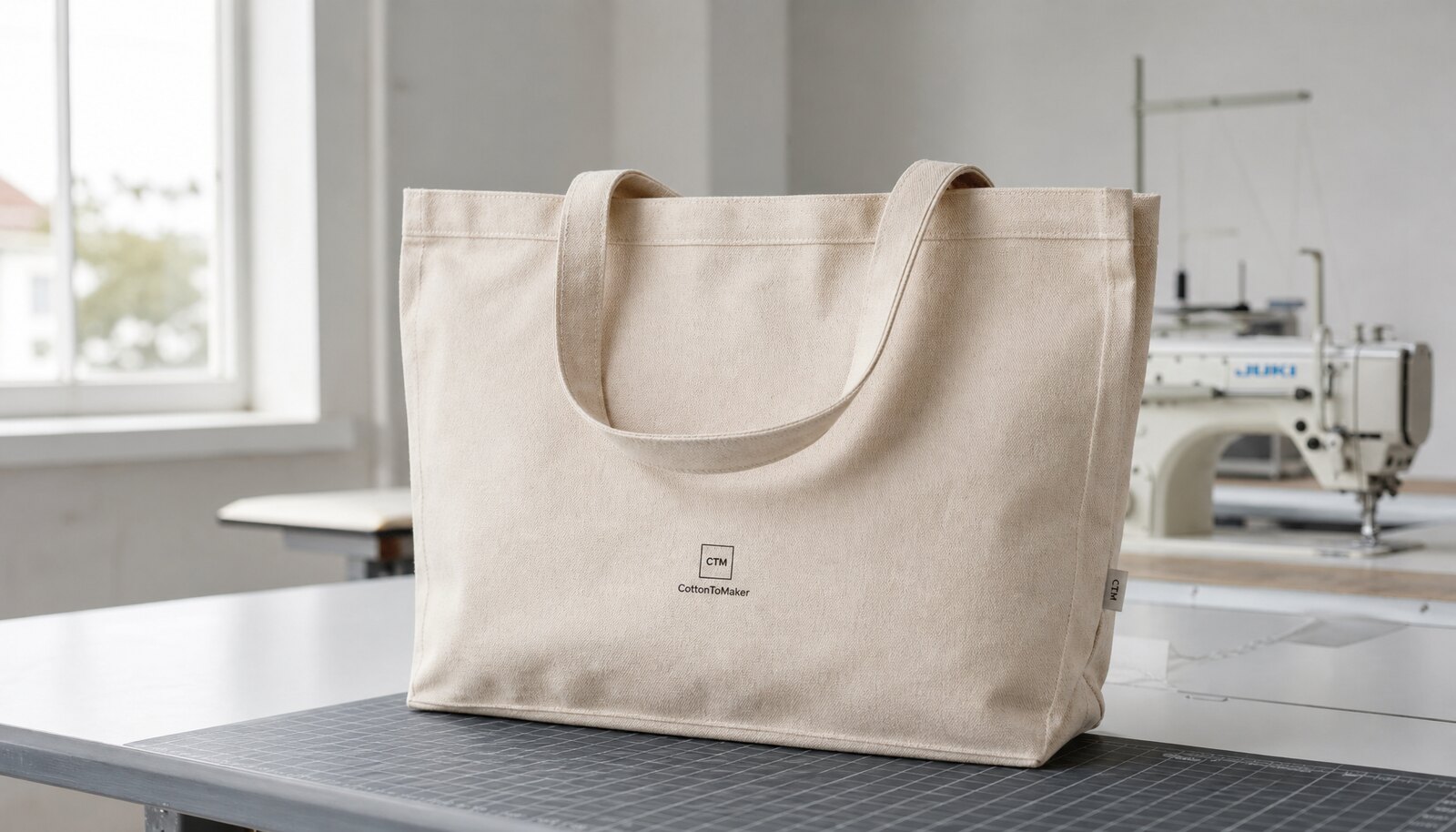
Why school buyers need a bulk pricing plan instead of a single unit price
Schools buy printed canvas shopping bags for more than one purpose. The same bag may be used for admissions packs, open day handouts, school-store retail, fundraiser merchandise, or book-fair distribution. Because the use case changes, the buying decision should start with a pricing plan instead of a single quoted number. A unit price alone can hide the real commercial differences between lightweight giveaway bags, reusable retail bags, and heavier bags intended to carry books.
Procurement teams should first define the school use case. If the bag only needs to hold brochures, forms, and a small welcome item, a lighter construction may be enough. If it must carry textbooks, stationery, or bundled merchandise, the fabric, handle, and seam spec must be stronger. The buyer does not need the most expensive canvas available; it needs the lowest-cost construction that still meets the load and durability requirement.
A useful pricing plan also depends on how the bags will be distributed. A retail-style school store may justify a cleaner print, tighter folding, and individual polybags. A one-day event handout may not need retail packaging at all. Those choices change labor, carton count, and freight volume, so they should be decided before quote comparison begins. If the supplier is not quoting against the same packing plan, the unit price comparison is not meaningful.
Procurement teams should also separate fixed charges from recurring charges. Screens, artwork setup, sampling, and tool retention are mostly fixed. Fabric, sewing, print labor, packing, and freight scale with volume. Once the buyer sees that cost structure clearly, it becomes much easier to judge whether a higher unit price is actually a better landed-cost decision. That is the basic logic behind a bulk pricing plan that works for schools rather than a generic product quote.
- Start with the school use case before asking for price.
- Separate fixed setup charges from recurring production costs.
- Compare landed cost, not only ex-works unit price.
Set the fabric spec first: weight, weave, finish, and load expectation
For most school programs, the most practical range is usually 10 oz to 12 oz canvas, or roughly 340 to 420 GSM after finishing. That range often gives enough body for books, notebooks, and resale merchandise without making the bag unnecessarily heavy or costly. Lighter fabric can be acceptable for flyers and welcome packs, but it may sag more, show print distortion more easily, and wear out faster in regular use. Heavier fabric gives a more structured feel and higher load margin, but it also raises material cost and freight weight.
The right fabric depends on the load profile. A giveaway bag for brochures is a different commercial choice from a bag intended to sell in a school shop. Buyers should ask the supplier to quote finished fabric weight rather than raw fabric alone. Raw fabric data can be misleading because washing, dyeing, pre-shrinking, and finishing change the final feel and performance. Ask whether the bag is natural, bleached, washed, or dyed, and whether finishing might affect shade consistency between cartons.
Fabric finish matters as much as weight. A softer washed canvas can feel more premium but may not hold structure as well. A firmer finish can improve shelf appearance and make the bag easier to pack, but it may also feel less soft in hand. For printed bags, the base color also matters because it affects logo contrast. If the artwork contains light tones or fine type, the supplier should confirm whether the print will remain legible on the chosen base cloth.
Procurement teams should define a performance expectation in measurable terms. Instead of asking for a “strong bag,” specify what it must carry and how it should behave. For example, the bag can be required to hold a set load of textbooks or sample cartons without seam failure, handle tear, or significant corner distortion. This gives the factory a manufacturing target and gives the inspector a clear pass-fail basis.
- 8 oz–10 oz: suitable for flyers, brochures, and lightweight event use.
- 10 oz–12 oz: practical all-around range for most school retail and book-carrying programs.
- Above 12 oz: premium feel and higher load margin, but higher cost and freight.
- Ask for finished weight and finishing method, not only raw fabric data.
Understand print cost before you lock the design
For bulk school orders, screen printing is often the most cost-efficient commercial method when the artwork is simple and the volume is repeatable. It works well for school names, mascots, event slogans, and one- or two-color logos. The reason it is cost-efficient is straightforward: once the screens and setup are prepared, recurring print cost is usually manageable at volume. The downside is that setup charges are real, and every added color increases work, registration control, and the chance of visible variation.
Digital transfer and heat transfer can be useful when the order is short-run, full-color, or highly detailed. They allow more artwork flexibility, especially for campaigns that change every season. But buyers should avoid assuming that full-color automatically means better value. Some transfers may look good at delivery but may not be the right choice if the bags will be folded, reused often, or sold through a school store. Ask the supplier how the print behaves under abrasion, washing, and regular handling, not only how it looks in a proof.
The quote should show print pricing by color count and print area. A small chest logo is not priced the same as a large front-panel print. Likewise, white underbase, special effect inks, or oversized coverage can change the cost structure materially. If the artwork is likely to be repeated in future terms, ask whether the screens or plates will be stored and whether reuse has any time limit or storage fee. For a school with an annual admissions campaign, that detail can matter more than a small difference in the first order.
The most common procurement mistake is approving artwork before the print assumptions are fixed. A low quote can become expensive once the supplier sees that the logo has fine detail, multiple colors, or a large print area. Buyers should freeze the vector file, placement, color count, and print dimensions before final pricing. That makes the quote more reliable and protects the school from change-order surprises.
- Use screen print for stable, repeatable school logos and event names.
- Use transfer or digital methods for short runs or full-color complexity.
- Ask for a price split by color count and print area.
- Confirm whether screens or plates are retained for repeat orders.
Use a real bulk pricing framework, not a one-line quote
A procurement-friendly pricing plan should show how the price changes as quantity changes. That means the supplier needs to separate one-time setup costs from recurring costs. In school sourcing, the most useful structure is a tiered quote that makes visible how much of the price is fixed and how much is tied to material, sewing, print labor, packing, and freight. Without that breakdown, the buyer cannot tell whether a price is genuinely competitive or just missing important cost items.
The useful commercial question is not only “What is the unit price?” but also “What is included in that unit price?” If the supplier is quoting screen charges separately, the buyer should know whether the charge applies once per artwork or once per color. If carton charges are separate, the buyer should know whether carton dimensions are optimized for freight or simply whatever the factory normally uses. If samples are chargeable, the buyer should know whether the sample cost is refundable after bulk award.
A good quote should also expose the price elasticity across volume bands. For example, a test run may look expensive because setup charges are spread across fewer pieces. A larger run can reduce the unit price because the same setup cost is amortized across more bags. The buyer should ask for at least three pricing levels so the school can see the cost step-down and choose the right quantity with real budget visibility. This is especially useful when the final headcount or event attendance is not yet final.
Buyers should be careful not to compare numbers from different specifications. A lighter bag with a lower quote may not be cheaper once freight, retail packaging, or replacement risk is included. Likewise, a more expensive bag may be the better landed-cost choice if it reduces defect risk, improves resale value, or lowers the chance of replacement orders. The right bulk pricing plan makes those tradeoffs visible instead of hiding them in a single line item.
- Ask suppliers to separate fixed setup charges from recurring unit costs.
- Request at least three pricing tiers so you can see the cost step-down.
- Do not compare prices unless the bag spec and packing plan are identical.
Example landed-cost model: how the delivered price can move
To compare suppliers properly, procurement teams should build a landed-cost model rather than relying on factory price alone. A simple model should include the ex-works bag cost, print setup, packing cost, inland pickup, export documentation, freight, duty or import tax if applicable, and any destination handling charges. The buyer does not need a complex finance model to do this; even a spreadsheet with the main cost buckets is enough to reveal which quote is actually cheaper delivered to the school or distributor.
The example below uses a common school tote configuration: 10 oz–12 oz natural canvas, one-color front print, standard self-fabric handles, loose carton packing, and one production run. If the school adds a second print color, the setup charge rises. If the school asks for individual polybags, packing cost and freight volume usually rise. If the bag weight moves up, both the material cost and the shipping cost can increase. These are normal commercial changes, but they need to be visible in the quote.
A practical landed-cost review also needs a freight allocation rule. If the order contains multiple products, the buyer should agree with the supplier whether freight will be allocated by cubic volume, gross weight, or item value. For single-item orders, the simplest method is usually to allocate by shipment weight and carton volume together, because tote bags are light but bulky. For imported orders, buyers should also ask whether duty is calculated on product value only or on the taxable customs value after freight and insurance, because that can change the delivered number materially.
Use the model below as a negotiation tool. If one supplier has a lower factory price but larger cartons, the freight may erase the gain. If another supplier has a slightly higher unit price but tighter packing and lower defect risk, the landed cost may actually be better. This is why procurement teams should always request both the price structure and the shipment assumptions behind it.
- Model ex-works, packing, inland, freight, and duty separately.
- Agree on a freight allocation method before comparing suppliers.
- Check whether lower unit price is offset by larger cartons or extra handling.
How to compare suppliers by route, not just by headline price
The source route matters almost as much as the quote itself. A direct factory gives the buyer clearer visibility into fabric control, sewing, printing, and packing. That is often the best option when the school expects repeat orders, stable artwork, or strict quality control. The tradeoff is that the buyer must verify the factory’s actual production site and not rely on a sales office or brand promise alone. If the contact cannot identify where the canvas is cut, printed, and packed, the sourcing risk is higher than the unit price suggests.
A trading company or agent can be useful when the procurement team needs help coordinating multiple items, several delivery points, or mixed specifications. The upside is convenience and consolidation. The downside is that responsibility can become less clear if the buyer later finds a printing defect or seam failure. That is why the quote should state who owns each stage: who buys the fabric, who prints, who inspects, and who is responsible for corrective action if the shipment fails inspection.
A mixed route can work if the buyer has written clarity on the actual production site and the inspection owner. In that case, the commercial contact may be a trading office, but the supplier still provides auditable factory information, approved samples, and final inspection evidence. Procurement teams should not treat the source route as a formality. It affects lead time, defect handling, repeat-order consistency, and the ability to lock in stable pricing for future school terms.
The comparison below helps buyers think about route selection in commercial terms. None of the routes is automatically best for every order. The right choice depends on repeat volume, artwork stability, control requirements, and how much procurement bandwidth the buyer has to manage the program.
Supplier vetting workflow: what to check before award
Before awarding a school tote order, the buyer should run a simple but disciplined supplier vetting workflow. Start with company verification: confirm the legal entity name, production location, primary contact, and whether the seller is the actual manufacturer or a reseller. Next, ask for recent product photos that show the factory’s own output, not just catalog images. Then request a sample that matches the intended spec. If the sample arrives quickly but looks generic, that is a sign to dig deeper rather than award on speed alone.
The next step is to test sourcing capability, not just sales responsiveness. Ask the supplier how canvas is sourced, where the print is applied, and how the product is packed. If the supplier claims direct factory status, request the site address, inspection contact, and the name of the person who will approve pre-shipment release. For higher-volume school programs, a video call with the production floor or packing area can be helpful. The purpose is not to create friction; it is to see whether the quote is backed by a real production path.
Finally, compare the commercial terms. Does the supplier offer clear payment milestones? Are samples credited against bulk orders? Are screens stored for reorders? Is there written responsibility for defects found at inspection? The supplier with the lowest quote is not always the best procurement choice if the commercial terms are vague. A good vetting workflow reduces the chance that a school pays for a bargain and receives a problem.
- Verify the legal seller, production site, and actual manufacturing role.
- Request factory-specific photos and a matching sample before award.
- Confirm who owns printing, inspection, and defect responsibility.
- Check whether sample fees, screens, and reorder terms are commercially workable.
Turn the sample into a signed production reference
A digital proof is not enough for bulk production. Before the order begins, the buyer should receive a physical pre-production sample made from the actual fabric and using the final print method, handle construction, and packing approach. This sample is the real commercial reference for the order. It shows how the bag feels in hand, how the print sits on the weave, whether the handles are comfortable, and whether the bag folds and packs the way the school expects.
The sample approval should be documented in writing. Buyers should not approve with a vague note like “looks okay.” Instead, record the exact bag size, fabric weight, print placement, print color reference, handle length, seam type, and packing style. If the logo needs to sit a specific distance from the top edge, write that down. If the school requires the same bag to work for both events and resale, test the sample in both roles before approval. That reduces the chance of later disputes about appearance or function.
The best approval process includes a simple load check. Put books, notebooks, or sample cartons into the bag and confirm that the handles, seams, and bottom construction behave as expected. If the sample fails here, the issue is far cheaper to fix before production than after shipment. Buyers should also ask for a fresh sample if the supplier changes fabric lot, print method, or bag size. A revised sample is not bureaucracy; it is how procurement teams avoid rework and claims.
- Approve a physical sample, not only a digital proof.
- Write measurements and tolerances directly onto the sample approval record.
- Test the sample under realistic school load conditions before final sign-off.
Build a practical MOQ and volume strategy for schools and distributors
MOQ is often treated as a factory barrier, but in practice it reflects setup economics. Cutting canvas, preparing screens, mixing ink, setting up the sewing line, and packing all become more efficient once the order reaches a practical production scale. This is why small orders with multiple artwork variations can look disproportionately expensive. For schools, the easiest way to protect price is usually to standardize the bag and only vary the print where the program truly needs it.
If the buyer expects several campuses, multiple event dates, or district-wide use, the best approach is to keep the bag body identical and change only the print line when necessary. Each added version increases setup and QC workload. If the school wants different names on different bags, the supplier should quote that variation explicitly. The buyer can then decide whether the branding benefit is worth the extra cost. Where possible, consolidate delivery dates and shipping points to reduce handling and freight waste.
A practical volume strategy is to request three quotes: a test quantity, a standard bulk tier, and a repeat-order tier. This lets the buyer see where the factory is absorbing setup cost and where the pricing should improve on reorder. It also helps when enrollment counts or event attendance are not final yet. The key procurement lesson is to avoid over-fragmenting the order into too many small versions. Every extra variation usually increases cost faster than buyers expect.
- Keep the base bag constant when comparing MOQ across suppliers.
- Ask for three tiers: test run, standard bulk, and repeat run.
- Limit artwork variation unless the commercial benefit clearly outweighs the cost.
Quality control: what to inspect, how to classify defects, and when to reject
For printed canvas shopping bags, QC should go beyond a basic checklist. The buyer needs clear defect definitions, a sampling method, and a release standard before production starts. A useful quality plan starts by separating critical, major, and minor defects. Critical defects include wrong artwork, missing handles, open seams, or the wrong bag size. Major defects include broken stitches, severe misprints, or handle reinforcement that does not meet the approved sample. Minor defects may include small trim irregularities or slight folding marks that do not affect use or resale.
Inspection should verify workmanship, dimensions, and print quality. Check size against the approved drawing and use the agreed tolerance. Measure handle length and placement. Look closely at seam straightness, stitch density, and reinforcement at stress points. Test the bag with a realistic load to see whether the bottom seams spread, the handles pull, or the bag twists. A canvas tote that looks fine when empty can still fail when loaded, so the test should reflect how the school will actually use it.
Print inspection is equally important. The buyer should review print centering, edge sharpness, registration, ink coverage, and shade consistency. A good screen print should show clean edges without pinholes, banding, or smearing. If the artwork has fine text or thin lines, the buyer should define the minimum acceptable clarity before production. If the bag is for resale, the cosmetic standard should be tighter than it would be for a one-day giveaway. That distinction should be written into the purchase order.
AQL or another formal inspection threshold should be set before shipment. The goal is not to create paperwork for its own sake; it is to stop disputes about what is acceptable. The inspection report should document carton counts, defect counts by class, measured dimensions, print photos, and packing condition. For larger orders, pre-shipment inspection with photo evidence is far safer than relying on factory self-checks alone.
- Define critical, major, and minor defects before production starts.
- Use a realistic load test, not just empty-bag inspection.
- Set an AQL or inspection threshold and require photo evidence before release.
- Reject wrong artwork, open seams, missing handles, or carton count errors immediately.
Specification comparison for buyers
| Buying scenario | Recommended spec | Commercial upside | Main risk to check |
|---|---|---|---|
| Flyers, admissions packs, and handouts | 8 oz–10 oz canvas, one-color screen print, loose bulk carton packing | Lowest usable cost when the bag only carries paper items | Can sag, crease, or distort if the bag is later reused for heavier loads |
| Book fairs and student retail counters | 10 oz–12 oz canvas, reinforced handles, one- or two-color print | Strong all-around balance of cost, print quality, and reusability | Ask for finished weight and seam reinforcement, not only the word canvas |
| Fundraising merchandise or school store resale | 10 oz–12 oz canvas with cleaner finish and retail-ready packing | Better shelf presentation and less handling damage | Packaging and carton volume can raise freight and landed cost |
| District-wide giveaway with one stable logo | Screen print with stored screens, standard size, repeatable artwork | Lowest recurring print cost on repeat orders | Make sure screen ownership, storage, and repeat-run pricing are written into the quote |
| Multi-campus order with different names | Same base bag, variable print line, controlled artwork changes | Keeps the base spec consistent while allowing local branding | Multiple versions raise setup, QC, and pick/pack complexity |
| Short-run event with full-color artwork | Digital transfer or heat transfer, smaller MOQ, limited variation | Useful when the design is detailed or the quantity is low | Confirm abrasion resistance and whether the finish is appropriate for resale |
| Cost-sensitive shipment to a regional distributor | Direct factory, loose bulk packing, consolidated cartons | Usually the cleanest route for repeat purchase planning | Need factory verification, not just a sales office claim |
| Mixed products in one delivery | Trading company or agent with documented factory source | Simplifies coordination when bags are one part of a larger order | Confirm who owns the fabric purchase, print control, and final inspection |
| Imported order with multiple freight legs | Quote must separate ex-works, inland, export docs, freight, and duty exposure | Allows true landed-cost comparison across suppliers | Unit price alone can hide the actual delivered cost |
Buyer checklist before sampling
- Confirm the bag’s end use before asking for a quote: flyers, books, merchandise, lunch items, or resale stock.
- Specify the finished fabric weight in GSM or oz after finishing, not only the generic term canvas.
- Freeze artwork size, print placement, Pantone targets, number of colors, and any reverse-side print before requesting final quotes.
- Ask for a supplier breakdown that separates base bag cost, print setup, extra colors, packing, carton cost, inland handling, and freight assumptions.
- Request a physical pre-production sample using the actual fabric, handle construction, and print method.
- Set measurable tolerances for bag size, print placement, handle reinforcement, seam straightness, and carton count.
- Define the packing standard clearly: loose pack, bundle pack, inner polybag, retail polybag, or mixed packing.
- Ask who signs off on fabric approval, sample approval, pre-shipment inspection, and final release.
- If repeat orders are expected, confirm whether screens, plates, or print files are retained and for how long.
- Compare suppliers on landed cost and risk, not just the lowest factory quote.
Factory quote questions to send
- What is the finished canvas weight in GSM or oz, and what finishing allowance or shrinkage allowance is included?
- Is the fabric natural, bleached, washed, or dyed, and will the finish affect shade consistency between cartons?
- How many print colors are included in the quote, and what is the price for each extra color or screen?
- Is the print method screen print, digital transfer, or heat transfer, and what is the expected wear performance after repeated use?
- Is the handle made from self-fabric or webbing, and what reinforcement stitching is included at the handle ends?
- What is the sample fee, what does the sample include, and can it be credited back against the bulk order?
- What MOQ applies by fabric color, print color, and artwork variation?
- What packing is included in the unit price: loose pack, bundle pack, inner polybag, or individual retail packaging?
- What are the carton dimensions, gross weight, and bag count per carton used in the quote?
- Which costs are included in the unit price and which are excluded: screen charges, carton charges, inland handling, export docs, duty, or freight?
Quality-control points to confirm
- Check the finished canvas weight against the approved spec and look for thin areas, weave gaps, or uneven finishing.
- Measure bag dimensions against the approved drawing; the buyer should define an acceptable tolerance, commonly plus or minus 0.5 to 1 cm depending on construction.
- Inspect seam quality at the side seams, bottom seams, and top hem; stitching should be straight, consistent, and free of skipped stitches or loose ends.
- Verify handle reinforcement at both ends. Bar-tacks or equivalent stress-point stitching should be visible, intact, and consistent from bag to bag.
- Test load behavior with a realistic school use case, such as books or sample cartons. The bag should not twist excessively, tear at the handle, or show corner strain.
- Check print centering, edge sharpness, color registration, and coverage. Reject smeared print, pinholes, banding, misalignment, or ghosting that exceeds the agreed tolerance.
- Review shade consistency against the approved sample under daylight or controlled light. Large carton-to-carton color shifts should be treated as a nonconformance.
- Define defect classes before production: critical defects such as wrong artwork, missing handles, or open seams; major defects such as broken stitches or severe misprints; minor defects such as slight trim issues.
- Set an AQL or inspection threshold before the order ships. For important school programs, buyers often use a formal pre-shipment inspection rather than relying on factory self-checks.
- Confirm carton count, SKU labels, outer marks, and packing method against the purchase order. Damaged cartons, print creasing, or crushed handles should be documented in the inspection report.