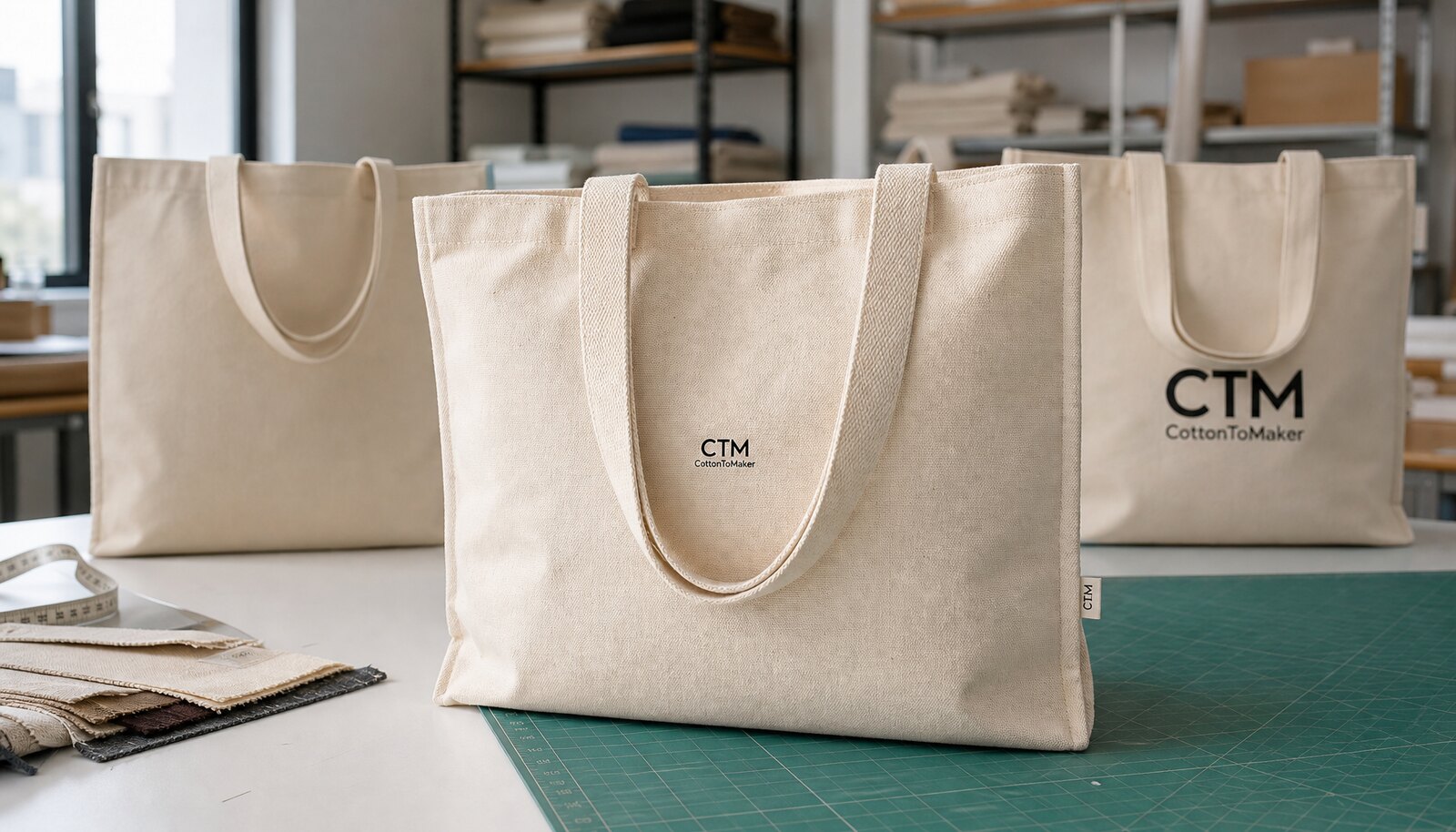
Start with the hotel use case, not the tote style
Hotels buy printed canvas shopping bags for different reasons, and the job matters more than the bag category. A tote sold in the lobby shop needs a cleaner presentation, more consistent print quality, and stronger shape retention than a free giveaway handed out at check-in. A bag used for in-room merchandising or conference retail may prioritize speed, price, and volume instead. If procurement skips that first decision, suppliers will quote different products and call them equivalent.
The fastest way to lose control of a bulk order is to write a generic bag spec and then compare prices. A bag for brochures and slippers is not the same product as a retail tote meant to sit on a shelf next to premium hotel-branded items. Decide where the bag will be used, who will carry it, what it will hold, and how visible the brand needs to be. That context drives fabric weight, print method, handle construction, and packing.
- Retail tote: prioritize presentation, shape, and print clarity.
- Amenity or welcome bag: prioritize ease of folding and lower unit cost.
- Destination souvenir bag: prioritize sturdier canvas and better print durability.
- Conference or event bag: prioritize lead time, consistency, and easy warehouse handling.
Choose fabric weight and construction before you negotiate price
For most printed canvas shopping bags for hotels, 10 oz to 12 oz cotton canvas is the practical baseline. It is heavy enough to feel credible in a retail setting, but not so heavy that the bag becomes expensive to sew, pack, or ship. If the tote is meant to sell as merchandise or needs to stand upright on a shelf, 12 oz to 14 oz is often the more commercial choice. If the bag is only for light gifting, 8 oz to 10 oz can work, but buyers should accept a softer body and a less premium hand feel.
Construction details usually matter more than buyers expect. A flat tote is easier to produce and lower risk on carton space, but a light gusset helps the bag stand open and hold small retail items more naturally. Reinforced handles, secure bar-tacks, and a clean top hem often do more to improve performance than adding unnecessary thickness. Ask the supplier to explain exactly how the bag is assembled, not just what fabric it uses.
- Specify fabric weight in both oz and GSM if possible.
- Ask for the weave, finish, and weight tolerance range.
- Confirm whether the bag is unlined, single-layer, or lightly lined.
- Set handle width and handle drop in the spec, not in a later email.
Match the decoration method to the artwork and reorder plan
Screen print is still the default choice for many hotel logos because it gives solid color coverage, clean edges, and reliable repeatability on canvas. It is usually the most cost-effective method when the design is simple and the order will repeat. Heat transfer and digital print become more relevant when the artwork has multiple colors, small details, gradients, or variable destination names. Those methods can solve a design problem, but they also introduce more risk around abrasion, fold lines, and fabric texture.
The right question is not which method looks best in a sample room. It is which method will still look acceptable after the tote has been folded, packed, shipped, and handled by guests. On coarse canvas, very fine text can break up or lose sharpness. That is why buyers should approve the final artwork at production scale, on the actual fabric, before mass run. If brand precision matters, ask for a strike-off or print proof on the same material, not just a digital mockup.
- Use screen print for one to three solid colors and stable repeat orders.
- Use transfer or digital print when the artwork complexity justifies the added control.
- Avoid tiny fonts and fine linework on rough canvas unless the proof proves legibility.
- If color accuracy matters, ask for a Pantone reference or an agreed visual standard.
Use a quote matrix so supplier pricing is actually comparable
Wholesale quotes for printed canvas shopping bags often look cheaper than they are because the scope is incomplete. One supplier may include print setup, another may not. One may quote bulk packing, another may charge separately for folding, bagging, or carton changes. Procurement should force every bidder onto the same comparison base: identical bag size, identical fabric weight, identical print area, identical packing format, and identical shipping term. Without that normalization, the price gap is mostly noise.
A serious buyer should compare more than the ex-factory number. The landed cost is affected by one-time setup charges, sample fees, carton size, gross weight, and whether the supplier can keep the same production standard across reorders. If the hotel brand will reorder every season, a slightly higher unit price can still win if the supplier has cleaner sampling, fewer corrections, and a more stable lead time.
- Separate one-time setup costs from recurring unit price.
- Ask every bidder to quote the same artwork size and print color count.
- Compare carton size and gross weight, not just bag price.
- Ask whether sample fees are refundable or credited against bulk volume.
Compare supplier routes before you commit to MOQ
There are usually three sourcing routes for hotel tote programs: direct factory, trading company, and local print partner. Direct factory sourcing is usually best for repeatable programs, because it gives you clearer control over the fabric, stitching, and packing standard. A trading company can be useful if the hotel needs multiple categories consolidated into one shipment, but it adds another handoff and can blur accountability when something is wrong. A local printer can make sense for short-run trials, but the total cost per bag can rise quickly once the blank bag, printing, labor, and local delivery are all added together.
The right route depends on how stable the program is. A new hotel opening may need speed and lower MOQ more than perfect unit economics. A mature property or chain program should push harder on repeatability, documentation, and golden-sample control. If the bag will be used across several properties, version control is critical: same base bag, same print position, same label standard, same carton mark system, and the same approval history.
- Use direct factory for recurring SKUs and controlled specifications.
- Use a trading company only if it improves sourcing, consolidation, or communication.
- Use local print-on-demand for trials when MOQ is the main barrier.
- Do not compare a local retail-ready bag with a factory ex-works quote unless all local handling costs are included.
Understand MOQ, lead time, and schedule risk before you promise launch dates
MOQ is not always a single number. A factory may set one minimum for the bag body, another for each print color, and another for labels, packaging, or dyed fabric. A one-color logo on standard natural canvas can be relatively easy to source. A fully custom program with dyed material, multiple print passes, branded labels, and retail packing usually raises the minimums quickly. Buyers should treat MOQ as a bundle of production constraints rather than a simple sales number.
Lead time also depends on what is already available. If the supplier has stock fabric and a stable print process, standard production can move quickly after sample approval. If the bag needs dyed fabric, special finishing, or a busy season schedule, the timeline stretches. For hotels, this matters because opening dates, seasonal promotions, and conference calendars are fixed. Also ask the factory about holiday shutdowns and port congestion risks, especially if the order depends on a specific ship window.
- Ask for MOQ by fabric color, print color count, and packaging format.
- Confirm whether mixed destinations or artwork versions can share the same production run.
- Get the production calendar in writing, including any regional factory holiday closures.
- Build in approval time for artwork, strike-offs, and packaging confirmation.
Check compliance and documentation for the market you are shipping into
Printed canvas shopping bags for hotels are often sold to guests, so procurement should treat them as consumer goods, not casual giveaways. That changes the documentation standard. If the hotel group requires sustainability claims, ask for evidence rather than marketing language. If the bag is advertised as organic cotton, request the relevant certification scope. If the bag is marketed with recycled content, ask how that content is verified. If the bag will be sold in the EU or UK, ask whether the supplier can support the local textile, chemical, labeling, and packaging requirements that apply to the destination market.
The right compliance file depends on the route and region. OEKO-TEX Standard 100, GOTS, REACH-related declarations, restricted substance lists, and packaging compliance documents may be relevant, but only if they match your sales market and brand policy. For social compliance, do not rely on a website logo. If the hotel chain requires an audit standard such as BSCI, SMETA, or another approved framework, ask for the current report scope and date. The point is traceability, not paperwork volume.
- Ask for material declarations if the bag is sold retail or shipped across borders.
- Confirm whether sustainability claims are supported by current certification or traceability documents.
- Check label requirements for fiber content, origin, and local language rules where applicable.
- If your brand has a supplier code of conduct, send it with the RFQ instead of discussing it after pricing.
Write QC limits that a factory can inspect instead of vague quality language
Quality control for canvas totes needs measurable criteria. A buyer should not ask for a 'good print' or 'clean stitching' and leave it there. Define what the factory must check, how it will inspect it, and what counts as a defect. A practical retail standard usually includes size tolerance, print placement, color consistency, seam integrity, handle reinforcement, and packing quality. If you do not define the limit, the supplier will treat the sample as an approximate reference rather than a pass-fail benchmark.
The most useful QC plan is one the supplier can actually execute on the line. Ask for an AQL plan or the factory's standard inspection method, then align it with your own risk tolerance. For hotel retail, major defects should be tightly controlled because the bag is a visible brand item. A tote with misregistered artwork, weak handles, or packing damage becomes a customer-facing problem, not just a warehouse issue.
- Set a size tolerance for width, height, and gusset before the order starts.
- Define acceptable print shift and reject obvious misregistration, blur, or smudging.
- Agree a color reference and inspect against the approved sample under consistent light.
- Reject skipped stitches, loose ends, open seams, and weak handle reinforcement.
- Require carton count reconciliation against the packing list before shipment release.
Get the packing, carton, and warehouse spec right the first time
Packing can change the real landed cost more than buyers expect. A tote that is folded badly can show heavy crease lines across the logo and arrive as a lower-value product, even if the sewing is fine. Carton dimensions matter as well, because they affect ocean pallet efficiency, air chargeable weight, and the ease of manual receiving. If the hotel distribution team handles the cartons by hand, the gross weight should be chosen for handling convenience, not only for container efficiency.
Decide early whether the bags need individual polybags, a belly band, or only bulk packing. Retail display programs sometimes justify a cleaner presentation layer, but bulk packing is often enough for back-of-house distribution and reduces plastic use. Whatever format you choose, the carton should protect the print face, the style code should be obvious, and the counts should reconcile cleanly against the PO. If the destination uses warehouse scanning or property-level distribution, ask for barcode or carton-mark details at the quote stage.
- Define fold direction so the printed face is protected in the carton.
- Set carton labeling for style, color, size, PO number, and destination.
- Keep carton weight at a level your warehouse can handle without rework.
- Ask whether palletization, corner protection, or master carton marks are included.
Turn the buying checklist into a controlled RFQ package
The best wholesale buying checklist is one that becomes a clean RFQ. The supplier should not have to guess at the bag dimensions, artwork size, print method, packing method, or delivery term. Include the hotel's use case, target quantity, expected reorder pattern, and any compliance or documentation needs. The more complete the RFQ, the easier it is to spot pricing gaps, sample issues, and scope creep before the order is placed.
For multi-property hotel groups, version control should be part of the RFQ from the beginning. If the same tote will be used across several properties or regions, specify what can stay standard and what can change. That prevents unnecessary tooling changes and helps the supplier hold a stable baseline. It also makes future reorders much easier because the approved spec already exists in a form that procurement, branding, and operations can all reference.
- Attach artwork, size spec, and color reference to the RFQ.
- State the purchase intent: one-time launch, seasonal program, or recurring replenishment.
- List all packaging and labeling requirements up front.
- Ask for a written production timeline with sample, approval, and shipment milestones.
Specification comparison for buyers
| Decision area | Options to compare | Main cost drivers | Practical decision threshold |
|---|---|---|---|
| Supplier route | Direct factory, trading company, local print partner | Middleman margin, sample handling, communication speed, consolidation needs | Use direct factory for repeat programs and controlled specs; use a trader only if they add real sourcing value; use local printing for very low MOQ trials |
| Fabric weight | 8 oz, 10 oz to 12 oz, 12 oz to 14 oz canvas | Raw fabric usage, sewing difficulty, carton weight, perceived retail value | 8 oz works for giveaways; 10 oz to 12 oz fits most hotel retail and merchandising; 12 oz to 14 oz is better when the bag must stand up or sell at a premium |
| Bag structure | Flat tote, light gusset, full gusset, lined tote | Fabric consumption, sewing time, carton volume, shape retention | Choose flat for light brochures or gifts, light gusset for general retail, and full gusset only when the bag needs real carrying volume |
| Decoration method | Screen print, heat transfer, digital print | Setup fees, color count, artwork complexity, abrasion resistance | Screen print is usually strongest for simple hotel logos; move to transfer or digital only when the artwork justifies the extra control work |
| Packing format | Bulk pack, folded with band, individual polybag | Labor, plastic use, presentation standard, receiving efficiency | Bulk pack is best for distribution; polybag or belly band is worth it only when the bags are sold retail or displayed in a gift shop |
| Handle spec | Self-fabric handles, cotton webbing handles, longer shoulder drop | Material cost, reinforcement stitching, perceived quality | Cotton webbing is usually the better retail choice; shorter handles are acceptable for brochure bags but not for shopping use |
| Compliance package | Basic packing list, material declaration, audit/certification files | Testing fees, document collection time, third-party verification | Ask for documentation if the bag is sold retail, shipped into regulated markets, or included in a chain-wide sourcing program |
| Lead time structure | Stock fabric, dyed fabric, special finishing, seasonal capacity | Material availability, print setup, factory calendar, shipping lane | Standard programs can move quickly if fabric is in stock; dyed fabric, special labels, or peak season schedules extend the timeline materially |
Buyer checklist before sampling
- Define the hotel use case first: guest retail, welcome gift, in-room merchandising, event resale, or outlet packaging, because each one has a different target cost, finish, and presentation standard.
- Lock the bag dimensions in millimeters or inches, then specify the fabric weight in oz or GSM so suppliers do not substitute a lighter canvas than the sample.
- Choose the print method based on the artwork, not the quote alone. Simple logos usually suit screen print; detailed artwork may justify transfer or digital print if durability is acceptable.
- Specify handle type, handle width, handle drop, and attachment stitching. A tote that is hard to carry will not perform well, even if the print looks strong in photos.
- Ask for the full quote basis: bag body, print setup, sample charges, packing format, carton spec, and freight term. A low unit price is meaningless if the rest of the scope is undefined.
- Request a pre-production or golden sample made with the same fabric, print method, thread color, and packing method as the bulk order.
- Set the carton, fold, and label requirements before confirming the PO so the bags arrive clean, countable, and ready for warehouse receiving.
- Ask for material declarations and any relevant compliance files early if the bag will be retailed or shipped into markets with textile and chemical restrictions.
- Agree the acceptance criteria in writing: print placement, color tolerance, seam quality, size tolerance, and defect limits before mass production starts.
Factory quote questions to send
- What is the exact canvas weight, weave density, and finish, and what tolerance range do you allow on the production lot?
- Which print method are you quoting, how many colors are included, and what setup, screen, or plate charges apply?
- What is the MOQ by bag size, fabric color, print color count, and label or packaging option?
- Can you quote the same bag with and without a gusset so we can compare landed cost against carrying capacity?
- What is the handle material, handle width, handle drop, and reinforcement method at the stress points?
- What are the approved size tolerances for width, height, gusset, and handle length, and how do you inspect them?
- How will the bags be folded and packed, how many pieces per carton, and what are the carton dimensions and gross weight?
- What sample will you send for approval, how long does it take, and will the bulk match the approved sample exactly?
- What documents can you provide with shipment, including packing list, carton marks, material declarations, and any audit or test records if required?
- Which issues most often delay production on this style, and what should we approve early to avoid schedule slippage?
Quality-control points to confirm
- Fabric weight should stay within the agreed tolerance. For a procurement spec, treat a visible drop in hand feel or stiffness as a rejection risk even if the supplier says the lot is within range.
- Measure width, height, and gusset against the PO. Set a practical size tolerance before launch, typically tight enough that the bag still folds and displays consistently across properties.
- Print placement should be centered and aligned. Reject obvious skew, ghosting, pinholes, banding, or any shift that makes the logo look off-center to the eye.
- Use a documented color reference. If Pantone matching matters, agree an acceptable delta before production; otherwise inspect against the approved sample under daylight or a standard light source.
- Reject smudging, cracking, or weak ink coverage on the main logo area. For bags that will be folded and reopened, also check the print after handling and re-folding.
- Handle stitching must be even, secure, and symmetric. Reject skipped stitches, loose thread tails, uneven bar-tacks, or any sign that the handle attachment is not reinforced properly.
- Seams should be straight and closed cleanly, with no open edges or frayed raw fabric showing where the buyer or guest will see it.
- For a practical strength check, fill the bag with the heaviest expected retail load and hold it for a short, defined test period. Reject any seam separation, handle tear, or excessive stretch.
- Packing should protect the print face and preserve shape. Reject cartons that show crushed corners, heavy crease lines across the logo, ink transfer, or bags compressed so tightly that they cannot recover.
- Carton counts, style codes, and destination labels must reconcile with the PO and packing list. Any mismatch should stop shipment until corrected.