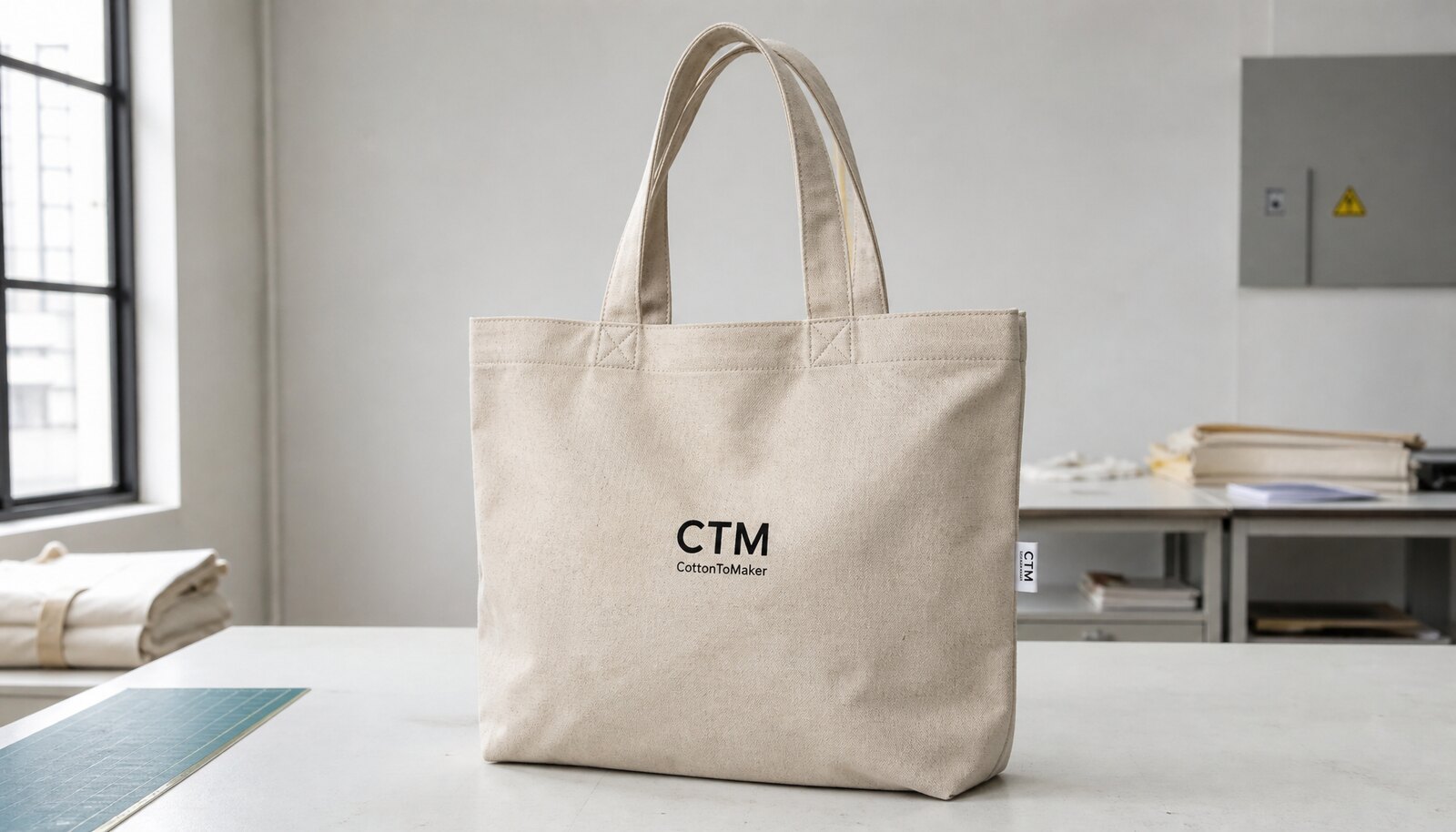
Why gift shop buyers should treat canvas bags as a timing item, not a simple commodity
Printed canvas shopping bags for gift shops are often purchased as a merchandising item, not as a generic utility bag. That changes the buying logic. The bag may sit next to a postcard rack, a museum counter, or a tourist display where appearance matters as much as function. If the print is off-center, the handle feels flimsy, or the bag misses the seasonal launch date, the retail value drops fast.
For procurement teams, the question is not only “what is your unit price?” It is whether the supplier can deliver the same fabric, the same print, and the same packing spec on a repeat schedule. Gift shops often reorder in smaller waves because demand follows visitor traffic, holidays, and exhibit changes. That makes schedule reliability and spec control more important than chasing the cheapest first quote.
This is also why buyer intent needs to be written clearly from the beginning. A supplier can quote a low price on a promotional tote that is good enough for giveaway use, but that same tote may not satisfy a gift shop shelf standard. The difference is often in the details: the handfeel of the canvas, the straightness of the seams, whether the print stays crisp after folding, and whether the pack-out is retail-ready or just production-ready.
A serious sourcing review should therefore look at two commercial questions together: how much does the order cost per piece, and how much schedule risk is embedded in the quote? If a factory needs a lot of back-and-forth to approve artwork, if it cannot explain the real MOQ by SKU, or if the sample process is unclear, the “cheap” quote can become the expensive one once the launch date is at risk.
- Treat timing as part of the product specification, not an afterthought.
- Use repeat-order consistency as a selection criterion, especially for gift shop replenishment.
- Separate “quote attractiveness” from “launch reliability” when comparing suppliers.
What changes MOQ most on a printed canvas tote order
MOQ is usually not a single number. It is a commercial outcome created by fabric consumption, cutting efficiency, print setup, sewing flow, and packing labor. A supplier may tell you the MOQ is 3,000 pieces, but that number can move higher or lower depending on the design, the number of colors, the number of sizes, and whether the buyer wants individual retail packing. Procurement teams should therefore ask for MOQ by version, not just one headline number.
The first variable is fabric and construction. An 8 oz to 10 oz canvas tote is usually the most practical range for gift shops because it looks more substantial than a promotional bag without making the piece slow to sew. Once you move to heavier canvas, reinforced lining, or added structure, the factory may need more time per piece and may reserve a larger production slot. That can raise MOQ or create a higher price tier.
The second variable is artwork. A one-color screen print on the front panel is the easiest configuration to quote and run. Add a second color, a back print, or a more detailed illustration, and the print setup becomes more sensitive to alignment, curing, and yield. Fine text, tonal shading, or a small logo near a seam can increase reject risk. If the design is visually ambitious, ask the supplier which print method it recommends before discussing quantity.
The third variable is color strategy. Natural canvas generally gives the most efficient route because the base fabric is commonly available and does not need shade approval. Custom dyed canvas or color-matched trim usually creates more friction because the supplier must coordinate fabric sourcing and color consistency. For gift shops that want a premium look but limited risk, it is often better to hold the bag body natural and use print or label color for branding instead of custom-dyeing the whole bag.
- Separate MOQ by design, colorway, and packing format before you accept a quote.
- Ask whether the supplier is quoting a real production MOQ or a commercial minimum for that specific artwork.
- If you plan to reorder, ask for the minimum repeat order after the first run; it is often lower than the initial MOQ.
The commercial spec choices that matter most for gift shops
A gift shop tote has to walk a narrow line: it must be affordable enough to merchandise comfortably, but good-looking enough to feel like a retail item rather than a giveaway. That is why the best starting point is usually a medium-weight natural canvas in the 8 oz to 10 oz range, roughly 280–340 GSM. This range gives enough body for display, supports common logo printing well, and still lets sewing stay efficient.
Bag size matters more than many buyers expect. A standard format around 38 x 42 cm works well for books, souvenirs, small boxed gifts, and everyday carry. If you add a gusset for extra volume, you improve utility but also increase cutting complexity and carton size. Oversized bags can drive freight costs up quickly, especially if the buyer later needs air shipment for a seasonal deadline. The apparent unit savings on fabric can disappear in logistics.
Handle style should also be chosen with the retail use case in mind. Short handles make the bag convenient for hand carry and usually cost less. Long handles around 60–70 cm make the bag more versatile for shoulder carry and are often preferred in tourist-heavy stores. But the handle length itself is only part of the story. The attachment method, bartack position, and stitch density determine whether the tote survives repeated use without seam issues.
For print, the practical rule is simple: keep the artwork compatible with the production method. Screen printing is usually the most cost-effective route for simple logos, one- to two-color branding, and repeat reorder programs. If the artwork includes gradients, tiny text, photographic detail, or several color breaks, ask the supplier whether another method is more realistic. Trying to force difficult artwork into the cheapest method often creates poor registration, dull color, or a sample that looks acceptable in hand but weak on the sales floor.
- Choose a size that matches the actual gift assortment, not just a generic tote dimension.
- Use one clear brand mark rather than crowding the bag with too much text.
- If the bag will be displayed on hooks or pegs, test how it hangs when folded and filled.
How factory quotations usually build MOQ and unit price
A useful factory quote should show the cost logic behind the number, not just the final amount. When buyers only see one unit price, they cannot tell whether the supplier is giving a competitive real price or simply hiding setup in the margin. For printed canvas shopping bags for gift shops, the quote should ideally separate fabric cost, printing cost, sewing cost, packing cost, and any special handling such as polybagging or barcode application.
Fabric cost is usually the most visible driver, but not always the biggest risk. If the supplier quotes a low canvas weight, the price may look attractive while the bag loses retail appeal. Conversely, if the buyer requests a very heavy canvas, the extra fabric and slower sewing can lift the unit price and may also lengthen the production schedule. Ask the supplier to show the fabric weight it is using and whether that weight is measured before or after finishing.
Printing costs are commonly tied to the number of colors, the print area, and the number of print locations. A single logo on one side is the cheapest setup. A front-and-back print, or a design that needs a white underbase, adds screens, setup time, and quality risk. If the art is color-heavy, the buyer should ask for an itemized comparison between two simpler art versions and the preferred premium version. That comparison is often more valuable than negotiating the unit price line by line.
Packing also affects the commercial result. Flat-fold bulk packing is usually the most efficient. It reduces labor, carton volume, and often the chance of damage in transit. Retail-ready packing, individual polybags, hanging tags, and barcode stickers all add labor and materials. They are not necessarily bad choices, but they need to be acknowledged in the quote comparison. A quote that omits packing is not cheaper if another supplier has already included it in the unit price.
- Ask for an itemized quote or at least a quote that labels what is included and what is excluded.
- Compare fabric weight, print colors, and packing method before comparing unit price.
- If a quote looks unusually low, ask which cost element has been reduced or removed.
Supplier routes: which sourcing path fits a gift shop program
Most buyers will evaluate at least three sourcing routes: factory-direct, trading-company, and local decorator or import intermediary. Each route can work, but they behave differently when artwork changes, when the order is small, or when the gift shop needs a repeatable replenishment schedule. Choosing the right route is not about ideology; it is about how much visibility and control the buyer needs.
Factory-direct sourcing usually offers the cleanest path when the order is meant to repeat. The sewing team, print team, and packing team are closer to the same schedule, which makes it easier to troubleshoot if something goes wrong. It also makes quote comparison more transparent because the buyer can ask direct questions about print setup, material availability, and production bottlenecks. The tradeoff is that factory-direct sourcing may require cleaner artwork files and firmer spec discipline from the buyer.
Trading-company sourcing can be useful if the buyer wants to coordinate several product types or does not have time to manage multiple factories. The downside is that the real production constraint can be less visible. A trading company may give a smooth commercial answer, but it may still need to go back to the factory to confirm whether the requested color, size, or packing format is actually feasible at the quoted MOQ. That can slow corrections and make lead time less predictable.
Local decorators or regional importers are sometimes useful for emergency replenishment or very small runs. They can be faster for simple art because communication is direct and shipping distances are shorter. However, once the order grows beyond test volume, local conversion often becomes less cost-efficient than factory-direct sourcing. For buyers who need both price and repeatability, the main question is whether the route can support the next reorder without changing the spec or moving the launch date.
- Use factory-direct when repeat consistency, cost clarity, and schedule control matter most.
- Use trading routes when you need broader sourcing support but can tolerate less transparency.
- Use local or regional conversion for urgent, simple jobs where speed matters more than unit cost.
How to compare quotes without being misled by a low price
The strongest quote comparison starts with a common spec sheet. If two suppliers are quoting different fabric weights, different print areas, or different packing formats, their prices are not actually comparable. The easiest way to avoid false savings is to send the same artwork file, the same dimensions, the same bag construction, the same packing request, and the same delivery basis to every supplier. Then ask each supplier to confirm what it changed, if anything, to hit its price.
A practical procurement review should include more than unit price. Ask for the MOQ per design, any extra cost for a second print color, the charge for custom packing, the sample fee, the lead time broken into stages, and the estimated carton dimensions. A cheap tote price can become expensive once the freight carton is larger than expected or the supplier charges separately for every added label, polybag, or correction sample.
It is also worth asking which assumption would invalidate the quote. For example, if the supplier priced the job using stock natural canvas, what happens if the buyer later requests dyed fabric? If the quote assumes a single-front print, what is the delta for a back print? If the quote includes bulk packing, what is the surcharge for retail-ready packing? Those “what if” questions expose the real commercial flexibility of the supplier.
When comparing factories, beware of quotes that are vague about included services. If one supplier is clearly explaining production stages and another only gives a final number, the second may not be cheaper—it may simply be leaving out a cost bucket. The safest comparison is the one that lets you predict the landed cost, not just the factory gate price.
- Keep one RFQ version and one artwork version for all suppliers.
- Ask what changes the MOQ tier and what changes the price tier.
- Request carton size and gross weight before choosing between sea, air, or mixed freight.
Lead time review: a realistic breakdown by production stage
A standard lead time for printed canvas shopping bags for gift shops is often around 35 to 50 days after sample approval when the fabric is available and the artwork is final. That headline range is useful, but it hides the real schedule logic. Procurement buyers need to know where time is consumed so they can manage bottlenecks before the order slips.
The first stage is pre-production alignment: artwork check, dimension confirmation, print position confirmation, and packing instruction review. This step can be fast if the buyer sends clean files and a clear spec, but it can also become the longest part of the order if the artwork changes several times. Many delays happen before a single bag is cut. If you are buying for a seasonal launch, this is the stage that deserves the most attention.
The second stage is sample making and approval. For a bag order with straightforward print, a sample may move quickly. But if the buyer needs to verify exact color, logo placement, handle length, or retail folding, the sample should be treated as a true approval gate. Skipping a physical sample may save a few days, but it increases the risk of a repeat run being wrong at scale. If the order is time-sensitive, use a sample schedule that includes enough time for internal review and revision, not only the factory’s turn time.
The third stage is bulk production: fabric preparation, cutting, printing, sewing, finishing, and inspection. Here the bottleneck depends on the specification. A simple one-color tote usually moves smoothly. More colors, heavier fabric, or special labels slow the line. If a factory says it can produce quickly but cannot explain which step controls the schedule, that is a sign the timeline may be optimistic.
The final stage is packing and booking. Even when production finishes on time, the order can still miss the ship date if packing instructions are unclear, cartons are not labeled correctly, or freight booking is late. Buyers should therefore ask the supplier to provide a stage-by-stage plan, not one combined date. If the order is tied to a tourist season or store opening, keep a contingency buffer in the purchase plan. A few extra days in the schedule is often cheaper than an emergency shipping solution.
- Separate schedule risk into sample time, bulk time, inspection time, and freight booking time.
- Treat artwork approval as a gating item, not admin work.
- Add buffer time for peak season, custom packaging, or repeated sample revisions.
QC acceptance thresholds that are specific enough to use in a PO
Quality control on a gift shop tote should be written in measurable terms. Vague language such as “good quality” or “no defects” is not enough for procurement use. A buyer needs criteria that a factory, inspector, and receiving team can all understand in the same way. The goal is to prevent disputes after arrival by deciding what counts as acceptable before production starts.
For finished size, buyers commonly set a working tolerance of about +/- 0.5 cm to 1.0 cm on key dimensions for standard tote programs, unless the artwork or display requirement is more demanding. If the bag is going to be shelf-folded or hung in a precise retail display, the buyer should tighten the tolerance on the critical dimension and record it in the spec sheet. The same approach should be used for handle drop, gusset depth, and print position.
For print, acceptance should cover position, color density, clarity, and cure quality. The print should be centered or placed within the agreed tolerance, with no major offset, smudging, or ghosting. A basic bend or rub test should be performed after curing so the buyer does not accept artwork that looks good only when untouched. For simple logos, the buyer should also confirm legibility at actual use size, not just on a digital proof.
For stitching, the buyer should look at handle reinforcements, bottom seams, and side seams. A tote that fails at the handle attachment point can create complaints very quickly because that is the part users stress most. The QC sheet should specify that there must be no skipped stitches, broken thread, uneven bartacks, or open seams. If the bag uses any contrast thread or decorative stitching, the buyer should set an appearance standard as well, because uneven stitching is visually obvious on canvas.
For packing, the inspection should confirm piece count per carton, carton marks, barcode application, inner pack method, carton integrity, and shipping label accuracy. Buyers should also check for odor, stains, loose thread, contamination, and fabric damage from folding or print rubbing. A pre-shipment inspection is most useful when it samples from multiple cartons rather than only the outer layer. If the lot is large, ask for random carton picks from different pallets or stack positions. That is where hidden problems usually appear.
- Set tolerances in writing for size, print position, and carton count.
- Inspect from multiple cartons and not only the top layer.
- Require photo evidence of packed cartons, labels, and sample measurements before release.
Sample approval and pre-shipment checklist: what to verify before you pay the balance
A good sample process should reduce uncertainty, not just create a nice-looking photo for the buyer’s record. The sample should be checked against the actual selling purpose: can it hold the intended items, does it look premium enough for a gift shop, does the print remain sharp after folding, and is the handle length comfortable for the intended shopper? A sample that passes visually but fails in use is not a real approval.
When the physical sample arrives, use a short but disciplined checklist. First, verify dimensions and compare them with the approved spec. Second, inspect the canvas surface for yarn defects, shading differences, stains, and inconsistent handfeel. Third, evaluate the print under normal light and after gentle folding, because tote bags are not stored flat forever. Fourth, test the handle attachment with reasonable pull force and inspect the stitching at all load points. Fifth, check the fold and carton fit if the bags are sold from a display table or peg wall.
For pre-shipment review, the buyer should ask the supplier or inspector to confirm that the bulk lot matches the approved sample in fabric weight, print location, and pack-out. If the order involves multiple cartons, random inspection should not be limited to the first carton off the line. The buyer should ask for AQL-style thinking even if a full formal AQL program is not used. In practical terms, that means sampling enough pieces from enough cartons to catch a batch-level issue rather than a single obvious defect.
The pre-shipment checklist should also include commercial items. Confirm the final piece count, carton count, gross weight, net weight, shipping marks, and the invoice description. If a barcode or hangtag is required for retail receipt, check placement and scan quality before shipment. The goal is to avoid a situation where the goods are technically produced but cannot be sold or received efficiently because the packing data is wrong.
- Approve samples only against the final spec, not against a revised verbal promise.
- Check both appearance and use: carry function, display function, and pack function.
- Before balance payment, verify carton count, marks, and inspection evidence.
Practical sourcing tactics and red flags in supplier communication
A procurement buyer can save time by asking the right questions in the first reply. Instead of asking for a “best price,” send a compact RFQ with bag dimensions, canvas weight target, print colors, packaging requirement, target quantity, and delivery window. Then ask the supplier to reply with MOQ, lead time, setup charges, sample path, and any limitations. The quality of the response tells you a lot. Suppliers that answer clearly and in the same structure are usually easier to work with later.
There are several red flags worth watching. One is a quote that is very cheap but avoids answering whether the price includes printing setup, packing, or carton labeling. Another is a supplier that says “no problem” to every artwork request without noting any production limits. Overpromising at the quoting stage often becomes delay later when the factory has to renegotiate because the design is harder than expected. A third red flag is a supplier that cannot tell you how it will inspect handle strength or print placement. If it cannot describe its own quality process, the buyer should assume the process is not mature.
Useful verification steps are straightforward. Ask for photos of similar jobs with the same fabric weight and print style, not just generic product pictures. Request a written breakdown of what is included in the sample fee and whether the sample is refundable against the bulk order. Confirm that the supplier understands the destination market’s packaging expectations, especially if the bags must arrive shelf-ready or barcode-ready. If possible, compare at least two suppliers on the same day so the commercial terms stay aligned with the same market conditions.
The most practical tactic for repeat programs is to lock the specification early and preserve it. Keep one approved sample, one signed spec sheet, and one photo record tied to the purchase order. When the next reorder comes, the buyer can reference that archive instead of rebuilding the order from scratch. That reduces quote drift, prevents material substitutions, and makes lead time more predictable.
- Use a structured RFQ so every supplier answers the same questions in the same order.
- Watch for vague inclusions, universal “yes” answers, and missing QC detail.
- Save an approved sample and spec archive for reorders to reduce drift and delay.
Specification comparison for buyers
| Decision area | Option A: lower-cost standard | Option B: balanced retail-ready | Option C: premium / higher-control | Commercial impact on price and lead time |
|---|---|---|---|---|
| Fabric weight | 6–7 oz / 200–250 GSM | 8–10 oz / 280–340 GSM | 10–12 oz / 340–400+ GSM | Lighter fabric lowers fabric cost and can shorten sewing time; heavier fabric increases material cost, carton weight, and sometimes sewing time |
| Canvas construction | Plain canvas, no lining | Plain canvas with reinforcement at stress points | Heavier weave, optional lining or board insert | Plain construction keeps MOQ and lead time lower; reinforcement or lining adds labor and inspection steps |
| Print method | 1-color screen print | 1–2 color screen print with clear registration control | Heat transfer, multi-step print, or specialty finish | Simple screen print is usually the fastest and most economical; complex art and special effects extend setup and raise scrap risk |
| Artwork complexity | Large logo, few solid areas | Logo plus small secondary copy | Multi-location branding or detailed illustration | Each additional color or print position adds setup and inspection time |
| Bag size | Small souvenir tote or compact carry bag | Common retail size around 38 x 42 cm | Oversized or gusseted merch tote | Larger bags increase fabric use, cutting time, carton volume, and freight exposure |
| Handle style | Standard short handles | Long shoulder handles | Reinforced long handles or contrast handle build | Longer or reinforced handles add sewing time but may improve sellability in gift shops |
| Color approach | Natural canvas only | Natural or one dyed base color | Custom dyed body and contrast trims | Natural base is usually fastest; dyed canvas can add material lead time and color-matching approval |
| MOQ structure | One SKU, one print, one carton spec | One design with one or two colorways | Multiple designs or mixed pack program | More SKUs reduce efficiency and often raise MOQ per SKU; mixed packs need more pack control |
| Packing format | Flat-fold bulk packed | Flat-fold bulk with barcode or hangtag | Retail-ready individual polybag or gift packaging | Bulk flat-fold is fastest and cheapest; retail-ready packing adds labor, materials, and carton volume |
Buyer checklist before sampling
- Confirm the final bag size, gusset depth, handle drop, and target loading weight before asking for a quote.
- Specify fabric type, GSM or oz weight, acceptable color tolerance, and whether shrinkage matters for your shelf display.
- Send vector artwork and define logo size, print placement, number of colors, and Pantone references if color match matters.
- Ask for a physical pre-production sample, not only photos, before you release mass production.
- Agree carton packing, barcode or hangtag needs, carton marks, and shipment labeling before production starts.
- Record inspection checkpoints for stitching, print adhesion, size tolerance, odor, stains, and quantity count.
- Ask the factory how it will handle reprint, repair, or replacement if sample-approved details do not match the bulk lot.
- Keep the RFQ tied to one spec version so quote comparison, sample approval, and inspection all use the same requirements.
Factory quote questions to send
- What fabric weight and weave are you quoting, and is the GSM measured before or after finishing and washing?
- Which print method is included, how many colors does the quoted price cover, and what setup fees or screen charges apply?
- What is the real MOQ per artwork, color, size, and packing format, and what changes if we reduce any of those variables?
- How many days are required separately for sample making, sample approval, bulk production, inspection, and export packing?
- What packing method is included in the quote, and how many pieces per carton are planned?
- What seam reinforcement, handle stitching, and finished-size tolerance do you use for inspection?
- Can you share the artwork file requirements and the exact print area you will use on the bag?
- What step is most likely to delay this order, and what do you need from us to avoid that delay?
- If the order is repeated later, what can stay unchanged and what must be reconfirmed?
- Will you provide inspection photos, carton measurements, and final shipment weights before dispatch?
Quality-control points to confirm
- Fabric weight should fall within the agreed range, with no obvious thin spots, slubs, stains, or patchy weave zones in the production lot.
- Finished size should stay within an agreed tolerance; for most tote programs, buyers commonly set a working tolerance of about +/- 0.5 cm to 1.0 cm on key dimensions, unless the design is more demanding.
- Print placement should remain centered or position-accurate within an agreed tolerance; for logo-led gift shop bags, a practical control is often within about 0.5 cm to 1.0 cm from the approved position.
- Print quality should show clean edges, proper ink coverage, no ghosting, no major color shift against the approved sample, and no visible cracking on a simple bend test after curing.
- Handle attachment should be reinforced, with no skipped stitches, broken thread, uneven bartacking, or loose seam ends; pull tests should be done on random samples from the lot.
- Seam integrity should be checked at side seams, bottom seams, gusset joins, and handle joins; no open stitches, puckering, or needle damage should be accepted in normal retail orders.
- Carton pack-out should match the purchase order exactly: piece count, carton marks, inner pack format, barcode location, and gross/net weight should be checked before release.
- A pre-shipment inspection should sample from multiple cartons, not only the top layer, and should cover appearance, measurement, print, packing, and quantity count.
- Acceptance limits should be stated in the PO or QC sheet before production; if the supplier will not agree to written limits, the buyer should treat that as a commercial risk.
- Pre-shipment checklist should include odor check, thread trimming, carton strength, tape sealing, shipping mark accuracy, and photo evidence of packed cartons ready for dispatch.