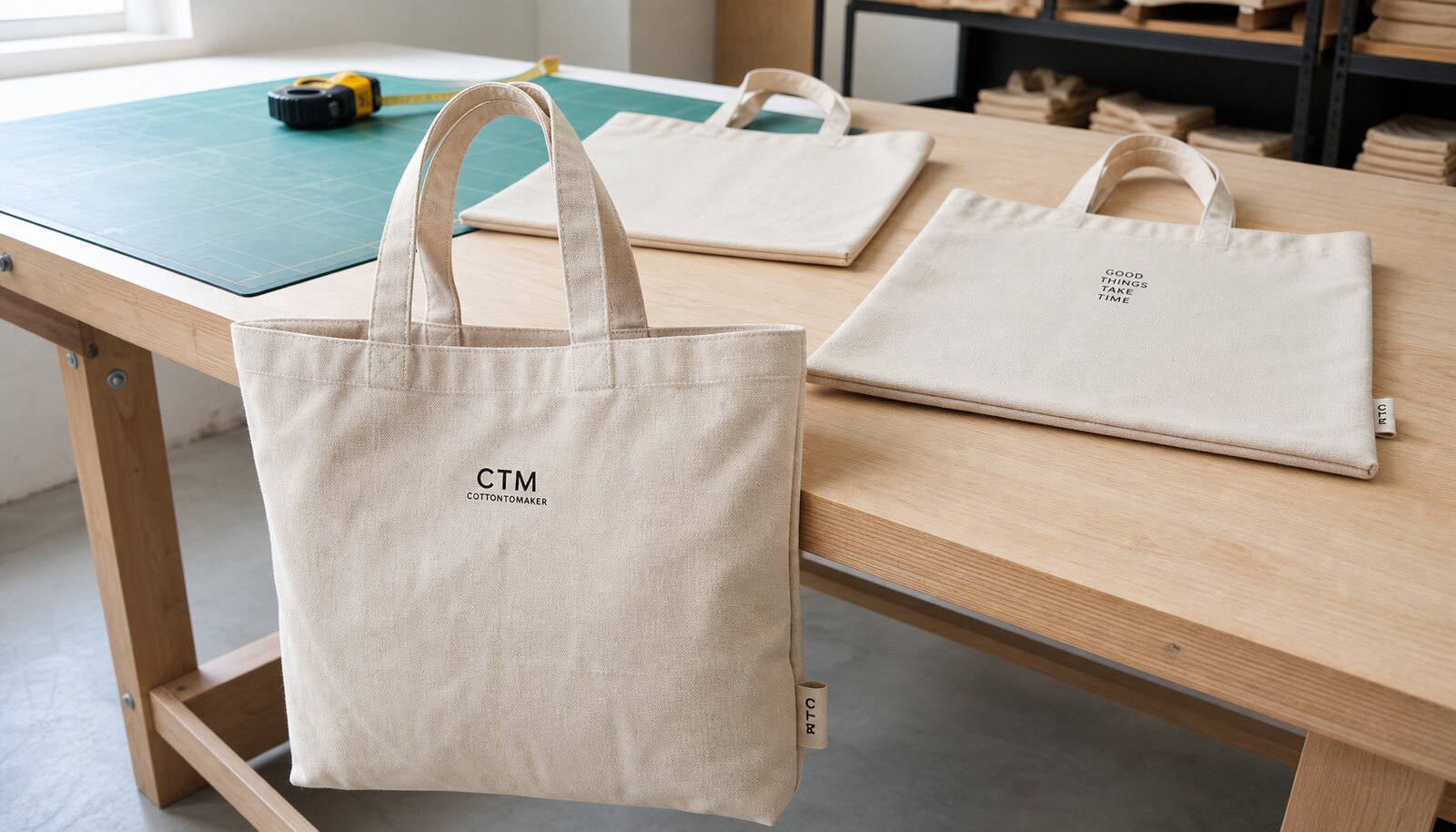
Why printed canvas shopping bags need a pricing plan, not just a unit price
For ecommerce brands, printed canvas shopping bags often get quoted as if they were a simple commodity. In reality, the unit price is only one part of the decision. The bag spec, print method, handle construction, packing format, and shipping volume can change the landed cost more than the supplier’s headline price. If you compare only the ex-factory number, you can end up choosing a cheap quote that is expensive by the time it reaches your warehouse.
A real bulk pricing plan should map the order by use case: is the bag going into an order insert program, a retail add-on, a gift-with-purchase, or a reusable customer carry bag? That answer determines whether you should prioritize fabric body, print durability, fold size, or carton efficiency. A good RFQ makes these priorities visible so each supplier quotes the same target.
- Define the bag’s role before requesting pricing: retail carry, ecommerce insert, or promotional giveaway.
- Use one spec sheet for all quotes so every factory prices the same canvas weight, size, and print coverage.
- Treat freight, carton volume, and packing labor as part of the pricing plan, not afterthoughts.
The spec choices that drive most of the cost
The biggest cost driver is fabric weight. For printed canvas shopping bags, 12oz to 14oz cotton canvas is usually the practical range for ecommerce brands that want a sturdy retail feel without overpaying for unnecessary weight. 10oz can work for lighter gifting programs, but it often looks softer and may wrinkle more in transit. Above 14oz, the bag becomes more structured, but sewing time, needle wear, and freight cost rise quickly.
Print method is the second major cost lever. Screen print is usually the best option for bulk orders with one to three spot colors and a clean logo. It gives stable color, better unit economics at scale, and easier repeatability. If the artwork has gradients, thin lines, or photographic detail, you may need digital printing or heat-transfer style decoration, but those methods need tighter testing because the look can change on textured canvas.
- 12oz-14oz canvas is the common middle ground for ecommerce shopping bags.
- Simple spot-color screen print usually gives the most predictable bulk price.
- Avoid over-specifying heavy fabric or full-coverage art unless the customer-facing value clearly supports it.
How factories build the quote: where the price really comes from
Most factory quotes are built from five parts: fabric, printing, sewing labor, trims, and packing. Fabric cost is affected by weight, width, and whether the factory buys greige fabric and finishes it in-house. Printing cost depends on the number of colors, print area, and screen setup. Sewing labor changes with bag size, handle type, and reinforcements at stress points. Packing labor increases if the buyer wants fold-to-size, individual polybags, barcode stickers, or retail inserts.
When you ask for bulk pricing, make sure the quote separates the bag price from the packing method. A quote that includes retail folding may look only slightly higher, but once you add the extra labor and carton volume, it can be much more expensive than bulk-packed units. The same applies to handle construction: self-fabric handles are often cheaper than webbing handles, but webbing may be better if the bag carries heavier items or needs a more polished retail feel.
- Request cost separated by fabric, print, sewing, and packing if the factory can provide it.
- Ask whether the quote assumes bulk pack, folded pack, or polybag pack.
- If handle reinforcement is upgraded, confirm whether the extra stitching is priced per bag or bundled into the standard sewing rate.
Which sourcing route fits ecommerce brands best
Ecommerce buyers usually have three sourcing routes: direct factory, trading company, or local decorator sourcing blanks. Each route has a different pricing logic. Direct factory sourcing usually gives the clearest control over fabric weight, print, and lead time. Trading companies can simplify communication and sometimes consolidate different bag styles, but they may not control the sewing line or print room directly. Local blank sourcing may reduce freight uncertainty, yet the blank bag often costs more and gives less room to optimize the final specification.
The right route depends on order size and repeat frequency. If the brand is launching a single bag style and expects repeat buys, direct factory sourcing often gives the best bulk pricing plan. If the team needs broad SKU management or wants to test several styles quickly, a trading route can work, but the buyer should still demand the same evidence: sample photos, production capacity, and clear QC ownership.
- Direct factory: best for price control, spec ownership, and repeat orders.
- Trading company: useful for multi-item consolidation, but verify who actually makes the bag.
- Local blanks plus decoration: easier logistics, weaker cost control on the base bag.
Comparison table: supplier options for bulk printed canvas shopping bags
Use the table below to compare sourcing routes before you collect quotes. A low unit price from one route can lose once setup fees, freight, and packing are added. The goal is not to pick the cheapest number on paper; it is to find the route that can hold quality, scale, and lead time together.
For ecommerce brands, the most common mistake is assuming all suppliers are quoting the same product. In practice, one factory may include heavier canvas and stronger handles, while another uses thinner fabric and a simpler pack method. The comparison should start with route, then verify the same spec line by line.
- Write decisions in measurable language, not only descriptive wording.
- Ask for sample photos plus one physical approval sample for important orders.
- Keep quotation, sample approval, and inspection notes tied to the same spec version.
How to set MOQ logic without overbuying inventory
MOQ for printed canvas shopping bags is rarely just a factory policy. It is tied to fabric roll usage, print screen setup, cutting efficiency, and carton planning. A factory may accept a low MOQ on paper, but the unit price climbs because the setup cost has to be spread across fewer bags. For a buyer, that means the cheapest-looking MOQ can become the worst value if the first run is too small for the intended price band.
A smarter approach is to think in SKU logic. If the same bag body can support several print versions, consolidate the body spec and vary only the artwork when possible. That keeps the fabric and sewing cost stable. If you need multiple colors or sizes, ask whether the factory can mix them within a production batch or whether each variant triggers a separate MOQ and separate print setup.
- Consolidate size and construction where possible; vary artwork instead of bag body.
- Confirm whether MOQ applies per color, per design, or per order total.
- Watch for hidden setup costs on screens, plates, or artwork handling.
Sample approval: the checks that protect the bulk order
A printed canvas shopping bag sample should not be approved just because the logo looks good in a photo. The sample has to prove the structure, not only the decoration. Check fabric hand feel, finished dimensions, handle length, stitch consistency, and whether the print sits flat on the canvas without excessive bleed. If the bag is meant for ecommerce inserts, fold it the same way it will be packed in bulk and confirm that the folded size still fits the shipping plan.
Ask for a pre-production sample made from actual bulk materials whenever the order value justifies it. A paper proof or artwork mockup cannot tell you how the ink cures on a rough canvas weave or how the bag behaves after stitching. For brand owners, the sample is the point where the product either becomes a repeatable SKU or a one-off mistake.
- Match sample fabric to the intended bulk GSM or ounce weight.
- Measure finished bag dimensions after pressing, not only cut size.
- Check print edge sharpness, color density, and any cracking at handle folds or seam lines.
Packing, cartonization, and freight: the hidden part of bulk pricing
Packing can change the economics of printed canvas shopping bags more than buyers expect. Bulk-packed bags are usually cheaper to produce and ship because they use less labor and less carton volume. Retail-folded bags, individual polybags, and barcode labeling are useful when the bags go through a distribution center or retail shelf, but each extra step creates labor cost and can reduce carton count. That means the product price and freight price both move upward.
Carton data should be part of the quote, not the last step before shipment. If the factory can tell you how many bags fit per carton, the carton size, and the gross weight, you can estimate shipping cost and warehouse handling earlier. This is especially important for ecommerce brands shipping by ocean, where volume often matters more than the bag’s unit weight.
- Bulk pack lowers cost, but only if your warehouse can receive and repack efficiently.
- Retail folding changes carton quantity and may increase damage from repeated handling.
- Ask for carton dimensions and gross weight before you approve the final purchase order.
Lead time risk: what causes delays in printed canvas orders
The schedule risk in canvas bag production usually comes from three areas: sample approval delays, artwork corrections, and print-room bottlenecks. If the buyer sends a low-resolution file or changes the logo after screen setup, the lead time can stretch even when the factory line is otherwise ready. Fabric availability is another common issue, especially when the order needs a specific shade, wash, or heavy weight that is not in regular stock.
A practical schedule should split time into sampling, approval, material prep, production, and packing. When a supplier gives only one total lead time number, you do not know where the risk sits. For importers, that makes it difficult to align shipping bookings and launch dates. The quote should show what happens if approval is delayed and whether the production slot is reserved after sample confirmation or only after deposit.
- Separate sample time from mass production time.
- Clarify whether fabric is stock-supported or must be woven/finished to order.
- Keep artwork final before screen making to avoid rework delays.
Quote data to compare before you approve the PO
A usable quote for printed canvas shopping bags should give you enough data to compare landed cost, not just ex-factory price. At minimum, it should include bag size, fabric weight, print colors, print area, handle type, packing method, MOQ, sample cost, lead time, carton pack, and the quotation basis such as FOB or EXW. If any of these are missing, the quote is incomplete and may not be safe to compare against another supplier.
The strongest quotes also mention tolerances and assumptions. For example, if the factory allows a small overrun or underrun, that needs to be stated clearly. If the printing cost assumes a standard logo size and the buyer later enlarges it, the quote should say so. This prevents disputes when the final invoice arrives and the factory explains that the original pricing was based on a narrower spec.
- Compare quotes only after confirming the same size, fabric weight, and print coverage.
- Make the incoterm explicit so freight and export handling are not hidden.
- Use one worksheet for sample cost, unit cost, packing cost, and freight estimate.
Specification comparison for buyers
| Spec decision | Recommended option | When it fits | Buyer risk to check |
|---|---|---|---|
| Fabric weight | 12oz to 14oz canvas for retail-ready shopping bags | Best for ecommerce brands that want a bag with enough body to hold shape and survive repeated use | Lightweight 8oz fabric can look cheap and distort under print; heavy fabric raises freight and sewing cost |
| Print method | Screen print for one to three solid-color logos | Useful when the artwork is simple, the order is large, and repeatability matters more than fine detail | Too many colors raise setup cost; fine lines and gradients may fill in or mis-register |
| Artwork complexity | Front-only, 1-2 spot colors, no full-bleed coverage | Good for bulk pricing and faster approval on standard ecommerce inserts or retail carry bags | Overly large print areas can cause cracking, slow curing, and higher scrap if placement drifts |
| Handle style | Self-fabric handles or 25mm cotton webbing handles | Fits most ecommerce shipping kits and mid-market retail gifting programs | Thin handles can cut into the hand under load; weak attachment stitching leads to early failure |
| MOQ route | Single style and colorway with consolidated print screens | Best when the brand can commit to one bag size and one artwork for the first buy | Multiple SKUs split the MOQ and push the unit price up quickly |
| Sampling route | Pre-production sample with actual fabric, print, and trims | Needed when the buyer cares about color matching, handle length, or fold size in carton | A flat artwork proof does not show print density, shrinkage, or real seam behavior |
| Packing style | Bulk-packed with carton dividers or folded retail pack if required | Choose bulk pack when the bags are inserted into ecommerce kits or repacked in-house | Retail folding adds labor and can change carton quantity, volume, and damage risk |
| Supplier route | Direct factory with print and sewing in one facility | Best for buyers who want lower landed cost and tighter control over lead time | Trading routes can be easier to source but may hide subcontracted QC and less predictable scheduling |
| Incoterm strategy | FOB for importers who can manage freight; EXW only if the team controls pickup tightly | FOB usually gives clearer quote comparison across factories | EXW can make a cheap quote look better until trucking, export handling, and paperwork are added |
Buyer checklist before sampling
- Bag size, fabric weight, handle length, and print placement are written in millimeters or inches, not vague terms like 'standard'.
- Artwork file is vector-based and includes pantone references or a clear color target for each print color.
- The quote states fabric GSM or oz, stitch count or reinforcement method, and whether the price includes one side or both sides printed.
- Sample approval includes fabric hand feel, print sharpness, seam strength, and carton packing dimensions.
- Lead time is split into sample time, mass production time, and ship-ready date, with the critical path identified.
- Packing quantity per carton, carton size, and gross weight are shown so landed cost can be checked before booking freight.
Factory quote questions to send
- What exact canvas weight, yarn count, and fabric finish are included in this quote?
- Is the printed price for one side, two sides, or one side plus gusset, and how many colors are included?
- What is the MOQ by colorway and by print design, and can the MOQ be mixed across sizes?
- Do you produce the fabric, print, and sewing in one plant or subcontract any step?
- What is the sample charge, and is it refundable after bulk order confirmation?
- How many cartons fit on one pallet or in one cubic meter, and what is the estimated carton gross weight?
- What overrun or underrun range do you allow, and how do you handle defective units in bulk?
Quality-control points to confirm
- Fabric weight tolerance should be controlled within a practical range of about +/- 5% of the agreed specification.
- Print registration should stay within an acceptable offset for the logo size; large misalignment should be rejected before packing.
- Seam density, bartacks, and handle attachment points should be inspected under load, not only by visual review.
- Bag dimensions should be measured after pressing or folding, because raw cut size can differ from finished size.
- Color matching should be judged against a physical standard under daylight or a controlled light source, not only on screen.
- Carton count, inner pack, and barcode placement should match the buyer’s warehouse receiving method.