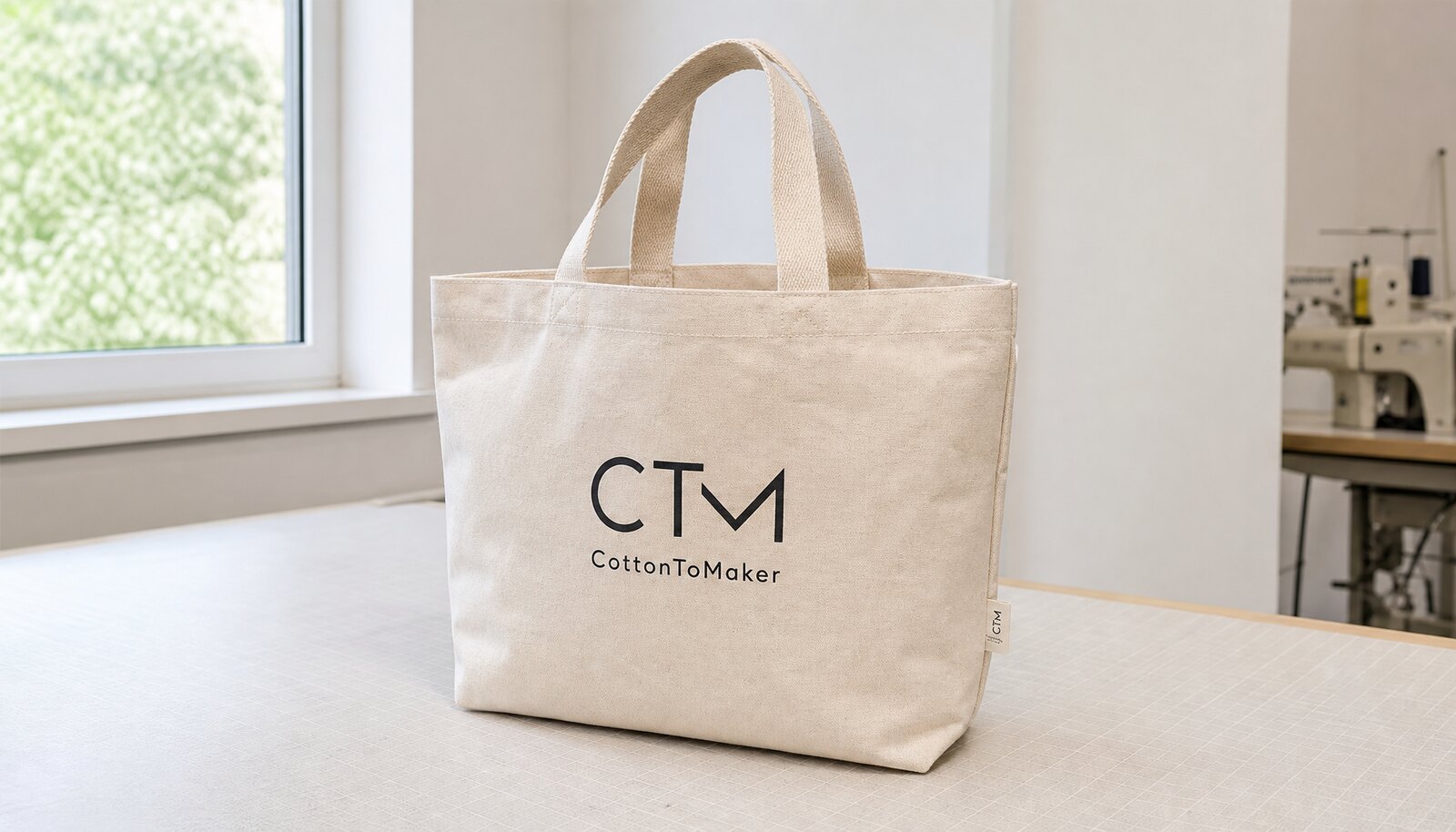
What cosmetic brands usually mean when they request printed canvas shopping bags
For cosmetic brands, a printed canvas shopping bag is rarely just a tote. It is often a retail carry bag, a gift-with-purchase bag, a launch mailer insert, or a reusable bag sold at checkout. That means the buying brief needs to cover appearance, durability, and pack-out behavior in the same document. If the spec only says “printed canvas shopping bag,” the factory will fill in the gaps with its default cloth weight, handle style, and packing method, which is how buyers end up comparing quotes that are not actually the same product.
The useful starting point is to define the job of the bag. A bag used for a cosmetic set with boxed skincare and glass bottles needs stronger canvas and better handle reinforcement than a simple event giveaway. A retail bag for a premium beauty line may also need a cleaner finish, better print registration, and a more refined label or woven tab. Once the function is clear, the factory can quote the right construction instead of padding the price later with change orders.
- Retail shopping bag: visible branding, better finishing, stronger handles.
- Gift-with-purchase bag: lower cost, simpler print, faster production.
- Premium beauty tote: heavier canvas, cleaner stitch lines, better label detail.
- Launch set bag: packing method must match the way the brand ships and stores kits.
Fabric weight drives both price and perceived quality
Canvas weight is one of the first numbers to settle because it affects hand feel, print stability, sewing speed, and freight. For most cosmetic-brand shopping bags, 12 oz to 16 oz canvas, or roughly 340 to 450 GSM, is the practical range. At the lower end, the bag feels lighter and costs less, but the front panel can look less crisp, especially when the print covers a large area. At the higher end, the bag stands better, feels more retail-ready, and tolerates heavier product loads, but sewing gets slower and carton weight rises.
Natural canvas, bleached white canvas, and dyed canvas behave differently under print. Natural canvas has a more organic appearance, but the surface may show slight fiber variation and can mute some colors. Bleached white fabric gives cleaner color reproduction and is often preferred for beauty branding, especially if the artwork uses soft pastels or high-contrast typography. If the brand expects a very clean printed result, the buyer should request a lab dip or swatch approval before the sample stage so the factory does not guess the base fabric tone.
- 340-400 GSM: good for low-to-mid value promotional use and lighter contents.
- 400-450 GSM: better for retail, larger cosmetics, and premium perception.
- Dyed canvas: useful for brand identity, but color consistency must be controlled by lot.
- Bleached canvas: better print clarity, especially for small text and pale colors.
Print method choice should match artwork, not just budget
For most printed canvas shopping bags for cosmetic brands, screen printing is still the default commercial option because it is stable, cost-effective at scale, and easy to repeat on reorder. It works best when the artwork has one or two spot colors, bold logos, and clear spacing. If the design has gradients, tiny type, or photographic effects, screen print may not be the best route unless the buyer accepts a simplified version. A badly chosen print method creates more rework than the savings it promised.
Heat transfer and digital transfer are more flexible for complex artwork or smaller orders, but they bring their own risks. Transfers can show edge lift, crack under bending, or look too shiny if the supplier uses the wrong film or pressing temperature. Buyers should ask for a print durability note from the factory and compare it against the bag’s intended use. A shopping bag for a short promotional campaign has different durability requirements from a retail tote that will be reused for months.
- Screen print: best for solid logos, repeat runs, and lower unit cost at volume.
- Heat transfer: useful for short runs and more detailed artwork.
- Digital transfer: better for multi-color images, but verify hand feel and adhesion.
- Woven label plus small print: a common premium option when the bag needs subtle branding.
MOQ is usually a tooling and setup question, not a pure volume question
Many buyers treat MOQ as a fixed number from the supplier, but with canvas bags it usually comes from the way the factory batches fabric, printing screens, cutting, and sewing. A one-color logo on one size and one fabric color can often be produced at a much lower MOQ than a multi-color print across three sizes. Once the order includes special handles, lining, inside pockets, or retail-ready packing, the setup burden increases and MOQ rises. That is why two quotes from the same factory can look very different when the buyer changes only one line in the RFQ.
A realistic MOQ for factory-direct orders often starts around 500 to 1,000 pieces per artwork or color, but this is not a promise and should not be treated as a universal rule. Smaller orders may still be possible if the supplier already stocks the base canvas or if the buyer accepts a standard blank bag with a small brand application. If the brand is testing a market, it is often smarter to keep the first order to one bag size and one print location instead of splitting the launch into too many variants.
- One size, one color, one print location = easiest MOQ path.
- Multiple fabric colors or multiple print locations usually increase MOQ.
- Special trims, zipper tops, pockets, or lining can raise setup charges.
- If the supplier claims a low MOQ, verify whether it includes your exact fabric and print method.
How to compare supplier quotes without being misled by a low unit price
A low unit price on a canvas tote quote often hides a shorter fabric weight, simpler print, weaker handles, or bulk packing that is not suitable for retail. The commercial comparison should include the fabric GSM, print method, sample charge, packing method, and carton volume. When those items are ignored, a quote that looks 10 percent cheaper can become more expensive after freight, rework, or repacking. Procurement teams should treat the first quote round as a specification alignment exercise, not a price race.
For cosmetic brands, landed cost matters more than factory price because the bag is often shipped with product kits or used in promotional programs where damage and presentation both matter. A bag that saves a few cents but arrives wrinkled, misprinted, or packed in oversized cartons can create warehouse labor and shrink customer value. The stronger supplier is usually the one who can explain how the price changes with each spec decision and show what is already included in the quote.
- Compare identical specs only: GSM, print colors, handles, packing, and carton plan.
- Separate unit price from setup charges, plate charges, and sample charges.
- Ask whether freight estimate is based on carton count or gross carton volume.
- Request one quote with the exact sample and one quote with the production bulk spec.
A practical quote comparison table for sourcing routes
The right sourcing route depends on order size, artwork complexity, and how much control the buyer needs over production. Factory-direct sourcing usually gives the clearest visibility on materials, stitch construction, and packing, which matters when the bag is part of a cosmetic brand’s retail image. Trading companies can be useful when a buyer needs mixed product consolidation or does not have the internal bandwidth to manage multiple factories, but the real manufacturing details should still be disclosed before any comparison is made.
For buyers reviewing MOQ and lead time, the main question is whether the route can meet the bag’s exact spec without stacking hidden delay onto the schedule. A supplier that can quote quickly but cannot confirm fabric inventory, print screen timing, or carton planning may end up adding days later. That is why the quote should show not only price, but also what has already been locked and what is still uncertain.
Sample approval should test feel, print, and pack-out together
A cosmetic-brand bag sample is not only for visual approval. It should confirm how the fabric folds, whether the print sits cleanly on the face panel, whether the handle attachment feels secure, and whether the bag packs the way the warehouse needs it to pack. A sample can look good on a table and still fail in a fulfillment line if it takes too long to flatten, if the print rubs, or if the carton count is inefficient.
The best sample review is done against written acceptance criteria. For example, the print should be centered within the approved placement window, the seams should not twist after pressing, and the handles should remain symmetrical. If the bag includes a lining or pocket, test whether the inside construction adds stiffness in a way that affects the outside shape. Buyers should also keep the approved sample as the reference for bulk inspection, because verbal approvals become unreliable once production begins.
- Check front print registration against a measured placement guide.
- Measure bag dimensions after sewing, not just on the flat fabric panel.
- Test handle pull strength with a realistic product load.
- Open, flatten, and repack the sample to confirm warehouse handling efficiency.
Packing details can change freight cost and receiving labor
Packing is a hidden cost driver in canvas bags because the same bag can be shipped very differently depending on the buyer’s channel. Bulk flat packing in master cartons is usually the most efficient for importers and distributors because it reduces carton volume and keeps handling simple. Retail brands sometimes need individual polybags, size stickers, or insert cards, but every extra step adds labor and may increase the carton count. If the order is for a beauty promo launch, packing requirements should be tied to how the receiving team will distribute the bags, not just to how they look on arrival.
The carton plan should be part of the quote from the beginning. A supplier should be able to tell you how many pieces fit per carton, the approximate carton dimensions, and whether the cartons are double-walled if the bags are heavy. For ocean freight planning, even a small change in folded thickness can alter the cubic volume enough to affect the landed cost. That is why buyers should not approve packing after production starts; it must be fixed alongside the spec sheet.
- Flat bulk packing: best for low cost and easier freight planning.
- Individual polybagging: used when dust protection or retail handling matters.
- Insert cards and barcode labels: useful when bags are sold through retail channels.
- Carton marks should include style, quantity, and PO reference for faster receiving.
Lead time is usually lost in approvals, not in sewing
When buyers ask for lead time, factories often answer with only the sewing window, but the real schedule includes fabric sourcing, screen making, sample approval, cutting, stitching, finishing, packing, and booking transport. For a straightforward printed canvas shopping bag, production may move quickly once all details are frozen. The delay usually comes from late artwork revisions, fabric shade changes, or the need to remake a sample because the print position was not approved the first time.
A practical lead time review should separate the critical path from the variable path. If the factory already has the base canvas in stock, the order may move faster. If the fabric must be dyed or the print requires multiple screens, the front end can add several days before sewing even starts. Buyers should build in time for pre-production sample approval, especially when the bag will be used in a seasonal cosmetic launch or linked to a campaign date that cannot slip.
- Fastest path: stocked fabric, one-color print, one size, simple packing.
- Slower path: dyed fabric, multiple print colors, lining, zipper, or insert cards.
- Lead time should be stated from artwork approval and deposit, not from inquiry date.
- Add buffer for ship booking and export documentation if the launch date is fixed.
Cost drivers that matter most in cosmetic bag sourcing
The most meaningful cost drivers are fabric weight, print complexity, labor time, and packing method. Increasing GSM raises material cost and usually sewing time. More print colors add screens, alignment work, and quality risk. Handles made from thicker webbing or reinforced with extra stitching improve durability but raise labor. If the bag uses a zipper, lining, or pocket, the factory must add more operations and more inspection points, which is why premium-looking bags can jump in price faster than buyers expect.
There is also a cost difference between a bag that is designed for production and a bag that is only designed for appearance. Production-friendly bags have clean seam allowances, a print zone that avoids stitching distortion, and a packing format that minimizes creasing. Cosmetic brands that care about repeat orders should design for repeatability first. The lower-risk quote is often not the cheapest one; it is the one with the fewest hidden variables.
- Heavier canvas increases material cost and freight weight.
- Multi-color art increases both setup and reject risk.
- Zippers, pockets, and linings add labor more than buyers usually estimate.
- Retail packing can cost more than the bag decoration itself if the channel is demanding.
Specification comparison for buyers
| Spec decision | Recommended option | When it fits | Buyer risk to check |
|---|---|---|---|
| Fabric weight / GSM | 12 oz to 16 oz canvas, usually 340-450 GSM | Retail cosmetic bags that must feel premium and hold jars, palettes, and kits | Too light leads to sagging and print distortion; too heavy can raise freight cost and slow sewing |
| Print method | Screen print for 1-2 spot colors; heat transfer or digital transfer for small runs; woven label plus minimalist print for premium look | When artwork is simple and you need stable repeat orders or short deadlines | Fine lines may fill in on screen print; transfers can crack or peel if curing and wash tests are weak |
| MOQ route | 500-1,000 pcs per color/artwork for factory-direct production; higher if multiple sizes or multiple print placements | When you need a controlled launch with one hero SKU | MOQ often rises when the bag has custom trim, heavy handles, or special packing; split SKUs can trigger set-up charges |
| Handle spec | Self-fabric handles or cotton webbing handles with reinforced X-stitching | For cosmetics that need a stronger carry feel and retail-ready appearance | Short handles may look neat but reduce usability; weak bar-tacks fail under bottle weight |
| Closure option | Open top for low cost; top zipper or snap only when product value and retail positioning justify it | When the bag is used as a shopping tote, gift-with-purchase, or premium reusable bag | Closures add labor, parts, and lead time; zipper alignment is a common defect point |
| Artwork placement | Front center print with a clear 15-25 mm safe margin from seams and hem | When branding must be visible on shelf and in social content | Print too close to seams can warp after sewing and create rejection at inspection |
| Lining / pocket | Unlined for cost control; add inside pocket only for premium bundles or travel sets | When the bag is a promotional add-on or a higher-margin retail accessory | Pocket stitching and lining increase sewing time and QC points, which affects MOQ and lead time |
| Packing route | Flat pack in bulk with size-graded inner polybags only if retail requires protection; master carton with carton marks | When you want the lowest freight cube and easiest warehouse receiving | Overpacking increases volume and carton cost; underpacking risks dust, creasing, and print rub |
| Supplier route | Direct factory for repeatable specs; trading company only if you need multi-item consolidation or smaller mixed orders | When you have a stable spec and want quote transparency | Trading-company quotes can hide the real MOQ, carton plan, or print method limits unless factory details are disclosed |
Buyer checklist before sampling
- Lock the canvas weight, finished size, handle length, and whether the bag is unlined or lined before requesting quotes.
- State the print method, number of colors, artwork coverage, and acceptable color tolerance in the RFQ.
- Confirm whether the order is one artwork only or if sizes, scents, or product lines will be split into multiple SKUs.
- Request a pre-production sample with the exact fabric, stitch type, print method, and packing method.
- Ask for carton dimensions, carton quantity, gross weight, and whether the factory uses bulk flat packing or individual polybags.
- Set acceptance criteria for seam strength, print clarity, and shade variation so inspection is not subjective.
- Reserve lead time for raw material booking, sample approval, and artwork correction, not only sewing time.
Factory quote questions to send
- What exact canvas GSM, weave type, and shrinkage range are you quoting for this bag?
- How many pcs per size, color, and artwork variant are needed to keep the quoted MOQ valid?
- Which print method is included in the price, and what changes in cost if we add more colors or larger coverage?
- Is the quote based on bulk flat packing, individual polybagging, or retail-ready packing with inserts?
- What are the sample charges, sample lead time, and whether the sample cost is refundable after order placement?
- What is the production lead time after artwork approval and deposit, and what part of that lead time is for material sourcing?
- Which defects are counted as major versus minor in your final inspection standard?
- Can you share carton size, pack quantity per carton, and estimated master carton volume for freight planning?
Quality-control points to confirm
- Fabric weight matches the approved GSM within an agreed tolerance, and the hand feel is consistent across the lot.
- Print position stays within the approved placement window, with no visible misregistration, ghosting, or ink bleeding.
- Stitching is straight and reinforced at handle joins, corners, and stress points; loose threads are trimmed.
- Bag dimensions stay within the approved tolerance after sewing and pressing, especially if the bag has a gusset.
- Color shade is controlled across panels and between sample and bulk, especially on natural canvas and dyed canvas.
- Handles are equal length, securely attached, and able to carry the intended cosmetic load without seam opening.
- No oil stains, dirt marks, broken needles, or fabric slubs appear on the visible face of the bag.
- Cartons are labeled with style, quantity, PO number, and carton count to reduce warehouse receiving errors.