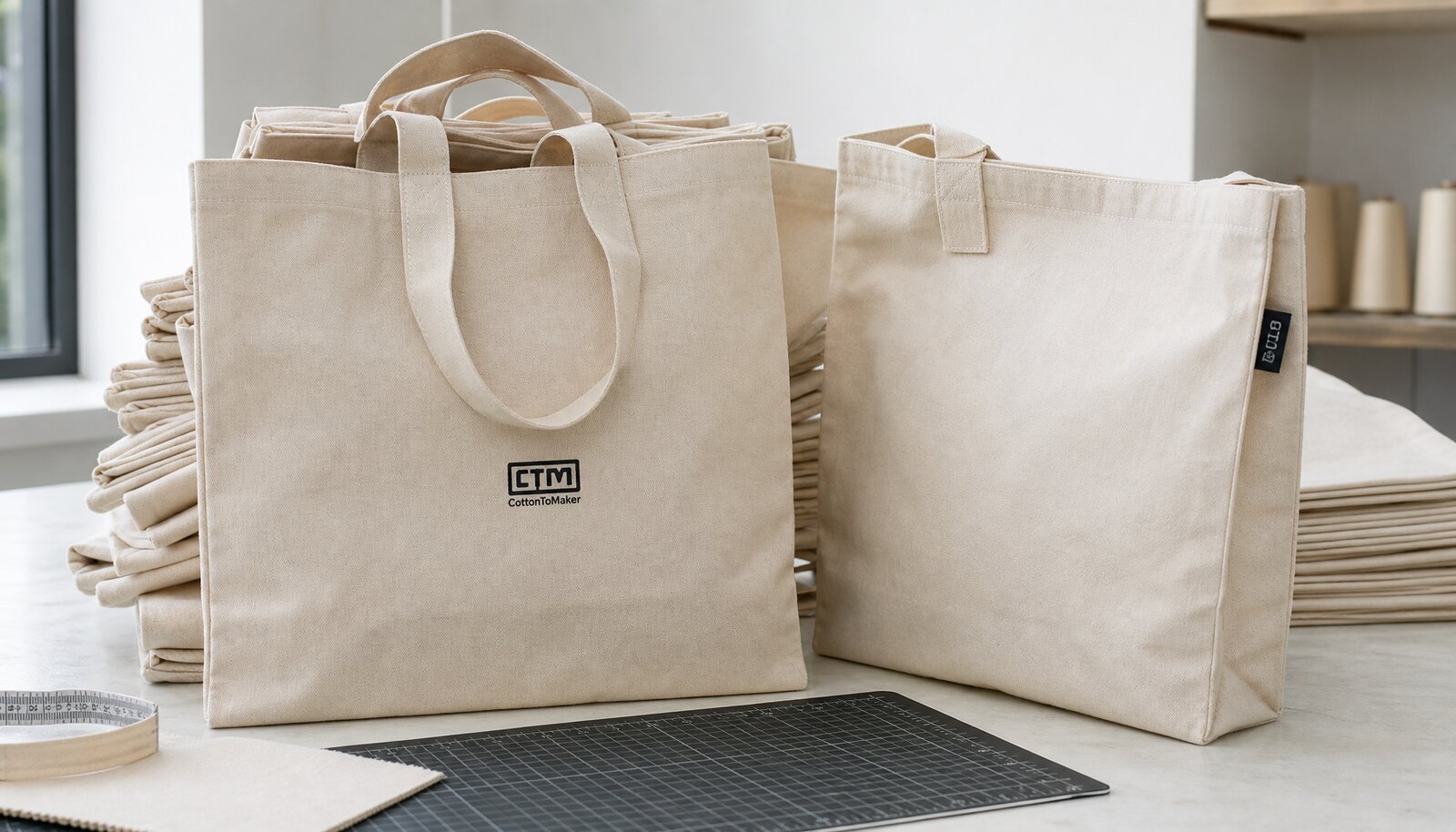
Why carton planning matters more on coffee tote programs than most buyers expect
For printed canvas shopping bags for coffee brands, the unit price is only part of the landed cost. Carton size, bag thickness, and packing count can change how many pieces fit in a carton, how many cartons load per pallet, and how much cubic freight you pay. Coffee brands often focus on print quality and forget that a thicker 12 oz bag can reduce pack density enough to raise freight and warehouse handling costs.
This is especially important when the tote is used as a retail item or a gift-with-purchase. Buyers need the bag to look premium on shelf, but they also need predictable carton counts and stable packaging for distribution centers. If the supplier quotes only a piece price, you may miss the hidden cost of oversized cartons, weak folding, or inconsistent packed quantity.
- Carton planning affects ocean freight, warehouse slotting, and count accuracy.
- A bag that folds well can ship cheaper than a bag that only looks good flat.
- Retail-facing coffee programs need better packed presentation than trade-show giveaways.
Start with the bag specification that matches the use case
For most coffee brands, 10 oz to 12 oz canvas is the practical range. At around 320-400 GSM, the bag feels substantial without becoming expensive to sew, print, and freight. If the bag is meant for retail resale, the buyer usually needs a cleaner finish, stronger handles, and better print clarity than a one-time event tote. If it is a premium gift item, the surface should accept fine logo detail and keep shape after folding.
The size should be chosen around the actual product mix. A coffee tote that needs to carry two 250 g bags, a mug, or a boxed sampler needs a wider gusset and handle reinforcement. If the bag is too narrow, the carton pack may be efficient but the end user experience suffers. If it is too large, fabric consumption and carton cube both rise quickly.
- 10 oz: good for lighter retail use and lower freight weight.
- 12 oz: safer default for coffee brand programs that want better structure.
- 14 oz: only if the bag must support heavier contents or a more premium feel.
Print method choice should follow logo detail, not habit
For printed canvas shopping bags for coffee brands shipping carton planning, the print method affects both unit cost and yield. Simple one-color logos often work best with screen printing because setup is manageable and the result is durable. If the artwork includes small type, multiple shades, or a detailed badge, the buyer should test whether screen printing can still hold the lines cleanly. Digital or transfer methods can help on short runs, but they can also change the look and raise cost per bag.
Natural canvas is not a smooth art paper. Ink can sink into the weave, especially on lower-grade cloth. Buyers should require a pre-production strike-off or sample print using the exact fabric color and weave. A white logo may look strong on a sample and turn grayish if the base cloth is heavily flecked or the ink deposit is too thin.
- Use screen print for standard logos and repeat volumes.
- Use transfer or digital only when artwork complexity justifies the higher cost.
- Confirm ink cure, rub resistance, and color consistency before bulk release.
Comparison of sourcing routes for coffee-brand tote programs
Not every supplier route gives the same control over carton planning. A trader may be useful for low internal workload, but a direct factory often gives better visibility on sewing, print, and packing. For coffee brands that need repeat orders and stable supply, the sourcing route should be judged on how well it supports spec control and carton accuracy, not just on quoted unit price.
The table below helps procurement teams compare where margin may disappear after the first quote. It is especially useful when one supplier quotes a low bag price but another includes better packing discipline and more reliable carton data.
- Write decisions in measurable language, not only descriptive wording.
- Ask for sample photos plus one physical approval sample for important orders.
- Keep quotation, sample approval, and inspection notes tied to the same spec version.
Supplier route comparison buyers can actually use
For this product type, the best comparison is not only between factories. It is also between a direct bag factory, a print-first sourcing agent, and a general gift supplier. Each route handles carton planning differently, and that difference shows up in freight, QC follow-up, and lead time risk.
If your program includes retail distribution, ask each supplier to quote the packed carton spec, not only the finished bag dimensions. A supplier who cannot tell you how many pieces fit per carton, or who changes the count after sampling, is not quoting the true landed cost.
- Write decisions in measurable language, not only descriptive wording.
- Ask for sample photos plus one physical approval sample for important orders.
- Keep quotation, sample approval, and inspection notes tied to the same spec version.
How MOQ and price tiers work on canvas totes
MOQ on canvas bags is rarely arbitrary. It usually follows fabric roll usage, cutting marker efficiency, and print setup. A factory may prefer one color run that aligns with one fabric lot and one print screen setup. If you split colors, sizes, or print placements, the MOQ per variant can rise because each version creates more cutting and packing waste. Buyers who understand this logic can often negotiate better by reducing complexity instead of simply pushing for a lower quantity.
When you compare quotes, separate the one-time costs from the unit costs. Screen setup, sample development, and extra carton labeling should not be hidden inside an inflated bag price. A quote that looks expensive may actually be clearer if it exposes the setup charge and the pack-out assumptions.
- Single-color print and one fabric color usually give the best MOQ efficiency.
- Multiple logo colors increase setup, proofing, and rejection risk.
- If the supplier quotes very low MOQ, inspect whether they are pooling your order with other buyers.
Quote data that needs to be on the same line item
Procurement teams compare quotes faster when every supplier is forced to use the same structure. Ask for the same bag size, same GSM, same print method, same carton count, and same delivery basis. If one quote includes packing in polybags and another does not, the piece price is meaningless. You need the factory to show what is included and what is excluded so that landed cost can be compared fairly.
The most useful quote data for this category includes fabric spec, handle length, reinforcement details, print area, carton dimensions, gross weight, and the production calendar. If those items are missing, the buyer is not yet looking at a real manufacturing quote. They are only seeing a rough estimate.
- Request a quote on the same Incoterm basis across all suppliers.
- Make carton dimensions mandatory in the reply.
- Separate sample cost, setup cost, and bulk unit cost.
Packing and carton planning: where tote programs often lose money
Packing is not just a warehouse issue. It changes freight cost, carton durability, and print appearance. A canvas tote that is folded too tightly can create hard creases across the logo panel. A tote that is packed too loosely wastes volume and allows the contents to shift in transit. The goal is to achieve a fold pattern that protects the print, keeps counts simple, and fills cartons efficiently without deforming the bag.
For coffee brands, an efficient packing format is usually a fixed piece count per inner bag and a controlled number of inners per carton. The carton should be strong enough for stacking, with a clear packed weight that your forwarder and warehouse can use. Buyers should also know whether the factory uses moisture protection, corner boards, or compression straps, especially for long sea freight routes.
- Use consistent folds so the print area lands on the same side in every carton.
- Do not let the supplier change pack count without updating carton dimensions and gross weight.
- If the bags are retail-ready, request a pre-packed sample carton photoset before bulk packing.
Sample approval should test the bag as packed, not only as sewn
A sample that looks good on the table may still fail in bulk if the packing method changes or if the print sits differently after folding. For coffee brands, the pre-production sample should match the final fabric lot, final ink type, stitch pattern, and carton arrangement. That is the only way to judge whether the tote will survive storage, palletization, and retail display without curling, rubbing, or looking uneven.
Acceptance criteria should be specific enough for a factory to repeat. Instead of saying the sample looks nice, define the acceptable print placement tolerance, acceptable seam waviness, acceptable handle symmetry, and acceptable carton count. If the sample is used as the bulk standard, save one sealed reference sample for QC on arrival.
- Compare pre-production sample against the approved artwork and the final packing format.
- Check the bag after folding, not just while fully opened.
- Keep one sealed control sample for incoming inspection.
Lead time risks that matter when the bags are tied to a coffee launch
Canvas tote lead time can slip for reasons that are easy to miss. Fabric sourcing delays, print plate approval, thread color mismatch, and carton artwork changes can each add days. If your launch date is fixed, build a buffer around sample approval and freight booking. A factory may finish sewing on time but still miss the ship date if the buyer keeps revising the carton label or barcode layout.
For seasonal coffee promotions or new-store openings, it helps to split the timeline into sample, bulk production, packing, and booking milestones. A practical lead time quote should tell you how many days are required after sample approval and deposit, not a vague total. If the supplier cannot separate those stages, schedule risk is higher than it appears.
- Protect time for artwork proofing and print plate confirmation.
- Do not lock the launch date until carton labels and packing instructions are approved.
- Build extra days if the order includes multiple colors or mixed SKU packing.
Specification comparison for buyers
| Spec decision | Recommended option | When it fits | Buyer risk to check |
|---|---|---|---|
| Fabric weight | 10 oz to 12 oz canvas, 320-400 GSM | Retail tote, coffee gift-with-purchase, or resale bag where body and print clarity matter | Too light looks cheap and wrinkles in carton; too heavy raises unit weight and freight cost |
| Print method | 1-2 color screen print for flat logos; water-based or discharge only if you need a softer hand feel | Most coffee brand logos, roastery marks, and retail shelf programs | Fine text can fill in; confirm ink opacity on natural canvas before bulk |
| Bag structure | Simple gusseted tote with reinforced stress points and hemmed top edge | Daily shopping use and repeat-carry programs | Weak handle bar tacks and narrow seams fail under bottle or coffee bag loads |
| Handle length | Long shoulder handles around 60-70 cm total loop length | Retail and café sales where shoppers carry the bag home | Too-short handles reduce usability; too-long handles can increase fabric consumption and sewing minutes |
| Packaging format | Bulk packed with fixed piece counts per inner polybag and outer carton | Import shipments where carton math and cube control drive freight | Loose packing causes carton overfill, print rub, and count disputes |
| Carton size strategy | Use carton dimensions based on compressed bag thickness, not bag flat size only | Ocean freight and mixed-SKU container planning | Oversized cartons waste volume; undersized cartons crush print and creasing in transit |
| Supplier route | Direct factory with in-house cutting, printing, sewing, and packing control | Larger runs, repeat programs, and brand-controlled specs | If printing is outsourced, lead time and shade control become harder to manage |
| Sample approval route | Pre-production sample matched to final fabric, print, trim, and packing method | Any launch where carton loading or retail presentation matters | Approved artwork alone does not prove the carton pack-out or final print density |
| MOQ logic | Start with a MOQ that matches one fabric roll or one cutting marker if possible | Custom sizes, multiple colors, or branded retail programs | Low MOQ can hide a higher setup cost per unit and weaker supplier attention to packing detail |
Buyer checklist before sampling
- Confirm final bag size, gusset, handle drop, and usable loading weight.
- Specify fabric type, GSM/oz weight, color tolerance, and shrinkage expectations.
- Send vector artwork and define logo size, print position, and Pantone references.
- Ask for sample photos plus one physical pre-production sample before bulk approval.
- Agree carton packing, barcode or hangtag needs, and shipment marks before production.
- Record inspection checkpoints for stitching, print adhesion, stains, and quantity count.
Factory quote questions to send
- What fabric weight do you recommend for this bag, and how will the quote change between 10 oz, 12 oz, and 14 oz canvas?
- Is the print screen print, heat transfer, or digital? What is the setup cost, and how many colors are included in the quoted price?
- How many pieces per carton do you plan, what are the carton dimensions, and what is the estimated gross weight per carton?
- What is the MOQ by color and by print design, and does the MOQ change if we choose unbleached fabric or a custom dye lot?
- Will the sample use the same fabric, ink, thread, and packing method as mass production?
- What is the lead time for sample approval, bulk production, and ready-to-ship cartons after deposit?
- Which sewing points are reinforced, and what pull strength or load test do you use for handles and seams?
Quality-control points to confirm
- Fabric GSM tolerance should stay within an agreed band, commonly plus or minus 5% to 8% depending on the base cloth.
- Print should be centered within an accepted placement tolerance and should not show major color drift between sample and bulk.
- Handle stitching should be reinforced with no skipped stitches, loose thread ends, or uneven bar tacks.
- Top hem must lie flat and not twist after pressing and folding.
- Carton counts should match the packing list exactly, with no mixed lots unless approved.
- Cartons should not bulge; compression should not create permanent crease marks through the printed panel.
- Sample approval should cover fabric, color, print, dimensions, sewing quality, and final packed carton appearance.