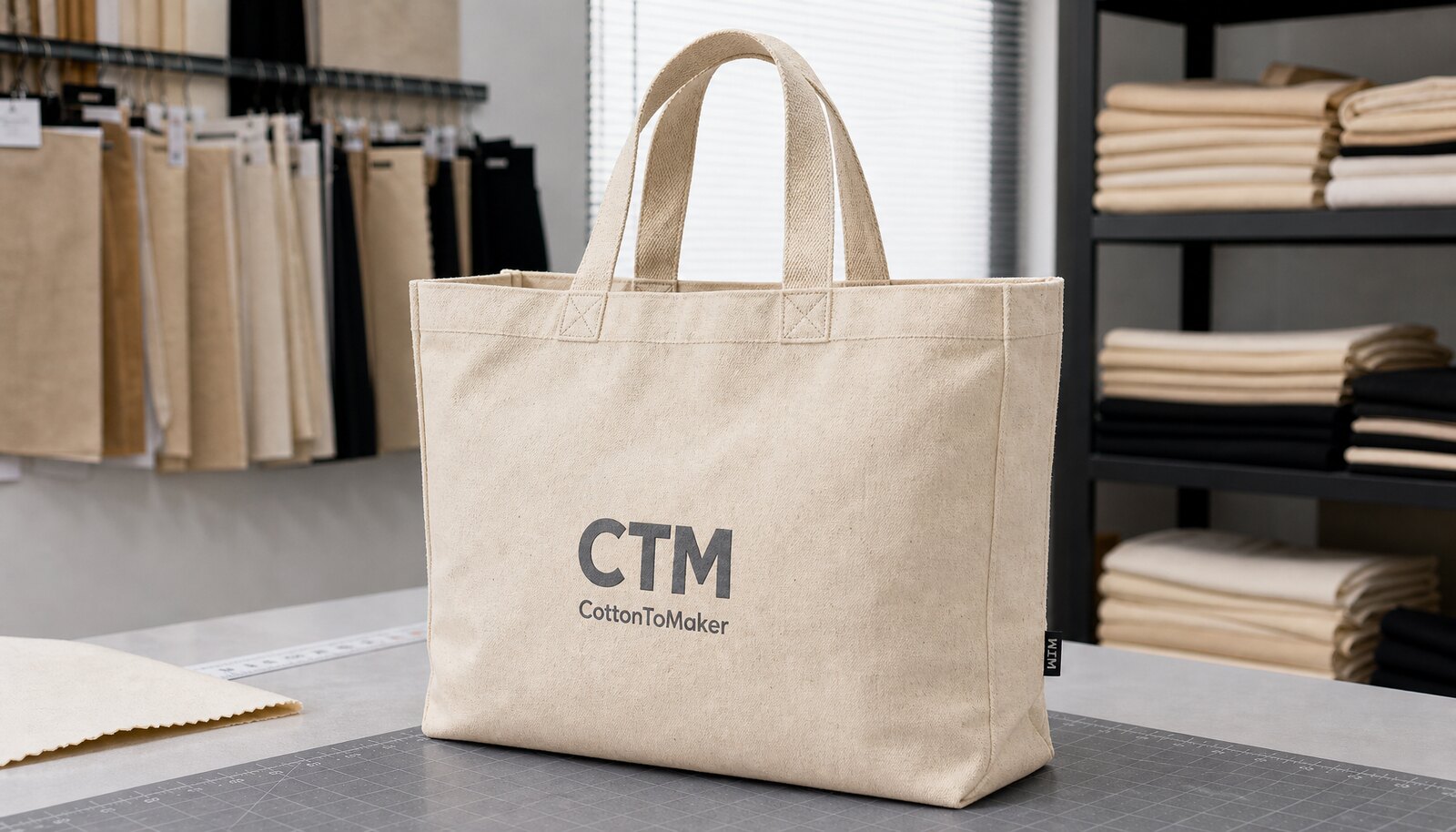
Start with the coffee retail job to be done
For coffee brands, a canvas bag is rarely just a carrier. It may protect a roasted bean pouch at the register, hold a gift bundle with a mug and tasting card, sit on a retail shelf as branded merchandise, or travel inside a subscription box as a value-added insert. Those uses are not interchangeable. A bag meant to move a single 250 g pouch has very different structural needs from a bag expected to carry multiple items, stand upright in-store, and still look good after being reused by a customer.
That is why the procurement brief should begin with the load and the customer journey, not the artwork. State the product mix, the heaviest item the bag must carry, how often the bag will be reused, and whether the bag needs to stand upright for merchandising or fold flat for stock control. If the supplier only receives a logo file and a rough size request, it will default to its own standard tote pattern. The result may be usable, but it will not be optimized for coffee packaging or for the shelf behavior your team actually needs.
- Name the real contents: pouch, gift set, mug, card pack, or subscription insert.
- Specify whether the bag is a one-time point-of-sale carrier or a repeat-use retail tote.
- State whether shelf stand-up shape matters more than fold-flat storage.
- Include the customer handoff scenario so the bag is designed for the correct handling path.
Choose canvas weight by use case, not by habit
Canvas weight drives price, structure, packing volume, and the way the bag looks under store lighting. For many coffee retail programs, 10 oz canvas, roughly 340 gsm, is a practical starting point because it balances cost and body without feeling thin. It is usually enough for small bean pouch combinations, cards, and light merchandise. When the bag must present as a premium retail item or carry a boxed gift set, 12 oz canvas, roughly 400 gsm, usually gives better body and shape retention. Heavier 14 oz cloth can be appropriate for higher-end merchandise, but it adds stiffness, shipping weight, and folding bulk that some retailers dislike.
Do not rely on the ounce number alone. Ask for the measured GSM, whether the cloth is pre-shrunk, whether it is washed or raw, and whether the fabric will be natural, bleached, or dyed before printing. Natural canvas generally suits specialty coffee because it reads clean and artisanal. Dyed canvas is stronger visually when the bag must match a brand color story or sit behind darker retail graphics. If you want a stable print edge on a textured weave, request a sample on the actual production fabric rather than accepting a print proof on paper or a substitute cloth.
- Use 10 oz as a common base for everyday retail use, but verify the actual measured GSM.
- Move to 12 oz when the bag must feel premium or carry a boxed bundle.
- Reserve 14 oz for premium merchandise or higher-load use, not as a default.
- Ask for shrinkage expectations and fabric finish details before comparing prices.
Specify dimensions around the product mix and shelf behavior
A coffee bag that works for a slim pouch can fail as soon as it is asked to hold a second item or sit upright on a retail table. The right dimensions depend on what goes inside and how the customer sees it. A common starting point is around 35 x 40 cm with a 10 to 12 cm gusset, but this should be treated only as a benchmark for comparison, not as a universal spec. If the bag must hold a mug, gift box, or two bean bags side by side, the gusset may need to be wider than the body depth suggests. If the bag is meant to look compact and premium, the footprint may need to be tighter even if the bag uses heavier fabric.
Handle geometry matters just as much as body size. A shorter hand-carry drop looks neat at checkout and uses less material, but a longer drop improves reuse and shoulder carry. Buyers should define handle width, attachment length, top hem finish, and whether the handle join uses box-x stitching or bar-tacks. Those decisions affect cost and also determine whether the bag survives repeated load cycles. The print area should be mapped away from seams, folds, and handle attachment points. If the logo crosses those areas, the artwork may warp enough to look off-brand even when the bag itself is technically within tolerance.
- Define finished size, gusset depth, and handle drop in the RFQ.
- Map the logo away from seam lines and handle stitch zones.
- Choose a handle construction that matches the intended carry method.
- Confirm whether the bag must stand upright when filled with your standard product set.
Match the print method to the artwork and the reorder plan
Most coffee brands get the best balance of quality and cost from screen printing because their graphics are usually limited to one or two colors and need strong edges on textured canvas. Screen printing is efficient when the bag will be ordered repeatedly, but each additional color adds screens, setup time, and registration risk. Ask the factory for the minimum line width and minimum text size it can print cleanly on your selected canvas weight. If the brand logo includes thin strokes or small legal copy, those details should be verified against a real strike-off, not assumed from the artwork file.
Transfer methods can be useful for complex, multi-color, or seasonal art, especially when the order is small or the design includes gradients and photo detail. The tradeoff is durability and feel. A transfer can sit more visibly on top of the fabric and may show wear at fold lines or edges if the bags are packed tightly. That makes it a practical choice for short runs and campaigns, but a less attractive option when the bag is expected to function as repeat-use packaging. Sewn patches and woven labels can create a premium look, yet they also add components, approval steps, and another source of reorder variation. If you need those elements, ask who owns the patch artwork or tool and whether it is included in the quotation or treated as a separate item.
For procurement, the key decision is not which method sounds best in general, but which one matches the art complexity, reorder frequency, and price ceiling of the program. A simple logo on a natural canvas tote usually justifies screen print. A seasonal coffee collab or merchandise drop may justify a higher-cost embellishment if the extra detail supports sell-through. The method should be chosen deliberately, not by default.
- Use screen print for simple brand marks and repeat volume.
- Use transfer only when the artwork genuinely requires more detail or color depth.
- Ask for the minimum line width, font size, and print area the factory can hold reliably.
- Require a strike-off or pre-production sample on the final fabric before bulk approval.
Build the spec sheet around tolerances and acceptance thresholds
Procurement-grade buying depends on more than dimensions alone. The supplier needs to know what counts as acceptable variation. Set finished-size tolerances, print-position tolerance, and seam-quality expectations before the factory starts cutting. If those limits are not written down, the supplier will use its own internal standard, which may be broader than your retail team expects. A bag can be technically “within spec” and still look inconsistent across a shelf display if the logo shifts too far left or the body size drifts from carton to carton.
For a coffee brand, visible presentation matters. Define the acceptable color shift against a reference sample or Pantone target, and state whether a slight tone variation in natural canvas is acceptable. Natural fiber lots often vary more than buyers expect, so color tolerance should be qualified by material type. Also define the reject conditions clearly: open seams, missing stitches, major misprint, wrong size, contamination, strong odor, or damaged handles should be automatic rejects. A supplier should not have to guess which defects are cosmetic and which are shipment-stopping.
- Write size, print, and seam tolerances directly into the spec sheet.
- Use a signed reference sample as the visual standard for the bulk run.
- Define automatic reject conditions before production starts.
- Qualify color tolerance more tightly for printed areas than for natural base fabric.
Use a sample sequence that actually protects the order
A flat artwork proof is useful, but it is not enough for printed canvas shopping bags. The approval path should normally move from artwork proof to strike-off or sample print, then to a pre-production sample made with final fabric, final ink, and final packing method. That sequence gives the buyer visibility into how the weave accepts ink, how seams pull the shape, and how the bag looks once folded and carton-packed. It also reveals whether the print placement still works once the bag is built, because a design centered on a flat pattern can shift once the handles and gusset are attached.
Keep the sample sequence disciplined. If the fabric changes after sample approval, the sample is no longer a valid reference. If the pack method changes, the sample should be updated again. Buyers often lose time by approving a “close enough” sample and hoping the factory will reproduce it at scale. For a coffee brand with retail expectations, that approach usually creates avoidable rework. Lock one reference sample, mark it with the order number, and keep it available for later comparison. The goal is not simply to approve a look; it is to create a measurable production standard.
The sample should also be checked as a customer would experience it. Fold it the way it will sit in a carton or on a shelf. Put product into it using the intended load. Inspect the print after bending the bag around a normal stack. That catches issues that a flat bench inspection will miss, such as fold creases through the logo or handle geometry that looks neat empty but awkward once loaded.
- Do not approve bulk production from artwork proof alone.
- Use a pre-production sample built from final fabric, final ink, and final pack.
- Tie the approved sample to the order number and keep one buyer-signed reference copy.
- Re-sample if fabric, ink, label, or packing changes.
Control the quote by normalizing inclusions, Incoterms, and hidden charges
The most common sourcing mistake is comparing quotes that are not built on the same basis. One supplier may quote only sewing and printing, while another includes inner packing, carton marks, labels, and palletizing. A lower unit price can be misleading if it excludes the items your logistics team needs to receive the bags ready for distribution. The RFQ should specify exactly what is included and what is excluded, then ask every bidder to quote on that same basis. If you do not force normalization at the start, you end up doing it manually after the quotes arrive.
Incoterms matter as much as the unit price. Compare the suppliers on the same term, whether EXW, FOB, or another agreed basis, so freight, export handling, and destination charges are not hiding the real difference. Ask who pays for artwork revisions, pre-production sample revisions, screen changes, carton marks, and replacement of defective units. Ask whether the quote includes any tooling or setup ownership, because print screens, labels, and artwork files can become a reorder issue later. If the supplier retains control of those assets without a written understanding, repeat orders can become more expensive or slower than expected.
A buyer should also ask for separate line items when possible: body, print, labels, unit packing, carton packing, palletizing, and special testing. That gives you a cleaner way to decide whether a premium element really adds value. For example, if a woven side label is a brand priority, the added cost should be visible rather than buried inside a blended total. If the supplier cannot separate the items, the quote is harder to audit and harder to negotiate on a reorder.
- Compare all quotes on the same Incoterm and the same packing assumption.
- Require suppliers to list inclusions and exclusions in writing.
- Ask who owns artwork files, screens, labels, and other reorder assets.
- Insist on separate price lines when a component could be removed or changed later.
Compare sourcing routes by control, not just by price
A direct cut-and-sew factory usually gives the strongest control over fabric, sewing, and print consistency, which is important when the bag is part of a coffee brand’s retail identity. That route is often the best fit for repeat orders and for brands that need the same tote to reappear season after season. The tradeoff is that the buyer needs to manage the spec more carefully and follow the sample process closely, because the factory will build to the exact brief it receives.
A trading company can be helpful when a procurement team is sourcing multiple product types or wants one contact to coordinate the order, but the buyer still needs factory disclosure. The sales office is not the production line. Ask where the bags are actually sewn and printed, and request evidence that the disclosed factory is the one being used. A domestic decorator or local printer may be the right choice for launch tests, urgent events, or very small quantities, but that route often relies on stock base bags and may offer fewer choices for GSM, handle construction, or custom size. It can work well for speed, but less well for long-term consistency.
The decision should be based on program life, not just first-order convenience. If the bag will be reordered, ownership of patterns, screens, and reference samples matters. If the bag is a one-off campaign, speed and ease may matter more. A procurement team should pick the route that matches the commercial life of the product, not the route that only makes the first quote look easy.
- Use a direct factory when repeatability and spec control matter most.
- Use a trading company only when factory disclosure is written and verifiable.
- Use local decoration for fast tests or short-run launches.
- Ask how the supplier preserves reorder continuity across fabric lots and print setup.
Write packaging and carton rules before production starts
Packing is not a final housekeeping task; it is part of the product spec. A canvas tote that is folded too tightly can arrive with permanent creases in the print area, while a bag packed too loosely may move around inside the carton and pick up rub marks. For coffee retail, the packing method should protect the visible face, support warehouse handling, and keep the bags easy to count. The best unit pack is the one that preserves appearance without creating unnecessary labor or freight volume.
Specify whether each bag should be polybagged, belly-banded, or bulk-folded with carton liner protection. Then define the carton count, carton dimensions, gross weight target, carton marks, SKU label location, and barcode placement. If the retail team applies price stickers, the supplier should know where those stickers can go without covering the artwork or hitting a seam. For export shipments or humid routes, state whether a moisture barrier or carton liner is required and whether the carton should be single-wall or double-wall. Those details influence freight cost and damage risk, so they should be agreed before the quote is issued, not after the first shipment has left the factory.
If you are building a retail-ready program, ask the supplier to show how the bag will be folded inside the carton. A fold method that looks harmless on paper can crease a logo or distort the handle shape once the bags are compressed into a shipping carton. The carton spec should therefore be checked against the visual standard, not only against the freight dimension target.
- Choose a fold and pack method that protects the logo face from crease damage.
- Set carton dimensions and gross weight expectations early for freight planning.
- Define label, barcode, and sticker locations so they do not cover the print.
- Add moisture protection or liner requirements when the route or climate needs it.
Set a practical QC plan with measurable checks and reject rules
A procurement buyer should not accept “QC checked” as a sufficient statement. For printed canvas shopping bags, quality control needs measurable points. Start with the body dimensions and verify them against the approved sample before bulk packing. Check seam construction at the bottom corners, side seams, and handle joins, because those are the places where failure is most likely to show up under load. Ask the supplier to state the stitch density on load-bearing seams and verify that the same construction is used across the order. If the bag is meant for repeat use, that detail matters more than decorative finishing on the visible face.
Print control needs equal attention. Set a visible standard for print position, logo size, color match, and ink coverage. Ask for a simple tolerance statement: how far can the print shift, how much shade drift is acceptable, and what defects trigger rejection? For brand-sensitive work, the acceptable range should be tighter than for a generic promotional tote. Also check for ink rub-off, cracking after folding, and edge lift after carton compression. A bag that looks fine on a table can still fail once it is handled, stacked, and transported.
The acceptance criteria should also cover contamination and presentation issues. Reject oil marks, strong odors, loose threads, dirt, damaged handles, and misprinted or missing artwork. If the order is large, define the sample size and the inspection level before production starts so the supplier knows how the lot will be judged. A load test is especially useful: fill the bag to the intended product weight, lift it by the handles, and hold it long enough to expose weak stitching or handle creep. That is a simple test, but it often reveals the exact failure the customer would otherwise discover first.
For larger programs, keep a reference sample and compare incoming cartons to that sample during inspection. The purpose is not to create more paperwork; it is to prevent the kind of uneven lot quality that turns a reorder into a customer complaint. If the supplier cannot explain its in-line and final inspection process clearly, the buyer should treat that as a risk signal rather than a minor documentation gap.
- Measure body size, gusset, and handle drop before packing approval.
- Require a stitch density target or a clear seam-construction standard for load-bearing points.
- Set color tolerance and print-shift limits in writing.
- Perform a load test against the real product weight, not a generic carry test.
- Define reject thresholds for open seams, wrong artwork, major misprint, contamination, and handle failure.
Specification comparison for buyers
| Spec decision | Commercially strong default | When it fits | Buyer tradeoffs to check |
|---|---|---|---|
| Sourcing route | Direct cut-and-sew factory with in-house print control | Repeat programs, private-label retail, and dimension-specific custom bags | Usually best for consistency and fewer handoffs; ask who owns fabric booking, print screens, and final sample sign-off. Reorder continuity is stronger, but lead time depends on factory capacity and your approval speed. |
| Sourcing route | Trading company with named factory disclosure | Multi-category sourcing teams or buyers needing one contact across several SKUs | May simplify communication, but price transparency is weaker. Require the real production site, subcontractor disclosure, and a written statement on which steps are done in-house versus outsourced. |
| Sourcing route | Local decorator or domestic printer | Short launches, event drops, or urgent test runs | Fast on sampling and small quantities, but fabric options are usually narrower. Reorders can shift if the stock base bag changes, so lock the exact body and print method before scaling. |
| Fabric weight | 10 oz / about 340 gsm natural canvas | Everyday retail carrier for coffee bags, cards, and light gift bundles | A good balance of hand feel and cost. Check actual GSM, weave tightness, and shrinkage after finishing; lighter-looking fabric can still quote as 10 oz while feeling inconsistent across suppliers. |
| Fabric weight | 12 oz / about 400 gsm canvas | Premium shelf bags, gift sets, and repeat-use customer totes | Improves structure and shelf presence, but adds cost, carton weight, and folding bulk. Confirm whether handles and seams are adjusted to carry the heavier body cleanly. |
| Fabric weight | 14 oz / about 470 gsm canvas | High-premium positioning or heavier bundled contents | Good for shape retention but may be too stiff for easy shelf packing. Reorder cost rises and carton counts often fall because the finished bag occupies more volume. |
| Print method | 1- to 2-color screen print | Simple logo programs, most coffee retail identities, and larger volume | Lowest cost per impression at scale, but each color adds setup and registration risk. Ask for minimum line width, Pantone target, and overprint tolerance on textured canvas. |
| Print method | Digital or heat transfer | Gradients, photo detail, small runs, or seasonal art | More flexible on art complexity, but rub resistance and edge wear become more important. Confirm fold/box compression resistance and whether the transferred area can crack or lift after handling. |
| Print method | Sewn patch, woven label, or mixed embellishment | Premium merchandise lines or co-branded releases | Adds perceived value but also adds components and approval steps. Clarify who sources the patch, who owns the tool or artwork file, and whether the patch impacts lead time or MOQ. |
Buyer checklist before sampling
- State the exact use case: point-of-sale carrier, gift bundle bag, shelf merchandise, event bag, or e-commerce insert.
- Define finished dimensions, gusset depth, handle length, handle width, and handle drop in the RFQ.
- Specify fabric as measured GSM plus weave/fabric finish, not only an ounce label.
- Tell the supplier the maximum product load and the heaviest item the bag must carry without seam failure.
- Provide vector artwork and state one approved print position, one print size, and Pantone references.
- Choose a primary print method and name a fallback only if the art or MOQ truly requires it.
- Confirm whether the quote includes labels, hangtags, carton marks, inner packing, palletizing, and export documents.
- Request samples in sequence: artwork proof, strike-off, then pre-production sample in final fabric and final pack.
- Set acceptance criteria for size tolerance, print position, color tolerance, seam quality, loose threads, and odor/oil marks.
- Compare all quotes on the same Incoterm, the same pack method, and the same inclusion list.
Factory quote questions to send
- What is the exact fabric construction, measured GSM, weave density if available, and expected shrinkage after finishing or washing?
- Is fabric sourced in-house or through a mill partner, and can you disclose the final production site for sewing and printing?
- Is printing done in-house, and if not, which step is subcontracted?
- What is included in the quoted unit price: body, handles, labels, packing, carton marks, and palletizing?
- What is the MOQ by bag size, fabric color, and print color, and which variable raises it the most?
- What are the sample stages you can provide, and which one will match the final bulk fabric and ink?
- What are the permitted overrun and underrun percentages, and how are defect replacements or credits handled?
- What Incoterms are available on this quote, and what hidden charges may still appear at shipment or destination?
- What is the packed unit specification: fold method, individual pack type, carton count, carton dimensions, and gross weight?
- Do you retain the print screens, artwork files, or sewing patterns for future reorders, and who owns them contractually?
Quality-control points to confirm
- Measure body width, height, gusset depth, handle length, and handle drop against the approved sample before bulk packing starts.
- Check seam construction at the bottom corners, side seams, and handle joins for skipped stitches, seam slippage, or open edges.
- Require a visible stitch density target for load-bearing seams and verify that the same construction is used across the lot.
- Inspect print registration, logo size, and print position on the real bag, not only on a flat artwork proof.
- Set a color tolerance target before production; for critical brand colors, require a signed color reference against the approved sample or Pantone standard and reject visible shade drift.
- Check for ink rub-off, surface tackiness, cracking after folding, and edge lift after carton compression.
- Measure fabric weight or at least verify mill/lot documentation if actual in-house weighing is not practical on every order.
- Inspect for loose threads, oil marks, dirt, odors, needle damage, and fabric slubs in the print area.
- Confirm handle reinforcement pattern and attachment strength where the load transfers to the bag body.
- Review carton count, carton labels, SKU codes, and barcode placement against the packing list and retail spec sheet.