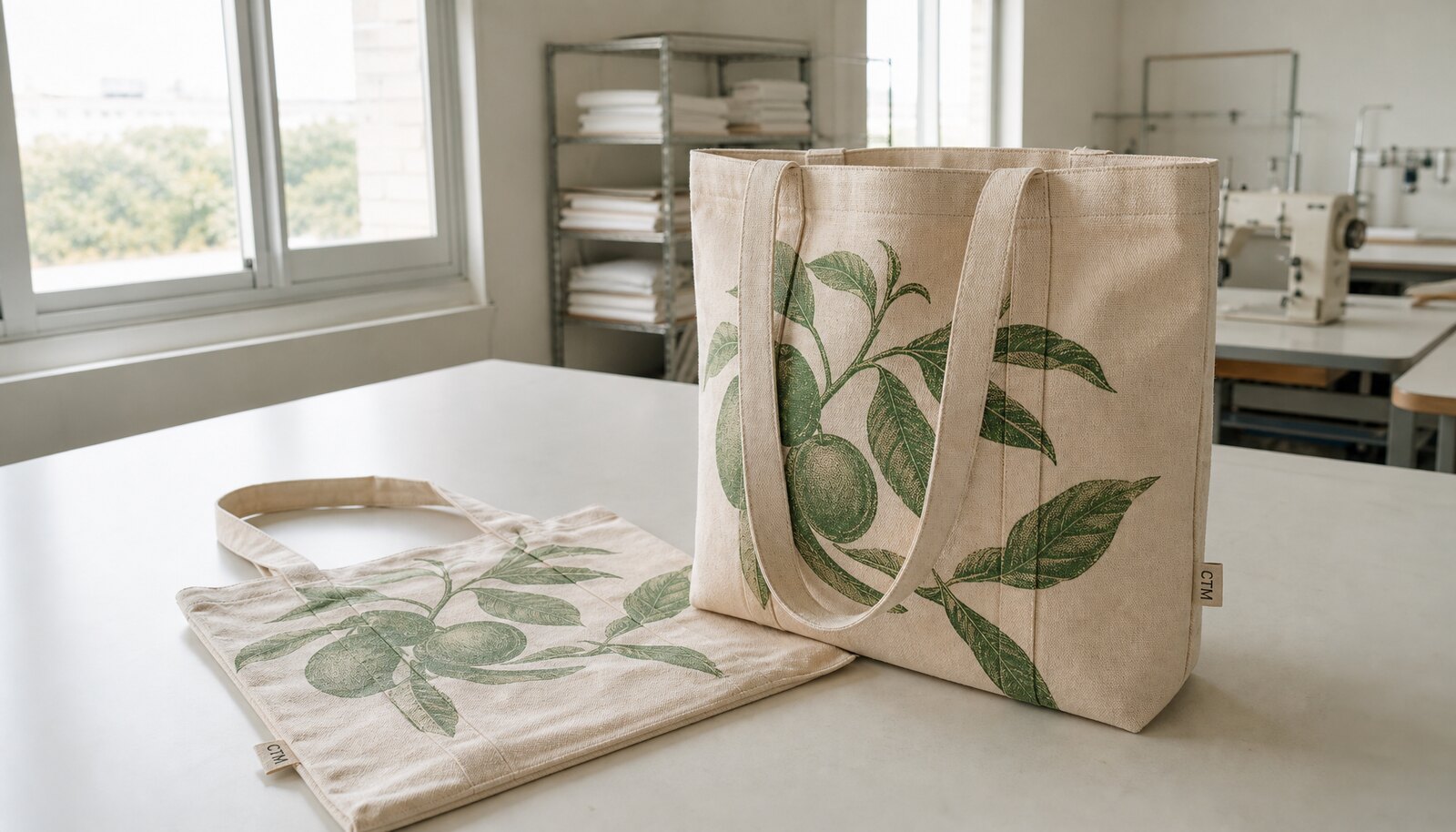
Why sample approval matters more for charity campaign bags than for ordinary promo totes
Printed canvas shopping bags for charity campaigns are not just low-cost giveaways. They often carry sponsor logos, donor messaging, event branding, and sometimes a resale value or a “keep and reuse” expectation. That creates a different buying problem from a generic promotional tote. Procurement teams need the bag to look credible in public, survive handling by volunteers or donors, and arrive on time in the right packaging format. If any one of those fails, the campaign can still run, but the bag will work against the brand instead of supporting it.
The sample stage is where a buyer can still correct the order at low cost. Once bulk cutting, screen making, and packing are locked, changes become expensive fast. A good sample approval process answers three questions: does the bag match the intended use case, can the factory repeat the build at scale, and will the receiving team be able to count, store, and distribute it without extra labor? Treat the sample as a production standard, not as a display piece.
For procurement teams, the practical risk is not only print quality. It is also mismatch risk: the artwork may be correct, but the fabric weight, handle length, or carton format may not suit the campaign. A bag that feels fine in a sample room can still be awkward in a field event or expensive to distribute if the packing format is inefficient. The approval process should therefore be built around use, cost, and repeatability rather than visual impression alone.
- A charity tote may need stronger seams and better presentation than a standard event bag because it is handled more often and seen in public.
- Sample approval should confirm the exact combination of fabric, print, construction, and packing that will be produced in bulk.
- If the approved sample does not define tolerances and packing method, the bulk order is still open to interpretation.
Start with the campaign use case before choosing fabric weight or decoration
The right spec depends on how the bag will be used. A volunteer kit bag carries documents, water, brochures, and small gifts, so it needs shoulder comfort and better load stability. A donor handout bag may only carry a few inserts and a brochure, so a lighter structure can be acceptable if the presentation is clean. A fundraising retail bag, on the other hand, should feel closer to a sellable item and may justify stronger fabric, tighter stitching, and more accurate print alignment. The same logo can require three different bag builds depending on purpose.
That is why the first RFQ question should not be “What is your best price?” It should be “What is the expected use load, distribution method, and presentation level?” Once the use case is clear, the fabric weight, handle style, print method, and packing format become easier to specify. For many charity campaigns, 12oz to 14oz cotton canvas, roughly 340-400 GSM, is the most practical range because it balances perceived value, print quality, and sewing efficiency. If the bag will be reused frequently or carry heavier contents, move toward the upper end and require reinforced stress points.
Do not choose GSM in isolation. Two bags with the same nominal weight can feel different if one uses a tighter weave, better finishing, or a washed treatment. Buyers often find that a slightly heavier fabric is not necessary if the weave is dense and the seams are reinforced well. In contrast, a heavier but loose weave can still look and feel cheap. Ask for the actual fabric sample and inspect it under normal lighting rather than relying only on a spec sheet.
- Donation handout: prioritize fast packing, clean logo visibility, and low unit cost.
- Volunteer or staff kit: prioritize shoulder carry, load stability, and low risk of seam failure.
- Retail or fundraising merchandise: prioritize hand feel, print accuracy, and shelf presentation.
How to specify canvas fabric so quotes stay comparable
Canvas sourcing fails when buyers use broad terms such as “good quality” or “thick canvas” without a measurable basis. The same word can mean different things to different suppliers. One supplier may quote a lighter fabric with a tighter finish, while another may quote a heavier but rougher canvas. If the canvas is natural or unbleached, surface slubs and color variation are normal to a point, but they still need to be bounded so the batch looks acceptable when it reaches the end user. A procurement spec should therefore identify the fabric weight, color, finish, and any shrink or wash expectation.
For quoted fabric weight, ask for the supplier’s measured GSM or ounce basis and how they measure it. A practical buyer approach is to request a tolerance band and a sample swatch from the same lot. If the order is large or if the campaign is high visibility, you can also ask for the yarn count or weave density because it affects print sharpness and seam stability. This is especially important if the artwork contains small text or thin linework. On rough or open weave canvas, fine details can blur even when the print looks acceptable at first glance.
From a sourcing perspective, natural canvas often gives the best cost-performance balance for charity campaigns because it avoids dyed-fabric color matching complexity. However, dyed canvas may be better if the campaign uses a strong brand color or if the bag needs to look more retail-like. In those cases, ask how the supplier controls shade variation between production lots and whether a bulk color dip standard exists. Buyers should not accept a fabric color by photo alone; request a physical swatch or a color standard before bulk approval.
- Request the exact GSM or ounce weight, not a generic description like “heavy canvas.”
- Ask for weave density or yarn count if the print contains fine elements or small text.
- Confirm whether the canvas is natural, bleached, dyed, or washed, because the base color changes print opacity and visual value.
Choose print method based on logo complexity, volume, and durability expectations
For printed canvas shopping bags for charity campaigns, decoration choice is usually the biggest driver of both appearance and unit cost. Screen printing is the standard for simple logos, campaign slogans, and one- or two-color branding because it is cost-effective at volume and gives good opacity on canvas. The tradeoff is that it is less forgiving when the artwork has gradients, fine halftones, or tiny reverse type. Digital printing can reproduce more detail, but it often costs more, and the hand feel may differ depending on ink system and curing method. Heat transfer can work for special cases, but it introduces another failure mode: adhesion and edge wear over time.
The key RFQ detail is not just the print method. It is the full print condition: number of colors, Pantone or brand references, print size in millimeters, print position from seam or top edge, one-side or two-side application, and whether the ink should be matte, semi-gloss, or water-based. A buyer comparing quotes without those details is not comparing like for like. For a charity campaign, that matters because the logo often needs to be bold and legible from a distance, not merely visible up close.
If the design includes small type, ask the supplier for the minimum stroke thickness they can hold on the canvas. On coarse canvas, thin lines can break up. A practical sourcing rule is to avoid ultra-fine lines unless the supplier has already shown a successful strike-off on the same fabric. If the campaign depends on sponsor logos or multiple small marks, ask for a print proof at final scale and check the smallest text with the naked eye at arm’s length. If it is hard to read on the sample, it will be worse in mass production unless the supplier changes the printing method or enlarges the artwork.
- Screen print: best for simple logos and repeat campaigns with stable artwork.
- Digital print: useful for more complex art, but requires closer review of opacity and durability.
- Heat transfer: only use when the supplier can show a confirmed substrate and durability expectation on the actual bag fabric.
Build a quote comparison that exposes real cost, not just a low headline price
Procurement buyers often receive quotes that look very different on the surface but are impossible to compare. One quote may include a single print color, no inner polybag, and bulk carton packing, while another includes two colors, more careful packing, and a tighter QC process. A low headline price can therefore be a sign of a stripped-down specification rather than genuine savings. To avoid this, the RFQ should separate the bag body, decoration, packing, and freight assumptions into a standard template.
The easiest way to compare suppliers is to ask for a price breakdown by spec component and a clear list of what is included. That means fabric weight, bag dimensions, handle type, print method, number of colors, packing format, carton count, and whether sample fees are deductible from the bulk order. Then ask which line items change the price the most. In many factories, the practical price jump occurs at a few quantity thresholds because screen setup, cutting efficiency, and carton loading improve with scale. If your order is near a threshold, it may be better to order slightly more and secure a cleaner unit cost. If your order is flexible by version, ask whether combining versions under one fabric and one print setup can reduce overall cost.
Do not ignore non-unit costs. A bag that is a few cents cheaper ex-factory can become more expensive if it requires special packing, additional screening fees, or multiple shipping cartons. For charity campaigns, those overheads matter because the bag often ships with other event materials. A quote should therefore answer the buyer’s operational question: what is the total delivered cost for a bag that is ready to distribute, not just the factory price for a loose tote.
- Require the supplier to state whether screen setup, plate fees, or rush fees are included.
- Ask for the carton quantity and gross weight so freight and receiving costs can be estimated.
- Check whether the sample fee will be credited back on order placement.
Supplier segmentation: when to use a direct factory, trading company, or local converter
The best supplier route depends on how much control the buyer needs over sample approval and production consistency. A direct factory is usually the strongest choice when the campaign is visible, artwork accuracy matters, or the packing format must be controlled tightly. The factory can confirm sewing methods, screen setup, and carton packing directly, which reduces the chance of a message getting lost between buyer and production. That does not mean every direct factory is easier to work with; it means the buyer can more directly verify who owns each production decision.
A trading company or sourcing agent can be useful when the order is small, the timeline is tight, or the buyer needs support comparing multiple factories. The tradeoff is another layer in the communication chain, which can be a risk when sample revisions are needed. A local converter or decorator may be practical if the bags are being finished domestically from imported blank totes, but this route can limit price advantage and reduce fabric choice. For campaign work, the right route depends on whether the priority is speed, control, or flexibility.
When screening suppliers, ask who physically controls the sample room, the cutting room, and the printing setup. If the person quoting the order cannot explain the sample approval path, the buyer should be cautious. The most reliable suppliers can show how the blank swatch becomes a printed strike-off, how the pre-production sample is signed off, and how that sample is stored as the production reference. That chain of custody matters more than a polished sales deck.
As a buyer, you should also consider whether the supplier has experience with campaign-style orders that require multiple destinations, multiple versions, or event-specific packing. Even without claiming special expertise, a supplier that can show clear carton labeling, folding standard, and order tracking will usually reduce internal handling work after the goods land.
- Direct factory: best for specification control and repeatability.
- Trading company: useful for speed, sourcing support, or mixed-supplier comparison.
- Local converter: practical for short domestic turnaround or final-stage customization, but may have less fabric flexibility.
What the first sample should prove before you approve bulk production
The first physical sample should answer whether the bag is fit for production, not just whether it looks acceptable in a photo. Start with dimensions. Measure body width, height, and gusset with a tape measure on a flat surface. Then measure handle drop and compare the sample to the intended use. A charity event bag that is too short on the shoulder can be annoying in use, while one that is too long may swing badly or feel awkward in crowded environments. Measurement consistency is especially important if the order will be repeated or split across multiple deliveries.
Next, inspect the print in normal light and from normal viewing distance. The logo should be centered or placed exactly where the spec says it should be. Check whether the ink fully covers the canvas weave, whether small letters are readable, and whether the edges are clean rather than fuzzy. If the artwork has fine lines or sponsor marks, make sure the supplier has not silently enlarged or simplified them. A sample that “looks close enough” is not enough when the bag is part of a public campaign.
Then perform a handling test. Load the bag with the approximate campaign contents and carry it for a short period. Watch the top seam, handle attachment, and bottom panel for distortion. The bag should not twist dramatically, and the handles should not dig into the hand or shoulder. If the order will be folded in cartons, fold the sample the same way and check whether the print creases badly or the bag refuses to lie flat. A sample that survives the table test but looks poor after folding can still fail in the real distribution process.
- Use measurement tools, not visual judgment, for size and handle drop.
- Approve the actual print position against the final artwork file at full size.
- Test the bag under realistic load before signing off.
QC checklist: define measurable defects, not just general appearance
A sample approval checklist article should be specific enough that a QC inspector can use it without interpretation. The first step is to separate defects into critical, major, and minor categories. Critical defects are those that make the bag unusable or unfit for distribution: open seams, torn fabric, missing handles, severe print misalignment, or contamination that cannot be removed. Major defects are those likely to trigger buyer rejection: measurable size out of tolerance, weak print coverage, crooked handle attachment, or obvious stains. Minor defects are small visual issues that do not affect function but still need a written limit if the campaign has a premium presentation requirement.
A practical buyer standard is to define measurement tolerances before production and inspect against those tolerances on the approved pre-production sample. For example, bag width and height can be controlled within a small band, while handle drop should be held tighter because buyers and end users notice that immediately. Print placement should be checked relative to a seam or top edge so the logo is not drifting from bag to bag. If the supplier offers AQL inspection, ask which plan they use for visual defects, print defects, and sewing defects, and confirm that the acceptance levels are written into the order documents rather than being left to the factory’s internal habit.
It is also worth asking for a simple print adhesion check. For canvas bags, a dry rub test and a light tape pull can reveal whether the print has cured properly or is only sitting on the surface. The exact method should match the ink system, but the point is the same: the print should not smear, flake, or peel under normal handling. Likewise, seams should be inspected for skipped stitches, loose thread bundles, and weak reinforcement at stress points. If the bag is intended to carry books or donor packs, you should also check whether the bottom seam and handle bar tacks hold under load without opening. None of these checks require elaborate lab work, but they do require a written pass/fail standard.
Carton-level QC matters too. Confirm style code, quantity, color, and destination marks before shipment leaves the factory. A buyer who approves the bag but ignores the carton data can still receive the wrong version or mixed versions in the same case. For multi-location charity programs, carton labels are part of the quality standard, not just an admin detail.
- Set zero tolerance for critical defects such as open seams, torn fabric, or unreadable branding.
- Use written measurement tolerances for body size and handle drop before bulk production starts.
- Include a basic print adhesion test and load test in the sample approval process.
- Confirm carton markings and packing count as part of QC, not after delivery.
Packing and distribution planning for charity programs with multiple delivery points
Charity campaigns often involve more than one receiving point. Bags may move from the factory to a central warehouse, then to event kits, branch offices, or sponsor locations. That distribution chain creates packing risk. If the bags are packed loosely, the receiving team may lose time recounting, refolding, or sorting them. If they are overpacked or folded inconsistently, presentation quality suffers and carton damage becomes more likely. Packing should therefore be set during sample approval, not after production starts.
The buyer should decide whether bulk packing, inner polybag packing, or retail-style individual packing is required. Bulk packing is the lowest-cost option and is often fine for warehouse redistribution. Individual packing makes sense when the bags are sold, gifted individually, or need to stay clean and crisp for presentation. For mixed-version orders, separate carton labeling by artwork version is essential. Otherwise, the receiving team may spend time separating versions that should have been packed apart from the start.
Carton density also affects freight and handling. Ask the supplier for the target number of bags per carton and the expected gross weight. A carton that is too heavy can slow receiving and increase damage risk. A carton that is too light can waste shipping volume and increase freight cost. There is no universal ideal carton count because it depends on size, fabric weight, and folding method, but the supplier should be able to explain why they chose the packing layout and what the carton dimensions will be. For campaign buyers, that explanation matters because it affects warehouse labor and shipping cost at the same time.
- Approve the fold method so the bags arrive in the same presentation condition they were sampled in.
- Use separate carton labels for each artwork version or language version.
- Ask for carton gross weight and count before finalizing freight booking.
Lead time planning: where approvals usually slip and how to protect the campaign date
Lead time for printed canvas shopping bags is rarely lost in sewing alone. Delays usually occur in artwork confirmation, sample revision, and packing sign-off. That is why a buyer should build the schedule around decision points. If the campaign launch date is fixed, the safest approach is to reserve time for one sample revision and one inspection cycle before goods ship. A realistic plan typically includes a blank swatch confirmation, a printed strike-off or pre-production sample, final approval, bulk production, inspection, and a transit buffer. The more versions you have, the more important that buffer becomes.
A supplier may quote 20-35 days for bulk production after approval, but that figure only holds if the fabric, print method, and packing method are already settled. If the order still needs artwork clean-up, color matching, or sample correction, the calendar can slip quickly. Buyers should be careful with rush requests because a compressed schedule often forces the factory to skip a normal internal check or to use a substitute material without enough review. That is especially risky on public-facing charity orders where consistency matters more than a tiny speed gain.
The practical way to manage lead time is to lock the order in stages. First, confirm the spec and quote. Second, approve the sample. Third, release production only after the sample and carton plan are signed off. Fourth, reserve transit time that reflects the actual shipping lane, not an optimistic best case. This process gives procurement a clean paper trail and reduces the chance of arguing over whether a date slip was caused by artwork, approval delay, or factory execution. When the campaign date is fixed, clarity is more valuable than a fast but vague promise.
- Sample approval commonly takes 5-10 days when artwork is final and materials are available.
- Bulk production often takes 20-35 days after approval, but only if no major rework is needed.
- Always add shipping and customs buffer to the internal schedule before you commit to a public campaign date.
Specification comparison for buyers
| Spec decision | Recommended option | When it fits | Buyer risk to check |
|---|---|---|---|
| Fabric weight | 12oz to 14oz cotton canvas, usually 340-400 GSM | Best balance for charity distribution, event handouts, and resale bags that need a premium feel without excessive cost | Ask for the measured GSM tolerance on the same fabric lot, not just the nominal weight; ±5% is a practical starting point, and wider variation can change hand feel, print opacity, and seam behavior |
| Print method | 1-2 color screen print for bold logos; water-based or discharge style only if the supplier can prove the result on the actual canvas base | Best for high-volume charity campaigns where unit cost, logo legibility, and repeatability matter more than photographic detail | Require a strike-off or pre-production print on the exact fabric color; check coverage at the edges of the logo and whether ink sits stiffly or cracks after folding |
| Bag construction | Single-layer canvas with reinforced handle points, or double-stitched seams with bar tacks at stress points | Suitable for giveaway bags that still need dependable carry strength and consistent presentation | If the bag is single-layer, check seam allowance and bottom seam reinforcement carefully; if it is lined or boxed-bottom, confirm the pattern because sewing complexity can affect MOQ and lead time |
| Handle spec | 60-70 cm shoulder handles for volunteer kits and donor packs; shorter hand-carry handles for counter giveaways | Choose shoulder carry when bags will hold documents, brochures, or event kits; choose shorter handles only when the bag is a light, short-duration handout | Measure handle drop on the approved sample; a 10 mm swing can be noticeable on shoulder use and can change whether the bag feels comfortable or awkward |
| Supplier route | Direct factory with sample control, artwork confirmation, and documented QC flow | Best when the campaign is high visibility, packing rules are strict, or you need stable repeat ordering | Verify who owns the sample approval record and whether the factory can hold the same material, print screen, and packing standard for reorders |
| MOQ logic | Split by print setup, fabric color, handle style, and packaging format rather than only total quantity | Useful when a campaign needs multiple sponsor versions, regional language versions, or donor-tier variants | A low headline MOQ can hide a higher effective MOQ once you separate versions; ask for MOQ by SKU, not only total pieces |
| Packing method | Bulk packed with size/color segregation and clear carton marks, or retail-ready inner packing if required by the campaign | Best when bags ship to warehouses, events, or multiple charity branches and need fast receiving and accurate counts | Confirm fold method, polybag use, carton count, and carton gross weight; loose or inconsistent packing increases damage and counting disputes |
| Lead time structure | Sample approval 5-10 days; bulk production 20-35 days after approval; add transit and customs buffer | Works for planned fundraisers and seasonal charity campaigns with fixed launch dates | If artwork is not final or packing is not approved, the factory may quote a short lead time that is not realistic for your calendar |
| Quote format | Unit price tied to exact spec sheet, decoration method, packaging, carton data, and inspection standard | Best for comparing multiple suppliers on equal terms and avoiding hidden extras | Quotes without fabric weight, print area, and packing detail are not comparable and usually conceal extra charges or downgraded materials |
Buyer checklist before sampling
- Confirm final bag size, gusset, handle drop, and usable loading weight in millimeters and kilograms, not just by visual reference.
- Specify fabric type, GSM or ounce weight, color tolerance, shrinkage expectation, and whether the canvas is washed, dyed, or natural.
- Send vector artwork and define logo size, print position, ink color reference, and the acceptable registration tolerance.
- Ask for a blank fabric swatch first, then a printed strike-off or pre-production sample on the actual production material.
- Agree carton packing, inner bag count, barcode or hangtag needs, and shipment marks before production starts.
- Record inspection checkpoints for stitching, print adhesion, stains, seam reinforcement, and carton quantity count.
- Set a clear approval status: approved, approved with conditions, or rejected for rework; do not let an unclear sample move to bulk.
- Require the supplier to confirm the same material lot or an equivalent approved substitute if the original lot is unavailable.
Factory quote questions to send
- What exact canvas GSM, weave density, finish, and shrink allowance are you quoting for this bag?
- Is the quoted price based on screen print, digital print, heat transfer, or another method, and what print area is included in the price?
- How many colors are included in the unit price, and what is the additional cost per color, per side, or per size change?
- What is your MOQ by color, print version, handle style, and packing format, not just the total order quantity?
- Can you provide a blank swatch, a printed strike-off, and a pre-production sample before bulk sewing starts?
- What measurement tolerance do you hold for bag width, height, gusset, and handle drop after sewing?
- How many bags are packed per carton, what is the carton size and gross weight, and will you use inner polybags or bulk packing?
- What AQL level do you use for visual defects, measurement defects, print defects, and seam defects?
- What is your production lead time after sample approval, and what shipping buffer do you recommend for a fixed campaign date?
- If the approved fabric or ink is unavailable, what substitute approval process do you use before changing the order?
Quality-control points to confirm
- Fabric weight should match the approved GSM tolerance on the measured production sample; a practical buyer target is generally within ±5% unless the supplier offers a tighter written tolerance.
- Bag dimensions should be checked with a ruler or tape measure at full finished size, with a typical control target of ±5 mm on smaller dimensions and ±10 mm on larger body dimensions unless otherwise agreed.
- Handle length and handle drop should be checked bag to bag; a practical control limit is ±10 mm on handle drop and symmetry within 5 mm side to side.
- Print placement should be within the approved location tolerance, with the logo centered or aligned to the specified seam reference and not visibly skewed to the naked eye at normal viewing distance.
- Print adhesion should be tested with a dry rub test and a light tape pull on an inconspicuous area if the print system allows it; ink transfer, flaking, or edge lifting is a rejection risk.
- Print opacity should be checked on the actual canvas color; the logo should not show obvious fabric bleed-through, patchy fill, or pinholes at the agreed viewing distance.
- Seams should be straight and continuous, with no skipped stitches, broken thread bundles, loose needle holes, or raw-edge fraying that would affect appearance or function.
- Handle attachment should be reinforced with bar tacks or equivalent stress reinforcement where specified, and the attachment points should not pucker or distort the top edge more than the approved sample.
- A simple load test should be performed using the expected campaign contents; the bag should carry the load without seam opening, handle tearing, or unacceptable distortion.
- AQT/AQL-style inspection should separate critical, major, and minor defects; critical defects such as torn fabric, open seams, or unreadable branding should be zero tolerance, while major and minor defect limits should be agreed in writing before production.