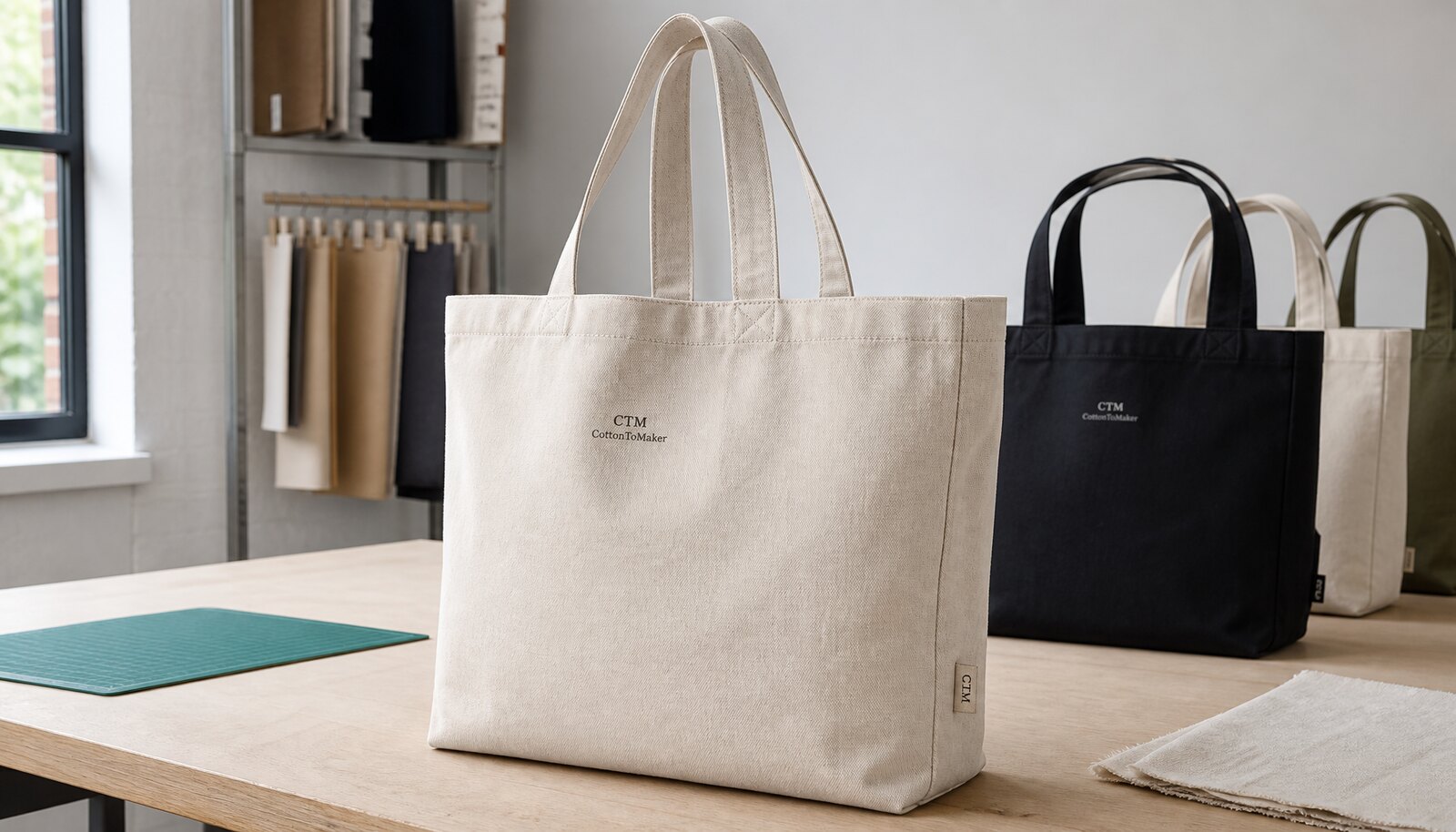
What makes a charity campaign tote different from a normal promo bag
Printed canvas shopping bags for charity campaigns sit in a different buying category than trade show totes or retail gift bags. The buyer is usually balancing donation value, visibility, and durability while keeping the landed cost low enough for large distribution. That means the spec cannot be vague. If you leave out fabric weight, handle construction, or print location, suppliers will fill the gap with their own assumptions and quote different products that are not directly comparable.
For charity campaigns, the bag is often handed out to supporters, volunteers, sponsors, or event attendees in a single day, but it still needs to survive repeat use. The bag is usually seen in public, so print clarity matters. The most common sourcing mistake is to focus only on the unit price and ignore whether the bag can actually carry brochures, apparel, or donated goods without seam strain.
- Campaign bags should be spec'd for visibility first, then for cost.
- A low-cost tote that tears after the first event creates more brand damage than savings.
- When the order is tied to a fundraising date, lead time risk matters as much as price.
Start with the right canvas weight and bag structure
For most campaign orders, 10 oz to 12 oz canvas is the practical starting point. It gives enough body for print, feels credible in hand, and does not inflate the sewing cost as much as heavier canvas. If the bag will carry books, merchandise bundles, or bottled items, move to 12 oz to 14 oz and confirm the handle reinforcement. Going lighter than 10 oz can work for low-load giveaways, but the bag may look soft, wrinkle heavily, and show more distortion around the print area.
The bag structure should match the distribution method. Flat totes are cheaper and faster to make, but a bottom gusset improves capacity and makes the bag more useful after the campaign. Side gussets can help with shape, but they add sewing time. If your buyer team compares multiple quotes, make sure each supplier is using the same construction. A quote for a flat tote is not comparable to a gusseted tote, even if the width and height are similar.
- 10 oz canvas: best for lightweight handouts and lower freight cost.
- 12 oz canvas: the most balanced choice for charity events and repeat use.
- 14 oz canvas: use when load performance and perceived value matter more than the lowest unit cost.
- Ask whether the fabric is bleached, natural, or dyed, because color affects print contrast and ink coverage.
Print method affects MOQ, color accuracy, and cost
Screen print is usually the default choice for charity campaign totes because it keeps the unit cost reasonable and handles large volume well. It works best for one to two solid colors, simple text, and bold logos. If the art includes gradients, fine lines, or small type, the supplier may suggest heat transfer or digital printing, but those methods change the cost structure and may not hold up the same way on canvas. For a buyer comparing quotes, the important point is not just the decoration method name; it is whether the finish meets the campaign's visibility and durability needs.
MOQ is tied to print method as much as to bag size. Screen printing often becomes economical at higher volumes because of setup and screen preparation. Heat transfer can lower the threshold for smaller runs, but it may increase unit cost and introduce adhesion risk in hot storage or during rough handling. Always compare quotes on the same artwork complexity, same color count, and same print area, otherwise the low quote is often just the one with fewer assumptions.
- One-color screen print is the cleanest route for most charity logos.
- Two-color print can still be efficient if the artwork is bold and simple.
- Avoid tiny reverse text unless the supplier proves it on a physical sample.
- If the campaign has multiple sponsor logos, decide whether they belong on one side or need separate versions.
MOQ logic: why the cheapest quote is often not the lowest-risk quote
The minimum order quantity for printed canvas shopping bags is usually driven by fabric booking, cutting efficiency, print setup, and carton packing economics. A factory with a standard tote line will often give a better price once the order reaches a production-friendly threshold, because the same screens, cutting layout, and sewing setup can be spread across more units. Below that threshold, the supplier may still accept the order, but the unit price usually moves up fast. Buyers should read MOQ as a production efficiency number, not just a sales condition.
For charity campaigns, a supplier may quote a low MOQ to win the inquiry and then add costs for color changes, sample revisions, or split delivery. If your campaign involves donor packs, sponsor packs, and event-giveaway packs, separate those into planned variants only if the quantity can support each setup. Otherwise, use one core bag and vary the insert or tag rather than ordering several underfilled styles.
- One style, one fabric, one print layout is the most cost-efficient buying route.
- Multiple colors or print positions can be acceptable only if the volume supports the setup.
- Ask whether MOQ is per design, per color, or per shipment batch.
- Clarify if the factory can combine two campaigns on the same base bag without re-cutting.
How to compare supplier quotes without comparing the wrong thing
A useful quote comparison starts with a common spec sheet. If one supplier quotes 10 oz canvas, another quotes 12 oz, and a third includes a lighter handle and smaller carton pack count, the numbers are not decision-ready. The same applies to print coverage: a small chest logo is not the same as a full-width graphic. Buyers need to compare the entire landed product, not just the ex-factory unit price. The most efficient way is to normalize all offers to the same bag dimensions, same fabric weight, same print colors, and same packing format before scoring the bids.
One practical way to sort suppliers is to separate manufacturing capability from trading convenience. A factory-direct quote with a real sample room, traceable production steps, and clear QC wording is often easier to manage for repeat campaigns. A trading source can still work, especially for urgent orders or mixed-item shipments, but the buyer should verify who actually cuts, prints, and inspects the bags. If the supplier cannot explain the production route clearly, the quote may not be reliable enough for a date-driven charity program.
- Compare fabric weight, dimensions, print coverage, and packing on the same line.
- Separate one-time campaign pricing from repeat-order pricing.
- Discount low quotes that omit sample charges, carton specs, or inspection steps.
Product-specific comparison: sourcing routes for charity tote orders
The table below compares the routes buyers usually face when sourcing printed canvas shopping bags for charity campaigns. The point is not to decide by price alone; it is to understand what each route really buys you in terms of MOQ, schedule control, and issue resolution. For campaign work, the best option is usually the one that matches your artwork complexity and your delivery window, not the one that looks simplest on paper.
Use this comparison when you are preparing an RFQ or reviewing multiple supplier quotes. It will help procurement teams avoid mixing retail-ready packaging expectations with bulk campaign production realities.
- Write decisions in measurable language, not only descriptive wording.
- Ask for sample photos plus one physical approval sample for important orders.
- Keep quotation, sample approval, and inspection notes tied to the same spec version.
Sample approval: what needs physical confirmation before production
A pre-production sample should prove more than the print artwork. It needs to confirm how the fabric behaves after sewing, whether the handles sit straight, and how the ink looks on the real cloth. On canvas, a design can appear sharp on a computer screen and still lose edge definition on the finished bag. If the campaign depends on sponsor recognition or donor visibility, sample approval is where small defects are cheapest to fix.
The sample should be reviewed under the same conditions the campaign bags will face: folded and unfolded once, held under normal light, and inspected for size consistency. The buyer should not approve a sample just because the logo placement seems close enough. Define the acceptable tolerance for print position, handle length, and seam symmetry before the sample arrives, then keep that tolerance in the approval record.
- Match actual fabric, actual print method, and actual finishing on the sample.
- Measure bag size, handle drop, and gusset depth with a ruler, not by eye.
- Rub the print lightly to see whether ink sheds or marks adjacent fabric.
- Check that folded sample pack-out matches how the bulk order will be packed.
QC thresholds that matter for charity distribution
Charity bags do not need luxury-level finishing, but they do need predictable quality. The most important checks are print alignment, seam strength, and handle reinforcement. A bag that looks acceptable on the sewing table can still fail once it is filled with event materials or distributed in transit. Buyers should state the acceptance standard in practical terms: no open seams, no obvious skipped stitches, no major print misregistration, and no handle stitches missing at the stress points.
For final inspection, an AQL-style approach works well if it is combined with product-specific tests. Ask for a simple load test and a print rub check, especially if the bags will be stacked in cartons for a while before use. If the supplier only offers visual inspection, the buyer is taking a risk on the most common campaign defects: weak handles, distorted print, and inconsistent trim length.
- Require reinforcement at the handle attachment zone.
- Set a practical tolerance for print shift and size variance.
- Inspect carton count and outer case condition before dispatch.
- If the bag is dyed, check for color transfer on white inserts or adjacent packing materials.
Packing and freight: small choices that change the landed cost
Packing is one of the easiest places to lose margin on a charitable campaign. If the bags are individually packed when bulk packing would work, the carton count rises and freight cost follows. On the other hand, if the print is delicate or the surface is prone to scuffing, a simple inner poly bag can prevent visible damage in transit. The right decision depends on how the bags will be handed out, stored, and counted at destination.
Carton dimensions should be part of the RFQ, not an afterthought. A supplier can offer a decent unit price but create a poor freight result if the cartons are oversized or packed inefficiently. For importers and distributors, the carton pack count affects warehouse receiving speed, pallet build, and damage risk. In some cases, a slightly higher factory price is cheaper overall if it reduces total cartons and improves cube efficiency.
- Bulk pack for campaign distribution unless retail presentation is required.
- Use inner protection only when print abrasion is a real risk.
- Request carton size and gross weight before booking freight.
- Make sure pack count supports your local handout plan.
Lead time review: where schedule slips usually happen
For standard printed canvas shopping bags, a realistic production window is often 14 to 20 days after sample approval, but that is only the factory time. Buyers still need to account for artwork fixes, material booking, and export packing. If the campaign date is fixed, do not build the plan on the shortest possible factory estimate. A one-week slip can happen from sample revisions alone, especially if sponsor logos or print colors are not finalized early enough.
Lead time risk increases when the order includes special handle lengths, dyed fabric, or multiple print colors. The schedule can also stretch if the factory is waiting for fabric stock or if the order is split across several shipping cartons and destinations. Procurement teams should ask for a clear production timeline with milestones: artwork finalization, sample approval, fabric in-house, cutting, print, sewing, packing, and ready-to-ship date. That makes it easier to see where the real bottleneck is.
- Treat sample approval as part of lead time, not as a separate step.
- Buffer extra days for artwork corrections and color matching.
- Ask whether the factory can begin cutting before final packing instructions are confirmed.
Specification comparison for buyers
| Spec decision | Recommended option | When it fits | Buyer risk to check |
|---|---|---|---|
| Fabric weight | 10–12 oz/yd² canvas for general charity giveaways; 12–14 oz if bags will carry books, apparel, or event kits | Best for a bag that must feel substantial at donation events without pushing the unit cost too high | Very light canvas can distort under print and fail load expectations; overweight fabric raises freight and slows sewing |
| Print method | 1–2 color screen print for most campaign graphics; heat transfer only for short-run variable names | Best when the charity logo is simple and the run is large enough to amortize setup | Fine text, gradients, and photo art can blur or crack if the supplier uses the wrong ink or curing process |
| MOQ route | Standard factory production with one print position and one bag size | Best for repeat campaigns and distributors comparing several bids on the same spec | Lower MOQ quotes may hide higher unit price, limited color options, or weaker QC on print alignment |
| Sampling route | Pre-production sample with actual fabric, print, handle length, and label pack-out | Best when the campaign artwork or bag load requirement is new | Digital artwork approval is not enough; ink density and seam behavior often change on real fabric |
| Handle construction | Self-fabric handles with reinforced cross-stitch or box stitch at stress points | Best for charity events where bags are reused after the event and may carry heavier handouts | Weak handle reinforcement causes failure in transit and creates post-delivery complaints |
| Packing format | Bulk packed in export cartons with poly-bag protection only if print rub risk is high | Best for large shipments where warehouse efficiency matters more than individual retail presentation | Too much retail-style packing increases carton count and freight cost without improving campaign value |
| Lead time strategy | 14–20 days for standard production after sample approval; add time for artwork revisions and fabric booking | Best when campaign dates are firm and customs clearance is already planned | Compressed lead times often cut buffer time for curing, trimming, and final inspection |
| Supplier route | Factory-direct with documented spec sheet, sample sign-off, and carton pack list | Best for controlled buying and quote comparison across multiple shipments | Trading-only quotes may look easy to approve but can hide factory mismatch, slow issue resolution, or inconsistent repeat orders |
| Quality control level | AQL-based final inspection plus print rub test and seam pull check | Best when bags will be handed to donors, supporters, or retail customers | Skipping load and print durability checks often creates visible defects after distribution, when replacement is expensive |
Buyer checklist before sampling
- Confirm canvas GSM or oz weight, bag size, handle drop, and whether gussets are included.
- Lock the print method, number of colors, print location, and artwork file format before asking for quotes.
- State whether the order is one-time campaign stock or a repeat program, because MOQ and unit price behave differently.
- Request a pre-production sample with actual ink, fabric, and finishing, not only a digital mockup.
- Define carton pack count, inner poly-bag use, and shipping mark text to match your warehouse receiving process.
- Set an acceptable variance for print position, size, seam alignment, and color shift before production starts.
Factory quote questions to send
- What canvas weight, yarn count, and finished bag dimensions are included in your quote?
- Is the print method screen print, heat transfer, or digital print, and what setup charges apply per color?
- What is the MOQ per style, per color, and per print design if we keep the same bag size?
- How many days are needed for sample making, sample approval, production, and export packing?
- What inspection steps do you include before shipment, especially for print rub, seam strength, and handle stitching?
- How are the bags packed per carton, and can you share carton dimensions and gross weight for freight planning?
Quality-control points to confirm
- Fabric weight should match the agreed GSM or oz target within a practical tolerance, with no obvious thin spots, slub breaks, or uneven weave.
- Print should be centered or positioned within the agreed tolerance, with clean edges, no pinholes, and no obvious ink cracking after flexing.
- Handle stitching should be reinforced at stress points, with consistent seam length and no skipped stitches on both handles.
- Bag opening and gusset dimensions should remain usable after sewing, not shrink enough to affect packing or event stuffing.
- Seams and bottom construction should hold a reasonable loading test for the intended charity use case, such as books, brochures, or gift items.
- Cartons should match pack count, barcode or shipping mark requirements, and show no crushing that can damage printed surfaces.