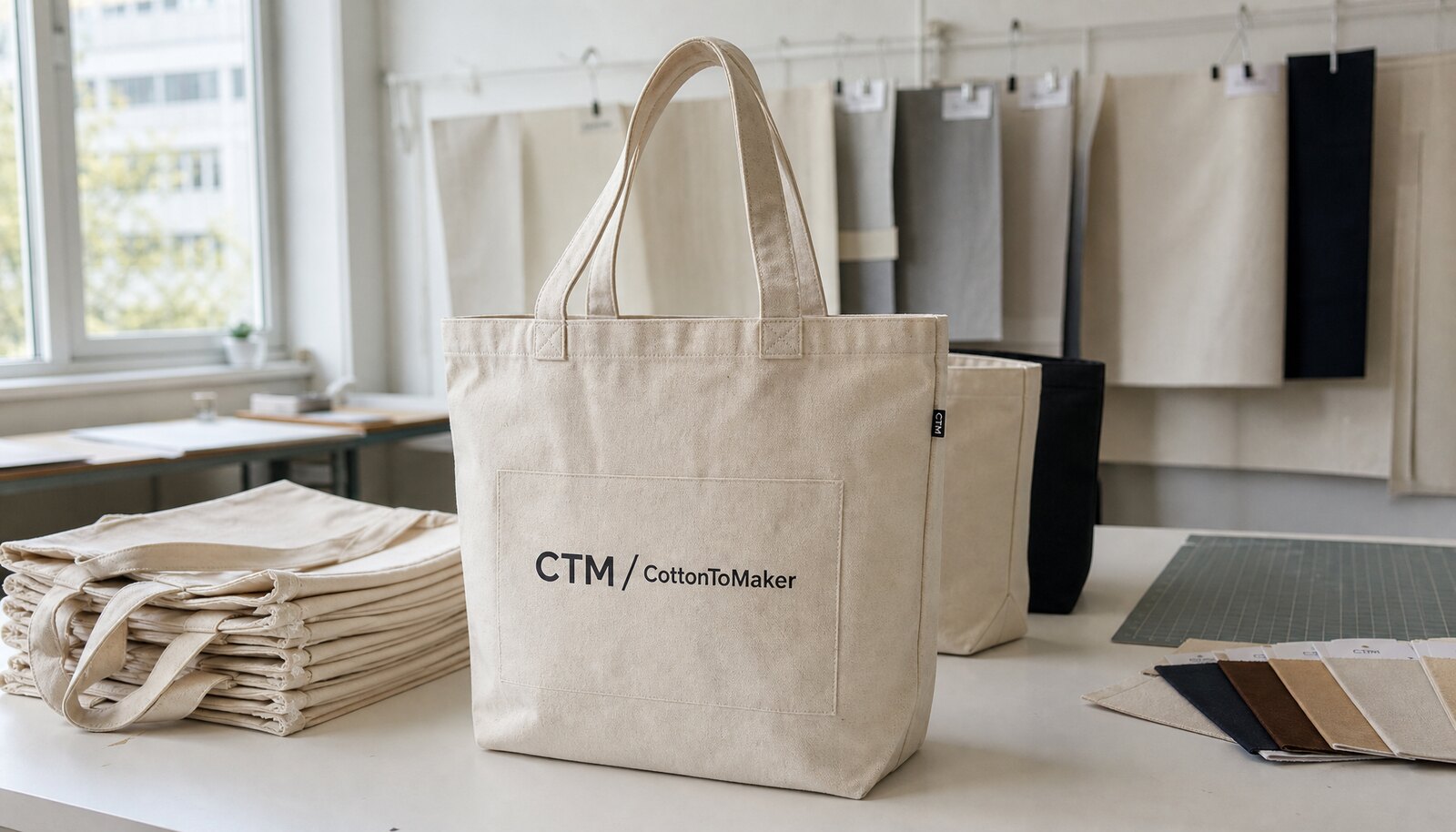
1) Define the campaign brief before you ask for a tote quote
Printed canvas shopping bags for charity campaigns are not standard retail totes with a logo dropped onto them. They may be handed out at a fundraising event, included in donor packs, sold in a charity shop, or used as a visible sponsor item at a public activation. Those use cases create different requirements for print durability, presentation, packing, and price. If the brief starts with a vague request for “a nice canvas bag,” suppliers will fill in the blanks with their own assumptions and the quotes will not be comparable.
The first procurement decision is the job the bag must do. If the tote will hold brochures and light giveaways for a one-day event, the bag can be lighter and the packing can be simpler. If it will be sold as a retail item or reused for grocery shopping, handle strength, seam reinforcement, and color stability matter more. If the charity needs sponsor logos, a clean print area and a predictable print method matter more than decorative features. The bag should be defined by use, not by a generic style name.
A brief that produces usable factory quotes should include bag size, contents, distribution method, campaign date, expected use life, and whether the order is for one-time issue or a repeat annual program. Once those are fixed, the supplier can propose the right fabric weight, print method, and packing style. That is also the point where procurement can remove wasted options such as embroidery on a low-cost giveaway or heavy fabric on a short-life handout.
For a clean RFQ, treat the charity tote as a specification-driven item. The clearer the usage scenario, the easier it is to compare suppliers on the same basis and avoid paying for quality features the campaign does not actually need.
- Donation pack: prioritize compact folding, clean count control, and low scuff risk.
- Retail fundraiser: prioritize print clarity, handle strength, and shelf presentation.
- Event giveaway: prioritize speed, controlled unit cost, and simple artwork.
- Repeat annual campaign: prioritize consistent fabric source, repeatable print registration, and archived specs.
2) Fabric weight, weave, and finish determine how the bag feels and how it prints
For most charity programs, the practical canvas range is usually 10 oz to 12 oz, roughly 340 to 410 GSM. That range is heavy enough to feel substantial and strong enough for normal reuse, but not so heavy that sewing and freight inflate the budget unnecessarily. A lighter fabric can work for simple handouts, but it tends to look less premium, wrinkle more, and may show the contents or the print on the reverse side. A heavier canvas can be the right choice when the tote is being sold or when the contents are bulky, but it adds cost at every stage.
The buyer needs more than a single weight number. Ask whether the fabric is 100% cotton, a cotton-rich blend, or recycled cotton content if that matters to your sourcing policy. Ask whether the weight is finished fabric weight or a greige estimate, and ask for the finished width. Two suppliers can say “12 oz canvas” and still be quoting different base cloths, different finishing, and different cut yield. That is why the same headline price can hide different performance.
Weave and finish affect the print result. A smoother, tighter weave generally gives cleaner lines and better registration for logos with small text. A more open natural canvas can create a handcrafted look, but it may absorb ink unevenly or show more slub. If the charity logo includes fine print, a web address, or sponsor names in small type, do not approve from a generic swatch photo. Ask for a strike-off or a printed sample on the intended cloth so you can see how the art sits on the actual surface.
Color also matters. Natural canvas, bleached canvas, and dyed canvas behave differently in print and can change the perceived color of the logo. If brand consistency matters, request Pantone targets and confirm whether the factory is matching the logo on a natural base or on a white-underprinted panel. That choice changes both look and cost.
- 8 oz to 9 oz: use for budget-sensitive handouts or very light contents.
- 10 oz to 12 oz: best all-round range for most charity shopping bags.
- 13 oz and above: suitable for premium retail resale or heavier reuse.
- Ask for fabric width and cut yield; it affects both bag size and cost efficiency.
- If the logo includes fine text, request a printed strike-off on the actual fabric, not just a digital proof.
3) Compare print methods by artwork complexity, durability, and quote transparency
For most charity tote programs, screen print is the default method worth quoting first. It works well for one- to three-color artwork, provides solid coverage on canvas, and keeps the cost structure easy to audit because setup charges are usually separated from running cost. It is also easier to compare from supplier to supplier because the variables are visible: number of screens, number of colors, print size, and whether one or both sides are decorated. When the logo is simple and the campaign quantity is meaningful, screen print is usually the most defensible option.
Heat transfer becomes relevant when the artwork is more detailed, when the run is small, or when the campaign needs variable elements. It can reproduce finer detail than a standard spot-color screen in some cases, but procurement should ask how the print holds up after folding, stacking, and handling. A tote for charity use is likely to be packed, unpacked, and reused. If the decoration sits on top of the fabric without enough bonding, the bag may look fine at first and then show edge lift or cracking after normal use.
Embroidery can be attractive for premium donor merchandise, but it is usually slower and more expensive than buyers expect for a campaign tote. Woven labels, badges, or sewn-on patches can also work, especially when the design needs texture rather than broad color fill. The key is to match the method to the logo and the commercial target. If the graphic is simple, durable, and flat, a basic print is often the most efficient. If the art has small gradients, complex line work, or a premium retail objective, a different method may be justified, but it should be justified with a quote, not with a sales pitch.
A useful rule for procurement is to ask the supplier for the method they recommend and the method they would use if cost were the only constraint. Those are often not the same. The difference tells you whether you are paying for a needed feature or for a visually nicer but unnecessary decoration.
- Use screen print for most one- to three-color charity logos.
- Use heat transfer only when artwork complexity or short-run flexibility justifies it.
- Use embroidery or sewn labels only when the campaign needs a premium finish.
- Ask what curing method is used and how the supplier checks adhesion after printing.
- Request a print strike-off or proof before approving the full run.
4) A real buyer comparison table should benchmark production path, not just supplier labels
Many tote-buying articles mix supplier categories with technical product details in one table, which makes the comparison feel generic and hides the commercial differences that matter. A better buyer table separates benchmark items from vendor types. That way, your team can use the table to compare quotes rather than to read marketing descriptions. The goal is to see who controls fabric, who controls decoration, who controls inspection, and where risk sits in the chain.
For charity campaigns, the production path matters because the product is public-facing and the order may be repeated next year. A direct factory can usually give clearer detail on sewing and fabric source, but the buyer must still ask whether printing is in-house or subcontracted. A trading company may be easier to communicate with and may offer flexible order handling, but the buyer should press for the actual inspection point and the subcontract chain. A stock reseller can move quickly for a small event, but it rarely gives the same control over exact construction or repeat consistency.
Use the table as a starting point for scorecarding. If one supplier can identify fabric source, sample workflow, carton spec, and inspection timing while another cannot, the second quote should not be treated as equivalent even if the unit price is lower. Procurement teams should weight transparency as part of value, not as a soft preference.
The most useful comparison question is simple: if there is a defect, who can fix it before shipment? The answer usually reveals whether you are talking to a real production owner or to a sales channel layered on top of one.
5) MOQ, unit price, and setup charges: the hidden drivers behind a charity tote budget
MOQ should be read as a commercial structure, not just a factory limit. A low MOQ can help a pilot campaign or a one-off donor event, but it often comes with higher unit cost, a less optimized fabric choice, or more limited packing options. A slightly larger MOQ may reduce unit price enough to make the campaign more competitive, especially if the tote is likely to be reordered. Buyers should compare the first order and the next order together, not just the first invoice.
The quote should be itemized. At minimum, procurement should ask how much is being charged for fabric, cutting, sewing, handle reinforcement, one print position, packing, carton marking, and export packing. Then ask what is excluded. Screen setup, artwork revision, sample charges, color matching, and second-side print charges often create the gap between the headline price and the landed cost. If the supplier will not break those out, the quote is not ready for comparison.
A useful sourcing practice is to test the supplier with a “what if” question: what happens to the unit price if the order moves from one color to two, or from 1,000 pieces to 3,000 pieces, or from bulk packing to insert packing? The response shows whether the factory understands its own cost drivers. It also shows whether the supplier has room to support a charity campaign that may need a revised quantity after fundraising numbers are finalized.
For repeat campaigns, ask whether the MOQ is linked to one artwork, one fabric color, and one size. Some suppliers will keep the same spec on a reorder; others will require a new setup if the order is split across dates or delivery points. That matters if your charity is ordering for a regional roll-out, multiple events, or a phased release schedule.
- Compare per-unit price after adding setup charges, sample charges, and packing charges.
- Ask whether the MOQ is tied to one artwork, one fabric color, and one print position.
- Check whether the supplier offers a price break at a second production tier.
- Use a forecast range, not only a minimum quantity, when negotiating.
- Ask whether split shipments are allowed and whether they change the unit price.
6) Sampling and approval should be a controlled workflow, not a casual sign-off
A sample is a production control tool. It should prove the bag can be made to spec, not just that the logo looks acceptable on a table. For printed canvas shopping bags for charity campaigns, the best sample is a pre-production sample made on the intended production fabric, with the intended print method, sewing method, and packing format. A random stock bag with a similar logo is not enough to lock a campaign order, because it does not prove the final sewing line, the exact fabric finish, or the final carton handling.
For artwork that needs exact placement or a specific color relationship, request a strike-off or print proof before the sample is sewn. That gives the buyer a chance to correct the file, line weight, or position before the factory spends time on the full sample. A small shift in artwork placement can be hard to fix later, especially on a canvas tote where panel cut and seam alignment affect visual centering. If the print is near a seam or pocket, the sample should show the final placement on the actual sewn piece, not just on flat fabric.
Approval should be documented. The buyer should define who signs off, whether approval is based on email or a marked physical sample, and which version of the artwork is the final one. If there are revisions after approval, the supplier should confirm whether that triggers a new sample charge, a lead time change, or both. This is where many orders drift: procurement thinks the order is approved, design thinks one more file is harmless, and the factory starts production against an old proof. A tight approval workflow avoids that risk.
Keep one signed or archived reference sample with the purchase order and artwork file. If the tote is reordered later, that reference sample becomes the baseline for repeatability and dispute resolution.
- Ask for a strike-off for print color and position before full sewing if the art is sensitive.
- Measure the sample with a ruler or caliper, not by eye.
- Rub the print, fold the bag, and inspect the handle join before approving.
- Keep a signed or email-approved reference sample record tied to the PO.
- If artwork changes after approval, require a written revision note and updated cost impact.
7) Inspection criteria should cover dimensions, decoration, and carton control
Good QC for tote bags is specific and measurable. The most useful approach is to split defects into functional failures, appearance failures, and packing failures. Functional failures include broken seams, missing handles, weak reinforcement, or a print that cannot be read. Appearance failures include crooked artwork, visible stains, heavy shade variation, or a bag that is materially different from the approved sample. Packing failures include wrong carton counts, incorrect labeling, or mixed SKUs that were not approved. Separating the categories makes disputes easier to resolve because not every issue has the same severity.
A buyer-level inspection should begin before boxes are opened. Check carton labels against the PO, then sample cartons from more than one position if the shipment is palletized or stacked deeply. Measure bag dimensions against the agreed drawing, not against memory. For print, confirm both placement and visual integrity. Even when the graphic is simple, a logo that shifts too far toward a seam or sits unevenly on the panel can look unprofessional once the bag is in use. For stitching, inspect the handle attachment and the bottom seams under light tension. A tote can pass a visual check and still fail if the reinforcement is weak.
The buyer should define tolerances in advance. As a practical guideline, many teams accept small dimensional variance and focus tighter control on logo position and seam integrity. That does not mean every small flaw is acceptable; it means the supplier knows what matters most. If the bags are for public distribution, the tolerance on visual consistency may need to be stricter than it would be for an internal warehouse tote. Charity campaigns are brand assets as much as they are packaging items, so the QC standard should reflect that visibility.
Do not leave the defect threshold to the factory. Tell the supplier which issues are correctable before ship, which require replacement, and which are automatic rejects. The best inspection process is clear enough that the supplier can run it before the goods leave the line.
- Define zero-tolerance defects: broken seam, missing print, wrong size, wrong artwork, wrong carton count.
- Define repairable defects: loose threads, minor trim marks, light creasing, if they do not affect function or presentation.
- Set a measurement tolerance for dimensions and logo placement before inspection starts.
- Require inspection of multiple cartons from different pallet positions.
- Ask whether inspection is internal, third-party, or buyer-appointed, and who pays for each option.
- Keep a retained approved sample for post-shipment comparison.
8) Packing, carton specs, freight terms, and payment milestones affect landed cost more than buyers expect
Packing should be treated as part of the product spec. For charity totes, the cheapest option is usually bulk carton packing, where the bags are folded and packed in master cartons for warehouse distribution. That works well if the bags are being handed out from a single location. If they are going into donor packs or retail sales, a better presentation may require individual folding, insert cards, or a protective polybag. Those choices add labor, but they can reduce damage and improve the end-user experience.
Ask for carton details, not just a promise that the bags will be “well packed.” Buyers should request inner count per carton, carton dimensions, gross weight, outer label format, and whether there is an inner liner or moisture barrier. Canvas can pick up warehouse odor, dust, and moisture marks during long transit. That risk increases on long-haul sea freight or during humid-season exports. If your route crosses multiple warehouses, a simple inner liner may cost less than repacking or return handling later.
Freight terms also matter. Ask whether the quote is EXW, FOB, CIF, or DDP and what is excluded at each step. A low ex-works price may look attractive until export handling, inland trucking, destination charges, or customs clearance are added. If your team needs a clean comparison, ask suppliers to quote on the same Incoterm and state whether duties, documentation, and last-mile delivery are included. This is especially important when the order has multiple delivery points, because a split-shipment plan can affect freight efficiency and carton labeling.
Payment terms deserve the same attention. Many factories expect a deposit with balance before shipment, but the exact milestone should be clear in writing. If the supplier requests a larger deposit, balance against shipping documents, or payment tied to inspection release, make sure the commercial terms match the production risk and the urgency of your campaign. Procurement teams should not treat payment as a separate finance issue when it directly affects manufacturing priority and ship timing.
For a charity order, the right freight and payment structure is the one that keeps the campaign on schedule while protecting the buyer from avoidable cost creep.
- Bulk carton pack: lowest cost, best for centralized distribution.
- Folded and inserted: better for retail presentation and donor-facing packs.
- Inner liner or protective poly: useful when humidity, dust, or long transit is a risk.
- Print carton marks to your specification to reduce warehouse mis-picks.
- Quote the same Incoterm across all suppliers before comparing price.
- Confirm payment milestones and who bears bank fees, export handling, and destination charges.
9) Ask for evidence when the supplier mentions fabric origin, sustainability, or print durability
If a supplier mentions recycled content, organic cotton, traceable fabric, or a special sustainability claim, ask for documentation tied to the actual order. The document should identify the relevant material or source path, not just describe a general capability. For procurement, the question is not whether the supplier can talk about sustainability; it is whether they can connect the claim to the fabric that will be sewn into your PO. If origin or certification matters to your charity’s own standards, make that a quote requirement from the beginning.
The same logic applies to print durability. A supplier may say the print is “washable” or “long lasting,” but those words are not operationally useful unless they are tied to a test method or a meaningful inspection criterion. Ask how the print is cured, whether the factory runs a rub test, and what they do if a sample begins to transfer or crack at the fold line. You do not need a laboratory specification for every charity tote, but you do need a clear answer that shows the supplier understands how the print will age in normal use.
If the order is higher risk, ask for a pre-shipment photo set, a retained sample, or third-party inspection. Those options are especially useful when the tote will be distributed publicly, sold in a charity shop, or used for a sponsor-facing campaign. Verification does not have to slow the order down if it is planned early. In practice, the most efficient suppliers are usually the ones who can produce evidence quickly because they already control their records and sample archive.
A procurement team should avoid unsupported claims like “premium quality” or “best canvas.” Replace those phrases with the actual questions that matter: what material, what test, what proof, and what happens if the goods do not match the approved reference.
- Ask for mill or source identification where fabric origin matters.
- Request the supplier’s real test method for print adhesion or rub resistance.
- Retain one approved sample from the order for future reference.
- Do not accept unsupported claims like “premium quality” without a measurable spec.
- If certification matters, require the document to reference the exact material for the PO.
10) Put the order guide into a repeatable RFQ and delivery workflow
A good order guide should help procurement move faster, not produce extra paperwork. The cleanest workflow is to lock the product spec first, compare supplier capability second, approve sample third, and then finalize packing and shipping details before production starts. That sequence prevents artwork changes from colliding with sewing, reduces quote drift, and gives the factory a single target. It also helps the buyer evaluate whether a supplier is commercially ready or only conversationally helpful.
For internal control, assign one owner for artwork sign-off, one for commercial approval, and one for receiving inspection. That split avoids the common problem where the supplier waits on a final color decision while procurement assumes design has already approved it. It also makes artwork revision handling clearer. If the logo changes after the strike-off, the buyer should know whether the change is minor or whether it requires a new sample, a new lead time, or a new setup cost. That clarity saves time later when the campaign date is fixed.
Before issuing the PO, confirm the final version of the artwork, the approved sample reference, the carton spec, the delivery destination, the freight term, and the remedy if defects are found. For a repeated charity campaign, archive the final spec so the next order can start from a known baseline. That archive should include the artwork file version, sample photos, measurement notes, and any agreed tolerance exceptions. It is much easier to repeat a good order than to reconstruct one from email threads.
For B2B procurement, the value of this guide is not just selecting the right printed canvas tote. It is controlling the order so the campaign arrives on time, looks consistent, and holds up through the distribution route without avoidable surprises.
- Freeze the final artwork version before mass printing.
- Keep the approved sample reference linked to the PO.
- Assign clear owners for artwork, commercial approval, and receiving QC.
- Archive the finished spec for repeat orders and future comparison.
- Confirm split-shipment rules and revision limits before production starts.
Specification comparison for buyers
| Benchmark item | What to compare in quotes | Buyer note |
|---|---|---|
| Fabric weight | 8 oz, 10 oz, 12 oz, or 13 oz+ canvas; confirm GSM and whether the weight is finished fabric or greige base | Quotes are not comparable unless weight, weave, and fabric finish are stated the same way |
| Construction | Bag size, gusset depth, handle width and length, seam allowance, reinforcement stitch, and loading expectation | Small construction changes can move both cost and defect risk |
| Print method | Screen print, heat transfer, embroidery, woven label, or a mixed decoration package | The method should match logo complexity, quantity, and durability needs |
| MOQ | Minimum per artwork, per color, per size, and per fabric color | Ask whether repeat orders can keep the same spec without retooling |
| Sampling | Strike-off, pre-production sample, revision cycle, sample charge, and charge credit policy | Sampling terms should be written before artwork approval |
| Packing | Bulk carton, folded insert pack, polybag, carton marks, inner liner, and carton count | Packing affects appearance, moisture risk, warehouse handling, and landed cost |
| Inspection | Internal QC, third-party inspection, inspection timing, and defect threshold | Ask for the checklist, not just the promise |
| Commercial terms | Incoterms, payment milestones, artwork revision limits, and split shipment options | This is where many “good price” quotes become expensive in practice |
Buyer checklist before sampling
- Confirm bag size, fabric weight in GSM, canvas color, handle length, gusset depth, and print location before requesting quotes.
- Send vector artwork, Pantone targets, and a placement drawing with exact logo dimensions and safe margins.
- State the target MOQ, annual forecast, and whether split shipments or partial releases are allowed.
- Define packing format: bulk carton, folded with insert, retail-ready polybag, or campaign-specific mail pack.
- Request a pre-production sample made on the intended production fabric, not a random stock bag.
- Set acceptance criteria for print position, stitch quality, size tolerance, and carton count before mass production.
- Ask the supplier to identify who owns fabric sourcing, print curing, and final inspection in writing.
- Request photos of current production, carton labels, and one recent QC report or inspection checklist sample.
- Clarify whether the quote includes screen/setup charges, sample charges, carton marking, and any artwork correction fees.
- Confirm the remedy if the approved sample is not matched in bulk production: rework, replacement, credit, or a revised schedule.
Factory quote questions to send
- What exact canvas weight, weave type, and finished fabric width will you use, and is the fabric 100% cotton or a cotton-poly blend?
- Is the quoted price based on dyed fabric, bleached fabric, or natural canvas, and will shade variation be controlled within the same lot?
- How many print colors are included, and what setup charge applies per screen, plate, or transfer step?
- What is your MOQ for this specific artwork, and can repeat orders keep the same fabric and print position without re-approval?
- Will the pre-production sample use the same fabric lot and the same sewing line as the bulk order?
- What is the sample lead time, sample charge policy, and can the sample charge be credited back on order placement?
- Who performs final inspection, what inspection level do you use, and can you share the checklist before production starts?
- How will the bags be packed in cartons, how many per carton, and can you print carton marks to our specification?
- Can you provide fabric source documentation or mill information if we need to verify origin or sustainability claims?
- What is your production lead time after artwork approval, and what happens if the approved sample is not matched in the bulk run?
Quality-control points to confirm
- Fabric weight should match the approved spec within about ±5% on a lot basis, unless your contract sets a tighter tolerance.
- Finished bag dimensions should stay within about ±0.5 in / ±1.5 cm for smaller dimensions and ±0.75 in / ±2 cm for larger dimensions unless your drawing specifies tighter limits.
- Print placement should stay within about ±0.2 to ±0.25 in / ±5 to ±6 mm of the approved artwork position on each bag panel, measured from fixed reference points.
- Logo edges should be sharp, with no blur, bleeding, pinholes, broken lines, or visible double images on the finished print.
- Cure and adhesion should pass a light dry-rub test and a fold test: no transfer to a white cloth and no cracking at the main fold line after repeated flexing.
- Handle stitching should be even and reinforced, with no skipped stitches, loose thread bundles, popped seams, or crooked handle attachment.
- Box stitch or X-stitch at the handle should be intact on both sides, and the stitch density should be consistent enough to avoid early tear-out under normal use.
- Gusset depth and seam alignment should match the sample; twisted seams, uneven bottom gussets, or crooked side panels should be counted as defects.
- Carton counts should be exact, and cartons should be sealed, labeled, and free from mixed SKUs unless a mixed pack was explicitly approved.
- Packaging should protect the goods from dust, odor, and moisture; if the route is humid or long-haul, use inner liners or comparable protection.