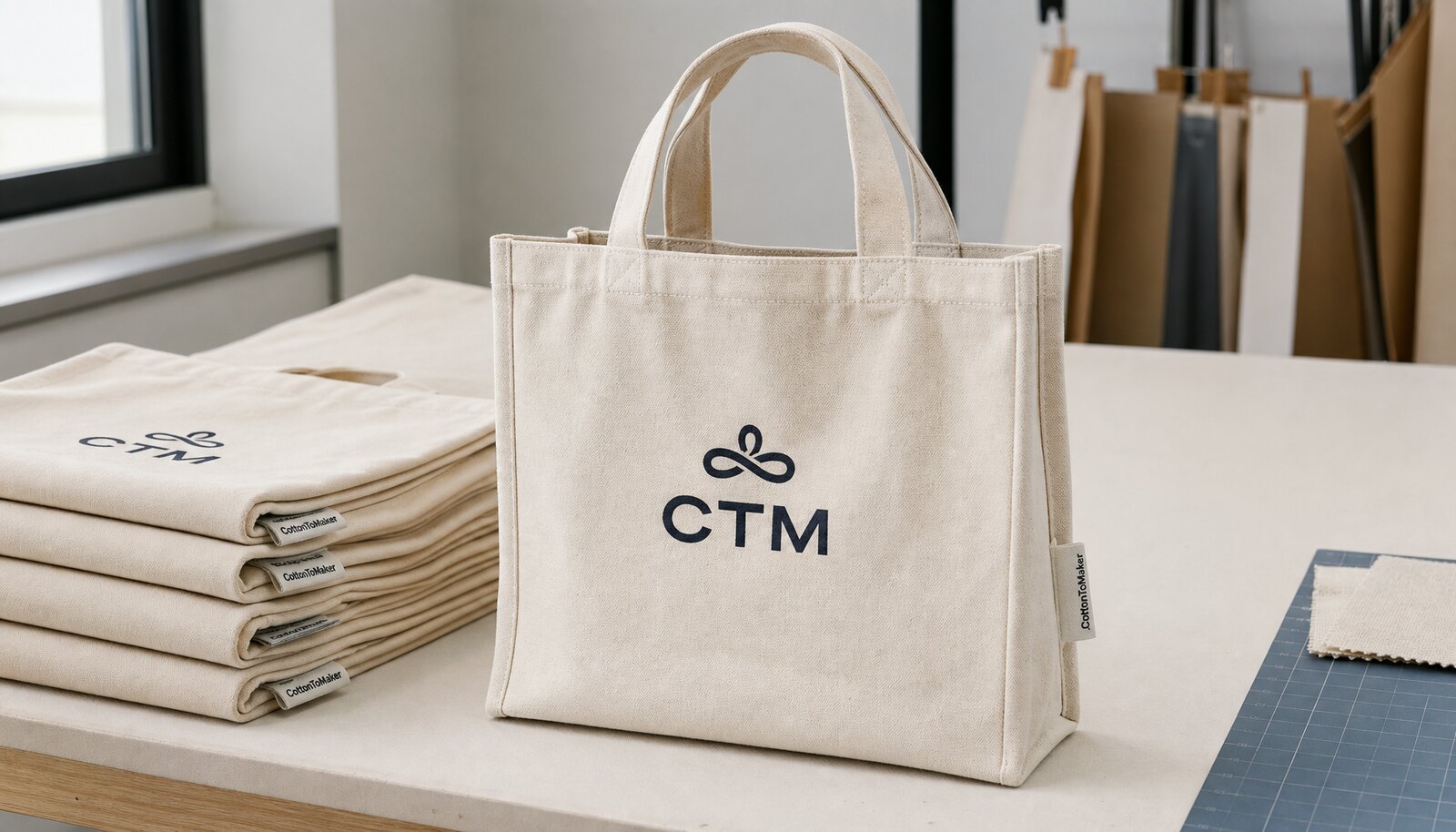
Why boutique buyers get different quote results for the same tote
Printed canvas shopping bags for boutiques look simple, but the quote can swing a lot depending on how the factory reads the spec. One supplier may quote a loose 12 oz stock canvas body with a basic single-color print. Another may quietly upgrade the fabric, add reinforced handles, and include polybag packing. If the RFQ does not spell out those details, buyers end up comparing different products at different price points.
The biggest sourcing mistake is treating the tote as a generic commodity. Boutique customers notice fabric texture, print sharpness, seam finish, and how the bag folds on shelf. Retail buyers should write the RFQ like a product spec, not a wish list. That means defining use case first: carry-out bag, gift bag, apparel bag, or premium branded accessory.
- A quote is only comparable when the canvas weight, print method, handle construction, and packing are identical.
- Boutique programs usually need better aesthetics than promotional totes, but not every order needs full custom cut-and-sew.
- The cheapest quote often excludes sampling, artwork setup, carton optimization, or stronger handle reinforcement.
Choose the right canvas weight before you compare prices
For most printed canvas shopping bags for boutiques, 12 oz canvas is the entry point for lighter retail use, while 14 oz to 16 oz gives a more structured look and better durability. In practice, a 12 oz bag may work for folded apparel, lightweight accessories, or gift packaging. Once the bag needs to hold denim, hardcover books, candles, or combined purchases, moving up in weight usually reduces returns and improves customer perception.
GSM conversions are useful when a supplier quotes in metric units. Buyers should still ask for the actual sample fabric or a clear fabric description, because canvas weave density and finishing affect the feel as much as raw weight. A lightly finished 14 oz canvas can feel sturdier than a poorly woven 16 oz cloth. If the brand position is premium, a cleaner weave with less slub is usually more important than chasing the heaviest spec.
- 12 oz: suitable for promo-level boutique bags, low carry weight, and tighter price targets.
- 14 oz: the most balanced option for many retail boutiques needing structure and repeat use.
- 16 oz: stronger shelf presence and better load performance, but higher fabric cost and a stiffer fold.
- Ask for fabric shade reference if natural canvas tone matters to the brand image.
Print method changes the quote more than many buyers expect
Single-color logos on natural canvas are usually most cost-efficient with screen printing. It gives good coverage, strong opacity, and repeatable results once the screen is set. For two to four spot colors, screen print is still often the best route if the art is not too detailed. If the design includes small text, gradients, photographic art, or frequent seasonal changes, digital transfer or heat transfer can reduce setup complexity, though the print feel and durability profile change.
The buyer should separate visual approval from production method approval. A sample that looks good on white paper can fail on rough canvas if thin letters fill in or the logo shifts across the weave. Ask for a strike-off on the actual fabric, not only a PDF proof. For dark fabric or covered panels, the ink system matters even more because opacity and crack resistance become visible in use.
- Screen print: best for stable designs and repeat orders.
- Heat transfer: useful for short runs and complex artwork, but check for cracking and edge lift.
- Digital print: useful for small quantities and artwork with color variation, but texture and wash behavior must be reviewed.
- Fine text should be reviewed at actual size, not enlarged on a design file.
MOQ logic: where price breaks are real and where they are artificial
MOQ for boutique totes usually has three layers: fabric MOQ, print setup MOQ, and packing MOQ. A factory may accept a low total quantity if it can use stock canvas and a simple print, but the unit cost will often rise sharply once you ask for custom fabric shade, special size, or labeled retail packing. Buyers should be careful not to over-customize the first order if the bag line is still being tested in the market.
The cheapest sourcing route for a new boutique program is often a standard canvas body with one logo print and simple folding. Once the design proves demand, the order can move into custom fabric weight, custom color binding, woven labels, hang tags, or different handle lengths. That sequencing matters because many quote comparisons look attractive only when the buyer ignores one-time setup fees.
- Low MOQ works best when the bag body is standard and only the print changes.
- A custom size usually affects cutting efficiency and can raise price more than a logo change.
- Special packing, barcode stickers, and insert cards can add labor even when fabric cost stays flat.
What a serious factory quote should show line by line
A useful factory quote for printed canvas shopping bags for boutiques should not just show unit price. It should show fabric weight, size, printing method, handle type, reinforcement, packing, carton count, sample cost, lead time, and any setup charges. If those items are missing, the buyer cannot compare quotes on equal terms or build a landed-cost model.
The best quote is the one that can be converted directly into a purchase order without guessing. It should state whether the price includes screen setup, one proof sample, standard stitching, basic folding, and outer carton labeling. If the factory offers multiple pricing tiers, the quotation should clearly show the threshold quantity for each tier so procurement can see where the break-even point lands.
- Unit price by MOQ tier
- Fabric weight and material description
- Print method and number of colors included
- Handle spec and reinforcement details
- Packing method, carton size, and CBM
- Sample cost, setup fees, and lead time
How to compare supplier routes without mixing different risk levels
Some buyers source direct from a canvas bag factory, while others use a trading company or a print house with outsourced sewing. Each route can work, but the quote should be read differently. A direct factory usually gives stronger control over fabric and stitching, while a trading route may be better when the buyer needs multiple categories bundled into one shipment. The risk is that the buyer may receive a quote that looks cheap because one step is outsourced or downgraded.
The comparison should focus on what happens if the order repeats. Direct factory sourcing often becomes more efficient on reorders if the spec is stable. Trading-company sourcing can be helpful for consolidation, but the buyer should require traceable factory identification, proof of the actual production line, and written confirmation of whether the same mill and sewing facility will be used on repeat orders.
- Direct factory: stronger process control, but the buyer must manage the spec tightly.
- Trading company: easier coordination for mixed SKUs, but more potential spec drift.
- Print house plus outsourced sewing: acceptable for simple items, but QC ownership can be fragmented.
- Retail buyers should prefer the route that matches internal QA capacity, not only the lowest ex-works price.
Comparison table: sourcing routes for boutique canvas tote programs
The table below compares the most common sourcing routes buyers use for printed canvas shopping bags for boutiques. The right route depends on order size, artwork complexity, repeatability, and how much internal time the procurement team can spend on spec control.
Packing rules should cover fold method, inner bundle, carton count, carton mark, moisture protection, SKU separation, and warehouse receiving needs. These details affect cost, damage rate, receiving speed, and whether the goods can move directly into retail or distribution.
- Write decisions in measurable language, not only descriptive wording.
- Ask for sample photos plus one physical approval sample for important orders.
- Keep quotation, sample approval, and inspection notes tied to the same spec version.
Sample approval: the fastest way to catch problems before bulk cutting
A pre-production sample should be treated as a production rehearsal, not a marketing prop. The buyer should review the exact canvas shade, logo placement, handle length, stitch finish, and folding style. If the bag has a gusset, the gusset seam and bottom shape must be reviewed because this is where many cost-saving shortcuts show up. For printed canvas shopping bags for boutiques, an approved strike-off or sample is the strongest protection against a repeat production mismatch.
Acceptance criteria should be practical and measurable. Minor weave variation is normal in canvas, but the logo should not look crooked, fuzzy, or too close to an edge. If the product is meant for a boutique counter or retail shelf, the sample also needs to be tested for visual balance when upright and folded. Buyers often approve a sample that looks good in isolation but fails when packed with a dozen units in a carton.
- Verify sample dimensions after pressing and folding.
- Check print registration at all corners and along seams.
- Load test the handles with realistic retail weight.
- Inspect for stains, oil marks, broken threads, and odor.
- Compare the sample against the final artwork file and color reference.
Packing, carton planning, and warehouse handling
Packing is not a small detail. A boutique tote can arrive with perfect stitching and still create warehouse problems if the carton size is too large, the fold is inconsistent, or the outer pack gets crushed. For store replenishment, consistent folding reduces receiving time and keeps the bag display-ready. For ecommerce or wholesale distribution, carton count and label accuracy matter because they affect how quickly inventory can be put away.
Ask the factory to quote both the per-unit packing method and the master carton data. The best quote includes units per inner pack, outer carton dimensions, gross weight, and estimated CBM. If the order will ship by sea, small changes in carton geometry can influence freight efficiency. If the bags must sit on a boutique shelf immediately on arrival, the packing standard should protect shape and reduce creasing.
- Choose individual polybags only when retail presentation or dust control matters.
- Use bulk packing if the receiving team will rework and distribute the bags anyway.
- Require carton labels that match style code, quantity, and destination.
- Confirm whether folding direction is fixed or factory standard.
Lead time risk is usually caused by details, not capacity
Factories usually miss schedule because a detail changes late: artwork revision, fabric substitution, sample approval delay, or packing instruction change. A boutique tote with a simple design can still slip if the buyer approves the wrong fabric shade and requests a re-strike, or if the print file is not finalized before sampling. Lead time should be measured from final artwork approval and deposit, not from the first inquiry date.
When comparing suppliers, buyers should ask which steps are sequential and which can run in parallel. Fabric procurement, screen preparation, sample production, and carton printing may each depend on prior approval. A quote that looks faster may simply be assuming no revisions. For seasonal retail launches, the safe planning method is to build a buffer for sample approval, not just sewing time.
- Late artwork changes almost always extend the schedule.
- Custom fabric shade adds risk if mill dye lots shift.
- Special packing or retail inserts can add one to three extra working days, sometimes more.
- Rush orders are best used only after the sample and artwork are already frozen.
Specification comparison for buyers
| Spec decision | Recommended option | When it fits | Buyer risk to check |
|---|---|---|---|
| Fabric weight | 12–16 oz canvas, with 12 oz for promo use and 14–16 oz for retail carry | Boutiques that want a structured look and better perceived value | Lightweight fabric can look wrinkled, print can show through, and weak seams fail under heavier retail loads |
| Print method | Screen print for 1–4 spot colors; heat transfer or digital only for short runs or complex art | Simple logos, seasonal drops, and repeat boutique programs | Fine text may close up on rough canvas; heat transfer can crack if washing or heavy abrasion matters |
| Handle construction | Self-fabric or cotton webbing handles with bar-tack reinforcement | Shopping bags expected to carry apparel, candles, books, or boxed goods | Short stitch lengths and weak handle attachment are the most common failure point in retail use |
| Bag structure | Gusseted tote with base seam reinforcement and clean edge finishing | Boutiques that want a bag to stand upright on shelves and in customer photos | Flat bags are cheaper but hold less volume and can distort print placement |
| Closure | Open top unless product security or gift presentation requires zipper or snap | Most boutique carry-out bags and retail packaging programs | Adding closures raises sewing cost, lead time, and defect risk if the use case does not need them |
| MOQ route | Start with factory stock canvas body plus custom print for lower MOQ; move to fully custom cut-and-sew for scale | Trial orders, seasonal launches, and new store openings | Low MOQ with too many custom details usually creates poor pricing, inconsistent color, and long sampling cycles |
| Color control | PMS reference plus physical strike-off for logo color on final fabric | Brand-sensitive programs where logo color and natural canvas shade matter | Digital proof alone is not enough; off-white canvas varies by mill lot and can shift the final look |
| Packing method | Individual polybag with carton count and master carton label, or bulk pack if retail-ready insertion is not needed | Ecommerce replenishment, warehouse receiving, and store distribution | Loose bulk packing saves cost but increases dust, crease marks, and warehouse handling time |
| Supplier route | Direct factory quote for better control, or trading company when you need mixed products and managed consolidation | Buyers comparing multiple product categories or needing one shipment from several mills | Trading quotes can hide factory spec changes; direct factory quotes require stronger buyer-side detail control |
Buyer checklist before sampling
- State the exact canvas weight in oz or GSM, the bag dimensions, gusset depth, handle length, and the required carry use.
- Attach logo artwork in vector format and specify whether the print must match PMS, a sample swatch, or only a visual reference.
- Define whether the order is retail-grade, promo-grade, or gift-pack grade, because this changes fabric, stitch density, and packing.
- Request a pre-production sample or strike-off before bulk production if the art uses fine text, gradients, or reverse printing on dark fabric.
- Specify pack count per inner polybag and outer carton, plus whether the bags must be folded to a fixed size for shelf display.
- Include target lead time, ship window, and destination port or final warehouse so the quote reflects realistic production scheduling.
- Ask for carton size, gross weight, and estimated CBM so freight can be compared on a landed-cost basis.
- Require a defect tolerance standard for print registration, seam appearance, stains, loose threads, and size deviation.
Factory quote questions to send
- What canvas weight do you recommend for this bag size and retail use, and what changes if we move from 12 oz to 14 oz or 16 oz?
- Is the quoted price based on direct screen printing, heat transfer, or digital print, and what is the setup charge for each method?
- What is the MOQ by fabric color, print color, and total order volume, and where does the price step down?
- Will you use stock canvas or custom woven fabric, and how does that affect shade consistency and lead time?
- What handle material and stitch reinforcement are included in the quote, and what load test do you apply before shipment?
- Can you share carton dimensions, units per carton, estimated gross weight, and CBM per carton for freight planning?
- Do you include a pre-production sample or strike-off, and what is the approval process before bulk cutting starts?
- What is the expected production lead time after artwork approval and deposit, and what risks can extend it?
- Which defects are counted as major versus minor in your final inspection, and what AQL or internal standard do you use?
- Are there any extra charges for folded packing, individual polybags, barcode stickers, insert cards, or rush production?
Quality-control points to confirm
- Fabric weight should match the agreed spec within a practical tolerance, and the hand feel should remain firm enough for retail display.
- Logo placement should stay within the approved tolerance window so the print does not sit too low, too close to a seam, or skewed on gusseted bags.
- Screen print edges should remain clean with no pinholes, heavy bleeding, or shade shift that makes the brand color look off-brand under store lighting.
- Handle stitches and bar-tacks should be even, secure, and free from skipped stitches or loose thread bundles at load points.
- Bag dimensions should be checked after pressing and folding, not only after cutting, because canvas can shrink slightly with finishing.
- Inner packing should keep each bag clean, flat, and consistently folded so retail teams do not need to rework cartons on arrival.
- Carton labels should match PO data, style code, carton count, and destination to avoid receiving delays at the warehouse.
- A sample should be judged for seam quality, print registration, odor, stain risk, and functional load carry before bulk approval.