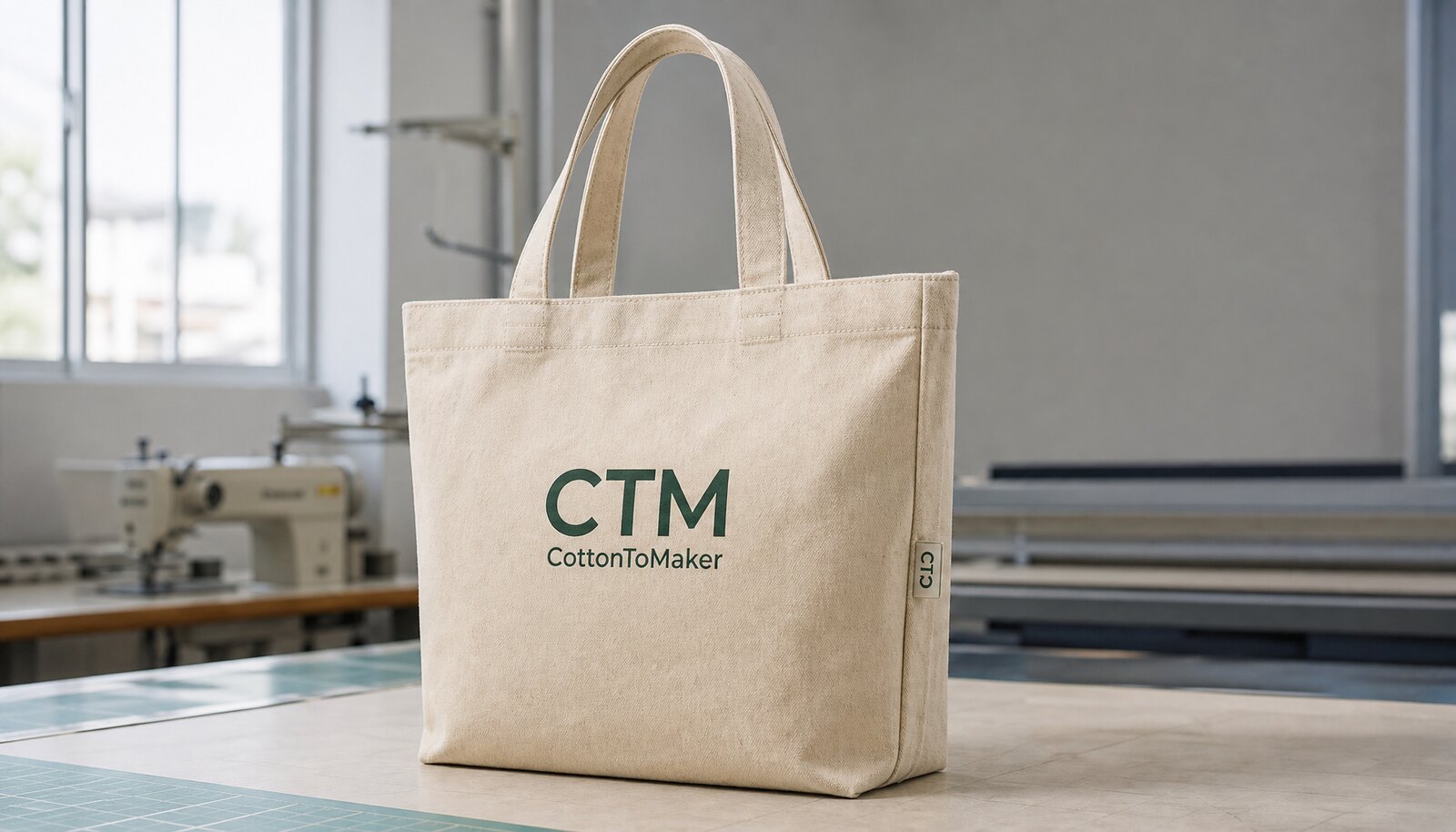
Start With the Retail Job, Not the Bag
Printed canvas shopping bags for boutiques are rarely just carrier bags. In some programs they are sold as merchandise. In others they act as gift-with-purchase packaging, seasonal brand touchpoints, or an upgraded checkout bag that helps the store feel more premium. The right bulk pricing plan depends on that use case, because the bag that sits at the register does not need the same finish as the bag that is sold on a shelf.
That is why a vague RFQ produces weak pricing. If the supplier only sees "printed canvas shopping bags for boutiques bulk pricing plan," they still need to guess the exact size, fabric weight, handle build, folding method, and decoration method. A procurement buyer should identify the function first: resale, promotion, or utility. Once that is clear, the quote can be built around the right cost drivers instead of around assumptions that later trigger sample revisions and price disputes.
- For resale or premium boutique use, prioritize cleaner stitching, more stable fabric, and a better print finish.
- For free carry-out packaging, prioritize durability, consistent production, and a lower landed cost per use.
- If the bag will be displayed near the register, request a sample that looks retail-ready rather than strictly production-only.
Choose the Right Fabric Weight and Construction Before Asking for a Price
Canvas bag pricing is driven more by fabric and construction than by the logo. A lighter 8 oz to 10 oz canvas usually fits promo-style use and lower-cost carry-out programs. A 10 oz to 12 oz canvas is often the practical middle ground for boutique buyers who want a bag that feels substantial without pushing freight weight too high. Heavier 12 oz to 14 oz options are more premium in handfeel and typically support higher perceived value, but they raise material, sewing, and logistics costs.
Construction details change the economics in predictable ways. A gusset increases volume and adds sewing steps. Reinforced handles improve durability but add labor and material. Interior binding, pockets, zipper tops, snap closures, or bottom boards each create separate operations that should be priced transparently. The wrong spec for the intended retail job is one of the fastest ways to lose margin, because buyers often pay for premium construction that the end use does not actually need.
- Ask whether the quoted fabric weight is before or after finishing, because that changes comparison value.
- Confirm whether the canvas is plain weave, twill, or washed, since the handfeel and print result can differ.
- If the bag will carry apparel or boxed goods, require reinforced handles and a simple load test on the sample.
Print Method Changes Unit Price, Reorder Risk, and Shelf Quality
For boutique tote programs, screen printing remains the most common bulk method when the artwork is simple and the quantity is meaningful. It usually works well for one to three spot colors, gives strong opacity on natural canvas, and is easier to repeat on reorders when the factory keeps the screens and ink recipe consistent. The buyer should still ask how setup is charged, how screens are stored, and whether the same screen can be reused for a repeat order or if the factory treats every run as a new setup.
For more complex designs, transfer printing, heat transfer, or digital decoration may be practical for a launch run or a limited seasonal campaign. The tradeoff is usually in durability, touch, and repeatability. If the bag will be handled frequently in-store, ask how the ink or transfer behaves after folding, abrasion, and basic rub testing. A design that looks clean on the approval sample but fails after packing or customer handling creates a hidden replacement cost that is easy to miss during sourcing.
- Match the print method to the artwork complexity instead of forcing a cheap method onto a difficult design.
- Use the same fabric weight for the sample and the bulk run, or the print result may not be comparable.
- If brand color matters, request Pantone control or a signed visual color standard rather than a vague verbal match.
Use a Real Bulk Pricing Plan, Not a Single Unit Price
A usable bulk pricing plan should show how the price changes by quantity band and by variant. One unit price does not tell a buyer enough. For printed canvas shopping bags, the most common cost breakpoints are setup-heavy first runs, moderate repeat runs, and larger production bands where cutting and printing efficiency improve. Buyers should ask suppliers to quote at several quantity levels so the true scale effect is visible.
An example pricing ladder for a basic boutique tote might look like this: 500 pieces at the highest unit price because setup charges are spread over fewer units; 1,000 pieces at a lower price once the first efficiency gain appears; 3,000 pieces with a more noticeable per-unit drop; and 5,000 to 10,000 pieces where a repeat order can remove or reduce some setup charges. The exact numbers vary by fabric weight, print color count, and packing format, but the logic should be visible in the quote. A supplier who refuses to break out setup, sample, and recurring costs is not giving a pricing plan; they are giving a single number with hidden assumptions.
For procurement teams, the goal is to see what happens when the order changes. What is the price if the logo goes from one color to two colors? What happens if you add a gusset, switch to a wider handle, or ask for retail tissue instead of flat packing? The best quote makes those deltas obvious. That is how a buyer protects margin and avoids discovering later that a small design change doubled the unit cost.
- Request price bands at 500, 1,000, 3,000, 5,000, and 10,000 pieces if those are realistic planning levels.
- Separate first-run setup charges from repeat-run unit price so the reorder path is clear.
- Ask for a delta price on each change: extra print color, extra handle reinforcement, retail folding, or polybagging.
Compare Suppliers by True Bag Variables, Not Just by Sourcing Route
Supplier route matters, but it is not enough on its own. A direct factory, a trading company, a domestic decorator, and a stock-bag overprinter can all produce canvas totes, but they do not price the same way and they do not carry the same risk. The meaningful comparison is not simply who is quoting the bag; it is what exact bag specification, print method, packing format, and delivery term are behind each quote.
This is where a thin comparison table can mislead. Two suppliers might both say "12 oz canvas tote," but one could be quoting plain flat packing, 1-color screen print, and FOB; the other could be quoting a gusseted tote with retail tissue, 2-color print, and DDP. Those are not equivalent offers. Procurement buyers should normalize the spec before judging the price and should ask the supplier to confirm whether the sample route is the same as the production route. If it is not, the quote should be treated as provisional, not final.
- Compare only after the same fabric GSM, print method, handle spec, and packing format are locked.
- Do not compare a stock blank overprint to a fully custom cut-and-sew tote as if they were identical programs.
- Ask who owns the files, screens, and packaging artwork so repeat orders do not restart the setup cycle.
What to Ask in the RFQ so the Quote Is Actually Comparable
A strong RFQ is short but specific. The supplier should not have to interpret the use case; they should only have to price it. The most useful RFQ includes finished dimensions, material weight, handle specification, print size, print color count, packing method, destination, and target quantity mix. If the order may repeat, the buyer should also say so. Repeat orders often justify better pricing because the supplier can reuse screens, files, or process settings.
Quote questions should also surface exclusions. If a supplier says the unit price is attractive, ask what is not included. Setup charges, sample charges, carton labeling, moisture protection, barcode stickers, export paperwork, and inland freight can all change the landed cost. Buyers should ask for the same answer in the same format from every supplier so the quotes can be compared side by side without hidden assumptions. This saves time and reduces the risk of awarding business to the cheapest-looking quote that becomes expensive after add-ons.
- Ask for a line-item quote that separates sample, setup, unit cost, packing, and shipment term.
- Request one sample quote and one bulk quote if the first run is intended to become a recurring program.
- Make the supplier state what is excluded so no one later argues over screens, cartons, or export documents.
Samples Should Prove Process, Not Just Look Good
For boutique canvas bags, the approval sample should be treated as a production test. The useful sample is usually a pre-production sample made from the same fabric weight, same thread, same print method, and same packing method that will be used in bulk. A strike-off can help confirm the print image; a sewn prototype confirms dimensions and construction; a packed sample confirms fold, carton fill, and shelf presentation. Each one answers a different question.
A buyer should review the sample with a ruler, not only with a visual impression. Measure the finished body width and height, compare handle lengths, check the gusset depth, inspect the symmetry of the print placement, and verify the stitching quality. If the sample looks better than the quoted production spec, that is not a success; it is a warning. The sample only counts if it is built from the same materials and same process assumptions as the bulk order. Otherwise the approval can hide a quality gap that appears only after production starts.
- Measure actual finished dimensions rather than relying on cut size.
- Test handle pull, seam alignment, and print placement before approving the bulk run.
- Keep one signed reference sample sealed for factory comparison during mass production.
Write QC Acceptance Criteria Before Production Starts
QC is more effective when the acceptance criteria are written down before the first bulk cut. For printed canvas shopping bags, the important checkpoints are usually size, stitching, print quality, handle reinforcement, and packing consistency. A usable spec sheet should define tolerance bands for body dimensions, a standard for seam and bar-tack quality, and a visual reference for print color and placement. If the buyer does not define those standards, the factory will use its own normal, which may be looser than the retail brand can accept.
The defects that cause claims are often small rather than dramatic. Loose threads, slight print blur, weak bar-tacks, stain marks, crooked fold lines, or carton labels that do not match the packing list can all create avoidable rework. It helps to classify defects by severity. Critical defects affect function, brand legibility, or safety and should be rejected. Major defects affect appearance or use enough to require sorting or replacement. Minor defects are cosmetic and may be acceptable only if the buyer has stated that in advance. That structure gives the inspection team a clear decision rule instead of a subjective argument at the warehouse door.
- Set dimensional tolerance bands for body size, gusset depth, and handle length on the spec sheet.
- Define what counts as critical, major, and minor defects before production begins.
- Require pre-shipment inspection from multiple cartons, not just the top layer of one pallet.
Packing and Carton Design Can Change Landed Cost Fast
Packing is part of product design, not an afterthought. A tote can be flat packed for freight efficiency, folded with tissue for retail presentation, polybagged for moisture protection, or inner boxed if the buyer wants a premium shelf-ready format. Every choice has a labor cost and a carton-volume impact. In some programs the bag itself is fine, but the packing makes the order expensive to ship or awkward to receive.
The carton spec matters just as much. Overfilled cartons crush the fold and can distort the print area. Underfilled cartons waste freight and allow the bags to move during transit. The buyer should request carton dimensions, gross weight, inner pack count, and outer carton labeling before the order is approved. If the supplier cannot tell you how many units fit per carton and how the cartons stack, then freight estimates are still guesswork. For imported orders, that can be the difference between a profitable program and one that looks cheap at the factory but expensive at destination.
- Choose one folding standard and keep it fixed across reorder cycles.
- Ask whether the carton was designed for warehouse handling, shelf display, or export stacking.
- If humidity or dust is a concern, ask for practical moisture protection rather than overpacking every bag.
Lead Time Planning Should Follow Approval Gates, Not Hope
Lead time in tote sourcing is usually lost in approvals, not sewing. The usual delay points are artwork confirmation, fabric booking, strike-off approval, sample revision, and packing approval. A buyer who wants a reliable schedule should ask the supplier to name each gate and the time required to clear it. A quote that only says "ship in 30 days" is too vague to manage a boutique launch or seasonal replenishment plan.
The most common scheduling mistake is to start late and then change the spec midstream. A color change after fabric booking, a print update after screen setup, or a handle adjustment after samples are approved can each create a reset. That is why a clean first order matters. It establishes the production files, the sewing standard, and the packing method for reorders. For procurement teams, the real efficiency comes from reducing the number of moving parts, not from asking the factory to compress a flawed plan into a shorter calendar.
- Freeze artwork and dimensions before the supplier books fabric or screens.
- Build a buffer for sample corrections if the logo has fine type or multiple print colors.
- If the launch date is fixed, simplify the bag spec instead of compressing every stage of production.
Specification comparison for buyers
| Decision variable | Recommended benchmark for boutique programs | Cost impact | Buyer risk to check |
|---|---|---|---|
| Fabric weight | 8 oz–10 oz for promotional carry-out, 10 oz–12 oz for everyday boutique use, 12 oz–14 oz for premium retail resale | Heavier fabric increases material cost, cutting resistance, sewing time, and freight weight | Ask whether GSM is measured before or after finishing and whether the fabric is pre-shrunk |
| Weave and finish | Plain weave for most printed retail totes; washed or brushed finish only if the handfeel justifies the premium | Special finishes add processing cost and can change print behavior | Confirm whether the finish changes shade, shrinkage, or print adhesion |
| Print method | 1–3 color screen print for simple logos and repeat orders; transfer or digital only for short runs or complex art | Setup cost is lower for screen print at volume, but multi-color art adds screens and labor | Check if screens, films, or plates are reusable on reorders and whether color matching is repeatable |
| Handle spec | 2.5 cm–3.5 cm cotton webbing or self-fabric handles, reinforced at the stress point | Wider or reinforced handles raise cost but improve load performance | Ask for handle drop length, stitch pattern, and bar-tack count |
| Construction | Flat tote for lowest cost; 2–3 cm gusset for more capacity; add pocket or zipper only when the use case requires it | Each structural feature adds labor and inspection points | Confirm whether gusset depth is cut size or finished size |
| Packing | Flat pack for best freight efficiency; folded with tissue or insert if sold as merchandise | Retail presentation packing increases labor and carton volume | Request inner pack count, polybag use, and carton dimensions in the quote |
| Incoterm | FOB for apples-to-apples freight comparison; DDP only if customs and duty handling is clearly documented | Different terms can hide large landed-cost differences | Ask what costs are excluded from the quoted unit price |
| QC standard | AQL-based incoming and pre-shipment inspection with written tolerances for size, seams, print, and packing | Better QC reduces claims and rework cost | Check whether the factory will share inspection photos and a report before shipment |
Buyer checklist before sampling
- Define whether the bag is a retail merchandise item, a gift-with-purchase item, or a simple carry-out bag before requesting prices.
- Lock bag size, gusset depth, handle length, finished fabric weight, and print area in one spec sheet.
- Request the same quote in at least two quantity bands so you can see the real price break at scale.
- Ask for a pre-production sample built from the same fabric, same print method, and same folding format as bulk.
- Require carton count, inner pack count, carton size, and gross weight in the quote so freight can be estimated properly.
- Separate one-time costs such as screens, setup, and sample charges from recurring unit price.
- Ask for documentation: material specification, color approval reference, QC report, and any test or compliance certificates the supplier can provide.
- Set pass/fail rules for print registration, seam strength, handle reinforcement, and packaging before production starts.
- Confirm who owns the print files, screens, and packaging artwork for the next reorder.
- Verify lead time by approval stage, not only by a promised ship week.
Factory quote questions to send
- What is the exact fabric composition, weave, and GSM, and is the weight stated before or after finishing?
- What are the finished dimensions, gusset depth, handle length, and seam allowance included in the quote?
- Which print method is included, how many colors are priced, and what is the maximum printable area?
- What is the MOQ by fabric color, print color, bag style, and packing format?
- Are screen setup, plate, artwork conversion, or sampling charges separate from the bulk unit price?
- What is the unit price at 1,000, 3,000, 5,000, and 10,000 pieces, and what changes at each tier?
- What packing method is included: flat pack, folded with tissue, polybagged, inner boxed, or loose packed?
- What carton count, carton dimensions, net weight, and gross weight are assumed for shipping planning?
- Which Incoterm is used, and what costs are excluded from the quoted price?
- What inspection standard is used before shipment, and can you share photos, a pre-shipment report, and carton marks?
Quality-control points to confirm
- Fabric GSM must match the approved reference within the agreed tolerance; the supplier should state the tolerance on the spec sheet.
- Finished size must stay within the approved dimensional tolerance for body width, height, and gusset depth.
- Handle length and handle drop should be measured on sampled pieces to verify consistency across the lot.
- Seam density, stitch alignment, and bar-tack placement must be even; skipped stitches, loose tension, and seam puckering are rejectable defects.
- Print placement should stay inside the defined print window, and the artwork should not drift, blur, or crop at the edges.
- Color should match the approved reference under normal daylight view; minor shade variation may be acceptable only if written into the spec.
- Ink should pass a basic dry-rub check and should not crack or peel after normal folding and handling.
- No stains, oil marks, broken needles, loose threads, odor issues, or visible repair marks should appear on packed goods.
- Folding method, inner pack count, barcode labels, and outer carton marks must match the packing instruction sheet.
- Pre-shipment inspection should sample from multiple cartons, not only from the top layer of the shipment.