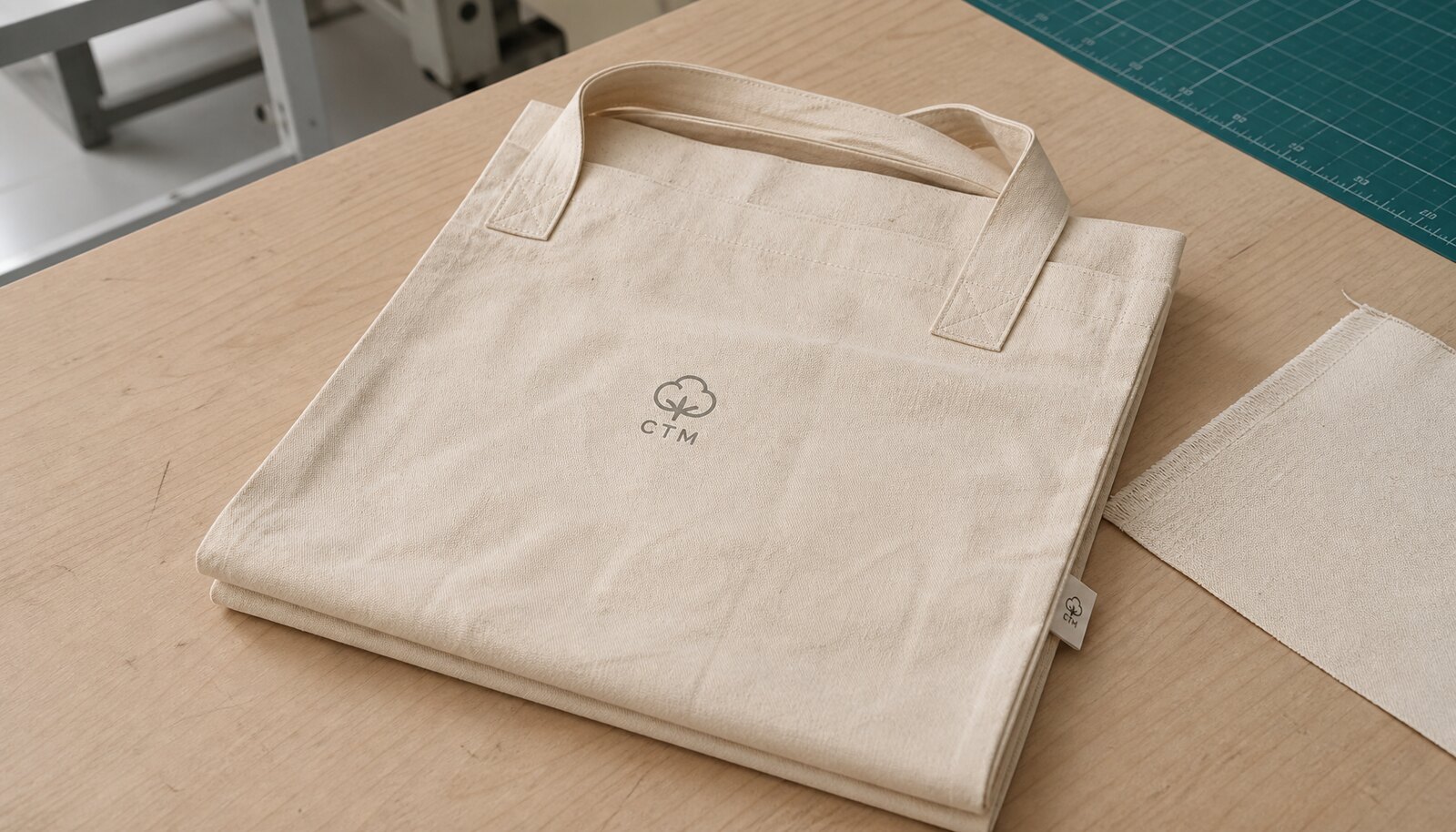
Why apparel brands get canvas shopping bag quotes wrong
Most quote problems start because the buyer treats a printed canvas shopping bag like a simple promotional item. For apparel packaging, it is closer to a retail accessory: the bag sits beside garments, carries the brand mark, and has to arrive clean, folded well, and consistent across stores. If the RFQ only says “printed canvas bag,” suppliers will fill in the blanks with their own standard material, standard print size, and standard packing. That is how one quote looks cheap and another looks expensive, even when they are not quoting the same product.
The biggest hidden variable is not the logo. It is the combination of fabric weight, handle build, print method, and packing. A 10 oz canvas bag with a one-color screen print, webbing handles, and bulk flat packing is a very different product from a 12 oz bag with two-sided high-coverage artwork, sewn side labels, and individual polybags. If your packaging team needs a bag that feels premium on the sales floor, you should specify the finished look and the operational constraint together, not separately.
- Do not quote only by size and artwork; quote by finished use case.
- Ask suppliers to price the same fabric, same print method, and same packing structure.
- For apparel brands, the bag often has to work as both packaging and resale item, which changes the spec.
Start with the right canvas weight and construction
For most apparel brand packaging, 10 oz canvas is the practical starting point. It gives a clean hand feel, enough body for printing, and acceptable cost for medium-volume orders. If the bag carries heavier folded knitwear or premium outerwear, 12 oz canvas usually gives a better retail feel and a flatter print surface. Below 10 oz, the bag can look too soft and may wrinkle badly after folding, which hurts presentation. Above 12 oz, the product becomes more expensive to sew, more difficult to fold consistently, and heavier in freight.
Construction matters as much as GSM. A bag with same-fabric handles may look fully coordinated, but webbing handles can be stronger and more comfortable for heavier contents. Reinforcement at the handle base should be visible and repeatable. If you want a clean retail appearance, specify top hem width, handle drop, and stitch style. If you only specify size, one supplier may use minimal stitching and another may add reinforcement that changes cost and appearance.
- 10 oz / about 340 GSM: common retail packaging balance.
- 12 oz / about 407 GSM: better for premium feel and heavier carry load.
- Specify handle width, handle drop, and reinforcement method in the RFQ.
- If the bag will be folded and boxed with apparel, confirm the final folded size before mass production.
Choose the print method by artwork, not by habit
Screen printing is still the default for many canvas shopping bags because it gives strong color on natural fabric and works well for simple logos. It is usually the best route when your artwork uses one to three spot colors, has strong outlines, and needs stable reorders. The cost structure is usually favorable at medium and higher quantities, but it depends on setup charges and the number of print stations. If you compare quotes without the same color count and print size, the unit price comparison is misleading.
Digital print or heat transfer can make sense when the artwork has gradients, photo-style detail, or many colors. The tradeoff is durability and feel. On some canvas constructions, transfers can crack at fold lines or edge lift after handling. If your brand wants a more premium tactile surface, ask for a sample on the exact canvas weight, not on a generic blank cloth. The final print should survive normal packing friction and store handling without visible scuffing.
- 1-3 spot colors: screen print is usually the most robust option.
- Multi-color or gradient art: use digital or transfer only after adhesion testing.
- Large solid print areas need ink opacity and dry cure control.
- For repeat orders, keep the same screen or file standard to avoid shift between batches.
Comparison of sourcing routes for printed canvas shopping bags
Not every buyer should source the same way. If you need strict control over finish, a direct factory usually gives the best visibility into material, print, and sewing. If your team handles multiple packaging categories and needs a faster comparison across suppliers, a trading company may reduce coordination work, but you lose some transparency. For apparel brands, the right route depends on whether your priority is engineering control or procurement speed.
The main issue is quote comparability. A direct factory may quote fabric, print, and packing separately. A trading company may bundle those items and hide the actual make-up cost. That is acceptable only if your RFQ asks for the same breakdown from all suppliers. Without that, one supplier can look cheaper simply because the quote excludes trim, labor steps, or carton details that become add-ons later.
- Use a direct factory when you need exact control of material and approval samples.
- Use a trading company when speed matters more than process visibility, but insist on itemized breakdowns.
- For annual programs, request both unit price and separate setup or tooling charges.
- Ask each route to quote the same packing format so landed cost is comparable.
Sample approval should test the final product, not a concept version
A useful sample for printed canvas shopping bags for apparel brands packaging must match the final fabric, final ink, final stitch density, and final fold. A blank sewn sample tells you almost nothing about print coverage, edge alignment, or how the fabric reacts to heat curing. For a new supplier, the pre-production sample should include the exact handle construction and any labels or side tabs that affect look and cost. If the supplier sends a soft prototype or a different fabric just to move the process along, treat it as a reference only.
Approval should be based on practical acceptance criteria. The print should sit within the agreed position tolerance. Stitching should be neat without loose threads at the handle base. The bag should fold to the agreed pack size without over-thick corners. If your brand cares about shelf presentation, open the sample after folding and confirm that creases do not distort the logo. These checks avoid a common retail problem: the bag looks fine flat, but poor when displayed or restacked.
- Approve the final fabric before print approval if the hand feel affects brand presentation.
- Use a marked sample with the exact print location and handle drop measurement.
- Check both front and back panels for distortion after stitching and pressing.
- Keep one signed sample in the production file and one in the warehouse receiving file.
Packing spec is part of the product, not an afterthought
Packing changes both cost and buyer experience. Bulk flat packing usually gives the best freight efficiency, but only if the fold is controlled and the cartons are not overfilled. If the bag is sold or distributed through stores immediately, individual polybagging may be necessary to protect the print and keep units clean. For apparel brands, the right choice often depends on whether the bag is inserted into a garment bag program, handed out at retail, or stored as replenishment stock.
The carton spec should be written clearly enough that a warehouse team can receive it without interpretation. State unit pack method, inner pack count, master carton count, carton dimensions, gross weight target, and outer carton markings. If the bag contains a woven label, barcode sticker, or care label, define its position in the pack before production starts. A small packing change can affect cube, freight cost, and store handling more than a minor sewing change.
- Flat pack is best for cost and volume efficiency.
- Polybag every unit only when cleanliness, retail display, or re-sale value requires it.
- Keep carton count stable across batches to prevent warehouse confusion.
- Define carton labels and SKU marks as part of the PO, not after production.
What drives MOQ and unit price in factory quotes
MOQ for canvas shopping bags is usually driven by fabric sourcing, print setup, and sewing line efficiency. If the supplier has to open a new fabric lot, create screens, or change handle material, the minimum quantity rises. A simple one-color bag with standard fabric may support a lower MOQ, while a multi-color or special-size bag often needs more units to absorb setup costs. Buyers sometimes focus only on price per unit and ignore the fact that a low MOQ may carry a much higher setup spread.
When comparing quotes, separate the recurring unit cost from one-time charges. A lower unit price can be offset by screens, color matching, sampling, label fees, or special packing. Ask the supplier to show whether the MOQ is based on size, print color count, or total order value. This helps procurement teams compare suppliers on the same basis and plan reorder economics more accurately.
- MOQ rises with print color count, special handles, and custom packing.
- Request unit price plus separate setup, sampling, and packing charges.
- For annual programs, ask for reorder pricing after screens are already made.
- If the supplier gives one blended price, request the cost split before PO issue.
Landed-cost comparison should include the hidden steps
A correct landed-cost view for printed canvas shopping bags includes more than ex-works price. Add sample charges, setup, carton packing, inland handling, testing if needed, freight cube, and any rework risk from print errors or folding issues. A heavier 12 oz bag can change your freight cost enough to erase a small unit-price advantage. Likewise, a cheaper print method may fail retail handling and create replacement cost after goods arrive.
For apparel brand packaging, the cheapest quote is often the one with the least detail. To compare suppliers properly, normalize all quotes to the same fabric weight, print sides, pack count, and carton size. Then look at the cost of quality, not only the price on paper. If one supplier includes a pre-production sample, lab dip, or full packing spec in the quote, that can save time and reduce approval loops even if the unit price is slightly higher.
- Compare ex-works, sample, setup, packing, and freight cube together.
- Normalize all quotes to the same GSM, print method, and pack format.
- Watch for extra charges tied to pantone matching, label insertion, or carton branding.
- Budget for replacement risk if the artwork is difficult or the fabric is too thin.
QC points that prevent the most common production failures
The most common failures in printed canvas shopping bags are not dramatic; they are small, repetitive, and expensive. Print shift, handle skew, loose threads, weak top stitching, uneven folding, and dusty fabric all show up at receiving. On apparel packaging, these defects matter because buyers often handle the bag before seeing the garments inside. A bag that looks careless makes the whole package look less controlled.
Set measurable thresholds before production. Define acceptable print placement tolerance, acceptable thread trim, allowable fabric defects in the visible front panel, and whether a slight dye shade variation is acceptable across the order. If you expect store-level consistency, inspect AQL-style on the first cartons and compare them to the signed sample. Do not wait until the full shipment is unloaded to find out that the fold style changed or the print is too pale.
- Check print registration against the signed sample, not against memory.
- Inspect handle stress points, top hem, and corner seams first.
- Review the first and last cartons from the run for consistency.
- Reject any shipment where the fold, carton count, or packing mark differs from the approved spec.
A buyer checklist for RFQs and production control
A good RFQ removes ambiguity before the factory prices the order. It should let the supplier price the same product that your warehouse will receive. If your team is managing multiple suppliers, use one internal spec sheet so every quote is built from the same assumptions. That makes supplier comparison faster and makes it easier to explain why one quote is higher or lower without debating basics like fabric or packing.
Once the order is placed, keep the approval trail tight. One version of the artwork, one signed sample, one packing spec, and one carton label standard. Many production disputes start because the buyer approved a photo, the factory followed a slightly different file, and the warehouse expected the original fold or label placement. The cleaner your document set, the fewer exceptions you have to manage at goods-in.
- Finished size and tolerance
- Fabric weight, weave, and color
- Print method, number of colors, and print position
- Handle material, length, and reinforcement
- Label, care tag, barcode, and accessory requirements
- Packing method, carton count, and carton markings
- Sampling requirement and approval reference
- Lead time, reorder lead time, and shipment terms
Specification comparison for buyers
| Spec decision | Recommended option | When it fits | Buyer risk to check |
|---|---|---|---|
| Sourcing route | Direct factory in canvas and print | You need control on GSM, print placement, and packing, and you can work from tech pack or clear artwork | Quote may exclude plate/setup, carton packing, or color matching unless written |
| Sourcing route | Trading company or agent with factory network | You need speed on multiple options or mixed categories across bags and packaging | Risk of margin layering, weaker production control, and limited visibility into actual fabric or print shop |
| Fabric weight | 12 oz / about 407 GSM canvas | Premium retail packaging, heavier garments, or a bag expected to feel substantial at point of sale | Can shrink more after washing tests and may cost more in cutting, sewing, and freight |
| Fabric weight | 10 oz / about 340 GSM canvas | Most apparel brand shopping bags, good balance of hand feel and cost | Can look too soft if print area is large or product load is heavy |
| Print method | Screen print for 1-3 spot colors | Simple logos, strong opacity on natural canvas, repeat bulk orders | Need separate color approvals; fine gradients and small type can fill in |
| Print method | Heat transfer or digital print for multi-color artwork | Short runs, detailed graphics, seasonal campaigns, or photographic artwork | Adhesion, cracking, and wash/rub performance must be tested on the final fabric |
| Handle construction | Same fabric handles or cotton webbing handles with reinforced cross-stitch | Retail use, heavier garments, and buyers who want a cleaner premium finish | Handle length and stitch count can vary and affect comfort and carry strength |
| Packing route | Bulk flat pack with carton label and poly inner protection if needed | Cost-sensitive shipments, warehouse repacking, or distribution to multiple stores | Need clear fold size, carton count, and moisture protection or bags arrive creased or dirty |
| Sampling route | Pre-production sample with final fabric, final print, and final packing | New vendor, new artwork, or any change in material or print placement | A simple blank sample is not enough; it will hide shrinkage, print shift, and stitching issues |
Buyer checklist before sampling
- Confirm final bag size, gusset, handle drop, and usable loading weight.
- Specify fabric type, GSM/oz weight, color tolerance, and shrinkage expectations.
- Send vector artwork and define logo size, print position, and Pantone references.
- Ask for sample photos plus one physical pre-production sample before bulk approval.
- Agree carton packing, barcode or hangtag needs, and shipment marks before production.
- Record inspection checkpoints for stitching, print adhesion, stains, and quantity count.
Factory quote questions to send
- What exact fabric weight, weave, and post-wash shrinkage should I expect on the quoted bag?
- Is the print price based on one side or two sides, how many colors, and does it include setup or screen charges?
- What is the MOQ by size, by print color count, and by handle material?
- Will the sample use the same fabric, ink, stitching, and packing method as bulk production?
- What packing method is included: flat pack, folded size, polybag, inner carton, master carton, and carton markings?
- What lead time applies after sample approval, and what parts of the schedule can move if artwork or trim changes?
- Which production checkpoints do you run for fabric, print alignment, and final carton audit?
- What is excluded from the quote, such as labels, packing inserts, freight, testing, or special inspection?
Quality-control points to confirm
- Fabric weight should be within an agreed tolerance, typically ±5 percent on the same lot, with no weak spots, streaks, or major slubs in the print area.
- Handle stitching must be even and reinforced at stress points; cross-stitch or box stitch should match the approved sample.
- Print position must stay within the agreed tolerance on both sides, with no visible misregistration, pinholes, or ink bleeding.
- Finished size should be checked after pressing and folding, because canvas can relax after sewing and shrink after heat exposure.
- Polybag, fold style, carton count, and carton labels should match the approved packing spec exactly to avoid receiving and store issues.