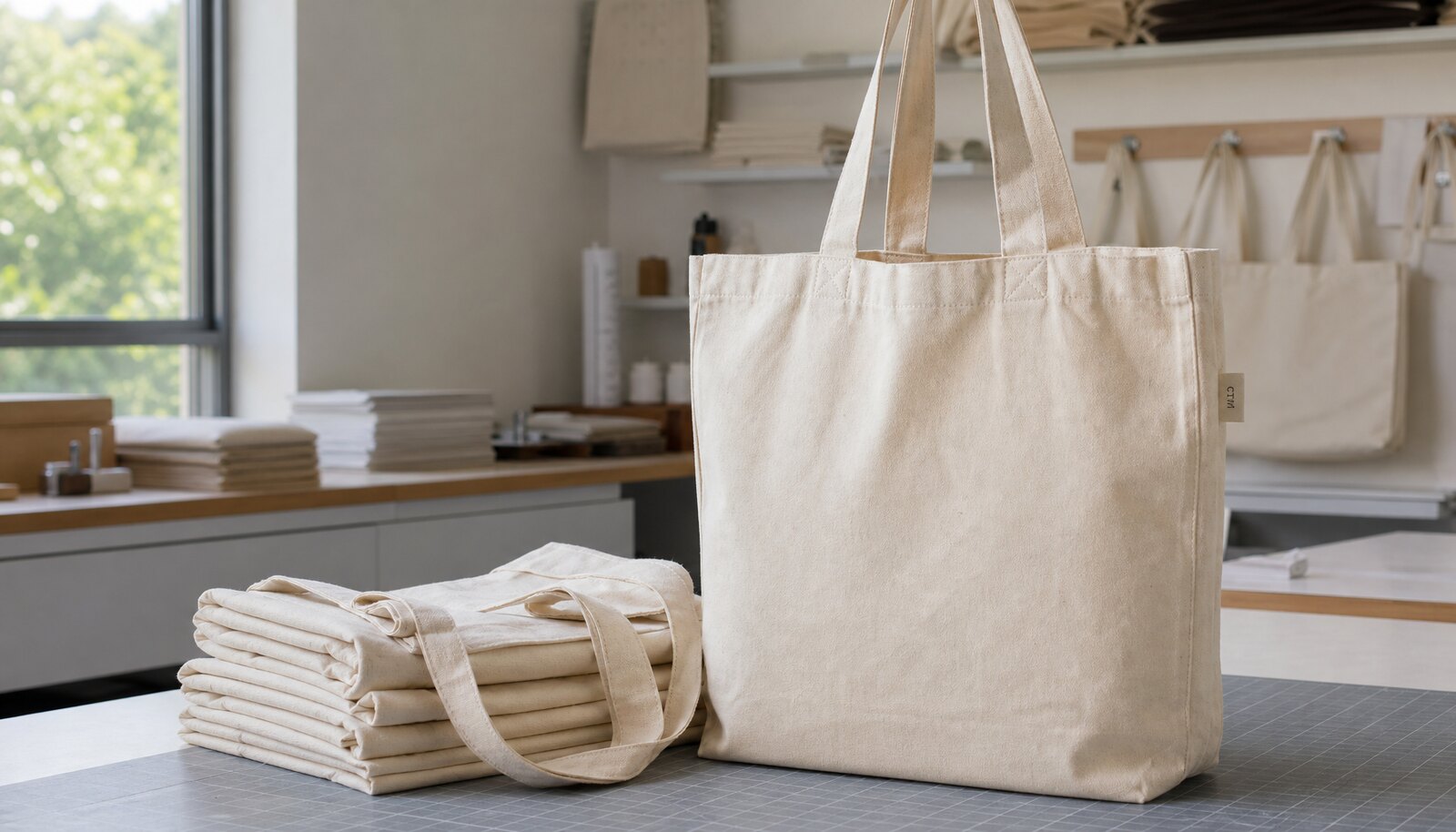
Why farmers market bags fail at the buyer level
Printed canvas shopping bags for farmers markets look simple, but most procurement problems start before the first sample is approved. Buyers usually focus on logo placement and unit price, then discover the bag is too thin, the handles feel short, or the print turns muddy on natural canvas. Farmers market customers load heavy produce, bottles, flowers, and mixed items into the bag, so the construction has to survive real use, not just a hanging display.
The best way to buy this product is to treat it like a functional carry bag with branding, not a branded souvenir. That means the spec must control fabric weight, handle strength, print contrast, carton packing, and repeatability. If any of those points are vague in the RFQ, supplier quotes will not be comparable and the cheapest line often wins on paper only.
- A market bag must carry weight without sagging at the gusset.
- Print visibility on natural canvas depends on ink opacity and base fabric shade.
- High-usage buyers need repeat orders, so raw material consistency matters more than a one-off sample finish.
Start with the bag body: size, shape, and GSM
For wholesale buying, the cleanest spec is usually a rectangular tote with a moderate gusset. Common working sizes are around 14 x 15 x 4 in or 16 x 14 x 5 in. Those dimensions give enough room for produce and market goods without making the bag bulky enough to raise freight and fabric cost unnecessarily. If you go wider than needed, the bag becomes expensive to ship and awkward to stack in cartons.
Fabric weight is the next decision that changes the whole feel of the product. For a farmers market tote, 10–12 oz canvas, or roughly 340–400 GSM, is the practical range for a retail-grade bag. Lower GSM can work for giveaways, but once a bag is meant to be reused, weaker fabric quickly shows through at the corners, especially when loaded with jars or heavier produce. If the supplier quotes only in vague terms like “thick canvas,” replace that with a numerical GSM requirement.
- Use a gusset if the bag must stand better on a market table or in a car trunk.
- Specify the allowable tolerance on final dimensions; otherwise the bag can arrive smaller than your retail packaging needs.
- Natural canvas often prints differently from bleached canvas; artwork that looks sharp on white fabric may appear softer on unbleached stock.
Choose the right print method for the artwork and volume
Most farmers market programs use one-color or two-color graphics, which is why screen print remains the default choice for wholesale orders. It gives solid opacity, stable repeatability, and better cost control when the design is simple. If the artwork has gradients, many colors, or photo-like detail, digital print or heat transfer may be considered, but those methods should be used with caution on canvas because feel, durability, and cost can vary a lot by supplier.
A low quote for print is only meaningful if the factory states exactly how many screens, how much ink coverage, and what curing standard is included. On natural canvas, under-cured ink can rub off during folding and packing, and overly heavy ink can crack around the weave. For procurement, the real question is not “what print method is cheapest,” but “which method survives distribution, retail handling, and customer reuse.”
- Screen print: best for 1–3 spot colors and stable reorders.
- Heat transfer: useful for short runs or variable artwork, but confirm rub resistance.
- Digital print: best for complex art, but compare hand feel and coverage on the actual canvas weight.
How MOQ really works on canvas tote sourcing
MOQ is usually tied to fabric sourcing, print setup, and sewing efficiency, not just a factory preference. If the supplier has stock natural canvas and standard handles, the MOQ can be relatively low for a one-color print. If the bag needs custom dyed fabric, special handle lengths, or a larger print area with multiple screens, the MOQ moves up because the factory has more setup waste and less material flexibility.
For buyers, the useful way to compare MOQ is by route. A stock-fabric route gives the most flexible entry point and is often best for first-time market programs or seasonal tests. A custom-fabric route is better only when the bag is a long-term core item and the brand needs a specific shade or hand feel. If a quote is low but the MOQ is high, it may still be a workable deal if the bag is a repeat SKU; if sales are uncertain, it becomes inventory risk.
- Low MOQ usually means standard fabric, simple print, and standard packing.
- Higher MOQ often follows custom color, special finishing, or multiple print positions.
- Ask whether the factory can reserve raw fabric for repeats; that reduces color variation in reorders.
Supplier routes: compare the real sourcing options
Not all suppliers are equal for this product. Some are sewing factories with in-house printing, some outsource print, and some are trading companies that bundle multiple subcontractors. The sourcing route changes your control over sample accuracy, cost transparency, and lead time. Procurement teams should compare the route, not just the quote total.
A bag that is simple on paper can become difficult if print, sewing, and packing are split across vendors. The more handoffs there are, the higher the risk of off-register prints, missed carton counts, or a mismatch between pre-production sample and bulk production. Use the comparison below to narrow the sourcing route before negotiating price.
- Write decisions in measurable language, not only descriptive wording.
- Ask for sample photos plus one physical approval sample for important orders.
- Keep quotation, sample approval, and inspection notes tied to the same spec version.
Supplier route comparison for printed canvas shopping bags
Use this comparison to decide whether you need a factory-direct quote, a trading-company route, or a mixed sourcing path for a farmers market program. The right route depends on order size, artwork complexity, and how much control your team needs over sample approval and packing.
For importers and distributors, the cheapest route is not always the lowest-risk route. A clear route decision early in the RFQ helps prevent hidden costs from changing the landed price after sample approval.
- Write decisions in measurable language, not only descriptive wording.
- Ask for sample photos plus one physical approval sample for important orders.
- Keep quotation, sample approval, and inspection notes tied to the same spec version.
Sample approval: what a good pre-production sample must prove
A usable sample for this bag should prove more than logo placement. It should show the final fabric hand, handle length, seam finish, print opacity, and the actual fold behavior inside the carton. If the supplier only sends a photo of a sample, treat it as preliminary. The physical pre-production sample is the reference that production should follow.
When reviewing the sample, put it through a simple but realistic check. Load it with market-type weight, hold it by the handles, and inspect whether the side seams pull or the opening distorts. Print should sit flat and centered, with no obvious ink bleeding into the weave. If the bag is meant for retail shelf display, the body must also fold cleanly without the print creasing into a broken visual line.
- Compare sample fabric against the agreed GSM or oz spec, not against memory.
- Verify that handle drop feels correct for shoulder carry if that is part of the buyer brief.
- Reject samples where the print position is visually acceptable but the size or placement will create packing problems.
Packing and carton planning that protects margin
Canvas bags are easy to damage in packing if the folding method is loose or the carton count is too high. A good packing plan should protect the print area, prevent sharp carton edges from crushing the gusset, and keep the carton weight within a warehouse-friendly range. For bulk buying, the carton size matters because it affects freight efficiency as much as the bag unit price.
The quote should state how many bags are packed per carton, whether polybags are used, and whether moisture protection is included. If the bags are shipped natural canvas, a little humidity control helps preserve the fabric appearance and prevents a damp smell when cartons are opened at destination. For retail-ready programs, carton marks must also be readable and consistent so inbound receiving is fast.
- Avoid overstuffed cartons that flatten the canvas and leave permanent fold marks.
- Use packing counts that balance labor cost with destination warehouse handling.
- Make carton dimensions part of the quote comparison because freight changes the real landed cost.
Lead time risk: where the schedule usually slips
The schedule on a printed canvas tote order usually slips in three places: artwork confirmation, sample approval, and packing readiness. Buyers often receive a production lead time that starts after approval, but the actual calendar should include the time needed to finalize artwork files and align on sample revisions. If the order is seasonal for farmers markets, a delay of even one week can push the bags into a weaker selling window.
A realistic plan breaks the schedule into stages rather than using one promise date. For example: artwork lock, sample production, sample transit or approval, bulk sewing, print cure and inspection, packing, and final dispatch. Once you see those stages, you can identify whether the risk sits with supplier capacity, raw material availability, or internal buyer delay.
- Ask which stage is the critical path for the quoted lead time.
- Keep a buffer for second sample revisions if the print position or color needs refinement.
- If the supplier needs to source fabric after order confirmation, lead time risk rises immediately.
Landed-cost comparison: what belongs in the quote
A fair comparison between suppliers requires the quote to separate the cost drivers. Unit price alone is not enough because one factory may include export cartons and packing while another charges those as extras. For printed canvas shopping bags for farmers markets wholesale buying checklist purposes, the buyer should compare fabric weight, print method, handle construction, carton count, and the destination term together.
When you compare landed cost, include likely extras such as extra screens, second print position, special folding, carton marks, and inland port handling. A bag with a slightly higher ex-factory price can still land cheaper if it packs more efficiently or avoids rework. Buyers should also factor in risk cost: a cheaper bag that arrives with poor print cure or weak handles can become a write-off if the market launch depends on first shipment quality.
- Compare quotes on the same fabric GSM, bag size, print size, and packing count.
- Separate one-time setup fees from recurring unit pricing.
- Treat packing and carton dimensions as part of the price, not an afterthought.
Specification comparison for buyers
| Spec decision | Recommended option | When it fits | Buyer risk to check |
|---|---|---|---|
| Fabric weight | 10–12 oz canvas (about 340–400 GSM) for retail-grade market bags | Best for shoppers carrying produce, jars, flowers, and mixed groceries without the bag feeling limp | Below 300 GSM often looks acceptable in photos but can sag, crease heavily, and distort print registration after packing |
| Print method | Screen print for 1–3 spot colors; heat transfer only for short-run artwork; digital print for complex multicolor art | Choose based on artwork complexity and expected wash/abrasion exposure | Some low quotes mix methods or use lower ink coverage; confirm opacity, cure, and hand feel on the sealed sample |
| Handle construction | Self-fabric handles with reinforced cross-stitch or box stitch; 20–24 in total drop for shoulder carry | Farmers market buyers usually want hands-free use while carrying produce or cash boxes | Short handles and weak seam stitching fail in real use; sample should be load-tested before approval |
| Bag size | Approx. 14 x 15 x 4 in or 16 x 14 x 5 in with gusset | Works for produce bundles, bread, flowers, and standard market purchases | Oversized bags increase freight and fabric cost; undersized bags look cheap and reduce repeat use |
| MOQ route | Stock fabric + one-color print for lower MOQ; custom dyed fabric or complex print only if volume is stable | Useful when a market chain, brand, or distributor needs controlled initial inventory | Custom color and special trims can push lead time and cash commitment much higher than the base quote |
| Sample stage | Pre-production sample with final fabric, final print size, and final packing format | Needed before mass production when artwork, dimensions, or packaging are fixed | Approve only if the sample matches production fabric weight, handle length, and print placement; photo approval is not enough |
| Packing method | Bulk packed by count per carton with moisture protection and carton marks | Best for importers and distributors optimizing carton efficiency and warehouse handling | Loose folding can create creases in print areas; overstuffed cartons cause edge crush and shipping damage |
| Lead time structure | Sample approval + production + packing + port transit buffer | Useful for seasonal farmers market launches and spring/summer retail resets | Factories may quote only sewing days; procurement needs the full calendar, including art confirmation and carton prep |
| Quote basis | Price should separate fabric, print, sewing, packing, and inland carton assumptions | Best for comparing suppliers on a true apples-to-apples basis | A low unit price can hide material upgrades, smaller size, or excluded packing that changes landed cost materially |
Buyer checklist before sampling
- Final bag dimensions with tolerances: body width, body height, gusset depth, and handle drop.
- Fabric specification in GSM or oz, plus whether the canvas is bleached, natural, or dyed.
- Print artwork file, print size, print positions, ink colors, and required opacity on natural canvas.
- Handle construction method, stitching pattern, and minimum seam reinforcement.
- Target MOQ, approved overrun/underrun range, and whether the supplier can hold raw fabric for repeats.
- Sample approval standard, including whether a physical gold sample or pre-production sample is required.
- Packing format: folds per bag, bags per polybag if used, inner carton count, master carton size, and carton mark requirements.
- Destination port, delivery terms, and whether the quote includes inland carton movement, export cartons, and loading fees.
Factory quote questions to send
- What is the exact fabric weight in GSM or oz, and is that measured before or after finishing?
- Is the quote based on one-color screen print, and what is included in the unit price if artwork needs a second color or a larger print area?
- What handle length, handle width, and handle reinforcement method are included in the quoted sample and mass production spec?
- What MOQ applies to this construction, and what changes the MOQ if we modify size, color, or print method?
- What are the packing details per carton, carton dimensions, and estimated carton gross weight?
- What is the production lead time from final sample approval, and what parts of the timeline depend on artwork sign-off or raw material procurement?
- What tolerances do you hold for size, stitching, print placement, and quantity overrun or underrun?
- Can you provide a pre-production sample photo set and a sealed physical sample before mass production starts?
Quality-control points to confirm
- Fabric GSM matches the approved target and is consistent across random bag checks.
- Bag dimensions stay within agreed tolerances, especially gusset depth and opening width.
- Handle stitching is secure at both ends with no skipped stitches, frayed thread, or seam puckering.
- Print is centered or placed to spec, with no visible pinholes, smudging, uneven ink density, or off-register edges.
- Ink cure is adequate so the print does not crack, smear, or transfer during folding and rubbing.
- Seams at side, bottom, and gusset junctions are clean, flat, and strong under moderate pull.
- Cartons are properly labeled, sealed, and stacked without compression damage to the bag body or print surface.
- Sample acceptance includes color expectation on natural canvas, since base fabric shade can shift the printed appearance.