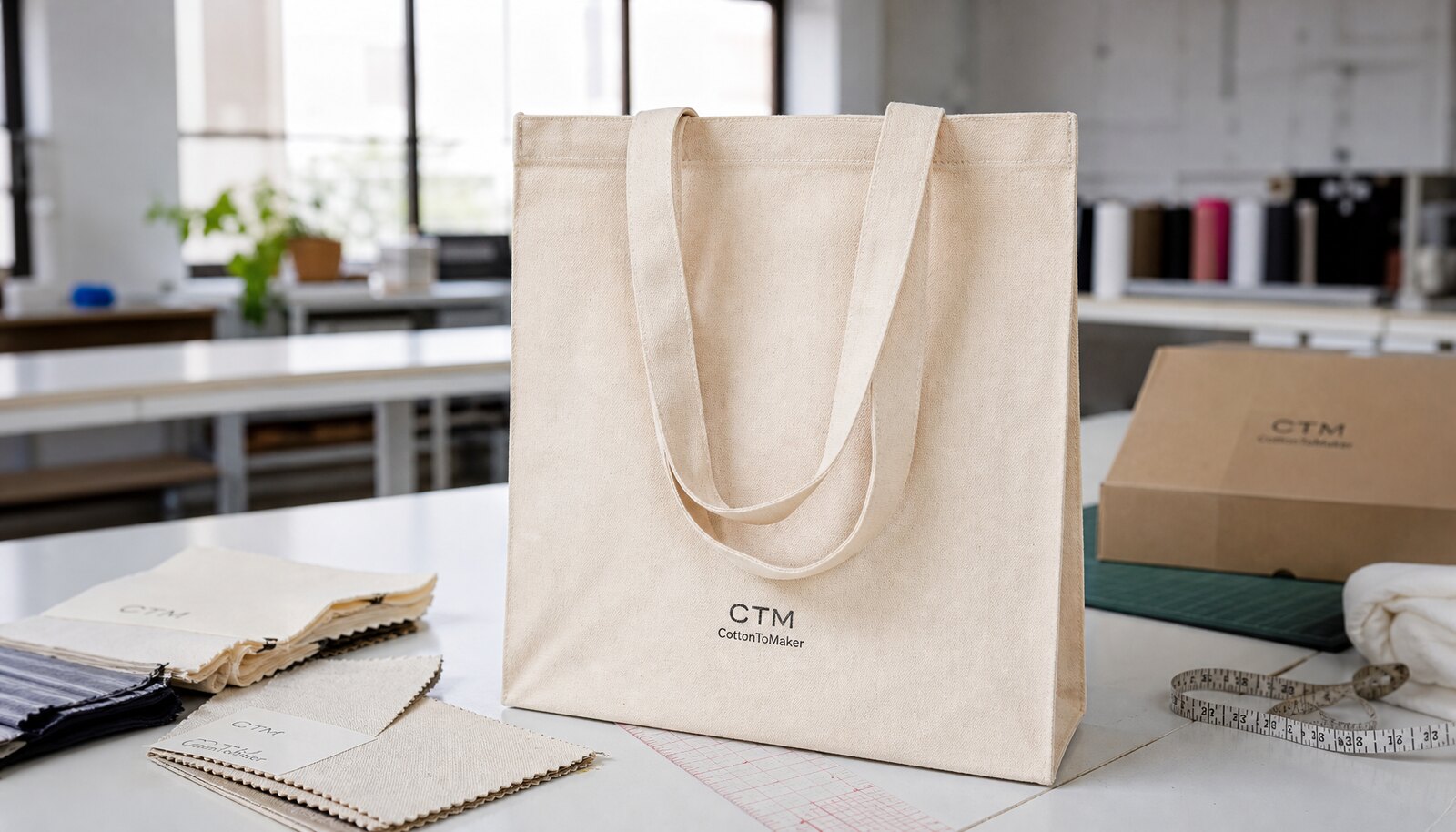
Begin with the reorder risk, not the product idea
A boutique tote reorder should start with what the first run actually did in the market. If the bags sold through quickly, the next question is not whether to order again. It is whether the second and third purchase orders can reproduce the same retail result without changing the bag’s feel, print clarity, pack-out, or display value. That is a procurement problem, not just a merchandising problem.
The most useful reorder memo records the facts that determine repeatability: which SKUs moved, which colorway converted best, whether any cartons arrived damaged, and whether customer feedback pointed to a product issue or a display issue. Those details let the next supplier quote against the actual run instead of a vague tote concept. For printed canvas shopping bags for boutiques, that distinction matters because the bag is part packaging, part brand asset, and part carry item.
A first order can hide weak process control. A sample may have looked fine even if the fabric lot was later swapped, the ink was changed, or the packing method was adjusted to protect margin. A buyer-ready reorder guide should identify what must stay fixed and what can be negotiated. That makes the next RFQ cleaner and gives procurement a stronger basis for comparison across suppliers.
- Record sell-through by color, size, and season window, not only total units sold.
- Note returns tied to broken handles, ink rub, loose stitching, odor, or packaging damage.
- Keep the last approved sample, spec sheet, and carton photo together in one file.
- Identify the commercial priority: print appearance, bag structure, retail presentation, or landed cost.
Lock the canvas spec before you compare prices
The most important spec for a boutique canvas bag is not size alone. Fabric weight, weave tightness, print area, handle construction, and finishing all drive perceived quality and repeatability. A tote that feels premium in hand can still fail as a reorder if the cloth is too loose, the print bleeds into the weave, or the handles stretch after a few carries. That is why the buyer should write the fabric callout in procurement language, not just in marketing language.
For many boutique shopping totes, a practical starting point is a medium-to-heavy cotton canvas rather than a fixed oz-to-GSM claim. If the supplier uses both units, ask for both in the quotation and make them match the same finished construction. Buyers should be careful about broad equivalencies that are not tied to the exact weave and finishing method, because two fabrics with similar nominal weight can still feel and print differently. The useful comparison is not just what the label says; it is how the cloth behaves when cut, sewn, printed, and folded.
The buyer should choose the weight band based on the tote’s actual use. A lighter canvas is often better when the bag needs to fold flat, ship economically, or sit as a value-add carrier. A heavier canvas is better when the tote must stand up on shelf, carry denser retail items, or hide contents more effectively. The right answer comes from the bag’s role in the store, not from a one-size-fits-all assumption.
Use composition, finishing, and tolerance notes to make the quote comparable. Ask whether the canvas is cotton, recycled cotton, or a blend, and whether the cloth is bleached, natural, dyed, or washed. Shade affects print contrast. Finishing affects hand feel. Tolerance affects whether a reorder will still look like the approved bag after production begins.
- State fabric in both local and buyer-friendly units if the supplier uses both.
- Ask for composition, finish, and shade description so the quotes can be compared fairly.
- Specify finished dimensions, gusset depth, handle length, and handle drop.
- Define any baseboard, lining, or insert requirement before pricing begins.
- Ask for the acceptable weight or fabric consistency tolerance in writing.
Choose print method for repeatability, not novelty
For reorder programs, the best decoration method is usually the one the factory can reproduce most consistently. For many simple logos, single-color screen print remains the most dependable option because the setup is straightforward and the result is easier to hold stable across later runs. Two-color screen print can still work well if the logo requires it, but every extra color adds a setup step, another registration point, and another place where variation can appear.
Screen printing should be specified in enough detail that the factory cannot substitute its own assumptions. Buyers should ask for the actual print method, the number of screens, the Pantone target, and whether an underbase is required on darker canvas. On woven canvas, the effect is not just about color. It also changes opacity, edge sharpness, and how much the logo sits on top of the cloth. A finer screen may improve detail, but it can look too light on a coarse weave. A heavier deposit may improve coverage, but it can crack sooner if the tote is folded often.
If the artwork is detailed, multicolor, or likely to change, another method can work for a short run or a special promotion. That said, procurement should compare the repeat risk, not just the image quality. Some methods are more sensitive to fabric texture or ink batch differences. A buyer managing boutique reorders needs a method that preserves the brand look across seasons, not only one that looks impressive in a proof.
A digital proof is not enough. Buyers should request a sample made on the same canvas weight and the same print system they plan to reorder. That is the only way to see weave show-through, registration behavior, and ink coverage on the real material.
- Default to simple screen print for stable repeat orders unless the artwork clearly needs another method.
- Confirm screen count, Pantone target, and whether an underbase is required.
- Check the logo on the actual fabric lot, not only on artwork proofs.
- If type is small, ask the supplier for the minimum line thickness that remains legible after production.
- Request a production-like sample before approving a reorder.
Use the right sourcing route for a reorder, not a first-time launch
A reorder is a different purchasing event from first-time development. If the tote already performs well, the sourcing route should protect repeatability rather than chase novelty. A direct factory often gives the buyer better control over print placement, cloth selection, and line continuity because the people quoting the job are closer to the people making it. The buyer also has a clearer path to ask who owns the master sample, who approved the spec, and whether the same production line will be used again.
A trading company or sourcing agent can still be useful if the buyer needs one contact for several products or wants someone to coordinate across different factories. The tradeoff is transparency. Procurement should verify who holds the spec file, who owns the approved sample, and who is accountable if the live production differs from the approved version. A good intermediary adds coordination. A weak one creates another layer where information can be lost.
Domestic suppliers have a different value proposition. They may cost more per piece, but they can shorten lead time, simplify sample correction, and reduce exposure to import disruption. That can be worth the premium if the bag supports a promotion with a fixed launch date or if the buyer needs a fast corrective sample after a prior issue. Offshore factories are usually better for planned volume and cost discipline when the forecast is stable. The right route depends on the business need, not on a default sourcing habit.
A buyer-facing comparison should also show where the risk sits. The lowest quote may come with higher minimums, weaker flexibility, or less clarity on the production line. A slightly higher quote may buy control, easier communication, or faster recovery if the first pre-production sample needs work. Procurement decisions are stronger when those tradeoffs are written down before the RFQ is sent.
- Ask who keeps the master sample and the final production file.
- Ask whether the reorder will run on the same sewing line, print method, and ink system.
- Compare setup charges, sample charges, and version control, not only unit price.
- If using an intermediary, request the actual factory name and location before approval.
- Choose domestic sourcing when speed or corrective control matters more than the lowest cost.
Set MOQ from inventory cover, not from supplier pressure
MOQ should come from sell-through, replenishment timing, and the cost of leftover stock. If the tote is a steady boutique carrier, the reorder should cover the next sales window plus a buffer for damaged units, store openings, or sudden demand. If it is tied to a seasonal campaign, the order should support the launch without leaving too much dead stock after the campaign ends. Buying only to satisfy a supplier minimum often moves the risk from production to inventory, which is the wrong side of the ledger for many boutique teams.
Lead time matters as much as quantity. A tote that takes several weeks to produce, then more time to pack, book freight, clear customs, and arrive at the distribution point, should be ordered against a wider cover window. The buyer should calculate weeks of cover using the actual replenishment cycle, not a generic estimate. If the item is repeatable, it is often better to reorder a little earlier and keep the spec stable than to place a tiny urgent order later and pay for new setup or express freight.
When demand is uncertain, split the risk instead of inflating the whole order. Some buyers divide by colorway or store cluster. Others place a core reorder now and hold back a smaller contingent order until sell-through confirms demand. That approach is more procurement-friendly because it ties inventory to observed performance instead of optimism. It also avoids paying for a cheaper bag that is cheap only because the warehouse is holding too many units.
The order quantity should also reflect the cost of another production cycle. If the next run needs a new screen, a different carton spec, or a new label, the apparent savings from a smaller quantity can disappear quickly. The right MOQ decision is the one that supports a stable next PO, not just the one that clears a single invoice.
- Base the reorder on weeks of cover and sell-through, not the supplier’s preferred MOQ alone.
- If demand is uneven, split by colorway or store cluster before increasing total inventory.
- Keep a buffer for sample approval delays, QC rework, transit variance, and replacements.
- Do not let low MOQ override the cost of setup, freight, and warehousing.
- If the bag is core and repeatable, a slightly larger stable order can cost less than a rushed top-up later.
Approve the sample as a production reference, not a display piece
A sample is only useful if it protects the mass run. The strongest approach is to keep one physical golden sample from the last approved order and require the supplier to match it closely. If the factory proposes a new cloth lot, a different stitch density, a changed handle tape, or a new print process, treat that as a change request rather than a routine reorder. Otherwise the buyer can approve a bag that looks similar in a photo but behaves differently in packing, stacking, or display.
The sample review should be measurable. Bag width, height, gusset depth, handle length, handle drop, and print position should be checked against the spec sheet. The front logo should sit where the mockup said it would sit, but the physical sample matters more than the render because fabric movement and stitching can shift the final look. Buyers should also review the inside of the bag, because hidden stitch quality is often where reorder drift appears when the supplier is trying to save time.
A useful sample check includes simple handling tests. Rub the printed area lightly with a dry cloth and then a slightly damp cloth to see whether the ink sheds, smears, or shows visible abrasion. Fold the tote several times to see if the print cracks too early. Check the opening shape and top edge finish to make sure the bag still looks clean when folded, carried, or hung on a display hook. These are small tests, but they help prevent avoidable complaints after distribution.
If the bag is part of the boutique’s brand presentation, review it in the same context in which it will sell. Natural canvas can look warmer under studio lighting and flatter under harsher store LEDs. Procurement does not need to solve lighting science. It only needs to recognize that a sample can pass in one setting and feel different in another. That is why the approved physical reference should sit with the PO, not only in a folder of photographs.
- Measure the sample against the spec sheet and the control sample, not against memory.
- Rub-test the printed area with dry and lightly damp cloth to check ink stability.
- Check the opening shape, top edge finish, and handle attachment from front and inside views.
- Treat any cloth-lot or print-method change as a new approval step.
- Keep dated photos of the approved sample next to the PO and carton reference.
Ask for supplier proof before you award the reorder
For a procurement team, supplier vetting should be more than a quote exchange. Ask for the legal business name, factory address, production location, and the name of the contact responsible for quality sign-off. If the supplier says the work will be done elsewhere, get that location in writing. For reorders, the factory of record matters because accountability gets blurry when the quote source is not the production source.
A practical document set can include a business license, recent factory profile, QC process summary, and any available compliance or testing records relevant to the market. Depending on destination and buyer policy, that can also include social compliance information, restricted substance controls, packaging declarations, or product safety documentation. Buyers should only ask for what they actually need, but they should ask early. A supplier that cannot produce basic documentation on request is a risk even if the price looks good.
Capability should also be verified against the actual tote. Ask whether the factory has made similar canvas bags in the same weight range, the same print method, and the same packing format. A supplier that can sew simple totes may still be weak on placement control, ink consistency, or retail-ready packing. If possible, request photos of current production, not only a polished brochure. The point is not to audit every process in detail. The point is to confirm that the supplier regularly makes the type of bag being ordered.
If the reorder is critical to a launch date, consider a short factory audit or a live sample review call. A buyer can learn a lot by asking how the factory controls version changes, who checks the first-off samples, and what happens when the incoming fabric is out of spec. Those questions reveal whether the supplier understands repeat production or only one-off quoting.
- Request the legal business name, factory address, and actual production site before approval.
- Ask for a business license, factory profile, QC process summary, and relevant compliance or testing records.
- Confirm whether the supplier has produced the same type of canvas tote and print method before.
- Ask who signs off on first-off samples and who owns the change-control process.
- If the order is important, add a short live review call or factory audit step before the PO.
Write QC thresholds the factory can actually hold
Quality control for a reorder should be more specific than a first sample review because the supplier already knows the target. Set tolerance bands that are realistic for sewn goods, but do not leave them vague. Natural canvas will vary somewhat in shade and hand feel, yet that variation must stay inside a range that still looks like one retail product. The tote should not ship with obvious print shift, crooked handles, severe seam puckering, or a shape that changes the way it displays in store.
The most useful QC thresholds are the ones an inspector can check during packing. If the print is off-center beyond the allowed range, if the handle stitch is loose, if the seam allowance is visibly uneven, or if the top edge rolls badly, the issue should be caught before shipment. Buyers should define whether the factory does final inspection, whether a third-party inspection will be used, and what happens if the inspection report shows a repeatable defect. Clear thresholds reduce debate and keep the factory focused on the real failure points.
For buyer use, QC should cover both appearance and function. A cosmetic pass should not hide a structural issue, and a structural pass should not excuse a bag that looks off-brand on the shelf. A tote used for daily boutique purchases needs stronger handle attachment than a low-use giveaway bag, so the pull requirement should reflect the intended use. The inspector should also confirm that reinforcement, if used, does not distort the print panel or create a visible bump that harms the retail look.
A practical QC plan should define acceptable failure limits. If only a small sample is inspected, agree on an AQL-style framework or another written acceptance plan before production begins. For example, the buyer can define minor, major, and critical defects; set the maximum count allowed per inspection lot; and state that critical defects such as wrong artwork, wrong size, or broken handles are not acceptable. The exact numbers should match the buyer’s risk tolerance and order size, but the principle should stay the same: the factory needs measurable limits, not vague expectations.
- Define print placement tolerance in millimeters from the agreed position.
- Set a seam and handle pull requirement that fits the intended carry load.
- Reject cartons with moisture, odor, crushed corners, or mixed packing even if the bags inside look acceptable.
- Separate appearance, dimension, and function into different acceptance criteria.
- Use a written AQL-style or equivalent acceptance plan with minor, major, and critical defects clearly defined.
Treat packing as part of the product, not an afterthought
Boutique buyers often focus on the tote itself and leave packing vague. That creates receiving friction later. Decide whether each bag should be bulk packed, folded with tissue, polybagged, or bundled in inner packs before production begins. If stores will hang or display the bag immediately, a cleaner retail pack may be worth the extra labor. If the goods go straight into a distribution center, a simpler bulk pack usually reduces cost, waste, and carton volume.
Packing choices also affect quality. A bag that is folded too tightly can crease the print. A bag packed too loosely can shift in transit and develop scuffs or dirty edges. Polybags protect against dust and light moisture, but they add labor and plastic cost, and they may slow receiving unless the label system is clean. The best format is the one that matches the warehouse reality, not the one that looks neat on a quote sheet.
Carton size and count matter more than many first-time buyers expect. A carton that is too heavy slows warehouse handling and increases compression risk, especially with structured or gusseted totes. Clear carton marks, SKU labels, and pack counts make receiving faster and reduce the chance of mixed goods being miscounted. For a reorder, the packing format should stay stable unless the buyer has a specific reason to change it, because packaging changes can create downstream labor costs that were never visible in the unit price.
If the boutique uses barcode labels or store-specific labels, confirm where they sit on the bag or carton. Label placement should not cover the print or make the bag look off-brand. Buyers should also ask whether palletization is included and whether cartons are stack-rated for storage. That may sound like logistics detail, but poor packing can turn a clean reorder into a receiving problem that stores remember longer than the product itself.
- Keep cartons manageable for manual handling and avoid overpacking them.
- Print carton marks that match the PO, SKU, color, and carton number.
- If you use barcode labels, confirm the label position before the mass run.
- Ask whether inner packs are folded the same way every time so the retail presentation stays consistent.
- Confirm whether pallets, stretch wrap, and corner protection are included in the quote.
Read the quote like a sourcing document, not a price tag
A useful quote breaks the bag into cost drivers. Fabric weight, print method, setup charges, stitching complexity, labeling, packing, and freight assumptions all affect the final number. If one supplier is much cheaper than the others, find the missing line item before making a decision. A low quote often means something has been left out: a screen charge, a different cloth lot, a more expensive carton, or a packing format that adds labor later.
For boutique totes, print pricing often has the biggest impact after fabric. Single-color screen print is usually the cleanest option for recurring orders because the setup is predictable and the result is easier to hold stable. Two-color work is still manageable if the logo is simple and the registration target is clear, but the buyer should expect more inspection time and possibly more waste. More complex decoration methods may be useful for special runs, yet they can be more sensitive to cloth texture and less forgiving across repeats.
The quote should also show whether the supplier understands the order as a repeat program or as a one-off. A repeat program quote should reference the last approved sample, the current spec version, and the same packaging logic unless the buyer requested a change. If the supplier sends a generic price without those references, procurement should assume the quote is incomplete. That is not nitpicking; it is how buyers avoid comparing unlike items and discovering the true landed cost only after the PO is issued.
Compare ex-factory price, setup costs, and landed cost separately. Ex-factory helps internal comparison, but procurement should not stop there. Freight, duty, local delivery, and receiving labor can make a cheaper unit price more expensive overall. The right quote is the one that lets a decision-maker see where the money goes and where the risk sits.
- Separate fabric, print setup, sewing, packing, cartons, and freight in the quote.
- Ask whether artwork changes trigger a new screen, plate, or file charge.
- Compare landed cost per bag, not only ex-factory price.
- Request the quote against the same spec version used for the last approved sample.
- If one quote is much lower, ask which line item is missing before comparing suppliers.
Specification comparison for buyers
| Sourcing route | What the buyer gets | Main risks to control | Best use case for boutiques |
|---|---|---|---|
| Direct factory | Direct access to the production line, easier version control for artwork and spec sheets, and better visibility into fabric lots and print settings | Risk of communication gaps if the buyer does not control the master sample, spec version, and approval trail | Best for repeat core SKUs, stable artwork, and buyers who want consistency across multiple reorder cycles |
| Trading company / sourcing agent | One point of contact, multi-product coordination, and flexibility when a buyer is placing mixed orders across categories | Risk of hidden margin, unclear factory ownership, and spec drift if the intermediary changes mills or sewing lines without disclosure | Best when internal sourcing bandwidth is limited and the agent can provide the actual factory name, factory address, and documentation trail |
| Domestic supplier | Shorter lead time, easier sample correction, simpler site visits, and lower exposure to import delays | Higher piece cost, narrower fabric or print options, and less pricing leverage at larger volumes | Best for urgent promotions, short-run retail launches, or programs where speed and correction speed matter more than lowest unit cost |
| Offshore factory | Often stronger cost competitiveness at higher volumes and wider access to canvas, sewing capacity, and print methods | Longer lead time, freight and duty exposure, and higher penalty if the first approval is wrong | Best for planned reorder programs with stable forecasts, locked specs, and enough volume to absorb setup and transit cost |
| Decision factor: repeatability | Can hold one approved spec across multiple POs when the factory keeps the same cloth lot, file, and line | If not controlled, repeatability is often lost in fabric substitution, print registration drift, or packing changes | Use as the top priority when the tote is a brand-visible item that must look the same every season |
| Decision factor: landed cost | Shows the real cost after setup, freight, packaging, and handling are included | A low ex-factory quote can still become expensive if the supplier omits screens, carton charges, or labels | Use when comparing suppliers for internal approval, budget planning, and purchase order sign-off |
Buyer checklist before sampling
- Last approved physical sample, kept with dated photos and a version note
- Final artwork file with Pantone target, logo size, print placement, and any underbase or knock-out instructions
- Fabric weight stated in both oz and GSM, plus the acceptable tolerance range
- Canvas composition confirmed, including whether it is cotton, recycled cotton, or a cotton blend
- Finished dimensions, gusset depth, handle length, and handle drop stated in the spec sheet
- Handle construction method defined, including self-fabric handle, cross-stitch, box stitch, or reinforcement patch
- Packing method, fold direction, inner pack count, and carton count confirmed in writing
- Reorder quantity based on weeks of cover, sell-through, and transit time rather than MOQ alone
- Inspection criteria for shade variation, print alignment, seam strength, stains, odor, and carton damage
- Lead time split into sample approval, production, packing, inland transit, and import transit assumptions
Factory quote questions to send
- Which exact canvas weight, weave density, and finished GSM are included in this price, and what tolerance do you guarantee on each?
- Is the print priced as one color, two colors, or another method, and how many screens, plates, or setup steps are included?
- What is the MOQ by artwork, colorway, and total order quantity, and does MOQ change if we adjust packing format or label application?
- Can you match the last approved sample exactly, or will you change the cloth lot, ink supplier, sewing line, or packing method?
- What is the actual print area, and what are the placement tolerances from top edge, side seam, and centerline?
- What packing format is included by default, and what extra cost applies if we need tissue, barcode labels, retail-ready polybags, or inner packs?
- What charges are excluded from the unit price, including artwork setup, screens, testing, cartons, palletizing, and inland freight?
- What is the production lead time after sample approval, and how many days are reserved for printing, sewing, packing, and QC hold?
- What replacement or rework policy applies if the print placement, seam quality, handle strength, bag size, or color misses the approved spec?
- Will the same production file, sample reference, carton mark, and revision number be used on the reorder, and can you confirm that in writing?
Quality-control points to confirm
- Fabric weight should fall within the agreed tolerance band; if the buyer has not specified a band, the supplier should state one in writing before sampling
- Bag dimensions, gusset depth, and handle drop should remain within the approved spec so the tote stacks and displays consistently
- Print placement should stay within the agreed millimeter tolerance on each panel; obvious left-right drift should be treated as a defect
- Ink opacity should cover the logo clearly with no broken lines, pinholes, ghosting, or severe fabric bleed-through on the approved canvas color
- Seams should be straight, with no loose threads, skipped stitches, or visible seam puckering that distorts the front panel
- Handle attachments should be secure, flat, and symmetrical; twisted handles or uneven reinforcement should be rejected if they affect use or appearance
- Cartons should be dry, clean, and correctly marked, with SKU, color, quantity, and carton number matching the packing list
- A random sample of bags should pass a simple carry test and handle pull check without early failure under normal boutique use
- Shade variation should remain within the approved visual band; bags that look dirty, washed out, or obviously mismatched across cartons should be rejected
- No major packaging defects should be accepted, including crushed cartons, mixed SKUs, wrong counts, moisture exposure, or missing labels