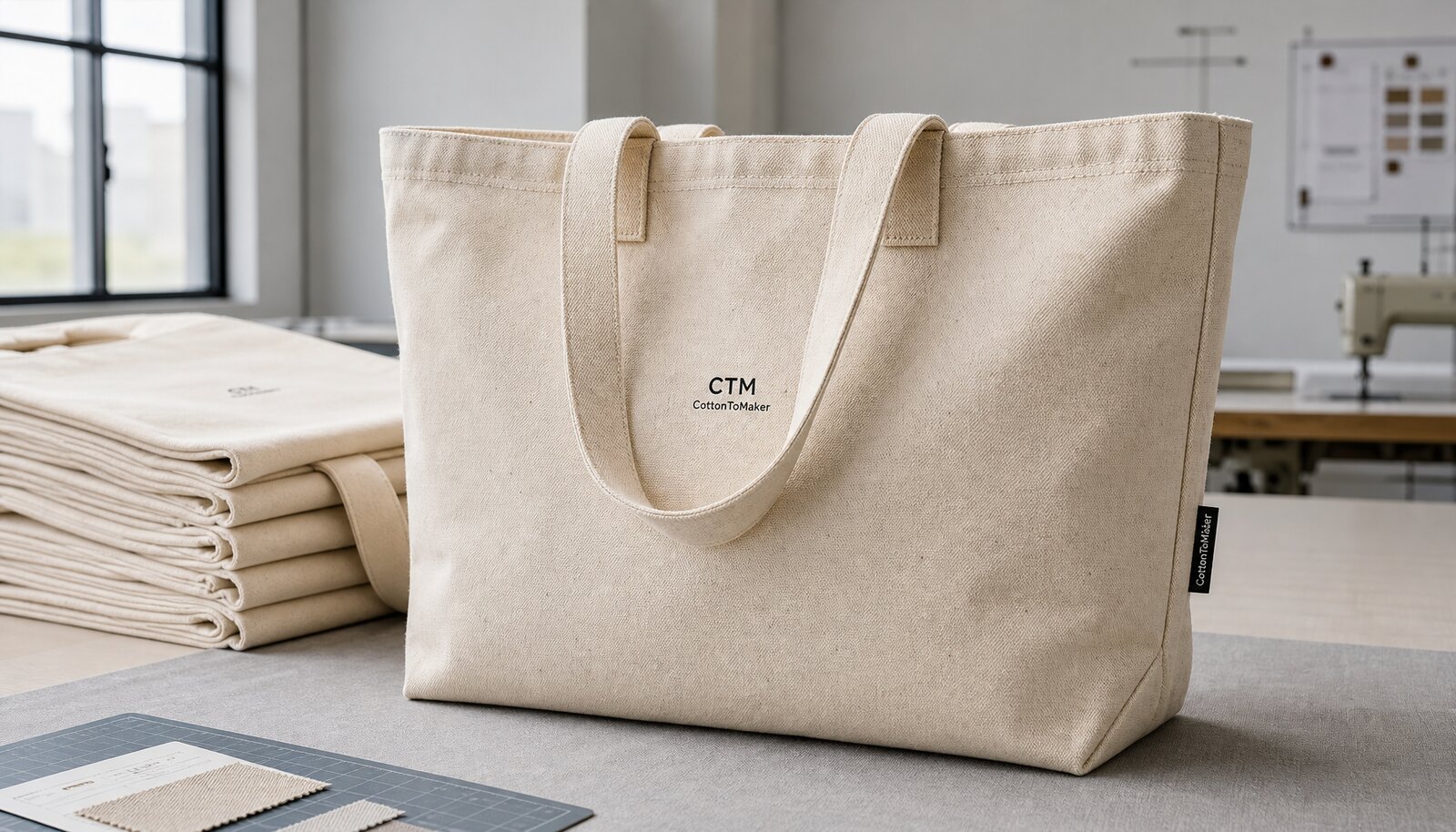
1. Start with the bookstore use case, not the tote catalog
A bookstore tote is not just another retail bag. It usually has to do three jobs at once: carry books safely, support the event’s branding, and remain useful after the customer leaves. That mix changes the specification. A giveaway bag for an author signing can be lighter and more decorative if it is handed out with a single book and a flyer. A retail tote sold at the counter has to feel more durable because the customer is paying attention to the bag itself, not just the promotion behind it. If the bag collapses when staff pack hardcovers, or if the print looks flimsy enough to be disposable, the giveaway loses value even if the artwork is good.
For procurement planning, define the main use case before you request pricing. Ask whether the bag is for event handout, membership promotion, resale, or a mixed program. Then map that use case to a carry load, print style, and finish level. The right spec for a local poetry reading may be different from the right spec for a publisher roadshow or a holiday buying campaign. Buyers who skip this step often receive quotes that are technically acceptable but commercially wrong because the supplier priced a default tote that does not match the job.
The best RFQ language is simple and operational. Instead of saying “need a nice tote,” say “need a printed canvas bag for bookstore event giveaway planning, used to carry one hardback plus flyers, with a reuse expectation of at least several event cycles.” That gives the supplier a real buying context. It also makes the next decisions—fabric weight, handle build, and print method—easier to judge. In other words, start with use, then translate use into construction.
- Event handout: focus on quick packing, clean logo placement, and moderate fabric weight.
- Retail resale: focus on stitch quality, handle comfort, and presentation finish.
- Mixed use: choose a spec that can survive book loads without looking overbuilt.
- Write the use case into the RFQ so suppliers do not quote their default tote.
- If the bag is likely to be reused, require the supplier to quote reinforcement explicitly, not as an assumption.
2. Fabric weight, weave, and finish: the main value lever
Fabric weight does most of the work in a canvas tote. It changes how the bag stands open, how the seams behave, and how the printed panel looks after folding. For most bookstore programs, 12 oz / 340 gsm is the practical middle ground. It is substantial enough to feel like a real bag, but not so heavy that the cost jumps without a clear benefit. If the tote will regularly carry hardcovers, catalogs, or bundled purchases, 14 oz / 400 gsm gives more structure and better shape retention. For a light giveaway that only carries a paperback and bookmarks, 10 oz / 280 gsm may be acceptable, but buyers should expect a softer body and a lower perceived value.
Finish matters just as much as raw weight. Natural unbleached canvas has a warm, independent-bookstore look, but it may show fiber flecks and slight shade variation. That is not automatically a defect; it is a material characteristic that needs to be accepted or controlled. Bleached or bright canvas gives a cleaner background for logos and can make small text easier to read. Some suppliers also offer prewashed or softened canvas. That can improve hand feel, but the buyer should ask whether the washing process changes shrinkage, print behavior, or lot-to-lot shade consistency. If the supplier cannot explain the fabric source and finishing step clearly, the quote is too vague for controlled procurement.
A useful buying threshold is this: if the bag is a pure giveaway and the books inside are light, do not overpay for heavy fabric just because “canvas” sounds premium. If the bag is meant to be reused after the event, do not underbuild it just to save a small amount per piece. The weak spot is often not the body fabric alone but the combination of fabric weight and seam construction. A 14 oz body with poor stitching is still a bad tote. A 12 oz body with strong handles and clean reinforcement often performs better than the price gap suggests.
- 10 oz / 280 gsm: budget-friendly, softer hand, lighter-duty use.
- 12 oz / 340 gsm: best balance for most bookstore events and giveaways.
- 14 oz / 400 gsm: better for heavy books, retail resale, and repeat use.
- Natural canvas: warmer look, more shade variation.
- Bleached canvas: cleaner print base and stronger contrast for logos.
- Prewashed canvas: softer feel, but confirm shrinkage and color consistency.
- Ask for lot photos or a swatch if the order depends on exact shade matching.
3. Print method selection: choose for artwork, quantity, and durability
The right print method depends on the design, not on habit. Screen printing is usually the best commercial choice for bookstores when the artwork is simple: one logo, a short slogan, or a small number of spot colors. It gives solid opacity on canvas and is generally easier to repeat on future runs. The buyer should still ask how the supplier controls mesh count, ink viscosity, and curing temperature, because those details affect edge sharpness and rub resistance. A good-looking sample is not enough if the ink smears when the bag is folded, stacked, or packed tightly in a carton.
For short runs or detailed artwork, digital print or heat transfer can reproduce fine lines, gradients, or photo-like graphics more faithfully than screen print. The tradeoff is cost, hand feel, and the possibility that the print layer feels more noticeable on the fabric. Embroidery is a premium choice for a small logo, but it is not the right answer for most bookstore graphics because it adds labor, slows production, and can distort small text. Buyers should also think about print placement. A front-center mark with a clean blank back panel often ages better than a fully covered bag, especially when the tote is intended to be reused beyond the event.
For printed canvas shopping bags for bookstores event giveaway planning, durability questions should be asked in practical terms. Will the ink crack when the bag folds? Will a wet hand or light rain leave transfer? Will a packed tote rubbing against other totes in transit cause scuffing? Those are the questions that matter for the store floor, not just the sample table. Ask the supplier to show a cured sample, then rub it under the same conditions the bag will likely see in packing and use. A print that is visually sharp but mechanically fragile is not a finished procurement answer.
- Screen print: strongest default for simple logos and repeat campaigns.
- Digital or heat transfer: useful for short runs and detailed art.
- Embroidery: best only for small logo marks or premium identity pieces.
- Ask for cure method, rub resistance, and print hand feel in the sample.
- Avoid oversized ink coverage unless the design truly needs it.
- If the print uses multiple colors, ask how registration is held on the production line, not just on the sample.
4. Size, handle build, and load path: where cheap bags fail first
Procurement teams should think about load path, not only appearance. A bookstore tote fails when the handle attachment cannot transfer weight into the body of the bag. That is why handle type and reinforcement matter as much as fabric weight. Cotton webbing handles are usually the safer choice when the bag will hold multiple books. They are easier to grip, less likely to twist, and can be bar-tacked at stress points. Self-fabric handles can work for lighter giveaways or for a softer retail aesthetic, but they should be widened and reinforced if the tote is expected to carry hardcovers.
Size also affects usability. A common bookstore-friendly format is around 38 x 42 cm / 15 x 16.5 in with a 10-12 cm gusset. That size fits paperbacks, notebooks, and a modest stack of event materials without becoming bulky behind the counter. If the bag is too narrow, staff cannot pack quickly. If it is too shallow, books sit awkwardly and push against the top seam. Buyers should ask the supplier to show the finished dimensions, handle drop, and whether the bag mouth stays open enough for fast packing. Those details are easy to miss in a flat drawing and very obvious in a filled sample.
A simple field check helps separate a good spec from a weak one: load the bag with the actual items the bookstore expects to hand out. Use one paperback, one hardcover, or a bundled set of books and flyers depending on the event. Then watch how the bag closes, where the seams strain, and whether the handles stay flat in the hand. If the sample only looks right when empty, it is not ready for bulk approval.
- Use webbing handles when the bag will carry hardbacks or repeated loads.
- Require bar-tacks or reinforced stitches at the handle ends.
- Check handle drop so the tote is comfortable on the shoulder or in hand.
- Confirm the opening width and gusset depth with an actual packed sample.
- Do not approve a flat sample without testing it with books inside.
- If the tote will be sold, ask the supplier to show how the handle reinforcement looks from the inside and outside.
5. MOQ, sample strategy, and the difference between a quote and a usable order
MOQ for canvas shopping bags is shaped by fabric stock, print setup, cutting, and whether the supplier keeps the whole process in-house. A direct factory that handles cutting, sewing, and printing on site can often support a more workable MOQ than a broker because it controls the production flow. That said, buyers should not treat low MOQ as automatically favorable. A very low minimum may hide setup fees, outsourced print work, or a narrower choice of fabric and trim. The most practical custom range for many bookstore events is often 1,000-3,000 pieces, with better unit economics once the setup cost is spread over a larger run.
Sample strategy should match the order risk. For a simple one-color tote, a photo proof and one printed sample may be enough. For a multi-color graphic, woven label, or special packing format, ask for a pre-production sample or at least a production-representative sample built with the final fabric and print process. Buyers should distinguish between a blank physical sample, which only verifies shape and material, and a printed sample, which confirms the actual artwork and ink behavior. If the supplier offers only a blank tote and a promise that the print will be fine later, the quote is incomplete for procurement purposes.
A practical approval rule is to compare sample quality against the real use case, not against a perfect showroom standard. A book tote for an event giveaway does not need luxury finishing, but it does need correct size, stable stitching, acceptable print clarity, and a repeatable construction method. If the supplier cannot explain what will be identical between sample and bulk—same fabric mill, same print process, same handle width, same carton count, same inspection point—the buyer should pause before award.
- Treat MOQ as a process question, not just a price question.
- Ask whether setup, screens, and packaging are included or separately charged.
- Use a blank sample to verify shape; use a printed sample to verify graphics.
- For complex orders, request a pre-production sample built from final materials.
- If volume is low, ask for stock body plus custom print as a cost-control route.
- Do not award on a photo alone when artwork, labels, or packing are changing.
6. Comparing supplier routes: factory, trading company, or local decorator
The best supplier route depends on whether the order is a one-time event or a repeatable program. A direct factory is usually the most useful route when the buyer needs stable specs, documentation, and control over print and sewing. You can ask to see cutting, stitching, and inspection photos, and you can usually trace which department owns each step. A trading company can be convenient when the bookstore is sourcing multiple promotional items together, but the buyer should verify where the bags are actually made, who controls the sample, and who takes responsibility if the print drifts or the carton count is wrong. A local decorator can be fast for domestic urgency, but custom canvas bags often become expensive once you move beyond stock inventory and simple branding.
A procurement buyer should compare routes on evidence, not assumptions. Ask the factory for the production flow, the equipment list for printing and sewing, and the last inspection point before packing. Request a company profile that names the canvas weight they normally run, the stitch type they use for handle reinforcement, and whether they can produce a cut-to-sew sample from your artwork. If they cannot explain those basics, they may be reselling rather than manufacturing. For repeat bookstore campaigns, that matters because the second order should look like the first order. A supplier route that cannot show consistency is risky even when the first price looks attractive.
Supplier verification should also include document checks. Ask for a business license, factory address, product photos taken on site, and at least one recent export document or shipment reference with non-sensitive details visible. If the supplier claims in-house printing, ask what type of presses or screen setup they use and whether the printer is in the same building as sewing. If they claim in-house inspection, ask for an example of an inspection sheet with defect categories and counts. These are not excessive requests; they are the normal checks a buyer should use when the order will be tied to an event deadline.
- Direct factory: best for traceability and repeat-spec control.
- Trading company: useful for consolidated sourcing, but verify the actual producer.
- Local decorator: useful for urgent domestic jobs, but often higher cost on custom shapes.
- Ask for production flow, equipment list, and sample ownership before award.
- Choose the route that can reproduce the same bag next season with minimal drift.
- Request business license, site photos, and a verifiable shipment or audit signal before paying a deposit.
7. A better quote comparison: what to ask for, and how to read the numbers
A usable RFQ for bookstore canvas totes should separate the job into cost blocks: bag body, print, handle or trim, packing, and export handling. If a supplier sends one lump sum, ask for a breakdown before you compare it with another quote. The reason is simple: one quote may include bar-tacks, carton labels, and folded packing while another excludes them. On paper they look close, but the landed cost and timing can differ a lot. For procurement teams, the most useful comparison is not just unit price; it is unit price plus setup, packing, freight impact, and the cost of any likely rework.
The buyer should also compare sample route and bulk route together. Sometimes a supplier gives a good sample but changes the process for production by switching fabric lot, print method, or packing detail. Ask what exactly will be held constant between sample and bulk: same fabric mill, same print mesh or transfer film, same handle width, same carton count, same inspection point. If the answer is vague, the order is not yet ready for award. A clear quote should show where the supplier is protecting consistency and where the buyer is taking change risk.
To keep the quote process useful rather than repetitive, ask for the thresholds that matter. What is the minimum acceptable fabric weight in the bulk lot? What is the maximum acceptable size variance? What print shift is tolerated before reprint? At what defect rate does the supplier trigger rework? These are the questions that turn a price sheet into a usable sourcing document. If the supplier cannot answer them, the buyer is comparing guesses rather than offers.
- Request a line-item quote: fabric, print, reinforcement, packing, and freight basis.
- Compare sample assumptions with bulk assumptions.
- Ask which items are included in the price and which are optional.
- Use the same spec sheet for every supplier to avoid false price comparisons.
- Do not award on unit price alone if the sample and bulk process differ.
- Ask for the supplier’s reject threshold for print, stitching, and carton count, not just the quote amount.
8. Packing, carton planning, and warehouse receiving details
Packing can create receiving problems even when the bags themselves are fine. For bookstore events and giveaway programs, bulk packing is usually the most efficient route because staff can open cartons quickly and stage the bags by the register or event table. If the bags are going into retail displays, a neat fold and an individual polybag may be worth the added labor. The key is to decide that upfront. If the supplier guesses, you may end up paying for presentation you do not need or receiving a bag that is too compressed to look good when opened.
Carton planning should be written into the order. Ask for the number of pieces per carton, carton dimensions, gross weight, and how the bags are oriented inside the carton. Canvas totes are bulky, and over-compression can crease printed surfaces or distort the handle fold. For warehouse receiving, carton marks matter as much as the product. Style, color, quantity, and order number should be printed or labeled clearly on each carton. Buyers should also ask for a photo of a packed carton before shipment. That one photo can prevent disputes over count, folding method, or label placement when the goods arrive.
Receiving teams should be told in advance what to check on arrival. They do not need to inspect every stitch, but they should verify carton count, outer carton condition, and one or two sample bags from each lot. If the packing list says 400 pieces and the carton count is short by one carton, the issue should be reported immediately rather than discovered after the event has started. In deadline-driven bookstore work, a fast receiving process is part of QC, not a separate admin task.
- Bulk pack for event giveaways and distributor shipments.
- Use individual folding or polybagging only when presentation matters at point of sale.
- Confirm pieces per carton, carton size, and gross weight before booking freight.
- Require carton marks with style, color, quantity, and order reference.
- Ask for a carton-pack photo if the order is time-sensitive or high value.
- Tell the receiving team what to check on arrival so missing cartons are caught early.
9. QC standards buyers can measure, not just inspect visually
QC for canvas bags should be measurable. Start with dimensions. The finished tote should match the approved sample within the buyer’s stated tolerance for width, height, gusset, and handle drop. Next check the fabric itself. The weave should be even, with no thin spots, broken yarns, oil stains, or obvious shade patches that make the batch look inconsistent. On printed panels, set a registration standard before production. If the artwork has multiple elements, the supplier should know how much shift is acceptable and what counts as a reject. Visual judgment alone is too loose for a bulk order.
For bookstore use, handle and seam performance deserve special attention. Ask the supplier to reinforce the handle ends with bar-tacks or equivalent stitching and to trim loose threads before packing. If the tote is intended for repeated book loads, do a simple load test on the sample and on a small production check lot. For example, pack the bag with a realistic bookstore load and hold it by the handles for a short interval to look for seam creep, stitch opening, or handle slip. If print durability matters, add a basic dry-rub or wet-rub comparison on the printed area. Buyers do not need laboratory language for every order, but they do need clear pass/fail rules that prevent an obvious problem from being shipped.
A practical manufacturing review also needs escalation steps. If a first sample fails on size, print registration, or stitching, do not just ask for “another sample.” Ask the supplier to identify the root cause, the correction they will apply, and which checkpoint will verify the fix. If the second sample still fails, the buyer should treat that as a process warning, not as a normal delay. At that point, the order may need a revised approval path, a different factory, or a narrower spec.
- Measure the finished size against the approved sample and record the actual numbers.
- Reject obvious weave defects, oil stains, broken yarns, and seam distortion.
- Set a print registration tolerance before bulk begins.
- Load-test the handle area with a realistic book weight.
- Use a simple rub check if the bag will be reused often or sold retail.
- Require loose-thread trimming and clean seam finishing before packing.
- If a sample fails, require root-cause explanation and a corrected resubmission before bulk approval.
10. Timeline control, risk points, and a useful FAQ for procurement teams
The most common schedule slips in tote sourcing are not sewing delays. They are approval delays. Artwork changes, missing Pantone references, revised bag dimensions after the sample is made, and late carton-label edits can all push a normal schedule past the event date. For standard printed canvas bags, 30-45 days after sample approval is a reasonable planning assumption, but only if the buyer keeps the spec stable. If the order includes woven labels, special inserts, multiple pack styles, or color matching, add buffer time. Bookstore campaigns are often tied to a launch date, tour date, or seasonal window, so the tote should be treated like a time-critical marketing asset, not a generic commodity.
A practical buyer workflow is simple: freeze the use case, lock the fabric and print method, approve a sample, confirm packing, and then monitor final production against the agreed QC points. If a supplier cannot confirm the fabrication method, show a production-representative sample, or provide clear carton and inspection documentation, the risk is not in the design. It is in the control system. That is the difference between a tote that supports the event and a tote that creates receiving issues after the deadline has already passed.
For printed canvas shopping bags for bookstores event giveaway planning, the strongest buyers are the ones who ask fewer vague questions and more specific ones. How thick is the fabric really? What exactly is the handle reinforcement? What defect rate is acceptable? Who signs off on bulk if the sample is approved by one person and the production lot is made by another? Those questions do not slow sourcing down. They prevent rework, which is usually the real delay.
- Common lead time: 30-45 days after sample approval for standard jobs.
- Add buffer for labels, inserts, special packing, and color matching.
- Freeze artwork and carton labels early to avoid rework.
- Treat the tote as a deadline item when tied to author tours or launch events.
- Use the same QC checklist on the sample and on bulk production.
- Require the same approver or a documented sign-off chain from sample to production.
Specification comparison for buyers
| Spec decision | Recommended option | When it fits | Buyer risk to check | Sourcing tradeoff / timeline impact |
|---|---|---|---|---|
| Fabric weight | 12 oz / 340 gsm canvas as the default; 14 oz / 400 gsm if the bag will regularly carry multiple books or heavier retail purchases | Most bookstore events, author signings, membership drives, and retail giveaways | Light fabric can sag, show seam distortion, and feel disposable; heavy fabric increases material cost and may require stronger seam construction | 12 oz usually gives the best balance of cost and usable durability. 14 oz adds stiffness, better shape retention, and more seam load, but may raise unit price and sample-to-bulk consistency checks |
| Fabric finish | Natural or lightly bleached canvas for most programs; prewashed only when hand feel matters more than maximum stiffness | Independent bookstores, branded retail bags, and campaigns where the tote should be reused beyond the event | Shade variation, shrinkage after finishing, and print contrast can vary by lot | Natural canvas is easier to source and usually faster to approve. Bleached or prewashed fabric can improve presentation, but the buyer should ask for lot photos and shrinkage confirmation |
| Print method | Screen print for 1-3 solid colors; digital or heat transfer for short runs with fine detail; embroidery only for very small logo marks | Simple logos, event slogans, and repeatable campaign artwork | Low-opacity ink, registration drift, cracking, or hand-feel issues if cure and mesh are not controlled | Screen print is usually the best repeat-order method. Digital and transfer can reduce setup work on short runs, but may increase unit cost and should be checked for rub resistance |
| Handle build | Cotton webbing handles with bar-tack reinforcement for heavier loads; reinforced self-fabric handles only for light use | Book-heavy bags, retail totes, and campaigns where the bag must survive repeat use | Handle failure is the most common first-point defect in tote use | Webbing handles add labor and material cost, but they reduce complaints and improve perceived quality. Self-fabric handles are cheaper and softer, but need tighter control on width and stitch density |
| Bag size | About 38 x 42 cm / 15 x 16.5 in with a 10-12 cm gusset for standard bookstore use | Fits paperbacks, hardbacks, notebooks, flyers, and mixed event handouts | A narrow mouth or shallow gusset slows packing and can distort the top seam | Standard sizes are easier to quote and reorder. Custom size changes may improve book fit, but they can increase pattern cost, sample cycles, and MOQ |
| MOQ route | Direct factory with cutting, printing, and sewing in-house; typically 1,000-3,000 pcs for custom production | Bookstore chains, publishers, and distributors planning repeat campaigns | Low MOQ can mean high setup costs, outsourced processes, or fewer options for finish and packing | Direct factory is usually best for consistency. Trading companies can be useful for consolidation, but buyers should verify who actually prints and sews the bags |
| Artwork placement | Front-center logo with a clean back panel unless there is a clear campaign need for a second print location | When the tote should stay reusable and visually clean after the event | Too much ink coverage can stiffen the canvas, complicate folding, and reduce perceived quality | Single-location printing is usually cheaper and faster. Multi-location artwork adds alignment checks, more rejection risk, and more time in approval |
| Packing method | Bulk pack in export cartons for giveaways; individual folding or polybag only when retail presentation is required | Event distribution, warehouse dispatch, and trade orders | Over-compression can crease printed panels; weak carton labeling can cause receiving disputes | Bulk packing lowers labor and carton volume. Retail-ready packing improves presentation, but it adds cost and can extend lead time |
| Supplier route | Direct factory first, then trading company only if the buyer needs multi-item consolidation or a local service layer | Repeat campaigns, multi-batch promotions, and buyers who need traceability | The supplier may not disclose where printing, sewing, or inspection actually happens | Direct factories usually make document review, sample control, and corrective action easier. Trading routes can be convenient, but verification needs to be stricter |
Buyer checklist before sampling
- Confirm the exact bag size, gusset depth, handle length, and whether the tote needs a flat bottom, boxed bottom, or open tote shape.
- Lock fabric weight in gsm or oz and specify whether the canvas is natural, bleached, dyed, or prewashed.
- Approve the print method based on artwork detail, color count, order quantity, and whether the bag must stay soft to the touch.
- State whether the bag must carry books repeatedly or only serve as a one-time giveaway, because this changes handle reinforcement, stitch density, and fabric weight.
- Provide final artwork in vector format and list Pantone references or an acceptable color tolerance if brand color matters.
- Define packing requirements clearly: bulk pack, folded, inner polybag, barcode label, or retail-ready insert.
- Set acceptance rules for print registration, size tolerance, seam quality, and carton count before sampling starts.
- Ask for a pre-production sample or photo proof when the order has multiple colors, multiple logos, woven labels, or special trims.
- Ask the supplier to confirm carton dimensions, units per carton, and gross weight so freight quotes are not based on assumptions.
- Request a simple rub or abrasion check if the bag will be reused often or sold as a retail item.
Factory quote questions to send
- What canvas weight are you quoting in gsm or oz, and is that the finished fabric weight or the greige weight before finishing?
- Which print method will you use for this artwork, and is the quoted price based on one side or two sides?
- What is the MOQ by color and by print design, and does the MOQ change if we choose a different handle or label?
- Are handle stitching, bar-tacks, and stress-point reinforcement included in the unit price?
- What sample type do you provide before bulk production: blank sample, printed sample, or pre-production sample?
- Can you share a spec sheet or work order showing fabric weight, finished dimensions, seam allowance, handle length, and carton pack-out?
- How do you pack the bags for export, and what carton quantity and carton size are used for this order?
- What is the lead time after artwork approval and sample approval, and what changes usually extend that schedule?
- Which inspection standard do you follow for print defects, loose threads, size tolerance, and carton count accuracy?
- Can you provide photos of the in-house cutting, printing, sewing, and inspection areas, or a recent factory audit report if available?
Quality-control points to confirm
- Fabric GSM or oz should match the approved spec within the supplier’s stated tolerance, and the buyer should record the actual measured weight from the approved lot.
- Canvas weave should be even, with no thin spots, oil stains, broken yarns, or visible weave distortion near seams or corners.
- Print registration should stay within the agreed tolerance, and color density should be consistent across left, center, and right panels under daylight or D65 lighting.
- Handles should be sewn straight, securely bartacked, and able to carry a realistic bookstore load without seam opening or stitch tearing.
- Bag dimensions, gusset depth, and handle drop should match the approved sample within the agreed measurement range, with no more than the buyer’s tolerance on width, height, or strap length.
- Inner loose threads should be trimmed; no needle damage, skipped stitches, exposed raw edges, or seam puckering should remain in the finished bag.
- Cartons should be marked with style, color, quantity, and carton count, and the actual carton quantity must match the packing list and purchase order.
- The fold pattern should not crack the print or leave permanent creases in the visible front panel; if folding is specified, the supplier should show the folded state in the sample.
- If a load test is required, the sample should hold a practical bookstore load, such as two hardbacks plus a paperback or the buyer’s agreed weight, without handle slip or seam failure.
- If wash or rub resistance matters, the buyer should specify a simple internal test, such as dry rub and wet rub comparison on the printed area, and reject obvious ink transfer or smearing.