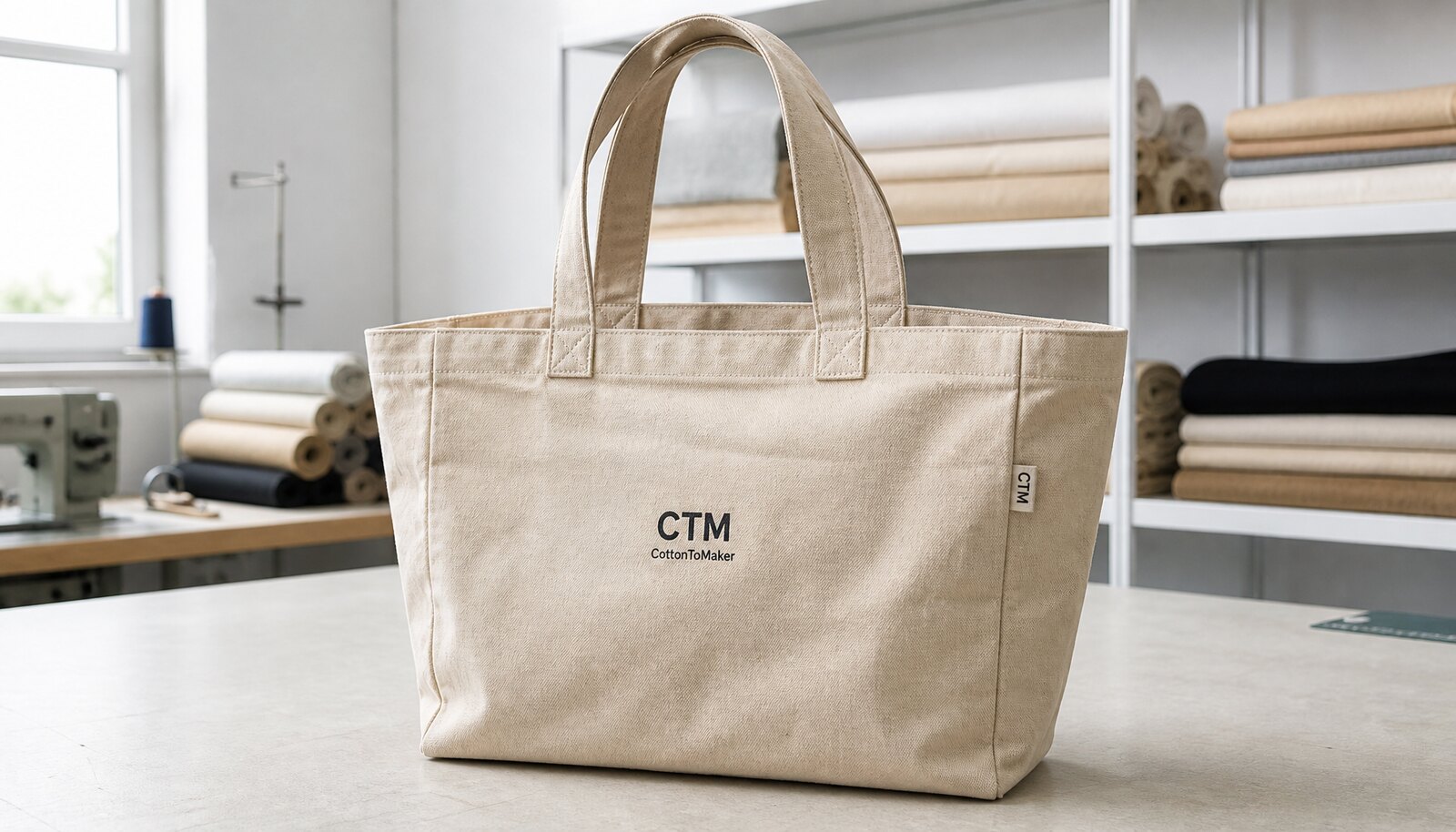
1. When canvas makes sense for a corporate event
Printed canvas bags are often selected for corporate events because they do more than carry items. A tote can support the brand experience, serve as a reusable carrier, and stay visible after the event ends. That is useful for conferences, dealer meetings, product launches, internal summits, and VIP kits where presentation matters as much as capacity.
The comparison is not simply canvas versus “other bags.” Procurement needs to compare canvas with paper, non-woven polypropylene, jute, and recycled-fiber options for a specific event use case. Paper can look polished and is easy to handle in many venues, but it weakens with moisture and usually has a shorter useful life. Non-woven PP is often the budget answer, yet it can feel less premium and may not support the same brand perception. Jute gives a natural look, but its uneven surface can make detailed printing less consistent.
Canvas usually sits in the middle on cost but near the top on tactile quality and reuse potential. That matters when the bag itself is part of the brand message. If attendees will carry the bag through a venue, on transit, or back to the office, the bag becomes a moving brand surface. If the bag only needs to hold a brochure and a pen for a few minutes, the extra cost is harder to justify.
A practical buyer rule is straightforward: choose canvas when the bag needs to survive handling, keep its shape, and still look acceptable after repeat use. Choose paper when the contents are light and presentation is short-lived. Choose non-woven PP when budget pressure is high and the bag is mainly a carrier, not a premium object. For many B2B event programs, canvas is the strongest fit when the buyer wants a reusable item without moving to a retail-grade gift bag.
The sourcing implication is that canvas orders deserve more specification detail than many buyers give them. If the spec is vague, suppliers may quote different fabrics, different sewing standards, and different print methods under the same bag name. That makes procurement comparisons noisy and can lead to disputes after the first sample.
Useful decision point: canvas is usually worth the premium when the event team wants the bag to be kept, reused, or photographed after the event. If the bag’s life ends at the registration desk, a lower-cost format may be the better procurement choice.
- Use canvas when reuse and brand presentation matter after the event.
- Use paper when the contents are light and the bag is mainly for one-day handout use.
- Use non-woven PP when the brief is cost-first and tactile quality is secondary.
2. Sustainable packaging comparison: what buyers should compare side by side
A sustainability comparison is only useful when the criteria are measurable. Words like “eco-friendly,” “cleaner,” or “green” do not help a procurement team decide. Buyers need to compare fiber source, print chemistry, packing method, freight volume, reuse potential, and whether the supplier can actually document the claim. A tote made from natural canvas can still be a weak sustainability choice if it is over-packed in plastic or printed with a system that undermines the claim.
For event programs, the comparison set usually includes cotton canvas, paper gift bags, non-woven PP, jute, and recycled-content options. Each one carries a different tradeoff. Cotton canvas has a stronger reuse profile and usually feels more premium. Paper can be easier to recover in some waste streams, but it loses strength fast in moisture or heavy loads. Jute is sturdy and natural-looking, but the surface is less uniform. Recycled options can improve the sourcing story, but the buyer needs to know exactly what is recycled and how much of it is in the finished product.
The biggest trap is assuming that a label automatically proves a lower impact. Organic cotton does not guarantee a better total outcome if the bag is used once and shipped inefficiently. Recycled content also needs definition: recycled cotton yarn, recycled polyester, and post-consumer content are not interchangeable. If the buyer wants to make an external sustainability claim, the supplier should be able to state the fiber composition and any certificate reference that applies.
A practical comparison should include these sourcing questions: What is the bag made from? What is the print method and ink type? How is it packed? How many times will it reasonably be reused? Can the supplier provide a fiber declaration, recycled-content statement, or certification reference if needed? The answer matters because a lower-impact material can still become a poor purchasing decision if it fails in use or costs too much to ship.
For many corporate events, the best sustainability result is the bag that gets reused several times and arrives in a lean pack-out. A stronger reusable tote can outperform a thinner “eco” option that tears early or looks disposable after the first event. That is why procurement should compare actual function, not only material branding.
- Compare by reuse cycle: one-time handout, post-event use, or repeat internal use.
- Compare by print durability, because failed decoration shortens the bag’s useful life.
- Compare by freight impact, since canvas is denser and heavier than paper.
- Ask for material declarations for recycled or organic claims, including blend ratio or certificate reference where available.
3. Fabric weight, weave, and finish: the spec that changes price and performance
When suppliers quote “canvas,” they may be quoting different yarns, different weave density, and different finishes. That is why two products with similar photos can price very differently. For most corporate event bags, a practical starting range is 10 oz to 12 oz cotton canvas, roughly 340–420 GSM. That range usually gives enough body to hold shape, better print coverage, and acceptable strength for notebooks, brochures, and compact sample kits.
Weight alone does not decide quality. Weave density and surface finish affect both print result and hand-feel. Tighter weave usually gives sharper logo edges and less show-through. Looser weave can be acceptable for lower-cost programs, but the surface looks more casual and texture variation is more visible. If the event is premium-facing, a more uniform weave is usually worth the added cost because the bag looks neater and the print reads better at first glance.
Finish also changes the buyer’s outcome. Unbleached natural canvas can support a sustainability story and avoids extra processing, but it will show fiber flecks and some shade variation. Bleached canvas can deliver a cleaner base for contrast, but it may add cost and should fit the brand look. Pre-shrunk fabric is useful when the buyer needs size consistency after storage or if the bag will be reused and laundered.
Handle and body construction need to be considered with the fabric weight. A heavier fabric with weak handle attachment is still a bad bag. A lighter fabric may be acceptable if the handle is reinforced and the contents are modest. Buyers often get the best result by specifying the bag as a system: fabric weight, body structure, handle style, seam allowance, and finished dimensions. That helps suppliers quote the same performance target instead of their own interpretation.
A cost driver worth testing is the point at which extra fabric weight stops adding value. Ask the supplier what the heavier cloth changes: print opacity, shape retention, handle support, or just perceived quality. If the answer is only “it feels better,” the buyer should weigh that against freight and unit cost before approving the heavier spec.
- 10 oz / about 340 GSM: workable for flat inserts and light handouts, but less premium in hand.
- 12 oz / about 400+ GSM: better for premium event kits, stronger handle support, and cleaner structure.
- Natural versus bleached: choose based on print contrast, brand image, and tolerance for shade variation.
- Pre-shrunk fabric is safer when size consistency matters across storage or repeated use.
4. Print method, artwork control, and ink questions procurement should ask
For event bags, the decoration method affects both appearance and cost. Screen printing is still the default for most logo-led orders because it gives solid coverage, is usually economical for one or two colors, and is easier to inspect on canvas. If the artwork is simple, screen print is often the most controllable option. Buyers can judge registration, ink density, and edge sharpness with less ambiguity than some other methods.
Heat transfer can work when the artwork includes gradients, fine detail, or multiple colors, especially on short runs. It is also useful for one-off personalization. The tradeoff is durability variability. If the bag will be reused, buyers should ask how the transfer performs under rub testing and whether the edges remain secure after repeated handling. A transfer can be acceptable, but it should not be treated as identical to screen print without a durability check.
Embroidery, woven labels, and sewn patches can make sense for premium programs such as executive kits or press packs. These methods add perceived value, but they also affect lead time, cost, and sometimes carton volume. If a supplier suggests a premium decoration, ask whether it changes the bag weight, adds extra sewing steps, or creates a risk of marking the fabric during handling. The buyer should know why the option is being proposed, not just what it looks like.
Artwork control is where many orders drift. Procurement should confirm the exact artwork file version, approved color reference, print area, and print position before production starts. If a color system such as Pantone is being used, specify the code rather than a descriptive color name. That matters because “navy” or “red” can vary enough to break consistency between reorders. Fine type should be reviewed at the viewing distance of the event, not only at close range. Small text that looks acceptable in a sample room may be too faint on textured canvas.
For compliance, buyers should avoid generic “eco ink” language. Better questions are: what ink system is used, is it water-based or plastisol-based, how is curing verified, and is rub resistance checked? If the organization has restricted substances rules, ask whether the supplier can support them before sample approval. The goal is not a marketing claim; it is a printed bag that looks clean, survives handling, and does not create a compliance issue later.
- Screen print works well for one- or two-color logos and sponsor marks.
- Heat transfer is useful for short runs or complex art, but check durability.
- Woven labels or patches can improve perceived value on premium kits.
- Ask how ink cure or adhesion is verified before mass production.
5. Supplier route comparison: direct factory, trading company, or local decorator
Supplier route affects price transparency, sample control, and delivery risk. A direct factory is usually the strongest option when the program will repeat, the spec is specific, or the buyer wants better visibility into sewing and printing. The factory can normally quote fabric, sewing, decoration, and packing more clearly if the buyer provides a clean spec. That makes it easier to compare one quote against another on a true like-for-like basis.
A trading company can be useful when the order needs multi-item consolidation or when one contact is preferred. The tradeoff is visibility. Some trading quotes hide the actual production path, which makes it harder to judge print control or QC. That does not make the route wrong, but it does mean the buyer should ask who physically makes the bag, who prints it, and who signs off on final inspection. If the route is unclear, the quote may look convenient while process risk stays hidden.
Local decorators and regional suppliers can be strong options for urgent domestic events. They are often faster to sample and can be practical when the order is relatively small. Their price may look competitive at low volume, but once the bag becomes a repeatable program or the decoration becomes more technical, the unit-cost advantage can narrow. Buyers should compare not only price, but also how quickly the supplier can correct a sample issue and whether the same result can be repeated later.
The route decision should match the business need. If the bags are for one fixed event and the design is simple, a local or regional supplier may be enough. If the tote will be used across several cities or reordered over time, a direct factory usually offers better spec control and more stable repeatability. If the job involves kitting several items into one package, a trading company may be practical as long as the production path is documented.
The key procurement point is that not all quotes represent the same supply chain. One vendor may be quoting a factory-made bag with controlled printing. Another may be assembling a mixed supply chain where sewing and decoration are separated. Those are not equivalent offers, so the buyer should not compare them on price alone.
- Direct factory: best for repeat orders, tighter spec control, and clearer cost breakdowns.
- Trading company: useful for consolidation, but verify the true maker and inspection path.
- Local decorator: useful for urgent timelines, but compare reordering consistency and print control.
- Do not compare quotes unless the production path is disclosed.
6. Landed-cost math: what actually changes the quote by percentage
For procurement, the right question is not “what is the cheapest bag?” It is “what drives the landed cost?” A tote quote can change materially with fabric weight, bag size, print count, handle type, finishing, packing method, and freight mode. Two bags that both look like cotton totes may still be priced differently because one uses heavier cloth, one has a wider gusset, one has reinforced handles, or one includes individual wrapping. Those differences should be visible before a purchase decision is made.
A practical way to compare prices is to separate one-time setup cost from recurring production cost. Setup can include artwork prep, screen making, sample preparation, and color matching. Recurring cost includes cloth, sewing labor, printing labor, finishing, and packing. If a quote looks low, ask where the setup cost went. If a quote looks high, ask whether it includes stricter QC, carton labeling, or better packing. That approach usually exposes the real tradeoff faster than comparing only unit price.
Cost drivers are usually easy to test once the spec is frozen. A larger bag uses more cloth and labor. A second print color adds setup and print time. Reinforced handles and wider gussets add sewing complexity. Individual polybagging adds labor and materials. A custom belly band or tag may seem minor, but on large orders it can create a noticeable cost increase. If the supplier cannot explain which of these changed the price, the quote is not procurement-ready.
A useful comparison table for sourcing can be built from a simple landed-cost framework. Include ex-factory price, sample cost, setup cost, packing cost, inland freight, international freight, duties if applicable, and receiving/warehouse handling. That is often enough to show why the “cheap” bag is not the cheapest finished option. For event teams, freight can matter more than expected because canvas is denser than paper and carton volume changes quickly with fold method.
Buyer tradeoff example: a lighter canvas may save unit cost and freight, but if the logo looks thin or the bag collapses in use, the event team may lose presentation quality. A heavier bag may cost more up front, but if it replaces a separate presentation sleeve or survives repeat use, it can be a better spend. Procurement should document that tradeoff rather than assuming one side is automatically better.
- Separate setup charges from recurring unit cost.
- Compare ex-factory, packing, freight, and receiving costs together.
- Ask what changes price immediately: size, print colors, gusset, handle style, or finishing.
- Use landed cost, not only unit price, when evaluating bids.
7. Sample approval: how to freeze the spec without adding unnecessary process
A sample only reduces risk if it becomes the production reference. For a canvas event bag, the buyer should approve the exact fabric shade, finished size, print placement, handle length, stitch style, and fold method before bulk production starts. If the sample is handmade but the bulk will be machine-produced, that difference should be recorded so the team does not expect handwork details that cannot be repeated at scale.
A useful sample review checks the bag in three states: flat, empty, and loaded. Flat, procurement can verify print placement and seam cleanliness. Empty, the bag should show the intended shape and fold correctly. Loaded with a representative kit, it should not strain at the handle root or open up at the gusset. This matters because event bags are judged when filled with brochures, notebooks, samples, or bottles, not only when they sit empty on a table.
The sample should also be checked in normal viewing conditions. Fine type and small sponsor marks can look clear at close inspection but fade at arm’s length. If the event will happen under warm or dim lighting, review the sample in similar light if possible. A bag that looks fine in the sample room should still read correctly in the event space.
Good sample control needs a signed spec sheet, approved artwork file, labeled sample reference, and note of any approved exceptions. That is more useful than a vague “approved” email. If the supplier offers a production sample, ask whether it was made on the same line, with the same fabric lot, and with the same ink or thread as bulk production. If not, ask whether a pilot run is possible for higher-risk orders.
The goal is not extra paperwork. It is to prevent the common failure mode where a buyer approves a clean sample and then receives bulk bags that differ in size, tone, or handle strength. Keeping one retained sample with the signed approval sheet is usually enough to protect both sides if the documentation is clear.
- Measure finished sample size at multiple points, not only the nominal size on paper.
- Review logo alignment, ink opacity, and edge sharpness.
- Test with representative contents: brochure pack, bottle, notebook, or sample kit.
- Keep one retained sample with the signed approval sheet.
8. Pack-out, carton control, and shipping details that affect cost and waste
Packing affects both cost and sustainability. Individual polybags can protect each tote and make presentation look neat, but they add labor, plastic, and carton volume. For most corporate event shipments, bulk folded packing in cartons is the more efficient choice. It reduces packing time and can lower freight cost by using space better. If the bag needs a more polished look, a paper belly band or a single recyclable sleeve may be enough without converting the whole order into retail packaging.
Carton planning should be based on the folded bag size and the final pack method, not only the sewing dimensions. A loose fold wastes volume and increases freight. An over-compressed fold can leave a bad crease or distort the print area. Procurement should ask the supplier for the fold method, pack count per carton, and estimated carton dimensions before the order is confirmed. That helps logistics teams estimate CBM and avoid surprises.
Carton marking matters more than many buyers expect. Each carton should show SKU, quantity, print version, and event reference if the bags will go to a warehouse or kitting partner. If there are multiple versions, the marking should be easy to read without opening the cartons. Mixed-size or mixed-print cartons create avoidable sorting labor and increase the chance that the wrong bag reaches the event floor.
If the shipment moves by sea, moisture protection should be considered. That does not always mean heavy plastic wrapping; it may mean better carton board, liner protection, or clear storage instructions. If the shipment moves by air, volume often matters more than weight for canvas, so fold efficiency becomes important. In both cases, more packaging is not automatically better. The right pack-out is the smallest one that still keeps the bags clean, countable, and event-ready.
A sustainability claim can be weakened by pack-out decisions. An unbleached canvas bag printed with water-based ink loses part of its packaging story if every bag is individually wrapped in plastic. That is why the packing spec should be decided together with the product spec, not after production starts.
- Ask for carton count and estimated carton dimensions before confirming volume.
- Decide whether a belly band, hangtag, or sleeve is part of the product spec or the event kitting step.
- If shipping by sea, confirm CBM early because canvas density can change freight.
- Use the minimum packaging that still protects cleanliness, count accuracy, and carton integrity.
9. Lead time planning: where event orders actually slip
The most useful lead-time plan separates sample production, sample approval, bulk production, packing, and transit. Corporate event buyers often collapse these into one date, which hides the real risk. A supplier may sew quickly, but if artwork approval is late or the fabric shade is not confirmed, the schedule still slips. Treat artwork freeze and sample sign-off as milestones, not casual updates.
Delays often start at print control rather than sewing capacity. If the logo file is not vector-based, if the color reference is vague, or if the buyer changes the artwork after the sample is made, print screens or transfer setup may need to be repeated. That can add days even before production begins. For multi-color art, the chance of revision is higher, so buyers should build buffer instead of assuming the first sample will be final.
Lead time also depends on fabric sourcing. Standard natural canvas is often easier to source quickly than dyed fabric or specialty-finish cloth. If the bag requires a specific color, lining, special handles, or woven label, the lead time can increase. For a hard event date, ask the supplier for factory time, then transit time, then an internal approval buffer. That sequence avoids confusing manufacturing time with delivery time.
The lead-time discussion should also include failure recovery. What happens if the first sample is rejected? Is there time for a second sample? Can the supplier run a pilot batch? Are partial shipments possible if only part of the order is needed for the first event? Those questions matter because a “fast” quote is not useful if rework pushes the order past the conference or roadshow schedule.
The practical takeaway is simple: set a hard artwork sign-off date, a sample approval date, and a shipping-ready date. When those milestones are visible, event teams can act early instead of discovering schedule risk after production is already underway.
- Plan sample lead time first, then bulk lead time, then freight time.
- Freeze artwork in vector format and define color references before screen making.
- Build buffer time for a second sample if the event is important or the print is multi-color.
- Separate factory production time from shipping time in every internal approval note.
10. Final RFQ and QC checklist before you place the order
The strongest RFQ for printed canvas bags is short, specific, and tied to one approved spec. It should identify the bag size, fabric weight, color, handle construction, print method, packing method, and delivery date. Then suppliers quote against the same target instead of a vague concept. That makes comparisons cleaner and reduces the chance that a low price is hiding a different material or a lighter construction.
Before awarding the order, confirm the quality-control method in plain language. Ask what is checked in-line, what is checked at final inspection, and how defects are counted. For event bags, the high-risk points are usually seam strength, print placement, odor or ink cure, size tolerance, and carton count accuracy. If the supplier only says “checked before shipment,” that is not enough for a fixed-date event order where rework time is limited.
It also helps to define what happens when the shipment arrives. Who opens the cartons? How many cartons are checked? What counts as an acceptable defect rate? If the bags go to a kitting partner or event warehouse, the receiving rules should be shared in advance so mixed cartons or mislabeled SKUs do not create downstream delays. The clearer the handoff, the less sorting labor the event team has to absorb.
Sustainability review should happen at the same time as QC review. Ask for fiber content confirmation, ink system detail, and packing material spec. If the buyer wants to state that the product supports a sustainable packaging initiative, the claim should match the actual materials and packing method. That keeps marketing language aligned with procurement reality and avoids the common problem where the bag is reusable but the pack-out undermines the message.
Before release, procurement should be able to answer four questions without guessing: What is being made? How is it printed and packed? How is it inspected? What proof will the supplier provide before the shipment leaves the factory? If those are clear, the order is easier to defend internally and less likely to create surprises at receiving.
- Lock the final spec in one controlled document before PO release.
- Require in-line and final QC checkpoints, not just a generic shipment check.
- Define carton receiving rules for the warehouse or kitting partner.
- Keep sustainability claims tied to specific materials and packing choices.
Specification comparison for buyers
| Option | Best use case | Buyer advantage | Main sourcing caution |
|---|---|---|---|
| Cotton canvas tote | Premium corporate events, sponsor kits, reusable handouts | Best tactile feel, stronger reuse value, good print surface | Heavier freight and higher unit cost; verify fabric weight and seam reinforcement |
| Paper gift bag | Light gifts, short event use, display-ready presentation | Lower cost, easier recycling in many markets, clean presentation | Poor moisture resistance and lower reuse value; confirm board weight and handle strength |
| Non-woven polypropylene bag | Budget-led events, large giveaways, short turnaround | Low cost, light to ship, fast production | Less premium feel; check print quality and whether the bag is actually reused |
| Jute bag | Natural-look branding, rustic or sustainability-led messaging | Strong material story and good carrying strength | Surface is uneven; fine logos and smooth color fills can print less cleanly |
| Recycled-fiber tote | Programs with a documented recycled-content brief | Can support a stronger materials story if claims are documented | Ask what “recycled” means: blend ratio, source type, and proof of content |
| Material | 8-12 oz cotton canvas, 120-220 gsm cotton, recycled cotton, or blended fabric selected by use case and target price | Before price comparison | Different cloth weights, backing, or certification claims make quotes hard to compare |
| Construction | bag size, gusset, handle drop, seam allowance, stitch density, reinforcement patch, and loading expectation | Before sampling | Weak stress points create returns and failed inspections |
| Decoration | screen print, heat transfer, embroidery, woven label, or hangtag matched to fabric texture and brand durability needs | Before artwork approval | The wrong method can crack, bleed, pucker, or fail on the chosen fabric |
Buyer checklist before sampling
- Fix the finished bag size, usable inner space, and handle drop before requesting quotes.
- State fabric weight in GSM or oz, not only “canvas,” and specify bleached or natural cloth.
- Define print method, print colors, print area, and whether decoration appears on one or both sides.
- Ask for a landed-cost breakdown that separates setup, unit production, packing, and freight.
- Request a pre-production sample, a signed spec sheet, and one retained reference sample.
- Set tolerances for size, logo placement, stitching, and shade variation before approval.
- Confirm carton count, carton dimensions, carton marks, and whether cartons are suitable for export shipping.
- Ask which tests or inspections are done in-line and at final audit, and how defects are recorded.
- For sustainability claims, request fiber composition, ink type, and packing details instead of generic wording.
- If the bags go to a warehouse or kitting partner, confirm SKU labels and event code labeling before production.
Factory quote questions to send
- What is the exact fabric specification by GSM/oz, yarn count, weave, and finish for this quoted bag?
- Is printing done in-house or subcontracted, and what is the process for color matching, screen setup, and cure control?
- What is the MOQ by fabric color, print color, and bag size variation?
- Please quote sample cost, sample lead time, bulk lead time, and whether sample cost is refundable against order.
- What is the packing method per carton, carton dimensions, gross weight, and estimated CBM for 1,000 pcs?
- Which quality points are checked before shipment: seam strength, print alignment, stain check, dimensional tolerance, and odor/ink cure?
- If we change handle length, gusset width, logo position, or bag color, which cost elements change immediately?
- Can you share the test standard used for fabric weight and seam strength, and whether results are available on request?
- What document confirms that the approved artwork version, color reference, and packing spec are the same files used in bulk production?
- If the order ships to a third-party warehouse, can you label cartons by SKU, quantity, and event code exactly as requested?
Quality-control points to confirm
- Fabric weight should match the approved range; confirm by measured sample rather than supplier statement alone, and reject cloth with thin spots, slubs, or patchy weaving that will weaken print coverage.
- Bag dimensions should stay within the agreed tolerance for width, height, gusset, and handle drop; record the tolerance on the approval sheet.
- Logo position should match the approved artwork; screen print should not drift across panels, and multi-color prints should register cleanly.
- Ink coverage should be even and fully cured; no stickiness, cracking, ghosting, heavy odor, or tacky feel at packing.
- Stitching at side seams, bottom seams, and handle joins must be straight and tight, with no skipped stitches, loose threads, or weak bar-tacks.
- Cartons must match the agreed pack count and protect the bags from dirt, moisture, and compression during transit; confirm carton board grade for sea freight.
- Random cartons should be opened to confirm fold method, final appearance, and no mixed sizes, mixed print versions, or mixed handle styles.
- Any insert, tag, or belly band should be checked for accurate placement and correct quantity in each carton or kitted unit.
- Keep one retained sample with the signed approval sheet so that disputes can be compared against the agreed reference, not memory.
- If the supplier offers wash or rub testing, ask for the method used and whether the result reflects the chosen ink and fabric combination.