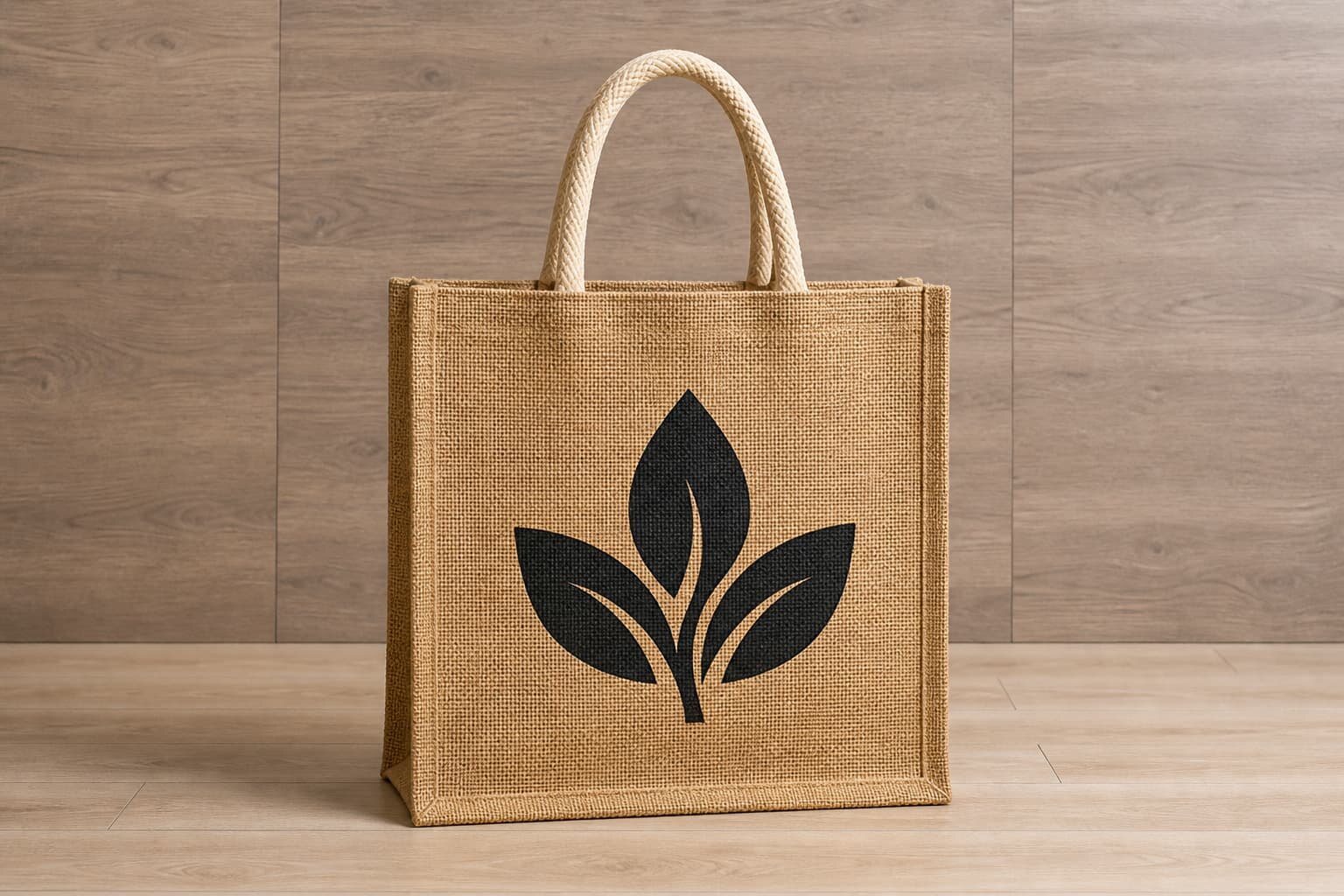
Why printed burlap bag quotes are hard to compare
A printed burlap bag quote can look simple: one bag size, one logo, one quantity, one unit price. In practice, the price depends on many small decisions that are easy to miss in an RFQ. Two suppliers may both quote a natural burlap tote with black logo printing, but one may use a lighter fabric, shorter handles, looser stitching, a smaller print area, fewer pieces per carton, or a different print process. The unit price may look attractive until the sample arrives and the buyer sees weak shape, uneven print edges, or carton packing that increases freight cost.
For procurement teams, the job is not only to find the lowest printed burlap bag price. The better target is to compare equivalent specifications. That means every quote should show the same fabric weight, bag dimensions, handle construction, logo method, print size, packing method, lead time, and sample approval route. If those items are missing, the quote is not ready for supplier comparison.
- Ask for the finished bag size, not only the cutting size.
- Compare GSM and weave density before comparing unit price.
- Check whether print setup cost is included or charged separately.
- Review carton data because bulky jute bags can change landed cost.
- Use the same artwork file and print size for every supplier quote.
Start the RFQ with the product use, not only the bag size
Burlap bags are ordered for many different uses: retail gift packaging, wine bottle presentation, supermarket promotions, holiday hampers, garden products, coffee packaging, trade show giveaways, and brand merchandise. Each use changes the correct specification. A promotional event bag may only need to carry light brochures. A grocery bag or wine bag needs stronger handles, better bottom support, and more attention to seam strength. A retail display bag may need a cleaner shape and more controlled print position.
When sending an RFQ, describe the product that will go inside the bag and the expected carrying weight. This helps the factory choose a practical GSM, handle length, reinforcement, and packing style. Without that information, suppliers often quote the cheapest construction that meets the visible size request but may not meet the actual use.
- For gift packaging, focus on print appearance, fabric cleanliness, and consistent folding.
- For grocery or retail shopping use, focus on handle pull strength and bottom seam strength.
- For wine bags, specify bottle size, bottom construction, divider requirements, and handle load.
- For promotional giveaways, define whether the bag is single-use display packaging or reusable.
- For e-commerce kits, confirm whether the bag must arrive flat, shaped, or individually packed.
Fabric GSM and weave decide the real value of the quote
Burlap is not a perfectly smooth fabric. It is made from jute yarns with visible slubs, open weave areas, and natural color variation. GSM is a key cost driver, but GSM alone does not describe the whole fabric. A 260 GSM burlap with a tighter weave can feel more stable than a heavier fabric with loose, uneven yarn. For printed bags, weave consistency matters because ink follows the surface. If the weave is too open, fine artwork may break or look rough.
For many bulk printed burlap tote and shopping bag orders, 260-300 GSM is a practical range. Lighter fabric may be suitable for small gift pouches or low-cost event packaging, but it can feel thin in larger totes. Heavier burlap can improve body and durability, yet it increases sewing difficulty, folding thickness, carton volume, and sometimes material waste. The right quote should state GSM clearly and should not rely on vague terms such as standard burlap or premium jute.
- Ask whether GSM tolerance is controlled, for example plus or minus 5 percent.
- Request a fabric swatch when the order is color-sensitive or print-sensitive.
- Check whether the quoted fabric is natural, bleached, dyed, laminated, or lined.
- Confirm if the burlap has any backing, coating, or odor-control treatment.
- Do not compare a laminated jute quote directly with an unlaminated burlap quote.
Printing method changes both price and acceptance standard
Most printed burlap bags use screen printing because it is economical for bulk orders and works well with simple, bold logos. Screen print is suitable for one-color or two-color artwork, especially when the buyer accepts the natural rustic texture of burlap. The ink will not look the same as on cotton canvas or paper. Small gaps, uneven edges, and texture show-through can be normal if they match the approved sample.
Heat transfer and digital print may be considered for more detailed artwork, but they are not always the best solution on coarse burlap. Transfers can feel like a patch on the fabric and may not suit a natural packaging look. Digital print depends heavily on fabric preparation and artwork. If the quote does not state the print method, the buyer cannot judge whether the price is realistic or whether the result will match the brand standard.
- Use screen print for bold logos, icons, and simple retail messages.
- Avoid small reversed text and hairline details on open-weave burlap.
- Specify Pantone references, but allow realistic tolerance on natural fabric.
- Request a printed swatch before approving full bag production for complex logos.
- Ask if ink curing time is included in the lead time before packing.
MOQ should be checked by design, not only by total quantity
MOQ is often misunderstood in printed burlap bag sourcing. A supplier may state 1,000 pieces MOQ, but that may mean 1,000 pieces per size, per fabric color, per print design, or per handle type. If a buyer wants four artwork versions at 250 pieces each, the factory cost may be very different from one artwork at 1,000 pieces. Screen setup, cutting efficiency, fabric procurement, and packing labels all affect the real minimum.
Buyers should ask suppliers to show MOQ logic instead of only asking for the lowest MOQ. A factory can sometimes combine several artwork versions if the bag body is identical and only the print screen changes, but there may be extra screen charges and longer production handling. For distributors and retail buyers with multiple SKUs, this point is important because the cheapest quoted unit price may only apply to one consolidated design.
- Clarify MOQ per SKU and MOQ per shipment.
- Ask whether mixed artwork is allowed under one purchase order.
- Separate MOQ for natural burlap, dyed burlap, and laminated jute versions.
- Check whether sample quantity can be produced using bulk materials.
- Ask how overrun and underrun quantities are handled for each SKU.
A useful quote separates the cost drivers
A one-line unit price is not enough for quote comparison. Procurement teams should ask for the main cost drivers so they can understand why one supplier is higher or lower. This does not mean the factory must reveal every internal cost. It means the quote should separate practical items such as bag body specification, handle upgrade, printing cost, setup charge, individual packing, export carton, and sample fee. With this structure, buyers can make controlled changes instead of asking every supplier to requote from zero.
For example, if the target price is too high, the buyer can decide whether to reduce the print size, remove individual polybags, change the handle material, adjust GSM, or increase order quantity. Without cost breakdown, buyers often pressure the supplier for a lower price and unknowingly receive a lower fabric grade, weaker stitching, or rougher packing.
- Unit price should state currency, trade term, and quantity basis.
- Printing charge should show color count and print positions.
- Setup charge should show screen, plate, or artwork handling cost if applicable.
- Packing cost should show bulk pack or individual pack differences.
- Quote validity should be listed because jute, freight, and exchange rates can move.
Sample approval should test the difficult parts first
A printed burlap bag sample is not only for checking whether the logo is centered. It should prove that the chosen fabric, print method, handle construction, and packing approach can work together. For new artwork, the first useful sample may be a printed fabric swatch rather than a finished bag. This is faster and cheaper, and it helps the buyer approve line thickness, ink coverage, and color behavior before the factory cuts and sews a full sample.
For larger orders, a sealed pre-production sample is recommended after the order is confirmed but before bulk production starts. This sample should use the correct fabric, handle, print, stitch, label, and packing method. The buyer should approve it with comments that can be measured, not with vague notes such as improve quality. Clear acceptance points reduce disputes when bulk goods are inspected.
- Measure print size and position against the artwork approval sheet.
- Check whether the logo remains readable on the burlap texture.
- Compare handle length and grip comfort with the intended use.
- Review seam allowance, stitch density, and corner finishing.
- Keep one approved sample sealed for final inspection reference.
Packing data affects landed cost and warehouse handling
Burlap bags are bulky compared with many lightweight promotional bags. Carton size, pieces per carton, and compression method can make a noticeable difference in ocean freight, air freight, and warehouse storage. A supplier with a slightly lower unit price may create a higher landed cost if the cartons are too large or poorly filled. For procurement teams comparing quotes, packing data should be treated as part of the commercial offer, not as a detail to confirm later.
Packing also affects product appearance. Over-compressed laminated jute bags may arrive with hard creases. Loosely packed natural burlap bags may shift during transit, causing distorted shapes or rubbed print areas. If the bag is for retail presentation, individual packing, tissue separation, or controlled folding may be needed. If the bag is a low-cost giveaway, bulk packing may be enough.
- Ask for carton dimensions in centimeters, not only approximate CBM.
- Request units per carton, gross weight, net weight, and carton material.
- Confirm whether bags are flat packed, folded, bundled, or individually packed.
- Check if moisture protection is used for long sea shipments.
- Ask whether carton marks, SKU labels, and barcode labels are included.
Lead time should be split into real production stages
A quote that says 25 days production may not include sample approval, artwork revision, material booking, inspection waiting time, or export documentation. For seasonal promotions and retail launches, this can create a serious schedule gap. Buyers should ask suppliers to split lead time into sample making, sample courier time, bulk material preparation, printing, sewing, inspection, packing, and shipment handover.
Printed burlap bags can require extra time when the fabric is dyed, laminated, or when artwork needs several screens. Ink curing and odor dissipation should also be considered before packing, especially for dense print areas. Rushing these steps can lead to ink transfer, odor complaints, or cartons packed before the bags are stable.
- Confirm lead time starts after deposit and final artwork approval.
- Ask whether raw burlap is in stock or needs weaving, dyeing, or lamination.
- Build time for printed swatch approval if the logo is new.
- Reserve inspection time before final carton sealing or shipment release.
- Separate factory production lead time from international transit time.
Common quote comparison mistakes to prevent
The most common mistake is comparing unit prices before normalizing specifications. A lower price may come from a smaller bag, lighter fabric, thinner handle, single-side print instead of double-side print, lower carton packing standard, or missing setup charge. Another mistake is approving artwork on a clean digital mockup instead of testing it on real burlap. Burlap texture changes how logos look, especially fine text, small icons, and light ink colors.
Procurement teams should also avoid sending different RFQ versions to different suppliers. If one supplier receives a detailed spec and another receives only a photo, the quotes will not be comparable. Use one master RFQ sheet and require suppliers to mark exceptions. If they change GSM, print method, handle material, or packing, they should state it clearly in the quote.
- Do not accept standard size without a finished measurement.
- Do not assume natural burlap color is identical from batch to batch.
- Do not approve full production from a digital logo placement proof only.
- Do not ignore carton CBM when comparing FOB or EXW prices.
- Do not let suppliers substitute handle material without written approval.
Specification comparison for buyers
| Spec decision | Recommended option | When it fits | Buyer risk to check |
|---|---|---|---|
| Fabric weight | 260-300 GSM natural burlap for most promotional totes | Good balance for grocery, wine, event, and retail gift bags where the bag must stand well but still fold for export packing | Low GSM may look loose and transparent; high GSM may increase carton volume, sewing difficulty, and freight cost |
| Printing method | Single-color screen print for simple logos and bold artwork | Best for large solid marks, short slogans, and brand graphics without small gradients | Ink spread on coarse burlap can close fine text; approve a real printed fabric swatch, not only a digital proof |
| Logo detail | Keep letters above 6 mm height and avoid thin reversed lines | Works when the brand can accept a rustic print edge matching burlap texture | Artwork designed for paper or nonwoven bags may fail on open-weave jute unless simplified |
| Bag structure | Laminated inner surface or cotton lining when cleaner print and stronger shape are required | Useful for retail packaging, food gift sets, cosmetics, and higher-value presentation bags | Lamination and lining change hand feel, recyclability claims, stitch tension, and unit price |
| Handle choice | Cotton webbing or jute webbing reinforced with cross stitch | Recommended for reusable shopping bags and bottle bags that carry real weight | Rope handles may look attractive but can pull through weak side seams if reinforcement is not specified |
| MOQ logic | Separate MOQ by bag size, fabric color, handle type, and print color count | Needed when buyers compare several SKUs or seasonal artwork versions | A quote showing one MOQ for all versions may hide setup, dyeing, cutting, or print-screen limitations |
| Packing method | Flat packed by bundle, with export carton size and gross weight listed | Best for bulk import where freight cube and warehouse counting matter | Over-compressed packing can crease laminated burlap; loose packing increases CBM and landed cost |
Buyer checklist before sampling
- Confirm the exact bag type: tote, drawstring pouch, wine bag, shopping bag, or gusseted gift bag.
- State finished size in width x height x gusset, and specify tolerance in millimeters or centimeters.
- List burlap GSM, weave appearance, natural or dyed color, and whether lamination or lining is required.
- Provide artwork with print size, print position, Pantone reference, and acceptable rustic texture limits.
- Ask the supplier to separate fabric cost, printing cost, handle cost, packing cost, mold or screen cost, and sample cost when possible.
- Check whether quoted MOQ applies per design, per size, per color, or for the full order combined.
- Request carton dimensions, units per carton, gross weight, net weight, and loading quantity estimate.
- Define sample approval steps: blank sample, print swatch, pre-production sample, or sealed production sample.
- Require clear lead time split for material preparation, sample making, bulk cutting, printing, sewing, inspection, and packing.
- Ask for photos of similar production quality, but do not approve bulk production based only on catalog photos.
Factory quote questions to send
- What burlap GSM and weave density are included in this quote, and can you send a close-up fabric photo or swatch?
- Is the print quoted as screen print, heat transfer, digital print, or another method, and how many colors are included?
- What is the minimum line thickness and minimum letter height you recommend for this burlap weave?
- Does the MOQ apply per artwork, per bag size, per fabric color, or per shipment?
- Are screen charges, artwork setup, sample charges, and courier charges included or listed separately?
- What handle material, handle width, handle length, and reinforcement stitch are included in the price?
- What is the expected size tolerance and print position tolerance for bulk production?
- How many pieces per carton, what carton size, and what gross weight are quoted?
- What defects are considered major for burlap bags, such as print smearing, broken yarns, odor, stains, loose seams, or handle pull failure?
- What is the earliest realistic ship date after artwork approval and deposit, not including international transit?
Quality-control points to confirm
- Measure finished bag size after sewing, not only cut panel size before sewing.
- Check GSM by fabric swatch or supplier test report, especially when comparing low and high quotes.
- Rub the printed area lightly after drying to see whether ink dusting, cracking, or transfer occurs.
- Inspect fine logo details at normal viewing distance and close range because burlap texture can distort small text.
- Pull handles by hand and, for heavier-use bags, request a defined load test based on intended product weight.
- Check inside seams for loose yarns, missed stitches, exposed lamination edges, and weak corners.
- Open several cartons to confirm packing count, bundle count, moisture protection, and carton strength.
- Smell the bags after carton opening; strong oil, mildew, or chemical odor should be treated as a production risk.
- Compare bulk production against the sealed pre-production sample for fabric shade, print color, handle color, and stitching style.