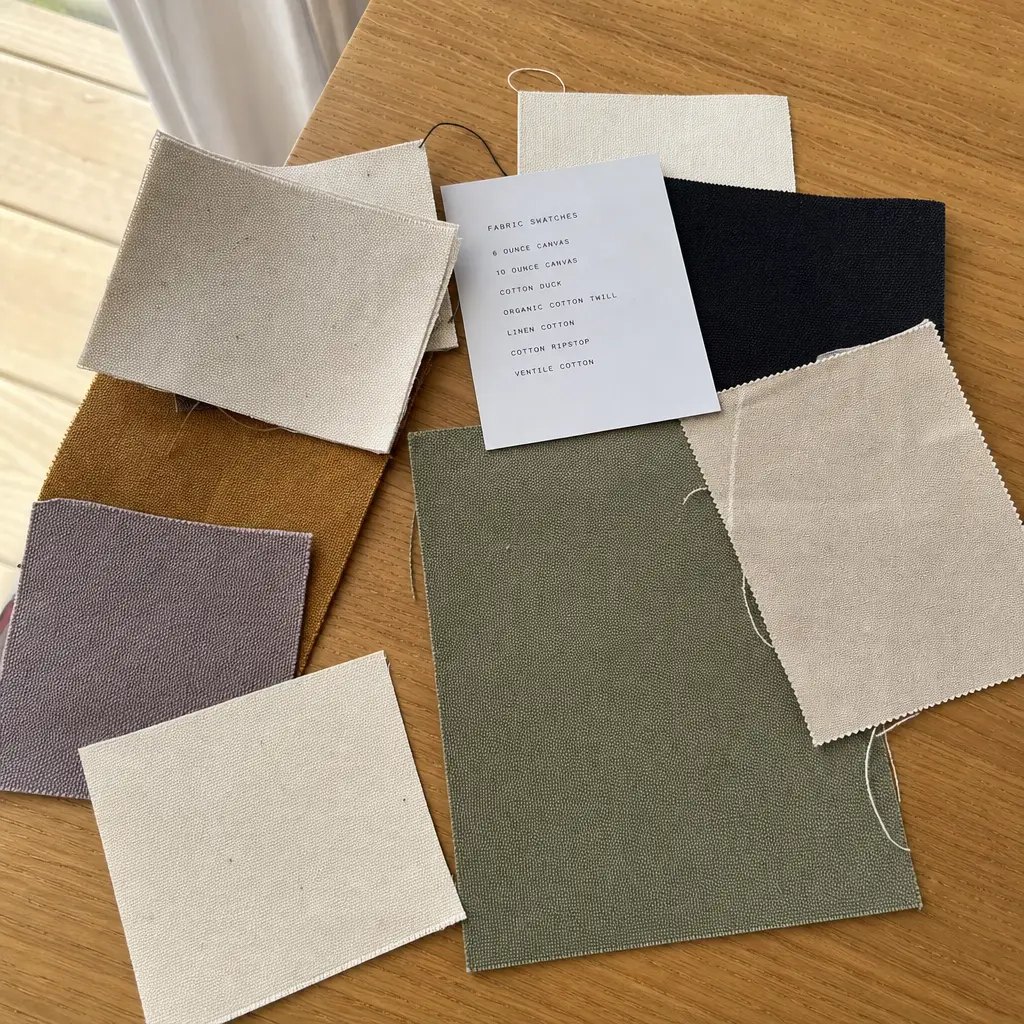
Why print proofing decides whether the tote feels premium or sloppy
For tech startups, the bag itself is usually simple. The logo is what creates risk. Most sourcing problems with wholesale canvas grocery totes for tech startups begin when buyers approve artwork on a screen and assume the printed result will behave the same way on cotton canvas. It will not. Canvas has texture, ink spread, and absorbency that can soften edges, shift alignment, or flatten detail once production begins.
That matters more when the brand mark is small or minimal. Startups often prefer restrained logos, line icons, or short wordmarks with a lot of blank space around them. Those designs look clean when they are centered perfectly, but they also make a small misprint obvious. A 5 mm shift that might be tolerable on packaging can look careless on a tote because the eye has nowhere else to land.
This is why proofing should be treated as a commercial control, not a design review. The question is not whether the mockup looks good. The question is whether the proof defines enough detail for the factory to reproduce the same result consistently across the whole order. If the approval package does not specify fabric, print method, placement, tolerance, and packing, then the factory is left to interpret the order on its own terms.
The most common failure mode is mismatch between what was quoted and what was actually approved. One supplier may price a light natural canvas with a basic screen print; another may use heavier fabric or a different print method. If those differences are not visible in the proofing record, procurement ends up comparing unit price without comparing the real production assumptions.
- Canvas weave can soften fine art that looked sharp in a PDF.
- Natural fabric shade changes how black, navy, and bright brand colors read.
- Minimal logos make placement errors more visible than busy graphics.
- Proofing must define the production standard, not just the design intent.
- A clean sample is useful only if the bulk run can replicate it.
Set the base tote spec before you argue about artwork
Start with the base bag because print quality is only as good as the surface underneath it. For grocery-use canvas totes, a 10 oz to 12 oz canvas is often the commercial sweet spot. It gives the tote enough body to stand up in use without pushing the unit weight, freight, and budget too far. If a supplier quotes GSM instead of ounces, ask how they convert it and whether the number refers to finished fabric, not a catalog estimate. Cross-supplier comparison is much easier when every quote uses the same measurement basis.
Lighter canvas can work for giveaways, but it changes the print story. Thin fabric can show more ink strike-through, distort around a loaded handle, or feel underspecified when the tote is handed over at an event. Heavier canvas gives a better handfeel and more structure, but it also adds freight weight and can reduce carton efficiency. There is no universal best answer; the right choice depends on whether the tote will carry produce, swag, retail products, or mixed-use office items.
Gusset construction is another decision that should be locked before proofing starts. A flat tote is cheaper and simpler, but a bottom gusset generally improves grocery use because boxed items sit more naturally and the bag stands better. Once you add a gusset, the print positioning, seam clearance, and folding behavior all change. Comparing a flat tote quote to a gusseted tote quote is not a fair apples-to-apples exercise unless the supplier restates the bag structure in the same way.
Handle design deserves equal attention. Self-fabric handles are common, but width, length, stitch pattern, and reinforcement determine whether the bag is comfortable and stable under load. For startup teams planning to reuse the same tote across conferences, onboarding kits, and small retail programs, a more deliberate handle build often protects the program better than simply asking for thicker canvas.
- A common grocery-use starting point is about 15 x 16 x 4 inches with 24 to 26 inch handles.
- Ask whether the supplier measures size flat, after sewing, or after pressing.
- Write seam clearance around the artwork so the logo does not hit the hem or side fold.
- If you expect heavier loading, prioritize reinforcement before chasing a heavier fabric alone.
- Natural canvas is usually easier to source than custom-dyed fabric, especially at lower volumes.
Choose the print method from artwork behavior, not supplier habit
Screen printing is still the default for most tote programs with simple logos. It gives predictable coverage on cotton canvas, scales well for repeat orders, and usually offers the best balance of cost and consistency when the artwork is one or two colors. For buyers managing procurement, the main advantage is control: once the screens and placement are approved, the factory has less room to improvise.
That said, screen print is not the right answer for every design. If the artwork includes gradients, small photographic detail, or a multicolor illustration, then a transfer or digital route may be more practical for the first run. The tradeoff is that each method has a different failure pattern. Heat transfer can look crisp but may feel like a film on the surface. Digital printing can save setup cost on small quantities, but it may appear less saturated on untreated natural canvas and often needs closer sample review.
The useful question is not which method sounds modern. It is which method preserves the logo at the actual size you plan to use. A small wordmark that looks fine on a monitor may need a much thicker line on cotton to remain legible after printing. Ask the supplier to state the minimum readable text size, the minimum line weight, and whether an underbase is needed on darker bags. If the factory cannot explain those tradeoffs, it is not controlling the process closely enough.
For many startup procurement teams, the best approach is to request alternate pricing for two methods only when the artwork truly supports both. Otherwise, too many quote options create confusion and slow the approval loop. Pick the method that fits the design behavior and ask the factory to prove it with a strike-off on the actual fabric.
- Screen print suits bold marks and repeatable orders.
- Transfer print can work for multicolor art, but inspect edge durability and cracking risk.
- Digital print is best reserved for small runs or complex graphics that justify the higher unit cost.
- Dark bags may need an underbase or double-pass print to keep the logo visible.
- Small text should be tested at actual size on actual canvas before approval.
Use a proofing workflow that matches how canvas actually gets made
A digital proof is only the layout stage. It confirms the art is placed where you expect, but it does not tell you how the ink will sit on the fabric or whether the final bag construction will shift the print during sewing. The safer workflow is artwork file review, digital layout proof, print strike-off on actual fabric, and then a physical pre-production sample showing the finished bag. If the supplier skips the strike-off, you are taking a shortcut exactly where canvas behavior matters most.
The physical sample should be made from the same bag spec, not from a generic sample the factory had on hand. If the sample uses different canvas, a different printer, or a different handle stitch, it can look acceptable while hiding the production risk. Buyers should ask what exactly differs between the sample and bulk line, and whether the remaining differences are cosmetic or structural. If the factory cannot answer that clearly, the sample is not yet a reliable approval tool.
Proofing also needs a clear sign-off chain. Brand teams care about visual identity, procurement cares about price and timing, and operations cares about packing and receiving. Those are separate decisions. If one person approves a design change after another person has already signed off the sample, you can lose time and create an avoidable dispute over what was authorized. Keep one written approval record and attach it to the PO so the factory has a single source of truth.
For startup programs, a practical lesson is to document the sample with more than photos. Save the approved sample ID, the date, the measured print dimensions, and the approved placement notes. That makes repeat orders easier and gives receiving a clean standard if the next batch arrives from a different production line.
- Approve the final vector file with exact print dimensions.
- State print position from the top hem and side seam.
- Request a strike-off if line detail, color, or negative space is critical.
- Use one physical reference sample for both color and placement checks.
- Keep the sample ID and approval date tied to the PO record.
What belongs on the print approval sheet
A print approval sheet should read like a production record, not a marketing slide. It needs the bag SKU, fabric weight, fiber content, color, print method, print size, print side, placement measurements, and the tolerance allowed for alignment. If the artwork must avoid seams, folds, or stitch lines, say so. If the brand cannot accept any visible residue from tape, transfer film, or screen prep, that also needs to be written down. Generic notes like “premium look” are too vague to help the line.
The approval sheet should also capture what cannot vary on reorder. This is especially important for startups that may place a second order months later with a different buyer or a new factory contact. Logo size, ink color, placement, and fabric shade should all be referenced against the approved standard. If the factory proposes a close substitution, the sheet should state whether that requires written approval before bulk production continues. Without that rule, a small substitution can become a batch-wide problem.
Good approval documentation protects both sides because it removes ambiguity. A new buyer can compare the tote against the signed sample without having to ask what “centered” meant in the designer’s head. If a dispute occurs, the record shows whether the problem was a defect, an unapproved deviation, or a change requested after approval. That is much better than relying on memory or screenshots in a chat thread.
- Record logo width and height in millimeters or inches.
- Record top-hem distance and left-right tolerance.
- State acceptable rotation or tilt limit.
- Reference a physical sample ID, not just a photo.
- Specify whether substitutions require written approval before production continues.
Turn the supplier quote into a real comparison, not a price race
MOQ and unit price are only meaningful when the quote structure is clear. On canvas tote orders, the first-order cost usually includes fabric booking, print setup, sample work, and packing choices. A supplier with a low headline price may be omitting one-time setup charges or assuming a simpler bag than the one you actually want. The result is a quote that looks cheaper but is not comparable.
The best way to compare vendors is to separate blank bag cost, print cost, sample cost, and packing cost. Ask each supplier to quote the same bag size, same fabric weight, same handle build, same print method, and same carton spec. If one quote includes two-sided print and another only one side, the unit price is not useful until you normalize the assumptions. This is where procurement teams save time by forcing the factory to restate the order in plain language.
Repeat-order pricing matters too. A tote program often starts as a launch item and then becomes a reorder item if the tote performs well. Ask what changes on the second order if screens are already made, artwork is unchanged, and the base fabric is in stock. That tells you whether the supplier can support a stable program or only a first-run project. The landed-cost view should include freight impact from carton count and gross weight, not just the factory gate number.
For lower volumes, digital or transfer methods may beat screen print on setup cost. For larger volumes, screen print usually becomes more attractive. The right answer depends on the order size and the risk of rework if the brand mark is not stable. Compare total cost against the failure cost, not just the invoice line.
- Ask for blank tote, print, sample, and packing as separate lines.
- Normalize all quotes to the same size, fabric, print method, and carton spec.
- Check whether the MOQ changes by color, artwork, or shipment split.
- Request reorder pricing if the bag is likely to become a repeat SKU.
- Include carton efficiency and freight weight in the total landed-cost review.
Sample approval should test use, not only appearance
A tote sample needs to survive a real-world check. A logo that looks neat on a flat table may crease awkwardly when the bag is folded, loaded, or slung over a shoulder. Handles can twist if they are sewn off-angle. Heavy ink can feel brittle on fold lines. Those are the failures that matter in a grocery-use tote, and they are easy to miss if the sample is only photographed rather than handled.
Use the sample with realistic contents. If the tote is meant to hold groceries, test it with boxed items or weight that reflects normal use. If it is part of a startup welcome kit, pack the sample with the actual items you expect to distribute. The goal is not lab certification; it is to find the most likely commercial failure before bulk production. Ask the supplier how the handles are reinforced, what stitch density they use, and whether the sample matches the bulk construction exactly.
The sample review should also include presentation. If the tote will go into a retail package or a fulfillment box, check whether it folds cleanly, opens easily, and stays presentable after unpacking. A bag can pass strength checks and still disappoint if it arrives wrinkled, dirty, or difficult to stack. For that reason, add a receiving perspective to the approval process and photograph the signed sample with a ruler, label, and date.
- Load the sample with realistic weight for the intended use case.
- Inspect print after folding and unfolding to spot cracking or edge lift.
- Check whether the logo still looks centered when the bag is filled.
- Review inside seam finish if the tote will be sold at retail.
- Record the approved sample with a dated photo and ruler.
Packing choices can protect the print or ruin it before receipt
Packing is where many acceptable bags become disappointing. Canvas grocery totes are often compressed to save carton space, but aggressive bundling can crease fresh prints or rub transfer surfaces against each other. If the logo sits on the center body of the bag, a tight fold line may run directly through the print. The bag may still be technically usable, but it will not feel polished when opened at receiving or in front of customers.
A better approach is to define the bundle quantity, carton weight cap, and whether the tote is folded once or packed flat. Polybags are not automatically better. Some teams prefer polybag-free inner bundles for sustainability and faster unpacking, but if the shipment faces humidity, long transit, or multiple warehouse touches, moisture protection may still be worth it. Ask the supplier how the bags will be packed, how many fit per carton, and whether the carton remains within your handling limit when full.
Carton labels should match the SKU record and the packing list. If the order has multiple sizes or logo variants, make sure the outer marks are specific enough that receiving does not need to open cases to identify contents. That sounds basic, but labeling mistakes often cost more time than print defects because they slow the inbound process before anyone even checks the product.
- Common export packing is 25 to 50 pcs per carton depending on size and fabric weight.
- Keep carton weight within a warehouse-friendly limit.
- Use interleaving if the print surface is vulnerable to rub damage.
- Require carton marks with SKU, quantity, gross weight, and carton dimensions.
- Ask about moisture protection if transit conditions are humid or slow.
Lead time risk usually comes from artwork, fabric, and approval delays
Suppliers often give one overall lead time, but tote production slows down for three different reasons: artwork changes, fabric booking, and waiting for sample approval. If the startup brand team revises the logo after screens are prepared, the clock does not simply keep moving. It often resets the print setup step. That is why the quote should separate sample time from bulk time and explain when each step begins.
Fabric availability is another hidden factor. Stock natural canvas usually moves faster than custom-dyed fabric or special weights that must be reserved from a mill. If the tote is for an event date or launch window, standard fabric and tighter proofing usually beat a custom material program that stretches the schedule. Ask whether the fabric is already in stock, whether it has to be reserved, and whether the supplier can hold the booking long enough for your approval cycle.
Good timing management means asking for a written latest-ship date, not only an estimated production window. The factory should state whether production starts after PO receipt, deposit, sample approval, or final packing confirmation. Those milestones are not interchangeable. If timing matters, request a critical-path schedule so you can see where delays will affect the ex-factory date.
- Separate sample lead time from bulk production lead time.
- Check whether fabric is stock, reserved, or custom sourced.
- Ask when screens or print plates are actually prepared.
- Request a written latest-ship date.
- Keep approval cycles short if the launch date is fixed.
Choose the supplier on repeatability and acceptance control
The cheapest tote is not always the cheapest program. A slightly higher ex-factory price can buy better fabric consistency, cleaner print setup, stronger handle reinforcement, and a packing spec that reduces receiving issues. Those factors matter because a tote program fails in practice when the second batch looks different from the first or when the cartons arrive in a condition that makes warehouse handling harder than expected.
Use landed-cost logic instead of unit-price logic alone. A heavier tote may be worth it for retail resale or premium event kits. A simpler tote may be fine for conference giveaways. What matters is the cost of failure in the use case. If the bag will be seen by customers or partners, print alignment and surface finish deserve a tighter standard than a throwaway promo item.
Before award, ask the supplier to restate the order in their own words. That quick check catches mismatches in fabric weight, print method, handle build, packing, and acceptance criteria. If they cannot restate the order clearly, they probably do not understand it well enough to reproduce it on reorder. For procurement, that is a warning sign worth acting on before the PO is issued.
- Compare suppliers on the same spec, not on a loosely similar tote.
- Keep approved artwork files and sample references tied to the SKU.
- Use a defect threshold in the PO so rejection decisions are not subjective.
- Consider freight and carton efficiency when you compare quotes.
- Choose the factory that can explain how it will reproduce the same result on reorder.
Specification comparison for buyers
| Spec decision | Recommended option | When it fits | Buyer risk to check |
|---|---|---|---|
| Fabric weight | 10 oz to 12 oz canvas for most grocery-use programs; ask the supplier to state whether that is nominal fabric weight or finished fabric weight, and whether the quote is based on oz or GSM | Good balance for onboarding kits, retail giveaways, grocery carry, and event merchandise that needs structure without becoming overly heavy | Do not compare oz and GSM blindly; ask for the supplier’s measurement basis, tolerance, and whether the same fabric is used on the sample and the bulk run |
| Fabric type | Plain-woven cotton canvas with stated fiber content, weave, and shrinkage allowance; request a blank swatch if color consistency matters | Works well for simple logos, repeat orders, and buyers who care about a natural handfeel more than water resistance | Natural canvas shade varies by lot and mill, so define an allowed shade range or approve a reference swatch before bulk |
| Bag size | About 15 x 16 x 4 inches with a bottom gusset for grocery and mixed-use carry | Fits produce, boxed items, conference kits, and laptop accessories without turning into an oversized shopper | Flat tote pricing can hide major differences in carton count, print centering, and load shape; confirm whether the size is measured flat or sewn finished |
| Handle construction | 1 inch self-fabric handles, 24 to 26 inch total length, 10 to 12 inch drop, with box-stitch or X-box reinforcement at stress points | Comfortable for shoulder carry and better suited to heavier grocery loads or mixed retail use | Single-line stitching may pass a visual check but fail under repeated carry; ask for stitch pattern, stitch count, and reinforcement detail |
| Print method | Screen print for simple logos, heat transfer for multicolor artwork at lower quantities, digital only where the fabric and design justify it | Choose based on artwork complexity, volume, and the need for repeatable color and placement | Each method has different failure modes: screen can misregister, transfer can crack or lift, digital can look weak on untreated canvas |
| Artwork placement tolerance | Center print with a written placement tolerance, such as ±5 mm left-right and a rotation limit stated on the approval sheet | Important for minimalist startup logos where a small shift is obvious | Without a written tolerance, the factory may treat visible misalignment as acceptable if it does not affect function |
| MOQ route | Screen print often becomes more practical from about 500 to 1000 pcs per artwork, while smaller test runs may suit digital or transfer methods | Useful for campaign testing, phased launches, and first orders before a reorder forecast exists | Low MOQ can mean higher unit cost, weaker color control, and less efficient carton packing; ask whether MOQ changes by size, color, or logo |
| Packing method | 25 to 50 pcs per inner bundle or carton, with carton weight capped to suit warehouse handling and freight limits | Good for importers, distributors, and fulfillment centers that need easy receiving and lower damage risk | Overpacked cartons can crease fresh prints and create receiving friction; confirm whether pieces are folded once, flat packed, or interleaved |
| Proof approval path | Digital proof plus a physical pre-production sample for color, placement, and construction, especially for first orders | Best for remote factory management and brand-sensitive artwork | A screen-only proof is not enough on cotton canvas because absorbency and weave change the final look |
Buyer checklist before sampling
- State the end use first: grocery carry, startup welcome kit, event giveaway, retail resale, or ecommerce insert. That choice drives fabric weight, handle build, print durability, and packing method.
- Write the fabric specification in the quote request using the supplier’s measurement basis. If one supplier uses oz and another uses GSM, ask each to explain how they measure the finished canvas.
- Specify finished size, gusset depth, handle length, and handle drop with a tolerance. Also state whether the bag is measured flat, after sewing, or after pressing.
- Attach vector artwork and define print size, number of colors, print side, no-print seam clearance, and minimum line thickness. Fine text that looks sharp in a PDF may close up on canvas.
- Ask for both a digital proof and a physical strike-off if the logo uses small type, thin lines, or brand-critical colors. A mockup alone does not show ink behavior on the actual weave.
- Write the placement rules on the proof sheet: distance from top hem, centerline reference, and allowed tilt. Do not leave “centered” open to interpretation.
- Set acceptance criteria before production starts for print registration, color match, seam quality, handle reinforcement, loose threads, and carton labeling.
- Separate MOQ by size, color, and artwork if needed. Some factories quote one MOQ but enforce stricter sub-MOQs once the order is split across multiple colors or variants.
- Define packing in detail: pieces per carton, inner bundle count, flat or folded pack, barcode label format, carton marks, gross weight cap, and any moisture protection.
- Request a timeline that separates sample lead time, screen or plate preparation, bulk production, and ex-factory date. One blended lead-time number hides the real schedule risk.
Factory quote questions to send
- What exact fabric are you quoting: fiber content, weave, nominal oz or GSM, and whether the weight is measured on finished fabric or greige fabric?
- Is your quote for a flat tote or a gusseted tote, and what finished size tolerance is included?
- What print method are you pricing for this artwork, and why is that method the best fit for the fabric and logo size?
- What is included in the print setup cost: screen charges, film, color matching, underbase, test strike-off, and any rework if the first proof misses the approved standard?
- What MOQ applies by artwork, size, color, and shipment split if we need phased delivery?
- What sample stages do you offer: blank sample, print strike-off, pre-production sample, and production-line sample?
- How are the handles reinforced, and what stitch pattern or reinforcement detail do you use at the stress points?
- What load or carry test have you used for a similar grocery tote, and what failure modes do you watch for during production?
- What packing method is assumed in your price, and how many pieces fit per export carton at the quoted dimensions?
- What in-line and final inspection points do you record for print placement, seam strength, measurement, carton count, and carton marking?
Quality-control points to confirm
- Check fabric weight against the approved range, but also check whether the bulk fabric feels materially different from the approved sample. A tote can meet nominal weight and still feel too limp or too stiff.
- Measure finished size and gusset using one written method and record the tolerance in the PO. If the supplier measures before pressing and you measure after packing, disputes become likely.
- Inspect handle attachment for stitch consistency, clean backtack, no skipped stitches, no broken thread, and no twist that changes shoulder carry balance.
- Compare print color against the approved physical sample or Pantone reference under consistent lighting. Phone photos are not a reliable color standard.
- Verify print placement from the top hem and side seams, and reject any batch where the logo drifts outside the written tolerance or rotates visibly.
- Check for pinholes, weak ink coverage, ghosting, edge bleed, transfer marks, and cracking after simple rub and fold tests when those tests are relevant to the print method.
- Review fine text and thin icons at actual size on fabric. Canvas texture can close in details that look acceptable on a monitor or paper proof.
- Inspect canvas surface for oil marks, slubs that interrupt the print, mildew odor, visible shade variation, and loose fibers that make the bag look unfinished.
- Confirm carton count, SKU label, carton marks, gross weight, and carton dimensions against the packing spec. One mislabeled carton can waste time at receiving.
- If the tote is for retail resale, check fold consistency, hang presentation, and surface cleanliness in addition to functional strength and print quality.