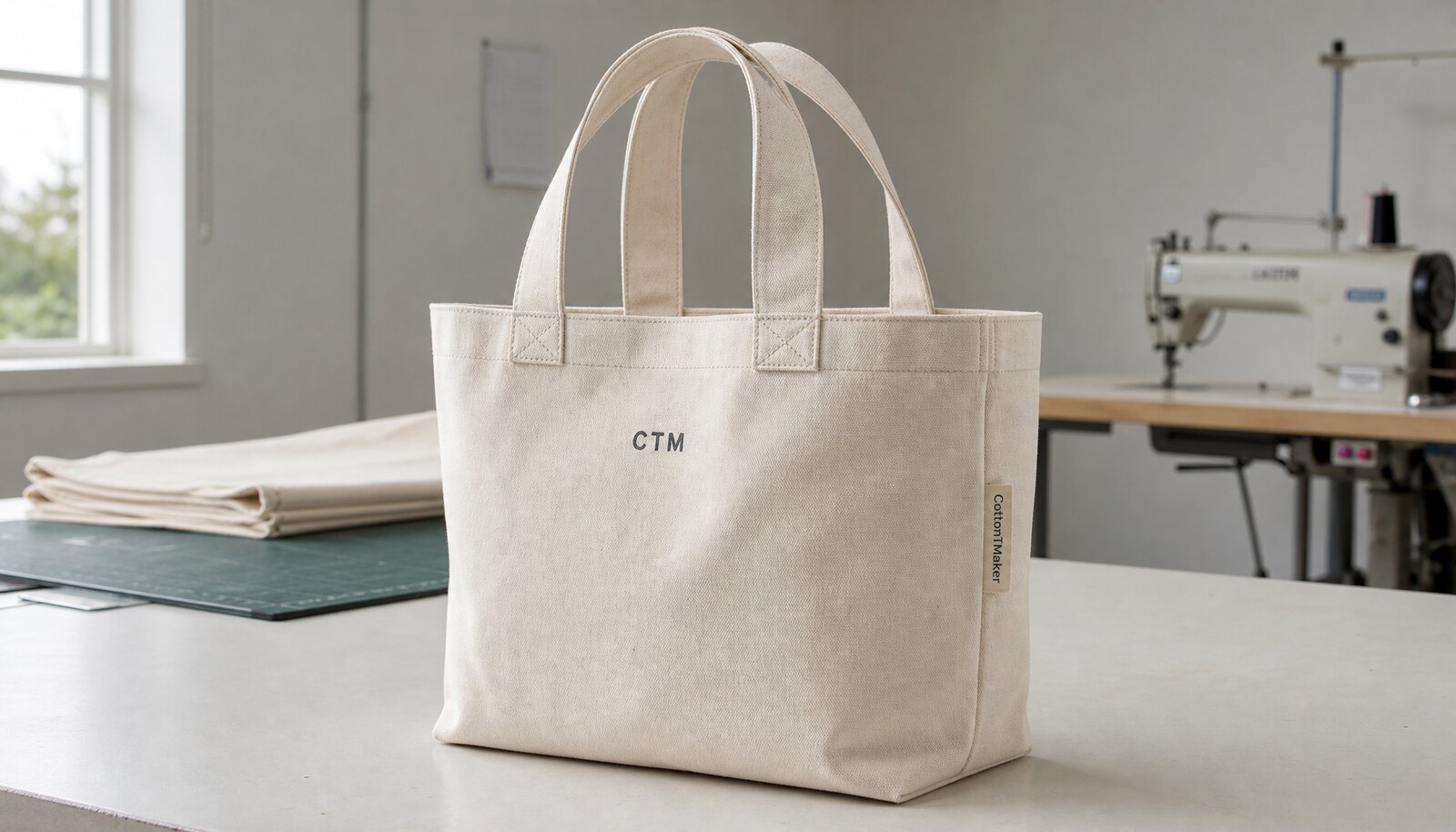
Start With The Use Case, Not The Logo
Personalized reusable bags in bulk fail when the buyer starts with artwork and only later decides how the bag will be used. A tote for grocery carry, a retail launch, an event kit, and a member gift do not need the same canvas weight, handle build, or packing format. The fastest way to make supplier quotes useful is to define the channel first, then choose the bag structure that matches the load, the hand feel, and the presentation standard.
For a procurement buyer, the RFQ has to do more than name the logo. It should state the bag type, finished dimensions, fabric target, print method, packing method, ship window, and whether the order needs to be repeatable on re-order. If the bag is meant to be reused many times, a promotional spec that looks fine in a sample can become expensive after the first complaint or the first retailer return.
- Write the intended use in one line: grocery, retail, event, gift-with-purchase, or ecommerce insert.
- State the load expectation if you have it, even as a simple target like light, medium, or heavy carry.
- Decide whether the bag must look premium on a shelf or only survive distribution in a carton.
- Treat the artwork as part of the spec, not as the starting point of the spec.
Choose Canvas By Weave, Weight, And Shrink Behavior
Canvas is not one generic material choice. In tote buying, you are usually choosing between a looser plain-weave canvas, a denser duck canvas, or a finished canvas that has been bleached, dyed, or prewashed. The tighter and more even the weave, the cleaner the print edge and the lower the fray risk on the cut edge. A looser weave can save money, but it also telegraphs a more casual look and can absorb ink unevenly.
Shrinkage matters because cotton canvas moves after washing, steam, or a finishing cycle. Ask whether the fabric is pre-shrunk, enzyme washed, or simply heat-set, and ask what shrinkage was tested in the factory, not just in a mill brochure. If the bag must keep a retail silhouette, set a shrinkage target in both length and width and confirm how the factory measured it.
- Use lighter canvas when the bag is mainly carrying brochures, samples, or event items.
- Use denser canvas when the bag needs to hold shape, take repeated use, or support retail pricing.
- Ask the supplier whether the quote is based on plain weave, duck canvas, or a finished fabric with washing or dyeing.
- Request the shrinkage test result in writing so the bulk run is not judged on guesswork.
Use Construction Details To Separate Real Durability From A Low Quote
The biggest durability differences are often in the seams, handles, and corners. A bag with the same fabric weight can feel stronger or weaker depending on whether it uses a turned seam, a bound seam, a box-and-cross handle attachment, bar tacks, or a simple single-stitch join. For grocery or daily-use bags, the handle anchor and bottom corners should be treated as stress points, not decorative details.
Ask the supplier to identify the seam allowance, stitch density, and reinforcement style on the tech pack. If a quote does not specify whether the handles are self-fabric, webbing, or folded canvas, the quote is incomplete because the cost and strength are different. A gusset also changes the bag: it increases usable volume, changes how the tote stands, and affects both freight density and print placement.
- Ask for the exact seam style: turned seam, bound seam, overlocked edge, or another construction.
- Confirm the reinforcement at the handle base, such as box stitch, bar tack, or cross stitch.
- Set the handle width and handle length in the RFQ because they change both comfort and unit cost.
- If you need a gusset, specify it explicitly; a quoted flat tote is not the same product.
Match Decoration To Artwork, Volume, And Hand Feel
The right decoration method depends on the logo, the number of colors, the surface area, and the order size. Screen printing is usually the cleanest cost option for one to three solid colors and larger runs. It gives a stable commercial look when the art has clear edges and the buyer can approve a fixed placement. Heat transfer and DTF can handle gradients, fine detail, or short runs, but they add a different surface feel and can clash with a buyer who expects the logo to look printed into the fabric rather than layered on top.
Embroidery, woven labels, and side labels often work better when the brand wants a quieter, more premium tone. Embroidery can distort lightweight canvas if the design is too dense, so it performs better on heavier fabric or on a reinforced panel. Woven labels are useful when the main body needs to stay clean and the brand mark should be subtle. If the quote mixes several decoration methods, split the cost by method so you can see what is really driving the price.
- Use screen printing for simple artwork and repeatable bulk orders.
- Use heat transfer or DTF for complex art, gradients, or lower-volume launches.
- Use embroidery or woven labels when the brand wants a premium finish and the bag body can handle the process.
- Keep the print position fixed in the RFQ because moving the art even a small amount can change setup and rejection risk.
Compare Supplier Routes Before You Compare Unit Price
A low unit price is not useful if the sourcing route hides responsibility. When you compare quotes for personalized reusable bags bulk programs, you need to know whether the same supplier cuts the fabric, sews the bag, prints the logo, and packs the cartons. A direct factory with in-house printing is usually easier to control on repeat orders. A trading company can help when you want several factory options, but the buyer still has to confirm the real production site and the exact spec behind each quote.
The cleanest comparison is to ask every supplier to quote the same finished spec and the same route. If one factory includes screen setup, another excludes it, and a third is quoting with outsourced print, the numbers are not comparable. Ask for the same packing format, same artwork version, same carton count, same fabric weight, and the same delivery term. If those items are not aligned, the cheapest line item can become the most expensive landed bag.
- Request the factory name, production location, and whether the print process is in-house or outsourced.
- Ask for one quote with all costs separated: bag, print, packing, cartons, and any setup charges.
- Compare the same packing density across suppliers so carton cost does not distort the unit price.
- Treat a trading company quote as a service layer until the underlying factory is fully identified.
Make MOQ And Lead Time Work In Your Favor
MOQ on reusable bags is usually driven by more than sewing capacity. Fabric procurement, screen setup, print plates, label preparation, and packing labor all affect the minimum order. A supplier may be willing to sew a small run, but if the artwork has multiple colors or several size options, the real MOQ can rise quickly. That is why buyers should ask for MOQ by fabric color, bag size, print color, and packing format instead of accepting one simple total.
As a planning benchmark, many factories are more flexible at 300 to 500 pieces on stock canvas and one-color decoration, while custom size, custom dye, or special finishing often pushes the order into 1,000 plus pieces and a longer pre-production cycle. The useful question is not just how many pieces the plant will accept. It is what quantity lets the plant make the bag with controlled waste and stable quality. A lower MOQ is only valuable if the factory does not quietly change the fabric, reduce inspection, or weaken the packing standard to protect margin.
- Ask for MOQ by color, size, and artwork version, not only by total pieces.
- Separate setup charges from unit price so you can see the true economics of a short run.
- If you need multiple colorways, confirm whether the factory treats them as one order or several small orders.
- If a supplier offers a low MOQ, verify what spec change they used to get there.
Approve Samples With Measurable Acceptance Criteria
A sample is only useful if the buyer knows what to measure. For tote bags, the key checks are finished size, seam quality, handle reinforcement, print placement, and color match. The sample should be signed off against a physical swatch or a clear reference, not just a JPG on a screen. If the production bag is meant to sit flat on a retail shelf or fold neatly into a carton, the sample must also show the final fold and pack direction. Otherwise the bulk run can be technically correct but commercially awkward.
Set tolerance rules before production starts. A common buyer approach is to allow a narrow size tolerance, verify that print registration is visually centered, and require that the approved sample matches the mass run. For heavier-use bags, ask for a simple pull check on the handle attachment and inspect the bottom corners for strain. If the sample passes on appearance but fails on handling or folding, it is not a good approval.
- Measure body width, height, and handle length on the sample, not just the spec sheet.
- Check print placement from the seam or top edge so a small shift does not pass unnoticed.
- Hold the sample against the approved Pantone or physical fabric swatch if color matters to the brand.
- Keep one signed sample as the bulk reference and one as the supplier reference.
Set QC Rules The Factory Can Actually Inspect Against
QC for canvas totes needs to be measurable, not vague. The factory should know exactly what counts as a pass or fail before the order starts. That means you should spell out the seam allowance, stitch density, reinforcement type, print placement tolerance, shrinkage limit, carton count rule, and defect categories. If the bag is being shipped into a distributor or retail warehouse, the carton and label requirements matter as much as the bag itself because a wrong carton count or missing barcode creates labor at destination.
The best QC plans combine visual checks and simple measurements. A production bag can look fine from three feet away while still failing on stitch consistency, print registration, or carton accuracy. For personalized reusable bags in bulk, ask the supplier to inspect against your written standard or to follow an agreed AQL process. If the project is high visibility, the lot should also be checked for one-off issues like color drift between fabric rolls, uneven handle length, and loose threads at the reinforcement point.
- Set a size tolerance in the RFQ, commonly around plus or minus 1 cm on body dimensions unless your use case needs tighter control.
- Require stitch density on the critical seams, such as 7 to 9 stitches per inch if that is the approved standard.
- Define print tolerance in millimeters so a centered logo does not drift by eye from batch to batch.
- Write a shrinkage limit into the approval, commonly no more than 3% unless the design or finishing process allows more.
- Require carton and inner pack verification so count errors are caught before shipment leaves the factory.
Specify Packing, Cartons, And Warehouse Handoff
Packing is where many reusable bag programs lose margin without the buyer noticing. A bag can be cheap at factory gate and still be expensive to move if the cartons are oversized, the folds are inconsistent, or the inner packs do not match the receiving warehouse's rules. If the bags go to a distributor or ecommerce fulfillment center, confirm whether they need bulk packing, individual polybags, barcode stickers, or shelf-ready presentation. The right choice depends on how the bag will be received, stored, and sold, not on what is easiest for the factory to pack.
Ask for carton dimensions and carton weight before you approve the quote. That matters for freight density, warehouse handling, and the total landed cost. If the quote does not mention carton count or inner pack size, it is incomplete. A neat tote that arrives with poor fold memory, wrinkled print, or inaccurate counts can create labor cost at destination. That is not a cosmetic issue alone. It is a margin issue.
- Decide between bulk pack and individual polybag before the quote is finalized.
- Confirm whether barcode labels, hangtags, or care labels are included or treated as extras.
- Ask for carton dimensions and gross weight, not just carton count.
- If the destination warehouse has receiving rules, build them into the factory packing instruction.
Use A Clean RFQ To Force Apples-To-Apples Quotes
The best way to get a comparable quote is to send a tight spec line and ask every supplier to mirror it exactly. A useful RFQ for personalized reusable bags bulk programs should name the material, weight, weave, finished size, handle build, decoration method, packing format, and delivery term in one place. If you want to compare options, ask for two or three versions of the same bag, not a vague open-ended quote. For example, request one version with no gusset, one with a 6 cm gusset, and one with a different handle length so you can see the cost impact of each change.
A practical quote should break out blank bag cost, decoration setup, decoration unit cost, packing, carton work, sample charges, and any special finishing line. If a supplier will not separate those items, you cannot tell whether the price is coming from the bag, the print, the packing, or a hidden margin layer. The goal is not to produce the lowest number on paper. It is to produce a quote that can be repeated with the same bag, the same risk profile, and the same warehouse outcome.
- Write one line that defines the bag exactly, then ask the supplier to quote that line back to you.
- Request alternate pricing for a flat tote and a gusseted tote so you can compare usability versus freight.
- Ask the supplier to separate one-time setup from recurring unit cost.
- If the quote combines multiple decoration methods, ask for each method as a separate line item.
Specification comparison for buyers
| Spec decision | Recommended option | Typical MOQ / lead time | Buyer risk to check |
|---|---|---|---|
| Direct factory with in-house printing | Best control when one plant cuts, sews, prints, and packs the bag | Often workable from 500-2,000 pcs; sample and bulk timing is usually the fastest when specs are stable | Confirm the same site owns the full process, not just the sewing step |
| Factory with outsourced printing | Acceptable when the sewing plant is strong and the artwork is simple | Often similar MOQ, but add time for print coordination and extra approval steps | Print color, placement, and drying quality can drift if the partner shop is not tightly managed |
| Trading company quoting from multiple factories | Useful for early market scanning across several price bands | MOQ can vary widely by factory; lead time is often less predictable because the actual plant is hidden | You may lose visibility on who makes the bag and where the margin sits |
| Domestic decorator using imported blank totes | Good for urgent launches, short runs, or local fulfillment | Lower setup friction; lead time is usually shorter because the blanks are already on hand | Blank quality, shrinkage, and seam build may not match your final retail standard |
| Stock canvas tote with custom label or side tag | Best for fast brand trials and lower-risk promo programs | Often the lowest setup burden; MOQ can be relatively flexible if the label is standard | The bag can feel generic unless label placement, fold, and presentation are specified |
| Fully custom bag with custom size, trim, and print | Right for retail programs where the bag itself is part of the product story | Commonly needs a higher MOQ and a longer sample cycle because more variables must be approved | More opportunities for spec drift across size, reinforcement, print, and packing |
| Pilot run before full production | Smart when artwork, size, or use case is still being validated | Often 300-1,000 pcs if the factory uses stock canvas and simple decoration | A small run can hide scale issues unless the pilot matches the full order spec exactly |
| Split sourcing: bag body from one supplier, branding from another | Only for buyers with strong QC and clear handoff control | Can be efficient when decoration needs local control or multiple methods | Color match, transit damage, and responsibility gaps can become hard to settle |
Buyer checklist before sampling
- Final finished size with tolerances for body width, body height, gusset depth, and handle length
- Canvas type, fabric weight in oz and GSM, and whether the quote is based on plain weave, duck canvas, bleached, natural, dyed, or recycled cotton
- Whether the fabric is pre-shrunk, enzyme washed, heat-set, or untreated, and what shrinkage limit the supplier is quoting
- Handle width, handle length, handle material, and reinforcement style at the stress point
- Seam style, seam allowance, bottom construction, and whether the bag uses turned seams, bound seams, or overlocked edges
- Print method, print position, artwork size, number of colors, Pantone references, and any special finish such as spot gloss or washed effect
- Packing spec, including fold direction, polybag requirement, insert card, barcode label, carton count, and carton mark format
- Target MOQ by size, color, and artwork version, plus whether the MOQ changes if a second print location is added
- Required sample stages, including fabric swatch, strike-off, pre-production sample, and first article approval
- Target ship date, destination port or warehouse, and the required incoterm, such as EXW, FOB, or DDP
Factory quote questions to send
- What exact fabric weight are you quoting, and is that GSM measured before or after finishing?
- Can you confirm the canvas weave type, yarn count, and whether the fabric is pre-shrunk or only heat-set?
- What is the quote based on: blank bag only, bag plus print, or bag plus print plus packing and carton work?
- What is the MOQ by size, color, print version, and packaging format, and what changes if I add a second artwork color?
- Which print method do you recommend for this artwork, and what is the setup charge per color or per placement?
- What seam style, seam allowance, and reinforcement method are included in the quoted price?
- Can you quote the same bag with and without gusset, and with a shorter or longer handle, so I can compare cost tradeoffs?
- What size tolerance, stitch tolerance, and print placement tolerance do you normally hold on production?
- What shrinkage target do you guarantee or test against after the bag is washed or steamed?
- Can you share carton size, carton weight, units per carton, and whether the bags are polybagged or bulk packed?
Quality-control points to confirm
- Fabric weight matches the approved target within the agreed production tolerance, and the supplier states whether the weight was measured before or after finishing
- Finished body width, body height, gusset depth, and handle length stay within the written tolerance, commonly around plus or minus 1 cm for body dimensions and plus or minus 1.5 cm for handle length unless the buyer sets a tighter rule
- Seam allowance is consistent with the approved construction, with no exposed raw edge at stress points unless the design explicitly allows it
- Main seams and handle anchors meet the specified stitch density, such as 7 to 9 stitches per inch on the critical seams if that is the approved standard
- Handle reinforcement uses the approved method, such as box stitch or bar tack, and both sides are symmetrical with no skipped stitches or loose thread tails
- Print placement stays within the agreed registration tolerance, often 2 to 3 mm for centered logos, with no visible bleeding, smearing, ghosting, or double hits
- Color matches the approved physical swatch or Pantone target within the buyer's acceptable visual tolerance under the same lighting used for approval
- Shrinkage after the agreed wash or steam test stays within the approved limit, commonly no more than 3% on body dimensions unless the design or fabric finish allows more
- Carton count, inner pack count, fold direction, and barcode placement match the approved packing spec exactly
- Carton marks, SKU, quantity, gross weight, and destination labels are legible, correct, and placed where the warehouse requires them