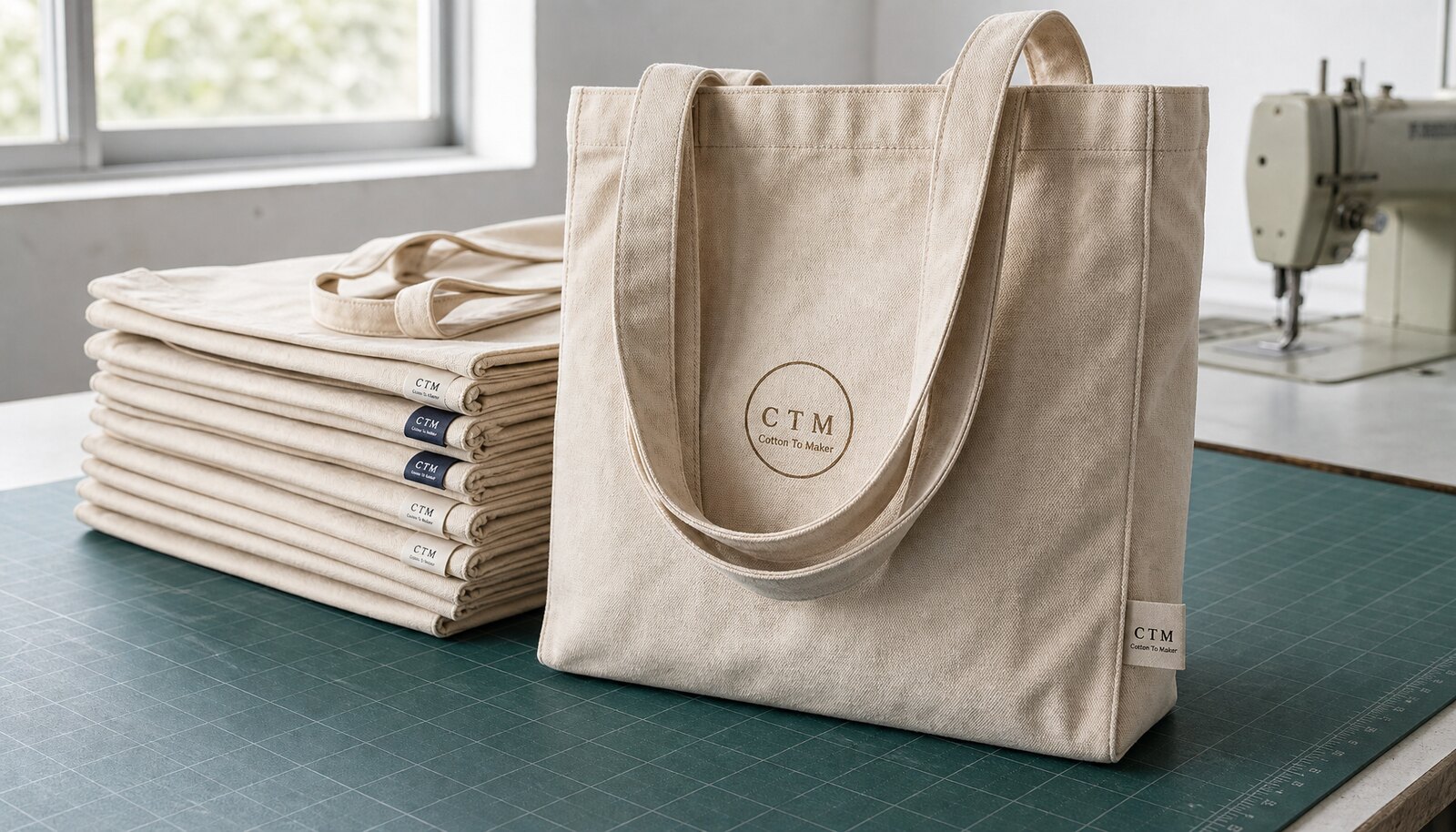
Why personalized canvas totes fail at the quote stage
Most tote programs do not go wrong because the bag is complicated. They go wrong because buyers treat it like a simple commodity and leave too much open in the RFQ. When the supplier has to guess fabric weight, handle length, print method, and packing method, the quote may look attractive but the bulk result can drift fast.
For personalized canvas totes, the real buying problem is not finding a bag; it is specifying a repeatable retail or promotional product that prints cleanly, survives normal use, and lands at the right cost. If your team wants quote comparisons that are actually comparable, the order should be written around the finished use case, not just size and logo.
- A tote for book retail needs a different fabric density than a one-time event give-away.
- A bag that ships flat for ecommerce needs different packing than one that goes straight to shelf display.
- A logo that works on a screen may fail on canvas if the stroke weight is too fine.
Start with the bag structure, not the decoration
The best RFQs start by defining the bag body. For most personalized canvas totes, 10 oz to 12 oz canvas is the working range buyers should consider. Around 340 GSM gives a balanced retail feel without pushing cost too high, while 410 GSM or heavier helps when the tote must stand up better, carry more weight, or feel premium in a gift set.
Canvas construction matters as much as weight. A tight plain weave gives better print clarity and less distortion after sewing. If the weave is loose, the bag may feel soft, but the print edges can look less crisp and the body can twist when loaded.
- Common buyer target: 10 oz / 340 GSM for standard branded retail totes.
- Upgrade to 12 oz / 410 GSM for thicker hand-feel, better structure, and heavier carry.
- Specify whether the fabric should be pre-shrunk or enzyme-washed if dimensional stability matters.
- If you need a light tote for mailers or event kits, say so clearly; do not let the factory default to heavy canvas.
Print method choices change both cost and acceptance quality
A personalized canvas tote is usually a print-first product, and the print method must match the artwork. Screen printing is usually the best route for one to three spot colors because it gives strong opacity, stable repeatability, and lower unit cost at volume. It also handles bold logos well on natural canvas.
If the art has gradients, photo elements, or a short run with many SKUs, heat transfer or digital transfer can be practical. The tradeoff is durability and feel. Buyers should decide whether the goal is soft-hand retail appearance, low-cost promo volume, or sharp short-run branding. The wrong method often creates the most expensive problem: a bulk batch that technically matches the artwork file but does not match the brand standard.
- Screen print: best for flat colors, large runs, and strong opacity.
- Heat transfer: useful for short runs, more artwork complexity, or variable personalization.
- Digital print: helpful when you need color variation, but confirm wash and rub resistance.
- Embroidery is usually better for small logo marks on thicker canvas, not full-body artwork.
How to read MOQ logic without getting trapped by a low unit price
MOQ on personalized canvas totes is rarely only about bag quantity. It is usually a combination of fabric lot minimum, print setup, and packing labor. A supplier may quote a low unit price at 5,000 pieces because the screen setup and cutting loss are spread efficiently, while a 500-piece order can carry a much higher price because the same setup cost is divided across fewer units.
The buyer mistake is comparing only piece price without reading the MOQ structure. A more useful quote shows MOQ by size, by color, and by print design. If mixed colors or mixed logos are allowed, the factory should state whether the price changes. For brands running seasonal or retail replenishment programs, that detail matters more than a headline number.
- Request MOQ per artwork, not just per bag style.
- Ask whether natural canvas and dyed canvas share the same MOQ.
- Clarify if one-sided and two-sided prints have different minimums.
- For low-volume launches, compare direct factory versus stock bag customization.
Comparison of sourcing routes for personalized canvas totes
Different sourcing routes solve different problems. A direct factory is usually the best choice when your team has a stable spec, repeat reorder potential, and wants the strongest control over fabric, stitching, and print consistency. A trading company or consolidated supplier can be useful if you need multiple bag categories in one shipment or want to simplify communication across several factories.
Local stockholders and print-on-demand vendors can win on speed, but the buyer should treat them as a different product category. The base bag may already be made, which reduces lead time, yet color consistency, exact size, and stitching control can be looser than a custom production run. That is acceptable for urgent promotions, but not for a polished retail line.
- Use direct factory sourcing for repeat brand programs and tighter cost control.
- Use a local stockholder only when lead time matters more than exact spec control.
- Use a trading company if you need consolidated sourcing across multiple items or factories.
- Treat print-on-demand as a convenience route, not a factory-quality benchmark.
What a good quote should include, line by line
A useful quote for personalized canvas totes should break out the parts that change cost. The bag body, handle material, print method, packaging, and carton spec should be visible. If the supplier bundles everything into one attractive lump sum, you cannot tell what is driving the price or where the hidden risk sits.
A buyer-friendly quote also states what is excluded. Freight, duty, testing, custom labels, inserts, barcode stickers, and overrun policy should be visible before approval. For procurement teams comparing suppliers, this is where false savings usually appear. One factory may look cheaper until you add individual polybags, insert cards, or a stricter carton size that affects freight.
- Ask for separate pricing for bag body, print, and packing if possible.
- Confirm whether the quote includes carton marks, inner packs, and master cartons.
- Request the allowed overrun or underrun percentage in writing.
- Make sure the quote names the currency and validity period.
Sample approval should test more than the logo
A pre-production sample is not only for confirming how the artwork looks. It should verify the actual canvas weight, handle length, panel shape, seam finish, and packing method. If the sample is made from the right fabric but the wrong handle reinforcement, the bulk order can still fail in use. On a tote, the weak point is often the handle joint, not the printed area.
The sample should be checked after light folding, because canvas behaves differently once it has been packed and unpacked. Buyers should also compare the sample against the original artwork on a real-sized template, not a reduced screen image. A logo that looks centered on a PDF can shift visually once the bag is sewn and filled.
- Verify body size, handle drop, and pocket placement if a pocket is included.
- Inspect print density on both light and dark parts of the natural canvas.
- Confirm seam finish under the handle and at the side gusset if present.
- Approve packing appearance, not just the unpacked bag.
QC thresholds that protect the order after bulk starts
For personalized canvas totes, quality control should focus on a small number of measurable points. Dimensions should stay within the agreed tolerance, and the print should sit in the approved location with acceptable registration. Handle stitching should be even on both sides, with no skipped stitches or loose threads that could unravel in use.
Buyers should also define what is unacceptable before production begins. If the canvas shows obvious thin spots, heavy oil stains, broken needle marks, or print smears, that batch should not move to packing. A printed tote may look simple, but once it goes into retail or corporate gifting, visible defects are quickly noticed by end users and distributors.
- Size tolerance should be defined in writing for both width and height.
- Print placement tolerance matters more than many buyers expect.
- Require a visual standard for stains, loose threads, and broken stitches.
- Retain one signed sample for production reference and dispute handling.
Packing, labeling, and carton planning affect your landed cost
Packing is a cost item, a QC item, and a shelf-readiness item. If the totes are going to retail, individual polybags with a barcode or insert card may be worth the added labor. If the bags are for internal promotion or bulk distribution, flat bulk packing can reduce cost and carton volume. The right choice depends on where the product is opened and who handles it next.
Carton size also matters more than many buyers expect. Overly large cartons waste freight space, while cartons packed too tightly can cause heavy creasing, especially on thicker canvas. If your shipment is ocean freight, ask the factory to target a practical carton size and carton weight that your warehouse can handle without repacking.
- Use individual polybags when retail presentation or hygiene matters.
- Use bulk packing when the customer will re-sort or redistribute the bags anyway.
- Confirm whether carton labels include SKU, color, size, and quantity.
- Check if inner packs are counted by dozens, halves, or custom bundle units.
Lead time risk is usually hidden in artwork and packing approvals
The production schedule for personalized canvas totes can look short on paper and still slip because the art approval cycle is too slow or the packing spec changes late. Most factories can move quickly once the sample is approved, but the order does not really start until the fabric, screen, label, and carton details are frozen. Every late change can push the calendar because it may require a new print screen, new cutting layout, or revised packing line setup.
For planning, it is safer to separate the timeline into sample lead time, material preparation, bulk production, and shipment booking. A realistic factory quote should show each stage, even if the final dates are estimates. If the supplier only promises a single delivery window, procurement may not know where the delay risk sits until it is already late.
- Sample lead time is often a separate clock from bulk lead time.
- Artwork approval delays can move the whole schedule more than sewing capacity does.
- Busy seasons affect carton and freight booking as much as factory sewing lines.
- For urgent orders, confirm whether the factory holds standard canvas in stock.
Specification comparison for buyers
| Spec decision | Recommended option | When it fits | Buyer risk to check |
|---|---|---|---|
| Fabric weight | 10 oz / 340 GSM for retail; 12 oz / 410 GSM for premium or heavy-fill use | Daily-use promo bags, bookstore retail, trade show resale, brand launches that need better structure | Thin 8 oz canvas can wrinkle, print may show through, and handles may stretch if the load is too high |
| Canvas construction | Plain weave, tight and even yarn count, pre-shrunk if possible | When you need consistent print registration and less size variation after sewing | Loose weave creates a soft but unstable bag body and can make the print look fuzzy or uneven |
| Handle style | Self-fabric handles with reinforced X-box stitching, 24–26 in total length for shoulder carry | Retail and gift programs where the bag should feel more premium than a basic promo tote | Short handles reduce usability; weak bartacks fail first at the handle joint |
| Print method | Screen print for 1–3 solid colors; heat transfer or digital for short runs and complex art | Logo-led programs, simple brand marks, and mixed-artwork campaigns | Fine gradients, small type, and dark-to-light color accuracy can fail if the method is mismatched to the art |
| Logo placement | Front center or upper front with a safe margin from seam and handle | When the bag will be photographed, sold in retail, or used as a walking brand asset | Artwork too close to seams distorts after sewing and may fail print approval |
| MOQ route | Factory direct for repeat programs; trading company only if consolidation or mixed-item sourcing is needed | Standardized tote programs with clear specs and stable forecast | Low MOQ quotes often hide higher unit cost, looser QC, or less control over fabric lots |
| Sample approval path | Pre-production sample with actual fabric, print, handle length, and packing method | Any order with new logo, new size, or new supplier | A mockup-only approval misses shrinkage, print density, and seam behavior |
| Packing method | Bulk in OPP if retail-ready is not required; individual polybag with insert card for e-commerce or premium retail | Shipments that need shelf presentation, SKU separation, or barcode control | Tight packing can cause creasing; loose packing can raise contamination and sorting risk |
| Sourcing route | Direct factory when you need cost control and stable repeat production; local stockholder when lead time is critical | Forecasted programs versus emergency replenishment | Stockholder color and size variation can be wider than a custom production run |
Buyer checklist before sampling
- Final size with tolerance, including usable depth and handle drop
- Fabric weight in GSM or oz, weave type, and whether the canvas is pre-shrunk
- Print method, number of colors, artwork file format, and exact logo placement
- Handle length, handle width, seam reinforcement, and stitching density
- Sample approval standard for color, print sharpness, seam strength, and bag shape
- Packing method, carton count, carton size limit, and barcode or label requirements
- Target MOQ, approved overrun/underrun range, and whether mixed colors are allowed
- Required lead time for sample, production, and ocean or air shipment
Factory quote questions to send
- What fabric weight, weave, and shrinkage allowance are included in this quote?
- Is the print price based on one side or both sides, and how many colors are included?
- What is the MOQ per size, per color, and per print design?
- Are handles self-fabric or webbing, and what reinforcement stitching is included?
- What packing method is quoted, and does it include individual polybags, inserts, or barcodes?
- What is the sample charge, what will be refunded, and how long does a true pre-production sample take?
- What are the tolerances for size, print placement, and stitch defects?
- Which costs are excluded: cartons, testing, freight, duty, or destination handling?
Quality-control points to confirm
- Bag dimensions within agreed tolerance after sewing and light steam flattening
- Fabric weight verified against spec, with no obvious thin spots or yarn slubs in the body panel
- Handle reinforcement even on both sides, with no skipped stitches, loose threads, or twisting
- Print registration aligned to the approved artwork, with color density consistent across the run
- Seam strength acceptable under normal hand pull, especially at handle joins and side seams
- No oil stains, dust, needle marks, broken threads, or panel contamination before packing
- Carton count, SKU labels, and barcode placement match the approved packing list
- One finished sample retained and signed off before bulk release