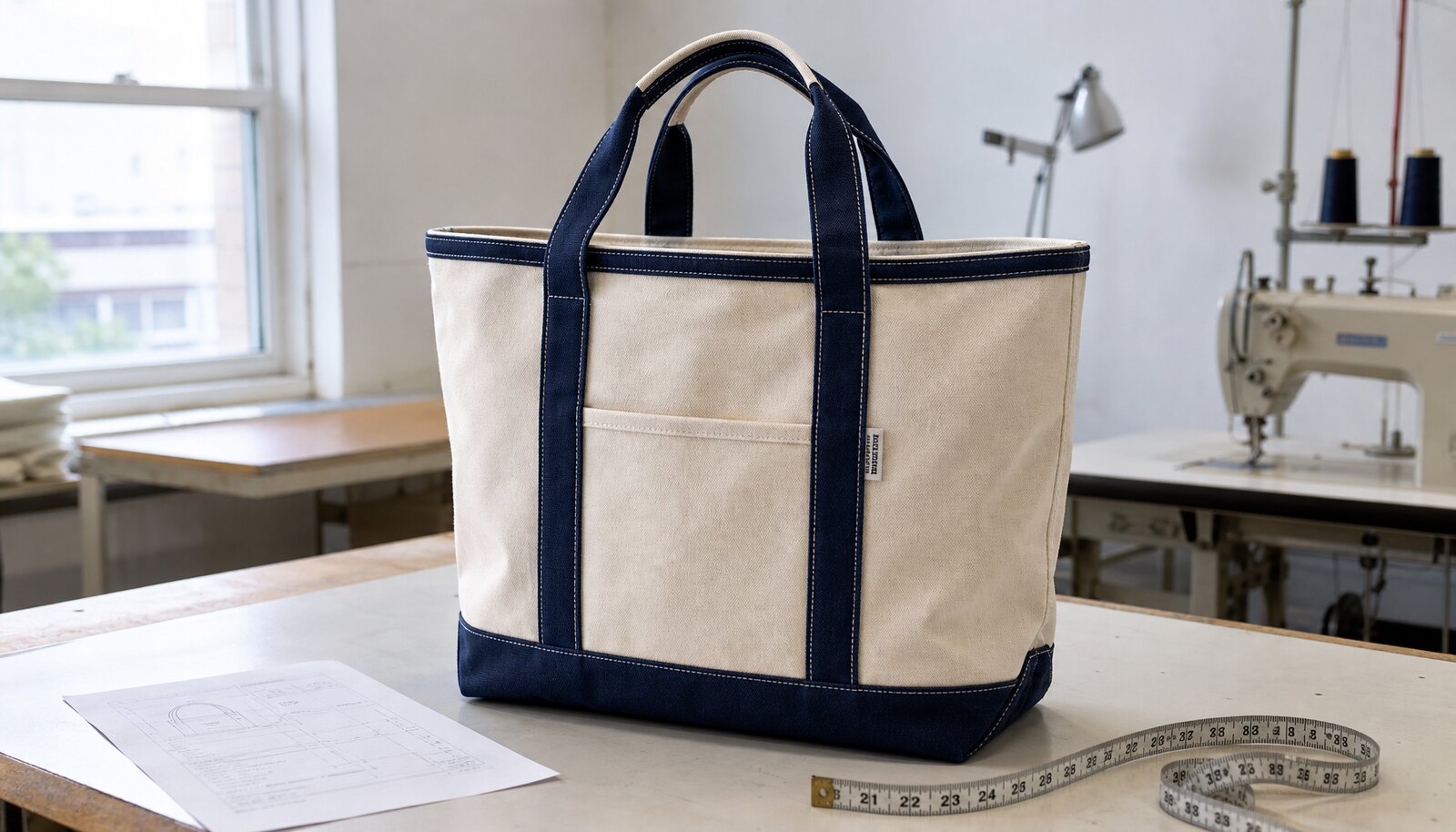
What a personalized boat tote is, and why buyers source it as a working product
A personalized boat tote is usually bought as a functional branded carry item rather than a fashion accessory. For procurement teams, the item has to do three jobs at once: hold merchandise securely, present the brand clearly, and ship without creating avoidable damage or waste. That is why the format shows up in retail, hospitality, marina shops, resort gifting, club programs, and corporate merchandise.
The commercial challenge is that many suppliers use the term boat tote loosely. A true boat tote should normally have enough body, a tidy top edge, stronger handle attachment, and a shape that stands neatly on display. If a supplier is really quoting a generic canvas tote under a marine-style name, the buyer can end up with a bag that collapses too easily, looks cheap on shelf, or fails in use. For procurement, the risk is not only visual; it is also returns, weak sell-through, and an expensive reorder cycle.
This style is useful because one base platform can support multiple branding needs. A retailer can keep the same body and change the artwork seasonally. A resort or event buyer can keep the same construction and only change the logo, label, or packing. That flexibility works only when the base spec is stable and documented. Otherwise, every reorder turns into a new development project.
The first buyer decision should be the use case. If the tote must stand upright in a boutique or on a marina shelf, structure and presentation matter more than the lowest unit cost. If it is a promotional handout, freight efficiency and turnaround may matter more. If it is intended for paid retail, stitching, print quality, and finishing become part of the margin equation. Build the spec from the channel backward, not from a catalog photo forward.
- Use the style when one bag must support branding, daily use, and display appeal.
- Treat structure, reinforcement, and print area as commercial specs, not design preferences.
- Do not compare quotes until body shape, decoration method, and packing standard are fixed.
Build the specification around fabric weight, body structure, and carrying load
Fabric weight affects both the look and the economics. For most retail and branded bulk orders, 10–12 oz canvas is the practical range. Ten oz is lighter, folds more easily, and can lower freight cost. Twelve oz gives more body, better shelf presence, and usually a more premium handfeel. It also tends to recover shape better after packing. If the buyer wants a heavier, rugged look, 14 oz can work, but sewing time rises and the factory may need to adjust seam allowance and shrinkage allowance.
If the supplier quotes in GSM, ask for the mill figure and the finished state. A nominal 12 oz canvas can feel very different depending on weave density, washing, dyeing, or calendaring. A washed canvas can look more relaxed and lifestyle-driven. A heavily calendared finish can give a crisp body, but it may also show crease memory after packing. Ask whether the weight is stated before or after finishing because that is a common source of quote mismatch.
The body shape matters as much as the fabric. A tote with a flat base, boxed corners, or a gusset is easier to display and more useful in retail than a bag that collapses into a sleeve. If the product is expected to carry bottles, catalog packs, or heavier event items, ask for bottom reinforcement or an insert board. If the bag needs to sit upright on a shelf, ask the supplier to confirm that it can stand on its own when empty. That question forces the factory to think about panel alignment and bottom shape rather than only measuring width and height.
Handle geometry needs its own line in the spec. Buyers often give total handle length but forget handle drop, width, and attachment method. Handle drop affects shoulder carry. Handle width affects comfort and the sense of quality. Attachment method affects durability. A simple single-line stitch may be acceptable on a low-cost promotional tote, but not on a bag that will be reused many times. For a more reliable build, require self-fabric or webbing handles with reinforced attachment points and a stitch pattern that the factory can document on the spec sheet.
The safest approach is to define the tote by use case, not only by dimensions. A retail tote that should stand on its own and carry a moderate load should be written differently from a promotional tote that must ship flat and arrive cheaply. Buyers who lock in the use case early usually get fewer sample revisions and fewer disagreements later when the factory tries to save cost.
- For retail display, favor 12 oz canvas with a structured hem and reinforced base.
- For freight-sensitive promotional programs, 10 oz may be the better cost balance.
- If the bag will carry heavier merchandise, add a gusset or bottom reinforcement requirement.
- State whether fabric weight is pre-finish or post-finish so the supplier cannot mix reference points.
Decoration is often the biggest quote swing, so lock it before comparing suppliers
Most buyers expect the body to drive cost, but decoration often changes the quote more than the canvas itself. Screen printing is usually the most economical route for simple logos, bold art, and limited color counts. It works well when the print area is flat and the artwork has clean edges. Embroidery gives a more premium appearance and can support a higher retail price, but it adds stitching time, backing material, and a real risk of puckering or distortion on lighter fabric. Woven labels, side labels, and sewn patches work well when the buyer wants quieter branding or wants to avoid a large printed surface.
The supplier should not decide the decoration method from the logo file alone. A logo sent without production intent invites guesswork: is the brand trying to hit a low retail price, or is it trying to look premium; should the artwork be visible from across the store, or only from arm’s length; is the program a large replenishment order or a small launch capsule? The same art can be printed, stitched, patched, or labeled, but each route changes cost, failure mode, and packing requirements.
A useful buyer tactic is to quote the same art in three versions: blank bag, one-color decoration, and premium decoration. That exposes where the money is going and helps merchandising decide whether the logo should be large and obvious or small and understated. A full-front print can improve brand visibility but may require a larger screen, more careful curing, and a more protective pack-out. A small embroidered crest can support a premium position, but the buyer should confirm that the logo will still be visible on a larger panel.
The RFQ should be specific in practical terms. State the print width in millimeters, the placement, and whether the logo should be centered, offset, or placed on a pocket or label. If embroidery is requested, state the visual standard you want the sample to match. If a woven label is requested, give the finished size, background color, and stitch allowance. Clear art instructions shorten the sample cycle and reduce the chance that the factory prices assumptions you did not intend to buy.
- Use screen print for simple graphics and tighter target pricing.
- Use embroidery only when the margin supports added labor and slower output.
- Use woven labels or patches when you want subtle branding with lower print-risk exposure.
- Always quote blank, printed, and premium versions side by side so the decoration premium is visible.
How to compare quotes without getting fooled by a low unit price
A quote for a personalized boat tote should be read like a procurement document, not a sales flyer. If the supplier gives only one all-in unit price, it is hard to see whether the number includes fabric upgrade, reinforcement, decoration setup, packing labor, carton inserts, barcode labels, or rework allowance. The cleaner method is to force the quote into separate lines: bag body, decoration, packing, cartonization, sample fee, and freight. Once those are split out, you can compare a factory, a trading company, and a local decorator on the same basis.
This separation matters because some suppliers price aggressively on the visible piece and recover margin elsewhere. One vendor may quote an attractive ex-factory bag cost but assume bulk packing when your channel actually needs individual polybags and barcode labels. Another may underquote the print and charge extra for a second color, a larger artwork area, or a curved placement. A third may offer a low MOQ but add handling fees that make the order unattractive once the product mix is finalized. The goal is not the cheapest line item; it is the best total landed cost for the real channel requirement.
Buyer teams should also watch the definitions behind the numbers. Is the MOQ per artwork, per color, per fabric shade, or per total PO? Is the print cost based on the number of colors in the art, the number of screen setups, or the number of placements? Is the packing quote assuming loose bulk or fixed folding? These are common sources of friction because the buyer and the factory may both think the quote is clear when they are actually pricing different jobs. The fastest way to prevent confusion is to require the supplier to restate assumptions in writing.
If you buy for more than one channel, compare order scenarios rather than only one standard case. For example, one scenario may be 3,000 units for retail with individual polybags and barcodes; another may be 500 units for a promotional event with simple bulk packing; a third may be a replenishment order with no artwork change but a new shipping deadline. The best supplier is not always the lowest price. Sometimes the right supplier is the one that can absorb a change request without restarting the whole schedule.
Use landed-cost thinking early. Ex-factory price alone can hide a more expensive reality if the tote requires extra reinforcement, special packing, or longer transit. A low FOB quote with high carton volume may cost more than a slightly higher quote with compact packing. For procurement buyers, that is not an accounting detail; it is the difference between meeting margin and missing it.
- Ask for a line-item quote: bag body, decoration, packing, cartonization, and freight.
- Compare at least three order scenarios: retail launch, promotional run, and replenishment.
- Do not approve a quote until MOQ, overs/unders policy, and packing assumption are all written down.
Choose the supplier route that matches the order risk, not just the target price
The sourcing route changes the kind of risk you inherit. A direct factory is usually the best fit when the buyer wants repeatability, enough volume to justify setup, and direct control over fabric source, sewing method, and QC. That route is useful when the tote is expected to reorder in the same shape across a season or year, because the factory can keep the spec stable and respond to small refinements. The tradeoff is that direct factories often want clearer artwork, more disciplined sample approval, and larger minimums tied to fabric color or setup.
A trading company is useful when the buyer is managing multiple SKUs, different decoration versions, or a lower initial purchase quantity. The advantage is convenience: one contact can coordinate canvas, printing, packing, and shipment across more than one source. The tradeoff is visibility. A trading layer can obscure who actually cuts the canvas, who prints the logo, and which plant owns final packing. That matters because tote quality often depends on stitching discipline and packing control, not only on the sales promise. If the order is sensitive to exact handle reinforcement or repeat shade, ask the trading company to identify the actual factory and explain the inspection process used there.
A local decorator can be the right answer for rush replenishment or last-minute event inventory, especially when the buyer needs a decorated bag fast and is willing to accept a narrower set of fabric and construction options. But a local decorator is not automatically a construction expert. Some source the blank tote from elsewhere and only control printing or embroidery. That can work if the bag body is already approved, but it is a poor fit if you need to change dimensions, seams, or handle strength at the same time. Buyers should not assume that faster decoration means better bag control.
The order scenario should decide the route. If the tote is a paid retail item with brand reputation on the line, lean toward a direct factory or a tightly managed trading program with documented QC. If the tote is an event handout with a short deadline, speed may matter more than perfect source transparency. If the program will repeat every quarter, choosing a factory that can hold the same build and packing method is usually worth the extra initial sampling effort.
- Direct factory: best for repeat programs and tighter build control.
- Trading company: useful for mixed SKUs or smaller initial orders, but verify the actual factory.
- Local decorator: useful when speed matters more than full control of bag construction.
- Ask who owns cutting, printing, sewing, and packing before you compare the quote.
Use a supplier-vs-supplier comparison that shows how each route behaves in real buying scenarios
A useful comparison has to show supplier behavior side by side, not just list abstract pros and cons. Buyers need to see how a factory, a trading company, and a local decorator respond when order size, timing, or packaging changes. That is where the real differences show up. A factory may be the lowest-cost option at scale, while a decorator may be the fastest for a small branded run. A trading company may be easiest to manage, but not always the easiest to audit. This is why procurement teams should compare actual scenarios rather than a generic scorecard.
The table below is designed to help buyers evaluate route fit. It does not replace supplier due diligence, but it does expose where hidden cost or control loss can appear. Read it against your own PO: if you need retail packing and repeat reorders, the direct factory may win. If you need a small launch quantity with one contact managing the process, a trading company may be easier. If you need printed bags for an event next week, a local decorator may be the only realistic route.
When you use this table in RFQ review, do one more check: ask each supplier to explain a recent or current comparable order in their own terms, without asking for unverifiable claims. You are not looking for a case study. You are looking for whether they can speak clearly about their actual production controls, sample discipline, and packing limitations.
What sample approval should lock before bulk production starts
Sample approval is the point where the commercial spec becomes real. For a personalized boat tote, the sample is not only for visual sign-off. It is where the buyer locks the dimensions, handle drop, artwork placement, seam reinforcement, and packing logic that the factory will use on the production line. If the sample is approved casually, the supplier may assume the finished sample is the final standard even if several measurements were never formally confirmed.
The most useful sample review has three layers. First is usability: does the tote stand, fold, and carry as intended? Second is branding: does the logo look correct in size, placement, and color, and does the branding support the channel? Third is build quality: are the stitches clean, are the handles reinforced correctly, and is the top edge symmetrical? It is common for a sample to look acceptable on a table but still fail on one of these checks. That is why the buyer should not approve from a single photograph or a vague email statement.
Before bulk production starts, the spec packet should include the final sample, a marked-up dimension sheet, artwork placement notes, packing instructions, and the date of approval. If the buying team includes merchandising, sourcing, and QA, make sure the approver is named. A tote order can go wrong when one person approves the look and another later expects a different handle drop or carton count. Written sign-off resolves that gap and gives the factory one version to follow.
A useful exception case is when the supplier offers a pre-existing body that is close to the target but not identical. In that situation, buyers should decide whether the difference is acceptable in the channel. A small shift in body width may be fine for a promotion but not for a retail shelf program. A slightly lower handle drop may be acceptable for hand carry but not for shoulder carry. Use the sample to test the product in the real context, not only against the drawing.
- Require a pre-production sample after all artwork and construction decisions are final.
- Save a marked spec sheet with version number, not only an email approval.
- Keep a reference photo showing logo placement, handle drop, and packing configuration.
- Do not approve from appearance alone; check usability, branding, and build quality separately.
Set QC thresholds that match how the bag fails in the real world
Quality control for a personalized boat tote should focus on the failure points buyers and end customers notice immediately. The first point is handle attachment. If the bag will carry books, bottles, or retail merchandise, the handle joins must have consistent reinforcement and enough stitch density to hold load over repeated use. The second point is the top hem and body geometry. If the top edge waves or the side seams drift, the tote looks off-center and cheap even if the fabric is correct. The third point is decoration integrity, because the logo is often the main reason the product was ordered at all.
A useful QC plan should use clear defect severity. A critical defect is one that makes the bag unsafe, wrong SKU, or unusable: torn seam, missing handle, wrong size outside tolerance, wrong artwork, or serious contamination. A major defect is one that hurts function or sell-through: weak handle reinforcement, print misplacement, severe puckering, color mismatch beyond the approved sample, or a tote that cannot stand as specified. A minor defect is one that does not stop use but still needs control: loose threads, small scuffs, slight packing wrinkles, or minor label misalignment. Buyers should not collapse all defects into one basket; the factory needs to know which issues trigger rework, repair, or rejection.
For inspection, the first article should be measured before bulk approval. Check body width, body height, gusset, handle length, handle drop, and print placement against tolerance. Then inspect workmanship: X-box or bar-tack consistency, stitch gaps, seam puckering, and top hem straightness. After that, check decoration: print edge sharpness, rub resistance after 24 hours, embroidery backing and tension, or label alignment. Finally, review packing: carton count, barcodes, polybag warnings where required, and whether the tote is protected against compression. A bag can pass sewing and still fail as a packed commercial item if it arrives crushed or damp.
A good buyer also asks for a first article checklist before mass production. This is not optional paperwork. It should include dimensions, stitch reinforcement, logo placement, trim color, carton mark, fold method, and carton drop condition. If the factory cannot show a disciplined first-article process, that is a signal to tighten supervision or choose a different supplier.
- Critical defects: wrong SKU, torn seams, missing handles, or wrong artwork.
- Major defects: weak reinforcement, print misplacement, color mismatch, or shape failure.
- Minor defects: loose threads, slight packing wrinkles, or small label shifts.
- Use a first-article inspection checklist before authorizing bulk packing.
Packing and carton choices can protect margin or quietly destroy it
Packing is one of the easiest places to lose value on a tote program. Bulk packing keeps labor and material cost lower, but if the bag is structured or premium looking, it can arrive wrinkled, compressed, or out of shape. Individual polybag packing adds cost, but it protects retail appearance and makes it easier to manage barcodes, EAN labels, and online fulfillment. For e-commerce and shelf-ready retail, a simple retail pack with a barcode sticker and carton insert is often worth the added expense because it lowers handling damage and store-level complaints.
The right packing choice depends on the channel, not only on factory convenience. A wholesale club or event distribution order may tolerate bulk pack if the tote can recover shape after unpacking. In that case, the buyer should still define the fold direction, the number of pieces per carton, and the carton compression standard. If the supplier chooses a fold that leaves a deep crease in the logo panel, the bag may technically be delivered correctly but still fail retail expectations. Ask for carton dimensions, net and gross weight, and the stackability of the master carton because freight and warehouse handling depend on those values.
If the tote is intended for retail resale, the packing spec should address moisture and odor as well as appearance. Canvas can absorb warehouse smells, and tightly sealed polybags without ventilation can trap odor or humidity. That is a real complaint trigger for buyers receiving imported merchandise. A simple instruction such as clean, dry packing, no wet cartons, and no visible dust contamination is worth including in the PO. For premium programs, ask how the goods are stored before packing and whether cartons are kept off the floor. These are small questions, but they tell you whether the supplier thinks in retail terms or only in shipment terms.
The safest procurement habit is to align carton counts with your SKU map and warehouse process. If one carton mixes sizes, colors, or decoration versions, receiving becomes slower and mis-sorts increase. If the factory can keep one SKU per carton, the goods are easier to count and less likely to be opened and repacked. That operational detail often matters more to downstream labor than the original sewing price.
- Retail channel: individual polybag, barcode, and shape protection.
- Wholesale channel: bulk pack only if the tote can recover shape after unpacking.
- Always require carton marks that match the PO, SKU, and colorway map.
- Ask for carton dimensions and gross weight so freight can be checked before shipment.
Plan lead time from the slowest task, not from sewing alone
A realistic lead time for a personalized boat tote includes several separate steps: sample development, artwork finalization, fabric booking, decoration setup, production, packing, and freight. Many buyers only count the sewing calendar, then discover that the order is late because artwork revisions took a week, a print screen had to be redone, or the factory was waiting for a fabric shade to arrive. For most standard custom runs, a 25–40 day production window after sample approval is a useful planning baseline, but it is only a baseline. The real lead time depends on artwork complexity, the number of colorways, and the supplier’s capacity when the PO is placed.
The buyer should work backward from the in-store date or launch date. That means building time for sample round-trip, internal review, PO release, production, packing, ocean or air transit, customs clearance, and warehouse receiving. If the bag supports a seasonal launch or event date, release the order early enough that the supplier can reserve fabric and print capacity. The biggest schedule mistakes are usually not sewing line delays; they are late artwork approval, late payment release, or a final change to logo placement after the sample has already been signed off.
There are useful exception cases. A replenishment order for an existing program can move faster if the factory already has the same material and setup. A new fabric shade or washed finish can slow the job significantly because the factory may need to source or confirm the exact lot. Multi-color decoration also extends setup time because each color may require a separate screen, stitch program, or placement check. Buyers should ask the supplier which part of the schedule is most likely to slip. That question often reveals whether the factory is thinking honestly about capacity or just quoting the shortest number it thinks the buyer wants to hear.
A disciplined procurement team treats lead time as a negotiated schedule, not a promise. Once the supplier has committed, the buyer should track sample approval date, material booking date, production start date, packing date, and ready-to-ship date. If the order is important enough to launch a product line, it is important enough to monitor in milestones.
- Build the schedule around sample approval, not only production days.
- Reserve extra time if you need custom colors, washed finishes, or multi-color art.
- Protect launch dates with freight and customs buffer.
- Ask the supplier which milestone is most likely to slip before you release the PO.
Specification comparison for buyers
| Supplier route | Best fit | Typical pricing behavior | Procurement tradeoff to watch |
|---|---|---|---|
| Direct factory | Repeat programs, larger runs, stable artwork, and buyers who need tighter control over body construction | Lower ex-factory pricing at higher volumes, but setup, MOQ, and change fees may be stricter | Ask who controls cutting, stitching, and final packing; confirm whether sample fees are credited on bulk orders |
| Trading company | Mixed-SKU programs, lower initial quantities, and buyers who want one contact for sourcing and shipment | Quote may look simple, but margin can sit inside fabric, decoration, and packing lines | Request the actual factory name, inspect the build sample, and verify whether the same plant will repeat the order |
| Local decorator | Rush replenishment, event timelines, and programs where a blank tote already exists | Often competitive on decoration only, but body construction may be limited to off-the-shelf blanks | Check whether they control bag sewing or only branding; decoration speed does not guarantee bag quality |
| Material | 8-12 oz cotton canvas, 120-220 gsm cotton, recycled cotton, or blended fabric selected by use case and target price | Before price comparison | Different cloth weights, backing, or certification claims make quotes hard to compare |
| Construction | bag size, gusset, handle drop, seam allowance, stitch density, reinforcement patch, and loading expectation | Before sampling | Weak stress points create returns and failed inspections |
| Decoration | screen print, heat transfer, embroidery, woven label, or hangtag matched to fabric texture and brand durability needs | Before artwork approval | The wrong method can crack, bleed, pucker, or fail on the chosen fabric |
| MOQ | Base MOQ plus change drivers | During quote review | Custom colors, trims, and packing can change minimums |
| Sample | Physical sample with close-up photos | Before bulk cutting | Photo-only approval can miss hand feel and seam issues |
Buyer checklist before sampling
- Final tote dimensions with tolerance bands for body width, height, gusset depth, and handle drop
- Fabric spec in oz or GSM, plus whether it is natural, dyed, bleached, washed, or coated
- Artwork file format, logo size, placement in millimeters, Pantone references, and acceptable print tolerance
- Handle length, handle width, seam allowance, stitch count, and reinforcement method at the handle roots
- Bottom construction requirement: flat base, boxed corners, gusset depth, or internal reinforcement board
- Packing method: bulk pack or individual polybag, barcode label location, carton quantity, and carton marks
- Target MOQ by fabric color and decoration version, not only total order quantity
- Sample approval date, approver name, and spec version used for sign-off
- Expected lead time split between sample development, mass production, and transit
- Acceptance standard for first article inspection, including defect severity levels and AQL target
Factory quote questions to send
- What is the fabric weight in oz or GSM, and is that weight before or after washing, dyeing, or finishing?
- What is your MOQ by fabric color, print method, embroidery stitch count, and logo color count?
- Please quote separately for blank bag, one-color print, multi-color print, embroidery, and woven label or patch.
- What reinforcement do you use at handle joins and bottom seams, and how many stitches or bar-tacks are standard?
- Can you confirm handle length, handle drop, handle width, and whether the handles are self-fabric or webbing?
- Please state the exact bag dimensions, gusset depth, and tolerance you can hold in bulk production.
- What is included in packing: individual polybag, desiccant, barcode sticker, carton spec, and master carton quantity?
- How many days do you need for a pre-production sample, and what changes create a new sample fee?
- What is your production lead time after sample approval, and what parts of the schedule are most likely to slip?
- Can you provide photos of a recent bulk run, including handle stitching, print close-up, and carton packing?
Quality-control points to confirm
- Measure body width, height, gusset depth, and handle drop on the first article; compare against the approved spec and flag any dimension outside tolerance before bulk packing.
- Check handle seam construction visually for X-box, bar-tack, or equivalent reinforcement; reject loose stitches, skipped stitches, broken thread, or asymmetric attachment points.
- Inspect top hem straightness, side seam alignment, and bottom corner symmetry; a tote that tilts badly or cannot sit square should be treated as a structural defect, not a cosmetic issue.
- Verify print registration, edge sharpness, ink coverage, and cure resistance with a rub test after 24 hours; any smearing, cracking, or ghosting should be recorded as a major defect.
- For embroidery, inspect backing material, puckering, thread tension, and logo readability from normal viewing distance; distorted text or dense thread buildup should be treated as a major defect.
- Confirm carton count, barcode placement, polybag suffocation warning if required, and carton compression resistance; crushed or mislabeled cartons are a packing defect even when the bag itself is acceptable.
- Spot-check shade variation across fabric lots, especially on natural canvas, dyed panels, or contrast trim; visible panel-to-panel mismatch should be recorded and escalated.
- Review smell, moisture, dust, and oil contamination in packed goods before shipment release; odor, dampness, or visible marks are common reasons for post-arrival rejection.
- Set an inspection plan with defect severity examples: critical defects for torn seams or wrong SKU; major defects for print misplacement or weak handles; minor defects for loose threads or slight handling marks.
- Use a tighter first-article checklist before mass approval: dimensions, artwork placement, stitch reinforcement, trim color, packing configuration, carton mark, and carton drop condition.