Start With the Bookstore Use Case
An organic cotton tote for a university bookstore is not one product. A low-cost checkout tote, a paid retail tote, an orientation kit bag, and an alumni gift bag all need different fabric, construction, print, and packing decisions. The buying problem is that many RFQs say only “organic cotton tote with logo,” then suppliers quote different weights, different certifications, and different print assumptions. The lowest quote may not be comparable to the others.
Before requesting prices, define the load and the shelf role. A checkout tote may carry one hoodie and a few notebooks. A retail tote may need to hold textbooks, a bottle, and laptop accessories without handle distortion. Orientation orders usually need event-date reliability and carton sorting by campus or department. When the use case is clear, the factory can quote the correct construction instead of guessing.
- For a basic checkout tote, 8 oz to 10 oz organic cotton can work if the bag is not positioned as premium retail.
- For bookstore retail sales, 10 oz to 12 oz canvas gives a stronger hand feel and better perceived value.
- For heavy textbook use, add a bottom gusset and reinforced handle stitching before moving immediately to heavier fabric.
- For orientation kits, prioritize packing logic, carton labels, and on-time delivery as much as fabric weight.
Choose Fabric Weight by Feel and Load
Fabric weight is usually quoted in ounces per square yard, but many import teams also request GSM to compare suppliers. A practical conversion is not exact because weave and finishing affect the hand feel, but 10 oz cotton canvas is commonly around 340 GSM and 12 oz is commonly around 407 GSM. If a supplier quotes “10 oz” without GSM, ask for both and request a fabric swatch from the same mill or stock batch intended for bulk production.
Bookstore buyers should avoid judging only by the number. A tightly woven 10 oz organic cotton canvas can feel cleaner than a loose 12 oz fabric. Natural organic cotton also shows seed flecks and shade variation, which may be acceptable for a sustainability-led product but not for a clean white retail display. Dyed organic cotton adds color control work and usually increases cost, MOQ, and lead time.
- 6 oz to 7 oz: suitable for lightweight promo bags, not ideal for paid bookstore retail unless expectations are low.
- 8 oz: acceptable for low-load reusable shopping, but may wrinkle more and feel less premium.
- 10 oz: strong middle option for university bookstore logo totes and seasonal programs.
- 12 oz: better structure for paid retail and heavier books, with higher material and freight cost.
- 14 oz and above: durable but heavier, stiffer, more expensive, and not always needed for campus retail.
Match Organic Claims to Evidence
The word organic can create risk if it appears on a hangtag, website, campus sustainability page, or product label without supporting documents. Buyers should separate the product material from the marketing claim. A supplier may be able to use organic cotton fabric, but the certificate route, transaction certificate, labeling rules, and chain-of-custody wording need to match how the bookstore or brand will describe the bag.
If the tote will only be sold as a natural cotton bag with no organic claim, the documentation requirement is lower. If the purchase order, label, or hangtag says organic cotton, the RFQ should state whether GOTS, OCS, or another recognized claim is required. The quote should show whether certification paperwork, certified labels, or transaction certificate support is included or charged separately.
- Do not mix certified organic claim language with uncertified trim, lining, or labels unless the standard allows it.
- Request the supplier’s certificate scope before sampling if the claim will be printed on the product.
- Keep approved claim wording in the artwork file and purchase order, not only in email comments.
- Confirm whether certification documents can reference the buyer, importer, or shipment if your compliance team needs it.
Specify Construction Before Price
Two totes with the same fabric and logo can perform very differently. Seam type, handle length, stitch density, reinforcement, gusset design, and thread quality affect both cost and failure rate. For university bookstore use, handle attachment is the most common weak point because students overload bags with books, drinkware, and apparel. A clean RFQ should describe the finished size and construction details so each supplier quotes the same work.
A flat tote is cheaper and folds well, but a bottom gusset helps the bag stand, increases usable capacity, and improves retail appearance. Side gussets add volume but can complicate printing and folding. Handle drop should be chosen by how the bag is carried. Short handles suit hand carry; longer handles suit shoulder carry but need better reinforcement because the bag swings under load.
- Common bookstore size: around 38 cm width by 42 cm height, with or without 8 cm to 12 cm bottom gusset.
- Handle drop: around 25 cm to 30 cm for shoulder carry; shorter for hand-carry checkout use.
- Handle width: about 2.5 cm to 3.8 cm for comfort on heavier bags.
- Stitching: box stitch with cross reinforcement is preferred for heavy-use bookstore totes.
- Tolerance: set finished measurements to approximately plus or minus 1 cm unless the design needs tighter control.
Select the Print Method Around Artwork
Most university bookstore tote logos are suitable for screen printing, especially one to three solid colors. Water-based screen printing fits organic cotton positioning because it gives a softer hand feel than heavy plastisol and does not create a shiny promotional look. It is also efficient for repeat orders when artwork remains stable. The factory still needs vector artwork and Pantone targets because natural cotton shade can change the perceived color.
Not every campus artwork prints well on rough cotton canvas. Fine seals, small legal text, thin lines, gradients, and reversed details can fill in or disappear. Before approving bulk, review the artwork at actual print size on the fabric. If the logo requires high detail or photographic color, the factory may suggest heat transfer, digital print, or a simplified screen version. Each choice changes hand feel, durability, minimums, and cost.
- Screen print: best for solid logos, slogans, bookstore marks, and repeat production.
- Water-based ink: softer feel, good for natural cotton, but color may appear slightly muted.
- Pigment print: useful for stronger color on dyed fabric, depending on factory setup.
- Heat transfer: sharper detail, but can feel like a patch and may not match an organic retail story.
- Embroidery: premium look for small marks, but less practical for large front-panel artwork.
Build MOQ Around SKU Efficiency
MOQ is not only a supplier rule. It comes from fabric sourcing, cutting efficiency, printing setup, sewing line planning, and packing complexity. A bookstore program with one natural fabric, one size, and one one-color logo can be efficient at a lower quantity than an order split across five fabric colors, four campus logos, and individual barcode packs. Buyers comparing quotes should calculate MOQ by SKU, not only by total order quantity.
If a university system has several campus bookstores, a shared base tote can reduce cost. The buyer can keep one size, one fabric, and one packing format, then change artwork by campus. However, every artwork change may require separate screens, setup time, print approval, and carton labeling. If each campus wants a different fabric color, the dyed fabric MOQ may become the real constraint.
- Lowest-cost structure: one fabric color, one size, one print design, bulk packed.
- Moderate complexity: same bag with different print colors or campus logos.
- Higher complexity: multiple dyed fabric colors, multiple sizes, barcode labels, and retail hangtags.
- Common hidden cost: screen charges repeated for each artwork version or print location.
- Useful quote format: show unit price by quantity tier and list all setup charges separately.
Approve Samples With Production Evidence
A sample should remove uncertainty, not create decoration theater. For organic cotton totes, the buyer needs to feel fabric weight, inspect handle reinforcement, see print behavior on the actual surface, and verify packing. A photo sample can confirm logo position, but it cannot confirm hand feel, fabric thickness, ink penetration, odor, shrinkage, or handle comfort. For paid retail items, a physical pre-production sample is worth the time.
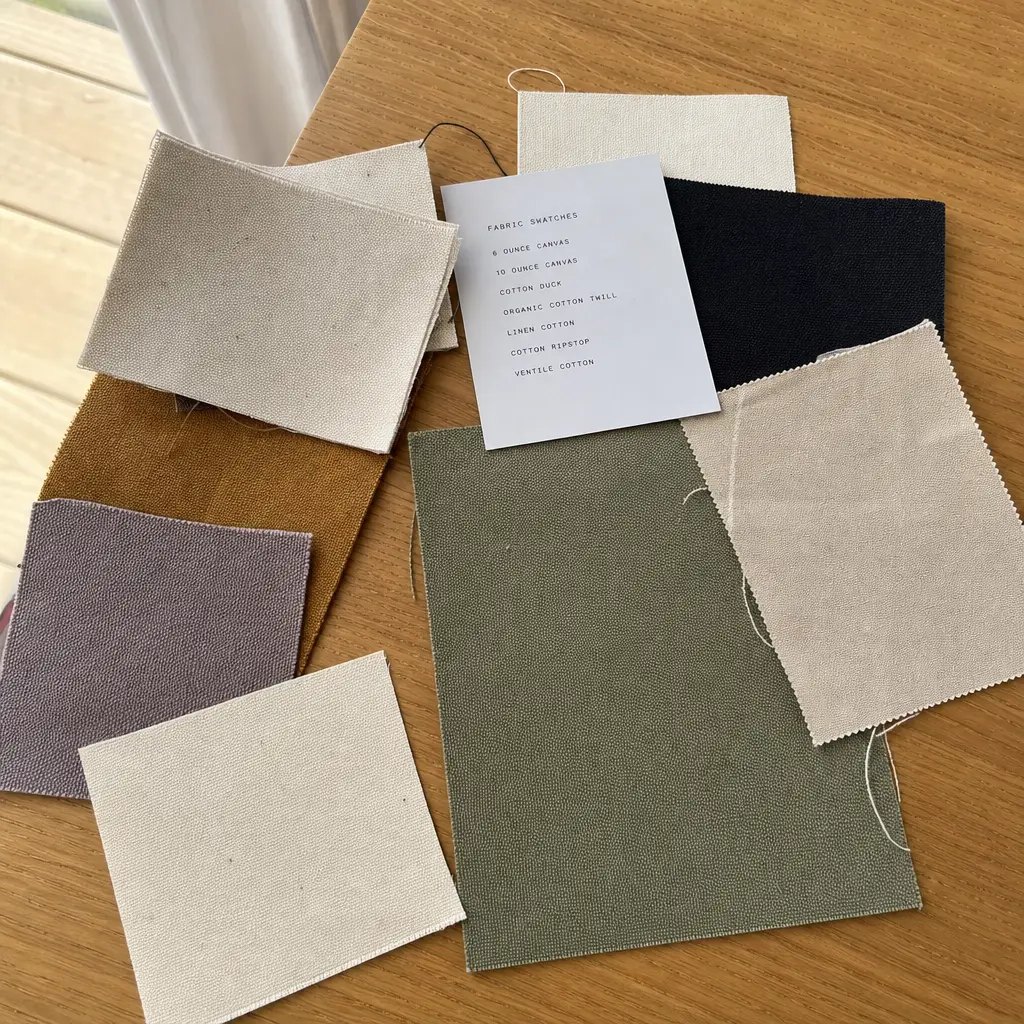
The sample approval process should be staged when timing allows. Start with a fabric swatch and print strike-off if the artwork or color is important. Then approve a finished sample using the final size, final handle length, final seam, and final print. Once approved, the sample becomes the standard for bulk inspection. Write any accepted variation clearly, such as seed flecks on natural cotton or slight shade difference between lots.
- Measure finished width, height, gusset, handle drop, and print placement on the sample.
- Load the bag with a realistic bookstore weight and observe handle stretch and seam distortion.
- Rub the printed area with a white cloth after curing to screen for poor ink fixation.
- Review the inside seams and loose threads; students notice messy construction on paid retail items.
- Keep one approved sample at the buyer side and one sealed reference sample at the factory.
Set Packing for Receiving and Freight
Packing is often treated as a shipping detail, but it affects landed cost and receiving labor. Organic cotton totes can be flat packed, folded, bundled, or individually packed. Flat bulk packing usually gives the best balance of carton efficiency and low plastic use. Individual polybags protect retail goods but add cost, handling time, plastic concerns, and waste at the store. If the bookstore has a sustainability policy, paper belly bands or recycled polybags may need to be quoted from the start.
Carton data must be included in the quote because freight teams need cubic volume, gross weight, and carton count. A cheap unit price can lose its advantage if the bags are packed loosely and ship too much air. Mixed-SKU cartons should be avoided unless the receiving team wants them, because they slow counting and increase shortage disputes. For campus distribution, carton labels should show item code, campus, color, quantity, PO number, and carton number.
- Typical carton quantity: 50 to 100 pcs depending on fabric weight, gusset, folding method, and carton strength.
- Request carton dimensions before placing the PO, not after production is finished.
- Use moisture protection for sea freight, especially natural cotton in humid seasons.
- Avoid excessive compression that creates hard creases on paid retail totes.
- Define barcode and hangtag placement if the totes go directly to bookstore shelves.
Control Lead Time Risks
University bookstore calendars are unforgiving. Fall orientation, new semester rush, graduation, alumni weekend, and homecoming have fixed selling windows. The practical lead time is not only sewing time. It includes artwork cleanup, fabric availability, organic documentation, sample production, sample shipping, sample approval, deposit, bulk production, inspection, export packing, vessel or air booking, customs clearance, and inland delivery.
A realistic schedule separates buyer-controlled steps from factory-controlled steps. Many delays start with late artwork, unclear claim wording, or changed packing instructions. If the order requires certified organic documentation, add time for document review and do not wait until shipment to discover the supplier cannot support the claim. For repeat bookstore programs, approving a carryover base tote early and changing only the print can protect the delivery date.
- Artwork review and strike-off: usually the first schedule risk if campus logos are detailed.
- Fabric sourcing: longer when dyed organic cotton or certified lots are required.
- Sample approval: allow courier time and internal buyer review time.
- Bulk production: plan around factory peak seasons and holiday shutdowns.
- Inspection and packing: do not compress these steps to recover late approvals.
Compare Quotes by Landed Sellable Unit
FOB unit price is only one part of the buying decision. A proper comparison includes fabric weight, certification support, print setup, sample charges, labels, packing, carton cube, inspection risk, and expected defect allowance. A lower quote may use lighter fabric, no organic documentation, single-row handle stitching, cheaper cartons, or a different print method. Put the quotes into one comparison sheet before selecting a supplier.
For university bookstores, the right number is landed cost per sellable unit. That means the cost after freight, duty, customs brokerage, inland transport, inspection, packaging extras, and expected defects. If the tote sells at retail, also compare perceived value. A 12 oz tote with clean stitching may justify a higher unit cost than an 8 oz tote that looks like a giveaway. If the tote is included free with textbook bundles, cost control may matter more than premium feel.
- Separate unit price from setup charges so reorder cost is clear.
- Compare fabric weight and construction line by line, not just product photos.
- Add carton cube to the landed-cost sheet because cotton bags can be freight-sensitive.
- Include inspection cost and possible rework time for tight retail launch dates.
- Request quote validity because cotton, freight, and exchange rates can move before PO release.
Specification comparison for buyers
| Spec decision | Recommended option | When it fits | Buyer risk to check |
|---|---|---|---|
| Fabric weight | 10 oz to 12 oz organic cotton canvas for main bookstore retail totes | Fits course materials, apparel add-on sales, orientation kits, and reusable shopping programs | Below 8 oz may feel promotional and show books through the fabric; above 14 oz raises freight and may feel stiff |
| Cotton standard | GOTS or OCS organic cotton claim matched to buyer labeling requirement | Fits brands that need traceability language on hangtags, web pages, or campus sustainability reports | Do not accept a generic organic statement without transaction certificate or scope evidence if the claim will be printed |
| Bag construction | Flat tote with bottom gusset, cross-stitched handles, and 2.5 cm seam allowance target | Fits bookstore checkout use where students carry textbooks, bottles, and apparel in one bag | Weak handle stitching and narrow seam allowance cause failures even when fabric GSM looks acceptable |
| Print method | Water-based screen print for 1 to 3 solid-color bookstore logos | Best balance for organic cotton positioning, soft hand feel, and repeat production consistency | Fine campus seals, gradients, and tiny reversed text may require discharge, pigment adjustment, or transfer instead |
| MOQ logic | One fabric color, one size, shared print setup, and cartonized packing to keep MOQ efficient | Works for semester replenishment and multi-campus bookstore programs with common artwork | Splitting many colors, sizes, and department logos increases setup cost and can push each SKU below factory efficiency |
| Sampling path | Pre-production sample using bulk fabric quality, final handle length, final print ink, and approved packing | Needed before purchase order release when the tote will be sold as a branded retail item | Photo samples alone miss hand feel, shrinkage, print strike-through, and handle comfort |
| Packing format | Flat packed 50 to 100 pcs per export carton with moisture protection and carton labels by SKU | Fits importers, distributors, and university stores that need easy receiving and shelf replenishment | Overpacked cartons crush edges; underfilled cartons increase cubic volume and landed freight cost |
| Supplier route | Direct factory or factory-backed exporter with organic documentation and in-house print control | Best for custom specs, repeat programs, and buyers comparing landed cost by component | Trading-only quotes may hide subcontracted print, unclear cotton certification, and weak defect accountability |
| Lead time buffer | Approve bulk sample before peak season and reserve 35 to 55 days for production plus shipping planning | Fits fall orientation, alumni weekend, graduation, and back-to-school retail windows | Late artwork approval compresses curing, inspection, carton marking, and vessel booking time |
Buyer checklist before sampling
- Define the retail use first: checkout bag, orientation kit, merchandise item, or bookstore gift-with-purchase.
- Specify bag size, gusset depth, handle length, fabric weight in oz and GSM, and finished tolerance.
- State the organic cotton claim required: no claim, OCS, GOTS, transaction certificate, hangtag text, or label wording.
- Attach vector artwork and confirm print colors by Pantone or approved fabric strike-off, not only by screen image.
- Choose print method based on artwork detail, hand feel, color count, wash expectation, and fabric shade.
- Set sample approval steps: fabric swatch, print strike-off, size sample, and final pre-production sample if timing allows.
- Request packed carton dimensions, gross weight, net weight, pieces per carton, and carton marking layout.
- Define acceptable defect limits for stitching, print registration, stains, odor, broken needles, and measurement variance.
- Confirm whether quote includes organic labels, hangtags, barcode stickers, individual polybags, desiccants, and inner packs.
- Compare landed cost by usable sellable unit, not only by FOB unit price.
Factory quote questions to send
- What exact fabric weight will be used, shown in oz and GSM, and is it greige, dyed, or washed after sewing?
- Is the cotton claim supported by GOTS, OCS, or another document, and can the required certificate follow this shipment?
- What is the MOQ by size, fabric color, print color count, and artwork version?
- Which print method is quoted, what is the maximum print area, and what artwork details may need adjustment?
- Will the sample use the same bulk fabric, ink, handle tape, stitching thread, and packing material as production?
- What are the size tolerances, handle pull-strength target, stitching SPI, and print registration tolerance?
- How many pieces per carton, what carton grade, what carton size, and what gross weight should the freight forwarder use?
- What is included in the unit price and what is charged separately: screens, sample fee, certification paperwork, labels, barcode stickers, and export carton marks?
- What is the production lead time after deposit, artwork approval, sample approval, and receipt of final packing instructions?
- How are shade variation, print defects, and shortage or overage handled before shipment?
Quality-control points to confirm
- Fabric weight verified against approved swatch with an acceptable production tolerance agreed before cutting.
- Finished tote size checked flat and opened, including width, height, gusset, handle drop, and print placement.
- Handle attachment inspected for box stitch or cross stitch consistency, skipped stitches, and loose thread trimming.
- Print surface checked for pinholes, ink bleeding, registration shift, cracking, stains, and logo placement variance.
- Organic label and claim wording matched to approved proof, purchase order, and certificate requirement.
- Carton quantity, carton marks, barcode labels, inner packs, and mixed-SKU packing checked against the packing list.
- Moisture, odor, mold risk, and foreign matter reviewed before final carton sealing.
- Random pull and load tests performed on handles using a buyer-agreed practical load level for textbooks and retail goods.