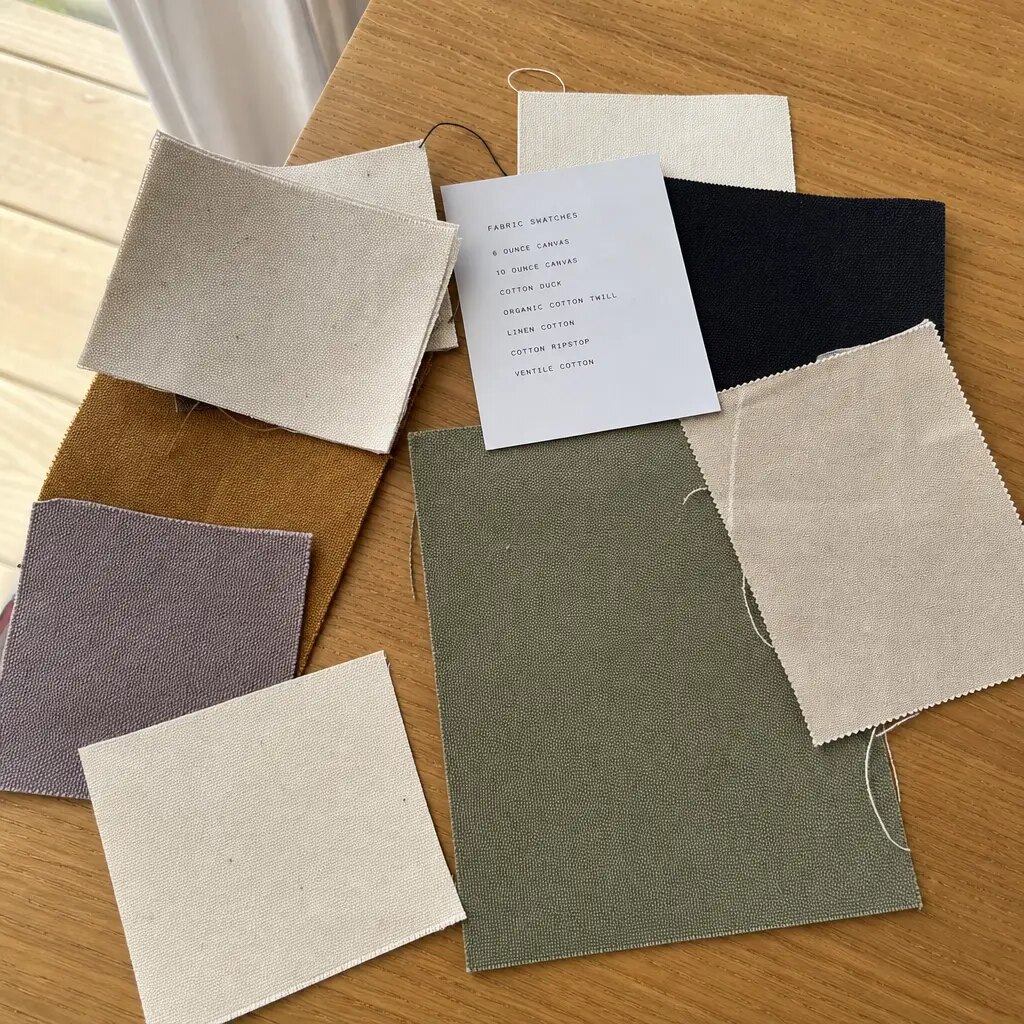
What makes a craft fair tote a different buying problem
Organic cotton totes for craft fairs are not just another tote bag line. The buyer is usually balancing event price point, fast resale, visual appeal on a table, and practical carrying strength for customers who may load the bag with multiple small purchases. That means the spec has to support both merchandising and utility. A tote that feels soft and premium but collapses at the handle is a poor trade for a fair where the bag often becomes part of the vendor's brand experience.
This is why the sourcing brief should start with the use case, not the artwork. A giveaway bag for a booth raffle, a paid retail tote, and a bundled purchase bag can all be called 'organic cotton totes,' yet they need different GSM, stitching, packing, and print assumptions. If those are not defined before quote collection, the supplier comparison becomes meaningless because you are not comparing the same product.
- For paid retail: prioritize hand feel, shape retention, and print appearance.
- For free distribution: control unit cost and carton efficiency first.
- For resale at craft fairs: keep the bag sturdy enough to be reused after the event.
Choose the right fabric weight before you talk price
For most craft fair programs, organic cotton totes in the 140-160 GSM range are the practical middle ground. At this weight, the bag usually feels substantial enough for retail display and repeated use, while still keeping fabric cost, sewing time, and freight under control. If the tote is too light, buyers often complain about see-through fabric, weak hand feel, and a cheap drape. If the fabric is too heavy, the bag becomes expensive to ship and may look more like a utility tote than a craft fair item.
The weave also matters. Plain weave can work well for budget-conscious programs, but a light twill often gives better structure and a more premium retail look. If the bag will be sold to customers who care about washability and appearance retention, ask for pre-shrunk or sanforized fabric. That reduces the risk of size change after laundering and keeps the print and handles aligned better over time.
- 140 GSM: lighter, lower cost, better for giveaways or low-load use.
- 150-160 GSM: best all-round range for retail and event resale.
- 170 GSM and up: stronger and more premium, but price and freight rise quickly.
Print method should follow artwork complexity, not habit
The most common mistake is choosing a print method because it is familiar to the buyer or supplier, not because it suits the design. For simple one- or two-color logos, screen print usually gives the best value and a consistent look on cotton. It handles solid shapes well and is easier to control across larger runs. If the artwork has fine detail, multiple color changes, or a short lifecycle, a transfer method may be easier to start with, but it usually needs a tighter sample review and can raise rejection risk if the finish looks too plastic or thin.
The quote should state the number of colors included, print size, print position, and whether the ink coverage is supposed to look opaque or soft. On organic cotton bags, a weak print can disappear into the fabric texture, especially on natural or unbleached tones. A strong sample approval should show the final bag body color, not a white test cloth, because color contrast and ink coverage behave differently on real fabric.
- Screen print: best for simple logos and repeat orders.
- Heat transfer: useful for short runs or variable artwork, but inspect adhesion and hand feel.
- Embroidery: premium look on heavier totes, but slower and usually not the cost leader.
How to compare supplier routes without getting fooled by unit price
For wholesale buying, the cheapest quote is often the one with the most hidden shortcuts. Direct factories usually offer better control over fabric weight, sewing details, and carton packing, especially if the buyer is placing repeat orders and can approve artwork on time. Trading companies or sourcing agents can be useful when the order combines many SKUs, but they may add a margin layer and reduce visibility into where the fabric and labor are actually coming from. That matters when the tote must match a previous event run or a retail planogram.
A proper comparison needs more than price per piece. The buyer should evaluate whether the supplier quoted the same GSM, same print method, same handle construction, same packing count, and same lead time basis. A lower quote based on a thinner fabric or fewer stitches is not a real saving if the bags fail on the sales floor or generate customer complaints at the event.
- Direct factory: better for stable specs, recurring orders, and stronger cost control.
- Trading route: useful for mixed sourcing, but verify responsibility for QC and rework.
- Stock-holder route: faster if you accept existing fabric and limited customization.
Use a quote comparison table, not a price-only spreadsheet
When procurement teams collect quotes for organic cotton totes wholesale buying checklist for craft fairs, the real issue is apples-to-apples comparison. If one supplier quotes 140 GSM plain weave with one-color screen print and flat packing, while another quotes 160 GSM twill with reinforced handles and individual polybags, the lower unit price tells you very little. You need a comparison grid that exposes the cost drivers behind each offer so internal stakeholders can make a decision without reworking the RFQ.
Ask each supplier to quote a base version and one alternate spec, such as a lighter GSM or a different print method. That gives you a realistic view of how much each spec choice affects budget. It also shows whether the supplier understands the business objective or is just pushing the easiest production path.
- Compare fabric weight first, then print method, then packing, then carton efficiency.
- Separate one-time setup charges from recurring unit price.
- Ask for carton dimensions because freight can erase small per-unit savings.
Sample approval is where most tote orders are won or lost
A pre-production sample should be treated as the production reference, not a courtesy item. The sample must use the same fabric batch type, handle material, stitch pattern, and print process that will be used in bulk. If the supplier sends a photo sample or a thin showroom sample, it is not enough to sign off on a craft fair order that depends on consistency. The sample should be reviewed under normal light, held by hand, and checked for print opacity, seam straightness, and handle symmetry.
The most useful sample checks are practical. Measure the finished bag dimensions, inspect the print edge sharpness, pull on the handles to see whether the bar-tacks hold cleanly, and fold the bag to judge whether it presents well on a retail table. If the bag has a side label or inner brand marking, confirm the position and stitching quality now, not after mass production. Any change after approval should trigger a written revision, because tote orders often go wrong when a small artwork tweak is treated as harmless.
- Use the sample to confirm fabric tone, not just logo placement.
- Test handle pull by hand and review stitch tension at the anchor points.
- Keep the approved sample labeled and archived for inbound QC comparison.
MOQ logic: what actually changes the minimum order
MOQ is not just a number the supplier chooses at random. On organic cotton totes, MOQ usually changes because of fabric sourcing, print setup, cutting efficiency, and packaging labor. A one-color logo on a standard natural tote may be feasible at a lower quantity than a multi-color print on dyed fabric. If the buyer wants several artwork versions, MOQ should be discussed per version, not only at the line-item total. Otherwise the supplier may protect margin by blending colors or delaying one design until enough volume accumulates.
A good sourcing rule is to decide the acceptable tradeoff between MOQ and unit cost before opening the quote. If the event is seasonal and repeat demand is uncertain, a slightly higher unit price on a lower MOQ may be smarter than chasing a bargain that leaves you with excess stock. If the tote will be reused across craft fairs and retail channels, higher MOQ can make sense because the design has a longer shelf life and the setup cost can be spread over more units.
- Ask for MOQ by color, by print version, and by size if multiple SKUs are involved.
- Clarify whether price changes if the order is split across several artwork variations.
- Treat unusually low MOQ offers as a sign to inspect fabric source and print constraints.
Packing and carton planning affect real landed cost
Many buyers focus on bag unit price and then discover that the carton plan changes the landed cost more than expected. A tote bag that folds efficiently and packs in a high carton count lowers freight cost and warehouse handling time. But if the supplier over-compresses the bags, the product can arrive creased and look less retail-ready. If it is packed too loosely, cartons grow large and shipping density drops. The right answer depends on whether the bags are going straight to a booth, a distribution center, or a store replenishment program.
For craft fair programs, a flat-packed tote with a practical carton count is usually enough. If the retailer wants shelf-ready appearance, then a clean fold, consistent bundle count, and clear carton marks matter more. If polybags are required, make sure the quote states whether they are individual or bulk inner packs. Packaging decisions often decide whether a quote remains competitive after freight is added.
- Request carton dimensions before PO confirmation.
- Confirm pieces per carton and gross weight for freight forecasting.
- Use barcode labels or clear carton marks if bags move into retail distribution.
Lead time risk is usually hidden in fabric, print, and approval delays
A realistic tote lead time should be broken into sample approval, material preparation, production, inspection, and shipping handoff. For standard custom organic cotton totes, a 25-40 day production window after sample approval and deposit is common when fabric and print setup are straightforward. The risk is that buyers often count only sewing time and ignore artwork approval delays, fabric procurement, and the queue for printing. If the order lands near peak event season, those hidden steps can push delivery past the selling window.
Buyers should ask what parts of the schedule are sensitive to late changes. A small adjustment to the print size may seem harmless, but it can force a new screen or a new layout, which resets time and cost. If the order is tied to a specific craft fair date, place a buffer into the schedule and require milestone dates in writing. That makes delays visible early enough to act on.
- Clarify sample lead time separately from bulk lead time.
- Reserve extra time if artwork is not final at RFQ stage.
- Build slack for freight, especially if the bags need to clear customs or inland transfer.
A practical buyer checklist for RFQ and order release
Before you issue the purchase order, the spec package should be detailed enough that another buyer could compare the offer without asking for clarification. That is the fastest way to reduce confusion between procurement, merchandising, and the factory. The checklist below is designed for importers and retail buyers who need to buy organic cotton totes wholesale for craft fairs without turning the order into a chain of revisions.
The point is not to over-engineer the tote. It is to fix the variables that affect quality, cost, and delivery. Once those are locked, suppliers can quote accurately and production can stay stable.
- Bag dimensions and allowed tolerance
- Organic cotton fabric weight, weave, and finish
- Handle type, length, and reinforcement method
- Print size, colors, and placement
- MOQ per artwork and per color
- Sample approval requirement
- Packing method, carton count, and carton dimensions
- Lead time milestones and shipping handoff
- Inspection standard and reject criteria
Specification comparison for buyers
| Spec decision | Recommended option | When it fits | Buyer risk to check |
|---|---|---|---|
| Fabric weight | 140-160 GSM organic cotton twill for general craft fair retail | Good balance of hand feel, print clarity, and price for mid-priced merch and event bags | Too light can show see-through and wrinkle badly; too heavy raises freight and sewing cost |
| Weave / fabric finish | Plain weave or light twill with pre-shrunk or sanforized fabric | When the tote must hold shape on a table display and look cleaner for retail sale | Unfinished fabric can shrink after washing or arrive skewed, which affects print alignment |
| Print method | 1-2 color screen print for simple logos; heat transfer only for short runs with artwork changes | For craft fair branding where unit cost must stay controlled and the design is not highly detailed | Multi-color artwork or gradients may need extra screens, higher MOQ, and higher reject risk |
| Handle construction | Self-fabric handles or reinforced webbing handles with bar-tack stitching | When the bag will carry purchases, catalogs, or multiple small items at events | Weak handle attachment is a top failure point; test stitch count and pull resistance before approval |
| Supplier route | Direct factory for recurring orders; trading company only if consolidating mixed SKUs | Best when the buyer can send specs early and wants lower landed cost and stable repeat production | Trading layers can hide true fabric source, inflate lead time, and blur responsibility for quality issues |
| MOQ logic | 1,000-3,000 pcs per color/artwork for direct factory pricing; lower MOQ usually means higher unit cost | When the buyer can forecast event demand and wants factory-level production control | Low MOQ offers may use stock fabric that does not match the final spec or may limit print options |
| Packaging | Flat packed with size-based carton packing and polybag only if the retailer requires it | For craft fairs where distribution is simple and space-efficient shipping matters | Overpacking increases labor and carton volume; underpacking can lead to dirty bags or creasing |
| Sampling route | Pre-production sample with final fabric, color, print method, and seam construction | Before mass order when the tote is tied to a retail launch or event season | A photo sample alone is not enough; fabric hand feel and print opacity can differ from bulk production |
| Lead time | 25-40 days after sample approval and deposit for standard custom runs | When artwork is approved and fabric is ready or can be dyed from existing stock | Peak season, yarn procurement, or printing queue delays can add 1-3 weeks if not reserved early |
Buyer checklist before sampling
- Define the end use first: giveaway tote, paid retail item, or bundled event bag; each one needs a different GSM, handle strength, and print finish.
- Lock the fabric spec in writing: organic cotton content, fabric weight in GSM, weave type, color, and whether the fabric is pre-shrunk.
- Send artwork with final size, Pantone reference if relevant, print placement, and the number of colors. Avoid vague phrases like 'large logo on one side.'
- State the required bag dimensions and allowed tolerance, especially if the bag must fit catalogs, A4 brochures, or sale items.
- Confirm the target MOQ per color and per artwork version, not just total order quantity.
- Request a pre-production sample with the same fabric, handle type, stitch pattern, and print method intended for mass production.
- Specify packing instructions: folding style, carton pack count, inner polybag need, barcode label, and shipping mark format.
- Ask for carton size and gross/net weight so freight and warehouse receiving can be estimated before approval.
- Require a lead-time breakdown: sample time, production time, packing time, and port handoff time if exporting.
- Compare quotes on landed cost logic, not just unit price: fabric spec, print setup, packing, carton size, and buffer for rejects matter.
Factory quote questions to send
- What exact organic cotton fabric weight, weave, and finishing are you quoting, and can you state the tolerance range?
- Is the quote based on direct factory production or sourced through a trading route, and who owns QC responsibility?
- How many print colors are included in the quoted price, and what is the setup cost per additional color or screen?
- What is the MOQ per artwork, per color, and per size, and what happens to the price if we reduce the quantity?
- Will you make a full pre-production sample using the same bulk fabric, handles, thread, and print method?
- What are the carton dimensions, pieces per carton, and estimated gross weight for export packing?
- What lead time applies after sample approval and deposit, and what parts of the schedule are the usual bottlenecks?
- What QC points do you inspect before shipment: fabric defects, measurements, print registration, stitch strength, and carton count?
- If the artwork changes slightly after approval, what charges and schedule impact should we expect?
- Can you quote a second option with a lighter or heavier GSM so we can compare landed cost and retail margin?
Quality-control points to confirm
- Fabric GSM matches the agreed range and the fabric surface is free of excessive slubs, holes, or weak spots.
- Bag dimensions are within tolerance for width, height, and gusset if applicable.
- Print has correct color count, clean edges, and no major misregistration or ink bleed.
- Handles are symmetrical, securely anchored, and reinforced at stress points with consistent stitching.
- Seams are straight and secure, with no open stitches, skipped stitches, or loose threads at load points.
- Packing count matches the carton mark and packing list, with no mixed artwork versions in the same carton.
- Cartons are intact, dry, and correctly labeled for destination and buyer reference.
- Approved sample and bulk production are materially consistent in fabric hand feel, print finish, and overall appearance.