Start with the sales use, not the cheapest tote quote
The best organic cotton tote for a coffee roaster is not simply the lowest-priced logo bag. It depends on where the tote will be sold, how it will be packed, what it must carry, and how the customer will judge it after purchase. A paid retail tote in a cafe needs to feel like merchandise. A gift-with-purchase tote works partly as packaging and partly as advertising. A subscription insert must fold neatly and arrive clean. A holiday bundle may need to hold coffee bags, a mug, and a boxed dripper without looking strained.
Write that use case into the RFQ before asking suppliers for prices. If the tote will be sold at retail, protect the details customers notice: fabric body, print sharpness, handle comfort, stitch quality, and label presentation. If the tote is for a short event, lighter fabric and simpler stitching may be acceptable if the budget and schedule are tight. If the tote is for wholesale cafe kits, receiving accuracy, SKU separation, and carton marks may matter as much as the bag construction.
Coffee products bring fit problems that standard promotional bag briefs often miss. A 250 g coffee bag, a 340 g bag, a 1 kg bag, a tin, a mug, and a boxed brewer all fill a tote differently. Some create bulk at the bottom. Some push against the side seams. Some make the handle drop feel too short once the tote is full. Before requesting a firm quote, list the heaviest and bulkiest items the bag must carry. This lets the supplier quote a realistic fabric weight, handle reinforcement, carton pack, and inspection standard.
Also decide how strongly the tote needs to support an organic, reusable, low-waste brand message. If the tote is merchandised beside coffee bags, the unbleached shade, organic documentation, packing method, and label wording should all support the claim. If the RFQ only says “organic cotton tote with logo,” suppliers may quote very different products under the same description. The cheapest response may simply be a lower-grade version of the bag you meant to buy.
- Paid retail merch: prioritize 280 to 340 GSM canvas, clean print, reinforced handles, and retail-ready labels.
- Gift-with-purchase: balance perceived value with campaign cost, carton efficiency, and launch date.
- Subscription add-on: prioritize fold consistency, low dust, predictable carton counts, and repeatable reorders.
- Holiday bundle: test the tote with the actual coffee bags, boxes, mugs, tins, or brewers before approving size.
- Event giveaway: simplify artwork and construction when speed and budget matter more than long-term reuse.
Specify organic cotton in terms a mill, printer, and sewing factory can quote
“Organic cotton” is a claim, not a full product specification. For procurement, the tote needs a defined composition, weave, fabric weight, finish, color standard, and document trail. For coffee roaster retail totes, a practical starting range is 10 oz to 12 oz canvas, approximately 280 to 340 GSM. That range gives more structure than lightweight promotional cotton, usually supports a cleaner screen print, and feels suitable for repeated use without pushing the tote into unnecessarily heavy canvas.
Lighter fabric can still be the right choice in some programs. A 140 to 220 GSM cotton tote may fit an event giveaway, flyer bag, or low-cost campaign where compact folding and freight savings matter. Expect more drape, less structure, and more transparency. At the other end, canvas above about 380 GSM can feel premium, but it also increases fabric consumption, sewing effort, carton weight, freight cost, and sometimes production difficulty. Do not raise GSM just because it sounds better. Check whether the customer will value and pay for the heavier fabric.
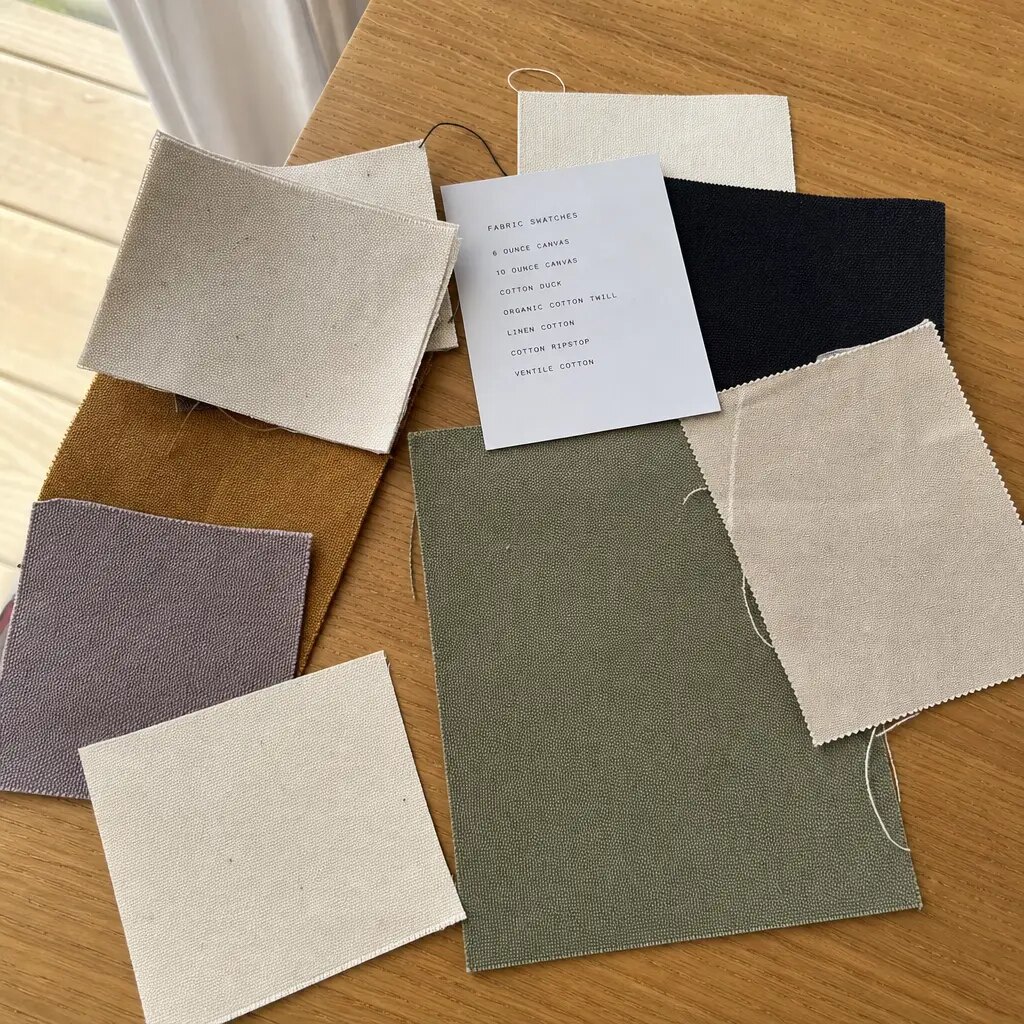
Finish changes both appearance and risk. Unbleached organic cotton has a warm natural shade with flecks, slubs, and lot-to-lot variation. That look often fits coffee branding, but it also means print colors can appear warmer than they do on a white digital proof. Bleached cotton gives a cleaner base for bright artwork. Dyed cotton supports brand color programs, yet it adds lab dip approval, shade tolerance, shrinkage review, and wet/dry crocking checks, especially on darker shades that may rub against clothing.
Organic documentation should be discussed before pricing and certainly before deposit. Some buyers only require a supplier declaration. Others need certification scope, mill records, fabric certificates, or transaction certificates for the actual order. A sewing factory may be able to stitch organic fabric but may not be able to issue the documents your distributor, retailer, or internal ESG policy requires. Ask exactly who can issue what, whether it applies to the production lot, and whether there is extra cost or lead time.
- Ask for a target GSM and tolerance, for example 300 GSM +/-5%, instead of asking for “heavy cotton.”
- State the weave, such as canvas or plain weave, when structure and hand feel matter.
- Approve unbleached shade with a physical swatch, not a monitor image.
- For dyed fabric, request lab dips, bulk swatches, shrinkage expectations, and crocking guidance.
- Confirm organic documentation before deposit so product claims, invoices, and buyer policy stay aligned.
Size the tote around real coffee products
A tote can look perfect in a flat artwork mockup and still fail once it is filled. Coffee bags are bulky, and gift accessories often create hard corners. A common retail starting point is about 38 cm wide by 42 cm high with a 10 cm bottom gusset. Treat that as a baseline, not a rule. If the tote must hold several 340 g bags, a 1 kg bag, a mug, or a boxed gift set, test the pattern with actual products or simple cardboard templates before final approval.
The gusset decision affects usefulness and cost. A flat tote costs less, folds smaller, and can work for flyers, samples, and light event use. A 10 to 12 cm bottom gusset adds volume, helps coffee packs sit more naturally, and makes the tote more useful after the first purchase. Side gussets can add capacity, but they also change folding and print placement. If the tote must stand on a retail table or carry a bundle without distortion, gusset construction belongs in the main specification, not in a side note.
Tolerances keep normal cut-and-sew variation from becoming an argument. Cotton totes are not rigid products, so exact precision is unrealistic, but the factory still needs measurable limits. For many standard totes, body width and height tolerance around +/-1 cm is commercially practical. Gusset depth and handle width may need tighter control, such as +/-0.5 cm, depending on the pattern. Print placement is often managed within +/-5 mm to +/-10 mm when the artwork, fabric, and print process allow it. Agree these figures before bulk production.
Measurement method is just as important as the tolerance. State whether width is measured flat across the top opening or at the body center. Confirm that height excludes handles. Define whether handle length is measured end to end or as handle drop from the top edge. Without this language, the buyer and factory can both be measuring carefully and still disagree because they are checking different points.
- List finished width, height, gusset depth, handle width, handle length, and handle drop where relevant.
- Confirm that dimensions are finished measurements after sewing and any finishing process.
- Use real coffee bags and accessories for a physical fit check before bulk approval.
- Keep artwork away from gusset folds, seam bulk, and bottom corners that can distort prints.
- Add measurement tolerances to the PO, sample approval sheet, and final inspection checklist.
Engineer handles for the load customers will actually carry
Handle failure is one of the worst tote defects because the customer usually discovers it while carrying coffee. Roasters often expect a tote to hold several coffee bags and then keep working as a daily grocery or commute bag. That puts pressure on handle length, width, reinforcement, stitch density, thread quality, and seam allowance. A tote can look clean in photos and still be unacceptable if the handles are weak.
Shoulder handles are usually more versatile than short hand-carry handles. Many roaster totes use handles around 60 to 70 cm end to end, though the best length depends on the bag height and the desired drop. Handle width around 2.5 to 3 cm is common for comfort. Narrower handles save material but can dig into the shoulder when the bag is full. If the tote is positioned as premium merchandise or grocery-style reuse, wider handles and stronger reinforcement are worth reviewing.
Use concrete reinforcement terms. “Strong handles” means different things to different factories. Specify box stitch, cross stitch, bartack, double row stitching, or the exact construction shown on the approved sample. Ask how the handle tape is inserted into the top hem and how much overlap is used. During inspection, handle joints should be checked for skipped stitches, broken thread, loose bartacks, poor alignment, and weak attachment points.
A practical load check can reduce risk even if formal laboratory testing is not required. Define an intended load based on the expected coffee bundle plus a reasonable margin, then ask the factory or inspector to perform a controlled hanging, carrying, or pull check on random samples. The method should be agreed in advance so it is repeatable and does not become an improvised destructive test.
- Specify handle length end to end and handle drop if shoulder comfort matters.
- Define handle width and fabric weight; do not accept a narrow substitute without approval.
- Require box stitch, cross stitch, bartack, or another named reinforcement method.
- Treat handle joints as functional points, not minor appearance details.
- Ask for a practical load check based on expected coffee contents and customer use.
Match the print method to the artwork and cotton base
Most coffee roaster tote artwork is well suited to water-based screen printing: house logos, roast-club marks, simple icons, text, line art, and one to three spot colors. At wholesale quantities, screen printing is usually efficient and can give a softer hand than many transfer options. Still, the result depends on the artwork, ink coverage, cotton texture, and base shade.
Large solid print areas need more caution than small logos. They use more ink, can feel stiff, may strike through to the reverse side, and must be cured properly. Fine line art and small reversed text can fill in on canvas texture. White or bright inks on natural unbleached cotton may look warmer and less crisp than they do in a digital proof. Request a strike-off on the actual fabric and approve it under consistent light before mass production.
Digital print and heat transfer can make sense for complex artwork, gradients, short runs, or seasonal graphics with many colors. They should still be tested on the selected cotton. Transfers may look sharp but can feel glossy, plasticky, or heavy. Digital printing can handle detail, but cost, durability, color limits, and hand feel vary by supplier and fabric. If the tote will be sold as premium organic cotton merchandise, the print feel is part of the product, not just decoration.
Placement deserves the same discipline as color. State the print width, print height, centerline, distance from the top edge, distance from side seams, and minimum clearance from gusset folds. A tolerance such as +/-5 mm to +/-10 mm is clearer than the word “centered.” If the tote will be folded for retail display, e-commerce kits, or subscription boxes, check whether the logo remains visible after folding.
- Use water-based screen print for simple 1 to 3 color logos, text, and roaster graphics.
- Request a physical strike-off on actual fabric for color, line clarity, curing, and hand feel.
- Avoid tiny reversed text unless the printer confirms minimum line and gap limits.
- Define Pantone targets, but judge final color against the approved fabric strike-off.
- Write print placement dimensions and tolerances into the tech pack and inspection file.
Build MOQ around one stable tote body
Coffee roasters often want multiple versions: a core logo, a holiday graphic, a cafe-specific mark, a wholesale partner design, or a limited seasonal drop. That can work, but only if MOQ structure is clear. A supplier may calculate MOQ by fabric purchase, cutting lot, sewing line, print setup, label version, or packing assortment. A price for 5,000 pieces of one design may not apply when the order becomes five designs of 1,000 pieces or ten designs of 500 pieces.
A stronger procurement strategy is to standardize the expensive base. Use one fabric, one GSM, one finish, one body size, one gusset, one handle construction, and one packing method. Then manage limited artwork changes on top of that body. This lets the factory cut and sew more efficiently, reduces shade variation, simplifies inspection, and makes future reorders easier. It also makes the real cost of design splits visible through screen charges, setup fees, label charges, and sorting labor.
Ask suppliers for tiered quotes that mirror the business plan. Useful scenarios include one design at 3,000 pieces, three designs at 1,000 pieces each, five designs at 1,000 pieces each, and a reorder quantity for one best-selling design. Ask whether the designs can share a cutting lot and whether cartons need to be single-SKU or can be packed by fixed ratio.
Be especially careful with fabric color splits. Natural unbleached fabric can often support several print versions with less complexity. Multiple dyed body colors may require dye-lot minimums, lab dips, extra approvals, and closer shade control between reorders. If the brand wants seasonal variety without adding too much risk, changing ink color on one approved natural tote base is often easier than changing the fabric color.
- Request MOQ by body style, fabric color, print artwork, label version, and packing assortment.
- Keep one approved tote body for core, seasonal, and wholesale programs when possible.
- Ask for separate line items for screen charges, label charges, sorting labor, and mixed-pack labor.
- Avoid very small artwork splits unless margin or channel requirements justify the cost.
- Plan reorders using the same approved sample, tolerance sheet, artwork standard, and carton specification.
Approve samples as production standards, not presentation mockups
The pre-production sample is one of the strongest controls in tote sourcing. It should use production fabric, actual GSM, actual finish, actual handle construction, actual labels, and the real print method. A substitute cloth sample can show approximate size, but it cannot confirm drape, print absorption, shade, hand feel, or seam bulk. A digital rendering cannot confirm curing, ink texture, handle comfort, or how the artwork looks when the tote is filled.
Run a fit test during sample approval. Put the intended products inside: two or three 250 g or 340 g coffee bags, a 1 kg bag, a mug, a tin, a dripper box, or the full gift set. Check opening width, gusset shape, handle comfort, print visibility, and whether the tote twists or distorts. Hang it on a shoulder. Carry it by hand. Fold it the way the factory plans to pack it. These checks reveal problems that flat sample photos miss.
Natural organic cotton needs physical approval. Decide what level of flecking, slubs, neps, and shade variation is acceptable. Those features may be part of the natural look, but they still need boundaries. Keep the approved swatch or pre-production sample as the inspection standard. If bulk production uses a new fabric lot, request a bulk swatch before mass cutting when shade consistency matters.
Sample comments should be measurable. Instead of “make it more premium,” write “increase fabric to 320 GSM,” “extend handle length to 68 cm,” “move logo 30 mm higher,” “change reinforcement to box stitch,” or “reduce print width to 240 mm.” Every approved change should update the spec sheet, quote, artwork file, and inspection checklist before the purchase order is finalized.
- Approve fabric, construction, print, labels, and packing before bulk cutting.
- Use real coffee products to test volume, handle comfort, and gusset performance.
- Review the sample hanging, filled, flat, carried, and folded.
- Keep a signed physical standard for fabric shade and print color.
- Document every revision with dates, measurements, updated artwork files, and responsible approvers.
Normalize quotes before comparing unit price
Wholesale tote quotes often look inconsistent because suppliers are pricing different products. One quote may be based on 8 oz cotton, no gusset, short handles, and a small one-color print. Another may include 12 oz organic canvas, a bottom gusset, box-stitched handles, a larger print, side labels, carton marks, and stronger documentation. Those prices cannot be compared fairly until the specifications are aligned.
A quote matrix should lock the major variables: fabric composition, GSM, tolerance, finish, body size, gusset, handle length, handle reinforcement, print method, print size, number of colors, label requirements, packing method, carton details, MOQ split, sample fees, print setup, inspection, documentation, incoterm, and lead-time trigger. Once those inputs are the same, price differences become useful. Then procurement can ask whether a higher quote reflects better materials, included services, lower risk, or simply less competitive production.
Control specification drift. Many projects begin as a simple natural tote and gradually add heavier fabric, a gusset, longer handles, a side label, swing tags, barcode stickers, and special cartons. Each change may be reasonable, but the original price no longer applies. Keep each quote revision in writing and label versions clearly so the purchase order matches the approved sample and final cost sheet.
Landed cost often matters more than ex-factory unit price. A heavier tote may add a small amount to unit cost but increase carton weight and CBM. Individual polybags, barcode labels, and mixed-SKU packing add labor. Organic documentation or third-party inspection may add cost, but they can reduce compliance and receiving risk. Compare the total cost of delivering compliant, saleable totes to the correct warehouse, not just the first number in the quote.
- Use one RFQ sheet for all suppliers so every quote covers the same tote.
- Separate unit price, screen charges, sample charges, documentation, testing, labels, and packing costs.
- Ask for carton dimensions, gross weight, pieces per carton, and estimated CBM before supplier award.
- Confirm incoterm and handover point when comparing overseas suppliers.
- Revise the quote whenever artwork, packing, label, documentation, or construction requirements change.
Define QC tolerances before production starts
Tote bags look simple, but bulk production defects are predictable: off-size panels, twisted handles, skipped stitches, loose threads, open seams, uneven top hems, poor gusset shape, off-center print, ink smudging, shade variation, stains, wrong labels, and incorrect carton counts. These problems are much easier to manage when the buyer defines inspection standards before production. They become subjective disputes when the PO only says “organic cotton tote with logo.”
The inspection file should separate critical, major, and minor issues. Wrong artwork, wrong fabric, missing required labels, unsafe handle construction, unusable open seams, and incorrect SKU quantities are serious because they affect function, compliance, or order accuracy. Minor natural flecks in approved unbleached cotton may be acceptable if they match the signed standard. Buyers should decide in advance how to classify stains, slubs, color variation, loose threads, print pinholes, measurement deviations, and print skew.
If a third-party or buyer inspection will be used, align the AQL plan before the purchase order. The exact inspection level depends on order size and risk, but the basic requirements should be clear: sample size, acceptable quality limits, defect definitions, measurement method, photo-report requirements, rework process, and reinspection rules. Retailer or distributor requirements should override generic factory practice when applicable.
Print QC needs its own checks. Inspectors should verify print size, placement, skew, registration, color against the approved strike-off, curing, cracking, tackiness, smudging, pinholes, and strike-through. Natural cotton bases make color matching less exact than printing on coated paper, so the physical strike-off is more reliable than a digital Pantone reference alone.
Carton QC is part of product quality for B2B buyers. Wrong carton marks, mixed SKUs, short counts, missing barcodes, or overweight cartons can delay receiving even when the totes themselves are well made. Final inspection should include carton count, carton numbering, SKU separation, packing list accuracy, carton condition, and gross weight checks.
- Set tolerances for body size, gusset, handle length, handle width, label position, and print placement.
- Use the approved sample as the standard for shade, hand feel, sewing quality, and print color.
- Classify insecure handles, open seams, wrong labels, wrong fabric, and wrong artwork as serious defects.
- Inspect both product appearance and functional construction.
- Include carton marks, SKU count, mixed-pack ratios, barcode accuracy, and carton weight in the QC checklist.
Plan packing for low plastic, clean receiving, and freight efficiency
Packing is a sourcing decision, not a final warehouse detail. Many coffee brands prefer to avoid individual polybags because reusable organic cotton merchandise should not arrive overpacked in plastic. Flat packing in clean master cartons can work well if the goods are protected from dust and moisture and if the receiving channel accepts bulk-packed units. Inner paper bands, cotton ties, carton liners, or fixed bundles may be enough for some programs, but the buyer must define the method.
Some channels require more structure. A retailer may need swing tags, barcode stickers, country-of-origin marking, fixed inner packs, or approved carton labels. A 3PL may prefer consistent folding and single-SKU cartons. A distributor may need cartons separated by cafe logo, seasonal graphic, or wholesale partner. If these requirements appear after pricing, the supplier may need to add labor, materials, and lead time.
Carton weight deserves attention with canvas totes. Medium-weight organic cotton packed densely can create cartons that are awkward or above warehouse handling limits. Ask for pieces per carton, carton dimensions, net weight, gross weight, and total CBM. If the carton exceeds your 3PL, distributor, or retailer limit, reduce the pieces per carton or adjust the carton size before production packing begins.
Mixed artwork programs need clear packing rules. If three designs are packed randomly, receiving teams may report shortages or spend time sorting. Define whether cartons must be single-SKU, mixed by fixed ratio, or separated with inner bundles. Carton marks should include PO number, SKU, design name, quantity, carton number, and origin marking where required.
- Decide whether individual polybags are prohibited, optional, or required by the sales channel.
- If avoiding polybags, specify flat fold, inner bundle count, carton liner, and moisture protection.
- Set maximum carton gross weight according to warehouse, 3PL, distributor, or retailer rules.
- Require carton marks with PO, SKU, design, quantity, carton number, and origin details where needed.
- Confirm total CBM before final freight booking and landed-cost approval.
Specification comparison for buyers
| Spec decision | Recommended B2B option | When it fits coffee roasters | Buyer risk to check |
|---|---|---|---|
| Fabric weight | 10 oz to 12 oz organic cotton canvas, approximately 280 to 340 GSM, with agreed GSM tolerance such as +/-5% | Retail merchandise, subscription add-ons, bean-bag bundles, cafe resale, and repeated daily use | Below about 220 GSM may look thin and lose shape; above about 380 GSM increases fabric consumption, carton weight, freight cost, and sewing difficulty |
| Fabric finish | Unbleached organic cotton for natural merchandising, or bleached/dyed fabric after physical approval | Roasters wanting a natural base, controlled seasonal colors, or stronger contrast for logo artwork | Unbleached shade and flecks vary by lot; dyed fabric needs lab dip, shrinkage, and wet/dry crocking checks |
| Organic documentation | Define required evidence in RFQ: supplier declaration, certification scope, fabric certificates, transaction certificates where applicable, and chain-of-custody expectations | Retail buyers, distributors, and procurement teams making organic or sustainability claims | A sewing factory declaration alone may not satisfy buyer policy; confirm what documents can be issued for the actual order before deposit |
| Finished size | Common retail start point: about 38 cm W x 42 cm H with 10 cm bottom gusset; written tolerance such as +/-1 cm for body and +/-0.5 cm for gusset | Fits several 250 g to 340 g coffee bags, small gift items, notebooks, and general reuse | Oversized bags raise fabric and freight cost; undersized bags may not fit 1 kg bags, gift boxes, or boxed brewers |
| Handle construction | 60 to 70 cm shoulder handles, 2.5 to 3 cm width, box stitch or cross stitch reinforcement; tolerance such as +/-1 cm length | Paid merch, coffee bundles, grocery reuse, wholesale cafe programs | Weak handle joints are a functional failure; specify reinforcement type, thread quality, and load expectation |
| Print method | Water-based screen print for 1 to 3 spot colors; digital or transfer only after testing on the selected fabric | Logos, roaster marks, line art, roast-club graphics, limited seasonal designs | Large ink areas can feel stiff, strike through, or cure poorly; fine text can fill in on textured canvas |
| Print placement | Define print size, centerline, distance from top edge, seam clearance, and placement tolerance such as +/-5 mm to +/-10 mm | E-commerce photos, retail display, cafe wall display, and walking brand visibility | Artwork close to seams or gusset folds distorts; inconsistent placement looks unprofessional across cartons |
| MOQ strategy | Standardize one bag body and fabric, then split 2 to 4 print versions if the factory confirms MOQ and setup charges | Roaster groups, multi-location cafes, seasonal campaigns, distributor programs | Too many small artwork splits add screen charges, packing complexity, and scheduling risk |
| Packing method | Flat packed in clean master cartons; inner bundles of 25 or 50 if needed; individual polybags only if required by channel | Wholesale receiving, 3PL inventory, low-plastic brand policies, bulk cafe distribution | No-poly packing needs dust/moisture control; overpacked cartons can exceed 3PL handling limits |
Buyer checklist before sampling
- Define the commercial use first: paid retail merch, gift-with-purchase, subscription add-on, wholesale cafe kit, event giveaway, or holiday coffee bundle.
- Specify organic cotton composition, weave, target GSM, GSM tolerance, finish, fabric color, and whether the tote is unbleached, bleached, dyed, or printed on natural base.
- State the documentation level required for the organic claim before quoting, including whether certification scope or transaction documentation is needed for the actual order.
- Confirm finished width, height, gusset depth, handle width, handle length, handle drop if important, seam type, and written measurement tolerances.
- Define the intended contents and weight: number of 250 g, 340 g, or 1 kg coffee bags; mugs; tins; boxed brewers; notebooks; or gift boxes.
- Choose construction details: flat or gusseted bottom, top hem width, side seam type, handle reinforcement method, thread color, label position, and trimming standard.
- Provide artwork as production files and list print width, print height, placement from top edge and side seams, number of colors, Pantone targets, and acceptable placement tolerance.
- Decide whether care/fiber labels, country-of-origin marking, side labels, swing tags, barcode stickers, hang tags, or retailer-specific labels are required.
- Clarify packing: no individual polybags, individual polybags, inner bundles, carton liners, fixed inner packs, mixed-design ratios, and maximum carton gross weight.
- Ask for carton specifications before approval: pieces per carton, carton dimensions, net weight, gross weight, carton numbering, SKU marks, and total CBM.
Factory quote questions to send
- What exact fabric composition, weave, yarn style if known, GSM, GSM tolerance, and fabric finish are included in the quote?
- Is the cotton certified organic at the fiber or fabric level, and what documents can be provided for this specific order rather than for a previous stock lot?
- Is your sewing factory, fabric mill, printer, or trading company included in any relevant certification scope, and can you share the scope certificate where applicable?
- Can transaction certificates or equivalent order-specific documentation be issued if our buyer policy requires them? If yes, what cost and lead time are involved?
- Is the quoted fabric available in stock, greige stock, mill stock, or woven to order? What is the minimum dye or finishing lot if we choose dyed fabric?
- What shrinkage range do you expect after finishing or washing, and are quoted finished dimensions measured before or after any finishing process?
- What shade tolerance do you use for unbleached cotton and dyed cotton, and will you provide lab dips or bulk-lot swatches for approval?
- What are the finished bag dimensions, gusset depth, handle width, handle length, top hem width, and measurement tolerances included in the price?
- What handle reinforcement is included: single row, double row, cross stitch, box stitch, bartack, or another approved construction?
- What is the expected carrying load for this construction, and can you perform a simple load or pull check during production inspection?
Quality-control points to confirm
- Fabric GSM should be checked with a cutter or scale method against the approved target and tolerance, commonly +/-5% unless another tolerance is agreed.
- Fabric appearance must match the approved swatch or pre-production sample for shade, flecking, slubs, weave density, and overall hand feel.
- Organic cotton identity should be verified against the buyer’s required document trail before bulk material is cut, not after finished goods are packed.
- Finished bag width and height should be measured flat at defined points, with written tolerances such as +/-1 cm for sewn cotton goods where appropriate.
- Gusset depth, handle width, handle length, handle drop, top hem width, and label position should be randomly measured and recorded during inspection.
- Handle attachment must show the approved reinforcement type with no skipped stitches, broken threads, loose bartacks, open seams, or weak attachment points.
- Side seams, bottom corners, gusset seams, and top hems should be straight, secure, trimmed cleanly, and free from seam slippage or raw-edge exposure unless designed.
- Print placement must align to approved measurements from top edge, side seam, and centerline; skewed, rotated, or visibly off-center prints should be classified.
- Print color should be judged against an approved physical strike-off under consistent light, because natural cotton bases change perceived color versus digital proofs.
- Print quality should be free from obvious cracking, smudging, tacky ink, heavy strike-through, pinholes in solids, bleeding, poor registration, and under-curing.