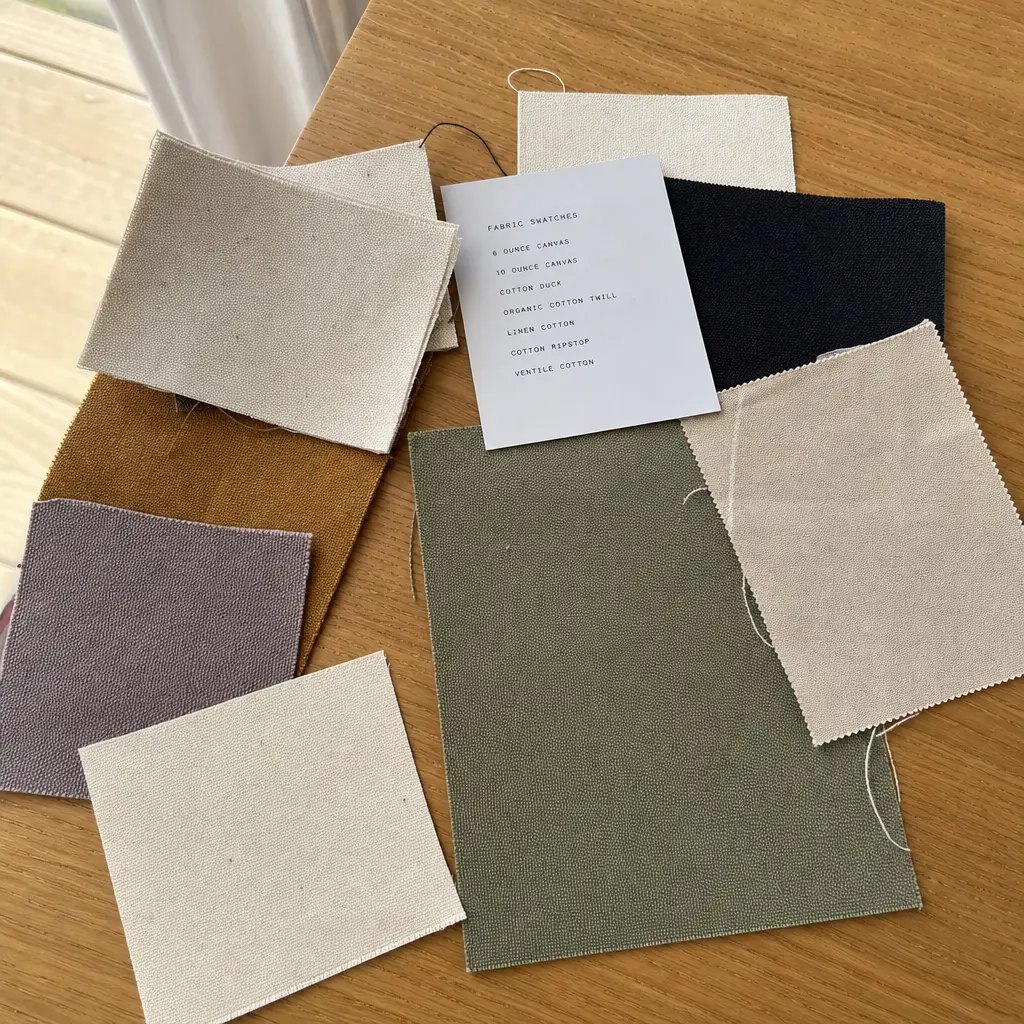
Plan From The Bookstore Shelf Date
Organic cotton totes for university bookstores should be planned from the date the item must be received, counted, priced, and ready for sale or kit packing. A factory ship date is not the same as a bookstore-ready date. Campus receiving teams may need several days to process cartons, especially during orientation, textbook rush, reunion weekend, or holiday retail periods.
A useful buying calendar separates internal approvals from supplier production. Artwork review, licensing approval, organic documentation review, sample approval, barcode creation, and packing instructions can all delay the production clock. If the university mark office must approve logo placement or Pantone color, that approval belongs before bulk printing, not after finished goods are packed.
For a fixed orientation date, build the timeline backward. If totes must be on shelves by August 15, target campus receipt by August 8, final inspection before shipment, finished packing before inspection, bulk sewing and printing before that, and sample approval several weeks earlier. This backward calendar gives procurement a clear view of which missed approval will threaten the delivery date.
- Set the required bookstore shelf date, campus receipt date, and supplier handoff date as separate milestones.
- Add receiving time for carton breakdown, counting, pricing, online inventory setup, or orientation kit assembly.
- Give licensing and sustainability reviewers firm approval deadlines before the factory begins screens or bulk cutting.
- Treat every logo variation, hangtag, barcode, and branch-specific carton mark as a possible schedule dependency.
Choose GSM Around The Selling Use
Fabric weight affects price, hand-feel, perceived quality, durability, and freight. A light 140-160 GSM organic cotton tote may work for a short event giveaway, but it can feel weak when sold as bookstore merchandise. For most university bookstore retail programs, 180-220 GSM is a practical range because it feels more substantial without becoming unnecessarily heavy.
If the tote is expected to carry textbooks, laptops, water bottles, and apparel together, buyers should evaluate 240-280 GSM fabric or reinforced construction. Heavier fabric improves structure, but it also increases unit cost, carton weight, and freight. That tradeoff should be visible in the quote, not discovered after shipping is calculated.
The RFQ should specify finished size, gusset, handle drop, fabric GSM, fabric color, seam finish, and expected carrying use. Natural organic cotton can vary by lot, so repeat orders should reference the approved shade and GSM range. If remaining inventory will sit beside a new reorder, ask the supplier how fabric shade will be controlled or disclosed.
- 160-180 GSM: suitable for light events, low-cost giveaways, and limited-use promotions.
- 180-220 GSM: suitable for standard bookstore retail totes, apparel, notebooks, and light books.
- 240-280 GSM: suitable for heavier bookstore use, premium programs, or laptop and textbook positioning.
- Heavier canvas: consider for gift sets, alumni merchandise, or higher-price retail presentations.
Define Organic Cotton Claim Scope Early
There is a major procurement difference between using organic cotton material and making a customer-facing certified organic claim. A university bookstore may only need organic cotton for internal sourcing goals, or it may need documented claim support for hangtags, product pages, sustainability reports, or licensed merchandise audits. The quote must reflect the required claim scope.
Buyers should ask which party is certified, what product stage is covered, and what documents can be issued for the order. Fabric certificates, transaction documents, scope certificates, and supplier declarations are not interchangeable. A mill document may support the fabric source, while a finished-product chain-of-custody claim may require certification coverage through cutting, sewing, printing, and trading steps.
Claim wording should be approved before hangtags, labels, or e-commerce copy are printed. Avoid broad language if the documentation only supports material content. For example, a statement about organic cotton fabric may be different from a certified finished-product claim. Keeping wording precise protects the bookstore, the distributor, and the supplier from avoidable compliance disputes.
- State whether documentation is for internal records, retail claims, chain-of-custody claims, or sustainability reporting.
- Ask for the certification scope holder, covered process stage, document type, order reference, and expected issue date.
- Do not print claim language until procurement, sustainability, and licensing reviewers agree on the wording.
- Store document copies with the SKU record so reorders can be matched to the same claim requirements.
Compare Lead-Time Options, Not Just Unit Price
Two suppliers can quote the same organic cotton tote with very different timelines because they are assuming different production routes. One may count only sewing days. Another may include fabric procurement, print strike-off, curing, final inspection, packing, and export handoff. For university bookstore procurement, the more transparent schedule is usually easier to manage.
Ask suppliers to break the timeline into fabric preparation, sample making, artwork approval, bulk cutting, printing, curing, sewing, trimming, inspection, packing, and shipment booking. This exposes the critical path. A small repeat order with available fabric may move quickly, while a heavier GSM tote with new artwork and retail barcode packing requires a longer calendar.
Lead-time options should be evaluated with risk. Air freight may rescue a late order, but it can damage margins on heavy cotton totes. Skipping a physical sample may save days but increase retail rejection risk. A clean comparison shows which schedule is fastest, which is safest, and which gives the best total landed value.
- Request a production-step timeline instead of a single phrase such as 30 days after deposit.
- Identify when the supplier considers the production clock started and what files must be complete.
- Ask which schedule step has the least buffer: fabric booking, screen approval, sewing capacity, inspection, or freight.
- Use expedited routes only after calculating freight impact, sample risk, and campus receiving limitations.
Control Artwork And Print Approval
Most university bookstore totes use screen printing because campus marks are often solid logos, department names, athletics graphics, or mascot artwork. Water-based screen print is a common choice for organic cotton because it can give a softer hand-feel than heavier ink systems. However, exact results depend on fabric shade, ink type, curing, print coverage, and logo detail.
Procurement should not rely only on a digital mockup for first-time retail orders. A digital proof confirms layout, but it does not show ink absorption, color shift on natural cotton, print hand-feel, or curing quality. A strike-off or pre-production sample on the intended fabric is the safer approval point for licensed merchandise.
Provide vector artwork, Pantone references, print size, placement from top edge or side seam, and maximum acceptable variation. If fine text, registration, or large ink coverage is involved, ask the factory to flag production risks before screens are made. Clear artwork inputs reduce rework and help protect the launch calendar.
- Use one-color or two-color designs when schedule certainty and cost control matter most.
- Approve physical print color under normal lighting when brand color is important.
- Check fine text and small trademark details at actual size before bulk screen setup.
- Define print placement tolerance in millimeters rather than approving by eye only.
Plan MOQ By Design Split
University bookstore programs often combine several designs in one order: the main university logo, athletics logo, alumni mark, department artwork, campus branch mark, or bookstore private label. The total order quantity may appear efficient, but each design can create separate screens, labels, carton marks, inspection lots, and packing instructions.
The RFQ should show total quantity and quantity per design. A 3,000-piece order split evenly across six logos is very different from 3,000 pieces with one 2,000-piece hero design and five small 200-piece department designs. Small splits may increase unit cost because setup time, printing waste, counting, and packing changeovers are repeated.
A practical way to control cost is to standardize the base tote. Keep the same fabric, size, handle drop, seam finish, label position, and packing method across designs whenever possible. Then negotiate the logo splits around the factory’s screen setup and minimum run logic. This keeps the assortment flexible without turning the order into many small custom productions.
- Ask for MOQ by total order, fabric lot, print design, label, packing method, and carton mark.
- Group small department designs into the same production window to reduce changeover waste.
- Keep base tote specifications identical when campus assortments need multiple logos.
- Save screens, placement records, approved sample photos, and carton templates for reorders.
Use Samples To Lock The Standard
A sample should establish the production standard, not simply show that a factory can sew a tote. For a bookstore retail order, the pre-production sample should match the approved fabric GSM, color, finished dimensions, handle drop, seam finish, print size, print position, label, hangtag, folding method, and packing method. If it does not, the approval should clearly state what remains open.
Avoid writing only 'sample approved.' Record measurements, acceptable corrections, and buyer comments. If the print sits too low, the handle is uncomfortable over a coat, the inner seam looks messy, or the fabric feels too thin, those issues should be corrected before cutting bulk panels. Once panels are printed or fabric is cut, changes can cause cost and schedule damage.
For repeat orders, buyers may not need a full new sample, but they should still confirm the fabric lot, print color, and any changed packing or documentation requirements. A short confirmation step is often enough to prevent the reorder from drifting away from the original approved SKU.
- Measure width, height, gusset, handle drop, print placement, label position, and fold size on the sample.
- Review seam finish, handle reinforcement, thread trimming, and fabric cleanliness as retail presentation details.
- Test the tote with realistic bookstore contents such as books, apparel, folders, or a laptop sleeve.
- Photograph the approved sample from front, back, inside, handle, label, print close-up, and packed view.
Build A Backward Calendar For Peak Dates
Orientation and textbook rush dates are unforgiving because demand is concentrated. A missed delivery may not be recoverable later in the semester. For new organic cotton totes, a practical planning model is two to three weeks for artwork, sample, licensing, and documentation review, followed by four to six weeks for bulk production after approvals are complete. Shipping time and campus receiving time must be added separately.
A sample backward calendar for an August 15 shelf date might look like this: campus receipt by August 8, shipment handoff by late July depending on freight mode, final inspection several days before handoff, packing completed before inspection, bulk sewing and printing through July, fabric booked in June, and sample approval by mid-June. If ocean freight is used, the calendar must begin much earlier.
The important control point is the approval cutoff. If artwork, organic claim wording, barcode files, or sample comments are late, the supplier may still quote the same nominal production days, but the delivery date becomes less reliable. Procurement should publish internal deadlines and treat late approvals as commercial risk, not factory delay.
- For orientation: set sample approval several weeks before bulk production must start.
- For textbook rush: add receiving and branch allocation time because cartons may move through busy campus systems.
- For holiday retail: account for freight congestion, vacation schedules, and slower internal approvals.
- For repeat replenishment: confirm fabric availability and capacity before promising an in-store restock date.
Specify Packing For Freight And Receiving
Packing affects freight cost, damage risk, and bookstore labor. Flat-packed totes are easier to count and usually present better than tightly compressed goods. Inner bundles of 10 or 20 pieces help receiving teams verify quantities quickly. If the bookstore needs hangtags, retail barcodes, price stickers, or branch labels, the factory needs exact files and placement instructions before packing begins.
Carton data should be part of the quote. Ask for pieces per carton, carton dimensions, net weight, gross weight, and packing method for each GSM option. A heavier 260 GSM tote may look affordable at unit price level but become less attractive when air freight or courier charges are calculated. Oversized cartons can also create storage problems in small campus backrooms.
Branch-specific packing needs special control. If one purchase order ships to several bookstore locations, carton marks should clearly show SKU, logo version, quantity, destination, and purchase order reference. Without this, receiving teams may spend extra time sorting cartons during the exact period when staff are already overloaded.
- Use flat packing for retail display, e-commerce inventory, or giftable merchandise.
- Use inner bundles when receiving teams need fast carton-level and bundle-level count checks.
- Avoid vacuum packing unless crease recovery and print appearance have been tested and approved.
- Confirm carton marks by SKU, logo version, branch destination, quantity, and purchase order number.
Set QC Before Production Starts
Quality control should be agreed before bulk production, not negotiated after defects appear. University bookstore totes are visible retail items handled by students, parents, alumni, and staff. Common inspection points include fabric defects, stains, GSM, dimensions, handle strength, seam construction, print adhesion, print placement, label accuracy, loose threads, folding, and carton count.
Functional testing matters because bookstore totes often carry heavier contents than event giveaways. Buyers can specify a practical handle load test based on expected use, such as holding a defined weight for a defined time without seam failure, tearing, or handle distortion. The exact test should be agreed with the supplier so it is repeatable and realistic.
For print quality, curing and rub checks help reduce the risk of ink transfer onto apparel, books, or hands. For retail presentation, classify oil stains, dirt marks, broken stitches, and obvious shade panels as major defects before inspection begins. Clear QC language makes the final inspection faster and reduces arguments about what counts as acceptable.
- Set tolerances for finished dimensions, GSM, handle drop, print placement, and print color before cutting.
- Define major defects such as oil stains, open seams, broken stitches, dirty fold lines, and incorrect labels.
- Check handle reinforcement consistency at all attachment points, especially on heavier GSM totes.
- Verify carton count, bundle count, barcode placement, shipping marks, and SKU separation against the purchase order.
Specification comparison for buyers
| Quote scenario | Typical lead-time impact | Best fit | Buyer risk to control |
|---|---|---|---|
| Repeat tote, same artwork, same packing | Shortest route when fabric is available; sample may be limited to fabric lot and print color confirmation | Semester reorders, bookstore replenishment, recurring alumni merchandise | Do not assume the previous fabric lot is identical; reconfirm GSM, shade, print color, carton count, and any certification documents for the new order |
| New logo on existing base tote | Moderate route; screen setup, strike-off, and licensing approval add time before bulk printing | Department launches, athletics variations, bookstore private-label versions | Logo approval can delay the clock; define who approves Pantone color, placement, trademark use, and final strike-off |
| New organic cotton fabric or heavier GSM | Longer route; fabric sourcing, shrinkage review, sample sewing, and freight estimates need more time | Premium retail totes, textbook-capable totes, sustainability campaigns | Quotes may hide fabric procurement time; require mill source, GSM tolerance, fabric availability date, and whether documentation covers the ordered fabric |
| Multiple logo splits in one PO | Longer than a single design because each split needs screens, counting, packing, labels, and carton marks | Multi-campus systems, bookstore branches, alumni plus department assortments | MOQ per design may drive cost more than total quantity; request a schedule and price by design split |
| Retail-ready packing with barcode or hangtag | Adds approval and packing time; carton data must be set before freight quote | Bookstore shelf stock, e-commerce inventory, gift programs | Late barcode, hangtag, price sticker, or carton mark files can stop packing even when sewing is complete |
| Fixed orientation or book-rush delivery date | Requires backward planning; supplier must reserve capacity before all buffers disappear | Orientation kits, welcome-week sales, start-of-term merchandise | A quote showing only production days is not enough; lock artwork, sample, inspection, shipping, and campus receiving deadlines |
Buyer checklist before sampling
- Confirm the required shelf date, not only the requested factory ship date; include time for receiving, counting, pricing, and display setup.
- Define the selling use: checkout bag, orientation kit, textbook-capable tote, alumni retail item, event giveaway, or licensed merchandise.
- Specify finished size, gusset, handle drop, fabric GSM, fabric color, print method, expected load, seam finish, and retail packing style.
- State whether organic cotton documentation is needed for internal sourcing records, customer-facing claims, or certified chain-of-custody claims.
- Provide vector artwork, Pantone references, print dimensions, placement measurements, licensing contacts, barcode files, and approved claim wording.
- Separate total order quantity from quantity per logo, bookstore branch, carton mark, label style, and packing method.
- Request a line-item quote covering fabric, printing, labels, hangtags, sample charges, packing, carton data, inland freight, and export terms.
- Approve a pre-production sample or strike-off using the correct fabric, ink, handle length, label, folding method, and packing method.
- Set QC tolerances for GSM, dimensions, handle strength, seam defects, print placement, print adhesion, stains, needle damage, and carton counts.
- Build a backward calendar with artwork cutoff, sample approval, fabric booking, bulk production, inspection, shipment booking, and campus receiving dates.
Factory quote questions to send
- What exact organic cotton fabric will be used, including GSM, weave, yarn or canvas description, color, shrinkage range, fabric availability date, and document support for this order?
- Does your quoted organic claim cover only the material composition, or can you support certified chain-of-custody documentation for the finished tote if required?
- Is the MOQ based on total pieces, fabric lot, print design, label style, carton mark, packing method, or a combination of these factors?
- Can you quote 180 GSM, 220 GSM, and 260 GSM versions with estimated carton dimensions and gross weight so we can compare landed cost?
- Which print method do you recommend for this artwork, and what print curing, rub, wash, or adhesion checks will be completed before packing?
- Will the pre-production sample use the same fabric lot or approved equivalent, same ink system, same label, same handle drop, and same fold as bulk goods?
- What are your tolerances for finished dimensions, GSM, handle drop, print placement, print color, seam allowance, and carton count?
- How many pieces will be packed per inner bundle and master carton, and what are the estimated carton dimensions, net weight, and gross weight?
- What artwork, licensing approval, hangtag, barcode, care label, carton mark, and shipping files do you need before the production clock starts?
- If our required delivery date is fixed, what is the latest safe date for sample approval, bulk material booking, final inspection, and shipment handoff?
Quality-control points to confirm
- Verify fabric GSM against the approved specification using an agreed tolerance, commonly plus or minus 5% unless the purchase order sets a tighter limit.
- Measure finished width, height, gusset, handle drop, and print placement after sewing and pressing, not from cutting panels alone.
- Check handle reinforcement at all attachment points; bookstore totes often carry books, laptops, apparel, and impulse purchases in the same bag.
- Confirm print color, registration, placement, curing, adhesion, and rub resistance on the actual fabric shade used for bulk production.
- Classify oil stains, dirt marks, heavy slubs, broken stitches, open seams, needle holes, and dirty fold lines before inspection begins.
- Review inside seams, thread trimming, label attachment, hangtag placement, barcode readability, and folding consistency for retail presentation.
- Check carton counts, inner bundle counts, SKU separation, carton marks, branch destinations, net weight, gross weight, and purchase order references.
- Retain approved sample photos and inspection findings for reorders so the next production lot can be compared against the same standard.