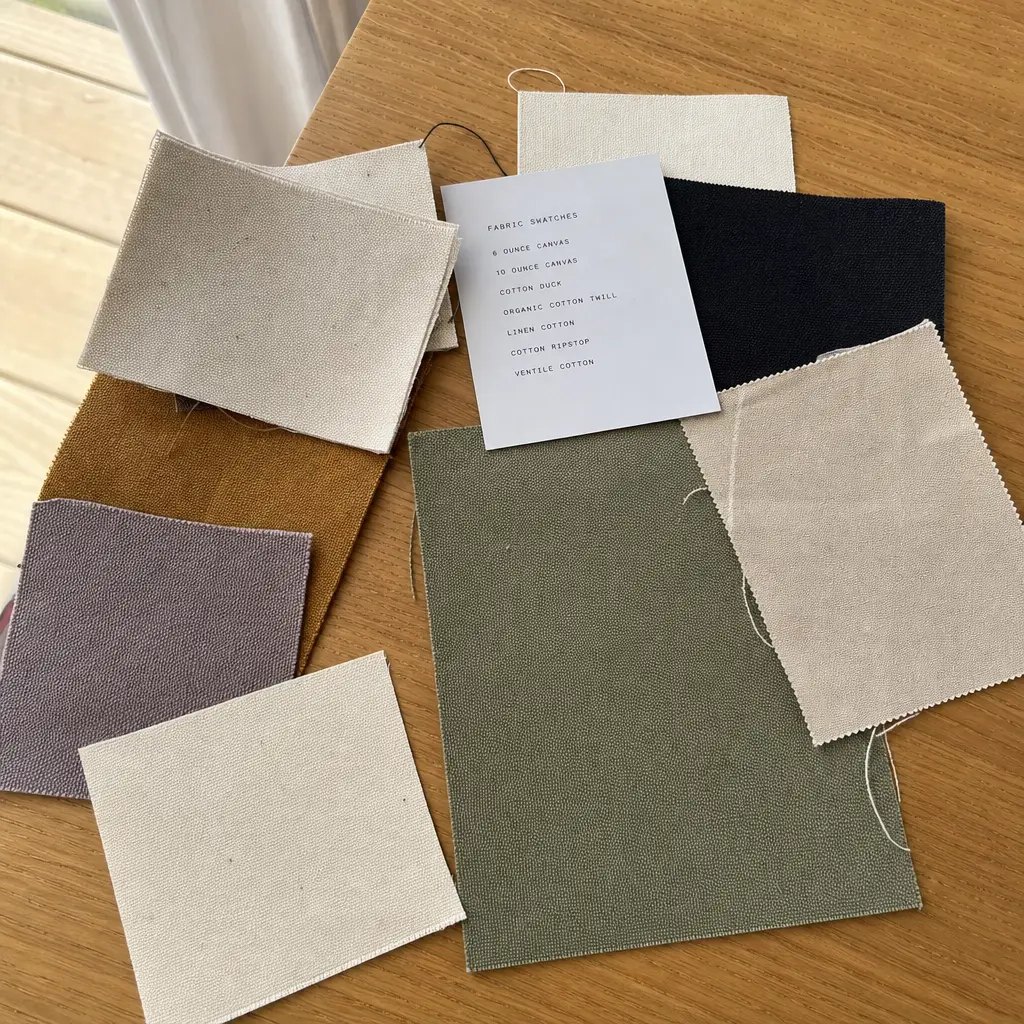
Start With the Bookstore Use Case
Fabric weight is not a decoration choice. For organic cotton totes sold or distributed by university bookstores, GSM drives perceived value, print result, carrying strength, carton weight, freight cost, and receiving efficiency. A 5 oz tote can be a sensible orientation giveaway, but the same tote can feel underbuilt next to textbooks and hoodies on a retail shelf. A 12 oz canvas tote can look premium, but it may push freight and carton weight higher than the buyer expected.
The first RFQ decision should be the tote's job. A bookstore may need one low-cost promotional tote for campus events and a different paid tote for daily student use. Combining both into one vague specification usually produces confusing quotes because suppliers choose different fabric weights, handle constructions, and print assumptions. The result is a spreadsheet that looks comparable but is not actually comparing the same product.
- Giveaway tote: prioritize low unit cost, quick production, flat packing, and acceptable logo visibility.
- Retail tote: prioritize handfeel, repeat-use strength, better seams, stronger handles, and a fabric weight that justifies the shelf price.
- Gift or alumni tote: prioritize heavier canvas, better finishing, branded label details, and carton planning for clean presentation.
- Online bookstore tote: prioritize barcode/SKU handling, consistent folding, and packaging that protects the print during fulfillment.
Read Fabric Weight Correctly
Organic cotton totes are often quoted in ounces, while many factories also work in GSM. Both are useful, but buyers need to know whether the supplier is quoting the finished fabric weight or an earlier material stage. A natural 8 oz canvas after finishing may not behave the same as a greige fabric described as 8 oz before washing, dyeing, or calendering. If the quote does not say finished GSM, the comparison is incomplete.
For university bookstore programs, the practical range is usually 5 oz to 12 oz. Below 5 oz, the tote can be very light and may not support retail positioning. Above 12 oz, the bag becomes more expensive to sew, pack, and ship, and the handles and seams must be upgraded to match the body fabric. The best weight is the one that matches the intended load, price point, print design, and shipping model.
- 5 oz to 6 oz, about 170-200 GSM: light promotional tote, low cost, easy folding, limited structure.
- 7 oz to 8 oz, about 240-270 GSM: better handfeel for mid-range programs, still economical for larger quantities.
- 10 oz, about 340 GSM: common retail canvas weight for campus stores needing durability without excessive carton weight.
- 12 oz, about 400 GSM: premium canvas feel, stronger body, higher cost and bulkier packing.
Match GSM to Carrying Load
A bookstore tote is often used harder than a normal promotional bag. Students carry textbooks, notebooks, a laptop sleeve, drink bottles, apparel, and small gifts. The weak point is rarely the center of the fabric panel; it is more often the handle seam, top hem, bottom corner, or gusset seam. A heavier fabric without stronger stitching can still fail in use.
A good RFQ should define the expected load and the construction required to support it. For a paid bookstore retail tote, specify handle width, handle drop, reinforcement stitch, seam type, and whether the bottom has a gusset. If the tote will be used in orientation kits, include the actual kit contents and estimated weight. That allows the factory to recommend fabric and stitching based on use instead of guessing from a product photo.
- For light event contents under 2 kg, 5 oz to 6 oz with standard stitching may be acceptable.
- For regular books and apparel up to 5 kg, 8 oz to 10 oz with reinforced handle stitching is a safer specification.
- For premium totes expected to carry heavier campus items, 12 oz canvas with box-x handle reinforcement and a bottom gusset is more suitable.
- For wide totes, consider extra bottom seam strength because the load spreads differently than on a narrow shopper shape.
Do Not Compare Quotes by Unit Price Alone
Organic cotton tote quotes can look close at first glance, but small specification changes can change the real cost. Fabric weight, fabric width utilization, organic documentation, dyed versus natural fabric, print color count, handle style, label type, packing method, and carton cube all affect the final landed cost. A low unit price may be based on thinner fabric, stock handles, fewer print passes, or bulk cartons that do not fit the bookstore's receiving plan.
When comparing suppliers, normalize the quote. Put each quote into the same assumptions: finished bag size, fabric GSM, handle drop, print size and color count, label requirements, packing, carton quantity, inspection, and Incoterm. For bookstore buyers importing through a distributor or campus retail group, carton cube and gross weight deserve special attention because canvas totes can become expensive to move even when the product price looks stable.
- Separate base bag cost from print setup, label, individual packing, carton upgrade, and sampling fees.
- Compare carton CBM per 1,000 pieces, not only pieces per carton.
- Record whether the price is EXW, FOB, CIF, DDP, or domestic delivered.
- Confirm whether organic cotton documentation is included or charged separately through material sourcing.
Choose Print Method Around Fabric Surface
Most university bookstore totes use screen printing because it handles solid logos, mascots, department names, and bookstore branding well. On natural organic cotton, the base fabric has a warmer shade and more visible texture than bleached cotton or polyester. Fine lines, small registered marks, and narrow serif lettering may lose sharpness on heavier canvas, especially if the print area crosses seams or sits near a folded edge.
For large solid prints, ink handfeel matters. A thick plastisol-style deposit may look strong but feel heavy on a natural cotton tote. Water-based or pigment printing can feel softer, but color brightness may be lower on natural fabric. The buyer should send vector artwork early and allow the supplier to identify minimum line thickness, print size limits, and Pantone tolerance before the pre-production sample.
- Use screen print for one- to four-color logos with clean shapes and repeatable color control.
- Use heat transfer only when artwork detail requires it and the handfeel is acceptable for the retail price point.
- Avoid placing print too close to the top hem, side seam, bottom gusset, or handle stitching unless the factory approves the printable area.
- Request a strike-off or printed sample on the actual fabric weight, because ink appearance changes by weave and GSM.
Set MOQ by Version, Not by Total Order
University bookstore programs often split demand across departments, sports events, alumni campaigns, orientation programs, and seasonal graphics. A buyer may say the order is 10,000 pieces, but the factory sees five fabric colors, eight artworks, two sizes, and several packing versions. Each split can affect fabric sourcing, cutting efficiency, print setup, sewing allocation, and inspection time.
MOQ logic should be written clearly in the RFQ. Some factories can combine the same bag body and change only the print, while others treat each print as a separate production setup. Dyed organic cotton usually has higher minimums than natural fabric. Heavy canvas may also require more material planning because the factory must reserve enough fabric from one lot to keep shade and weight consistent.
- State quantity by SKU, not only total project quantity.
- Identify which versions share the same fabric, size, handle, and packing.
- Separate natural cotton from dyed cotton because dye lot minimums can change MOQ.
- Ask whether overrun and underrun tolerance applies per SKU or across the total order.
Approve Samples With Measurable Criteria
A pretty sample is not enough. The sample must prove that the selected fabric weight, print method, stitching, label, and packing can be produced consistently. For organic cotton totes, the sample should be made from the intended fabric or clearly marked as a construction-only sample. If a supplier uses available stock fabric for the first sample, do not treat the handfeel or shade as final.
The pre-production sample should become the control standard for bulk inspection. Record the sample date, fabric weight, print method, logo size, print position, handle drop, sewing thread, label placement, and packing method. If the buyer approves changes by email after receiving the sample, those changes should be added to the final specification sheet before bulk starts.
- Measure finished bag width, height, gusset, handle drop, and print position from fixed reference points.
- Weigh or verify fabric GSM against the agreed tolerance, ideally on production fabric.
- Rub the printed area dry and lightly wet to see whether color transfer is a concern.
- Load the sample with the expected bookstore contents and inspect handle seam distortion after carrying.
- Fold the sample as it will be packed and check whether print cracking, creasing, or offsetting appears.
Control Organic Cotton Claims
Organic cotton language must be handled carefully. A tote described as organic should be supported by supplier documentation that matches the material and claim. Buyers should not rely on a website badge or product page phrase when the goods will be sold through a university bookstore. The purchase file should show what the supplier can document for the actual fabric or finished product, depending on the claim being made.
The label also matters. If the tote says organic cotton, the care label, hangtag, invoice description, and marketing copy should be aligned. If the product uses a blend, the content statement should say so. For distributors and campus retail buyers, the safest process is to collect documentation before the order is placed, not after goods are ready to ship.
- Request current scope evidence from the supplier or mill relevant to organic cotton processing.
- Clarify whether certification covers fiber, yarn, fabric, dyeing, printing, sewing, or finished goods handling.
- Avoid adding unsupported claims such as carbon neutral, chemical free, or fully sustainable unless separately documented.
- Keep label wording consistent with the approved purchase order and supplier documents.
Plan Packing for Campus Receiving
Packing is often treated as an afterthought, but bookstore receiving teams care about carton weight, SKU separation, carton marks, and fast counting. A heavy 12 oz canvas tote packed 100 pieces per carton may create a carton that is difficult to handle. A light 5 oz tote can be packed more densely, but excessive compression can crease the print or make shelf preparation slower.
For wholesale bookstore supply, flat packing is usually efficient. Individual polybags may be useful for online fulfillment or premium gift programs, but they add labor, material cost, carton volume, and sustainability concerns. If the bookstore wants to avoid individual plastic, consider paper belly bands, SKU stickers on bundles, or master carton organization that still protects the print.
- Approve carton quantity, dimensions, gross weight, and CBM before bulk packing begins.
- Use carton marks that include SKU, artwork code, color, quantity, gross weight, net weight, and purchase order number.
- Separate mixed artworks by inner bundle or carton to prevent receiving errors.
- Add moisture protection for ocean shipment, especially for natural cotton and uncoated cartons.
- Keep carton gross weight within the receiving team's practical handling limit.
Build a Realistic Production Schedule
The lead time for organic cotton totes is not only sewing time. The schedule may include fabric reservation, organic material verification, dyeing if needed, lab dip approval, print artwork adjustment, strike-off, pre-production sample, bulk cutting, printing, curing or drying, sewing, trimming, inspection, packing, and export booking. When the bookstore deadline is tied to orientation week or semester start, missed approvals can become more damaging than factory sewing capacity.
A practical schedule has decision points. The buyer should know when artwork must be final, when sample comments are due, when fabric is locked, and when packing data must be approved. If multiple campuses or departments are involved, appoint one approval owner. Delayed logo clearance or late SKU changes can push production into air freight discussions, which usually destroys the cost advantage of cotton totes.
- Natural fabric stock programs can move faster than custom dyed organic canvas.
- New artwork needs extra time for strike-off, screen making, and color adjustment.
- Heavier canvas may need more sewing capacity and slower machine speed than lightweight sheeting.
- Final inspection should be scheduled before the cargo is sealed and delivered to the forwarder.
- For fixed bookstore events, build in buffer for sample shipping, comments, and customs clearance.
Specification comparison for buyers
| Spec decision | Recommended option | When it fits | Buyer risk to check |
|---|---|---|---|
| Fabric weight for low-price event tote | 5 oz to 6 oz organic cotton, about 170-200 GSM, plain weave | Orientation week giveaways, short-term campus events, light bookstore promos with folded handouts, pens, and small apparel | May feel too thin for a paid retail item; dark print can show fabric slub and uneven surface more clearly |
| Fabric weight for bookstore retail tote | 8 oz to 10 oz organic cotton, about 270-340 GSM, canvas weave | Main shelf program where the tote must carry books, hoodies, notebooks, drinkware, and repeat campus use | Quote must state finished GSM tolerance and shrinkage; some suppliers quote greige weight before washing or finishing |
| Fabric weight for premium alumni or gift tote | 12 oz organic cotton canvas, about 400 GSM, with bottom gusset and reinforced handle stitching | Higher retail price point, alumni packs, campus store gift bundles, or co-branded merchandise programs | Higher duty, freight, and carton weight may affect landed cost more than the unit price difference suggests |
| Handle construction | Same-fabric handles at 2.5 cm to 3.5 cm width, cross-stitch or box-x reinforcement | Bookstore totes expected to carry textbooks, laptops, or water bottles without handle distortion | Handle pull strength should be tested after printing and finishing, not only on unprinted blank fabric |
| Print method for university logos | Screen print for solid one- to four-color logos; pigment print for softer natural finish | Campus wordmarks, mascot art, department logos, and bookstore-branded seasonal designs | Fine serif text and registered marks need minimum line thickness; confirm Pantone tolerance on natural organic cotton |
| Internal label and compliance marking | Organic cotton content label, country of origin, care label, and optional bookstore SKU label | Retail sale through campus stores, online bookstore fulfillment, and distributor inventory programs | Unverified organic claims can create compliance risk; label wording must match available certificates and purchase documents |
| MOQ planning by color and artwork | Treat each fabric color, print artwork, and bag size as a separate production lot unless supplier confirms combined setup | Multi-campus systems, department versions, sports season designs, and orientation plus bookstore retail programs | Small split orders can lose price advantage because dyeing, printing screens, and packing are charged per version |
| Packing method | Flat pack 50 or 100 pcs per export carton, with moisture protection and carton marks by SKU | Bookstore receiving teams that need quick count, scan, and shelf transfer without repacking | Heavy canvas cartons can exceed ergonomic receiving limits; carton dimensions and gross weight should be approved before bulk |
Buyer checklist before sampling
- Define the tote use case before selecting GSM: giveaway, paid bookstore retail, gift bundle, orientation kit, or alumni merchandise.
- Request fabric weight in both oz and GSM, and state whether the measurement is finished fabric weight after dyeing, washing, or calendering.
- Specify fabric type: organic cotton sheeting, organic cotton canvas, recycled-organic cotton blend, or dyed organic cotton canvas.
- Set finished bag size, handle drop, gusset depth, seam allowance, and stitching reinforcement in the RFQ, not only the flat bag dimensions.
- Send logo files in vector format and identify Pantone colors, printable area, minimum text size, and any trademark clearance rules.
- Require a pre-production sample using the intended fabric weight, print method, handle construction, label, and packing style.
- Approve shrinkage, print wash fastness, seam strength, handle pull strength, odor, color shade, and carton packing before bulk production.
- Ask suppliers to quote by SKU and by quantity break, including setup charges, sample charge, packing method, carton size, gross weight, and lead time.
- Separate organic certification evidence from marketing language; request transaction or scope evidence that supports the specific material claim.
- Calculate landed cost using carton cube, gross weight, import duty basis, inspection cost, and campus receiving requirements, not unit price alone.
Factory quote questions to send
- What is the finished fabric weight in GSM and oz, and what tolerance do you apply during bulk production?
- Is the quoted fabric certified organic cotton, organic in-conversion cotton, or a blend? What documents can support the claim for this order?
- Is the fabric dyed, natural, bleached, or washed? Does the finishing process change shrinkage, handfeel, or print appearance?
- What is the MOQ per bag size, fabric color, print artwork, and packing version?
- Which print method do you recommend for our logo artwork, and what line thickness or color limits should we adjust before sampling?
- Can you quote screen setup, sample cost, bulk unit price, label cost, individual polybag cost if used, carton packing, and inland freight separately?
- What handle pull test result can you support for the selected GSM and stitching pattern?
- What are the carton dimensions, quantity per carton, gross weight, and estimated CBM for each 1,000 pieces?
- What is the realistic lead time for lab dip or strike-off, pre-production sample, bulk fabric, printing, sewing, inspection, and export packing?
- Will the bulk sample be made from actual production fabric, or from available stock fabric for visual approval only?
Quality-control points to confirm
- Finished fabric weight within agreed tolerance, commonly plus or minus 5 percent unless a tighter range is written into the purchase order.
- Finished bag size tolerance controlled on width, height, gusset, and handle drop, not only the flat body panel.
- Handle pull strength tested on finished bag construction after printing and sewing.
- Seam slippage, skipped stitches, broken threads, loose ends, and uneven top hemming checked against an approved sample.
- Print position tolerance measured from bag edges and handle seam, with a clear allowance such as plus or minus 5 mm for normal tote production.
- Print color compared to approved strike-off under consistent light, especially on natural cotton where base shade affects the final color.
- Rub fastness and wash fastness reviewed when the tote is promoted as reusable or washable.
- Needle marks, stains, oil spots, odor, mildew, and excessive fabric slub controlled before packing.
- Carton marks, SKU labels, quantity per carton, inner packing, and moisture protection checked against the bookstore receiving plan.
- Random final inspection uses the approved pre-production sample as the standard, not a catalog photo or earlier quotation image.