Start With The Event Use
Organic cotton totes for trade show exhibitors are usually bought under date pressure, but the best RFQ starts with the carrying job. A tote used only for brochures can be lighter and simpler than a tote used as a premium sponsor gift. A tote packed with catalogs, samples, drinkware, or booth staff materials needs stronger fabric, reinforced handles, and packing that survives repeated handling before the show opens.
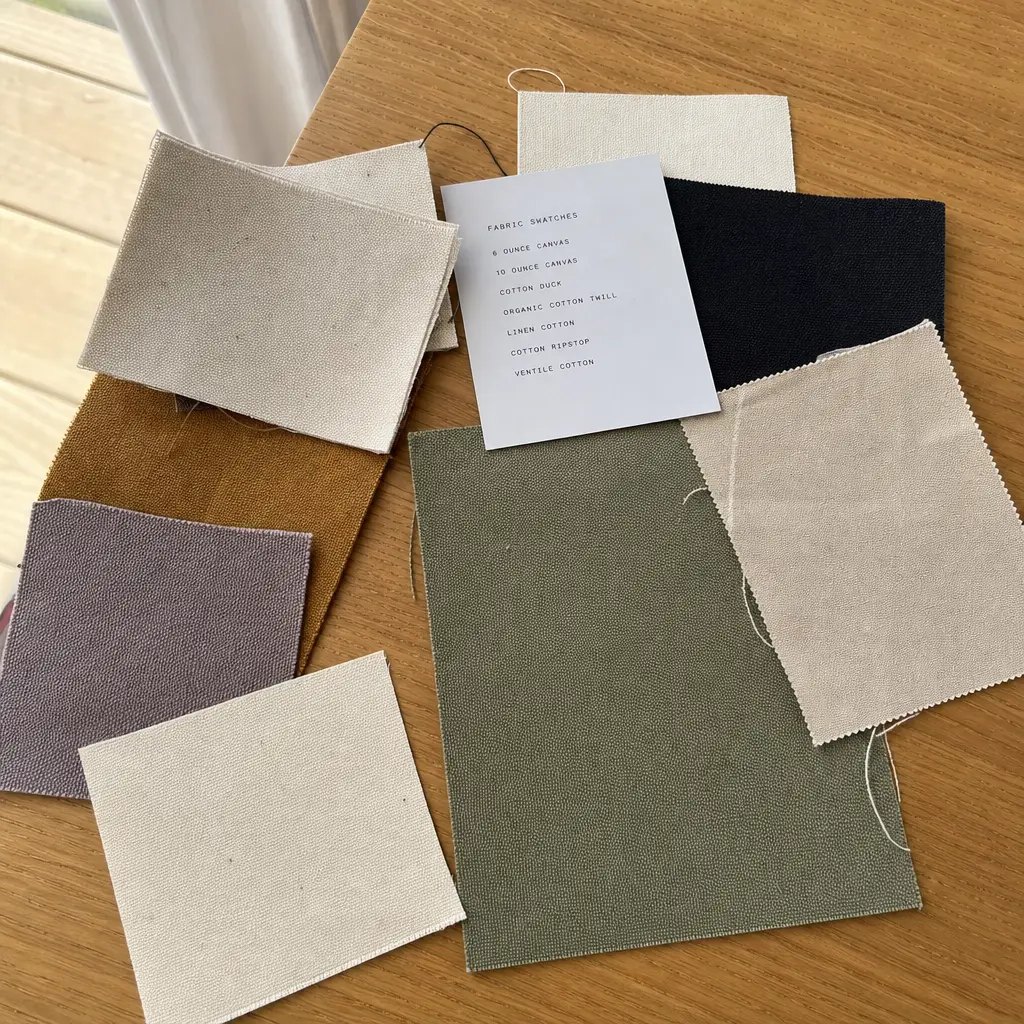
Procurement teams should separate the order by use case before asking factories for price. One generic specification often creates misleading quotes because each supplier fills in missing details differently. A 140 GSM natural cotton tote and a 280 GSM organic cotton tote may look similar in a price sheet, but they are different products in hand, in cartons, and in freight cost.
- Literature handout bag: 120-160 GSM can be acceptable if the load is light and the print area is not too heavy.
- Visitor gift tote: 180-240 GSM gives a better handfeel and usually supports cleaner brand presentation.
- Premium exhibitor kit: 240-300 GSM is more suitable when the tote carries samples or will be reused after the event.
- Retail resale tote: include stricter stitching, labeling, barcode, packaging, and compliance requirements from the start.
Choose GSM By Load And Brand Position
Fabric weight is one of the largest cost drivers for organic cotton totes. It affects material cost, print result, sewing speed, carton weight, and the way the bag feels when handed to a visitor. For most trade show programs, 140-180 GSM is the practical range for high-volume giveaways, while 220-280 GSM is used when the tote must feel more substantial or carry a heavier load.
The lowest quote often comes from the lightest fabric, a narrower handle, or a smaller bag body. Those changes are not always wrong, but they must be visible in the quote comparison. A buyer comparing suppliers should require every quote to state finished GSM, fabric type, bag dimensions, handle dimensions, and whether the fabric is natural unbleached, bleached, dyed, or custom dyed.
- For natural organic cotton, expect visible cotton seed flecks and minor yarn character unless bleached fabric is specified.
- For dark printed logos, very thin fabric may show ink strike-through or panel distortion.
- For large solid print areas, a midweight fabric usually holds a cleaner face and reduces stiffness complaints.
- For custom dyed fabric, plan higher MOQ, longer lab dip approval, and possible shade tolerance across dye lots.
Set Construction Details Before Pricing
A tote bag quote is only useful when construction details are fixed. The most common trade show format is an open-top flat tote with two long handles, but small changes can move the price and quality outcome. Handle length, handle width, side seams, bottom gusset, top hem width, and reinforcement stitching should be written into the RFQ instead of left to the factory's default.
For exhibition use, handle strength matters because visitors often add more weight during the day. Cross-stitch or box-stitch reinforcement at the handle joint is a small detail that prevents many failures. A wider handle also feels better on the shoulder, but it consumes more fabric. If the bag must stand better or hold boxed samples, a bottom gusset may be worth the extra material and sewing time.
- Common flat tote size: about 38 x 42 cm for A4 literature and event handouts.
- Common long handle length: 60-70 cm for shoulder carry, measured end to end before sewing or as finished drop if specified.
- Handle width: 2.5 cm is common; 3 cm or wider improves comfort but increases fabric use.
- Reinforcement: box stitch or cross-stitch should be specified for medium and heavy loads.
- Gusset: useful for product samples, but it increases cutting complexity, fabric consumption, and carton volume.
Control The Organic Claim
The word organic should not be treated as decoration. If the tote, hangtag, website, or exhibitor sustainability material makes an organic cotton claim, the buyer needs to define what proof is required. Some buyers only need fabric-level support for internal purchasing records. Others need chain-of-custody documentation connected to the finished order. These are different requirements and can affect supplier selection.
A practical RFQ should state the required certification route and document expectations. The factory can then confirm whether it is quoting certified organic cotton fabric, certified production under a recognized scheme, or only a material claim from an upstream mill. This avoids a common dispute: the bag price is approved, but the documents later do not support the buyer's marketing or compliance language.
- Write the exact claim the brand plans to use, such as organic cotton tote or made with organic cotton.
- Request available scope certificate or transaction certificate information before mass production, not after shipment.
- Clarify whether labels, hangtags, and packaging may display certification marks.
- Do not assume a natural cotton color means organic cotton; color and fiber claim are separate issues.
- Keep certification document requirements tied to the purchase order and artwork approval file.
Match Print Method To Artwork
Most organic cotton totes for trade show exhibitors use screen printing because it is cost-efficient for repeated logos, slogans, booth numbers, sponsor names, and event graphics. Water-based ink is often preferred for a softer handfeel and a more natural product story. Plastisol, pigment, or discharge options may be discussed depending on fabric color and design, but the quote should identify the ink system clearly.
Complex artwork changes the production logic. Gradients, small text, QR codes, photographic artwork, or many colors may require heat transfer or digital printing, especially at lower quantities. These methods can look sharp, but buyers should review handfeel, edge definition, wash expectation, and folding resistance. On a trade show tote, the bag may be folded, packed, unpacked, and carried all day, so print flexibility matters.
- For 1-3 solid colors on natural fabric, screen printing is usually the cleanest commercial choice.
- For large solid blocks, check ink stiffness and whether the panel waves after curing.
- For QR codes, approve a scannable printed sample at actual size before bulk production.
- For fine text, avoid placing small letters across heavy slub or seam areas.
- For multi-version exhibitor orders, group artwork by ink color and print size to reduce setup changes.
Understand MOQ Logic
MOQ is not only a sales rule. For organic cotton totes, MOQ comes from fabric sourcing, cutting efficiency, sewing line setup, printing screens, ink mixing, labeling, packing, and carton handling. A small order with five artwork versions can create more factory work than a larger order with one print. This is why two suppliers may quote very different minimums for what appears to be the same tote.
Distributors serving several exhibitors can reduce cost by standardizing the blank tote and varying only the print, or by grouping orders around one fabric GSM and one body color. Brand owners buying for a single event should avoid unnecessary colorways unless the marketing value is clear. Every version adds approval work and creates more chance of mixed packing at the warehouse.
- MOQ may be lower for natural fabric than for custom dyed organic cotton.
- MOQ may increase when a buyer requires certified chain-of-custody documents for the finished product.
- MOQ by artwork version should be separated from total order quantity.
- Small quantities often carry higher print setup and sample cost per unit.
- A factory may accept a lower MOQ if the buyer uses stock fabric width, standard size, and simple packing.
Approve Samples With Acceptance Criteria
A sample should answer production questions, not just show a rough idea. For trade show deadlines, the pre-production sample is the buyer's last good chance to catch fabric weight, handle length, logo placement, print color, and stitching issues before the factory cuts and prints the full order. The approved sample should be kept as the reference for inspection.
When time is short, buyers sometimes approve a photo sample or a substitute fabric sample. That may be acceptable for an early concept review, but it is risky for mass production approval. A real pre-production sample should use actual bulk fabric, actual print method, actual thread, actual handle construction, and the agreed finished size. If a substitute is unavoidable, the PO should clearly state which details are still pending approval.
- Measure finished width, height, handle length, handle width, and print placement on the sample.
- Weigh and verify fabric GSM using a proper sample cutter or agreed test method when GSM is critical.
- Fold the printed panel to see whether ink cracks, sticks, or changes surface appearance.
- Load the tote with realistic event materials and inspect handle stress points.
- Photograph approved sample details and share the file with the supplier, inspector, and receiving warehouse.
Plan Packing Around The Booth
Packing is often treated as a back-office detail, but for trade show exhibitors it affects booth setup speed. Bulk-packed totes in inner bundles of 25 or 50 pieces are easy to count, stage, and distribute. Individual polybags may be useful for retail resale or premium gift handling, but they slow down unpacking and create extra waste at the venue.
Carton planning should include more than pieces per carton. Procurement should request carton dimensions, gross weight, net weight, carton mark layout, and whether mixed artwork versions will be separated by carton. A distributor shipping to several exhibitors or locations needs carton-level identification to avoid opening boxes at the venue and manually sorting bags during setup.
- For simple handout programs, use flat bulk packing with paper band or inner bundle labels.
- For multi-exhibitor orders, assign artwork code, event name, quantity, and destination on carton marks.
- Keep carton gross weight manageable for manual handling, especially when totes are high GSM.
- Avoid over-compressing printed totes before ink is fully cured.
- Request estimated CBM early so freight and warehouse costs are not discovered after production.
Compare Quotes By Landed Cost
The lowest FOB unit price is not always the lowest landed cost. Organic cotton totes can vary widely in carton volume, certification cost, print setup, sample charges, inland freight, inspection cost, and packaging labor. A heavier but better-packed tote may create a stronger event result, while a slightly cheaper tote may require more cartons and create more damage or sorting work.
A clean quote comparison should place every supplier on the same specification and the same trade term. If one supplier quotes EXW and another quotes FOB, the buyer needs to add local transport, export handling, and document charges before comparing. For urgent trade show orders, freight mode can dominate the final cost, so carton CBM and gross weight should be collected at quote stage.
- Compare unit price with the same GSM, size, handle, print area, and packing method.
- Separate tooling, screen, sample, certification, and labeling charges from the bag unit price.
- Use estimated carton dimensions to calculate CBM and freight impact.
- Check whether inspection, export carton quality, and document fees are included.
- For air freight backup, estimate chargeable weight early because cotton totes can become bulky.
Protect The Schedule
Trade show programs have a hard deadline. A beautiful tote delivered after the event has almost no value. The schedule should be built backward from the booth delivery date, with time for sample approval, fabric purchase, cutting, sewing, printing, curing, packing, inspection, freight booking, customs clearance, and final local delivery. The purchase order should show milestone dates, not just one final ship date.
Schedule risk increases when the order includes custom dyed fabric, many artwork versions, strict certification documents, special labels, or split shipments. The buyer can reduce risk by approving standard fabric early, freezing artwork before sample making, and keeping packing requirements clear. A last-minute logo change may look small in an email but can require new screens, new sample approval, and a new print schedule.
- Freeze final artwork before screen making and request a digital proof with dimensions.
- Reserve production capacity after sample approval, especially before peak exhibition seasons.
- Allow curing and resting time before tight folding or carton compression.
- Schedule inspection before final balance payment and before the goods leave the factory.
- Keep an air freight contingency only for part of the order if the full volume would be too costly.
Specification comparison for buyers
| Spec decision | Recommended option | When it fits | Buyer risk to check |
|---|---|---|---|
| Fabric weight | 140-180 GSM organic cotton for light giveaways; 220-280 GSM for heavier booth kits | Use lower GSM for brochure carry bags and higher GSM when samples, catalogs, or retail-quality gifts are packed inside | A low GSM tote may pass unit price targets but fail at handle stress, print show-through, or perceived value on the exhibition floor |
| Cotton certification evidence | Request transaction certificate or scope certificate route depending on claim level | Needed when the tote will carry an organic claim on the bag, hangtag, website, or exhibitor sustainability report | A supplier may quote organic cotton fabric without proving chain-of-custody for the finished order |
| Bag construction | Plain open-top tote with reinforced cross-stitch handles | Best for trade show handouts where speed, stackability, and unit cost matter | Handles sewn only with a single line can tear when visitors add catalogs, drink bottles, and sample packs |
| Print method | Water-based screen print for 1-3 solid colors; heat transfer only for complex gradients or short runs | Screen print is stable for most logos and event graphics on natural cotton | Large ink coverage on thin fabric can stiffen the panel, crack after folding, or cause uneven shade on slub yarn |
| Bag size | Common working size around 38 x 42 cm with 60-70 cm handles | Fits A4 catalogs, badge inserts, lightweight samples, and over-shoulder carrying | Oversized totes increase fabric consumption, carton volume, freight cost, and booth storage space |
| MOQ planning | Consolidate exhibitors, colorways, and print versions where possible | Works when a distributor serves several exhibitors at one event and needs price breaks without excess inventory | Too many small artwork versions can create setup charges, mixed carton errors, and slower print line scheduling |
| Packing format | Flat bulk pack in export carton; inner bundles of 25 or 50 pieces | Suitable for booth setup teams that need fast counting and controlled distribution | Individual polybags add labor, plastic, carton volume, and disposal work unless required for retail resale |
| Lead time buffer | Approve artwork and pre-production sample before fabric cutting; reserve production slot early | Important for fixed trade show dates where late delivery has little recovery value | Rush approval after fabric purchase can lock in the wrong GSM, handle length, or print color |
| Quote comparison basis | Compare EXW/FOB unit price plus print setup, packing, carton dimensions, and estimated CBM | Allows procurement to compare suppliers beyond a simple bag price | A cheaper unit price may be offset by larger cartons, weak packing, or missing certification documents |
Buyer checklist before sampling
- Define the event use: light literature bag, premium visitor gift, booth staff kit, or retail resale item.
- Specify organic cotton claim level and required supporting documents before requesting price.
- Choose fabric GSM by load expectation, not only by target unit price.
- Set finished bag size, handle length, handle width, seam type, and reinforcement method in the RFQ.
- Send vector artwork with Pantone references and maximum print area, including placement tolerance.
- Decide whether natural, bleached, dyed, or custom-dyed fabric is required and whether shade variation is acceptable.
- Request a pre-production sample using actual fabric, actual print method, and actual handle construction.
- State packing format, inner bundle quantity, carton mark requirements, and whether cartons must fit booth storage limits.
- Compare quotes using unit price, setup charges, sample charges, carton CBM, lead time, certification evidence, and payment terms.
- Build a delivery buffer for sample approval, print curing, inspection, freight booking, customs clearance, and local event delivery.
Factory quote questions to send
- What organic cotton certification documents can be provided for this order, and at which stage of the supply chain?
- Is the quoted GSM measured before washing, after finishing, or as incoming greige fabric?
- What is the finished bag size tolerance and handle length tolerance you normally accept in production?
- Which print method is included in the quoted price, and what is the maximum print area before extra setup or ink cost applies?
- Can the pre-production sample be made with actual bulk fabric and actual ink, not substitute stock fabric?
- What is the MOQ by fabric weight, bag size, body color, and artwork version?
- How many pieces are packed per inner bundle and per export carton, and what are the estimated carton dimensions and gross weight?
- What production stages are scheduled after sample approval, and how many days are needed for cutting, sewing, printing, packing, and inspection?
- Are print curing, needle inspection, carton drop resistance, and handle pull checks included in your internal QC process?
- Which quote terms are used, such as EXW, FOB, CIF, or DDP, and which local charges or documents are excluded?
Quality-control points to confirm
- Fabric GSM within agreed tolerance, commonly plus or minus 5 percent unless a tighter tolerance is written into the PO.
- Finished bag size within agreed tolerance, typically plus or minus 1 cm for body width and height on sewn cotton totes.
- Handle length and width consistent across production cartons, with cross-stitch or reinforced box stitching at stress points.
- Print color matched to approved sample under standard light, allowing realistic variation on natural unbleached cotton.
- Print adhesion and curing checked by rub test, fold test, and light hand wash test when wash durability is claimed.
- Seams straight enough for retail or brand presentation, with no loose threads, skipped stitches, oil marks, holes, or heavy slub defects on the front print area.
- Carton count, inner bundle quantity, carton marks, and mixed-artwork separation verified before shipment.
- Random finished goods inspection completed before final balance payment or shipment release.