Start With The Real Delivery Date, Not The Factory Ship Date
For tech startup buyers, organic cotton totes usually support a fixed business moment: a conference booth, product launch, investor event, employee onboarding week, campus recruiting trip, partner roadshow, or retail campaign. The biggest planning error is asking only for a factory production lead time and treating that number as the total schedule. A factory may quote 25-35 days for production, but that number rarely includes sample approval, artwork correction, bulk fabric preparation, inspection booking, export documents, vessel space, customs, destination delivery, or repacking for kits.
Work backward from the date the bags must be physically available at the event warehouse, 3PL, retail fulfillment center, or kit assembler. Then add a buffer for late artwork, holiday congestion, carton damage, random inspection failure, and customs holds. If the order is tied to a public launch, the safest planning approach is to treat the delivery date as the deadline and the factory ship date as only one milestone in the middle. In practice, many tote programs need 8-12 weeks by sea once artwork is stable, and shorter only when the supplier already has suitable fabric, the print is simple, and approvals move quickly.
That is especially important for startups because internal priorities move fast. Marketing may change the campaign slogan, HR may alter the onboarding pack contents, or retail may revise the launch landing page after the tote artwork has already been approved. Each change can trigger a new strike-off or at least a revised proof, which affects the schedule. Procurement should therefore establish a dated approval chain early: who approves size, who approves artwork, who approves packing, and who has final sign-off on delivery timing. Without that governance, the lead time becomes a moving target rather than a managed project.
- Internal need date: when marketing, HR, retail, or distributor teams must receive usable bags.
- Warehouse arrival date: include receiving, counting, labeling, and kit assembly time.
- Factory ex-works date: when finished cartons leave the sewing or packing area.
- Production release date: when deposit, artwork, material approval, and sample approval are complete.
- Risk buffer: add more time for dyed fabric, heavy GSM, multi-color print, or split shipments.
Choose GSM By Use Case Before You Price The Bag
Organic cotton totes are often quoted too loosely: natural cotton tote, long handles, logo print. That is not enough for a reliable comparison. Fabric weight changes cost, structure, print appearance, sewing speed, carton weight, and buyer perception. A 5 oz bag may be fine for a single event handout, while an 8 oz or 10 oz canvas tote feels closer to retail merchandise. If a supplier quote is much cheaper, the first thing to verify is the actual GSM after finishing, not the mill claim before shrinkage or washing.
For common tote programs, 170-240 GSM works for lightweight giveaways and brochures. Around 270-340 GSM is a practical range for stronger startup merchandise, employee welcome kits, and retail bundles. Above that, the tote becomes more structured but also more expensive to sew and ship. Tech brands often want a clean, premium look, but a heavy canvas is not automatically better if the bag must ship air freight or fit inside a subscription kit. Procurement should match the bag to the use case rather than defaulting to the thickest fabric available.
The right GSM also affects print performance. Very light cotton can let dark ink show through, and very heavy canvas can make fine logos look less crisp if the surface texture is coarse. Ask the supplier for the actual fabric construction, whether the weight is before or after finishing, and whether the fabric has been pre-shrunk or bio-washed. These details matter because two bags described as “6 oz organic cotton” can still behave very differently in printing, sewing, and packing.
- 5 oz or about 170 GSM: light, foldable, low freight weight, better for volume giveaways.
- 6-7 oz or about 200-240 GSM: balanced for event totes and moderate daily use.
- 8 oz or about 270 GSM: stronger hand feel and better brand presentation.
- 10 oz or about 340 GSM: retail-grade structure but higher fabric and freight cost.
- Natural shade: lower processing cost than dyed fabric but may show cotton seed flecks.
Organic Cotton Evidence Should Match The Buyer Claim
If the tote will simply be described internally as made with organic cotton, your evidence requirement may be basic: supplier declaration, fabric mill information, and order traceability. If the bag will carry a certified organic claim, appear in retail packaging, or be sold through a distributor with compliance review, you need stronger chain-of-custody documentation. This affects supplier selection and lead time because certified fabric may not be available in every weight, weave, or dyed color.
Do not leave this issue until final inspection. Certification evidence is not created by the sewing factory after the goods are finished. It depends on the cotton source, spinning, weaving, finishing, and transaction documents. If your procurement team needs a specific certification framework, state it in the RFQ and require the supplier to confirm what document can be issued for the actual order quantity. If the factory can only offer a fabric-level certificate but not transaction evidence for finished bags, that may be acceptable for some internal campaigns and unacceptable for regulated retail channels.
The practical buyer question is not only “Is it organic?” but “What exactly can be claimed on packaging, invoice descriptions, and marketing copy?” That answer should be confirmed before sample approval. If legal or brand teams want the claim on a hangtag or carton mark, the factory needs to know that early so artwork, labels, and packing do not need to be reworked later. A small documentation issue can create a large delay if the order is already cut and printed.
- State whether the bag needs certified organic material, a supplier declaration, or no external claim.
- Confirm whether certification applies to fabric only or to the finished bag supply chain.
- Request the available fabric weight and color list before approving artwork tied to a specific shade.
- Avoid printing certification icons unless your legal or compliance team has approved the claim.
- Keep certificate scope, transaction evidence, and invoice description consistent.
Print Method Can Change Both Schedule And Defect Rate
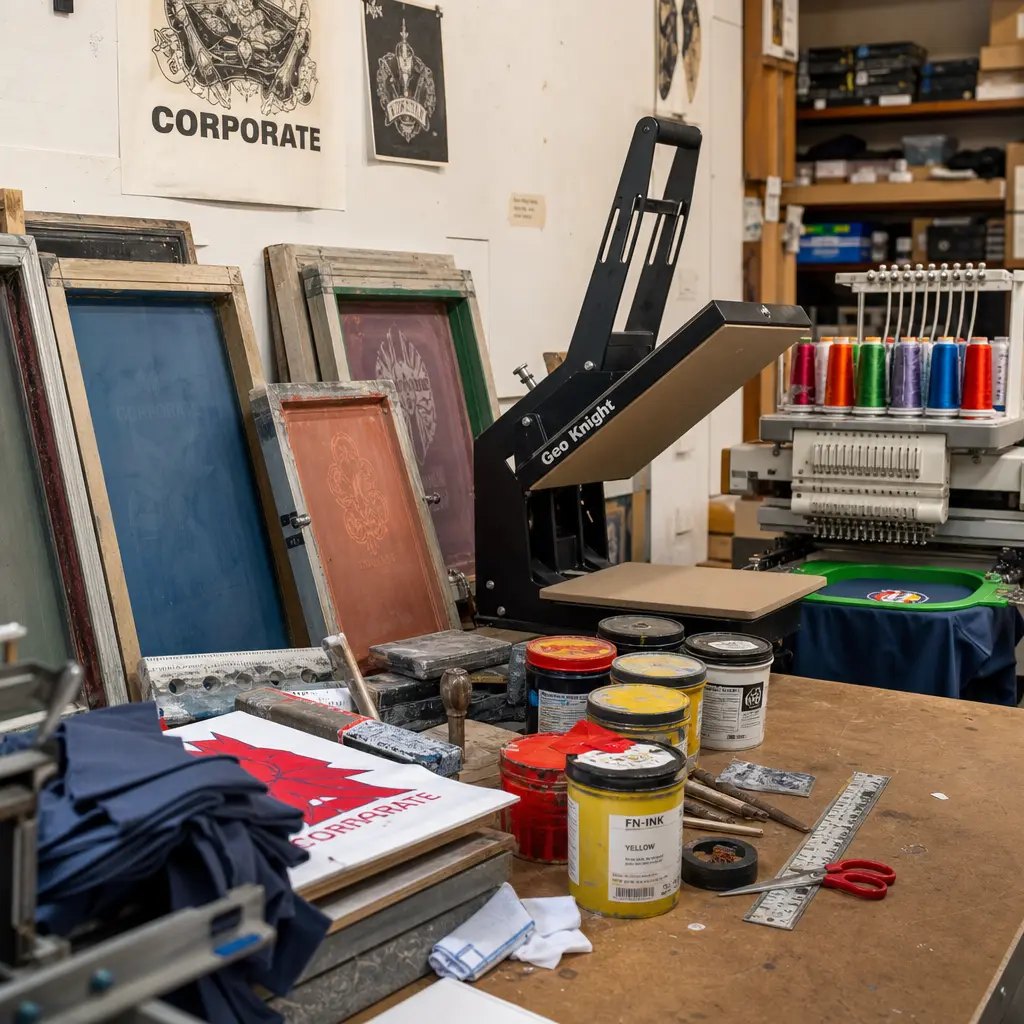
Most startup tote logos are best handled by screen printing. It gives solid color, good durability, and predictable unit cost when the artwork uses one to three spot colors. The buyer should send vector artwork with Pantone references, print size, print location from seam or top edge, and whether small text must remain readable. Natural organic cotton absorbs ink differently from coated paper or synthetic fabric, so the approved strike-off is more important than the digital mockup.
Digital print, DTF, heat transfer, and embroidery can work, but each adds a different risk. Digital methods may suit gradients or short runs, while heat transfer can feel heavy on soft cotton and may crack if curing is poor. Embroidery gives premium texture but may distort lighter fabric and increase needle breakage or puckering. For lead time planning, count artwork separation, screen making, strike-off approval, curing, and rework time instead of treating printing as a one-day step.
A useful procurement practice is to decide the acceptable print result before requesting a quote. For example, if the logo is a thin wordmark with small type, ask the factory whether the chosen method can reproduce the smallest line thickness on the selected fabric weight. If the design includes a dark logo on natural cotton, confirm whether one pass is enough or whether a second print hit is needed for opacity. A good supplier will tell you where the technical limits are; a weak supplier will just promise it can be done.
- Screen print: efficient for clean logos, campaign slogans, and larger orders.
- Water-based ink: softer hand feel but needs careful curing and may look less opaque on dark fabric.
- Plastisol-style ink: stronger opacity but heavier hand feel and may not fit some sustainability briefs.
- Digital or DTF: useful for complex artwork but must be tested for adhesion and wash resistance.
- Embroidery: premium look, slower output, and better on heavier canvas than very light cotton.
MOQ Is Usually A Stack Of Minimums, Not One Number
A factory may say the MOQ is 500 pieces, but that number can change once the buyer selects dyed fabric, heavy canvas, custom handle width, multiple print colors, individual packing, or retail barcode labels. For organic cotton totes, the true minimum is built from several parts: available greige fabric, dye lot, cutting efficiency, print setup, sewing line setup, and packing labor. A very low MOQ may be possible from stock fabric, but the unit price will carry more setup cost.
Procurement teams should compare quotes by total project cost, not only unit price. A supplier quoting 1,000 pieces with stock 8 oz natural organic cotton may be more economical and safer than another quoting 300 pieces with custom dyed 10 oz fabric and rushed printing. If your launch volume is uncertain, consider approving a standard construction that can be reordered without changing the fabric base. That makes repeat purchases easier, reduces quality variation, and usually shortens the next lead time because the supplier already knows the pattern, stitch sequence, and print setup.
It also helps to separate the MOQ of the bag from the MOQ of optional components. A custom woven label, hangtag, zipper pouch, or printed belly band may require its own minimum. If the supplier cannot break out those items clearly, the quote may look flexible while actually being tied to a much larger combined order. Ask for separate numbers so you can decide whether the add-on is worth the delay and inventory risk.
- Stock natural fabric usually supports lower MOQ and faster sampling.
- Custom dyed fabric may require a higher dye-lot minimum and lab dip approval.
- Multi-color screen print adds screens, setup time, and registration risk.
- Custom woven labels, hangtags, or retail bags can create separate accessory MOQ.
- Split delivery increases handling cost but may protect a fixed launch date.
Sample Approval Should Test The Risky Parts First
A tote sample that only proves shape is not enough if the real risk is print color, cotton shrinkage, handle strength, or packing presentation. The practical sample route is a proto sample for size and construction, a print strike-off on the actual selected fabric, and then a pre-production sample that combines final fabric, final artwork, final stitch details, and final packing. This sequence prevents the common problem where marketing approves a nice mockup while the production team has not confirmed the physical fabric behavior.
Sample approvals should be written, dated, and linked to one version of the artwork. Startup teams often move fast and multiple stakeholders may send small logo changes. If the factory receives a revised AI file after the strike-off, the old approval may no longer apply. The buyer should control version names and approval authority so production does not follow the wrong file. A simple approval log with sample date, artwork file name, approver, and comments can save days of rework later.
The best sample checklist covers the full user experience, not just appearance. Ask whether the tote fits the intended items, whether the handle drop is comfortable on the shoulder, whether the print is centered when the bag is filled, and whether the bag folds neatly for kit packing. If the tote is meant for a conference, try it with brochures and a laptop-sized insert. If it is meant for an employee kit, check how it stacks in cartons and whether it holds a water bottle without distorting the seams.
- Proto sample: confirms size, gusset, handle drop, seam construction, and general hand feel.
- Print strike-off: confirms ink color, opacity, edge sharpness, print size, and curing result.
- Pre-production sample: confirms final material, logo position, label, packing, and carton count.
- Approval record: includes date, photo, physical sample reference, artwork file name, and approver.
- Golden sample: keep one with the buyer and one with the factory for inspection comparison.
Build The Lead Time From Factory Operations
A useful production schedule should show the work steps, not only a single delivery promise. Organic cotton tote lead time can be short when fabric is in stock and the logo is simple, but it stretches quickly when certified fabric must be sourced, fabric must be dyed, or packaging accessories are customized. A realistic schedule gives procurement a way to see which approvals are blocking production and which operations can run in parallel.
For planning, separate pre-production from bulk production. Sample making may take several days, but approval delays can add more time than sewing. Bulk production includes fabric inspection, cutting, printing, curing, sewing, trimming, ironing or pressing if required, packing, carton marking, and inspection. If the factory prints panels before sewing, print approval must be locked before cutting. If the factory prints finished bags, the schedule must allow handling time and reject replacement. The supplier should state which steps are sequential and which can overlap so the buyer can see the true critical path.
Lead time planning should also account for outside-the-factory activities: export document preparation, booking space with freight forwarders, customs paperwork, carton labeling, destination receiving, and any kit assembly or relabeling after arrival. A factory may be able to finish earlier than the date your team can actually use the bags. That is why procurement should ask for a timeline that starts with RFQ and approval milestones and ends with usable inventory at the destination, not just factory completion.
- Stock fabric confirmation: 1-3 working days when the supplier has material on hand.
- Proto or size sample: often 5-10 working days depending on construction and queue.
- Print strike-off: usually several working days after artwork and Pantone details are complete.
- Bulk cutting and sewing: varies by order size, GSM, handle reinforcement, and line capacity.
- Final inspection and packing correction: reserve time before vessel closing or courier pickup.
Packing Decisions Affect Freight, Damage, And Kit Assembly
Packing is often treated as a small detail, but it affects carton volume, warehouse handling, plastic use, and whether the bags arrive ready for distribution. Flat pack cartons are efficient for most organic cotton totes. Individual polybags protect each unit but add cost, plastic, packing time, and unpacking labor. If the tote is going into an employee kit, retail bundle, or distributor carton, the packing style should be designed around the next handling step rather than only the factory shipment step.
Carton strength matters because cotton totes are heavy when packed in bulk. Overloaded cartons split at corners, while underfilled cartons crush and create creases. The RFQ should require the supplier to quote units per carton, carton size, gross weight, net weight, carton marks, and pallet requirements if any. Without this data, freight comparison is guesswork. It also becomes harder to calculate warehouse labor, since a carton that is too heavy may slow receiving and a carton that is too bulky may waste warehouse space.
For tech startup programs, presentation often matters as much as protection. If the tote is being inserted into a welcome box, a neat fold and clean stacking pattern can make the kit look better without adding much cost. If the bags are shipping directly to a distribution center, avoid packaging that causes extra unpacking steps. The right answer depends on the channel, so packing should be specified by end use, not by habit.
- Flat bulk pack: lowest labor and material cost, best for warehouse repacking.
- Individual polybag: cleaner for retail or direct distribution but increases plastic and labor.
- Paper belly band: better presentation, but test whether it slides off during transit.
- Carton liner: useful for moisture protection, especially for sea freight and humid routes.
- Carton weight: keep manageable for warehouse teams and destination handling rules.
Quote Comparison Needs More Than Unit Price
Two quotes for organic cotton totes can look similar while covering different products. One may include certified organic fabric, 8 oz canvas, reinforced handles, two-color screen print, and export cartons. Another may include conventional cotton, lighter fabric, one-color print, and no final inspection allowance. Procurement teams should normalize the quote before choosing a supplier, especially when buying for a public-facing tech brand where quality and claims matter.
A clean quote should include product specification, material basis, print method, MOQ, sample cost, bulk price, packing data, lead time, payment terms, trade term, validity, and exclusions. Ask suppliers to state assumptions clearly. If a supplier refuses to provide GSM, carton data, or print details, the low price may not survive production. Ask what happens if artwork changes, the shipment is split, or the order quantity is reduced after sample approval. Those commercial changes are often where hidden charges appear.
When comparing offers, it helps to line up the supplier’s production assumptions against your own business plan. For example, if the product will be used in a one-time conference, a lower-cost lightweight tote may be appropriate. If the same bag will be sold at retail or used as a recurring employee gift, the better choice may be a heavier canvas with stronger reinforcement and cleaner packing. The “cheapest” tote is not always the most economical once replacements, complaints, and reorders are considered.
- Material: organic cotton status, weave, GSM, color, shrinkage, and available width.
- Construction: size, gusset, handle drop, handle width, seam type, and reinforcement.
- Decoration: print method, color count, print size, screen charge, and approval sample cost.
- Packing: unit packing, carton quantity, carton size, gross weight, marks, and pallet option.
- Commercial terms: MOQ, price breaks, lead time, Incoterm, payment, quote validity, and exclusions.
Set Inspection Standards Before The Bags Are Packed
Final inspection should not be the first time the factory learns what the buyer considers acceptable. Organic cotton has natural slubs, seed flecks, and shade variation, so the buyer must separate normal material character from real defects. Real defects include wrong size, weak handles, open seams, stains, heavy odor, print misplacement, poor ink curing, carton shortages, and mixed artwork versions. The inspection plan should say which of these are critical, major, and minor so the factory can train operators and QC staff accordingly.
For most bulk orders, define an AQL level or at least a practical inspection plan with defect classifications. Critical defects might include wrong logo, unsafe contamination, or incorrect material claim. Major defects might include handle failure, obvious print damage, wrong size beyond tolerance, or dirty bags. Minor defects might include small loose threads or slight natural cotton specks within the approved limit. If the order is large or the launch date is immovable, consider a pre-pack or in-process inspection instead of waiting until the end of the line.
The buyer should also define what gets measured and what gets photographed. At minimum, ask the factory to record bag dimensions, handle drop, print placement, carton count, and a few representative photos of accepted goods and any defects found. If a dispute arises later, a measurement sheet tied to the sample approval is much more useful than a generic “passed inspection” statement.
- Size tolerance: define width, height, gusset, and handle drop tolerance in centimeters or inches.
- Print placement: define acceptable deviation from approved position, especially for centered logos.
- Handle strength: use agreed loading weight and duration for a simple pull or hang test.
- Stitching: classify skipped stitches, loose threads, open seams, and weak reinforcement.
- Packing: verify count per carton, carton marks, barcode labels, and moisture protection.
Specification comparison for buyers
| Spec decision | Recommended option | When it fits | Buyer risk to check |
|---|---|---|---|
| Fabric weight for event giveaways | 5-7 oz organic cotton canvas, about 170-240 GSM | Good for conference bags, app launch swag, onboarding kits, and moderate brochure weight | Too light fabric may show through dark prints, wrinkle heavily in transit, and feel low value beside premium tech merchandise |
| Fabric weight for retail or employee merch | 8-10 oz organic cotton canvas, about 270-340 GSM | Better structure, longer use life, stronger perceived value, and more suitable for paid merchandise or internal brand kits | Higher GSM increases sewing time, freight weight, and may require stronger handle reinforcement and more careful carton sizing |
| Print method for startup logos | Spot color screen print with Pantone reference | Best for clean wordmarks, icons, campaign slogans, and larger quantities with repeat artwork | Uncoated cotton absorbs ink differently, so you need a physical strike-off to confirm opacity, edge sharpness, and placement |
| Print method for gradients or small batches | DTF or digital print after wash and adhesion testing | Useful for detailed artwork, short pilot runs, or variable campaign art | Hand feel, cracking risk, and wash durability vary by ink system, curing control, and fabric surface texture |
| Handle construction | Self-fabric cotton handles with box-x or cross stitch reinforcement | Appropriate for laptops, bottles, brochures, and employee welcome kits | Weak handle stitching is a common failure point; define pull test load, stitch density, and reinforcement pattern in the RFQ |
| MOQ planning | Separate MOQ for greige fabric, dyeing, printing, and finished tote sewing | Helps compare real factory quotes and avoid artificial low MOQ pricing | A low finished-bag MOQ may still carry fabric surcharges, screen charges, or limited color choices |
| Packing method | Flat pack in export carton with inner polybag only if required by channel | Best for distributor warehousing, office delivery, and event kit assembly | Over-packing raises labor and plastic use; under-packing causes creases, scuffing, and carton abrasion |
| Approval sample route | Proto sample first, then print strike-off, then pre-production sample | Reduces risk when logo color, cotton shrinkage, handle loading, or trim details matter | Skipping pre-production approval can expose bulk to wrong GSM, wrong artwork version, or incorrect print placement |
Buyer checklist before sampling
- Define the launch date, warehouse arrival date, and required buffer before requesting production lead time.
- State the tote size, gusset, handle length, fabric weight in oz or GSM, and whether the cotton must be certified organic.
- Send artwork as vector files with Pantone colors, print size, print position, and acceptable placement tolerance.
- Separate sample lead time, material lead time, bulk sewing time, packing time, inspection time, and freight time in the schedule.
- Request fabric photos, GSM test result, shrinkage data, and organic cotton transaction evidence when certification claims matter.
- Approve a physical print strike-off on the selected fabric, not only a digital mockup.
- Confirm MOQ by fabric color, print color count, bag size, and packing style because each can change the real minimum.
- Lock carton dimensions, carton weight, units per carton, and pallet needs before comparing freight quotes.
- Set acceptance criteria for stitching, size tolerance, print color, print adhesion, odor, stains, and packing damage.
- Keep final artwork, deposit, and sample approvals on one dated approval sheet to prevent production version confusion.
Factory quote questions to send
- What organic cotton fabric is quoted: plain weave, canvas, or twill, and what is the confirmed GSM or oz weight after finishing?
- Is the cotton certified organic by a recognized chain-of-custody system, and can you provide transaction evidence for this order if required?
- What MOQ applies to the fabric, dyeing, printing, finished sewing, and special packing separately?
- How many days are needed for proto sample, print strike-off, pre-production sample, bulk cutting, sewing, printing, packing, and final inspection?
- Which print method is included in the quote, how many colors are included, and what is the setup charge for additional colors or screens?
- What are the size, handle length, seam allowance, stitch density, and reinforcement method included in the quoted construction?
- What carton size, gross weight, net weight, and units per carton are assumed in the quote?
- What quality standard, AQL level, and defect classifications will be used for final inspection?
- What artwork format, Pantone references, and approval deadline are needed to keep the quoted delivery date?
- Which costs are excluded: inland trucking, export documents, bank charges, courier samples, duties, destination charges, or palletization?
Quality-control points to confirm
- Fabric GSM should be measured from approved bulk fabric, with tolerance agreed before cutting.
- Finished tote size should be checked after sewing, not only from cut panels, with width, height, gusset, and handle drop recorded.
- Print color should be compared against approved strike-off under consistent lighting, not against a phone photo.
- Print adhesion should pass a basic rub test and, when relevant, wash or fold testing before bulk packing.
- Handle strength should be tested by loading to the agreed weight and observing seam tearing, stitch popping, or fabric distortion.
- Stitching should be even, locked at stress points, and free from skipped stitches on handles, side seams, and bottom corners.
- Natural cotton shade variation, black specks, and slubs should be classified in advance so normal fabric character is not rejected as a defect.
- Cartons should be checked for correct count, clean packing, readable marks, moisture protection, and no crushing before shipment.