Start With the Use Case, Not the Logo
An organic cotton tote looks simple until the order reaches production. The buyer is not only purchasing a bag. They are controlling a cotton claim, fabric weight, handle strength, print durability, label wording, packing method, receiving workflow, and the supplier’s ability to repeat the approved sample. A tote handed out at a weekend open house can be specified differently from a retail tote sold online or a franchise replenishment SKU shipped to dozens of studios.
The weakest RFQ is still the most common: "organic cotton tote with logo." A supplier can answer that with a stock natural cotton bag, a custom organic cotton canvas tote, a conventional cotton tote described as eco-style, or a certified material route with higher cost and longer lead time. Those offers are not comparable. Put every supplier on the same page before asking for price: fabric, GSM, dimensions, construction, print method, packing, evidence level, Incoterm, sample process, and inspection standard.
For wellness brands, the claim path matters because many teams may use the tote after procurement signs the PO. Marketing may place it on a product page. Studio staff may include it in welcome kits. A corporate wellness client may ask for documentation. A franchise partner may reorder without knowing the original limitations. Decide who will rely on the organic claim, then write the specification around that level of exposure.
- Define the program first: giveaway, paid retail, welcome kit, retreat bag, corporate wellness pack, franchise inventory, or distributor program.
- State where the organic claim appears: print, label, hangtag, invoice, product page, carton mark, catalog, or internal file only.
- Send one RFQ template to all suppliers with the same material, GSM, dimensions, print, packing, documents, samples, QC, and Incoterm.
- Assign internal owners for claim approval, artwork approval, sample approval, inspection release, and shipment document review.
- Control sustainability language; do not treat natural, organic, eco, recycled, unbleached, and low-impact as interchangeable terms.
Choose the Right Organic Evidence Level
Organic cotton evidence is not one universal document. In supplier conversations, buyers may hear about a facility certificate, fabric certificate copy, mill statement, supplier declaration, transaction certificate route, or finished-goods certification. These are not the same. Some documents describe a facility. Some support a material batch. Some are tied to a transaction. Others only show that a supplier works within a certain system, not that your specific order is covered.
Match the evidence level to the claim. If the tote is used internally and there is no consumer-facing organic statement, your company may accept a supplier declaration plus fabric batch information. If the tote is sold, advertised, invoiced as organic cotton, supplied to a corporate client, or listed in a franchise catalog, involve compliance or legal before quoting. It is far easier to price the correct document route up front than to repair a documentation gap after fabric has been cut and printed.
Control the exact wording in the PO and artwork file. "100% organic cotton," "made with organic cotton," "organic cotton canvas," and "natural cotton tote" carry different expectations. If the supplier can support fabric-level evidence only, do not approve label or hangtag wording that implies finished-goods certification. Ask to review a redacted sample document before deposit so you can confirm scope, issuer, linkage, and timing.
- Ask what the document covers: fiber, yarn, fabric, facility, transaction, finished goods, or general supplier qualification.
- Match document language with the claim used on labels, hangtags, invoices, product pages, sales sheets, and marketplace listings.
- Require batch or order linkage when the claim is consumer-facing or required by a retailer, distributor, or corporate client.
- Confirm whether document support depends on MOQ, fabric mill, certification route, or lead time before approving the quote.
- Keep organic claim approval separate from other eco preferences such as no polybag, recycled carton, or water-based ink.
Specify Fabric in Buyer Language
Fabric weight drives cost, hand feel, durability, print behavior, carton weight, and freight. For many cotton tote programs, 140-160 GSM is a light giveaway range. It can work for short-term event distribution but may feel too thin for paid studio retail. A 180-220 GSM fabric is often the practical middle ground for welcome kits, retreat bags, class packs, and general merchandise. A 240-280 GSM canvas or twill feels more substantial, but it raises material cost, carton weight, and sometimes MOQ. Above 300 GSM, the tote becomes more structured and may need slower sewing, heavier needles, larger cartons, and tighter folding control.
GSM alone does not define the bag. Plain weave is economical and suitable for flat promotional totes. Canvas and twill can look more premium, yet their texture can soften print edges or interfere with fine artwork. Natural unbleached cotton often shows seed flecks, slubs, yarn hairiness, and shade variation. Many wellness brands like this honest texture, but it must be approved intentionally. If the brand expects a cleaner cream tone, low fleck level, or bleached look, write that into the spec before sampling.
Use tolerances, not adjectives. A practical GSM tolerance is often plus or minus 5% for many natural cotton tote programs unless the buyer and supplier agree otherwise. Shade should be compared to an approved swatch under consistent light, not judged from a phone photo. If end users may wash the tote, request a shrinkage expectation and care label recommendation. Even when the bag is not intended for laundering, state whether the supplier will pre-shrink, wash, press, or deliver the bags unwashed.
- 140-160 GSM: light event bags, low-load giveaways, short-term campaigns, and price-sensitive programs.
- 180-220 GSM: welcome kits, retreat bags, class packs, and general studio merchandise with moderate durability expectations.
- 240-280 GSM: stronger retail feel, better structure, higher fabric cost, heavier cartons, and possible higher fabric MOQ.
- 300 GSM and above: premium canvas route with more demanding sewing, folding, carton space, and freight planning.
- Define the approved natural appearance: seed flecks, slubs, shade variation, yarn hairiness, and acceptable fabric marks.
Lock Construction Before Sampling
Most tote failures start with construction details that were never written down. Handle width, handle drop, top hem depth, seam allowance, stitch density, gusset shape, and reinforcement pattern all affect how the bag performs when it carries towels, water bottles, journals, candles, apparel, or retail purchases. A supplier may quote a light promotional build unless the buyer states that the tote must support regular use. Product photos are not a strength specification.
Turn style language into measurable instructions. Instead of asking for a "standard tote with long handles," specify a 38 x 42 cm flat tote, 65 cm self-fabric handles, 2.5 cm handle width, 30 cm handle drop, folded top hem, and reinforced cross-stitch handle attachment. For a gusseted bag, specify side and bottom gusset depth and whether the gusset is boxed, folded, or made through a separate construction. For a retail tote, define the internal seam finish, such as overlock, French seam, bound seam, or folded seam.
Set tolerances before inspection. For simple sewn totes, plus or minus 1 cm is a common finished-size starting point for width and height, but heavy fabric, washing, or special construction may require a wider or tighter value. Handle drop, label placement, and print placement also need numeric tolerances. Premium retail programs can tighten measurements, but tighter control usually increases sampling time, rejection risk, and cost. Choose tolerances that fit the use case, then inspect consistently.
- Specify width, height, gusset, handle length, handle drop, handle width, top hem depth, seam type, thread color, and reinforcement pattern.
- Define measurement method: lay flat, no stretching, measure after sewing and pressing, and record dimensions in centimeters.
- Use reinforced handle stitching for totes carrying drink bottles, books, apparel bundles, candles, or retail purchases.
- Classify missing reinforcement, open seams, severe slanting, broken stitches, and oil marks as major or critical defects.
- Request first-piece photos showing handle attachment, top hem, side seam, bottom corners, label placement, and print position.
Control Artwork, Ink, and Print Approval
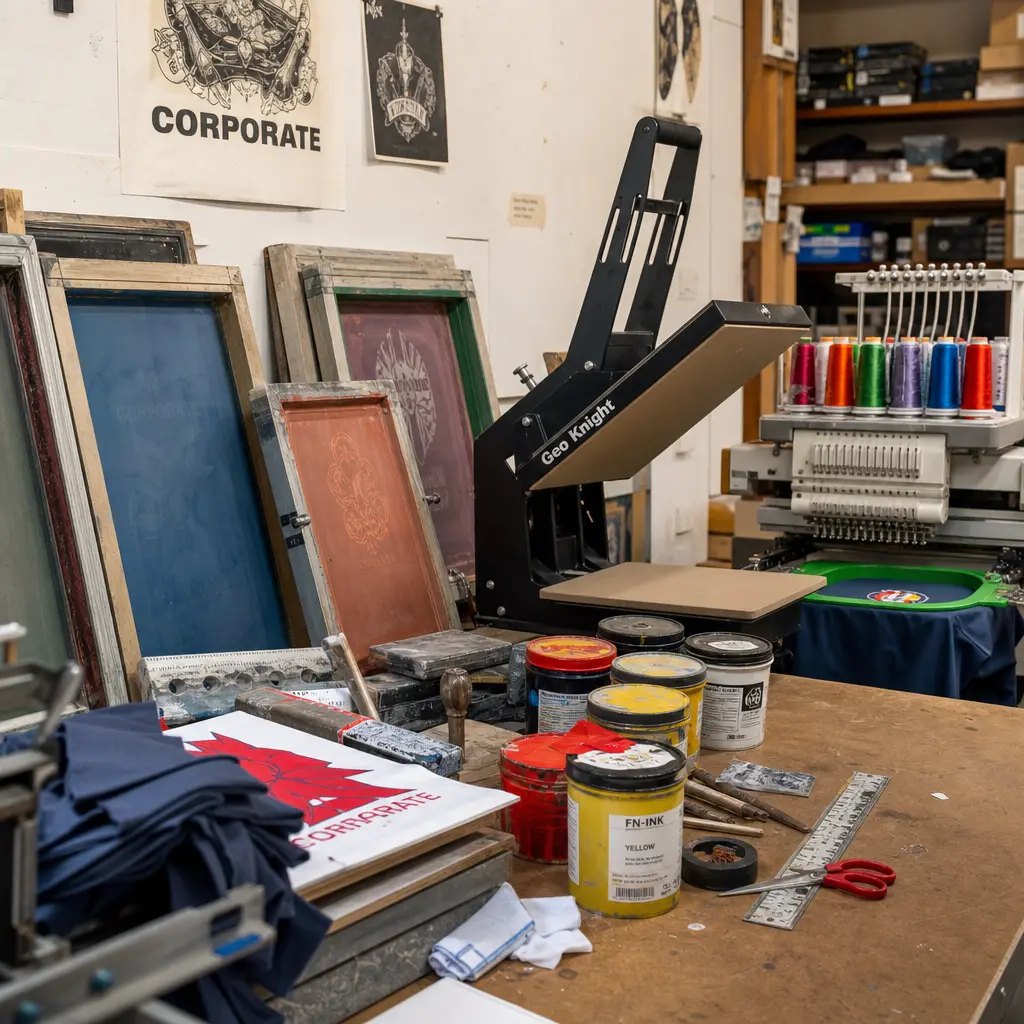
Screen printing is the usual choice for wellness studio totes because it works well for one-to-four color logos and repeat orders. Water-based ink can give the soft hand feel that many natural cotton programs want, but it still must be cured correctly. Plastisol-style prints can offer opacity on darker fabric, though the hand feel and chemistry profile may not fit every brand policy. Digital printing can support detail or small runs, yet woven cotton texture can reduce sharpness and durability if the artwork is not tested.
Artwork has to be reviewed on fabric, not only on a screen. Fine-line mandalas, small website text, pale ink on natural cotton, gradients, and large solid areas may behave differently on canvas than they do in a PDF mockup. If the design is large or close to seams, the supplier may need to print panels before sewing or confirm that finished-bag printing can hold position. Ask for a physical strike-off when color, opacity, texture, or hand feel matters.
Print QC should be specific enough for the inspector to make a decision. Define print size tolerance, position tolerance from the top edge or centerline, and color standard using Pantone, lab dip, or an approved physical print sample. After ink is fully dry, check curing with rub, bend, light scratch, tackiness, and cracking checks. If the print includes organic claim wording, artwork approval must be tied to the approved material evidence.
- Use screen printing for clean logos, repeat production, stable unit cost, and simple spot-color artwork.
- Use water-based ink when soft hand feel and natural appearance matter more than maximum opacity.
- Test digital printing before bulk when artwork has gradients, small text, detailed lines, or low-quantity personalization.
- Set print placement tolerance from top edge, side seam, or centerline; avoid subjective instructions such as "centered nicely."
- Approve color by Pantone, lab dip, or physical print sample, not by monitor color or phone photo.
Break Down MOQ and Quote Assumptions
MOQ is rarely one number. The tote body, organic fabric booking, custom color, dyed lot, print setup, woven label, care label, hangtag, barcode sticker, inner bundle, and carton mark can each carry a separate minimum. A supplier may accept 500 sewn bags but require 1,000 woven labels, a minimum fabric yardage, or a dye lot above the bag quantity. If the RFQ does not separate these drivers, the quote may change after deposit or the supplier may swap in stock components.
Ask what creates the MOQ instead of only asking for a lower quantity. A natural-color tote using standard organic cotton fabric may support a smaller run. A custom-dyed 260 GSM canvas tote with private label, printed hangtag, barcode sticker, and individual retail sleeve may require higher minimums because every component has setup waste and vendor rules. This helps procurement decide which customization is worth keeping now and which can wait for a reorder.
Compare quotes on a landed and inspection-ready basis. One supplier may include the pre-production sample, screen setup, carton marks, care label attachment, document support, and inspection cooperation. Another may exclude those items and look cheaper. Align Incoterm, freight, duty, inspection, customs handling, warehouse receiving, repacking, and rework responsibility before comparing unit price. For franchise or multi-location programs, distribution labor can outweigh a small difference in factory price.
- Request MOQ by fabric, dye lot, bag body, print color count, woven label, care label, hangtag, barcode sticker, bundle, and carton mark.
- Ask whether excess labels, hangtags, fabric, or printed panels are shipped, stored, discarded, or charged separately.
- Separate sample fee, screen charge, artwork adjustment, label setup, carton upgrade, document support, and rework policy.
- Compare EXW, FOB, CIF, DDP, and domestic delivery only after adding freight, duty, inspection, handling, and receiving costs.
- Confirm whether the price assumes stock fabric, natural cotton, bleached cotton, dyed cotton, pre-shrunk fabric, or special procurement.
Use Samples as Production Control
A sample is not decoration. It is the physical production standard. For organic cotton totes, the most useful pre-production sample uses intended bulk fabric or a documented equivalent, the actual print method, actual handle construction, actual label placement, and realistic packing. A polished development sample made from substitute fabric can help early decisions, but it should not authorize bulk cutting unless every substitution is documented and approved.
Sample comments should be measurable. Replace "make it stronger" with handle width, reinforcement pattern, stitch density, and seam allowance. Replace "logo is too light" with Pantone reference, ink type, approved strike-off, and acceptable opacity. Replace "better packing" with bundle quantity, carton quantity, carton size, maximum gross weight, and carton mark content. Clear comments reduce disputes between sales, sample room, sewing line, print shop, and final QC.
Keep an approval package, not just a sample on someone’s desk. The buyer and supplier should each keep a signed sample or sealed reference sample, measurement sheet, fabric swatch, artwork proof, label proof, carton mark proof, and deviation list. Factory QC should use the same package during first-piece inspection, inline sewing checks, print inspection, and final inspection. If the production line, print shop, or subcontractor changes, the package becomes the handoff standard.
- Measure sample GSM, width, height, gusset, handle drop, handle width, print size, print position, label placement, and packing count.
- Photograph approved details with a ruler and include photos in the PO or production file.
- Keep one sealed approval sample with the buyer and one signed sample with the supplier before bulk production starts.
- Require written approval for any deviation in fabric, GSM, shade, stitch, label, print, packing, or document scope.
- Do not approve bulk production from a digital mockup alone when fabric texture, print hand feel, or claim wording matters.
Build QC Around Defect Decisions
Quality control works best when the decision rules are agreed before production. A practical QC plan for wellness studio totes should cover document readiness, fabric GSM, shade, measurements, construction, print, labels, odor, stains, packing, carton marks, and mixed-SKU risk. The checklist does not need to be complicated. It does need enough detail for the supplier, buyer, and inspector to classify defects the same way.
Define critical, major, and minor defects in buyer language. Critical defects can include wrong material, unsupported organic claim, wrong logo, missing required label, mold, strong odor, contamination, or mixed SKUs that make goods unsellable. Major defects can include open seams, missing handle reinforcement, severe stains, incorrect size outside tolerance, underweight fabric outside tolerance, poor print curing, incorrect carton marks, or wrong bundle count. Minor defects may include small loose threads, slight natural flecks, or small shade variation if they match the approved standard.
Use inspection gates to catch problems while they can still be fixed. A fabric check confirms GSM, shade, and document status before cutting. A first-piece sewing check confirms dimensions and reinforcement before the line continues. A print check confirms placement, curing, and color before all panels or finished bags are printed. A packing audit confirms carton count, marks, bundle quantity, moisture protection, and SKU separation. Larger orders may justify third-party final random inspection, but the inspector still needs the buyer’s specification as the standard.
- Set inspection timing: fabric check, first-piece check, print strike-off, inline sewing check, final random inspection, and carton audit.
- Define sample size and acceptance rule, including whether an AQL standard is used and which defects are critical, major, or minor.
- Record measurements for width, height, gusset, handle drop, handle width, print placement, and label placement.
- Require inspection photos, defect counts, carton numbers checked, measurement records, rework evidence, and release approval before balance payment.
- Do not release shipment when organic evidence, wrong claim wording, mold, severe odor, or wrong artwork remains unresolved.
Specify Packing for Real Receiving Work
Packing should match how the totes will be received, counted, stored, and distributed. A carton of 200 loose totes may be acceptable for a central warehouse, but it can create counting errors for studio staff preparing welcome kits. Inner bundles of 25 or 50 pieces often make allocation easier. Natural unbleached cotton also shows dust, water marks, and carton abrasion more visibly than dark dyed fabric, so protection cannot be an afterthought.
Plastic reduction should be specified as a packing design, not as a slogan. Kraft paper bands, recycled paper wraps, carton liners, bundle packing, or master poly liners may work depending on the shipping route and storage conditions. Long ocean freight, humid seasons, and warehouse delays may require desiccant or other moisture control. State whether individual polybags are prohibited, optional, or required for retail presentation. If no polybag is allowed, ask how the supplier prevents dirt, moisture, and handling contamination.
Carton details affect receiving cost. Define units per carton, maximum gross weight, carton dimensions, carton strength, carton marks, SKU separation, barcode labels, country-of-origin marking if needed, and carton-number sequence. Franchise programs may need destination-specific allocation. Retail warehouses may require PO number, SKU, quantity, color, carton number, and barcode on a defined carton face. These items are inexpensive to add at origin and expensive to fix after arrival.
- Define inner bundle quantity and export carton quantity based on warehouse receiving, studio allocation, and kit-packing workflow.
- Set maximum carton gross weight so cartons can be handled safely by studio or warehouse staff.
- Require carton marks with PO number, SKU, product description, color, quantity, carton number, destination, and country of origin if needed.
- Confirm individual polybag policy and alternative protection such as paper bands, carton liner, master liner, or desiccant.
- Audit packing before shipment for bundle count, carton count, mixed SKU risk, carton strength, moisture control, and mark accuracy.
Plan Lead Time Around Approval Gates
Lead time is more than sewing days. A realistic schedule includes artwork approval, claim and document review, fabric booking, lab dip or shade approval if dyed, sample making, sample shipping, sample correction, print strike-off, bulk cutting, printing, curing, sewing, trimming, inspection, packing, export booking, and final documents. For custom organic cotton totes, early approvals can take longer than sewing, especially when custom fabric, labels, or transaction documentation are required.
Work backward from the required in-hands date. Studio launches, retreats, corporate wellness events, franchise openings, and retail drops usually do not move easily. Identify the last safe approval date for fabric, artwork, label wording, carton marks, and packing method. Late changes can trigger reprinting, relabeling, repacking, vessel changes, air freight upgrades, or acceptance of product that does not fully match the brand standard.
Ask the supplier for a milestone schedule instead of a single lead-time promise. The schedule should state what the buyer must approve at each gate, how many working days each stage needs, and what happens if approval is late. Production time often starts only after deposit, artwork, sample, fabric, and label approvals are complete. Put that assumption in writing so both sides understand the calendar.
- Build the timeline from required delivery date, not from an optimistic factory production estimate.
- Reserve time for sample revision if GSM, shade, handle drop, print color, label placement, or packing fails approval.
- Approve fabric, artwork, print strike-off, label wording, and carton marks before bulk cutting or printing begins.
- Schedule final inspection before balance payment and before freight loading, not after goods are already booked to ship.
- Add buffer for local holidays, peak-season capacity, port delays, customs review, weather disruption, and warehouse appointments.
Specification comparison for buyers
| Supplier option | What to verify | Commercial advantage | Buyer risk to control |
|---|---|---|---|
| Direct sewing factory | fabric batch documents, dye-lot photos, approved sample archive, and final QC record | Better sample-to-bulk control and faster production feedback | May be weaker on export paperwork or branded packing unless checked early |
| Trading company | Factory name, production photos, trim-source proof, and who owns QC decisions | Can coordinate small mixed orders and extra services | Markup can hide real factory capability and slow defect decisions |
| Specialized bag workshop | seam allowance, handle reinforcement, label attachment, fabric pre-shrink note, and batch shade control | More practical for detailed construction, trims, and repeat programs | Capacity may be limited during peak seasons |
| Low-price general supplier | organic cotton canvas, batch documentation where available, undyed or low-impact dyed fabric, and shrinkage control | Useful for simple promotional runs with loose specs | Material downgrades, weak packing, and vague inspection scope can erase savings |
| Retail-ready supplier | plastic-reduction request, recycled carton note, bundle count, carton mark, and moisture protection without overpacking | Can handle labels, SKU separation, carton marks, and receiving rules | Higher unit cost must be compared against reduced warehouse work |
| Compliance-focused supplier | Fabric records, labeling review, test plan, and production traceability | Safer for retail programs and repeat brand orders | Documentation claims need evidence, not only sales language |
| Local sample room plus bulk factory | Signed sample, bulk factory handoff, first-piece photos, and deviation owner | Good for complex branding before large production | Sample room quality may not match bulk line unless handoff is controlled |
Buyer checklist before sampling
- Define the commercial program: paid retail merchandise, new-member welcome kit, retreat bag, teacher training kit, corporate wellness pack, franchise replenishment SKU, event giveaway, or distributor inventory.
- State the organic claim level before quoting: internal sourcing record, fabric-level support, transaction certificate requirement, finished-goods certification requirement, or no consumer-facing organic claim.
- Confirm every place the claim may appear: bag print, woven label, care label, hangtag, product page, invoice, packing list, carton mark, franchise catalog, or only internal procurement records.
- Specify material in measurable terms: 100% organic cotton or blend, fabric construction, target GSM, GSM tolerance, weave, natural or dyed color, seed-fleck standard, shrinkage expectation, and pre-treatment.
- Lock finished measurements: width, height, gusset depth, handle length, handle drop, handle width, top hem depth, seam type, reinforcement pattern, and measurement tolerance after sewing and pressing.
- Ask the supplier to identify each production location or subcontracted step: fabric sourcing, dyeing or bleaching, cutting, sewing, printing, washing, labeling, hangtagging, bundling, carton packing, and export handover.
- Require one physical pre-production sample made with intended bulk fabric or a documented equivalent, actual print method, actual label placement, actual handle reinforcement, and proposed packing.
- Define print acceptance before artwork release: artwork file version, Pantone or physical color standard, print size tolerance, placement tolerance, hand feel, rub resistance, curing check, edge sharpness, and allowed fabric show-through.
- Request MOQ by driver: fabric booking, dye lot, bag body, custom size, screen setup, print color count, woven label, care label, hangtag, barcode sticker, inner bundle, and carton mark.
- Confirm packing data before PO: units per inner bundle, units per carton, carton dimensions, gross weight, net weight, moisture-control method, polybag policy, carton mark layout, pallet plan, or loose-carton plan.
Factory quote questions to send
- Is the quoted material certified organic cotton, organic cotton fabric with batch support, in-conversion cotton, recycled cotton blend, or conventional natural cotton? State exact composition and claim wording allowed.
- What document can be provided for the organic claim, who issues it, what scope it covers, what batch or order it links to, and can we review a redacted sample copy before deposit?
- Does the document cover fiber, yarn, fabric, facility, transaction, finished goods, or only supplier certification? If finished-goods documentation is not available, state that clearly in the quote.
- What GSM, weave, yarn appearance, color status, and GSM tolerance are included? For example: 200 GSM plain weave, natural unbleached, plus or minus 5% by agreed test method.
- Will bulk production use the same fabric supplier, fabric type, dye or bleach status, shrinkage process, and batch standard as the approved sample? If not, what approval gate applies?
- Can you provide a pre-production sample from bulk fabric before full cutting? If bulk fabric differs from the development sample, who pays for remake, delay, or cancellation?
- Which steps are in-house and which are subcontracted: fabric sourcing, dyeing, cutting, sewing, printing, washing, labeling, hangtagging, bundling, carton packing, and export documentation?
- What MOQ applies separately to the tote body, custom size, fabric color, dyed lot, print color count, woven label, care label, hangtag, barcode sticker, and carton mark?
- What print method is quoted, and are screen setup, ink matching, strike-off, curing test, artwork adjustment, and print sampling included or charged separately?
- What measurement tolerances do you accept for finished width, height, gusset, handle drop, handle width, print position, and label placement? Provide values in centimeters.
Quality-control points to confirm
- Verify organic cotton documentation before shipment, not after delivery. The document must match the agreed claim level and should be linked to the material, batch, order, or finished goods as specified in the PO.
- Check fabric GSM by cutting and weighing samples from bulk fabric or by another written agreed method. Do not accept estimated GSM based on hand feel, sample photos, or supplier description.
- Use a written GSM tolerance, commonly plus or minus 5% for many cotton tote programs unless the buyer sets a stricter or wider tolerance based on fabric availability and use case.
- Compare bulk fabric shade against the approved swatch under consistent light. Natural unbleached cotton may show seed flecks and shade variation, but the approved appearance standard must define what is acceptable.
- Measure finished bag width, height, gusset depth, handle drop, handle width, print position, and label placement on a defined sample size during inline and final inspection.
- Use practical finished-size tolerance, often plus or minus 1 cm for simple sewn totes, unless a specific measurement point requires tighter control or heavy fabric requires a wider tolerance.
- Inspect handle attachment for balanced reinforcement, no skipped stitches, no broken threads, no loose bartacks or cross-stitches, no puckering that weakens the stress point, and no distortion at the top hem.
- Inspect seams for open seams, raw edges where not approved, loose threads, needle holes, oil marks, slanted panels, uneven top edges, weak corner finishing, and inconsistent seam allowance.
- Compare print color to the approved Pantone, lab dip, or physical print standard under consistent light. Do not approve color only from phone photos or monitor screenshots.
- Check print curing after ink is fully dry by rub, bend, light scratch, tackiness, and cracking checks. Record whether failure is adhesion, cure, opacity, registration, or fabric texture interference.