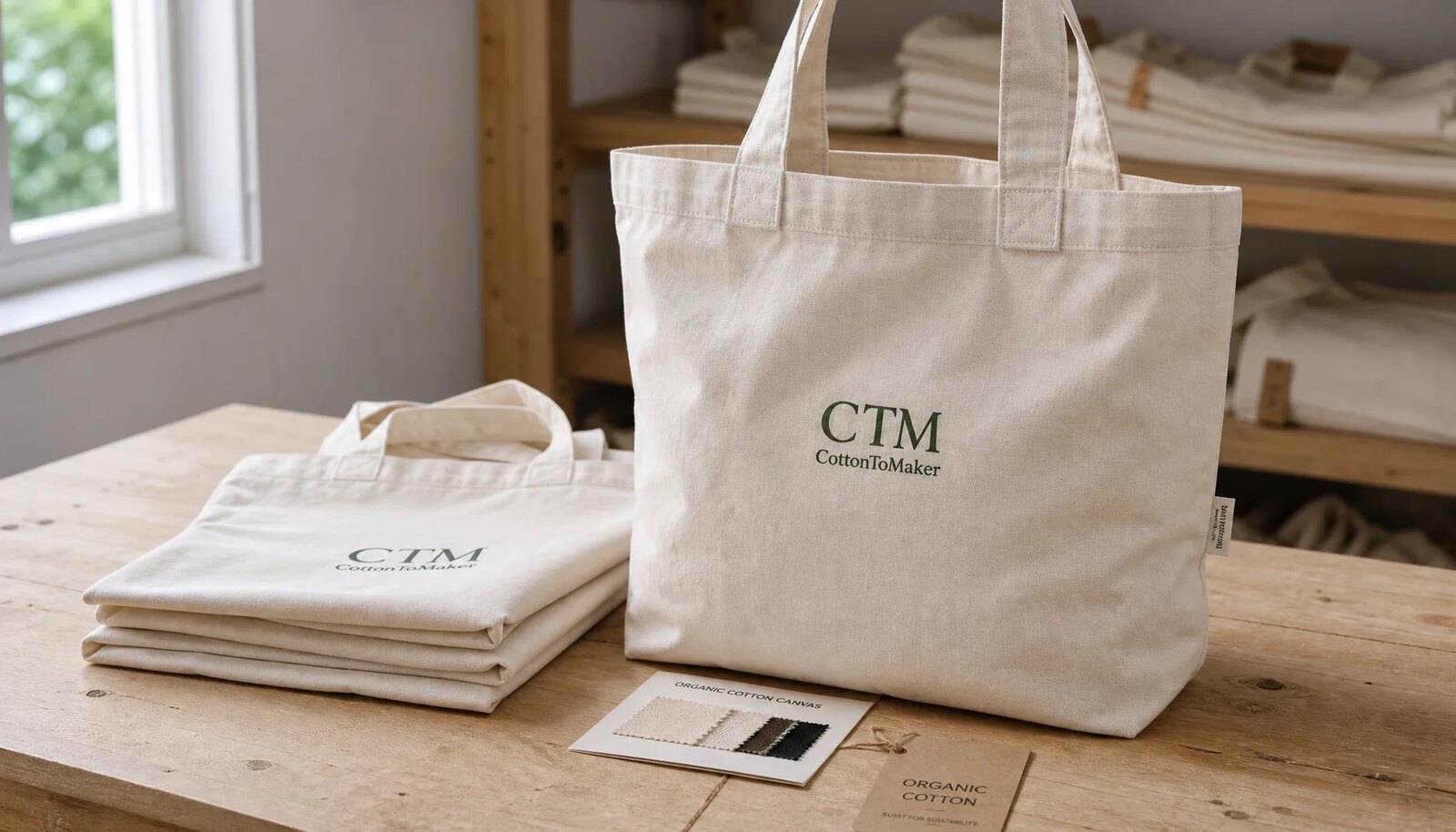
Start with the claim you can defend
The first sourcing decision is not logo size or unit price. It is the exact claim your company will make about the tote. `Organic cotton tote` can mean a finished product supported by chain-of-custody documents, a bag made with certified organic cotton fabric, or a natural cotton bag being described too loosely by a supplier. Those are different procurement jobs and they require different evidence.
For B2B buyers, the RFQ should separate material content from certification scope. If the tote will be resold, distributed by a brand, or used in sustainability messaging, ask for evidence before deposit. Recognized textile chain-of-custody programs such as GOTS or OCS are commonly used for organic cotton claims, but the useful question is whether the certificate holder, product scope, process scope, and transaction-document method match this order.
Do not print certification logos or finished-product organic seals on the tote, hangtag, carton, or web listing unless the exact program, license, and order file support that use. If the supplier only proves the fabric stage, the wording on labels and invoices may need to stay narrower. The buyer should decide the claim first, then ask the supplier to prove it.
- Use `made with organic cotton fabric` only when order-level material evidence supports it.
- Use `certified organic cotton tote` only when the finished product and relevant steps fall within scope.
- Avoid vague RFQ terms such as `eco cotton`, `green canvas`, or `sustainable tote`.
- Match certificate, invoice, packing list, label copy, and product description.
- Ask whether printing, washing, labeling, or subcontracting changes the claim the supplier can support.
Choose fabric by use, not habit
Craft fair totes get handled more like retail shoppers than giveaways. They carry candles, jars, ceramics, books, soaps, prints, and several vendor purchases at once. A sample can look fine on a table and still fail in use if the canvas is too light, handles are narrow, or the bag collapses when loaded.
For reusable craft fair totes, 10-12 oz canvas, roughly 300-380 GSM, is often a practical range because it gives better structure, better print coverage, and a stronger perceived value. Lighter 7-8 oz fabric, roughly 220-270 GSM, can work for lower-cost event distribution or flat items, but the buyer should treat handle reinforcement and print opacity as mandatory checks. Very light cotton should be reserved for flyers, catalogs, or small paper goods.
Natural undyed organic cotton is rarely uniform. Seed flecks, slubs, and creamy shade differences may be acceptable, but the buyer still needs a defined acceptance window. If color accuracy matters, approve print on the actual bulk fabric or a true pre-production swatch, not on white paper or a different base cloth.
- 5-6 oz or about 150-200 GSM: flat brochures, paper goods, and low-cost giveaways.
- 7-8 oz or about 220-270 GSM: smaller purchases and basic event bags.
- 10-12 oz or about 300-380 GSM: reusable craft fair totes with better body and logo appearance.
- 14 oz and above or about 430 GSM and higher: premium shoppers where structure matters more than freight efficiency.
- Dyed fabric needs lab dip approval, bulk shade tolerance, and colorfastness checks.
Specify construction around failure points
A useful tote spec is built around where bags fail: handles, bartacks, side seams, bottom corners, print cracking, shrinkage, stains, and packing creases. Body size alone is not enough. The supplier needs finished width, height, gusset, handle drop, handle width, seam type, stitch density, reinforcement method, label position, print area, and packing style.
A flat tote around 38 x 42 cm works well when the buyer wants simple booth display and efficient carton use. A gusseted shopper around 35 x 40 x 10 cm carries boxed goods better but requires cleaner corner sewing and more cube in freight. If the tote must hold jars, books, or ceramics, handle drop and reinforcement should be treated as performance specs, not style choices.
Ask for finished dimensions after sewing and after any wash or pre-shrink process. If printing happens before sewing, print placement control changes. If a side label, inside pocket, hangtag, barcode sticker, or bottom reinforcement is included, it should appear in the drawing and the sample approval file.
- Finished size: define width, height, gusset, handle drop, handle width, and tolerance.
- Handle reinforcement: specify box stitch, cross stitch, bartack, or the approved equivalent.
- Seam allowance: set a minimum allowance so the tote does not only look right in sample form.
- Gusset corners: inspect symmetry, puckering, stitch strength, and carrying capacity.
- Label position: define side label, care label, hangtag, or barcode placement before sampling.
- Intended load: tell the supplier the likely contents and target carry weight.
Control decoration and print testing
Decoration affects cost, MOQ, yield, compliance review, and customer perception. For many craft fair programs, water-based screen printing is practical for one to three solid colors because it gives a soft hand feel on cotton canvas. The tradeoff is screen setup cost and lower efficiency when many small artwork versions are split across one order.
Heat transfer, DTG, embroidery, woven patches, and sewn labels can all be valid, but each needs a different control set. Heat transfer should be checked for edge lift, cracking, and wash behavior. DTG needs attention to pretreatment marks, color consistency, and curing on natural cotton. Embroidery can look premium but may pucker lighter fabric or feel rough on the reverse side. Patches add trim MOQ and attachment checks.
Artwork files should include final size, color references, placement dimensions, print side count, and version name. `Center front` is not an inspection rule. Define distance from the top edge, side seam, center line, handle base, or bottom seam. If the bag is folded through the print, approve the crease effect before bulk packing.
- Screen print: efficient for stable logos and repeat quantities with solid colors.
- Water-based ink: soft feel, but approve color on the actual cotton shade.
- Heat transfer: useful for complex artwork, but test flex, wash, tape pull, and edge lift.
- DTG: suitable for low-volume design splits, but check curing and pretreatment marks.
- Embroidery: inspect puckering, backing, thread tension, and needle damage.
- Placement tolerance: set numeric limits for logo position and angle.
Treat MOQ as a cost map
MOQ is usually a production equation, not a random sales rule. It can come from organic canvas availability, weaving minimums, dye lot size, cutting efficiency, print setup, label supplier rules, packing materials, or the factory schedule. A supplier may accept 500 pieces for natural cotton with one print, but require 1,000 or more for a custom color, retail hangtag, or multiple artwork versions.
Ask suppliers to break MOQ into components. Separate base tote MOQ, fabric MOQ, custom dye MOQ, artwork MOQ, woven label MOQ, hangtag MOQ, barcode packing MOQ, and carton split MOQ. That makes negotiation practical without weakening the product. For craft fair programs with several event dates, keeping one blank tote and changing only the tag or insert can be cheaper than changing fabric and construction each season.
Price breaks should be judged against inventory risk. A lower unit price at a higher quantity does not help if the fair is seasonal, the artwork may change, or storage cost rises. For repeat programs, ask whether the supplier can hold approved fabric or repeat smaller batches after first approval.
- Base fabric MOQ: driven by stock organic canvas, greige fabric, or weaving minimums.
- Custom color MOQ: driven by lab dip, dye lot size, shade control, and colorfastness checks.
- Print MOQ: driven by screens, ink mixing, artwork versions, curing time, and drying capacity.
- Trim MOQ: driven by woven labels, care labels, hangtags, barcode stickers, or patches.
- Packing MOQ: driven by inner bundles, cartons, paper bands, polybags, and SKU labels.
- Repeat MOQ: ask whether smaller repeat batches are possible after first approval.
Verify compliance evidence before deposit
Supplier compliance should be reviewed before samples are treated as approved. Ask for current documents early: company details, factory role, organic scope certificate, certificate expiry date, product scope, process scope, transaction document method where applicable, and subcontractor disclosure. If the certificate belongs to the fabric mill only, the finished tote claim may need narrower wording.
Document matching matters. Supplier name, certificate holder, product description, order quantity, invoice wording, packing list, and label copy should not contradict each other. If printing is done by an outside workshop, ask whether that step is inside the certified scope or whether the claim must be limited to fabric content. Do not rely on catalog badges, screenshots, or verbal claims without certificate details.
Store the evidence against the PO, artwork version, and production batch. If the order is split across several designs or factories, check each batch. If the buyer changes wording from `made with organic cotton fabric` to `certified organic cotton tote`, the documentation burden changes. Compliance review should move with the claim, not with the supplier's marketing language.
- Scope certificate: check holder name, expiry date, product category, and process coverage.
- Product scope: look for finished bags, textile accessories, or relevant finished goods, not only yarn.
- Process scope: confirm cutting, sewing, printing, labeling, packing, and subcontracted steps where needed.
- Transaction documents: ask how order-level traceability documents are requested and when they are issued.
- PO file: keep certificates, quote, invoice, artwork, label copy, and inspection report together.
- Claim control: reject unsupported wording before labels, hangtags, or web pages are printed.
Approve samples with measurable criteria
A pre-production sample should lock more than appearance. It should confirm fabric weight, shade, hand feel, shrinkage direction, stitch construction, handle reinforcement, print method, print color, label, fold, bundle, and carton presentation. A digital photo cannot prove fabric feel, seam strength, curing quality, or carton crease behavior.
Use separate approvals when the order has meaningful risk. A fabric swatch confirms material direction. A blank construction sample confirms the bag build. A print strike-off confirms ink or decoration. A complete pre-production sample confirms the final product. A packing sample confirms how the tote will arrive. This prevents the common failure mode of approving a logo while assuming fabric, labels, and packing are also final.
For larger or repeat orders, use a sealed sample system. One approved sample stays with the buyer, one with the supplier, and one can be used by inspection staff. Mark the sample with PO number, date, fabric GSM, artwork version, label version, print method, and packing method. Any change after approval should trigger written signoff and, when material, a revised sample.
- Fabric swatch: approve GSM, texture, shade range, shrinkage, and acceptable slubs or flecks.
- Construction sample: check handles, seams, gusset, stitch density, label position, and symmetry.
- Print strike-off: approve color, edge sharpness, opacity, hand feel, rub result, and curing.
- Pre-production sample: approve final fabric, decoration, label, fold, trim, and packing.
- Packing sample: review carton count, bundle size, crease risk, barcode location, and carton marks.
- Sample record: mark PO, version, date, spec, and approval owner.
Set inspection rules suppliers can follow
Quality control improves when the acceptance criteria are numeric and visible. Inspectors need measurement tolerances, defect classes, sampling method, basic tests, and a decision rule. General wording such as `good quality` is not enough for totes that will be resold, displayed, or used on a fixed event date.
A practical inspection plan should include finished-size measurement, fabric weight check, fabric appearance review, handle pull or load test, seam inspection, print placement measurement, decoration durability checks, label verification, carton count, and moisture review. For organic cotton canvas, storage and humidity matter because cartons can soften or develop odor if packed or shipped poorly.
Classify defects before inspection. Critical defects may include wrong claim, wrong logo, missing required label, mold, contamination, broken handle, or wrong SKU carton mark. Major defects may include open seams, failed load test, severe print misregistration, dirty front panels, incorrect dimensions, or missing hangtags. Minor defects can include loose threads or small shade variation within an approved range.
- Load test: define weight and duration based on likely contents, then test handles and bottom seams.
- Measurement check: inspect body, gusset, handle drop, handle width, handle location, and print placement.
- Print check: use dry rub, wet rub, tape pull, flex, crease observation, and wash checks when relevant.
- Fabric check: verify GSM, shade, slubs, stains, holes, oil marks, and panel mismatch.
- Label check: confirm fiber wording, care wording, origin marking, barcode, SKU, and claim wording.
- Carton check: verify quantity, carton marks, gross weight, moisture risk, and SKU separation.
Pack for booth handling and retail intake
Craft fair tote orders often pass through factory packing, freight, warehouse receiving, local distribution, venue handling, and booth setup. Packing that works for a normal warehouse shipment can create problems at the fair. Overfilled cartons can crush handles or crease prints. Mixed SKUs slow distribution. Excess plastic can also clash with the product's sustainability message.
State the packing method in the RFQ: bulk packed, inner bundled, paper banded, individually polybagged, hangtagged, barcode labeled, or retail packed. For many event programs, bulk packing with inner bundles of 10, 25, or 50 pieces is efficient and easier to count. For retail resale, barcode labels, hangtags, suffocation warnings on polybags, and receiving labels may be required.
Carton dimensions and gross weight should be confirmed before order approval because they affect freight, storage, palletization, and venue handling. If one person must move cartons without equipment, keep gross weight practical. If totes ship directly to a craft fair venue or temporary stockroom, carton marks should show design, SKU, quantity, PO number, and destination clearly.
- Flat fold: saves carton cube but can crease heavy print areas if the fold line is poor.
- Half fold: easier for booth display but may increase volume and freight cost.
- Inner bundles: improve counting and distribution for multi-booth or multi-vendor programs.
- Paper bands: reduce plastic but must not stain fabric or hide required labels.
- Individual polybags: protect retail goods but add plastic, labor, cube, and inspection steps.
- Carton marks: include PO, SKU, design, quantity, gross weight, and receiving reference.
Compare quotes by landed risk and reorder speed
A usable supplier quote should include more than FOB unit price. Ask for fabric spec, certification basis, construction details, logo method, sample cost, setup cost, MOQ, production lead time, carton quantity, carton dimensions, gross weight, payment terms, quote validity, and shipping point. Without carton cube and weight, freight comparison is weak. Without scope information, the lowest price may not support the claim.
Build the order calendar backward from the craft fair or warehouse arrival date. Include artwork lock, document review, fabric booking, sample making, sample approval, bulk cutting, inline check, printing, packing, final inspection, cargo ready date, export handover, freight, customs, and local delivery. Seasonal craft fair buying leaves little room for late changes or failed inspection.
Compare suppliers in a side-by-side matrix and ask them to state assumptions. A quote that excludes print setup, hangtags, transaction documents, special cartons, inspection support, or barcode labels is not cheaper; it is incomplete. The best supplier is the one whose price, documents, construction, QC plan, and schedule fit the actual program.
- Commercial data: EXW or FOB price, currency, port, MOQ, lead time, sample fee, setup fee, and payment terms.
- Freight data: pieces per carton, carton size, gross weight, net weight, cube, and pallet plan if needed.
- Compliance data: certificate type, holder, scope, subcontractors, transaction document process, and claim support.
- Schedule data: sample days, bulk days, inspection date, cargo ready date, and shipment cutoff.
- Risk data: stock status, dye lot timing, artwork split impact, subcontracted steps, and packing availability.
- Remedy data: rework rules, replacement responsibility, inspection failure response, and delay ownership.
Specification comparison for buyers
| Supplier option | What to verify | Commercial advantage | Buyer risk to control |
|---|---|---|---|
| Direct sewing factory | fabric batch documents, dye-lot photos, approved sample archive, and final QC record | Better sample-to-bulk control and faster production feedback | May be weaker on export paperwork or branded packing unless checked early |
| Trading company | Factory name, production photos, trim-source proof, and who owns QC decisions | Can coordinate small mixed orders and extra services | Markup can hide real factory capability and slow defect decisions |
| Specialized bag workshop | seam allowance, handle reinforcement, label attachment, fabric pre-shrink note, and batch shade control | More practical for detailed construction, trims, and repeat programs | Capacity may be limited during peak seasons |
| Low-price general supplier | organic cotton canvas, batch documentation where available, undyed or low-impact dyed fabric, and shrinkage control | Useful for simple promotional runs with loose specs | Material downgrades, weak packing, and vague inspection scope can erase savings |
| Retail-ready supplier | plastic-reduction request, recycled carton note, bundle count, carton mark, and moisture protection without overpacking | Can handle labels, SKU separation, carton marks, and receiving rules | Higher unit cost must be compared against reduced warehouse work |
| Compliance-focused supplier | Fabric records, labeling review, test plan, and production traceability | Safer for retail programs and repeat brand orders | Documentation claims need evidence, not only sales language |
| Local sample room plus bulk factory | Signed sample, bulk factory handoff, first-piece photos, and deviation owner | Good for complex branding before large production | Sample room quality may not match bulk line unless handoff is controlled |
Buyer checklist before sampling
- Define the claim before quoting: `organic cotton`, `made with organic cotton fabric`, `certified organic`, or `natural cotton` each needs different evidence.
- Confirm whether the claim must apply to the finished tote, the fabric only, or the overall order, and do not use certification logos unless the program and license allow it.
- Specify finished dimensions, not just cut size: width, height, gusset, handle drop, handle width, print area, and tolerance.
- State fabric details clearly: GSM or ounce weight, weave, color, shrinkage expectation, pre-shrunk status, and acceptable natural variation.
- Set handle performance needs for craft fair use: same-fabric handles or webbing, reinforcement method, stitch density, and load target.
- Lock decoration before pricing: print method, artwork size, color count, placement, and whether the design crosses seams or folds.
- Request document evidence with the quote: scope certificate, expiry date, product scope, process scope, subcontractor disclosure, and order-level traceability method.
- Approve a complete pre-production sample using final fabric, final print, final label, final fold, and final carton mark.
- Ask for packing data in the quote: pieces per carton, bundle count, carton size, gross weight, moisture protection, and pallet plan if needed.
- Break MOQ into drivers: fabric, color, print setup, labels, packing method, carton split, and repeat-order rules.
Factory quote questions to send
- Which steps are done in-house, and which are subcontracted for cutting, printing, labeling, or packing?
- Which certificate supports this order, who holds it, and does the scope cover finished bags or only fabric or yarn?
- Can your paperwork support our intended claim, or should we limit the wording to `made with organic cotton fabric`?
- What GSM, weave, shrinkage range, and fabric treatment are included in the quoted price?
- Is the fabric stock, greige reserve, new weaving, or a custom dye lot, and how does that affect MOQ and lead time?
- What is the MOQ for this exact size, handle type, label, print method, and packing format?
- What decoration method do you recommend for this artwork, and what rub, flex, tape, or wash checks can you perform?
- What finished-size tolerances do you offer for body, gusset, handles, and logo placement?
- What load test do you recommend for craft fair use, and how are handles and bottom seams checked during production?
- How many pieces per carton, what are the carton dimensions and gross weight, and how will the print face be protected?
Quality-control points to confirm
- Finished size should match the approved tolerance sheet, typically around plus or minus 1 cm for body dimensions and plus or minus 1.5 cm for handle length unless the buyer specifies tighter limits.
- Fabric weight should be verified by measuring and weighing a defined swatch, not by relying on catalog text or an old sample.
- Fabric appearance should be checked for shade variation, oil marks, stains, holes, slubs, excessive nep, and panel mismatch.
- Handle attachment should pass the agreed load test with no seam opening, stitch breakage, tearing, or major distortion at the reinforcement point.
- Stitching should be inspected for skipped stitches, loose threads, open seams, raw edges, puckering, and weak gusset corners.
- Print placement should be measured from fixed reference points such as the top edge, center line, side seam, or handle base.
- Printed areas should pass the checks relevant to the order, such as dry rub, wet rub, tape pull, flex, crease, and curing review.
- Organic claim documents should be checked against supplier name, certificate holder, expiry date, product scope, lot traceability, and invoice wording.
- Labels and hangtags should match approved fiber wording, care wording, origin marking, barcode, SKU, and claim wording.
- Cartons should be checked for quantity, SKU split, folding quality, moisture control, carton strength, and receiving-label accuracy.