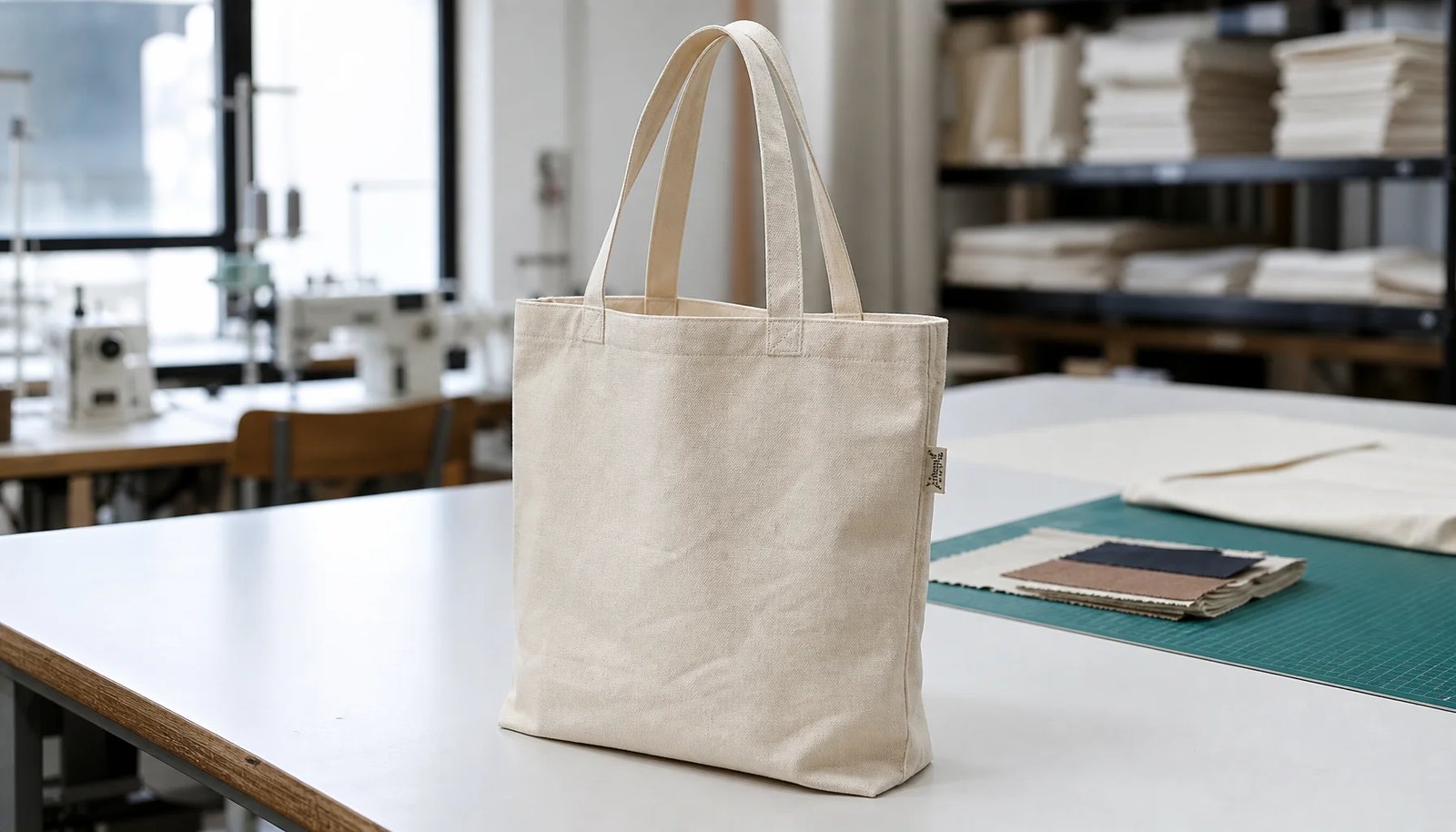
Start with the tote’s job inside the box
For subscription boxes, an organic cotton tote is usually doing one of three jobs: acting as a protective insert, creating a small premium moment, or functioning as a reusable bag the customer may keep using. Those are different products in procurement terms. A tote that only has to sit inside a carton can be lighter, flatter, and simpler. A tote that is meant to be reused has to hold shape, take print cleanly, and survive handling beyond the first delivery.
That distinction should drive the brief before you request a price. Define the maximum folded thickness, the heaviest item the bag may carry, and whether the bag has to look polished on first reveal or simply perform. If those points are still open when quotes come back, suppliers will make different assumptions and the numbers will not compare cleanly. The best RFQs for organic cotton totes for subscription boxes start with the use case, not the logo.
- State whether the tote is packaging, a gift, or a reuse item.
- Use the heaviest expected contents, not the average box weight, to define the build.
- Treat carton fit, foldability, and print durability as one procurement decision.
Choose fabric weight, weave, and finish together
GSM is useful, but it is not enough on its own. For most subscription-box programs, a finished fabric around 140-160 GSM is a practical starting point when the bag needs to fold flat and keep shipping cost under control. Move closer to 180-220 GSM when you want a more substantial hand feel, better structure, or a tote that customers are likely to reuse outside the box.
The weave and finishing process matter just as much as the number on the spec sheet. A tighter plain weave or compact canvas usually gives cleaner logo edges and less distortion at the seams. A looser cloth may feel softer, but it can stretch during cutting, vary more across rolls, and create size drift in bulk. Ask whether the weight is measured on greige cloth or finished cloth, and whether the fabric is pre-shrunk, calendared, or left untreated. Those details change what the quote really means.
- Use 140-160 GSM when the tote must stay flat and light.
- Use 180-220 GSM when structure and reuse are more important than freight efficiency.
- Do not compare suppliers on GSM alone if weave, finishing, or pre-shrink treatment differs.
Use the organic claim path to narrow supplier options
If the organic claim matters to the brand, the supply chain needs to be documented, not implied. Ask which certification path applies to the order, then verify that the relevant entities in the chain hold current scope certificates. For shipped goods, the transaction certificate is the document that ties the certified lot to the actual order. A general certificate on file is not enough if it does not match the shipment you are receiving.
This is also where buyers need to map the full production chain. Fabric, dyeing, printing, sewing, labeling, and packing may sit with different legal entities. If any of those steps are outside the certified chain, the claim may weaken or stop being usable depending on how you market the tote. Ask the supplier to name every party involved and to confirm which one is responsible for each document. That prevents surprises after the goods are already in transit.
- Request current scope certificates for every relevant processor, not just the seller.
- Require the transaction certificate for the lot you will receive.
- Make sure invoice language matches the claim you intend to use.
- If subcontractors are involved, identify them before sample approval.
Pick decoration for durability, not just the mockup
Decoration should follow the artwork and the use case. For bold logos, one or two colors, and higher unit volumes, screen printing is still often the simplest option. It is predictable, relatively easy to inspect, and usually the most cost-efficient route when the tote is a controlled part of a subscription-box program. The downside is that poor curing, weak ink, or overly fine art can crack, blur, or fill in after handling.
If the design needs softer hand feel or finer detail, a different print system may make more sense, but only if the factory can show real process control. Ask what ink system is being quoted, how many colors are included, whether setup charges are per design or per run, and what kind of proof will be approved before bulk starts. If the tote is likely to be reused, ask for wash or crocking data on the decoration system. A sample that looks right on a table but fails after a few uses is not production-ready.
- Use screen print for simple logos and predictable unit economics.
- Use softer-hand decoration only when the supplier can prove control, not just show a sample.
- Check small type, fine lines, and reversed-out elements before screens or plates are committed.
Specify construction details that affect wear and pack-out
A tote can pass visual approval and still be wrong for the box if the construction is inefficient. Handle width, seam allowance, reinforcement, and label placement all affect how the bag folds and how much space it consumes in the carton. Wider handles can improve comfort but add fabric and change the fold profile. Heavier seams can improve durability but make the packed tote thicker. If the tote has to fit a specific subscription box, those are not cosmetic details. They are pack-out variables.
Buyers should also define the load expectation. A light promotional insert may only need standard topstitching and a basic bar tack. A tote intended to carry books, boxed goods, or a multi-item set should have a written reinforcement method at the handle base and stress points. Do not accept vague statements like strong stitching or durable construction. Ask the supplier to name the stitch pattern, reinforcement method, and the point at which the bag is considered acceptable for release.
- Check that handle width and reinforcement still allow a flat fold.
- Specify reinforcement by construction method, not marketing language.
- Match seam build to the heaviest expected filled weight, not the average one.
Build sample approval around the actual subscription box
The pre-production sample should prove the exact order, not a generic version of it. That means the same fabric, the same print process, the same handle length, the same reinforcement, the same label placement, and the same packing style planned for bulk. A photo proof or a loose swatch is not enough when the tote has to fit a fixed carton and hold a specific brand presentation. If the sample is not made from production materials, the approval is incomplete.
A good approval sequence is straightforward: freeze the spec, approve the artwork proof, approve the physical sample, then issue the PO with the same details attached. When the sample arrives, measure the finished bag after sewing and pressing. Check the fold, seam symmetry, print placement, and the fit inside the actual box. If the tote has to sit beside tissue, cards, or another item, pack the full set before sign-off. That is the only way to catch carton problems early.
- Approve the exact production material, not a substitute sample.
- Measure the finished tote after sewing and pressing.
- Test the tote in the real subscription box before bulk release.
Write QC limits the factory can inspect against
Quality control works when the factory can test the same thing the buyer will reject later. For most customer-facing programs, the baseline should be zero critical defects, with major and minor defects capped by an agreed AQL and tied to written examples. That gives the inspector a clear call on missing bar tacks, crooked logos, visible oil stains, or damaged cartons before goods leave the factory. Without those definitions, inspection becomes a dispute instead of a control point.
The most useful limits are objective. Finished dimensions should have a written tolerance. Handle attachment should survive a defined load test based on expected use. Print should meet an agreed visual registration limit and a durability requirement. If the tote is intended to be reused, define shrinkage and crocking expectations up front. If the packaging matters to receiving, carton condition and barcode legibility must be part of the QC plan, not an afterthought for logistics.
- Set zero critical defects and written AQL limits for major and minor defects.
- Define dimensional tolerances for the finished tote, not just the cut fabric.
- Make print durability, seam strength, and carton condition part of inspection, not only receiving.
Pack for carton efficiency and freight math
Packing can quietly erase the savings from a low unit price. A flat-packed tote usually gives the best freight result, but only if folding is controlled and the fabric does not wrinkle into a bulkier shape than expected. If the box program wants a more premium presentation, tissue, individual polybags, or insert cards may be appropriate, but those need to be priced separately. Otherwise the supplier can hide labor and material cost inside a low-looking bag price.
Ask for carton dimensions, gross weight, units per carton, and inner pack counts before you compare suppliers. Then check that information against the actual fulfillment flow. A tote that fits the box but expands the master carton can create a shipping penalty that is larger than the product cost difference. For subscription programs, landed cost is not just the factory invoice. It is the total cost of getting the tote into the box without disrupting packing speed or shipping rates.
- Quote flat-packed and presentation-packed options separately.
- Compare gross weight and carton size across suppliers before choosing on unit price.
- Check the tote against the real fulfillment cell, not just the import invoice.
Ask RFQ questions that expose hidden cost
A clean RFQ forces every supplier to price the same product and the same obligations. If the brief is loose, one factory may quote a raw tote, another may include printing and labels, and a third may quietly exclude testing or packing. That makes the lowest number look better than it is. Procurement gets better results when the RFQ separates base bag cost from all the add-ons that can move the landed price.
The practical way to do that is to ask for separate pricing on decoration, packing, testing, and reorders. Also ask which costs are excluded, which subcontractors are involved, and what changes would trigger a revision to the quote. If the supplier can only quote one version, you still do not know the real cost structure. The goal is not just to buy the tote once. It is to define a repeatable program with fewer surprises on the next run.
- Split base bag cost from decoration, packing, testing, and paperwork.
- Ask the supplier to name excluded costs before you compare bids.
- Request a reorder path so the second run does not become a new sourcing project.
Specification comparison for buyers
| Material / build choice | Best use case | Buyer checks before quote | Main tradeoff | When to avoid |
|---|---|---|---|---|
| Organic cotton canvas, 140-160 GSM | Flat subscription-box inserts where the tote is mainly a branded bonus and space is tight | Confirm finished GSM, weave, pre-shrink treatment, handle length, and whether the fabric still holds print cleanly after folding | Lowest bulk and easiest pack-out, but less structure and a lighter hand feel | Avoid if the bag must carry heavier goods or needs a premium retail feel |
| Organic cotton canvas, 180-220 GSM | Reusable tote programs, premium box launches, or orders where the bag must feel substantial on first touch | Ask for actual finished weight, yarn count or weave description, and a sample after sewing and pressing | Better body and durability, but higher material cost and more freight volume | Avoid if carton weight and shipping efficiency are the primary constraint |
| Tight plain weave / compact canvas | Simple logos, fine type, and programs that need consistent print edges and less seam distortion | Request cut-and-sew sample, print proof, and confirmation that the cloth is stable after finishing | Cleaner decoration and more predictable sizing, but sometimes a firmer hand feel | Avoid if the brand brief depends on a very soft, relaxed drape |
| Undyed or natural-finish cloth | Brands that want the simplest organic story and lower decoration complexity | Verify whether the cloth is bleached, optically brightened, or left in its natural state | Easier to align with an understated organic claim, but natural variation is more visible | Avoid if you need exact shade matching across multiple lots |
| Garment-dyed or piece-dyed cloth | Programs that need a specific colorway or stronger shelf presence | Ask for shade band, colorfastness data, and confirmation that dyeing sits inside the claimed certification path | Better visual control, but more variables in color matching and testing | Avoid if the claim needs the most straightforward chain-of-custody documentation |
| Material | organic cotton canvas, batch documentation where available, undyed or low-impact dyed fabric, and shrinkage control | Before price comparison | Different cloth weights, backing, or certification claims make quotes hard to compare | |
| Construction | seam allowance, handle reinforcement, label attachment, fabric pre-shrink note, and batch shade control | Before sampling | Weak stress points create returns and failed inspections | |
| Decoration | water-based print, embroidery, woven organic label, or low-impact transfer checked against certification claims | Before artwork approval | The wrong method can crack, bleed, pucker, or fail on the chosen fabric |
Buyer checklist before sampling
- Define the tote’s role first: box insert, premium gift, or reusable retail bag.
- Lock the finished size, handle length, and target filled weight before asking for pricing.
- Ask for finished GSM, weave type, and whether the cloth is pre-shrunk, calendared, or left raw.
- Require a physical pre-production sample made from the exact fabric, stitching, print method, and label placement.
- Confirm the organic claim path in writing and ask which legal entity in the chain will issue the shipment documents.
- Compare cartons, inner pack counts, and gross weight against the actual subscription-box fulfillment flow.
- Write dimensional tolerances, print tolerance, and load-test expectations into the PO before production starts.
- Ask for a line-item quote that separates bag cost from decoration, packing, testing, and compliance paperwork.
Factory quote questions to send
- What exact fabric are you quoting, including finished GSM, weave, yarn count, and whether the cloth is pre-shrunk or calendared?
- Which organic certification path applies to this order, and which scope certificate and transaction certificate will accompany the shipment?
- Who owns each production step: weaving, dyeing, printing, sewing, labeling, and packing?
- What decoration method is included, how many colors does the price cover, and what setup or screen charges apply if artwork changes?
- Can you provide a physical sample in the same fabric, print method, and construction you plan to run in bulk?
- What finished size tolerance do you hold after sewing and pressing, and how do you control handle symmetry and placement?
- What test data can you provide for shrinkage, print durability, seam strength, and colorfastness, and which lab methods were used?
- What is the minimum order quantity for the base tote, and which variables change the MOQ or unit price?
- Please quote flat-packed and presentation-packed versions separately, with carton dimensions, carton weight, and units per carton for each?
- What costs are excluded from your price, including artwork setup, labels, testing, freight, duties, and any rework if the first lot misses spec?
Quality-control points to confirm
- Fabric GSM within the agreed tolerance band on the lot average, with no roll outside the written range without buyer approval.
- Finished width, height, and depth within the signed-off dimensional tolerance, measured after sewing and pressing.
- Handle length and placement must match the approved sample, and the left and right handles should sit symmetrically.
- No open seams, skipped stitches, loose thread bundles, needle damage, or broken topstitching at visible seams.
- Handle attachment and reinforcement must survive a written load test based on expected use, with no seam failure or tearing.
- Print registration within the agreed visual tolerance, with no bleed past art boundaries, ghosting, heavy pinholing, or patchy ink coverage.
- If the tote is intended to be reusable or washable, define shrinkage limits and require the print to retain acceptable appearance after the agreed test.
- Color should match the approved standard under lightbox review, and any instrument-based tolerance should be agreed before production.
- Cartons must arrive intact, dry, and correctly labeled, with scannable barcodes and no crushed corners that affect receiving.
- Piece count, inner pack count, and carton count must reconcile exactly with the packing list; shortages should count as a shipment defect.