Why carton planning belongs in the tote specification
For organic cotton totes, shipping carton planning is part of the product specification, not a warehouse detail to solve after sewing. The carton decides how many totes fit in the shipment, how much cubic volume you pay for, whether the print survives compression, and how cleanly the goods move through receiving. A tote can be well made and still arrive wrinkled, scuffed, or hard to count if the carton plan was never defined.
B2B procurement teams often compare organic cotton totes by unit price, fabric GSM, and print charge. Those numbers matter, but they do not explain the delivered cost. Two suppliers can quote the same 160 GSM tote and the same one-color logo while using different fold methods, carton sizes, board strengths, and pack counts. One shipment may arrive in compact, stable cartons; the other may create extra CBM, crushed corners, and receiving delays.
Good organic cotton totes shipping carton planning for eco apparel brands starts before the RFQ is sent. The buyer should define the intended channel: e-commerce insert, retail gift-with-purchase, event giveaway, staff uniform kit, or paid merchandise. Each channel has a different tolerance for creasing, dust exposure, barcode labeling, and carton handling. When the channel is clear, the supplier can quote a carton plan that supports the actual use case instead of guessing.
- Include carton pack count, carton dimensions, board strength, and inner packing in the RFQ.
- Compare quotes by landed cost per usable tote, not only factory unit price.
- Treat carton approval as part of product approval, especially for first orders and repeat programs with strict warehouse requirements.
Start with the tote details that change carton volume
The strongest carton plan begins with a precise tote spec. Finished width, finished height, gusset depth, handle drop, handle width, fabric GSM, seam style, and print area all influence folding volume. A vague request for an organic cotton tote gives the supplier too much room to assume. Those assumptions may produce an attractive quote, but they can also make the bulk shipment more expensive once the real carton count is known.
Fabric weight is usually the first practical decision. A 140-160 GSM organic cotton tote is a common starting point for apparel promotions, e-commerce inserts, and light retail use because it balances handfeel, printability, and folding efficiency. A 180 GSM tote has a more substantial feel and can suit paid merchandise or heavier inserts, but it takes more space in the carton. Higher GSM also increases gross carton weight, which matters for manual handling, courier limits, and pallet stacking.
Gussets deserve extra attention. A gusseted tote may not look much larger in a product photo, but the extra fabric and seam bulk change the fold. Boxed bottoms, side gussets, and wide handles can create uneven stack height inside the carton. If the tote must carry folded garments, shoes, or boxed accessories, the gusset may be necessary. If the tote is mainly a brand giveaway, a flat construction may deliver better carton density and lower freight cost.
Handle drop also affects packing. Long shoulder handles left loose can create irregular piles, while handles tucked into the fold produce cleaner cartons. If the front panel carries a large logo, the folding direction should avoid placing a hard handle edge across the printed area. These small details are exactly where procurement, product, and warehouse needs meet.
- Define finished size in centimeters or inches, not only an image reference.
- State GSM, color, gusset, handle drop, handle width, and expected load use.
- Ask the supplier to confirm whether the quoted pack count is based on your actual construction or a generic tote.
Choose fabric and print with compression in mind
Cartons create pressure. Every tote in the lower part of a carton carries the weight of the bags above it, and every carton in a pallet stack carries additional load. That is why fabric and print choices should be evaluated under folded and packed conditions, not only on a flat sample table. A beautiful print can still fail if the ink is under-cured, too thick, or placed where the fold line repeatedly stresses it.
Screen printing is often the most practical choice for one- or two-color eco apparel logos. It is cost-effective for repeat programs, gives stable artwork reproduction, and can hold up well when properly cured. The key phrase is properly cured. Buyers should ask how the factory checks cure and whether the print will be dry enough before folding and packing. Rushing printed totes into cartons can create offset, tackiness, or surface marks.
Heat transfer and digital printing can be useful when artwork has many colors, gradients, or short seasonal versions. They also introduce different packing risks. A transfer may create a raised film that presses into the next bag. Digital prints can vary by fabric color, pretreatment, or production batch. For either method, procurement should request a folded sample and, for important orders, a short packed test that replicates carton pressure.
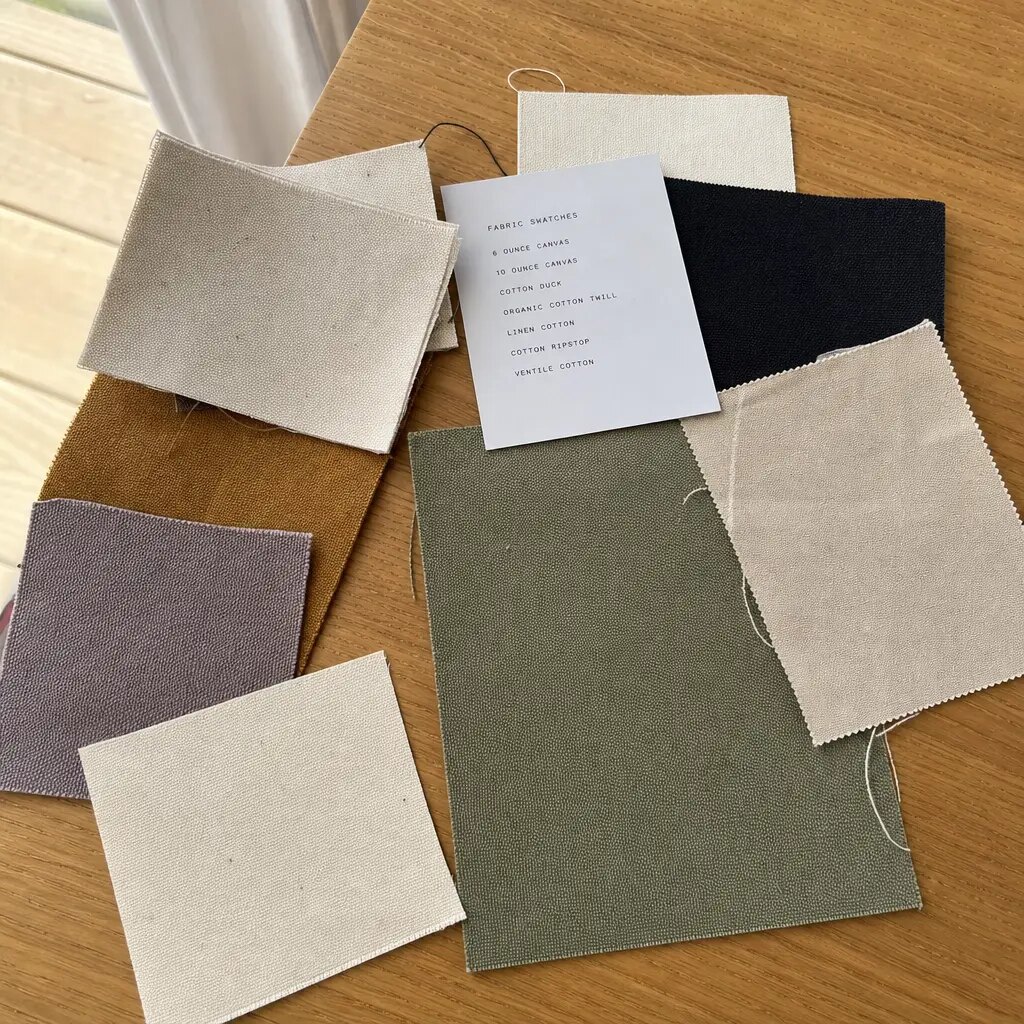
Natural organic cotton appearance should also be discussed early. Unbleached or natural cotton may show seed specks, slubs, and shade variation. These characteristics can be acceptable, even desirable, for eco positioning, but they should be controlled against an approved sample. If the brand expects a clean, bright, uniform surface, the buyer needs to specify the fabric finish and shade tolerance rather than relying on the phrase organic cotton.
- For screen print, confirm ink color, print size, cure method, and rub resistance expectation.
- For transfer or digital print, check whether the print surface can tolerate stacking pressure.
- Agree what natural cotton variation is acceptable before bulk fabric is cut.
Build the carton plan from pack count, fold, and board strength
A useful carton plan has three connected parts: how each tote is folded, how many folded totes go into one carton, and what carton board strength is used. If one part changes, the others may need to change. Increasing pack count may require a stronger carton. Changing from flat fold to tri-fold may reduce length but increase height. Adding tissue or kraft bands may protect presentation but also alter carton fill.
For most folded organic cotton totes, 10-25 pieces per carton is a reasonable planning range, but it is not a universal rule. Lightweight flat totes with small logos may pack efficiently at the higher end. Heavyweight gusseted totes, large printed panels, or premium retail bags may require fewer pieces per carton. The correct count is the one that allows the carton to close flat without bulging and keeps the bags presentable after transit.
Carton dimensions should be treated as quoted data, not estimated decoration. Ask for length, width, height, gross weight, net weight, and estimated CBM. If the supplier cannot provide these details during quotation, they have not completed the packing math. For high-volume orders, even small dimensional differences can change container utilization or freight cost.
Board strength matters. A 3-ply carton may be acceptable for light domestic movement or small courier shipments, but export cartons for ocean freight usually need stronger construction. A 5-ply export carton is a safer default for heavier totes, long routes, humid conditions, or high stacking. Buyers should also ask whether cartons will ship loose-loaded or palletized because stacking pressure and handling damage differ between the two routes.
- Do not approve a pack count that makes the carton bow at the sides or strain the tape.
- Use actual carton dimensions and gross weight in freight estimates before PO release.
- Specify 5-ply export carton when the route, weight, or stacking conditions justify it.
Define inner packing without weakening sustainability goals
Eco apparel buyers often want reduced plastic, and that is reasonable. The procurement risk is leaving inner packing undefined. A supplier may assume individual polybags, a master polybag, kraft bands, tissue, or no inner protection. Each option affects cost, labor, moisture control, presentation, and carton density. To compare quotes fairly, the RFQ should state the preferred inner packing and the conditions where exceptions are allowed.
Kraft bands are a practical option when the tote needs a tidy presentation without individual plastic. They can hold the fold, support simple warehouse counting, and align with many plastic-reduction goals. Tissue interleaf may be useful when the print panel is sensitive or when high ink coverage could rub against adjacent bags. No inner packing can work for plain totes when cartons are clean, transit is controlled, and the destination does not require individual retail handling.
Polybags should be chosen deliberately rather than automatically. Individual polybags add material and labor, but they may be necessary for certain retail channels, barcode requirements, moisture exposure, or dust-sensitive storage. A master polybag inside the carton can add some moisture and dust protection while avoiding individual plastic per tote. Desiccants may be appropriate for humid routes or long storage, but unnecessary moisture control adds cost and waste.
The best packing decision comes from the destination reality. Will cartons be opened in a clean apparel warehouse, stored in a back room, handed out at events, or shipped onward to consumers? Will the tote be inspected by retail staff or packed directly into a customer order? A carton plan that suits a store event may not suit an e-commerce fulfillment center.
- State whether the order uses no inner pack, kraft band, tissue, master polybag, or individual polybag.
- Use polybagging only when dust, moisture, barcode, or retail presentation requirements justify it.
- Ask the supplier to photograph the approved fold and inner packing before bulk packing begins.
Quote comparison should include carton data
A low unit price is not automatically the best procurement result. For organic cotton totes, the quote should be compared as a product-plus-packing offer. The buyer needs the bag price, print cost, inner packing cost, carton cost, estimated carton count, gross weight, CBM, and pallet assumptions. Without those numbers, there is no reliable way to estimate delivered cost or compare suppliers fairly.
MOQ also changes the carton economics. A small MOQ may use less efficient packing because the supplier is combining setup work, print preparation, and carton material purchase across fewer units. Splitting the order into several print versions can reduce carton efficiency further because each version may need separate carton marks, counts, and packing control. If the program has multiple logos or store locations, ask the supplier to quote by version, not only by total quantity.
Direct factories and trading companies may present carton data differently. A direct factory can usually connect the folding method to the sewing and printing process. A trading company may be useful when the buyer consolidates multiple products, but the buyer should still require exact carton details from the producing factory. The important point is not the supplier type alone; it is whether the supplier can prove the packing plan behind the price.
Procurement teams should standardize the quote sheet. Add columns for finished tote weight, carton quantity, carton dimensions, gross weight, CBM, pieces per carton, inner packing, board strength, and palletization. This turns carton planning from a late surprise into a comparable commercial input.
- Reject or revise quotes that omit carton dimensions, pack count, and gross weight.
- Compare suppliers using estimated landed cost per unit at the same order quantity and same packing method.
- Ask how carton count changes if GSM, gusset, artwork size, or inner packing changes.
Sample approval must test the packed condition
A flat tote sample proves only part of the order. It can show fabric handfeel, sewing quality, print color, and general proportions, but it does not prove the carton plan. The packed condition reveals different issues: fold creases through the logo, print offset, carton bulge, handle lumps, quantity errors, and carton closing pressure. For a new program, those risks should be checked before bulk production is released.
A strong approval sequence starts with a fabric reference, then a printed sample, then a pre-production sample made with final materials and construction. For higher-risk orders, add packed-carton approval. This does not always require shipping a full carton internationally, although that is useful for critical launches. At minimum, request clear photos of the folded tote, the stack inside the carton, the filled carton before closure, the sealed carton, and the carton mark.
The buyer should measure and record the approved sample. Note finished width, height, gusset, handle drop, handle width, logo size, logo position, fabric feel, print appearance, and folded size. These measurements become the reference for production inspection. If approval is given only by email comments such as looks good, the supplier and buyer may have different interpretations when bulk goods are checked.
Packed samples are especially important when the tote has a large print area, heavyweight fabric, natural light color, long handles, special labels, hangtags, or retailer-specific carton marks. They are also important when the shipment goes by ocean, where longer transit and stacking increase compression exposure.
- Approve final fabric, final print, final fold, and final carton method before bulk packing.
- Measure the sample after sewing and printing, not only the cut fabric panel.
- Request packed-carton photos for every new size, new GSM, new print method, or new carton configuration.
Quality control points buyers should put in the inspection brief
Quality control for organic cotton totes should cover both the bag and the carton. The inspection brief needs measurable checkpoints so the inspector is not relying only on general appearance. At the bag level, check fabric GSM, finished dimensions, handle strength, seam security, stitching consistency, stains, odor, print color, print placement, and print adhesion. At the packing level, check fold consistency, carton quantity, carton condition, carton marks, gross weight, and whether the carton closes correctly.
Handle attachment is a high-risk area because customers notice failures immediately. Reinforcement stitching should be even and secure, with no skipped stitches or loose threads at stress points. Side seams and bottom seams should be checked for open sections, puckering, or uneven sewing that changes the bag shape. If the tote has a gusset, inspect the gusset corners because bulk and stress concentrate there.
Print QC should include more than a visual logo check. Measure placement from fixed edges, compare color to the approved reference, and test whether the print surface feels dry and stable. A simple fold-and-rub check can reveal tackiness, cracking, or transfer risk. For high ink coverage, ask the supplier to keep printed panels from pressing directly against each other unless testing proves it is safe.
Carton QC protects the final mile of the order. Randomly open cartons to confirm the piece count, version, color, and packing method. Check that outer marks match the packing list and PO. Inspect whether cartons are overfilled, underfilled, damp, crushed, or inconsistently taped. A carton that arrives damaged is not always a freight problem; it can be a packing specification problem.
- Include both product defects and packing defects in the acceptance criteria.
- Use approved sample measurements as the reference for inspection tolerances.
- Treat wrong carton marks, mixed versions, carton shortage, and bulging cartons as operational defects, not minor paperwork issues.
Plan palletization, freight, and warehouse receiving early
Carton planning should connect to the freight route and destination warehouse. Ocean freight, air freight, courier delivery, and domestic trucking put different pressure on cartons. Ocean freight typically means longer transit, higher humidity exposure, and more stacking. Air freight is faster but expensive enough that inefficient carton volume becomes visible quickly. Courier shipments may have stricter carton weight and size limits.
Palletization can reduce handling damage and speed warehouse receiving, but it changes cost and dimensions. Some warehouses require palletized goods with standard pallet height, labels, and carton orientation. Others prefer loose cartons for container utilization. Before production, the buyer should ask the destination warehouse for receiving rules: maximum carton weight, maximum pallet height, required labels, barcode format, ASN requirements, and whether mixed SKUs on one pallet are allowed.
Gross carton weight matters for both logistics and worker safety. A carton packed too heavily may look efficient in CBM terms but create handling issues. For tote programs, especially heavier 180 GSM or gusseted bags, check whether the proposed carton weight is practical for the receiving team. Lower pack count may be worth the added carton cost if it reduces crushing and handling complaints.
The packing list should be aligned with the carton plan before shipment. It should show total pieces, pieces per carton, total carton count, carton dimensions, gross weight, net weight, and version breakdown. If the order has multiple colors or print versions, carton numbering should make receiving simple. Clear carton planning reduces back-and-forth between procurement, freight forwarder, supplier, and warehouse.
- Confirm destination warehouse rules before approving carton size and pallet plan.
- Check carton gross weight against manual handling limits and carrier restrictions.
- Make sure packing list, carton marks, and quote data use the same pack count and version names.
A practical RFQ workflow for repeat tote programs
For repeat eco apparel programs, the best workflow is to freeze the important details before sampling. Start with the finished tote size, fabric GSM, color, construction, print method, artwork, inner packing preference, carton strength, target pack count, destination, and expected order quantity. Then ask suppliers to return a quote with both product and carton data. This prevents the common problem where the bag spec evolves while the carton plan remains an old assumption.
Once quotes arrive, compare them using a shared template. Look for missing data, unrealistic carton counts, unclear board strength, vague inner packing, and sample terms that do not include final folding. Ask follow-up questions before choosing the supplier. A supplier that responds clearly about packing is often easier to manage than one that only repeats the unit price.
After supplier selection, approve samples in stages and keep one controlled spec version. If artwork changes, update the carton discussion if the print size or location changes. If GSM changes, ask for revised carton count and gross weight. If inner packing changes from kraft band to individual polybag, request updated carton dimensions. Small product changes can create real logistics changes.
After delivery, capture actual results. Record carton count, received condition, warehouse comments, and any print or crease issues. For repeat orders, this information is valuable. It helps refine pack count, folding method, and carton marks without restarting the entire sourcing process.
- Freeze the RFQ version before sampling so product, print, and carton data stay connected.
- Require revised carton data whenever GSM, size, gusset, print method, or inner packing changes.
- Use receiving feedback from the first shipment to improve the next purchase order.
Specification comparison for buyers
| Spec decision | Recommended option | When it fits | Buyer risk to check |
|---|---|---|---|
| Tote fabric weight | 140-160 GSM for standard retail or event totes; 180 GSM when the tote must feel more substantial or carry heavier inserts | Use 140-160 GSM for most eco apparel giveaways, e-commerce inserts, and store events; step up for paid retail merchandise or heavier welcome kits | Too-light fabric may wrinkle and collapse under carton compression; too-heavy fabric reduces carton density and can raise freight cost per unit |
| Bag construction | Flat tote for highest carton efficiency; gusseted tote when usable capacity matters more than carton density | Flat totes suit apparel promotions and folded retail presentation; gussets fit shoes, denim, folded sweaters, or boxed accessories | Gussets add sewing bulk and uneven folds if the folding method is not fixed before quotation |
| Print method | 1-2 color screen print for repeat orders; transfer or digital print only when artwork complexity or low MOQ justifies it | Screen print works for stable brand marks and predictable color; transfers support detailed artwork; digital can suit small seasonal batches | Poor ink cure, thick transfer films, or high ink coverage can offset, crack, or mark adjacent totes during carton pressure |
| Carton pack count | 10-25 pcs per carton for most folded organic cotton totes, validated by packed sample or packing photos | Lower counts fit heavyweight, gusseted, or heavily printed totes; higher counts fit plain, lightweight, flat-folded totes | Overpacking causes bulging cartons, creases, print scuffing, and inaccurate carton dimensions; underpacking increases freight and handling cost |
| Folding method | Flat fold or tri-fold with handles tucked inside and print panel protected from direct rubbing where needed | Best when distribution centers need consistent carton counts and retail teams need clean presentation | Loose handles and inconsistent folds create unstable cartons and may shift visible creases across the printed panel |
| Inner protection | Kraft band, tissue interleaf, master polybag, individual polybag, or no inner pack based on channel and moisture risk | Kraft band supports plastic-reduction goals; tissue helps protect print; polybag is reserved for dust, moisture, or retail barcode needs | Unspecified inner packing creates inconsistent supplier assumptions and makes quote comparisons unreliable |
| Carton board strength | 5-ply export carton for ocean freight, heavy totes, humid routes, or high stacking; 3-ply only for light domestic or short transit lanes | 5-ply is the safer default for international bulk orders and palletized ocean shipments | Weak cartons crush at corners, bow under stacking pressure, and can turn a correct product into a receiving complaint |
| Carton labeling | Outer carton marks with item code, PO, color, print version, quantity, carton number, gross/net weight, and destination where required | Required for warehouse receiving, marketplace routing, retailer compliance, and multi-version programs | Wrong carton marks delay receiving, mix print versions, and can force manual relabeling at the destination |
| Sample approval level | Pre-production sample with final fabric, final print, final fold, and confirmed carton packing method | Use for first orders, new artwork, new fabric GSM, new carton dimension, new retail channel, or new destination warehouse | Approving only a flat bag sample misses carton fit, folding creases, print transfer, and gross-weight issues |
Buyer checklist before sampling
- Define finished tote width, height, gusset depth, handle drop, handle width, seam allowance expectation, and usable loading weight.
- Specify organic cotton fabric type, GSM or oz weight, color standard, shade tolerance, shrinkage expectation, and whether certification documentation is required for the order.
- Confirm whether the tote will be flat, gusseted, boxed-bottom, lined, reinforced at handles, or finished with internal labels, hangtags, or barcode stickers.
- Send vector artwork with logo size, print position measured from bag edges, Pantone references or approved color standard, ink restrictions, and acceptable placement tolerance.
- Choose the print method before carton planning because ink thickness, cure time, and print-panel sensitivity influence folding and inner protection.
- Ask the supplier to quote carton pack count, carton dimensions, gross weight, net weight, carton board strength, and estimated CBM for the target order quantity.
- Define the folding method in words and photos: flat fold or tri-fold, handles tucked or wrapped, print facing in or out, and whether tissue or kraft band is required.
- Decide whether individual polybags, master polybags, kraft bands, tissue interleaf, desiccant, or no inner packing matches the destination market and sustainability policy.
- Confirm outer carton marks, item codes, carton numbering, PO number, color/version details, destination requirements, and pallet label needs before bulk packing starts.
- Approve one physical pre-production sample and request packed-carton photos or a carton sample when the order is new, high volume, retail sensitive, or shipped by ocean.
Factory quote questions to send
- What organic cotton fabric are you quoting: yarn count or construction if available, GSM, color, shrinkage expectation, and finished bag weight after sewing and printing?
- What finished dimensions are included in your quote, and what tolerance will you hold for width, height, gusset, handle drop, and print placement?
- Which print method are you using, what ink type or transfer type is assumed, and how will you confirm cure or adhesion before bulk packing?
- How many pieces will you pack per carton, what folding method will you use, and will handles be tucked inside each folded tote?
- What are the exact carton dimensions, gross weight, net weight, board strength, and estimated CBM for our target quantity?
- Does the price include kraft band, tissue, master polybag, individual polybag, desiccant if needed, carton marking, palletization, and export carton cost?
- Can you provide one packing photo showing the folded tote, one photo showing the filled carton before closing, and one photo of the sealed carton with marks?
- What is the MOQ by fabric color, print version, size, and carton configuration, and how does MOQ change if we split artwork across multiple designs?
- What pre-production sample will you provide: fabric swatch, printed bag sample, size sample, or final sample with actual folding and carton packing?
- What inspection standard do you use for stains, broken stitches, print defects, dimension variance, carton damage, and quantity shortage?
Quality-control points to confirm
- Fabric GSM should be checked from bulk fabric or finished bags against the approved reference and agreed tolerance, not accepted only from a catalog description.
- Finished bag dimensions must be measured after sewing and printing; record width, height, gusset, handle drop, handle width, and visible panel size before folding.
- Handle attachment should be inspected for reinforcement, stitch density, skipped stitches, loose threads, and symmetrical placement because handle failures create high customer dissatisfaction.
- Seams should be straight and secure, with no open seams, puckering that distorts the bag shape, or raw edges beyond the approved construction.
- Print color should match the approved standard within agreed tolerance, and print placement should be measured from fixed bag edges instead of judged by eye.
- Print cure and adhesion should be tested by folding, light rubbing, and short stacking pressure; ink should not crack, become tacky, offset, or mark adjacent bags.
- Natural cotton impurities should be controlled against the approved sample; agree in advance what level of seed specks, slubs, or shade variation is acceptable for organic cotton.
- Bags should be clean, dry, and free from oil marks, mold odor, strong chemical odor, needle stains, and visible dust before packing.
- Folding consistency should be checked during inline packing so carton height, carton closure, and presentation remain stable from first carton to last carton.
- Cartons must close flat without bulging, tearing, or excessive tape strain; a bulging carton means the pack count or fold pattern needs correction.