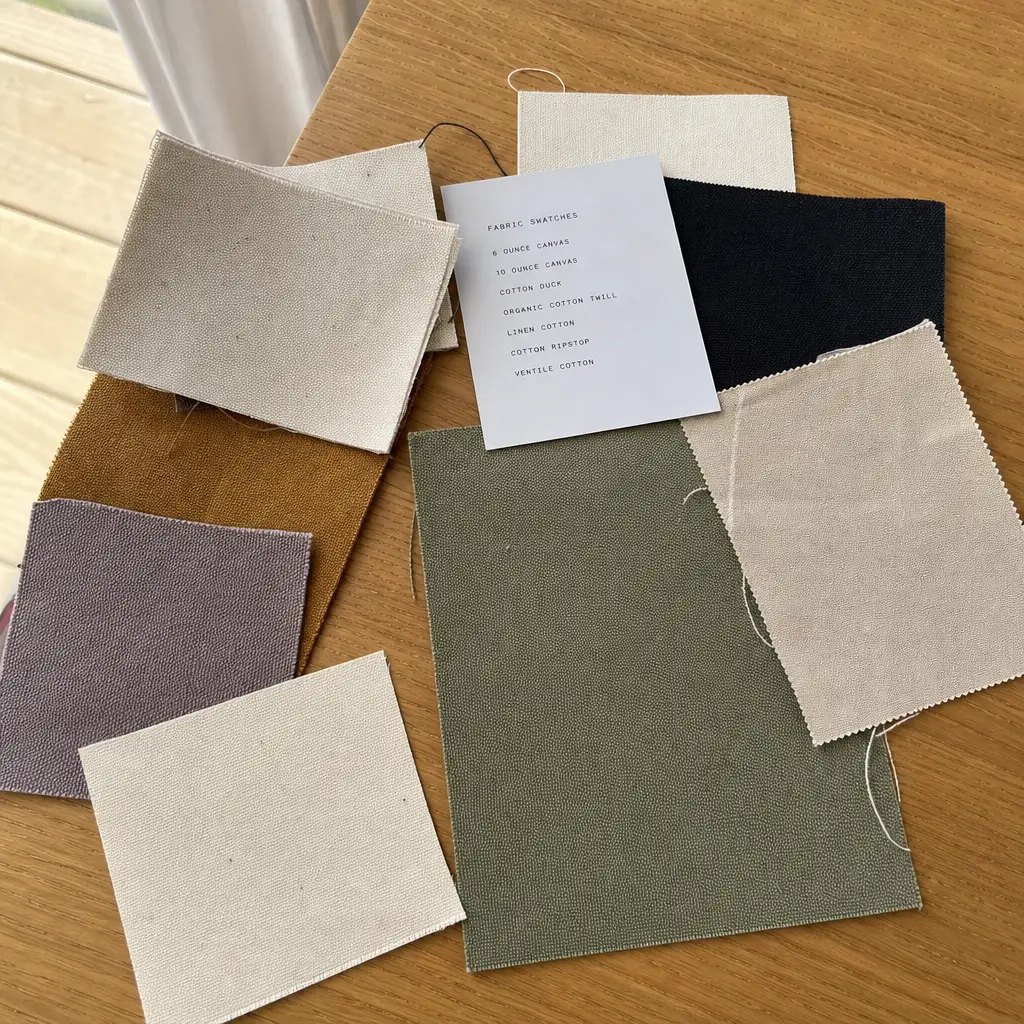
Define the Buying Problem Before Sending the RFQ
For tech startups, an organic cotton tote order often looks simple until the quotes arrive. One supplier prices a light promotional tote, another quotes a heavier retail-style canvas bag, and a third excludes print setup, sample freight, or organic documentation. Procurement then compares numbers that were never based on the same product. The RFQ must remove that ambiguity before suppliers calculate.
The buying problem is not only finding the lowest unit price. It is getting a tote that supports a launch, recruiting event, developer conference, employee onboarding kit, or merchandise drop without late artwork changes, weak handles, shade complaints, or inflated air freight. A useful RFQ defines the final use, expected contents, distribution method, and approval path so the factory can recommend a practical spec instead of guessing.
Before writing the RFQ, decide what outcome matters most. If the bag is meant to hand out at a conference booth, the main success factor may be print visibility, easy stacking, and a low landed cost. If it is part of a welcome kit, the bag may need more structure, cleaner stitching, and better folding. If it will be sold or given to external partners, presentation quality, labeling, and consistency matter more than shaving a few cents off the unit price.
A strong buying brief should also capture the practical environment. Will the tote be used indoors or outdoors? Will it carry notebooks only, or also water bottles, laptops, and boxed accessories? Will the order ship into a warehouse, a third-party kit assembler, or individual offices? These details change how the factory quotes construction, packing, and carton configuration.
- For event giveaway use, prioritize reliable print, clean packing, and carton efficiency over premium sewing details.
- For employee kits, specify a stronger handle, smoother print area, and better folding because the bag may be photographed or reused.
- For retail resale, add barcode, hangtag, label, fabric documentation, and tighter cosmetic inspection requirements.
- For partner gifts, allow more time for sampling and packaging because presentation defects become visible quickly.
- For shipping into multiple offices, ask for carton marks and separate destination labels in the RFQ.
Core Tote Specifications to Put in the RFQ
Start the RFQ with finished dimensions, not only a reference photo. A common flat tote might be around 38 x 42 cm, while a gusseted version might be 38 x 42 x 10 cm. If the bag needs to hold a laptop, hoodie, notebook, or boxed device accessory, describe the actual load. Finished size, gusset depth, handle drop, and fabric weight all affect cost and usability, and they also affect how the print area lands on the front panel.
The spec should distinguish between finished size and cut size. Many quote disputes begin because the supplier measured the bag panel before sewing while the buyer expected the post-sew dimension. In the RFQ, ask the factory to confirm whether dimensions are finished measurements after sewing and to state the tolerance for each dimension. If the tote has a boxed bottom, internal pocket, or reinforced corner, call that out explicitly because each detail affects labor and fabric usage.
Organic cotton totes are commonly quoted in 160, 180, 220, 250, 280, and 340 GSM. For a tech startup order that should feel credible but not overbuilt, 220-280 GSM is usually the practical center. Lighter fabric can be acceptable for single-day events, but it wrinkles more, feels less substantial, and may show contents through the fabric. Heavier canvas improves structure but increases material cost, sewing time, and freight weight. The RFQ should ask the supplier to quote the same bag at more than one GSM if the team is still deciding between budget and durability.
Also define the product profile the way a factory would. Is the tote open-top or zip-top? Does it have a self-fabric handle or webbing? Is the handle stitched to the top edge or inserted into the side seam? Does it need an inner pocket, lining, or label? Even a simple tote can have many cost drivers, and the clearer the spec, the cleaner the quote.
- Finished size: state width, height, gusset, and tolerance in centimeters.
- Handle drop: 25-30 cm suits shoulder carry for many tote styles; shorter handles may only work by hand.
- Fabric: specify organic cotton canvas or plain weave, GSM, natural or dyed color, and whether shrinkage matters.
- Seams: define inside overlock, bound seam, French seam, or other finish if the inside appearance matters.
- Reinforcement: require box stitch, cross stitch, or bartack at handles when the bag may carry heavier contents.
- Extras: state pocket, lining, zipper, label, or hangtag requirements so they are not treated as add-ons later.
Organic Cotton Evidence and Certification Boundaries
The word organic has commercial value, so it must be treated as a controlled claim. Some buyers only need organic cotton fabric as a sourcing preference; others need formal documentation for ESG reporting, retail labeling, or customer-facing claims. These are different requirements. If certification evidence is required, state the exact document level in the RFQ and ask whether it is included in the quoted price.
A factory may have access to certified organic cotton fabric, but the finished bag transaction paperwork can depend on the supply chain, certification scope, order size, and labeling claim. Do not assume a low quote includes certificate handling, transaction documentation, or label approval. If the final bag will carry a certified claim, align the artwork, hangtag wording, and document requirement before bulk fabric is booked.
The RFQ should also make clear whether the buyer wants proof of the cotton origin only, proof of the fabric mill chain, or proof tied to the finished bag purchase. If the supplier cannot issue the required document for the finished product, the quote may still be valid for a material-only order but not for a claim-bearing retail order. That distinction matters for legal review, marketing sign-off, and internal ESG reporting.
For procurement teams, the safest approach is to separate the commercial spec from the claim spec. Commercial spec covers the tote’s size, construction, fabric, and packing. Claim spec covers what can be said on the product, hangtag, and sales page. That split keeps the factory focused on production while giving compliance teams a clear approval point before any brand language is printed.
- Use plain wording if documentation is limited: for example, made with organic cotton fabric, subject to supplier evidence.
- Avoid printing certification logos unless the certification body, license scope, and approval process are confirmed.
- Request fabric source evidence before deposit if organic claim risk is material to the project.
- Keep marketing copy separate from factory artwork until compliance wording is approved internally.
- Clarify whether the supplier is responsible for transaction documents or only for material sourcing evidence.
- Ask whether certification-related costs are one-time or repeat costs on every production run.
Fabric Weight, Construction, and Cost Tradeoffs
Fabric is usually the largest cost driver in an organic cotton tote. A change from 180 GSM to 280 GSM is not a small upgrade; it changes fabric consumption cost, cutting feel, sewing speed, carton weight, and sometimes minimum fabric booking quantity. Buyers should quote several quantities using one fixed fabric spec before deciding whether a lighter or heavier option is worth it. That makes the price break visible and keeps the team from choosing by intuition alone.
The weave and finish also matter. A smoother cotton surface supports sharper logo printing. A more open or slubby surface looks natural but can break fine logo lines and absorb ink unevenly. Natural unbleached fabric may show cotton seed flecks, which many sustainability-focused brands accept, but procurement should not treat flecks as defects unless the approved sample defines a cleaner fabric grade. If the brand wants a cleaner retail look, ask for a tighter weave and a more polished finish rather than assuming all organic cotton looks the same.
Construction details often decide whether a bag feels cheap or durable. A plain open tote can work well for events, but if the bag will carry heavier items, a reinforced top hem and handle joint become essential. Some factories will quote the same fabric weight with different sewing details, so the RFQ should separate fabric choice from construction choice. That helps the buyer see exactly which part of the price changes when durability improves.
For startup buyers, the most useful quote comparison is not one price at one quantity. It is a matrix showing how much the unit price moves when GSM changes, when a gusset is added, and when reinforcement is upgraded. The team can then decide whether a premium is justified for a recruiting campaign, a partner launch, or a merchandise sale.
- 160-180 GSM: lower cost, lighter hand feel, suitable for short event use or flat mailer inserts.
- 220-250 GSM: balanced option for startup conferences, recruiting bags, and employee welcome kits.
- 280-340 GSM: stronger retail feel, better structure, higher material and freight cost.
- Natural fabric: fewer dye risks, but visible cotton flecks and shade variation must be accepted within sample limits.
- Dyed fabric: better brand color control, but requires lab dip approval and rubbing fastness attention.
- Ask for a second quote line showing the impact of reinforcement, lining, or pockets if those features are optional.
Print Method Selection for Startup Branding
Most startup tote orders use a front logo, event mark, or simple slogan. For one to three solid colors, water-based screen printing is often the best balance of cost, durability, and hand feel on organic cotton. It works well when the artwork is clean, the print area is not overloaded with tiny text, and the buyer approves a strike-off before mass production. It is usually the easiest option for procurement to compare because setup and production logic are familiar to most factories.
Heat transfer, digital print, and embroidery can be valid, but they solve different problems. Heat transfer can reproduce gradients or small runs, yet it may feel like a film on natural cotton. Digital print can help complex artwork but may have limits on color depth and wash performance depending on the process. Embroidery gives a premium texture but adds stitch cost and can pucker lighter fabric. The RFQ should name the artwork type instead of forcing one method too early, then ask suppliers which method they recommend and why.
The RFQ should also specify the art file standard. Send vector artwork in editable PDF, AI, or EPS, with fonts outlined and linked images embedded if required. Include Pantone references where brand control matters, but also ask for a realistic color match expectation on natural cotton. Some colors shift slightly on unbleached fabric, so it is better to define the acceptable range upfront than to fight over a theoretical mismatch later.
Small text and fine line work deserve extra attention. On textured canvas, very thin strokes may close up in print, especially on absorbent natural cotton. Ask the supplier to confirm the minimum printable line width and the smallest readable text size for the chosen method. If the logo has multiple colors, define registration tolerance and whether the supplier should present a strike-off before bulk approval. That simple step catches many artwork problems at low cost.
- Provide vector artwork in AI, EPS, or editable PDF with fonts outlined.
- State Pantone references or acceptable visual match if exact Pantone is not possible on natural cotton.
- Define print size in centimeters and position from top edge or center line.
- Require a print strike-off when brand color, line clarity, or ink hand feel is important.
- Avoid very thin reversed-out text on textured canvas unless the supplier confirms printable line width.
- Ask the factory to state whether print is one side, two sides, or same-artwork both sides.
MOQ Logic and Price Breaks That Make Quotes Comparable
MOQ is not a single factory number. It can come from organic fabric availability, dyeing minimums, screen setup, cutting efficiency, label production, packing labor, or carton purchase quantity. A supplier may accept 300 pieces for a natural blank tote but require 1,000 pieces for custom dyed fabric or a woven side label. Procurement should ask suppliers to explain which part of the order creates the minimum. That turns MOQ from a mysterious barrier into a planning tool.
For tech startup buyers, quote comparison works best when the RFQ includes price breaks at 500, 1,000, 3,000, and 5,000 pieces. These levels show whether the supplier is genuinely competitive at scale or only attractive at one quantity. They also help brand owners decide whether to consolidate event, HR, and partner merchandise demand into one production run. If a startup expects repeated use of the same design, the buyer can also ask what happens on a reorder with no artwork change.
The quote should show each cost driver clearly. Screen setup, sample making, label weaving, special folding, packaging inserts, and document fees should be separated from the base tote price. If a supplier merges everything into one number, the buyer cannot tell whether the tote is inexpensive because the fabric is light or because the quote omits real work. Procurement should ask for line-item pricing so finance can compare suppliers on the same basis.
There is also a scale question. Some teams believe it is safer to start with the smallest quantity possible, but tote production often becomes more efficient at a moderate run size because fabric booking, cutting, and sewing are easier to standardize. The RFQ should therefore help the buyer understand whether 500 pieces is a trial run or whether it is actually the most expensive way to buy a bag that the startup will reorder later.
- Ask for the same specification at each quantity level; do not let suppliers downgrade fabric for lower prices.
- Separate sample fee, screen charge, label setup, and packing surcharge from the unit price.
- Request the MOQ for custom dyed fabric separately from the MOQ for natural organic cotton.
- If the order may repeat, ask whether screens, patterns, and labels can be reused and for how long.
- For distributors, request carton quantity and CBM at each price break to calculate landed cost.
- Ask the factory to identify any quantity threshold that changes fabric source, print setup, or packing method.
Sample Approval Workflow That Prevents Bulk Mistakes
A sample is not just a photo for internal approval. It is the physical contract for fabric hand feel, finished size, handle drop, logo placement, print density, sewing method, label position, and packing style. If the first sample uses stock fabric, mark it clearly as a construction sample and do not approve bulk fabric shade or GSM from it. Procurement teams should treat the sample as a decision record, not a design accessory.
A practical workflow uses a fabric swatch or material confirmation first, then an artwork strike-off, then a pre-production sample using the closest available bulk materials. For urgent event orders, buyers may compress the workflow, but they should still keep written acceptance criteria. A signed sample sheet with measured dimensions and photos reduces disputes when the bulk inspection happens weeks later. It also gives the factory a clearer target when multiple people inside the startup are reviewing the order.
The sample review should be structured. Measure the tote flat and record width, height, gusset, handle drop, and print position. Check whether the handles hang evenly and whether the top edge closes neatly. Look at the inside seams, not just the front panel. If the tote will be folded into a kit or retail box, confirm the folding direction and packed appearance before mass approval. Those details often get missed when teams only focus on logo placement.
If there are multiple stakeholders, define who approves what. Brand may approve artwork, procurement may approve price and timing, operations may approve packing, and sustainability or legal may approve organic claim wording. Without that split, approval drifts and suppliers begin production with partial alignment. The RFQ should name the approval owner for each stage so the process is fast but controlled.
- Measure the sample flat and record width, height, gusset, handle drop, and print position.
- Weigh or verify fabric GSM if the tote feel is central to the purchase decision.
- Review handle reinforcement from both outside and inside, not only the front panel photo.
- Rub the print surface lightly with a dry white cloth after curing to catch obvious ink issues.
- Approve folding and packing if the bag must go directly into kits or retail cartons.
- Keep one sealed reference sample and one signed spec sheet in the project file.
Quality Thresholds for Inspection and Acceptance
Inspection criteria should be written before production, not negotiated after cartons are finished. Basic tote defects include open seams, broken stitches, oil marks, mold smell, dirty fabric, poor print registration, wrong print position, twisted handles, uneven top hems, shade variation beyond the approved sample, and cartons that are too weak for export handling. These are not cosmetic preferences; they affect usability and brand perception. For tech startups, a tote often carries the public face of the brand, so quality failures are visible immediately.
For most wholesale tote orders, buyers can use a normal AQL inspection approach, but the important part is defect classification. A missing logo, wrong fabric, incorrect size, or weak handle should be treated more seriously than a minor thread tail. If the tote will be used for a public launch event, define a maximum tolerance for visible front-panel defects because every bag is a walking brand surface. This matters especially when the bag will appear in photos, at booths, or in employee social posts.
QC also needs a functional test, not only a visual one. Ask the supplier to load a representative weight and check the handle joints for seam cracking, stitch opening, or handle stretch. For dyed fabric, confirm dry and wet rubbing fastness if the bag may contact light-colored apparel or furniture. For natural fabric, inspect for dirt transfer, oil spots, and odor. A clean-looking tote that fails in use still creates a procurement problem.
The acceptance plan should say what happens if the order has mixed defect types. Minor thread tails may be reworked. Size errors, wrong print position, or weak reinforcement may require sorting or replacement. If the buyer wants the factory to pre-sort or re-inspect the order, that should be stated in the RFQ so the pricing reflects the labor. Clear QC expectations protect both sides from arguments after the bags are packed.
- Critical defects: unsafe sharp objects, mold contamination, wrong product, or severe odor.
- Major defects: weak handle stitching, open seam, wrong print color, wrong logo placement, major stains, or incorrect size outside tolerance.
- Minor defects: small removable thread tails, slight crease marks, or minor natural cotton fleck variation within the approved sample range.
- Functional test: load a representative weight and check handle joints for seam cracking or thread breakage.
- Visual test: inspect front logo area under consistent light, not in mixed warehouse lighting only.
- Ask the factory to state whether defective pieces will be replaced, repaired, or credited.
Packing, Cartons, and Freight Cost Control
Packing choices change both unit cost and landed cost. Bulk packing 50-100 pieces per carton is efficient for conferences and warehouse distribution. Individual polybags protect each tote but add plastic, labor, and volume. Paper bands or kraft sleeves can support a retail or employee kit presentation, but they must be tested for rubbing, tearing, and extra packing time. Procurement should not treat packing as a cosmetic detail because it can materially change freight and handling costs.
Carton data should be part of the quote, not an afterthought. Importers and distributors need estimated pieces per carton, carton dimensions, gross weight, net weight, and CBM to compare FOB pricing accurately. A cheap tote with poor carton utilization can lose its advantage when freight is calculated. Overfilled cartons can also crush handles, create hard creases, or split during transit. Underfilled cartons can raise air volume and inflate shipping cost, especially when orders are sent by express or consolidated freight.
The RFQ should also define how the bags should be folded and counted. A bag folded randomly by one worker may look different from a bag folded by a packing line with a fixed template. If the tote is going into employee kits, the front logo should present consistently when the box is opened. If the tote is going to an event, a counted bulk pack may be enough, but the carton mark and bundle count should still be precise. That way, the warehouse team can receive and distribute the order without opening every carton.
For overseas shipping, ask the factory whether any desiccant, carton reinforcement, or palletization is recommended. These are not always necessary, but when sea freight is involved, moisture and compression can matter. The supplier should explain the packing method instead of defaulting to the cheapest option.
- For event distribution, bulk pack by counted bundles and use clear carton marks by design or destination.
- For employee kits, request neat folding direction and consistent logo presentation inside the kit carton.
- For retail buyers, define barcode, hangtag, inner carton, master carton, and carton drop expectations if needed.
- Use desiccant only when moisture risk justifies it and make sure it does not contact the printed surface directly.
- Request carton photos before shipment when third-party inspection is not scheduled.
- Ask for net weight, gross weight, and CBM so finance can estimate freight impact early.
Lead Time, Quote Data, and Landed-Cost Comparison
A credible lead time separates sample making, sample courier, buyer approval, fabric booking, cutting, printing, sewing, inspection, packing, and export handover. A supplier stating 20 days may mean 20 days after deposit, or 20 days after all artwork, sample, fabric, and packing approvals are complete. For startup launch dates, that difference can decide whether the order ships by sea or expensive air freight. The RFQ should force suppliers to state the timeline from a clear starting point, usually deposit plus final approval.
The quote should also be built for landed-cost comparison. Unit price alone is not enough. Procurement needs trade term, port, carton data, sample fees, setup charges, document costs, packing surcharges, estimated production lead time, payment terms, and quote validity. If the delivery location is known, ask for both FOB and an estimated delivered option, clearly marked as an estimate, so internal teams understand the freight impact. This is especially useful when comparing suppliers across regions or evaluating whether local sourcing is worth the premium.
It helps to request a quote template rather than a single email response. Ask the supplier to fill in the exact finished size, fabric spec, logo method, packing method, carton count, and excluded charges. Then every supplier quote can be reviewed against the same checklist. That reduces back-and-forth and makes procurement’s job easier when presenting the recommendation to finance or marketing.
For startups working toward a launch date, timing risk should be called out in the RFQ. If artwork approval is delayed, if the brand team wants another print strike-off, or if certification paperwork is not ready, the schedule may slip. The supplier should know what milestones are buyer-controlled and what milestones are factory-controlled. Clear ownership keeps the project moving instead of turning every delay into a blame issue.
- Quote basis: FOB port, EXW factory, or delivered estimate with address and assumptions.
- Cost lines: unit price, print setup, sample charge, courier, label, special packing, inspection support, and document fee if any.
- Timing: sample lead time, bulk lead time after approval, inspection window, and vessel or courier handover estimate.
- Validity: fabric and freight-sensitive quotes should show how long the price is valid.
- Risk note: any buyer delay in artwork, color approval, or deposit should reset the production schedule in writing.
- Ask for the latest approval date needed to still hit the requested ship window.
Specification comparison for buyers
| Spec decision | Recommended option | When it fits | Buyer risk to check |
|---|---|---|---|
| Fabric weight | 220-280 GSM organic cotton canvas for most startup event and merchandise totes | Balances hand feel, print surface, shipping weight, and a retail-style appearance for gifting or resale | Quotes based on 160-180 GSM may look cheaper but can feel thin, wrinkle easily, and distort under laptop or brochure weight |
| Cotton status | Certified organic cotton fabric with transaction or scope evidence available before bulk order | Useful when the tote supports ESG messaging, employee kits, retail resale, or partner-facing brand claims | Do not accept only the word organic in a quotation; define which document is required, when it is issued, and who pays for it |
| Bag construction | Flat tote with reinforced handle stitching and inside overlock or bound seams | Best for launch bags, conference giveaways, onboarding kits, and software partner events | Weak handle bartacks and loose seam allowance create field failures even when fabric weight is acceptable |
| Print method | Water-based screen print for 1-3 solid colors; heat transfer only for complex gradients or very small runs | Screen print gives a softer, lower-plastic feel on natural cotton and holds cost well at scale | Fine logo lines can fill in on textured canvas; require artwork line-width review before sampling |
| MOQ logic | Quote 500, 1,000, 3,000, and 5,000 pieces using the same final spec | Lets procurement see the step-down effect of fabric buying, screen setup, cutting efficiency, and carton utilization | Comparing one supplier at 500 pieces against another at 3,000 pieces hides true competitiveness |
| Color choice | Natural unbleached or dyed black/navy with pre-approved lab dip for brand color needs | Natural fabric reduces dye risk and suits sustainability messaging; dyed fabric supports brand systems | Dyed organic cotton needs shrinkage and rubbing fastness checks, especially for dark colors against light apparel |
| Packing method | Individual fold with paper band or bulk pack by 50-100 pieces per export carton | Paper band works for retail or employee kits; bulk pack controls cost for event distribution | Overpacking raises labor and carton volume; underpacking increases wrinkling, dirt marks, and carton crush claims |
| Sample approval | Pre-production sample using bulk fabric or confirmed substitute, final handle length, print size, and packing method | Prevents surprises before cutting fabric for bulk order | Prototype samples made from stock fabric can mislead buyers about weight, shade, shrinkage, and print absorption |
Buyer checklist before sampling
- Define finished tote size, gusset requirement, handle length, fabric GSM, cotton status, and seam finish in the RFQ.
- Attach vector artwork with Pantone or brand color references, print size, print position, and acceptable logo tolerance.
- Request price breaks at 500, 1,000, 3,000, and 5,000 pieces using identical specifications.
- State whether samples must use certified organic cotton fabric or whether a construction sample is acceptable first.
- List required test expectations: seam strength, handle pull, print rub, shrinkage after washing if relevant, and colorfastness for dyed fabric.
- Specify packing style, carton quantity, carton marks, barcode or label requirements, and whether bags must arrive distribution-ready.
- Ask suppliers to separate tooling, screen, sample, certification document, packing, and freight-related costs instead of giving one blended price.
- Require the quote to show production lead time from deposit and sample approval, not from initial inquiry date.
- Confirm whether the supplier is quoting FOB, EXW, DDP, or another term, and define the nearest port or delivery address.
- Keep an approved sealed sample and signed spec sheet before mass production starts.
Factory quote questions to send
- What exact fabric construction are you quoting: GSM, weave, yarn count if available, natural or dyed, and expected shrinkage?
- What evidence can you provide for organic cotton status, and is the quoted price based on certified fabric already available or newly booked fabric?
- Is the quoted size cut size or finished size after sewing, and what tolerance do you apply to width, height, gusset, and handle length?
- Which print method are you using for this artwork, and what are the minimum printable line width and color registration tolerance on this fabric?
- What stitching method will be used at the handle joint: cross stitch, bartack, box stitch, or another reinforcement?
- What is the MOQ for this fabric, this print method, and this packing method separately?
- How many pieces per carton, what is the estimated carton size and gross weight, and will the carton pass normal export handling?
- What sample stages do you recommend: blank fabric swatch, artwork strike-off, fit sample, and pre-production sample?
- What quote items are excluded, such as sample courier, import duty, inspection, palletization, retail labels, or certification transaction documents?
- What production capacity is available during the requested delivery window, and what approval date is needed to meet shipment?
Quality-control points to confirm
- Finished size tolerance should normally stay within plus or minus 1 cm for width and height on basic totes unless a tighter retail requirement is agreed.
- Handle length should match the approved sample within plus or minus 1 cm, with left and right handles aligned and not twisted.
- Handle attachment should use reinforced stitching, with no skipped stitches, broken thread, loose bartacks, or seam cracking under normal pull testing.
- Fabric GSM should be verified by cutting and weighing a measured swatch, not judged only by hand feel.
- Print placement should stay within agreed tolerance, commonly plus or minus 5 mm for simple front logo placement.
- Print surface should show no obvious pinholes, smearing, cracking, heavy ink build-up, or color mismatch beyond the approved strike-off.
- Dyed fabric should be checked for dry and wet rubbing fastness where dark colors may contact apparel.
- Inside seams should be trimmed cleanly, with no long thread tails, open seams, oil marks, mold marks, or needle damage.
- Cartons should be dry, clean, correctly marked, and packed to avoid excessive compression, odor transfer, or deformation during transit.