Start the RFQ with the carrying job
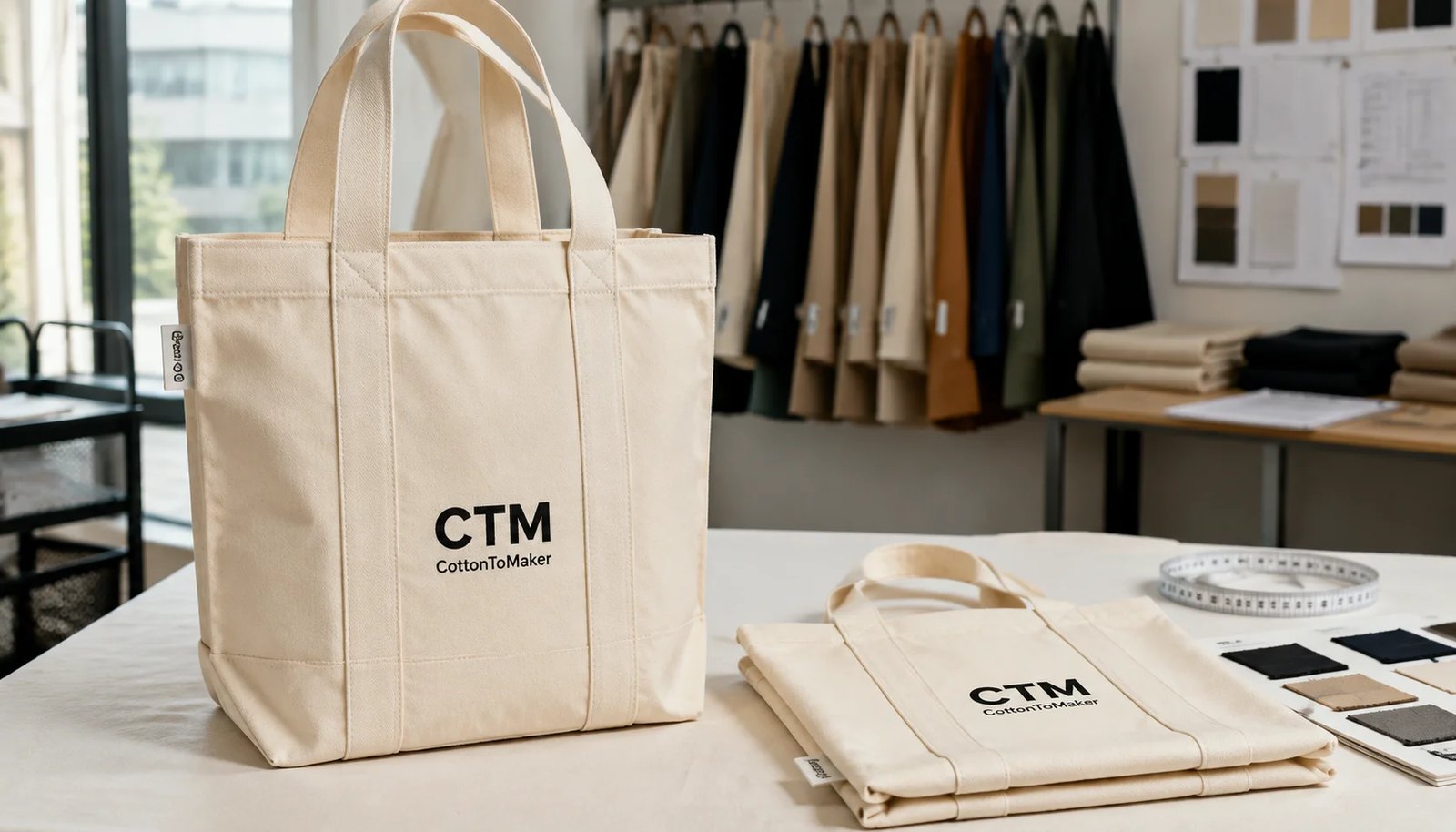
For liquor retailers, an organic cotton tote is not just a logo item. It has to carry glass, sit flat at checkout, survive a short walk to the car, and still look good enough for a customer to reuse. The RFQ should begin with the carrying job: bottle count, bottle size, expected retail use, and whether the tote is sold, gifted, or used as a purchase-with-purchase item.
A factory can quote a cheaper tote quickly if the RFQ only says organic cotton tote with logo. That quote will usually leave out the decisions that affect failure: fabric body, handle attachment, bottom structure, print durability, and carton packing. A useful RFQ tells the supplier what the bag must do before it tells them what price target you want.
- One standard 750 ml bottle usually needs less structure than two or three bottles, but handle reinforcement still matters.
- Mixed retail baskets may need a wider gusset so the bag stands better on the counter.
- Gift programs often require better folding, cleaner print, and lower visible fabric defects than checkout giveaway bags.
- If the tote may hold chilled bottles, consider how condensation can affect print rub and fabric staining.
Specify fabric weight without guesswork
Organic cotton totes for liquor retail normally sit in the heavier reusable range rather than the thin promotional range. A practical starting point is 10 oz to 12 oz canvas, roughly around 280 to 340 GSM depending on finishing and supplier conversion. Lighter 6 oz to 8 oz fabric can work for single-bottle or event giveaway use, but it may collapse at the counter and look underbuilt next to premium wine or spirits.
Do not rely on oz alone. Some mills quote fabric weight before washing, after finishing, or with loose conversion between ounces and GSM. The RFQ should state the target GSM, acceptable tolerance, weave type, and whether the quoted material is undyed natural organic cotton, dyed organic cotton, or blended material. If the bag carries an organic claim, the material description must match the documents the supplier can provide.
- Light use: 6 oz to 8 oz, usually for events, single light items, or budget campaigns.
- Standard reusable retail use: 10 oz to 12 oz canvas for better body and perceived value.
- Premium or heavier load use: 14 oz canvas may be suitable, but it increases sewing cost, carton weight, and freight.
- Request fabric swatches from the actual production source, not only a showroom swatch.
Choose the structure around bottle weight
A flat tote is simple and economical, but liquor retail usually benefits from a gusset or boxed bottom. Bottles create concentrated weight and round pressure points. A wider bottom helps the bag sit upright and reduces stress on the side seams. The best structure depends on whether the tote is designed for one bottle, two bottles, a gift box, or general merchandise.
Handle construction should be treated as a load-bearing spec, not a style detail. Self-fabric handles are common for organic cotton totes because they match the body and support a natural retail look. For heavier use, specify handle width, handle drop, stitching pattern, and reinforcement area. A comfortable tote for store customers often needs a handle drop that works by hand and over the shoulder, but very long handles can drag or swing awkwardly when loaded with bottles.
- For checkout bags, define finished width, height, gusset, and usable opening size.
- For bottle programs, include the maximum bottle diameter and height the tote must hold.
- For heavy loads, use box-X stitching, bartacks, or reinforced stitching at handle joints.
- Avoid narrow handles if the bag may carry two or more glass bottles.
Match print method to artwork and retail handling
Most liquor retailer tote artwork is suitable for screen printing: store logo, bottle shop mark, seasonal message, wine club branding, or event sponsor artwork. Water-based screen print is often a good fit for organic cotton because it keeps a softer hand-feel and aligns with a natural product position. For detailed artwork, gradients, or small batch multi-color work, digital print may be considered, but buyers should test color density and wash or rub performance on the actual fabric.
Print cost depends on color count, print area, ink type, screen setup, registration difficulty, and whether both sides are printed. A low unit price can become less attractive once screen charges and minimum print runs are added. The RFQ should include artwork at actual size, print position, Pantone references, number of colors, and whether print opacity must cover natural fabric texture.
- Use one or two solid colors when cost control and repeat ordering are priorities.
- Require a strike-off for color, hand-feel, edge sharpness, and ink coverage before bulk printing.
- Define whether minor fabric slubs showing through the print are acceptable on natural canvas.
- For dark dyed fabric, confirm whether underbase printing is required and included.
Build MOQ logic into the RFQ
MOQ for organic cotton totes is not one number. It can come from fabric availability, dyeing, printing setup, sewing line efficiency, label production, and carton packing. A factory may offer a low finished bag MOQ if natural stock fabric is available, but the same design in a custom dyed color may require a much higher fabric MOQ. Procurement teams should require suppliers to break down the MOQ reason instead of accepting a single unexplained minimum.
For liquor retailers running regional promotions, the order quantity may be split by store, artwork, or market. That split can change the economics. One 10,000 piece order with one print is not the same as five 2,000 piece orders with different logos. The RFQ should show each artwork version, ship-to allocation, and expected reorder potential so the supplier can quote setup charges and production planning accurately.
- Separate MOQ for blank natural fabric, dyed fabric, printed panels, labels, and finished bags.
- Request pricing at two or three quantity breaks, such as 1,000, 3,000, and 10,000 pieces.
- State whether artwork versions can share the same bag body and differ only by print.
- Ask whether overruns or underruns are expected and what tolerance applies.
Require evidence for organic claims
Organic cotton claims need more than a product description in a quotation. If the tote will be marketed as organic cotton, used in sustainability reporting, or sold with a hangtag claim, the buyer should verify what level of certification or traceability is available. The supplier may be able to provide scope certificates, transaction certificates, fabric mill documents, or chain-of-custody support, depending on the order route.
There is a commercial difference between certified organic cotton, made with organic cotton, and natural unbleached cotton. These are not interchangeable claims. Before approving artwork or packaging, align the exact wording with the documents the supplier can support. This prevents a common mistake: printing organic cotton on a bag, then discovering during compliance review that only a general material statement is available.
- Request the supplier's current scope certificate if certification is claimed.
- Confirm whether a transaction certificate can be issued for your order.
- Match hangtag and carton wording to the verified material claim.
- Keep certification document review separate from visual sample approval.
Use samples to lock the factory standard
A strong sample process reduces arguments after bulk production. For organic cotton totes, the buyer should not approve only a photo. At minimum, review a blank construction sample and a print strike-off. For larger orders, approve a pre-production sample made with bulk fabric, bulk print method, final stitching, labels, and packing. This sample becomes the reference for inspection.
Sample approval should be written in measurable terms. The approved sample should show finished size, fabric weight, handle drop, stitching density, print placement, print color, label position, and folding method. If the buyer accepts natural cotton variations such as small slubs, seed flecks, or shade differences, that tolerance should be recorded. Otherwise, inspectors and factories may judge defects differently.
- Measure bag width, height, gusset, handle drop, and handle width on the signed sample.
- Keep one approved sample with the buyer, one with the factory, and one for inspection if practical.
- Photograph details such as handle reinforcement, inside seams, label location, and carton packing.
- Do not release bulk production until artwork size and print position are signed off.
Define packing before comparing freight
Organic cotton canvas is bulkier than thin nonwoven or lightweight cotton. Packing affects carton size, carton weight, warehouse receiving, and store allocation. A quote without carton dimensions and pieces per carton is not ready for landed-cost comparison. Buyers should require CBM, gross weight, net weight, carton count, and inner packing method at each quantity break.
Packing also affects presentation. Over-compressed heavy canvas can create deep creases, distorted handles, and uneven folded edges. For retail programs, the buyer may prefer a neat fold with kraft band, belly band, recycled polybag, or carton-level separation by store. The right method depends on whether bags are displayed, handed out at checkout, inserted into gift packs, or shipped to many locations.
- Set a practical maximum carton weight for warehouse handling.
- Define whether each bag is individually packed, bundled, or bulk packed.
- Require carton marks for SKU, color, artwork version, quantity, and destination if needed.
- Include palletization requirements if the shipment moves through a retail distribution center.
Break lead time into controllable steps
A single lead time line such as 35 days after deposit is not enough for a liquor retail launch. Organic fabric booking, dyeing, sample approval, print setup, sewing, inspection, packing, and vessel booking can each move the schedule. The RFQ should ask the supplier to separate sample lead time, material preparation, bulk production, inspection window, and export handover.
Schedule risk is higher when the program uses custom dyed fabric, multiple artwork versions, special labels, or certification documents that must be issued per shipment. Retail buyers should also consider internal time for legal claim review, artwork approval, purchase order release, deposit payment, and freight booking. Many late deliveries begin with a clean-looking production quote that ignores buyer-side approval time.
- Show the required in-store date and work backward to the cargo ready date.
- Add buffer for print strike-off approval, especially for Pantone-sensitive brand colors.
- Confirm whether the quoted lead time starts after deposit, artwork approval, or sample approval.
- For seasonal liquor promotions, avoid changing artwork after screens or digital files are prepared.
Compare quotes by usable landed cost
The lowest FOB unit price is not always the lowest usable cost. A lighter tote may reduce unit price but increase complaints if handles fail or the bag feels too flimsy for premium bottles. A carton with poor packing density may raise ocean or air freight cost. Missing certification documents may force artwork changes or relabeling. Procurement teams should compare the full cost of a compliant, usable bag.
A practical quote comparison should include unit price, setup charges, sample charges, document charges if any, packing cost, carton data, incoterm, payment term, lead time, inspection cost, and expected defect risk. For liquor retailers, the final decision should balance load performance, brand presentation, claim support, and repeat-order stability. A slightly higher unit price from a supplier with clear fabric sourcing and reliable sample control may be lower risk than a vague low quote.
- Calculate landed cost using carton CBM and gross weight, not only piece price.
- Add print screen charges across the actual order quantity and artwork versions.
- Include inspection and testing costs when the program carries heavy bottles or organic claims.
- Compare supplier quotes only after normalizing fabric GSM, structure, print, packing, and incoterm.
Specification comparison for buyers
| Spec decision | Recommended option | When it fits | Buyer risk to check |
|---|---|---|---|
| Fabric weight | 10 oz to 12 oz organic cotton canvas, or 280 to 340 GSM equivalent | Bottle shops, liquor chains, and gift pack programs needing a reusable bag with better body than promotional cotton sheeting | Some suppliers quote oz and GSM inconsistently; require actual GSM tolerance and a cut sample before approving price |
| Bag construction | Boxed bottom or wide gusset tote with reinforced handle stitching | Retailers packing one to three bottles, tasting kits, or mixed merchandise at checkout | Flat totes may look cheaper in the quote but fail when carrying heavy bottles unless size and load target are defined |
| Handle style | Self-fabric handles, 2.5 to 3.5 cm wide, cross-stitch or box-X reinforcement | Premium retail use where comfort and strength matter more than lowest piece price | Long thin handles can twist under bottle weight; define handle drop and width in the RFQ |
| Print method | Water-based screen print for simple logos; pigment print or digital only when artwork requires fine color work | Most liquor retailer logos, store names, festival graphics, and limited seasonal campaigns | Low-cost plastisol-like prints can feel heavy or crack; include print hand-feel and rub-test expectations |
| Organic claim evidence | Supplier provides transaction certificate route, scope certificate, and yarn or fabric traceability documents where applicable | Brands making organic material claims on packaging, websites, or ESG reporting | A generic organic statement is not enough for customs, legal, or chain-of-custody review |
| MOQ logic | Separate MOQ for greige fabric, dyed fabric, print setup, and final bag quantity | Importers comparing domestic stock printing against custom factory production | A low bag MOQ can hide a higher fabric dye MOQ or print screen charge; require the cost split |
| Packing method | Flat packed by inner polybag or kraft band, export carton under practical carton weight limit | Retail distribution, warehouse receiving, or store allocation by carton | Over-compressed packing saves freight but causes creases and distorted handles on heavier canvas |
| Lead time basis | Sample lead time, material booking time, production time, inspection window, and shipping cutoff listed separately | Seasonal promotions, holiday gift campaigns, new store openings, and beverage launch programs | One total lead time number hides delays from organic fabric availability, artwork approval, and vessel booking |
| Quote format | Unit price tied to full spec sheet, artwork, packing, incoterm, carton data, and validity date | Procurement teams comparing two or more factories or trading partners | Quotes without carton size, gross weight, and incoterm cannot support landed-cost comparison |
Buyer checklist before sampling
- Define the bottle load target before selecting fabric weight: one 750 ml bottle, two bottles, three bottles, or mixed retail goods.
- State the fabric in both oz and GSM where possible, with acceptable tolerance, color, shrinkage expectation, and whether the cotton must be certified organic.
- Include finished bag dimensions, gusset depth, handle width, handle drop, seam allowance, and reinforcement stitching style.
- Attach artwork at actual print size with Pantone references, print placement, number of print colors, and acceptable print hand-feel.
- Separate sample requirements into construction sample, print strike-off, pre-production sample, and shipment sample.
- Require the supplier to quote MOQ logic by fabric, dyeing, printing, and sewing, not only final bag quantity.
- Request carton dimensions, pieces per carton, gross weight, net weight, and packing method for each quoted quantity.
- Set QC thresholds for dimensions, stitching, fabric defects, print registration, print rub resistance, odor, stains, and carton condition.
- Require documentary evidence for organic claims before packaging artwork is finalized.
- Compare landed cost by usable bag, not only FOB unit price, because packing density and carton weight affect freight and warehouse handling.
Factory quote questions to send
- What exact fabric construction are you quoting: canvas, twill, plain weave, or sheeting, and what is the GSM tolerance after finishing?
- Is the cotton certified organic, made with organic cotton, or only described as natural cotton, and what documents can be provided for the claim?
- What is the maximum recommended bottle load for this tote size and handle construction?
- What MOQ applies to natural fabric, dyed fabric, printed fabric, and finished sewn bags?
- Which print method is included in the price, and what setup charges apply for screens, color matching, or digital artwork preparation?
- Can you provide a print strike-off on the quoted fabric before bulk production starts?
- What is the sample timeline for blank sample, printed sample, and pre-production sample after artwork approval?
- What are the carton dimensions, pieces per carton, gross weight, and estimated CBM at each order quantity?
- Which inspection standard do you use for fabric defects, stitching defects, print defects, and packing defects?
- What lead time is based on current organic fabric availability, and how long is the quote valid?
Quality-control points to confirm
- Finished size tolerance should be agreed before production, commonly within plus or minus 0.5 cm to 1 cm depending on fabric weight and bag structure.
- Fabric GSM should be verified by cutting and weighing an approved sample area, not judged only by hand-feel.
- Handle attachment should show consistent box-X, cross-stitch, or bartack reinforcement with no skipped stitches at stress points.
- Side seams and bottom seams should be checked for seam slippage, open seams, loose threads, and uneven folding.
- Print color should be compared against approved Pantone or signed strike-off under consistent lighting.
- Print adhesion should be checked with dry rub and light wet rub tests suitable for the chosen ink system.
- Finished bags should be free from oil marks, dirt, mildew odor, needle damage, large slubs, and visible weaving defects outside agreed tolerance.
- Cartons should meet the agreed count, inner packing method, carton marking, and practical lifting weight for warehouse handling.