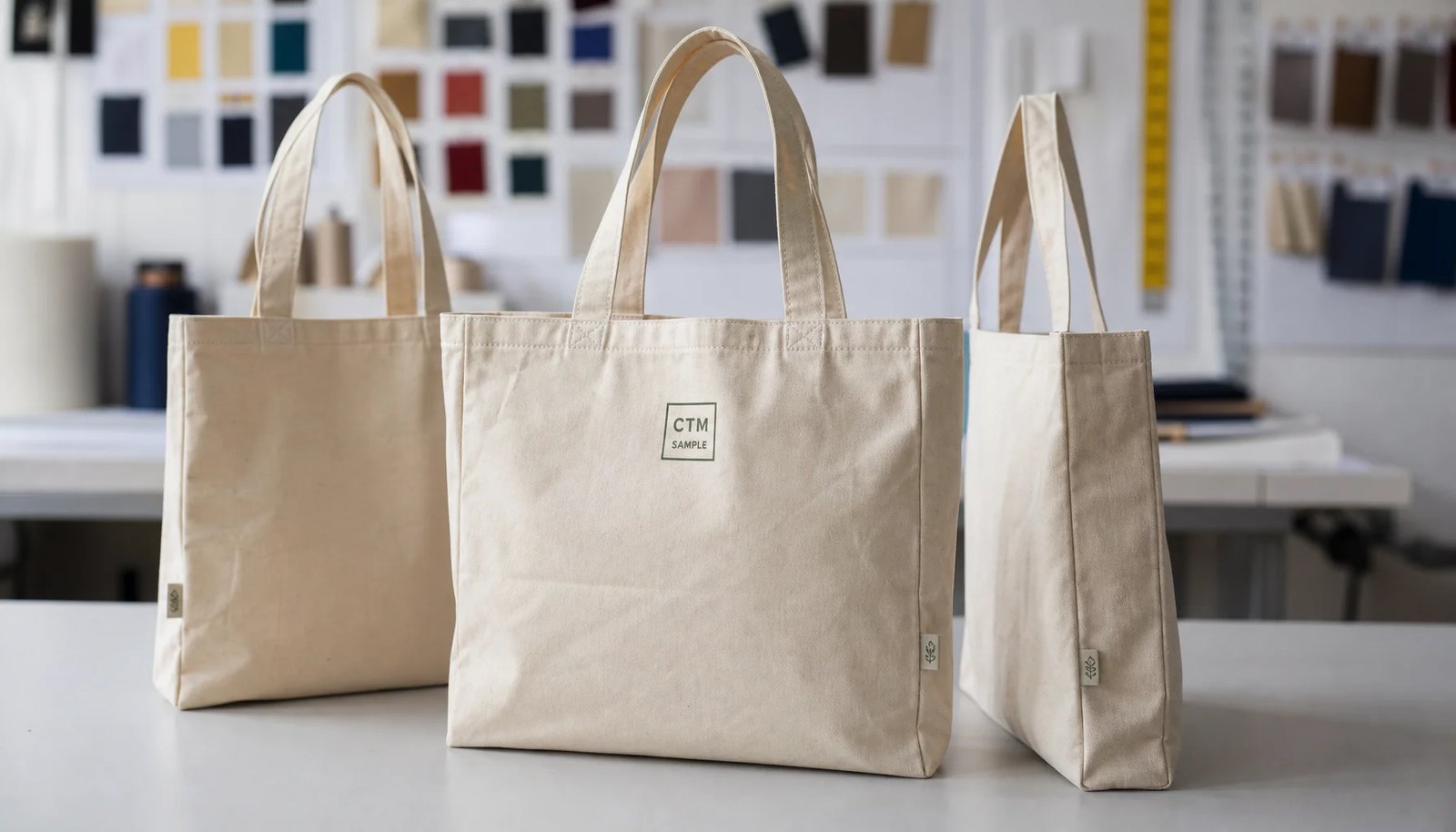
Start the RFQ With the Buying Use, Not Just the Bag Name
A useful RFQ for organic cotton totes starts with the bookstore use case. A tote sold at retail for 12 to 25 dollars needs a different fabric, handle, print finish, and packing method than a low-cost orientation giveaway. If the RFQ only says “organic cotton tote with logo,” factories will quote different assumptions and the lowest price may be based on a lighter bag than your merchandising team expects.
University bookstore buyers usually deal with mixed demand: campus logo resale, department orders, graduation events, alumni weekends, athletic promotions, and web store fulfillment. Put the program type in the first lines of the RFQ so the supplier can build the correct quote structure. A resale tote should hold shape better, have cleaner stitching, and arrive packed for easy receiving. A giveaway tote may prioritize cost, quick lead time, and compact packing.
- For bookstore resale, quote 10 oz to 12 oz organic cotton canvas with reinforced handles and retail packing.
- For orientation giveaways, quote 6 oz to 8 oz only if the buyer accepts a softer, lighter, less premium feel.
- For online order inserts, confirm folded size, packing cleanliness, and barcode or SKU label needs.
- For department logo splits, list each artwork and quantity separately so print setup and MOQ are not hidden.
Fabric Weight and Organic Cotton Evidence
Fabric weight is the first cost driver and also the first place where supplier quotes stop being comparable. Organic cotton totes can be made from plain weave cotton, twill, or canvas. For campus bookstore merchandise, 10 oz to 12 oz canvas, roughly 280 to 340 GSM, usually gives enough body for a retail shelf without becoming too bulky for packing. A 6 oz bag may still be organic cotton, but it will feel more like an event tote.
Organic claims need evidence that procurement can file. A factory may sew the bag, while the fabric mill controls the cotton sourcing documentation. Your RFQ should state what evidence is required and when it must be provided. If your university licensing office or sustainability team reviews supplier documentation, do not leave this until after production. The certificate name, fabric description, and order trail should make sense together.
- State fabric as organic cotton canvas, natural color, 10 oz or target GSM range, with acceptable tolerance.
- Clarify whether recycled content, conventional cotton blends, or non-organic stock fabric are not acceptable substitutes.
- Request fabric roll photos, GSM test photos, and certification evidence before bulk cutting.
- Keep one approved fabric swatch with the buyer and one sealed reference swatch with the factory.
Size, Gusset, and Handle Specifications That Affect Usability
Finished dimensions should be written clearly in width x height x gusset. Factories sometimes discuss cut-panel size internally, but buyers need finished size because that is what customers experience. A common bookstore tote size is around 38 x 42 cm for a flat tote or 38 x 40 x 10 cm for a bottom-gusset tote. A gusset costs more fabric and labor, but it makes the bag more useful for hoodies, books, drinkware, and boxed gifts.
Handle length changes how the bag is carried. Short handles look tidy but may not fit over winter coats. Long shoulder handles improve utility but can drag visually on a small tote. For bookstore programs, specify handle length from attachment point to attachment point and also specify handle width. A 2.5 cm to 3 cm handle is usually more comfortable than a narrow tape handle when the customer carries books.
- Write finished body size, gusset depth, handle length, and handle width as separate RFQ fields.
- For campus retail, use reinforced cross-stitch or bartack at handle joints instead of plain straight stitching only.
- If the tote must fit textbooks or a laptop sleeve, provide the approximate item size and load expectation.
- If the bag will hang on hooks, define hangtag position or handle drop so the display works in store.
Print Method Choices for Campus Logos and Licensed Artwork
Most university bookstore totes use screen printing because it handles campus marks, department logos, and solid school colors well at bulk quantities. Water-based screen print is often suitable on natural organic cotton when the artwork is not too detailed. For darker dyed cotton, opacity and color accuracy become harder, so the factory may recommend pigment ink, discharge testing, or additional print passes. Those decisions affect price and lead time.
The RFQ should include artwork size, print position, number of colors, PMS references, and whether artwork is already approved by the university licensing office. Do not assume a factory can match a school color from a JPEG. A proper quote needs vector artwork, print area, and color target. If the design includes fine mascot details, halftones, or small legal text, the supplier should review whether screen print, heat transfer, or digital print is more appropriate.
- Use screen print for solid one- to four-color bookstore designs with repeat orders.
- Use heat transfer only when detail is high and the buyer accepts a different hand feel.
- Require a print strike-off on the actual fabric before approving bulk printing.
- Define whether print can be slightly absorbed into natural cotton or must appear crisp and high opacity.
MOQ Logic for Bookstore Orders and Split Designs
MOQ is not only a factory rule; it comes from fabric sourcing, dyeing, cutting efficiency, print setup, and packing labor. A factory may accept 300 pieces for a stock natural organic cotton tote, but the unit cost can jump when the order uses custom dyed fabric, multiple print artworks, or separate retail labels. For importers and distributors, the cleanest RFQ separates total quantity from SKU quantity.
University bookstore orders often include several campus departments or event designs. If each department wants 150 pieces with different artwork, the total 1,500-piece order may still behave like ten small print jobs. The RFQ should list quantity by artwork and by bag color. This prevents the supplier from quoting one blended unit price and later adding screen charges, color-change charges, or packing surcharges.
- Ask for MOQ by bag body color, fabric weight, print artwork, and packing style.
- Request price breaks at practical levels such as 500, 1,000, 2,500, and 5,000 pieces.
- For mixed artwork orders, request separate setup costs plus a combined production schedule.
- For repeat programs, ask whether screens, labels, and cutting patterns can be reused.
How to Make Supplier Quotes Comparable
A low unit price can hide missing costs. One supplier may include screen setup, individual packing, carton labels, and sample approval, while another quotes only the sewn blank bag with a basic logo print. Procurement teams should force the quote into line items. This makes it easier to compare factories, explain landed cost to finance, and negotiate without accidentally removing a required feature.
For importers, quote basis matters. FOB pricing is common because the buyer or forwarder controls international freight. If you request EXW, FOB, and DDP from different suppliers without clear assumptions, the comparison becomes unreliable. The RFQ should define currency, incoterm, port, packing, carton data, and validity period. Carton cube is especially important because cotton totes can be bulky even when the unit weight is moderate.
- Separate blank bag cost, print cost, setup cost, label cost, packing cost, sample cost, and inspection cost.
- Request estimated carton size, pieces per carton, gross weight, net weight, and total CBM.
- State whether the quote must include export carton marks, barcode labels, hangtags, or retail belly bands.
- Use the same incoterm and destination assumptions when comparing supplier offers.
Sample Approval Path Before Bulk Production
The best time to catch a tote problem is before fabric cutting. A practical approval path starts with a fabric swatch, then a print strike-off, then a pre-production sample. The final approved sample should be sealed or clearly identified and used as the reference for bulk inspection. If the bookstore has trademark or licensing approval, build that review into the calendar instead of treating it as a quick email step.
Sample comments should be measurable. “Make it better” does not help a sewing line. State whether the body size is short by 1 cm, the handle drop needs 3 cm more, the ink is too warm compared with PMS reference, or the seam allowance is visible. Factories can correct precise comments faster, and procurement can prevent the same issue from being debated during inspection.
- Approve fabric hand feel, shade, thickness, and shrinkage expectation before cutting.
- Approve print color and artwork placement on actual fabric, not on paper proof only.
- Measure the sample flat and record finished width, height, gusset, handle length, and print position.
- Keep one signed or photographed approval record with date, sample version, and buyer comments.
Packing Choices for Retail, Web Orders, and Distributor Receiving
Packing is not a small detail for university bookstores. A tote packed loose in a master carton may be fine for a giveaway table, but it can create extra labor for retail receiving and online fulfillment. Natural cotton also picks up dust and creases easily, so a clean folding method matters. Individual polybags protect the bag but may conflict with plastic reduction goals. A paper belly band can support retail presentation if the fold is consistent.
Carton organization should match how the goods will be received. If one purchase order includes five department logos, mixed cartons can save space but create counting errors. Separate cartons by SKU improve receiving accuracy but may increase carton count and freight volume. The RFQ should define carton labels, inner quantities, and whether mixed cartons are allowed.
- Use loose bulk packing only when the buyer accepts more creasing and manual sorting.
- Use individual recyclable polybag or paper band when cleanliness and retail presentation matter.
- Specify carton marks with PO number, SKU, design name, quantity, carton number, and destination.
- Request packing photos before shipment so mixed SKUs and label errors can be corrected early.
Lead Time Risks Specific to University Bookstore Programs
Organic cotton tote lead time is affected by fabric availability, print approval, and seasonal production load. A simple stock natural cotton tote with one-color print can move faster than a custom dyed organic cotton tote with multiple artwork approvals. The RFQ should ask suppliers to break lead time into stages: sample, buyer approval, fabric booking, cutting, printing, sewing, packing, inspection, and export handover.
Campus programs often have fixed event dates such as orientation, homecoming, graduation, and alumni weekends. Missing the date can turn a profitable retail order into clearance inventory. Procurement should not use only the factory production time when planning. Add time for artwork revision, internal licensing approval, payment setup, inspection booking, freight, customs, and distribution to stores.
- Request lead time after artwork approval and again after pre-production sample approval.
- Identify long-lead items such as custom dyed fabric, custom woven labels, hangtags, or retail belly bands.
- Build a decision deadline for print strike-off approval into the purchase order timeline.
- For event orders, include the required in-store date, not only the ship date.
QC Thresholds That Prevent Claims After Delivery
Organic cotton fabric naturally has slubs and texture, but there is a difference between acceptable natural character and retail defects. Your RFQ should define how stains, holes, weaving faults, severe slubs, oil marks, crooked prints, open seams, and handle defects will be judged. If you use AQL inspection, state the level and defect classification. If the order is small, at least require documented internal QC with photos of key checks.
Load performance is especially important for bookstore totes because customers may carry heavy books or drinkware. The supplier should know the intended use and reinforce the handle accordingly. A simple practical check is to load the bag with a defined weight for a defined time and inspect handle joints and seams afterward. The exact threshold should match the tote construction and cost level, but the acceptance rule must be written before production.
- Define critical defects as broken handles, open seams, wrong logo, wrong fabric, severe stains, or unsafe sharp objects.
- Define major defects as visibly crooked print, size outside tolerance, poor stitching, or incorrect packing.
- Define minor defects as small loose thread ends or light natural cotton slubs within agreed limits.
- Require inspection photos of fabric weight, print placement, handle reinforcement, carton labels, and packed quantity.
Specification comparison for buyers
| Spec decision | Recommended option | When it fits | Buyer risk to check |
|---|---|---|---|
| Fabric weight | 10 oz to 12 oz organic cotton canvas, roughly 280-340 GSM | Main bookstore merchandise totes carrying books, apparel, bottles, and gifts | A supplier quoting 6 oz or 8 oz may look cheaper but can feel promotional rather than retail-grade |
| Cotton evidence | Transaction certificate or organic cotton scope evidence matching the mill or fabric lot | Programs promoted as organic, sustainable, or campus ESG merchandise | Do not accept only a logo on a sales sheet; align certificate name, invoice name, and fabric description |
| Construction | Lockstitch seams, reinforced handle cross-stitch, 2.5-3 cm handle width | Totes expected to carry textbooks, laptops, and bookstore purchases | Weak handle attachment is the most common claim point when stores sell totes as reusable bags |
| Gusset style | Bottom gusset 8-12 cm for retail; flat tote only for low-cost giveaways | Campus stores needing bags to stand better at checkout or hold folded apparel | Flat totes save cost but reduce perceived value and usable capacity |
| Print method | Water-based screen print for solid logos; discharge or pigment test required on dyed fabric | Bookstore logos, mascots, department marks, and orientation event designs | Ink migration, uneven coverage, and poor wash resistance can appear after bulk production |
| MOQ structure | 500-1,000 pcs per colorway for stable fabric and print cost; lower only for stock fabric | Seasonal bookstore replenishment, alumni events, orientation, and campus retail assortments | Very low MOQ may mean mixed fabric lots, limited color control, or higher unit freight |
| Packing method | Individual fold with paper belly band or recyclable polybag, then export carton by SKU | Retail display, online bookstore orders, and distributor receiving requirements | Loose bulk packing reduces cost but increases creasing, dust, mixed SKUs, and receiving labor |
| Sampling path | Blank fabric swatch, pre-production print strike-off, then sealed approval sample | Orders with exact university colors, trademark approvals, or bookstore planogram requirements | Skipping strike-off approval can leave the buyer arguing about color after goods are finished |
| Quote basis | FOB with separate tooling, sample, packing, carton, and freight assumptions | Importers and distributors comparing factories or preparing landed-cost worksheets | A single all-in unit price hides cost drivers and makes supplier quotes hard to compare |
Buyer checklist before sampling
- Define the tote purpose first: resale merchandise, checkout bag, orientation giveaway, alumni gift, or department order.
- Specify fabric as organic cotton canvas or twill with target GSM or ounce weight, acceptable tolerance, and fabric color.
- State finished dimensions in width x height x gusset, not cut-panel size, and include handle length and handle width.
- List print artwork size, number of colors, print placement, PMS references, and whether university trademark approval is required.
- Request organic cotton evidence tied to the fabric supply chain, not only a generic sustainability statement.
- Set minimum construction requirements for seam type, handle reinforcement, shrinkage tolerance, and load test expectation.
- Separate quote lines for unit cost, screen or setup cost, sample cost, packing cost, carton quantity, and estimated carton measurements.
- Require a sample approval sequence: fabric swatch, print strike-off, pre-production sample, and sealed reference sample for QC.
- Define packing by retail need: loose bulk, individual polybag, belly band, hangtag, barcode label, or carton SKU separation.
- Ask for lead time by stage, including artwork confirmation, sample making, bulk fabric booking, printing, sewing, inspection, and export handover.
Factory quote questions to send
- What organic cotton fabric weight and construction are you quoting, and what GSM tolerance will be controlled in production?
- Is the fabric greige, bleached, dyed, or stock natural, and can the same lot cover the full order quantity?
- What certificate or transaction evidence can be provided for the organic cotton fabric used in this order?
- What is your MOQ by fabric color, bag size, print design, and packing style, and what cost changes if the order is split by department logo?
- Which print method is included in the quote, how many print colors are included, and what is the maximum printable area?
- Are screen setup charges, artwork separation, strike-off samples, and repeat-order screen storage included or charged separately?
- What seam type, handle reinforcement, and load test standard will your factory use for bookstore-grade reusable totes?
- What are the estimated carton quantity, carton size, gross weight, and volume for the quoted packing method?
- What is the production lead time after sample approval, and which steps can cause delay if campus trademark approval is slow?
- Can you provide pre-shipment inspection photos showing fabric weight check, print color check, seam reinforcement, carton marks, and packed SKU count?
Quality-control points to confirm
- Fabric weight should match the approved range, with random GSM checks taken from bulk rolls before cutting.
- Finished size tolerance should be agreed before production; common commercial tolerance is about plus or minus 1 cm for body dimensions unless tighter control is quoted.
- Handle attachment should show clean reinforcement stitches with no skipped stitches, broken thread, or loose bartack ends.
- Print color should be compared under consistent lighting against the approved strike-off or PMS reference, not only against a phone photo.
- Print adhesion should pass a dry rub check and reasonable hand-scratch check after curing, especially for dark ink on natural cotton.
- Seams should be straight enough for retail presentation, with no open seams, raw fraying outside the intended allowance, or twisted bag bodies.
- Needle marks, oil stains, fabric slubs, and weaving faults should be classified by agreed AQL or defect criteria before inspection.
- Carton labels should match PO, SKU, color, design, quantity, carton number, gross weight, and destination requirements.
- Packed goods should be counted by SKU and design, with mixed-carton rules written clearly if split shipments or department logos are involved.