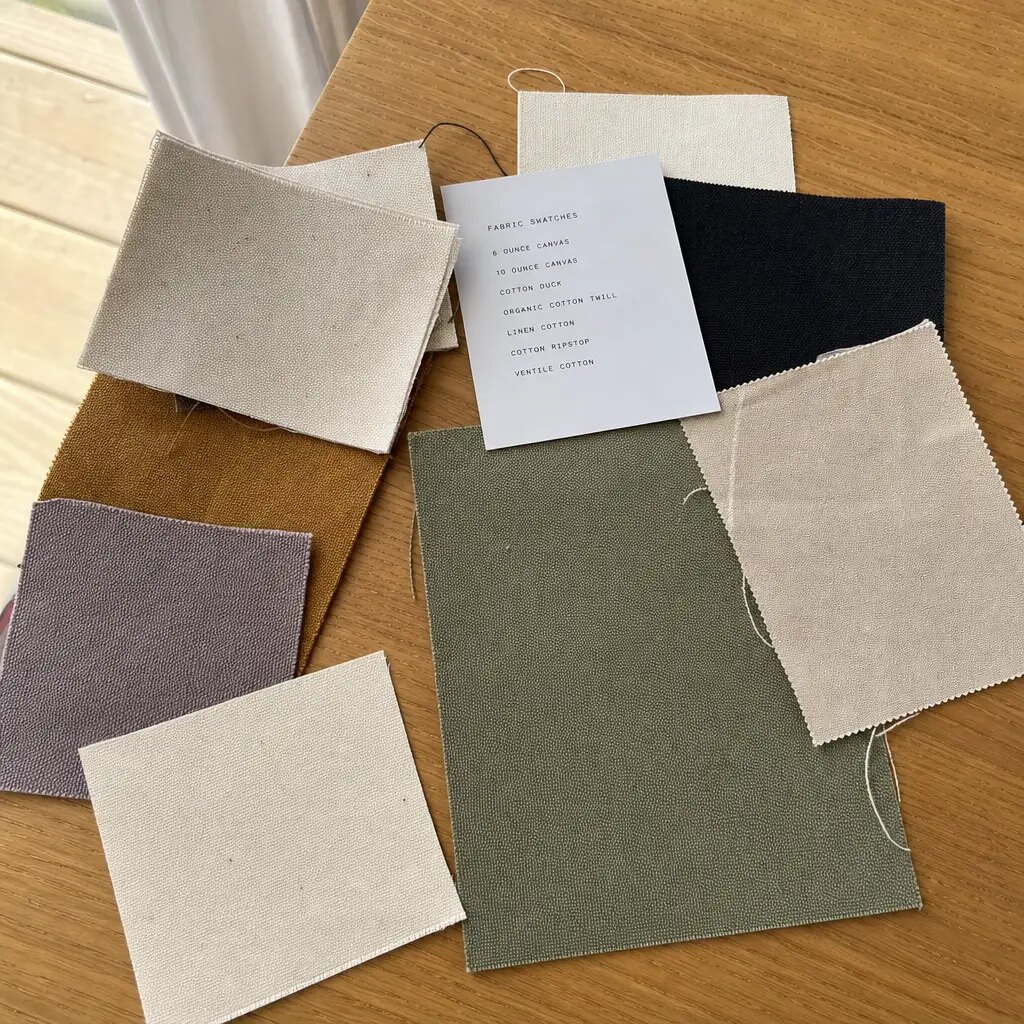
Why coffee roaster tote RFQs come back uneven
Most coffee roasters begin with a clear visual idea: natural organic cotton, restrained branding, shoulder handles, and a reusable bag that feels better than disposable packaging. The problem starts when the RFQ says only “organic cotton tote, custom logo, bulk order.” That phrase leaves the factory to choose fabric weight, weave, body size, handle length, print method, packing, and documentation standard.
Once those variables are open, quotes stop being comparable. One supplier may price a 5 oz plain cotton tote, another an 8 oz organic cotton canvas tote, and another a gusseted 10 oz retail tote. All may appear as “cotton canvas tote” on a quote sheet. The lowest price may simply be a different product.
A useful organic cotton totes RFQ template guide for coffee roasters turns the design idea into measurable buying language. It helps suppliers quote the same item, sample against the same reference, and show where MOQ, price, or lead time changes.
- Missing fields that distort quotes: finished GSM, weave, size, gusset depth, handle length, handle width, print size, print position, packing count, and document requirement.
- Hidden cost drivers: custom dyeing, zipper closure, inside pocket, two-side print, extra ink colors, sewn labels, hangtags, barcodes, and low artwork quantities.
- Best procurement outcome: compare like-for-like quotes before PO release, not after samples or bulk cartons expose the differences.
Start with use case, load, and channel
The first page of the RFQ should answer what job the tote must do. A tasting-event giveaway should not be specified like a tote sold online as branded merchandise. State the channel, whether the tote is sold or gifted, what it must carry, and how polished the presentation needs to be.
Avoid vague strength terms. “Strong tote” is not inspectable. Say whether the customer will carry two 250 g coffee bags, four 340 g bags, one 1 kg bag plus filters, a mug with boxed coffee, or a full holiday gift set. Then test the prototype with those items.
The channel also affects defect tolerance. A promotional tote may allow more natural fiber character and bulk packing. A resale tote needs cleaner fabric, stronger handles, accurate barcodes, better folding, and tighter print placement because customers associate the tote quality with the coffee brand.
- Event giveaway: open top, simple construction, one-color print, mid-weight fabric, bulk packing.
- Retail merchandise: heavier fabric, cleaner print, gusseted body, reinforced handles, hangtag or barcode, tighter visual standards.
- Subscription or gift set: dimensions tested with real contents, consistent folding, accurate SKU packing, possible zipper or snap.
- Farmers-market tote: prioritize gusset, handle comfort, seam reinforcement, and carrying performance over decorative extras.
Specify organic cotton fabric with document names
Fabric drives cost, hand feel, print result, and perceived value. For many coffee roaster bulk orders, 8 oz to 10 oz organic cotton canvas is a practical range. As a buyer-verifiable reference, 8 oz canvas is often around 270 GSM and 10 oz around 340 GSM, but conversions vary by mill, weave, and finish. Ask for finished fabric weight and tolerance.
Do not rely on “canvas” alone. Suppliers may use that word for different constructions. A tight, stable weave supports cleaner logo edges and small text. A loose, slubby, or irregular surface can create fuzzy edges, pinholes, ink bleed, and patchy opacity.
Natural organic cotton may show warm tone, seed specks, neps, small fiber irregularities, and shade movement. That may be desirable for coffee branding, but it still needs an approved allowance. If the brand expects a clean cream base or a dark body color, request bleached, stock-dyed, or custom-dyed options separately.
Organic claim control should happen before labels and hangtags are printed. Ask for document names: supplier certificate scope, transaction certificate where applicable, batch or lot reference, and invoice wording. Confirm whether dyeing, printing, sewing, labeling, or packing are inside or outside the relevant certification scope.
- RFQ fabric fields: organic cotton percentage, finished GSM or ounce weight, weave, color route, tolerance, surface allowance, and sample reference.
- Natural cotton allowances: seed specks, neps, slight slub, shade variation, odor, and visible contamination.
- Dyed fabric checks: lab dip, approved shade standard, shade band, crocking expectation, and print-opacity test on dark colors.
- Document workflow: match PO description, label wording, hangtag wording, invoice wording, and supplier evidence before approving claims.
Size, gusset, handles, and sewing decide daily usability
A tote can look good in a mockup and still disappoint in use. Specify finished body width, height, gusset type, gusset depth, handle width, finished handle length, and handle drop in centimeters. State whether measurements are taken flat, after pressing, and including or excluding gusset folds.
A flat 38 x 42 cm tote may suit simple cafe merchandise. A similar body with an 8-10 cm bottom or side gusset is often a better starting point for boxed filters, mugs, 1 kg coffee bags, or holiday sets. Do not approve the size until real contents have been packed into the prototype.
Handles deserve more attention than they usually receive. A 60-70 cm finished handle length often works for shoulder carry, while shorter handles may feel like hand-carry only. A 2.5-3.0 cm self-fabric handle usually feels more substantial than narrow tape. Specify the attachment pattern and reinforcement before sampling.
- Measurement table: width, height, gusset depth, handle width, handle length, handle drop, handle placement, label position, and print position.
- Construction options to quote separately: open top, zipper, snap, pocket, bound seams, contrast handles, care label, and side brand label.
- Inspection risks: twisted handles, weak backtacks, skipped stitches, seam puckering, uneven gussets, needle damage, and untrimmed threads.
Artwork and print: convert the mockup into production instructions
Many coffee tote designs suit water-based screen printing: one to three spot colors, clean wordmarks, origin stamps, simple typography, and line illustration. For natural organic cotton with a small or mid-size logo, one-color water-based screen print is often the most practical starting point.
The RFQ must turn the mockup into measurable instructions. Attach vector artwork where possible. State print size, color references, number of colors, and location. “Centered on front” is weaker than a placement diagram showing distance from top seam, side seam, bottom fold, or gusset seam with tolerance.
Fine artwork needs early technical review. Small type, QR-style marks, farm maps, thin origin lines, or cafe addresses may not print cleanly on textured canvas. Ask suppliers to confirm minimum line weight, minimum text height, registration tolerance, and whether a dark fabric needs an underbase.
Full-color artwork belongs in a different quote path. Transfer or digital decoration can handle gradients and photographic detail, but test hand feel, edge durability, folding behavior, rub resistance, and color repeatability on the actual fabric.
- Artwork fields: vector file, print size, color reference, color count, location, seam reference points, line weight, text height, and placement tolerance.
- Cost drivers: number of screens, oversized print, second-side print, gusset print, specialty ink, underbase, transfer film, and low quantity per artwork.
- QC checks: color match, registration, edge sharpness, opacity, pinholes, tackiness, curing, rub, folding, and tape-pull where relevant.
MOQ and quote comparison: make the matrix honest
MOQ for organic cotton totes is rarely one number. It may come from fabric lot size, dye lot, cutting efficiency, print setup, sewing line setup, trim availability, label MOQ, zipper length, or packaging materials. A supplier may support a low MOQ for natural open-top totes but require more volume for black organic fabric or custom dyeing.
Assortment complexity also changes cost. A 2,000-piece order looks efficient until it becomes four cafe designs, two fabric colors, bilingual hangtags, and separate carton labels for multiple destinations. Put the split in the RFQ: quantity by artwork, fabric color, size, label version, destination, and delivery window.
Ask for price breaks that match real decisions: launch quantity, likely reorder quantity, annual forecast, and consolidation quantity. Tiers such as 1,000, 3,000, 5,000, and 10,000 pieces are useful if they reflect plausible demand. Ask why the price changes so procurement can see whether setup, fabric buying, or sewing efficiency is the driver.
- Lowest-complexity order: natural fabric, one size, open top, one artwork, one print color, bulk flat packing.
- Quote separate lines for: sample fee, screen charge, unit price, labels, hangtags, barcodes, packing, optional closures, Incoterm, carton data, and lead time.
- Comparison rule: compare suppliers only after fabric, size, print method, packing, documentation, Incoterm, and inspection scope are aligned.
Sampling plan: approve one risk at a time
Sampling becomes confusing when one sample is expected to answer every question. A factory may send a sewn tote with substitute fabric, approximate print, generic trim, and standard packing. The buyer then comments on fabric, print, size, handles, and folding at once, even though each issue belongs to a different process.
Separate approvals by risk. First approve the organic cotton swatch for weight, weave, hand feel, natural fiber character, and base color. If dyed, approve lab dips before bulk dyeing. Then approve the print strike-off on intended fabric. After that, approve a prototype for size, gusset, handles, seam type, and real content fit.
The pre-production sample should be the production reference, not a concept sample. It should use bulk fabric, final ink, final trim, final labels, and final packing wherever possible. Keep an approved PPS reference with the factory and with the buyer or inspector through physical sample retention or detailed photos.
- Fabric swatch: GSM, weave, hand feel, base color, shrinkage expectation, and natural-character allowance.
- Lab dip: custom dye or strict stock-color control.
- Print strike-off: ink color, opacity, edge sharpness, hand feel, small-text legibility, and rub behavior.
- Prototype: finished size, gusset, handle drop, seam construction, label placement, and practical content fit.
- PPS: final material, print, trim, hangtag, barcode, folding, carton marks, and workmanship standard.
Packing, labels, and freight data affect landed cost
Packing affects labor, carton size, freight volume, warehouse receiving, SKU accuracy, and retail readiness. A flat open-top tote can pack efficiently in high carton quantities. A gusseted zipper tote with hangtags and barcode labels may need more folding labor, fewer units per carton, and more inspection time.
Many coffee roasters prefer to avoid individual polybags. That choice can fit the brand, but it needs a cleanliness plan: lined cartons, controlled inner bundles, clean folding surfaces, moisture awareness, and clear SKU identification. If several designs ship together, define whether mixed cartons are allowed.
Request carton data before production is finished. Units per carton, carton dimensions, gross weight, net weight, and CBM help buyers plan LCL shipment, air freight decisions, event deadlines, warehouse slots, and pallet handling. A lower unit price can lose value if cartons are bulky or hard to receive.
Labeling follows the channel. Retail totes may need SKU labels, barcodes, hangtags, care labels, fiber-content labels, and country-of-origin marking depending on the selling market. Giveaways may need only carton marks and a basic care label.
- Packing fields: fold method, units per bundle, units per carton, carton dimensions, gross weight, carton marks, SKU label, pallet need, and mixed-carton rules.
- No-polybag controls: carton lining, inner bundles, clean handling, moisture protection, and receiving identification.
- Retail-ready controls: barcode placement, hangtag attachment, fold consistency, price label area, and carton-level assortment accuracy.
Lead time: build the calendar from approval gates
Coffee tote projects are often tied to fixed dates: cafe openings, holiday gifts, festivals, origin campaigns, subscription drops, and online merchandise launches. The product looks simple, but the calendar includes artwork review, fabric sourcing, swatch approval, print strike-off, sample transit, revisions, material booking, printing, sewing, inspection, packing, freight, customs, and delivery.
Ask when “production lead time” starts. Does the clock begin after deposit, artwork approval, sample approval, fabric arrival, trim arrival, or final PO confirmation? That wording can decide whether a program ships comfortably or turns into air freight.
Organic cotton availability can also change timing. Natural stock fabric with one-color print may move faster when documentation is ready. Custom-dyed organic fabric with zippers, hangtags, and several artwork versions needs lab dips, trim sourcing, strike-offs, packing approval, and more inspection time.
For fixed launches, reduce risk early rather than cutting control steps late. Freeze artwork sooner, use available fabric colors where possible, keep trims simple, and request carton data before freight is booked.
- Request timing for: quote, artwork review, swatch, lab dip, strike-off, prototype, PPS, material booking, production, inspection, packing, and ex-factory handover.
- Clarify required ex-factory date, forwarder handover date, and in-warehouse date.
- Do not compress ink curing, final inspection, documentation review, or packing verification without accepting the risk.
QC thresholds to write before production starts
Organic cotton totes look straightforward, but common defects include skewed logos, uneven ink coverage, loose threads, weak handle stitching, shade variation, dirty fabric, damp cartons, mixed artwork versions, and inaccurate packing lists. These are easier to control when QC thresholds are written before bulk work begins.
Make checks measurable. Instead of “logo centered,” state print placement from seams with tolerance. Instead of “strong handles,” define handle width, attachment pattern, reinforcement, stitch density expectation, and a load check tied to intended contents. Instead of “clean cotton,” define unacceptable stains, oil marks, holes, mildew odor, excessive neps, and shade variation beyond the approved sample.
AQL inspection can be useful, but it should sit beside product-specific checkpoints. The inspector needs the approved PPS, measurement table, print placement diagram, packing instruction, carton mark format, defect classification, and documentation checklist.
State inspection timing and shipment release rules. Confirm whether inspection occurs after production and most packing are complete, whether rework is allowed before release, who pays for re-inspection, and which documents must be provided before goods ship.
- Measurement: width, height, gusset, handle width, handle length, handle drop, handle placement, label position, and print position.
- Fabric: GSM, weave defects, shade, stains, oil marks, odor, holes, dampness, neps, and natural-character allowance.
- Print: color, registration, sharpness, opacity, pinholes, smearing, cracking, tackiness, curing, rub resistance, and placement.
- Sewing: seam strength, stitch tension, reinforcement, backtack, loose threads, needle damage, puckering, zipper function, and snap alignment.
- Packing: carton count, units per carton, SKU accuracy, fold direction, barcode readability, carton marks, carton condition, and packing list accuracy.
Specification comparison for buyers
| RFQ item | Procurement-ready specification | Typical buyer decision range | Quote or QC risk to control |
|---|---|---|---|
| Use case and channel | State whether the tote is for cafe resale, event giveaway, subscription welcome gift, wholesale buyer gift, farmers-market use, or holiday gift set packaging. | Cost-led giveaway through premium resale merchandise. | Without channel context, suppliers may quote a cheaper construction that does not match customer expectations. |
| Fabric weight | State finished fabric weight after processing, with tolerance. 8 oz canvas is often around 270 GSM and 10 oz often around 340 GSM, but conversions vary by mill, weave, and finish. | 8 oz to 10 oz organic cotton canvas for many coffee retail and gift totes; lighter for giveaways; heavier only when structure justifies cost and freight. | Do not compare only the word canvas. Require finished GSM or ounce weight and ask how it is verified for the production lot. |
| Organic cotton claim support | Specify organic cotton percentage, required document names, and where the claim will appear: label, hangtag, invoice, website, marketplace, or carton. | 100% organic cotton for simple totes; review wording if trims, thread, labels, zippers, or packaging are not organic. | Ask for certificate scope, transaction certificate where applicable, batch or lot reference, supplier invoice description, and subcontractor disclosure before printing claims. |
| Fabric construction | Request plain weave, canvas, or duck construction with a swatch. Define acceptable slub, neps, seed specks, and surface irregularity. | Tight canvas for sharp logos and small text; rustic slub only when intentionally approved by the brand. | Loose weave or excessive fiber irregularity can create print pinholes, blurred edges, and a lower-grade appearance at the same nominal GSM. |
| Finished size and capacity | Define finished width, height, gusset type, gusset depth, and measurement tolerance in centimeters. State whether measured flat after pressing. | Flat 38 x 42 cm for simple use; 38 x 42 cm with 8-10 cm gusset as a common starting point for retail coffee and gift sets. | A flat tote can look fine in a mockup but fail with mugs, boxed filters, 1 kg bags, or holiday kit contents. Test real contents. |
| Handles | Specify handle material, width, finished length, handle drop, attachment position, stitch pattern, reinforcement, thread color, and tolerance. | 2.5-3.0 cm self-fabric handles; 60-70 cm finished length for many shoulder-carry programs. | Short, narrow, or single-row handles reduce cost but can feel uncomfortable or fail when customers carry multiple coffee items. |
| Print method | State decoration method, number of colors, print size, location, color references, and required hand feel, opacity, wash or rub expectations. | Water-based screen print for most 1-3 color roaster logos; transfer or digital methods for complex full-color art or small runs. | Transfer samples can look sharp in photos but may feel plastic, crack, peel, or vary in durability. Require strike-off on actual fabric. |
| Artwork tolerances | Provide vector files, print placement diagram, minimum line weight, minimum text size, registration tolerance, and placement tolerance from seam references. | Simple wordmarks, origin stamps, icons, and line illustration usually work best on canvas. | Small type and QR-style marks may not reproduce cleanly on textured cotton. Confirm technical limits before approving artwork. |
| Closure and trims | Quote open top, zipper, snap, inside pocket, care label, side label, hangtag, and barcode options separately. | Open top for most cafe merchandise and events; zipper for premium resale, travel use, or higher-value gift sets. | Zippers add trim MOQ, sewing time, function checks, carton bulk, and color or metal-finish matching issues. |
Buyer checklist before sampling
- State the channel: cafe giveaway, retail resale, subscription welcome gift, wholesale buyer gift, holiday gift set, farmers-market tote, or trade-show merchandise.
- List real contents and expected load, such as two 250 g bags, four 340 g bags, one 1 kg bag, mug plus filters, or boxed gift-set components.
- Specify finished body width, height, gusset type, gusset depth, handle width, handle finished length, and handle drop in centimeters.
- Define organic cotton percentage, weave, finished GSM or ounce weight, color route, and tolerance. Treat GSM-to-ounce conversions as buyer-verifiable because they vary by mill and finish.
- Clarify accepted natural cotton character: seed specks, neps, slub, shade movement, and what becomes rejectable staining or contamination.
- For dyed fabric, request lab dips, approved shade standard, shade band, and dry or wet crocking expectations where relevant.
- Attach final vector artwork where possible. Include print size, color references, print method, print position from seams, and placement tolerance.
- Confirm every decoration location: front, back, gusset, pocket, side label, hangtag, or inside panel. Each can change setup and inspection cost.
- List construction details: seam type, handle material, reinforcement, stitch density target, thread color, trimming standard, and loose-thread allowance.
- Request sample stages: fabric swatch, lab dip if dyed, print strike-off, prototype, pre-production sample, and packing reference sample.
Factory quote questions to send
- What exact fabric composition, weave, yarn character, finished GSM or ounce weight, and tolerance are you quoting for bulk production?
- Is fabric weight measured before or after dyeing, washing, finishing, printing, and sewing? Can you provide a production-lot GSM test, mill report, or equivalent lot evidence?
- Which organic cotton documentation can you provide for this order: certificate scope, transaction certificate where applicable, lot or batch reference, and invoice wording?
- Which steps are in-house and which are subcontracted: fabric sourcing, dyeing, cutting, printing, sewing, washing, labeling, inspection, and packing?
- What MOQ applies by fabric color, custom dye lot, bag size, print design, print color count, label type, zipper or snap trim, and packing format?
- Please quote 1,000, 3,000, 5,000, and 10,000 pieces if possible, and explain which cost drivers change at each tier.
- Which print method are you pricing, how many screens or color stations are included, and what minimum line weight, text height, registration tolerance, and color-matching limit apply?
- Can you quote open top, zipper top, snap, inside pocket, second-side print, sewn label, hangtag, barcode sticker, paper belly band, and individual polybag as separate option lines?
- Which sample stages are included, what materials may be substituted, and when will the sample use bulk fabric, final ink, final labels, and final packing?
- What measurement tolerance do you apply to finished body width, height, gusset depth, handle length, handle placement, and print position?
Quality-control points to confirm
- Measure finished bag width, height, gusset depth, handle width, handle finished length, handle drop, handle placement, label position, and print position against the approved specification sheet.
- Verify production-lot fabric GSM, weave, color, and hand feel against the approved swatch or PPS. Do not inspect only the development sample.
- Check organic cotton documentation against the purchase order claim, SKU description, label wording, invoice wording, and any transaction or batch references required by the buyer.
- Inspect natural cotton for shade consistency, excessive slub, excessive neps, seed specks beyond approved allowance, stains, oil marks, holes, weaving defects, mildew odor, chemical odor, or damp cartons.
- Check dyed fabric for panel-to-panel shade variation, dye-lot inconsistency, visible crocking, lint contrast, and print opacity problems on dark bases.
- Check print color against approved strike-off or color reference under consistent lighting, noting that natural cotton base color can shift perceived color.
- Measure print position from top seam, side seam, bottom fold, or gusset seam according to the artwork diagram.
- Inspect print surface for pinholes, smearing, blurred edges, poor registration, weak ink penetration, cracking, tackiness, color contamination, inconsistent coverage, and insufficient curing or drying.
- Perform dry rub and, where relevant, wet rub, folding, tape-pull, or light hand-wash checks on printed areas, especially for dark dyed cotton, heavy ink coverage, transfer decoration, or resale merchandise.
- Check handle attachment pattern, stitch density, backtack security, thread tension, thread color, reinforcement consistency, and symmetrical handle placement.