Define The Bookstore Use Before Setting The Spec
An organic cotton tote for a university bookstore is not one product. The same buyer may need a low-cost orientation bag, a premium alumni gift, a general merchandise tote, and a course-pack carrier. If the RFQ only says organic cotton tote with logo, suppliers will quote different fabric weights, handle constructions, and printing methods while appearing to offer the same item.
Start by defining the buying problem: what the bag must carry, how it will be displayed, and how long it should look acceptable after purchase. A tote sold beside branded apparel needs cleaner sewing and better print hand-feel than a giveaway bag. A tote used for textbooks needs stronger handle attachment than a tote meant for a sweatshirt and water bottle.
- For retail shelves, prioritize clean shape, smooth front panel, consistent natural shade, and barcode-ready packing.
- For campus events, prioritize MOQ flexibility, fast production, and simple one-color printing.
- For textbook or course-material use, prioritize heavier fabric, reinforced handles, and load testing.
- For sustainability messaging, prioritize traceable organic cotton evidence and low-plastic packing.
- For licensed school marks, prioritize artwork control, Pantone approval, and print strike-offs before bulk production.
Choose Fabric Weight With Carry Load In Mind
Fabric weight is the first serious quote variable. Many tote quotes use ounces per square yard, while fabric mills and factories may also use GSM. As a practical range, 8 oz cotton canvas is light and economical, 10 oz is a common retail starting point, and 12 oz gives a more substantial hand-feel for bookstore merchandise. Heavier options can work, but they raise material cost, carton weight, and sewing difficulty.
For organic cotton totes, the buyer should not evaluate weight by catalog wording alone. Natural organic cotton may have more visible seed specks and slight shade variation than bleached conventional cotton. That is not automatically a defect, but it must match the visual standard your bookstore wants. If the front print needs a very clean white or school-color background, natural organic cotton may require testing with the chosen ink before the final spec is locked.
- 8 oz or about 220-240 GSM: suitable for event bags and light retail items, not ideal for heavy textbooks.
- 10 oz or about 270-285 GSM: good everyday bookstore retail option with manageable cost.
- 12 oz or about 320-340 GSM: stronger hand-feel for premium retail, alumni, and heavier carry use.
- 14 oz and above: premium look, but higher freight weight and more stress on needle, seam, and print coverage.
- Recommended RFQ wording: state both oz and GSM with a tolerance after finishing, not just one marketing term.
Separate Organic Cotton Claims From General Sustainability Claims
The word organic can mean different things in supplier quotations. Some suppliers mean they buy organic yarn, some mean the fabric mill has organic capability, and some mean the finished tote can be certified or supported by a transaction certificate. A university bookstore that prints organic cotton on a hangtag or online listing needs stronger evidence than a buyer who only wants a natural-looking cotton tote.
Decide the claim level before sourcing. If the bookstore's sustainability team, licensing office, or campus procurement policy requires proof, include that in the RFQ. Otherwise, the cheapest quote may be based on unverified cotton with organic used as a loose description. This can become a problem after goods arrive, when product labels, web copy, or campus purchasing audits require documentation.
- Minimum evidence: supplier declaration and fabric mill information for internal reference only.
- Stronger evidence: organic cotton fabric documentation tied to the order lot.
- Highest evidence: certification or transaction documentation that supports finished-goods marketing claims.
- RFQ warning: do not accept certificate screenshots unless the scope, validity date, and product category match your order.
- Label control: align hangtag language with the documentation you can actually support.
Set Construction Details That Prevent Handle Failures
Handle failure is the defect most likely to become a customer complaint because bookstore shoppers use totes immediately. A clean print will not save a bag if the handle tears at the upper hem after carrying books. For university bookstore buyers, handle length, webbing width, stitch pattern, and reinforcement position should be specified before pricing.
The common construction choices are self-fabric handles, cotton webbing handles, flat tote body, and gusseted body. Self-fabric handles look consistent with the bag but must be folded and stitched properly. Webbing handles can be stronger and cleaner for higher volumes. A boxed bottom improves display and carrying shape but adds sewing time and may increase measurement variation if the factory is not experienced.
- Handle drop: 25-30 cm is common for shoulder carry; shorter handles suit hand carry but reduce usability.
- Handle width: 2.5-3.8 cm is usually more comfortable for retail totes than very narrow straps.
- Reinforcement: cross-stitch or bar-tack at each handle end should be defined, not left to supplier habit.
- Seams: side seams and bottom seams should have consistent stitch density and no skipped stitches.
- Load target: for bookstore use, define a practical static load such as 4-6 kg based on the intended merchandise.
Match Print Method To Artwork And Order Size
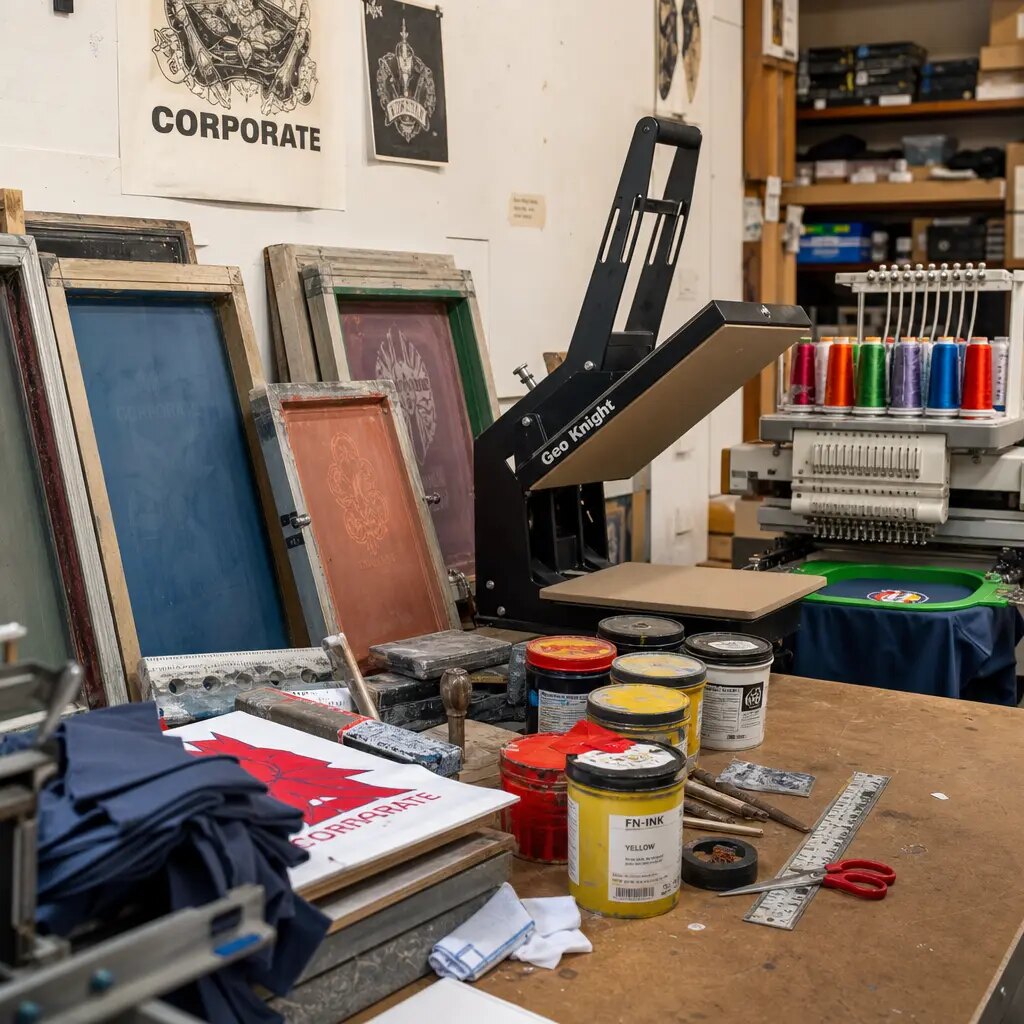
Most university bookstore organic cotton totes use screen printing because school logos, slogans, and mascot artwork often have solid colors. Water-based screen print is common for cotton because it gives a softer hand-feel than heavy plastisol-like deposits and fits sustainability positioning better. The tradeoff is that ink behavior depends on fabric shade, weave texture, and absorbency.
Digital printing can be useful for small batches, detailed artwork, or many designs, but it may not be the lowest-cost route for repeat bookstore programs. Heat transfer is sometimes used for complex marks, but buyers should evaluate hand-feel, edge appearance, and wash durability. If the tote is a retail item, the print should look intentional up close, not like an event freebie.
- One- or two-color logos: screen print usually offers the best balance of price, durability, and appearance.
- Full-color artwork: request a digital or transfer sample and compare surface feel before approval.
- Pantone matching: approve on the actual organic cotton fabric, not on coated paper or a digital proof only.
- Print placement: define distance from top edge and side edge, with tolerance such as plus or minus 5 mm.
- Ink testing: use dry rub, wet rub, and crease checks when the bag will be folded or packed tightly.
Build MOQ Logic Around Bodies And Designs
MOQ for organic cotton totes is not one number. A factory may have one MOQ for fabric procurement, another for cutting efficiency, another for printing setup, and another for carton packing. University bookstore programs often include multiple designs for departments, alumni events, admissions, athletics, and general campus retail. The buyer should structure the RFQ so suppliers quote the real cost of design variation.
A practical approach is to standardize one tote body and split the order across several prints. For example, the same 10 oz natural organic cotton tote can carry four different school graphics. This improves fabric purchasing efficiency and keeps sewing consistent. The unit price per design may still change because each screen, color, or artwork setup adds cost, but the total program becomes easier to control.
- State total order quantity and quantity per artwork, not only the combined quantity.
- Ask whether the fabric MOQ can be pooled across different printed designs.
- Request separate setup cost for each screen, color, or digital file.
- Clarify whether overrun or underrun tolerance applies by design or by total order.
- Use one bag body across multiple SKUs when the bookstore needs variety without high inventory risk.
Approve Samples In The Right Sequence
Sampling should reduce production risk, not create false confidence. A polished sales sample made from available fabric may not represent the final organic cotton lot. For a bookstore retail order, the sample approval sequence should normally include fabric swatch, blank construction sample, printed strike-off, and then pre-production sample if timing allows.
The blank sample proves shape, handle drop, sewing method, and fabric hand-feel. The printed strike-off proves logo size, placement, ink color, ink coverage, and how the artwork sits on the cotton texture. If a supplier wants to skip directly from digital proof to bulk production, the buyer carries the risk of color mismatch, print skew, or fabric absorption problems.
- Fabric swatch approval: compare GSM, shade, weave, seed specks, and shrinkage expectation.
- Blank sample approval: measure width, height, gusset, handle drop, handle width, and seam quality.
- Print strike-off approval: review Pantone color, registration, ink hand-feel, and placement tolerance.
- Pre-production sample: confirm all labels, hangtags, barcodes, and packing components are correct.
- Approval record: sign off with photos, measurements, date, revision number, and artwork file name.
Use Practical QC Thresholds Instead Of Vague Workmanship Language
A quality inspection checklist should classify defects before the inspector opens cartons. Vague wording such as good stitching or nice print gives too much room for argument. University bookstore buyers should define critical, major, and minor defects in commercial terms: safety and usability, retail appearance, and small workmanship variation.
For organic cotton totes, the inspection should include raw material verification, finished measurements, sewing strength, print quality, labels, and packing. The most useful inspection report includes photos of measured samples, defect examples, carton numbers, and production lot references. This lets the buyer decide whether the issue is isolated or systemic.
- Critical defect: broken handle, open seam, wrong logo, unsafe needle fragment, or incorrect legal marking.
- Major defect: print off-center beyond tolerance, severe stain, wrong fabric weight, missing barcode, or weak reinforcement.
- Minor defect: small thread end, slight natural cotton speck, or minor crease that does not affect retail sale.
- Measurement tolerance: define acceptable variation for height, width, gusset, and handle drop before inspection.
- Lot control: inspect across multiple cartons and print batches, not only the best-looking carton at the factory.
Plan Packing For Retail Handling And Import Logistics
Packing affects both appearance and landed cost. Individual polybags protect each tote and make retail handling easier, but they add material cost, labor, and plastic use. Bulk packing reduces waste and cost, but printed panels can crease or rub if the cartons are overloaded. The right choice depends on whether the bookstore will sell from shelves, hang bags on fixtures, or unpack directly into backroom inventory.
Carton planning matters more than many buyers expect. Heavy cotton totes can push carton gross weight above comfortable handling limits, especially with 12 oz or 14 oz fabric. If cartons are too large, they may crush during ocean freight or warehouse stacking. If they are too small, freight cost increases due to carton count. Packing specifications should be quoted, not improvised after production.
- Bulk packing: usually 25-50 pieces per carton depending on fabric weight and bag size.
- Retail-ready packing: individual bag, hangtag, barcode, and size or design sticker if the bookstore needs SKU control.
- Print protection: avoid tight folding across heavy ink areas when using screen print.
- Moisture control: use dry cartons, inner liner if needed, and avoid packing warm goods immediately after printing.
- Carton marks: include PO number, SKU, design name, quantity, gross weight, net weight, and country-of-origin information.
Protect The Schedule Around Artwork And Campus Approvals
Lead time does not start when a buyer sends an inquiry. It starts when the supplier has approved artwork, confirmed fabric, accepted deposit or payment terms, and received all label and packing instructions. University bookstore orders often lose time in licensing review, trademark approval, department sign-off, or late changes to campus event dates.
A realistic schedule separates sample time, material booking, printing setup, bulk sewing, final inspection, and shipping handover. Organic cotton fabric availability can add risk if the buyer requires a specific certification level or shade. Peak seasons before back-to-school and graduation also increase pressure on printing and sewing capacity.
- Artwork approval: lock vector file, Pantone colors, print size, and trademark clearance before sampling.
- Sample stage: allow time for fabric swatch, blank sample, and printed strike-off review.
- Production stage: book fabric and print screens only after written approval to avoid rework.
- Inspection stage: reserve time for corrective action if final inspection finds a major defect.
- Shipping stage: align carton dimensions and booking data early for air, sea, or courier comparison.
Specification comparison for buyers
| Spec decision | Recommended option | When it fits | Buyer risk to check |
|---|---|---|---|
| Fabric weight | 10 oz to 12 oz organic cotton canvas, roughly 270-340 GSM depending on weave | Best balance for bookstore retail totes carrying apparel, notebooks, and light textbooks | Underweight fabric may pass photos but sag under load; require GSM tolerance and pre-production swatch approval |
| Bag construction | Boxed bottom or flat tote with reinforced handle cross-stitch | Boxed bottom fits gifts and course packs; flat tote works for lower retail price points | Weak handle bar-tacks are the most common failure point during campus use |
| Print method | Water-based screen print for solid school marks; digital print only for short runs or gradients | Screen print gives better unit cost and durability on 500+ pieces with limited colors | Organic fabric has natural specks; light ink coverage and exact Pantone matching need lab dip or strike-off approval |
| Organic claim evidence | Transaction certificate or scope certificate from a recognized organic textile system when required | Needed when bookstore marketing uses organic cotton as a product claim | A supplier saying organic cotton is not enough; match certificate scope to yarn, fabric, or finished goods requirement |
| MOQ structure | Separate MOQ for blank fabric, dyeing if any, printing, and sewing | Useful when ordering multiple campus designs on one tote body | Low MOQ quotes can hide higher print setup, fabric surcharge, or mixed-carton packing cost |
| Sample approval | Blank construction sample plus printed strike-off before bulk cutting | Reduces risk when logo placement, handle length, and fabric feel matter at retail | Skipping the print strike-off often causes color, ink hand-feel, or logo-size disputes after production |
| Packing format | Individual recycled polybag only if retail display needs it; otherwise 25-50 pieces per export carton | Bulk carton packing saves cost and reduces plastic for bookstore backrooms | Loose packing without carton strength control can crease prints and deform boxed bottoms |
| Supplier route | Direct factory for custom repeat programs; trading company for many small campus SKUs | Factory route improves control over fabric and QC; trader route can consolidate low-volume accessories | Factory quotes may be narrower but more transparent; trader quotes need source visibility and inspection access |
Buyer checklist before sampling
- Define whether the tote is a retail product, orientation giveaway, alumni gift, or course-material carry bag; the acceptable fabric weight and stitching level change with use.
- State organic cotton claim requirements clearly: organic yarn, organic fabric, or certified finished product are not the same purchasing condition.
- Specify fabric weight in oz and GSM, with a tolerance such as plus or minus 5 percent after finishing.
- Request handle length, handle width, handle reinforcement method, and target load test instead of only sharing a product photo.
- Approve a fabric swatch, blank sample, and printed strike-off before mass cutting.
- Set print acceptance criteria for Pantone color, logo size tolerance, ink coverage, placement tolerance, and wash or rub resistance if needed.
- Confirm carton quantity, carton size, gross weight, inner packing, barcode or hangtag placement, and whether retail price labels are applied at factory.
- Require inspection photos and measurements from random cartons, not only top-of-production samples.
- Separate quote lines for fabric, printing, labels, hangtags, packing, testing, and freight-ready export cartons.
- Lock artwork file format, print area, and campus licensing approval before the production lead time starts.
Factory quote questions to send
- What organic cotton evidence can you provide for this order: scope certificate, transaction certificate, fabric mill declaration, or finished goods certificate?
- What fabric weight do you recommend for a bookstore tote that carries 4-6 kg, and what is the GSM tolerance after finishing?
- Is the quoted fabric greige, natural, bleached, dyed, or washed, and how does that affect shrinkage and shade variation?
- What is your MOQ for the tote body, and what is the separate MOQ for each printed design or logo colorway?
- Which print method are you quoting, how many screens or setups are included, and what is the maximum printable area?
- Can you make a blank construction sample and a printed strike-off before bulk production, and what sample cost and timing should be budgeted?
- What handle reinforcement will be used: cross-stitch, bar-tack, double row stitch, or another method?
- What in-line and final inspection points do you control, and what AQL or defect classification can you accept?
- What packing method is included in the price, and what is the carton drop or compression risk for export shipment?
- What quote validity, production lead time, peak-season capacity limit, and shipping handover term are included?
Quality-control points to confirm
- Fabric GSM measured from approved fabric rolls before cutting, with shade and slub level compared to the approved swatch.
- Finished tote dimensions measured flat, including width, height, gusset, handle drop, and handle width.
- Stitch density checked on side seams, hem, and handle attachment; loose threads trimmed without cutting seam integrity.
- Handle strength checked by static hanging load or pull test aligned with the buyer's intended use.
- Print placement measured from top edge and side edge; skew and off-center logo placement classified before packing.
- Ink adhesion checked by rub test and, where relevant, wash or wet crocking test on the approved fabric.
- Label, hangtag, barcode, campus licensing mark, and country-of-origin marking checked against the approved layout.
- Packing checked for correct pieces per carton, mixed-design separation, carton marks, moisture control, and retail presentation condition.
- Final random inspection recorded by carton number so defects can be traced to production lot or print batch.